

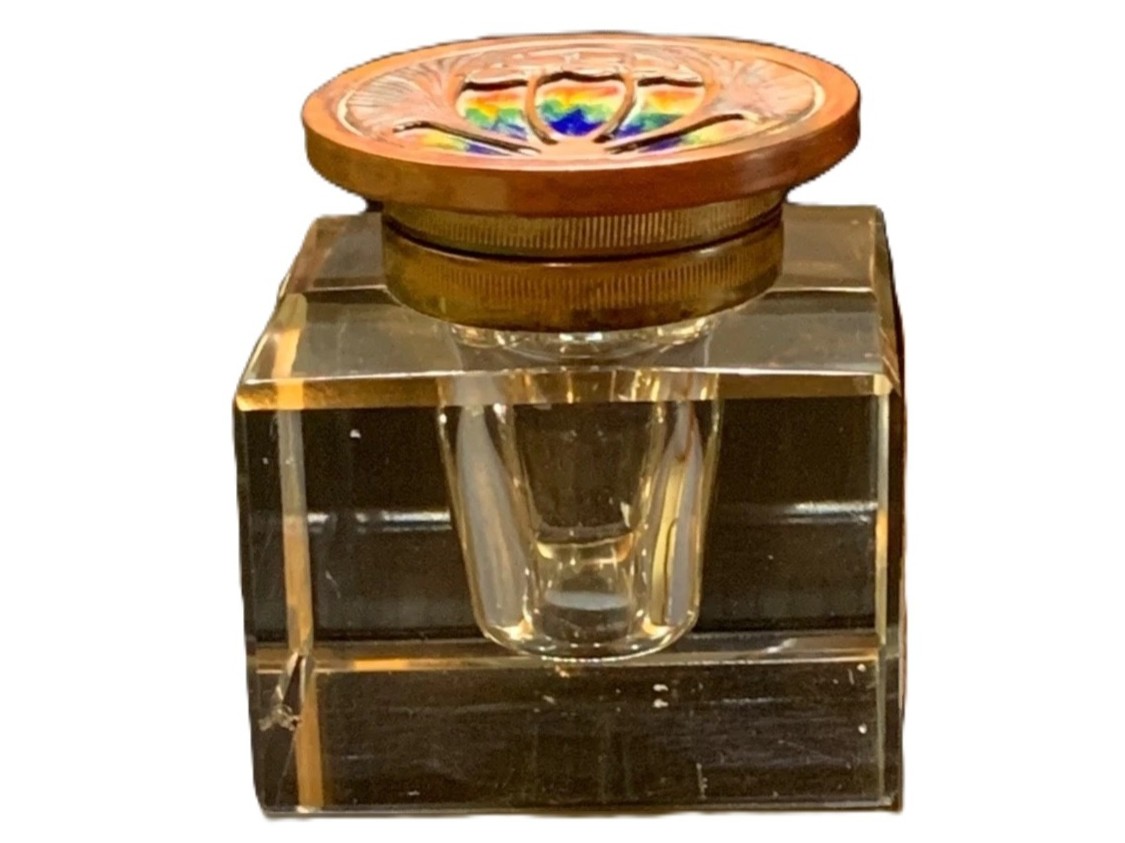


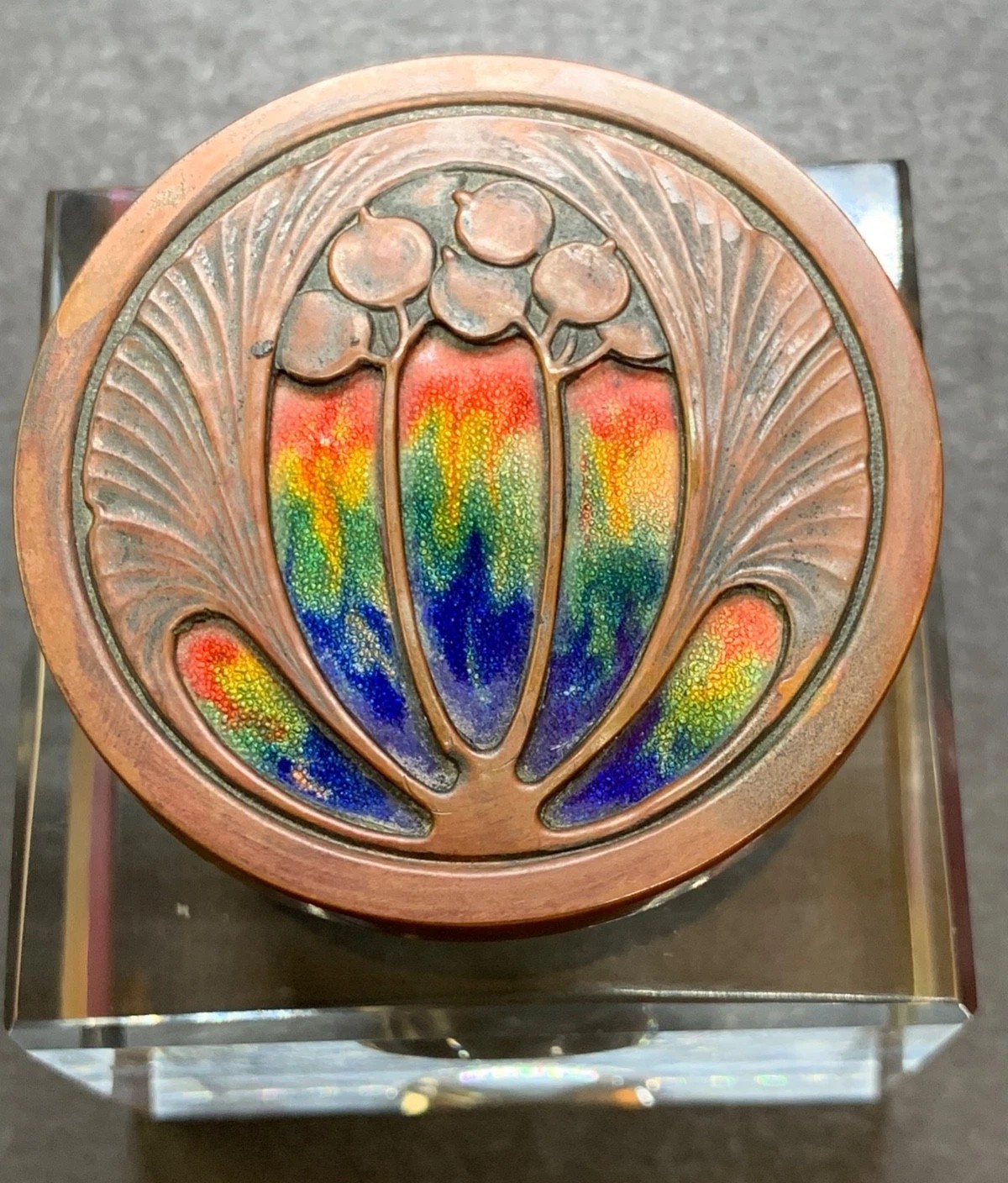
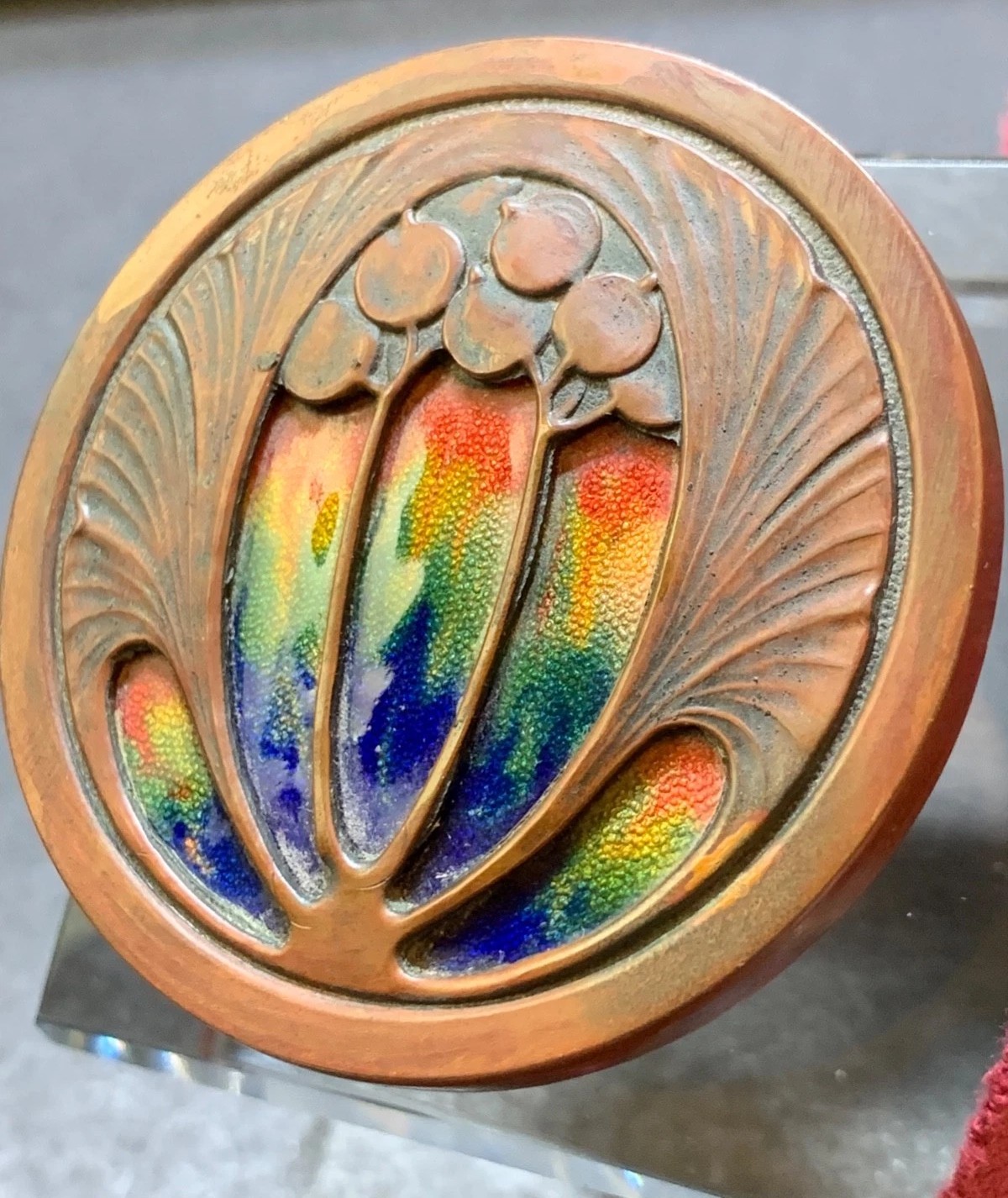
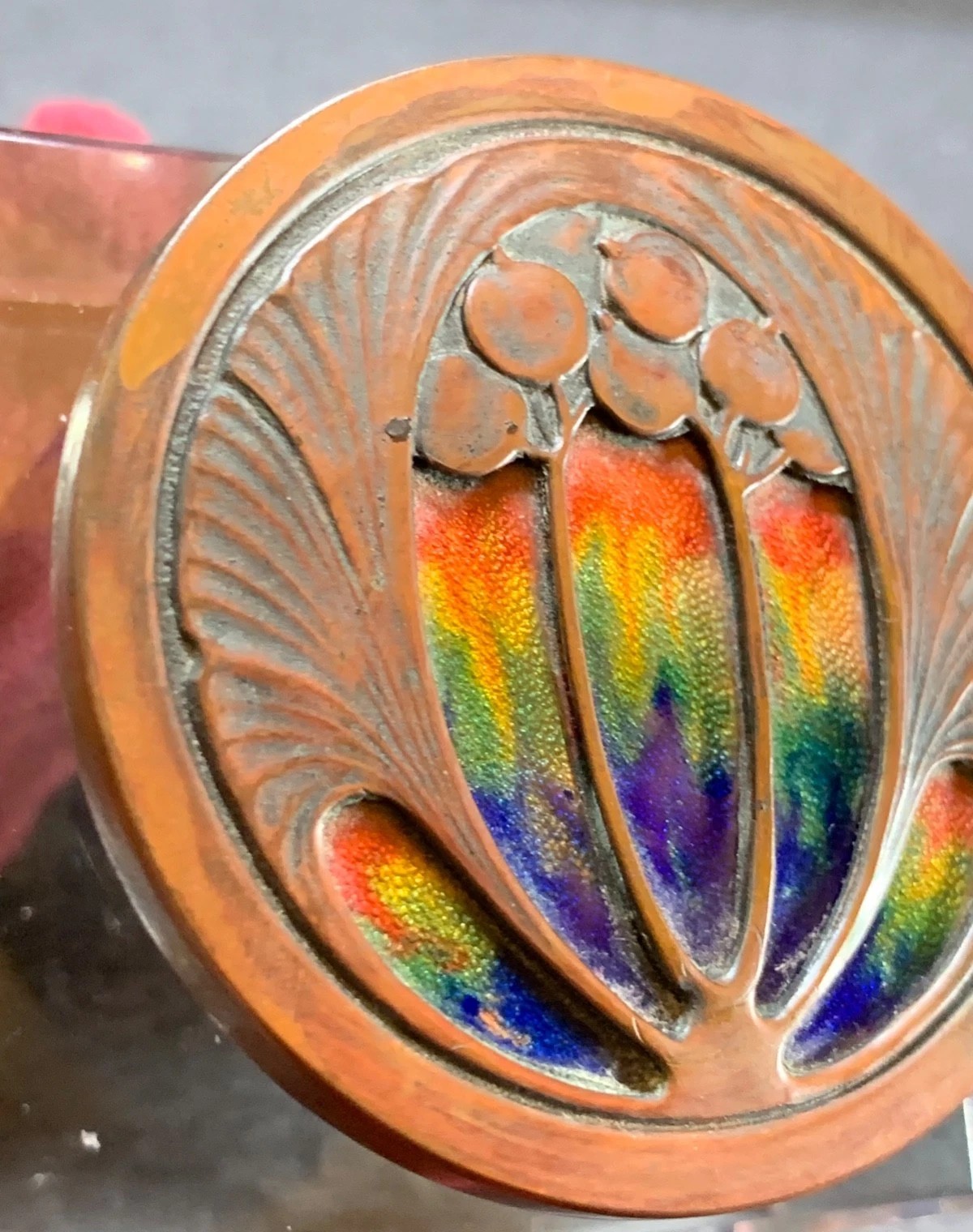
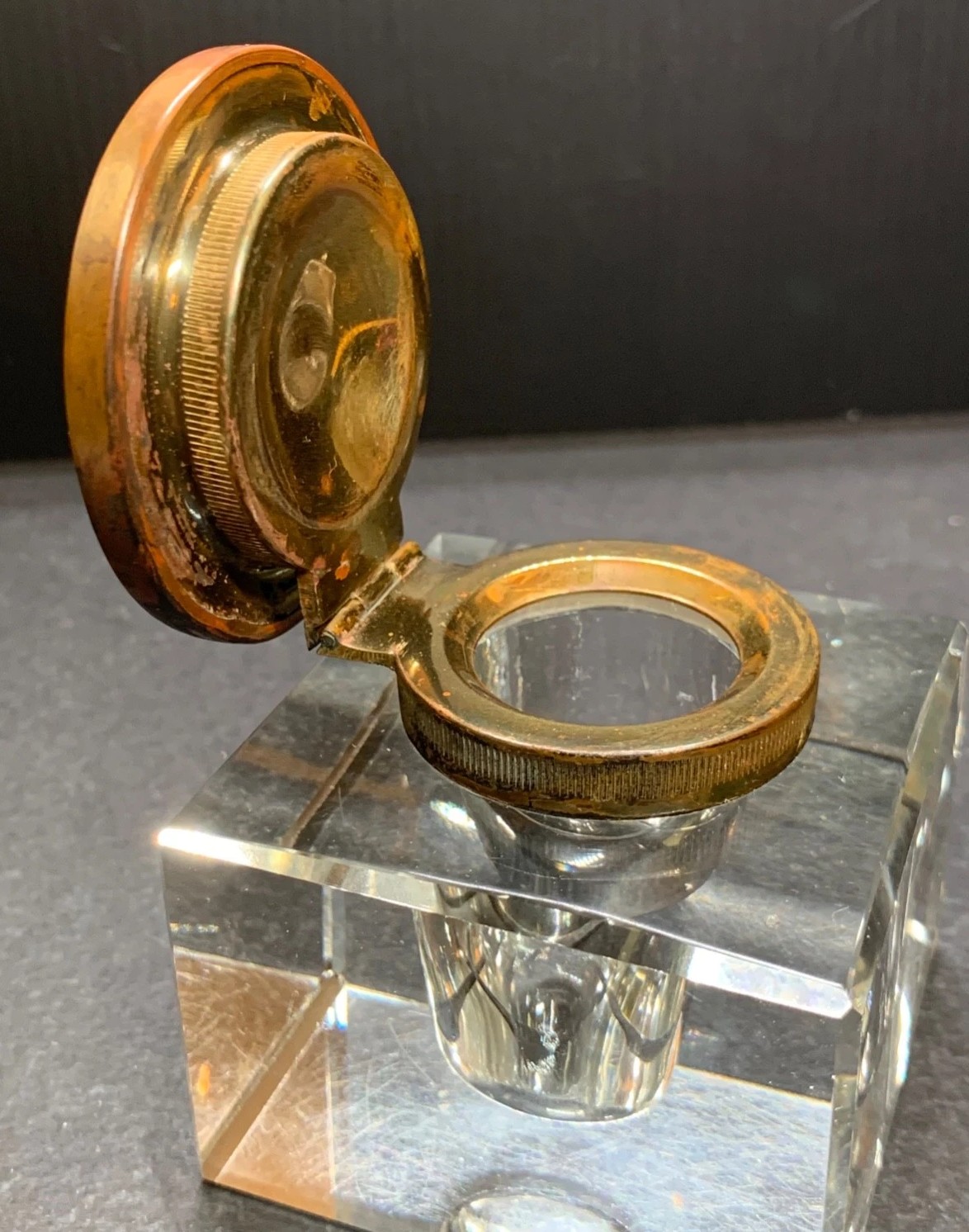
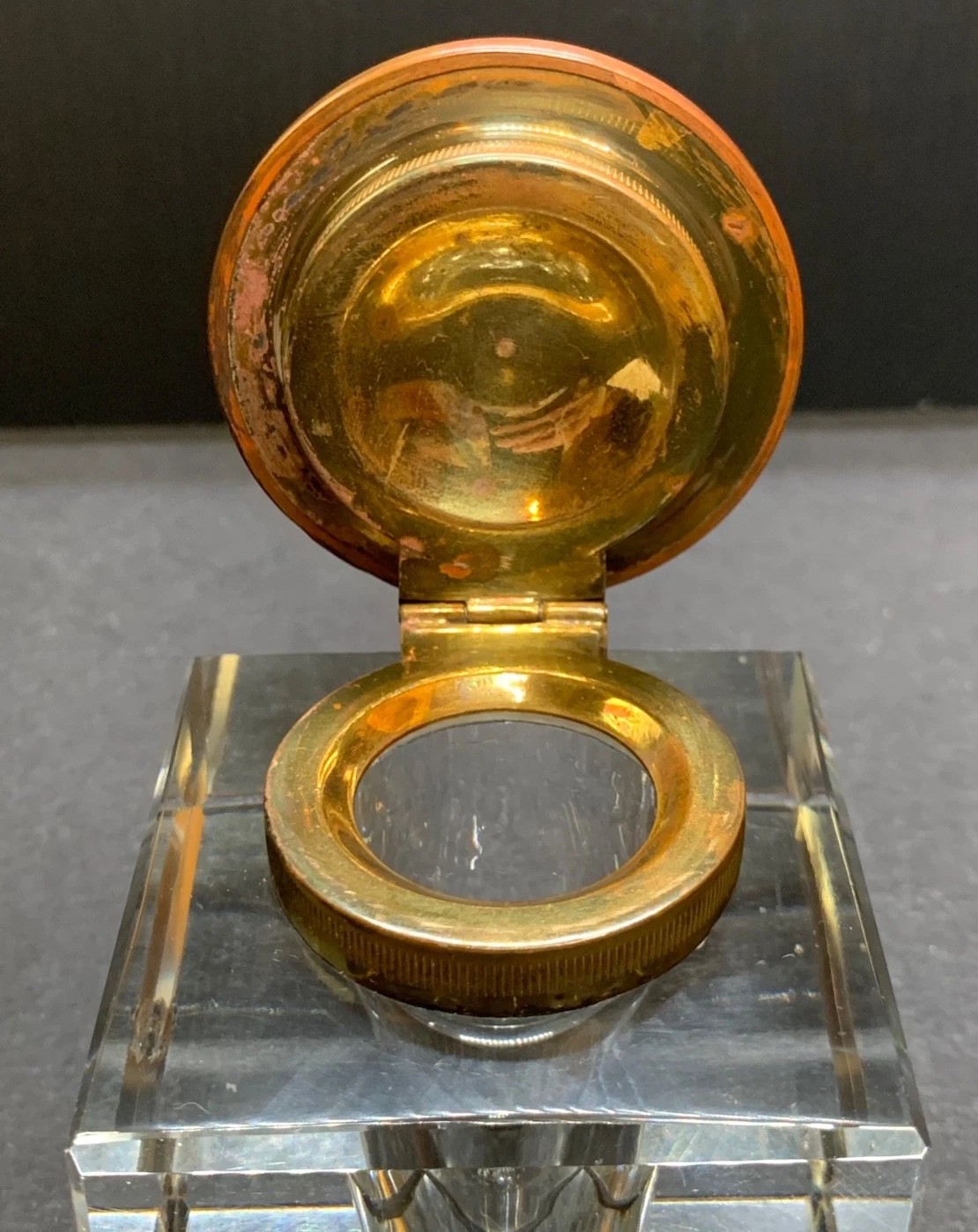
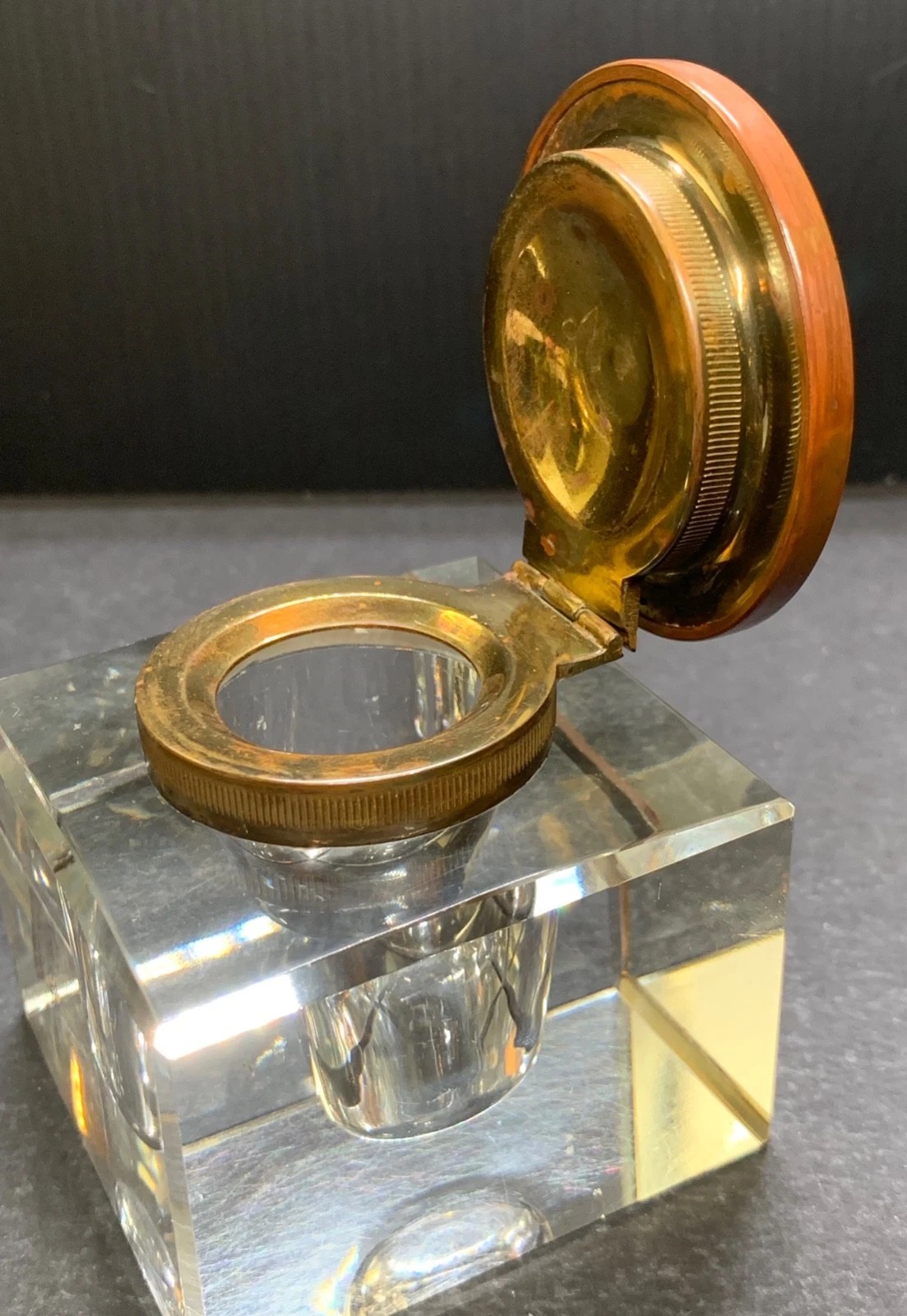

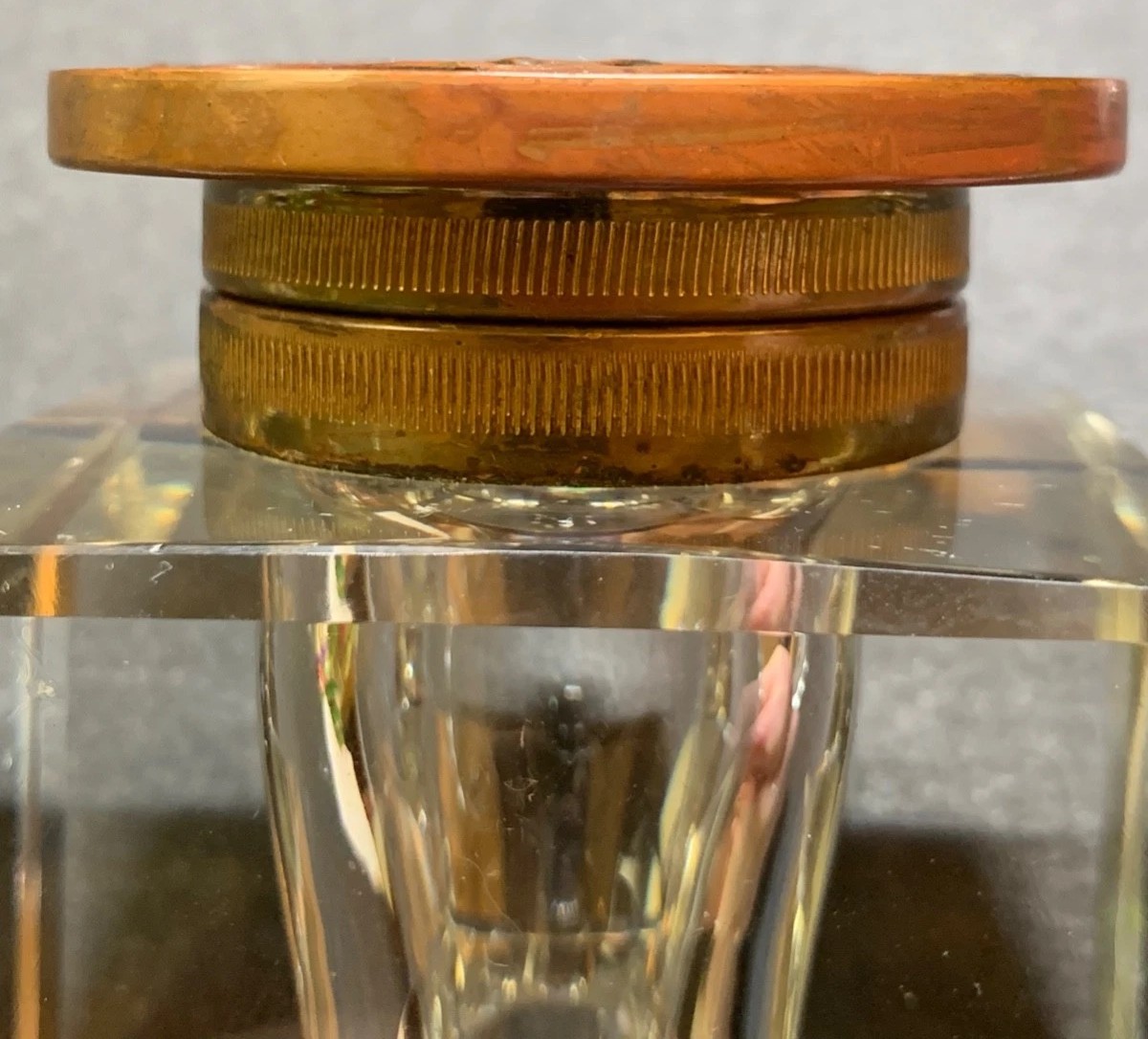
Phoebe Anna Traquair – Enamel Inkwell
| Categories | Arts & Crafts |
| Material | Coppered metal, Enameled Brass/Bronze/Metal |
| Markings | Unmarked |
| Manufacturer | Phoebe Anna Traquair |
| Origin | Scotland |
| Date or Era | circa 1905 |
| Measuring | 2 ⅝” x 2 ⅝” x 2 ¾” high |
This is a brass/copper and polychrome enamel inkwell lid on a beveled-glass well, dating to c. 1905–1910, consistent with the work and characteristics of Phoebe Anna Traquair. While the piece is unmarked (which is common for her smaller enamel works), the specific materials, date, and artistic style provide strong evidence for the attribution.
- Confirmation of the Artist and Context
- Phoebe Anna Traquair (1852–1936) was one of the leading and most versatile figures of the Arts and Crafts Movement in Scotland, primarily associated with the Edinburgh School. She excelled in mural painting, embroidery, illuminated manuscripts, and, notably, enameling.
- Shift to Enameling (c. 1900): Traquair began focusing intensely on enameling around the turn of the century (c. 1900–1910). This period represents the height of her metal and jewelry work.
- Stylistic Fit: Her small-scale enamel objects were highly distinctive. They were characterized by:
- Medieval and Renaissance Influence: Her works drew heavily on Byzantine and Early Renaissance art, particularly in the use of rich colors, symbolic imagery, and stylized figures.
- High Level of Detail: She used the cloisonné or champlevé techniques, or a combination thereof, to create miniature “paintings” in enamel.
- The Inkwell Form: Small, precious domestic objects like inkwells, mirror backs, and caskets were ideal formats for displaying her enamel miniatures.
- Description of the Inkwell (Arts & Crafts Masterpiece)
- Overall Composition: This is a sophisticated desk accessory where the functional glass inkwell is intentionally subordinate to the highly decorative lid, in line with the Arts & Crafts ideal of transforming common objects into art.
- The Beveled-Glass Well: The use of beveled glass shows attention to geometric structure and reflective surfaces, providing an elegant counterpoint to the organic metalwork.
- The Enamel Lid (The Masterpiece):
- Metal: The base metal is typically copper or brass, which Traquair favored for its malleability and ability to hold heat for the enameling process.
- Polychrome Palette: The rich colors of orange, yellow, green, and blue are characteristic of her vibrant palette, often laid in against a dark, dramatic background or interspersed with gilt metal lines.
- Design: The enamel design on the lid would likely feature highly stylized foliage, knotwork, or possibly a symbolic figure or tiny scene. The fine lines separating the colors would be the thin copper wire (the cloisons) holding the powdered glass in place before firing.
III. Additional Information
- Unmarked: Many of Traquair’s smaller enamel pieces and jewelry were not marked, making attribution reliant on stylistic factors and provenance.
- Technique: The vibrant, jewel-like colors suggest she utilized the technique of plique-à-jour (where the enamel is translucent, without a metal backing, like miniature stained glass) in conjunction with opaque enamels for maximum color impact, a technique perfectly suited to the period.
Sold for $131 in November 2025
Content disclaimer. The information posted is the owner’s best knowledge and may not have been vetted by the SOIC. We welcome comments, corrections, and additions, working to make our website information comprehensive and accurate.
Join the Society of Inkwell Collectors (SOIC) – it’s free!
Founded in 1981 as a non-profit organization,
we are documenting inkwells (and accessories).
We’re here to help and inform!