






Patented Revolving “Snail” Inkwell – Wolcott A. Hull
| Categories | Mechanical - Snail / Pivoting |
| Type | Snail |
| Material | Cast iron, Glass |
| Markings | Unmarked |
| Manufacturer | Peck, Stow, and Wilcox |
| Origin | United States |
| Date or Era | circa 1878 |
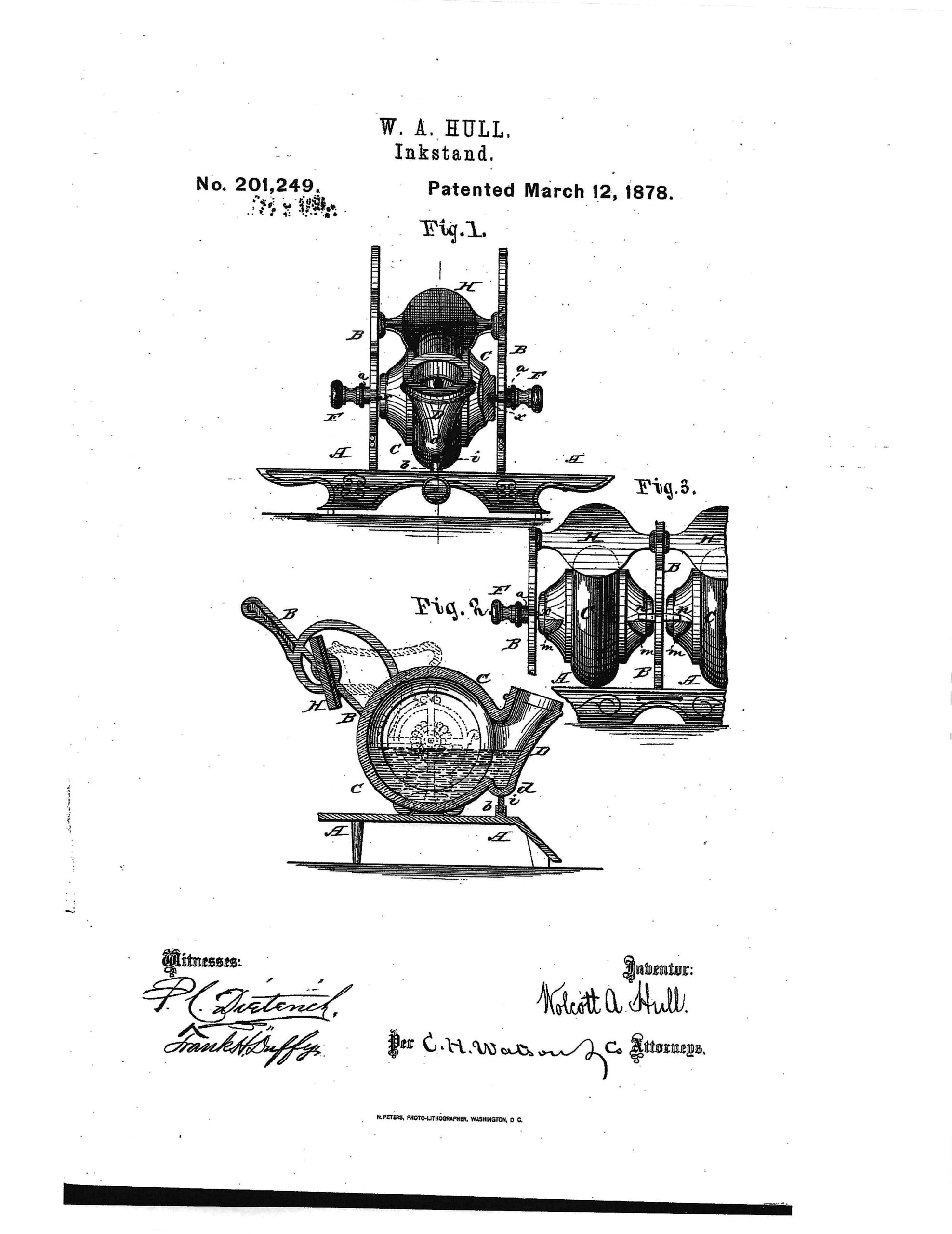
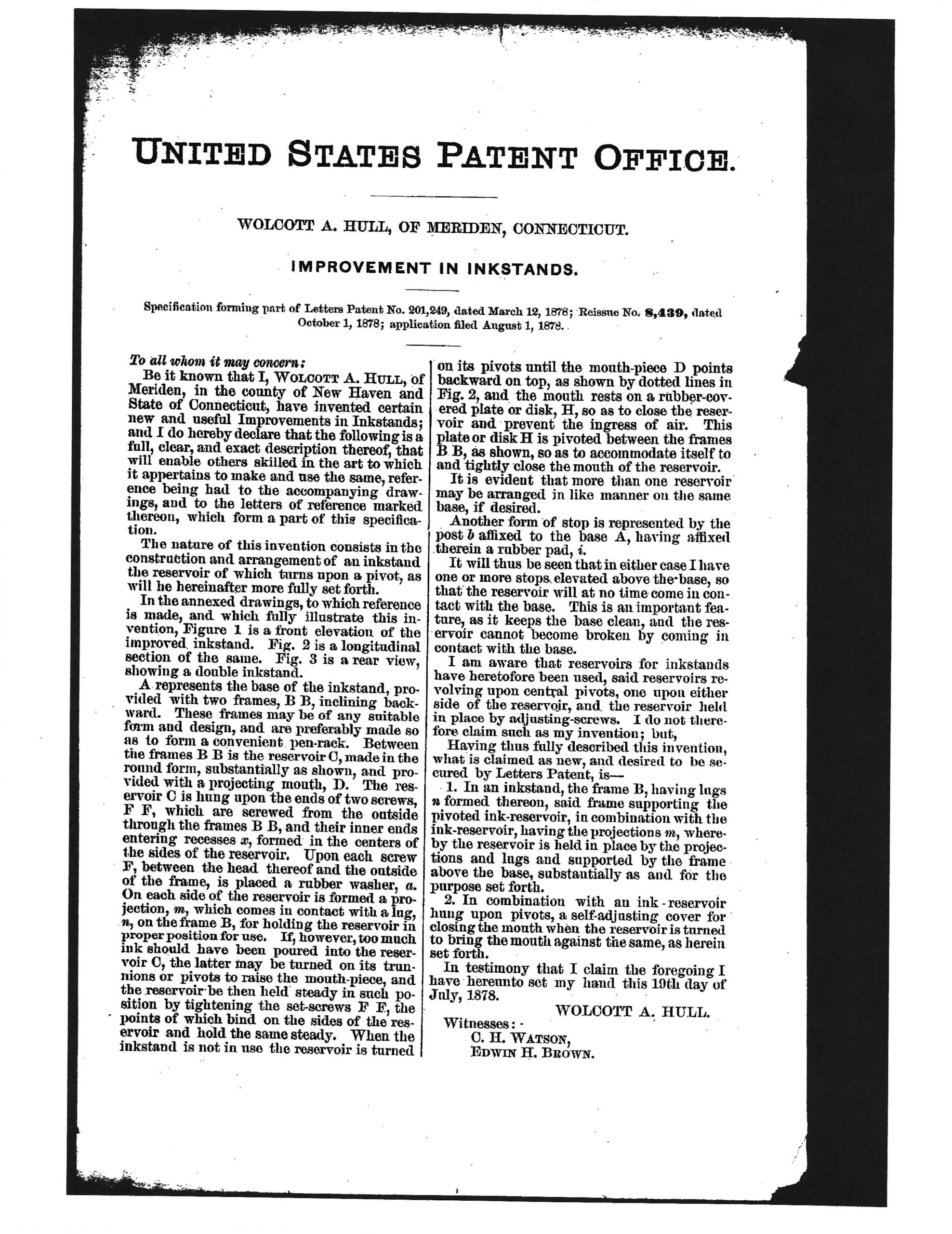
| Patent | Patent #201,249 dated March 12, 1878, and Patent # 8,469 dated October 1, 1878 |
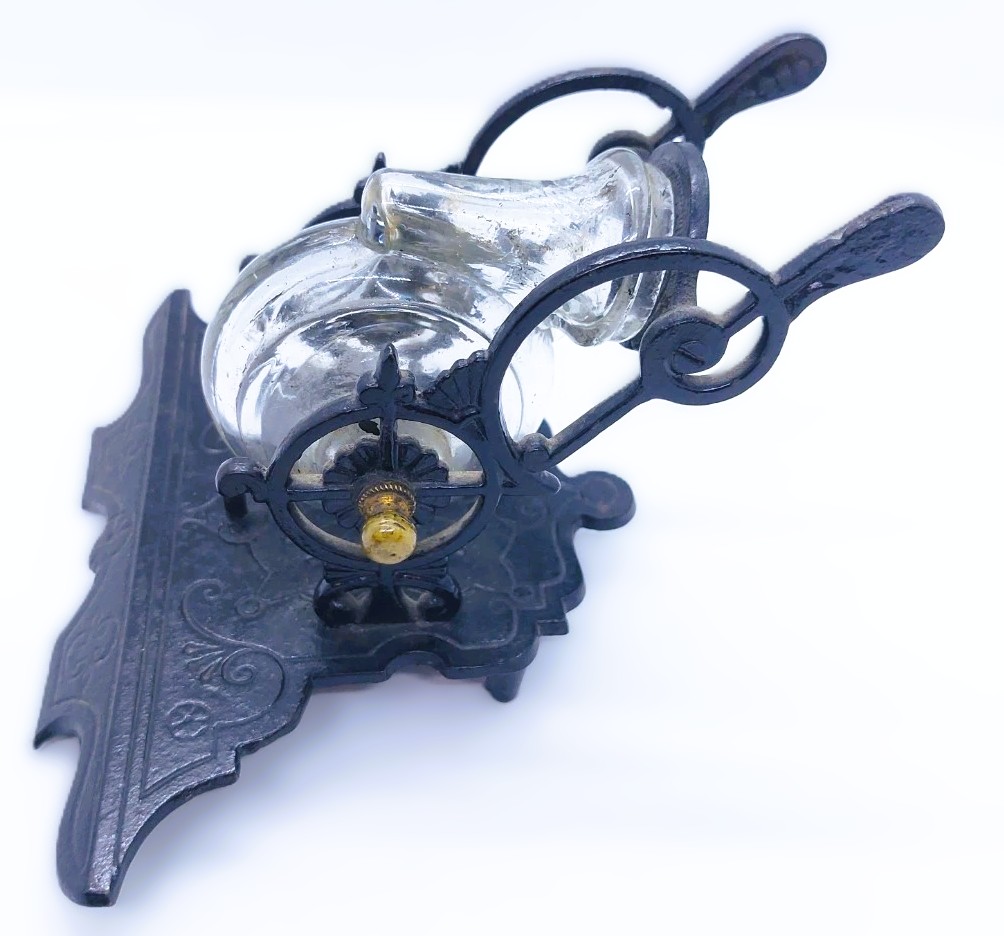
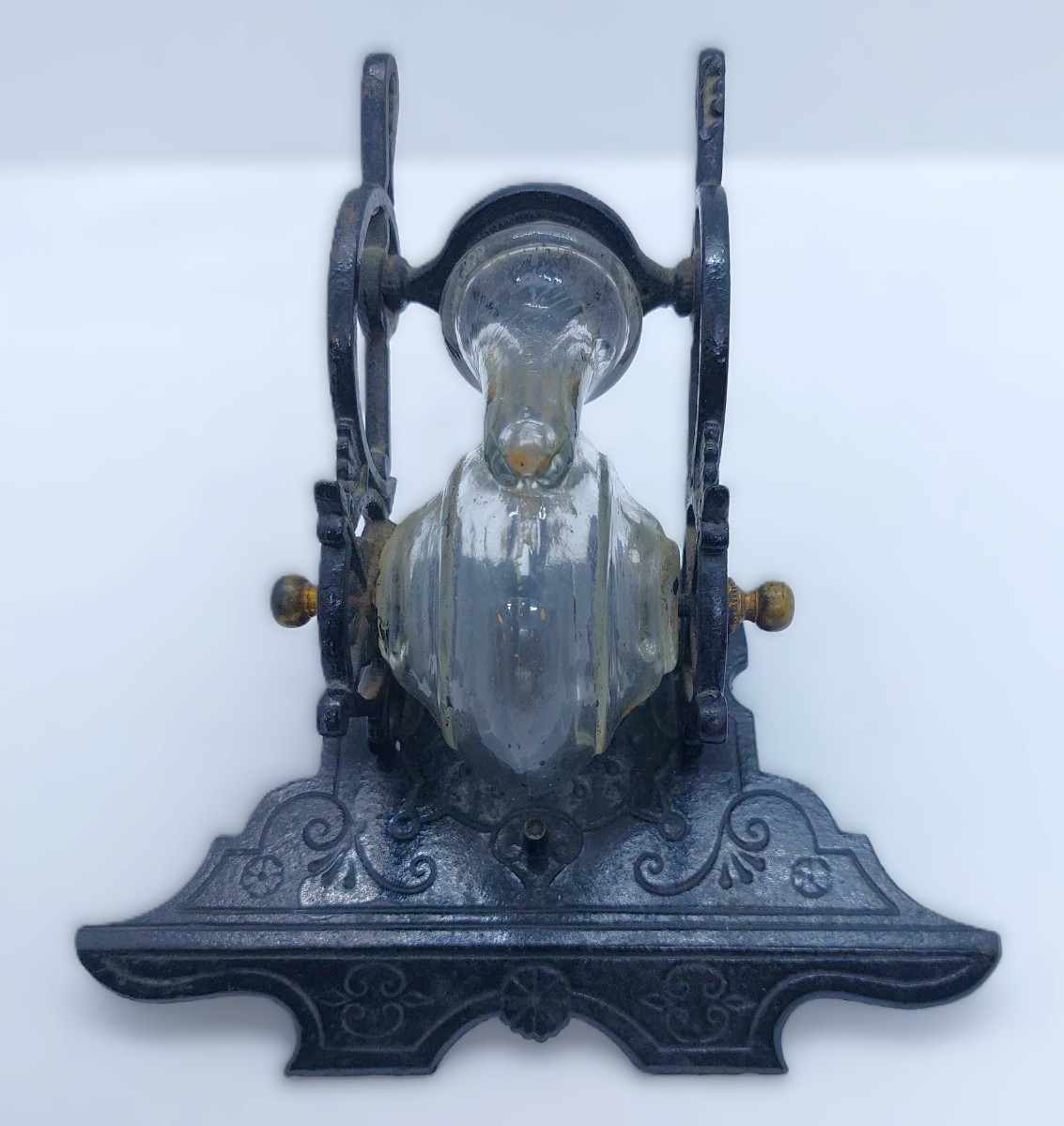
This revolving “snail” inkwell, patented by Wolcott A. Hull on March 12, 1878, is a classic of American desk-top engineering. Known to collectors as a “snail” due to the distinctive spiraled shape of the glass reservoir, it represents a mid-19th-century solution to the perennial problem of ink evaporation and thickening.
Design and Frame
- Manufacturer: This model was manufactured by Peck, Stow, and Wilcox of Southington, Connecticut, a firm renowned for high-quality hardware and cast-iron goods.
- Frame: The glass reservoir is suspended within an ornate cast-iron frame. The base features intricate scrollwork, serving as both a stable anchor and a decorative pen rest.
- Standards: The frame includes two vertical supports, or standards, which hold the reservoir in place.
- Axis of Rotation: The bottle rotates on an axis formed by retaining set screws threaded through the standards on each side, allowing the user to flip the inkwell open or closed with a simple hand movement.
The “Snail” Mechanism
The functional beauty of the Hull patent lies in its “revolving” delivery system, which utilizes gravity and an airtight seal to preserve the ink:
- Opening: To write, the user manually rotates the trumpet-shaped neck of the glass snail shell forward.
- Ink Delivery: As the bottle turns, the liquid ink flows from the main “shell” reservoir into the neck, making it accessible for dipping a pen.
- The Stopple Seal: When not in use, the bottle is rotated upward. The trumpet-shaped end closes firmly against a stopple plate—a round, metal cast disc—which creates an airtight seal.
- Preservation: By sealing the neck against the stopple plate, the mechanism prevents the ink from drying out or becoming clogged with dust, keeping the main supply fresh for much longer than a standard open well.
Historical Significance
The Patents: This model reflects the mechanical refinements found in Patent #201,249 (March 12, 1878) and the subsequent design protections of Patent #8,439 (October 1, 1878).
Sold for $130 in February 2026
Content disclaimer. The information posted is the owner’s best knowledge and may not have been vetted by the SOIC. We welcome comments, corrections, and additions, working to make our website information comprehensive and accurate.
Join the Society of Inkwell Collectors (SOIC) – it’s free!
Founded in 1981 as a non-profit organization,
we are documenting inkwells (and accessories).
We’re here to help and inform!