





Ottoman Silver Divit
| Categories | Middle East / Africa |
| Type | Qalamdan / Divit |
| Material | Silver |
| Markings | See Narrative |
| Manufacturer | Undetermined |
| Origin | Turkey |
| Date or Era | circa 1890 |
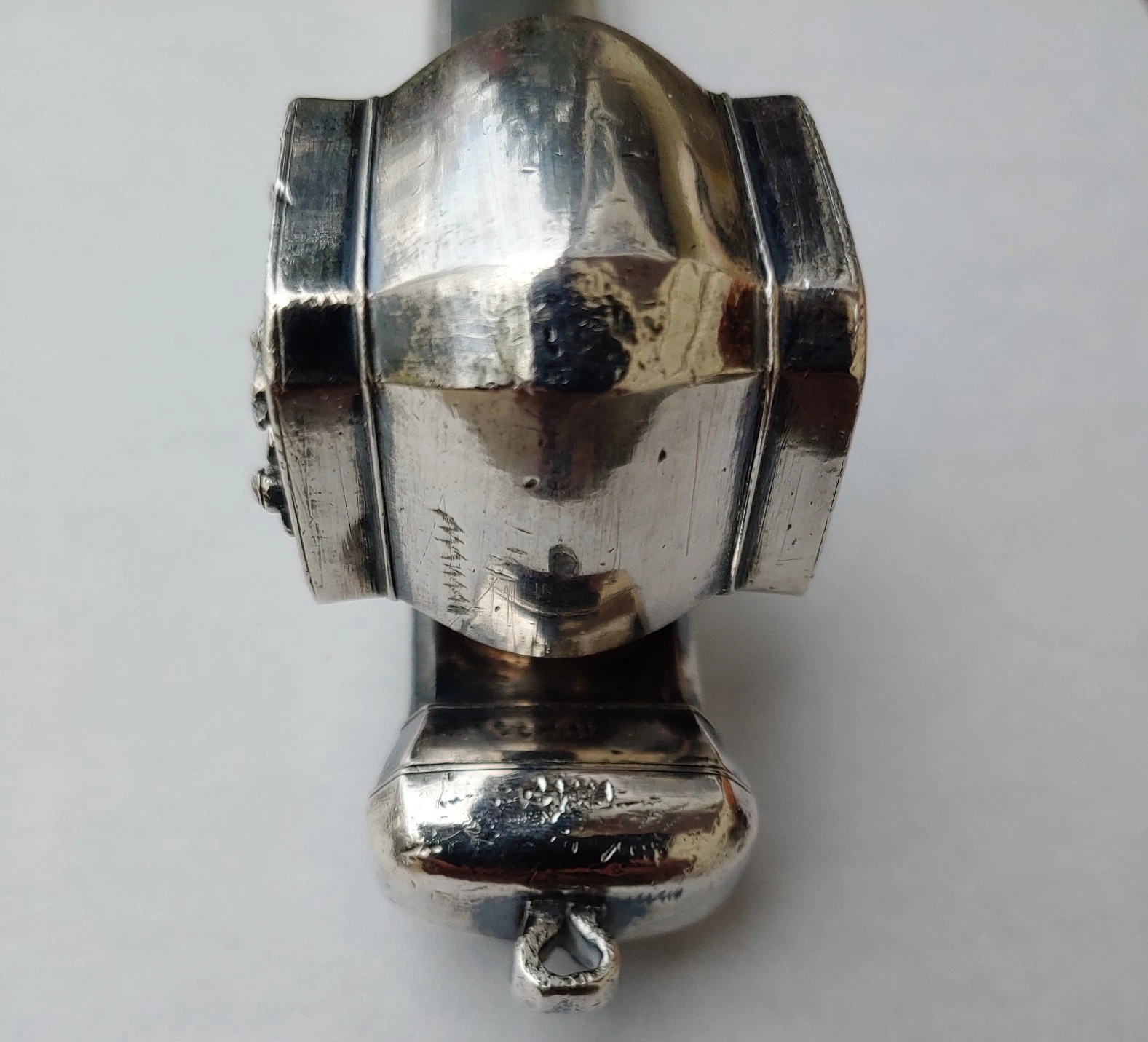
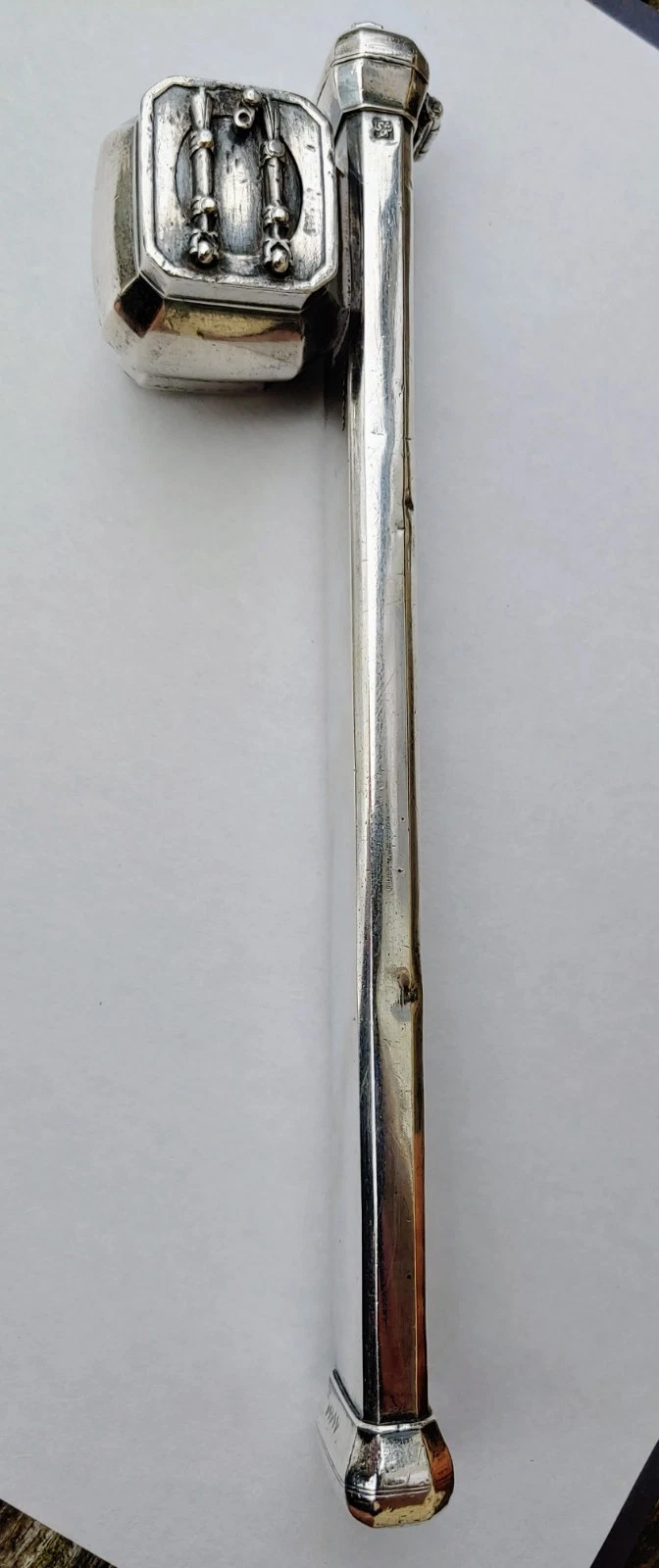
This is a well-preserved example of an Ottoman silver divit (traveling pen case and inkwell). The divit was an essential tool of literacy, bureaucracy, and status across the Ottoman Empire, carried by scribes (kâtips), merchants, and government officials.
Anatomy of the Divit
A standard divit consists of two primary integrated components made of high-quality silver:
- The Pen Case (Kalemdan): This is the long, slender, hollow rectangular tube that forms the main body of the piece. It was designed to hold reed pens (kamış kalem), which were the traditional writing instruments of the period. The end features a secure, hinged lid that snaps shut to keep the pens from slipping out during travel.
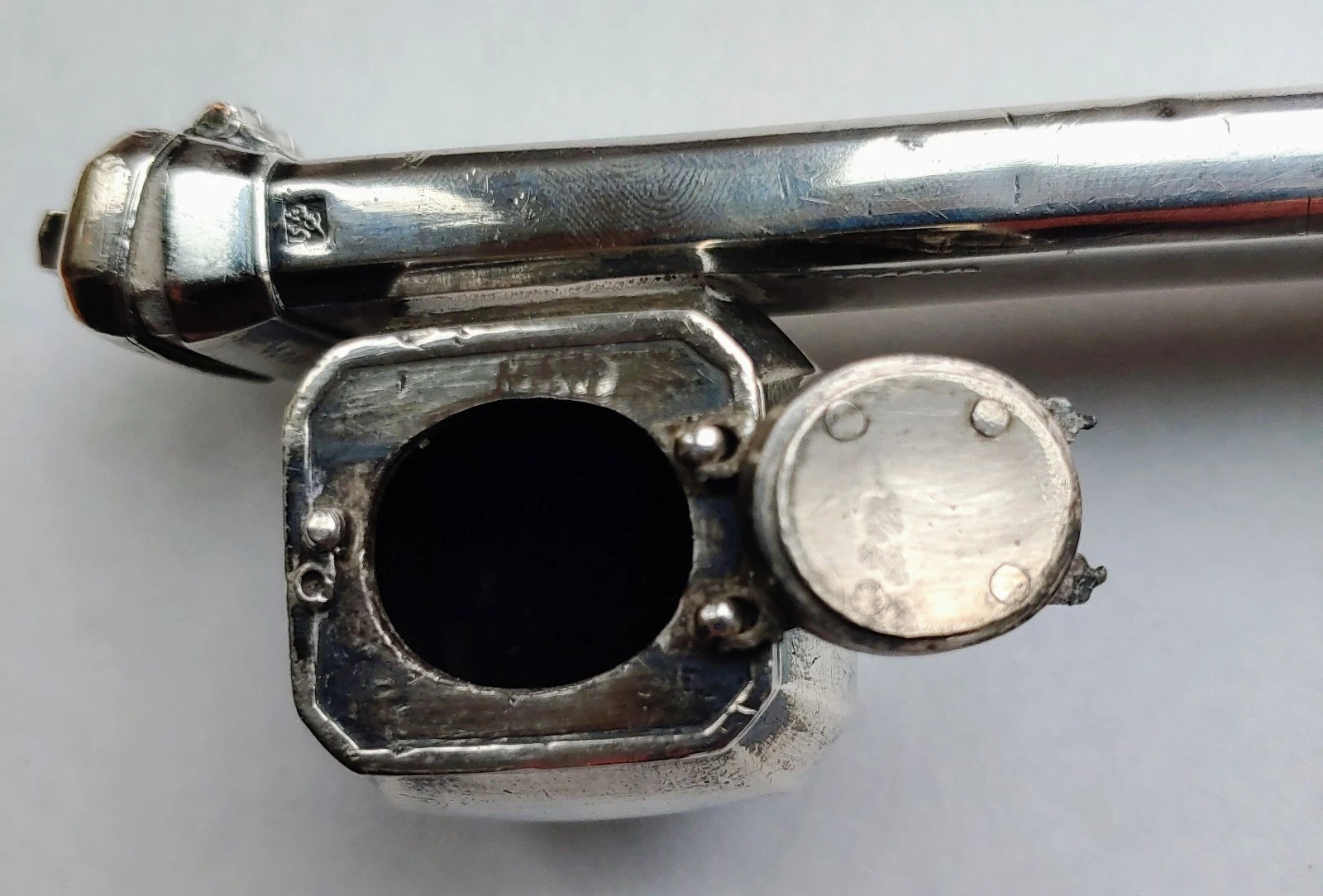
- The Inkwell (Hokka): This is the bulbous, block-like container permanently attached to the upper side of the pen case. Ottoman inkwells typically contained raw silk fibers (lika) soaked in water-based soot ink. The silk acted like a sponge, holding the ink in place so it wouldn’t spill out easily when the cap was opened, while allowing the scribe to depress the reed pen to absorb just the right amount of ink.
- The Suspension Loop: Located at the top near the pen case hinge, this small ring allowed the user to secure the divit to a cord or sash around their waist.
How It Was Used
The divit was designed for complete portability. It was typically tucked diagonally into the fabric sash (kuşak) or belt of the wearer, with the heavy inkwell section hooking over the top of the sash to hold it securely in place.
Whenever a document, letter, or ledger needed to be written or signed on the go, the scribe would pull the divit from their sash, flip open the hinged top of the kalemdan to slide out a reed pen and open the lid of the hokka to dip the pen into the ink-soaked silk.
Where and When Was It Made?
- Where: This piece was crafted in the Ottoman Empire, almost certainly in Istanbul, which was the epicenter of Court silver production and home to the official Imperial Mint (Darphane-i Âmire), where pieces had to be brought for assaying and stamping.
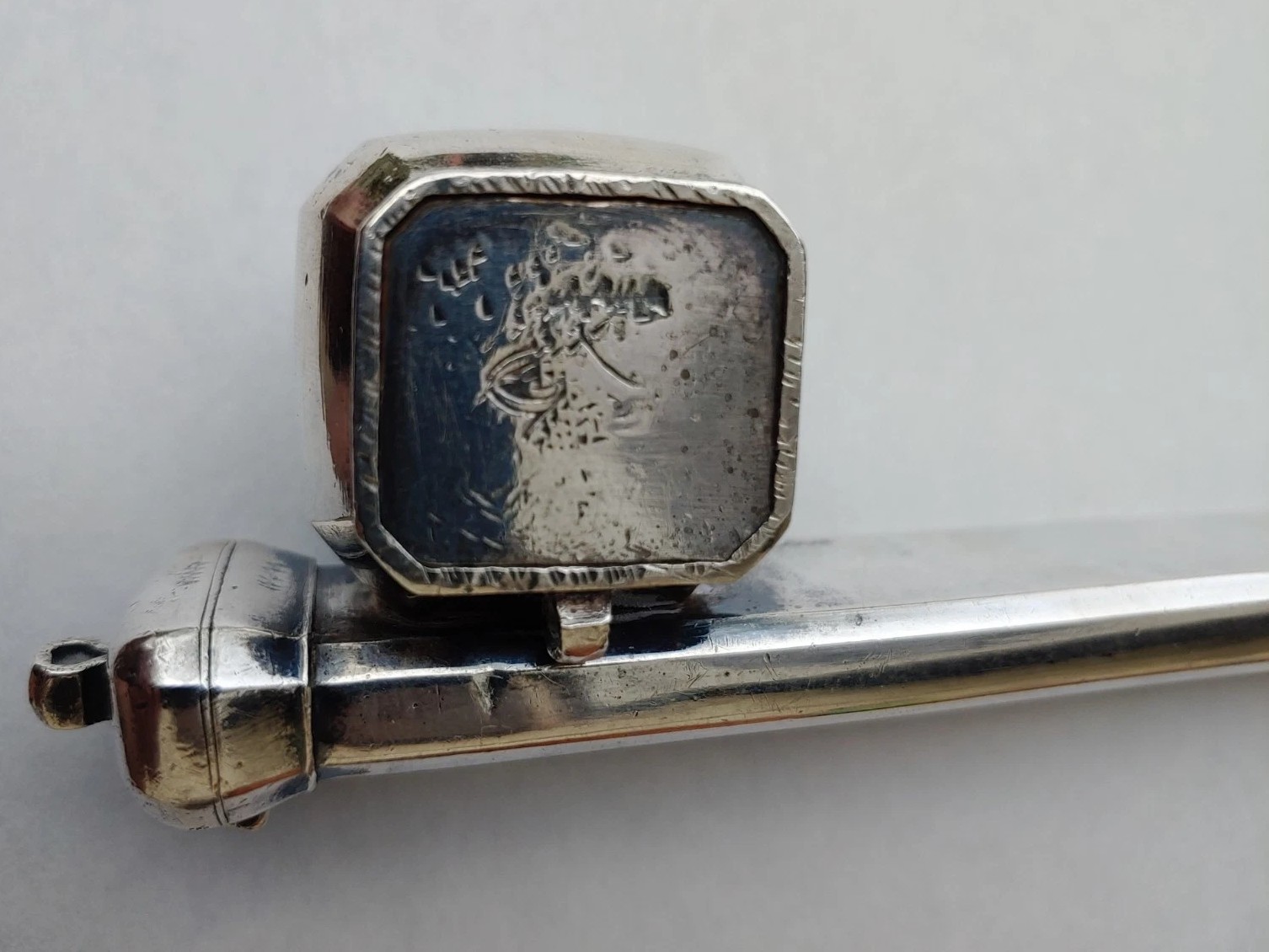
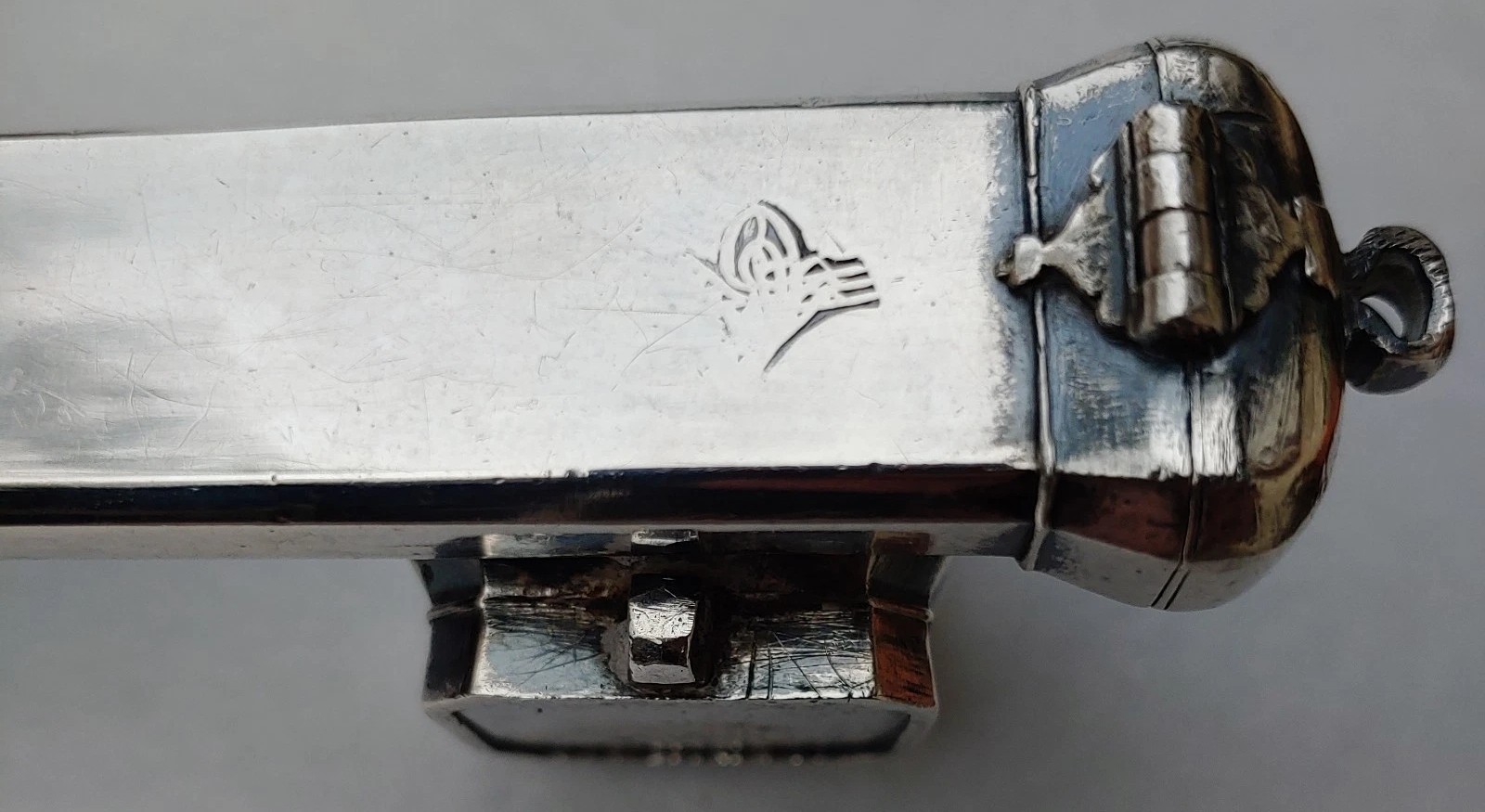
- When: It dates to the 19th century. To narrow down the exact decade, we look at the Tughra (the imperial calligraphic monogram) stamped on the piece. The Tughra stamp for this piece is on the flat side of the pen case near the lid hinge. This Tughra configuration—specifically with the distinct vertical lines and the side decoration—closely matches the monogram of Sultan Abdulhamid II (who reigned from 1876 to 1909).
Analysis of the Hallmarks & Marks
Ottoman silver was strictly regulated, and this piece bears the textbook marks required of official silver:
- The Tughra: Stamped cleanly into the silver, this guarantees that the piece was officially certified under the reigning Sultan’s authority.
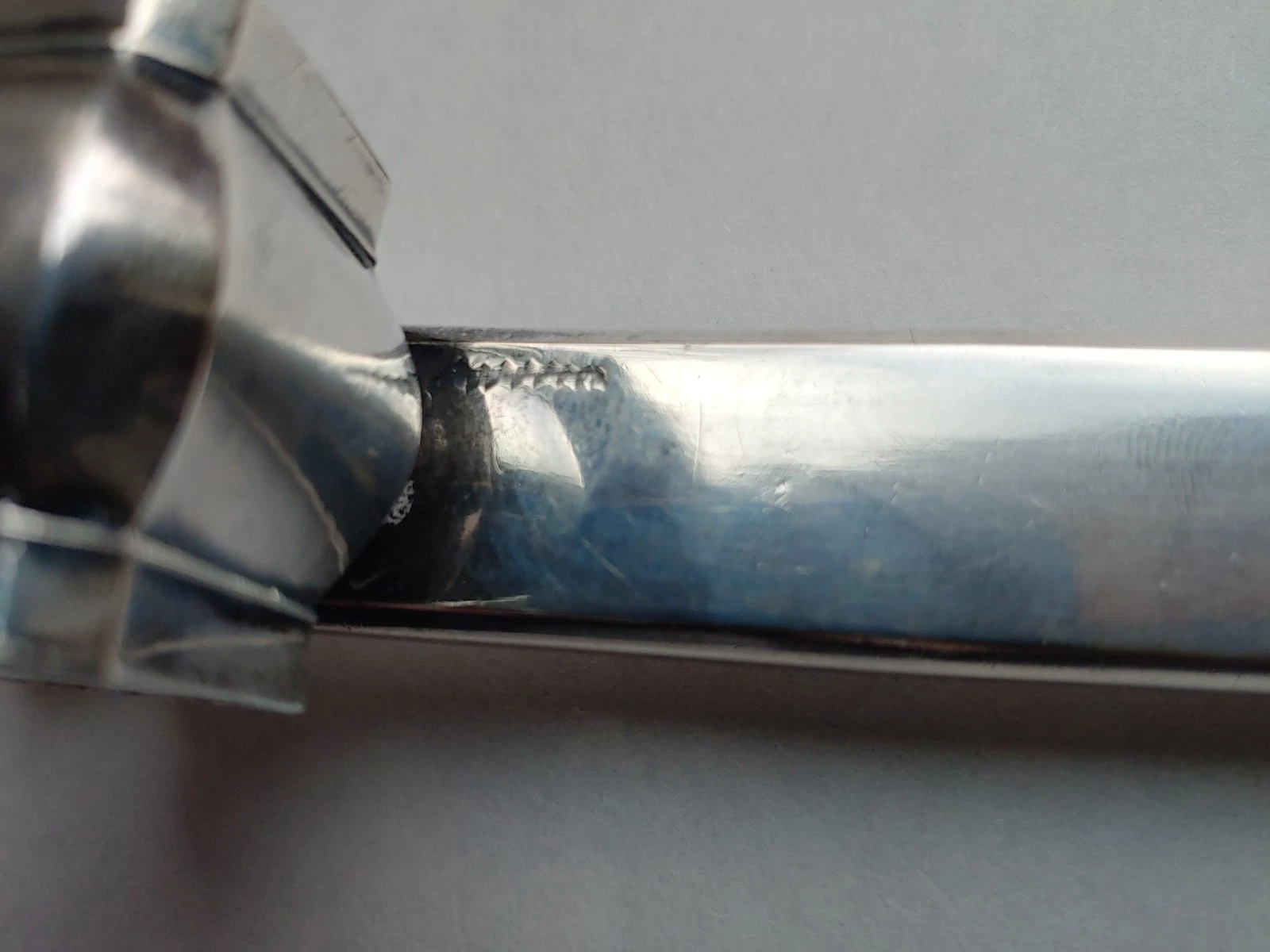
- The Sah Mark: Visible on the bottom/sides of the inkwell and near the rims, this is the state silver assay mark (often reading sah in Arabic script), which verified the purity of the metal.
- The Maker’s/Assayer’s Mark: Near the hinge, there is a small rectangular cartouche with Arabic lettering (reading Şükrü or similar). This indicates either the master silversmith who fashioned the piece or the specific assay official who checked the weight and fineness at the mint.
Distinguishing Design Details
What makes this piece particularly elegant is its clean, minimalist, geometric design. While many later 19th-century divits are heavily chased with ornate floral Repoussé work (often influenced by Western Baroque or Rococo styles), this one relies on sleek, architectural lines, faceted edges, and flat planes to highlight the quality of the polished silver.
The only raised decoration is found on the top lid of the inkwell, which features a stylized relief design mimicking two traditional architectural pillars or scrolled elements flanking a central motif. This restraint in decoration suggests a refined, classic preference—likely made for a professional who valued a durable, highly functional, and dignified tool of office.
Sold for $932 in May 2026
Content disclaimer. The information posted is the owner’s best knowledge and may not have been vetted by the SOIC. We welcome comments, corrections, and additions, working to make our website information comprehensive and accurate.
Join the Society of Inkwell Collectors (SOIC) – it’s free!
Founded in 1981 as a non-profit organization,
we are documenting inkwells (and accessories).
We’re here to help and inform!