

Onyx Inkstand
| Categories | Stone/Marble/Ivory/Bone/Hoof/Leather |
| Material | Metal, Onyx |
| Markings | See Narrative |
| Manufacturer | Undetermined |
| Origin | France |
| Date or Era | circa 1890 |
| Measuring | 6 ¾” x 4” x 4” high |
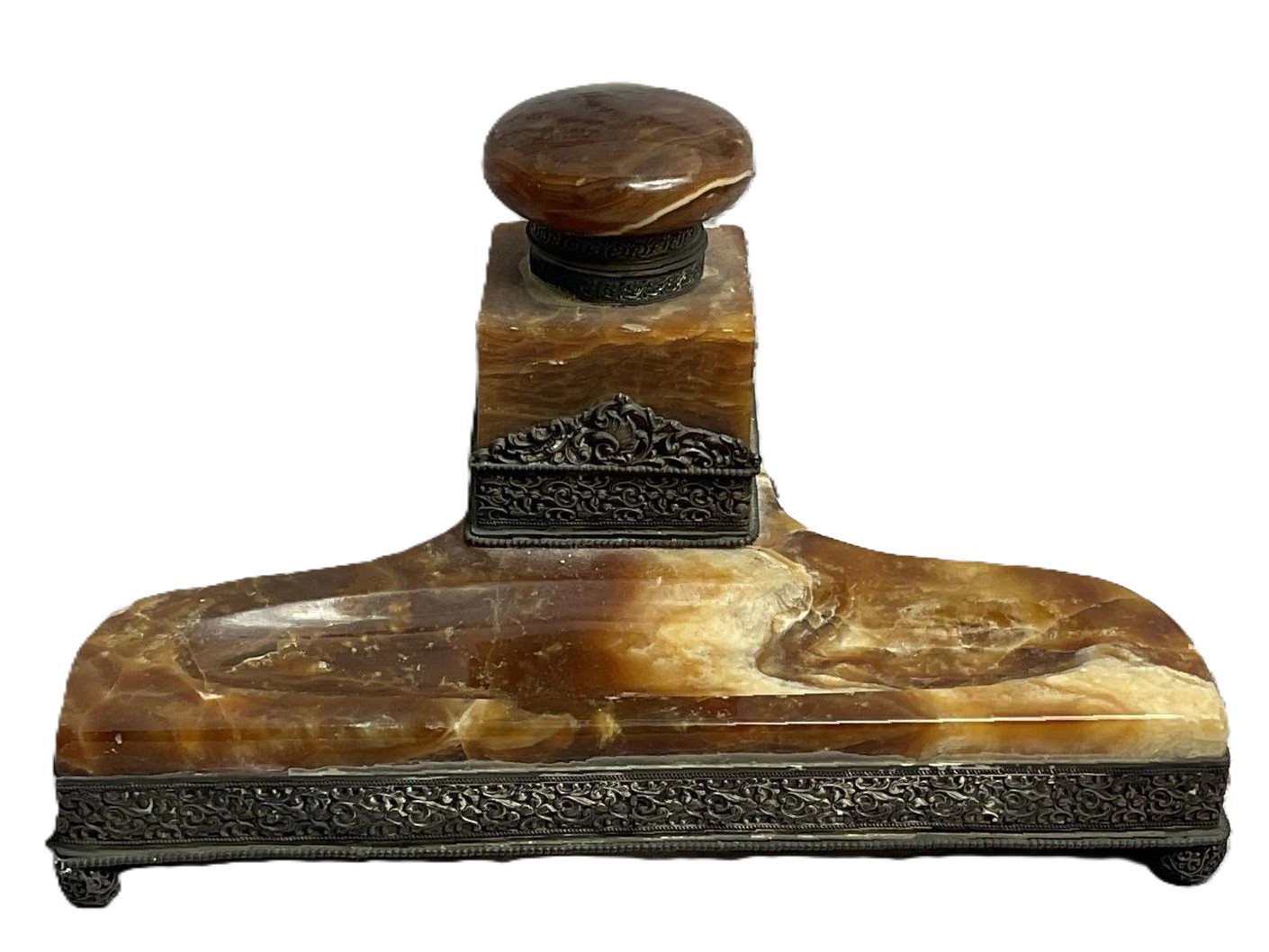
This inkstand combines natural stone with detailed metalwork.
Material and Appearance
Despite the common usage of the term “marble,” this piece is made from onyx marble (often simply called onyx). Specifically, this appears to be Algerian Onyx.
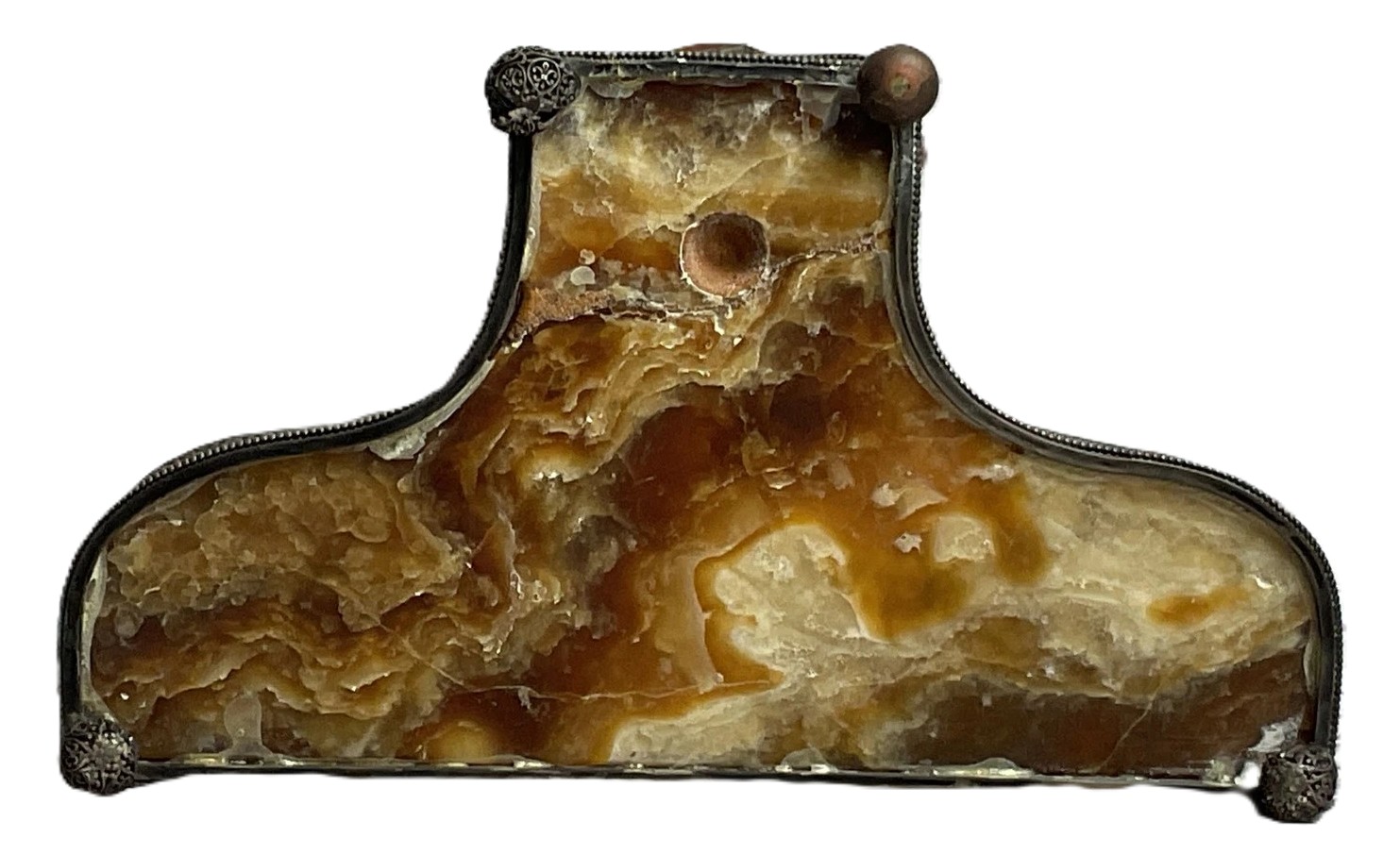
- Coloration: It features deep amber, honey-gold, and creamy white banding. Unlike true marble, which is a metamorphic rock, onyx marble is a form of travertine (calcium carbonate) that is translucent and known for these distinct, parallel layers of color.
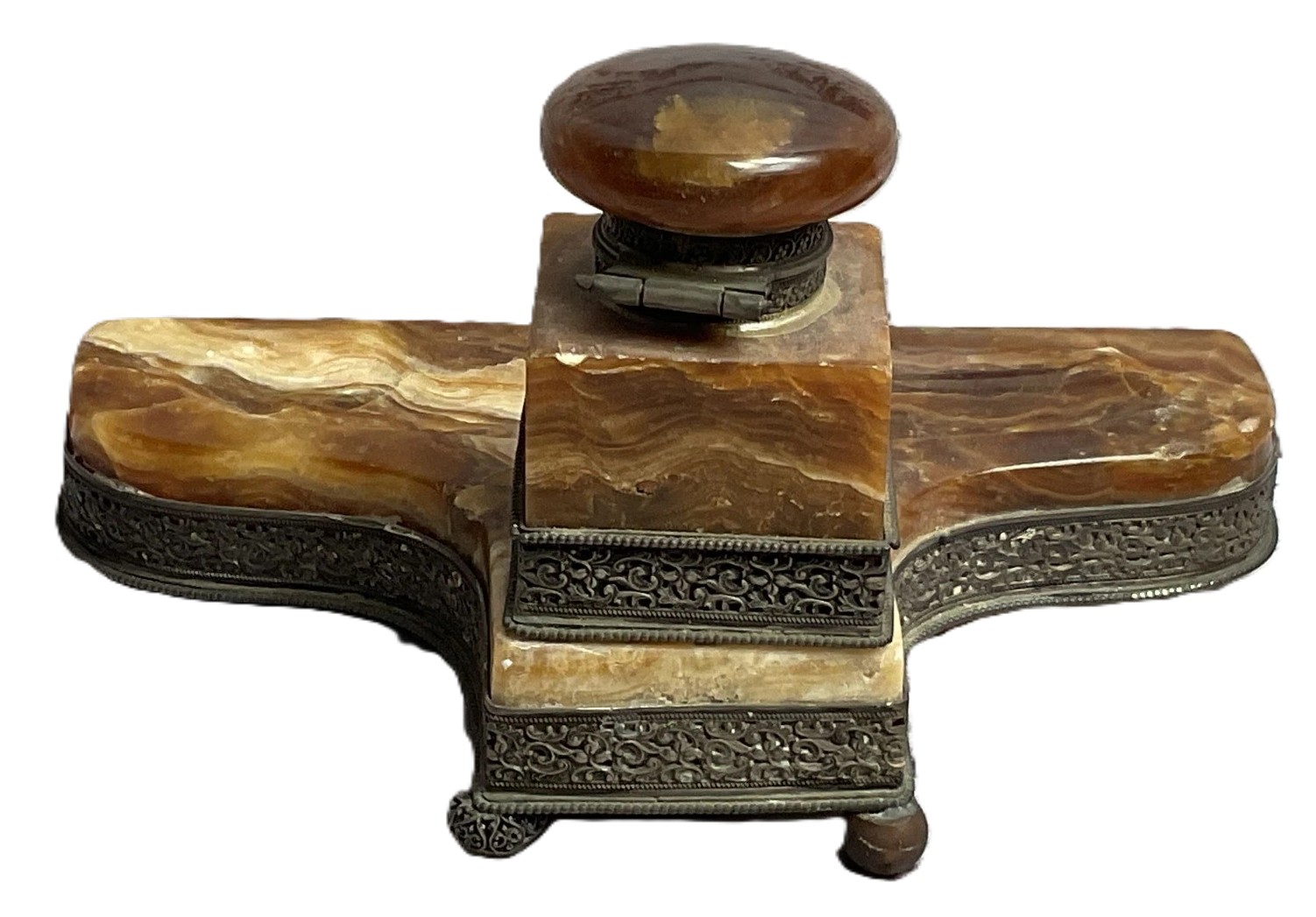
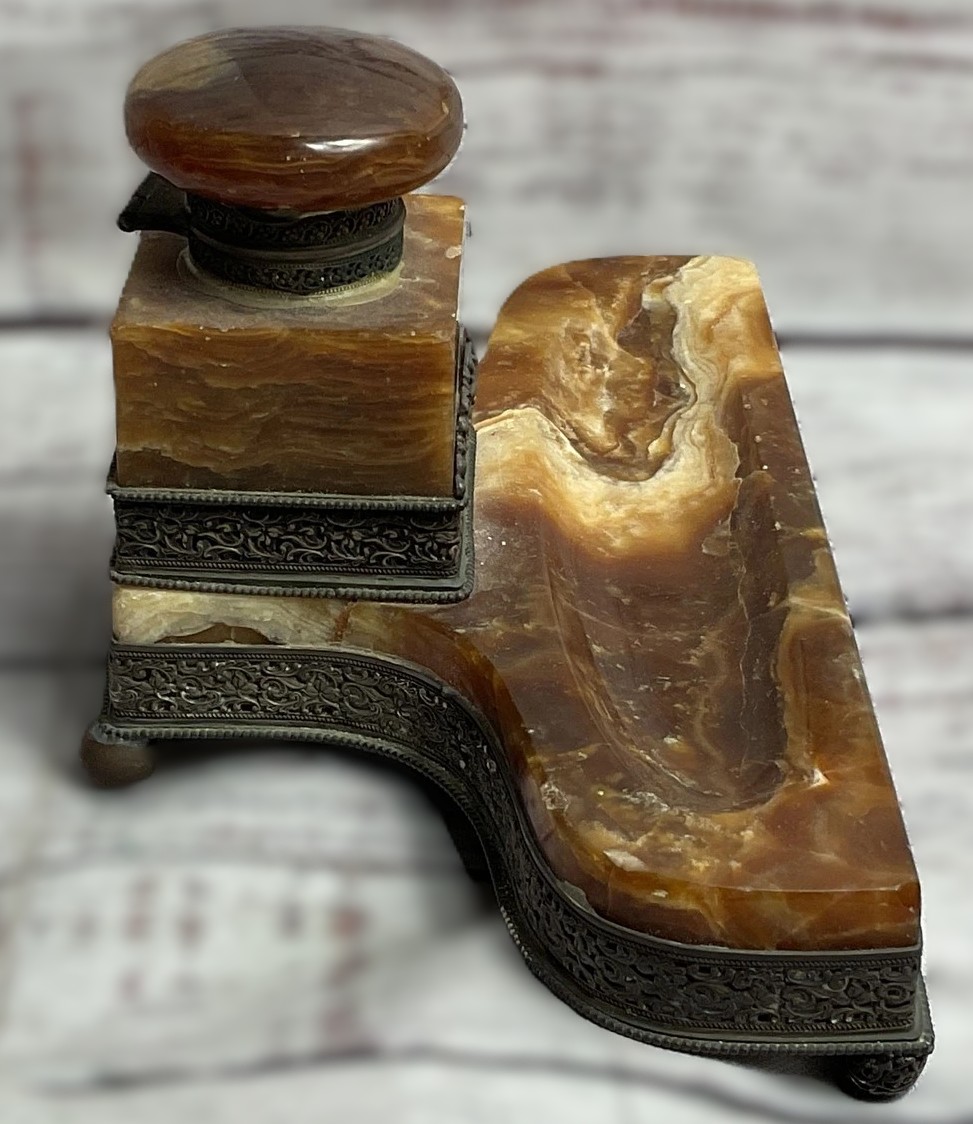
- Structure: The stand consists of a contoured base with a wide, shallow pen tray carved into the front. A square, block-style pedestal sits at the back, supporting a single inkwell.
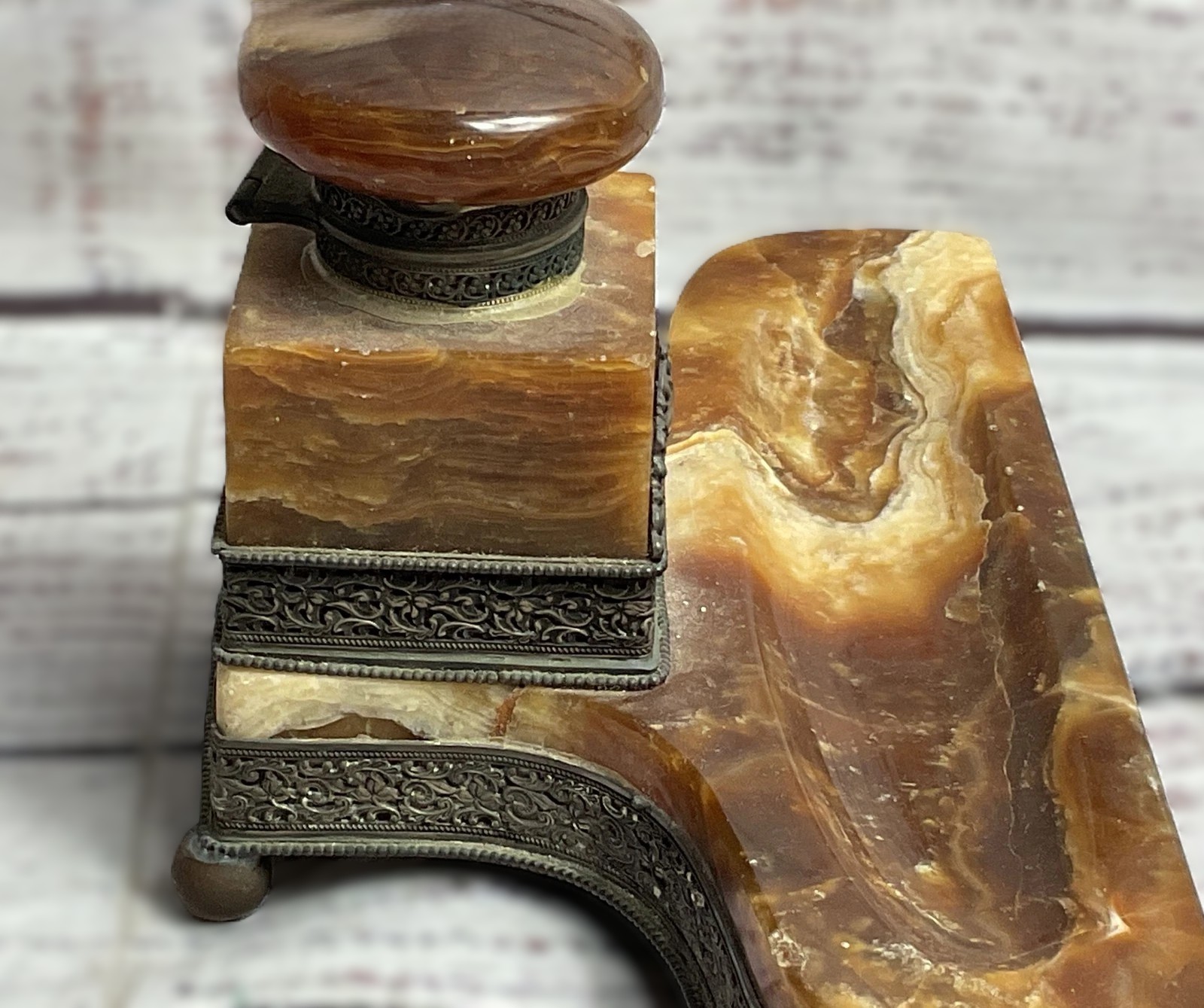
- Metalwork: The stone is accented by ornate silver-plated or gilt-metal filigree. This includes a decorative “gallery” or border around the base and the inkwell pedestal, featuring scrolling floral or acanthus leaf motifs. The piece sits on four small, decorative feet—one of which is a mismatched replacement.
Features
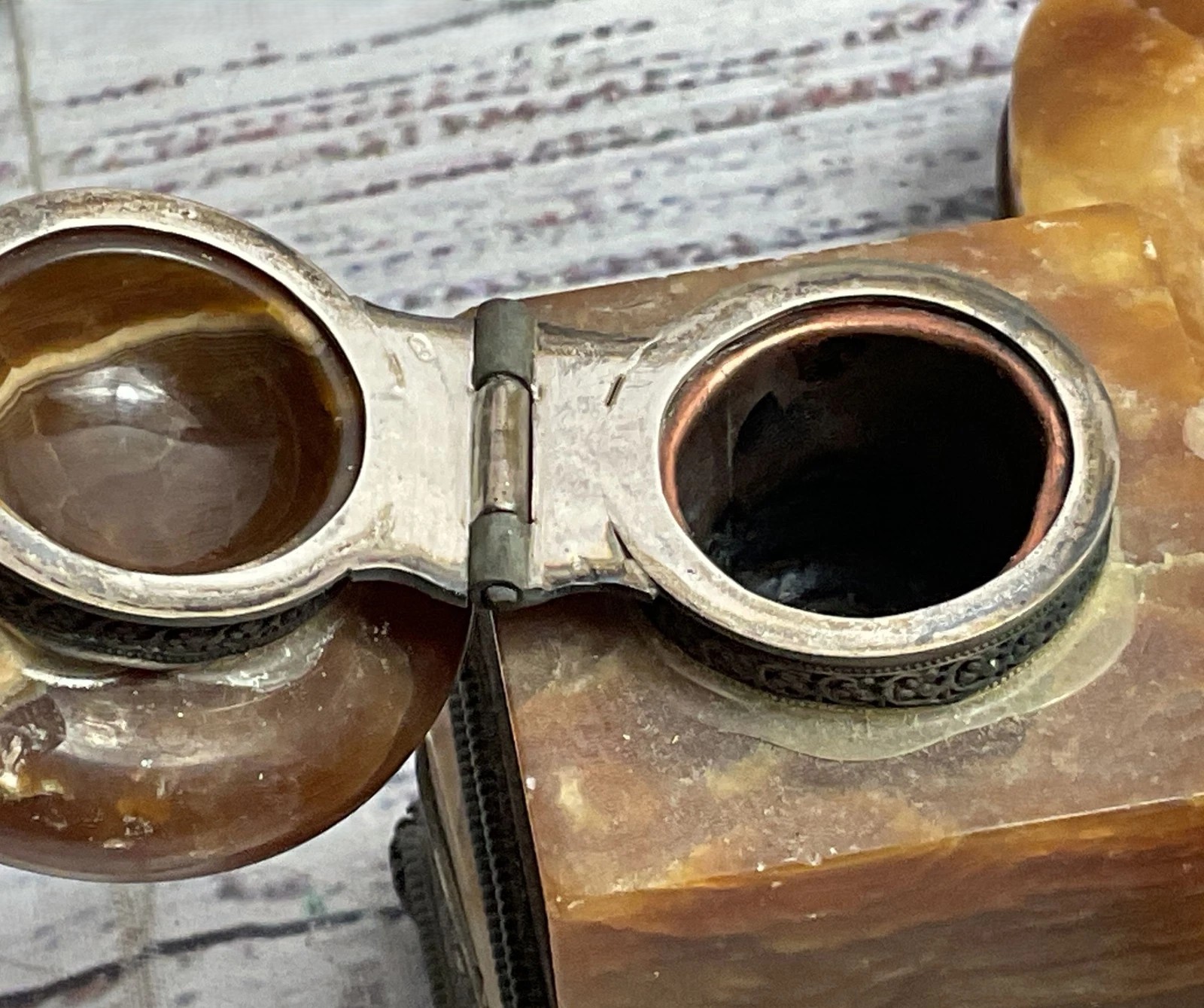
- Inkwell: The inkwell has a hinged lid with a rounded onyx “cabochon” top that matches the base.
- Hinge/Markings: There are small hallmarks or maker’s marks on the inner rim of the metal hinge.
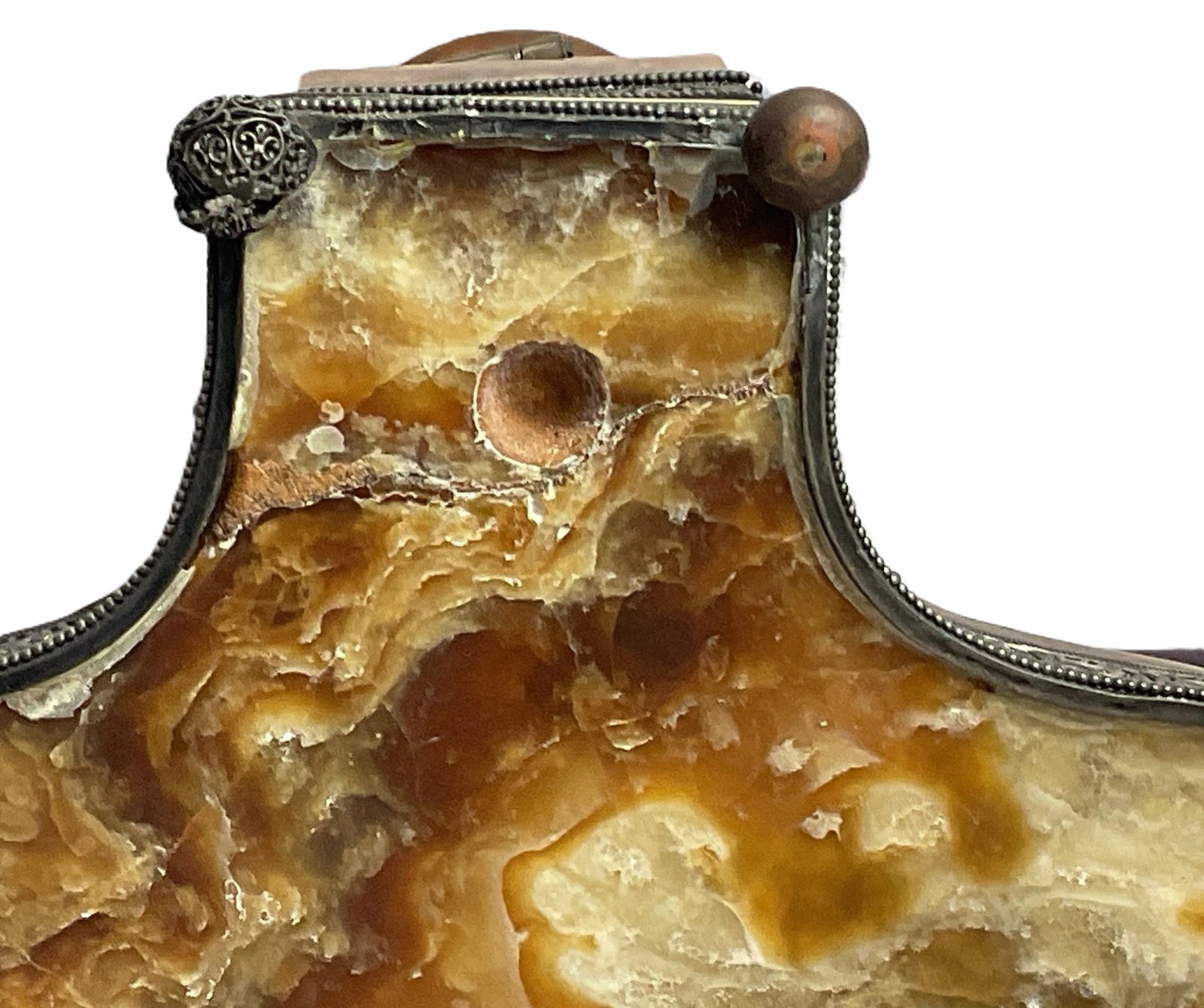
- Underside: The bottom shows the raw, unpolished state of the onyx, revealing its natural crystalline structure. There is a small circular indentation, likely from the manufacturing process or for a mounting screw.
Hallmark Identification
The marks are located on the flat metal plates of the hinge assembly:
- Left Hinge Plate: There is a small, oval-shaped mark. This is almost certainly the Boar’s Head (Tête de Sanglier), which was the official silver guarantee stamp for the Paris Assay Office for smaller items of at least .800 fineness, used from 1838 to 1961.
- Right Hinge Plate: A vertical rectangular or lozenge-shaped stamp is visible. This is the Maker’s Mark (Poinçon de Maître). While the specific initials are too worn to read clearly, it would have contained the maker’s initials and a unique symbol.
Age and Origin Summary
- Origin: Paris, France.
- Date: Circa 1880–1895. While the stamps were used for a long period, the combination of amber onyx marble and the specific scrolling filigree style (reminiscent of the Napoleon III or Belle Époque eras) was at its peak during this time.
- Material: The “marble” is specifically onyx marble (often called Algerian Onyx), a translucent stone prized in France for high-end desk sets during the Victorian period.
Sold for $69 in February 2026
Content disclaimer. The information posted is the owner’s best knowledge and may not have been vetted by the SOIC. We welcome comments, corrections, and additions, working to make our website information comprehensive and accurate.
Join the Society of Inkwell Collectors (SOIC) – it’s free!
Founded in 1981 as a non-profit organization,
we are documenting inkwells (and accessories).
We’re here to help and inform!