

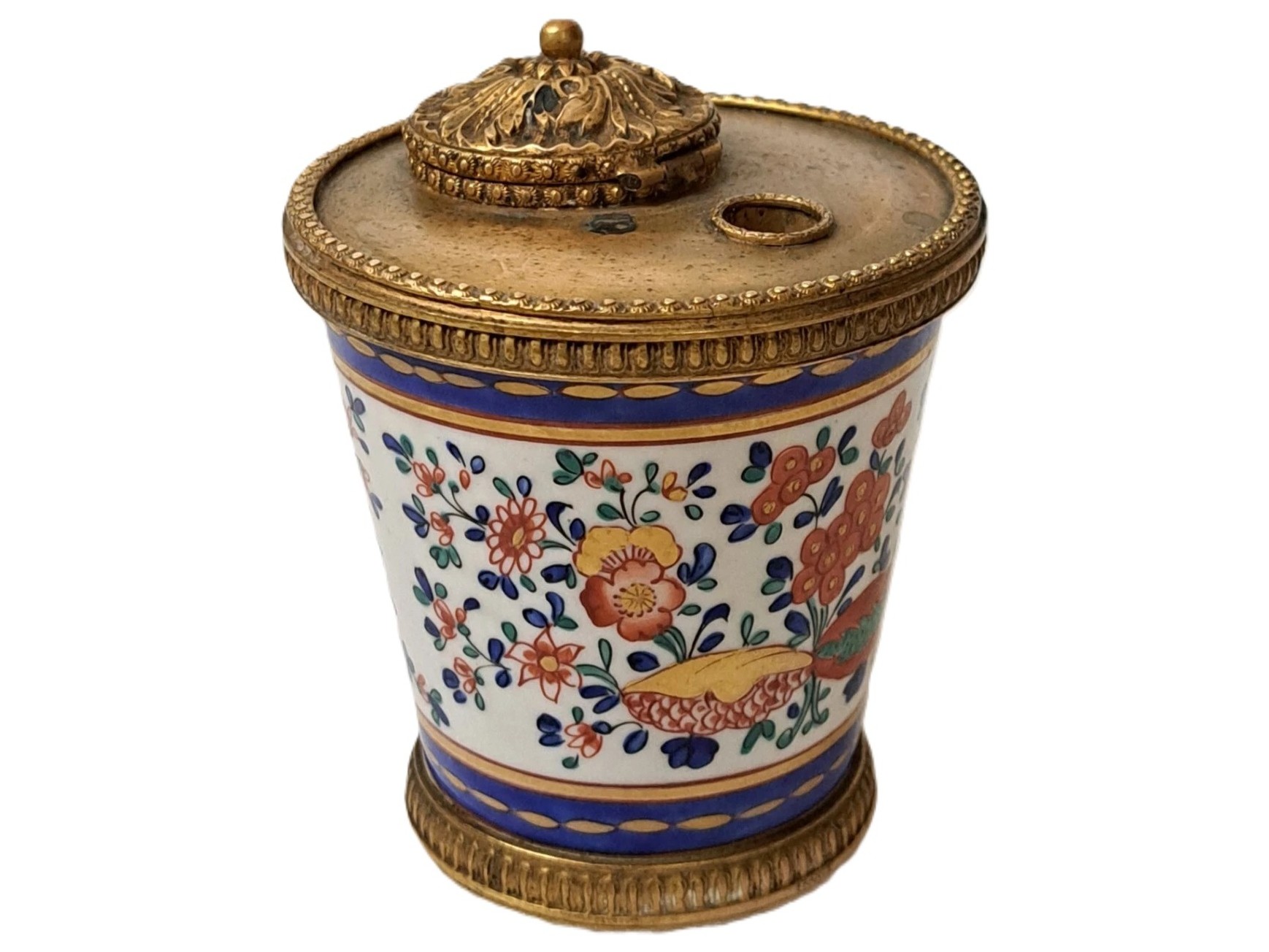
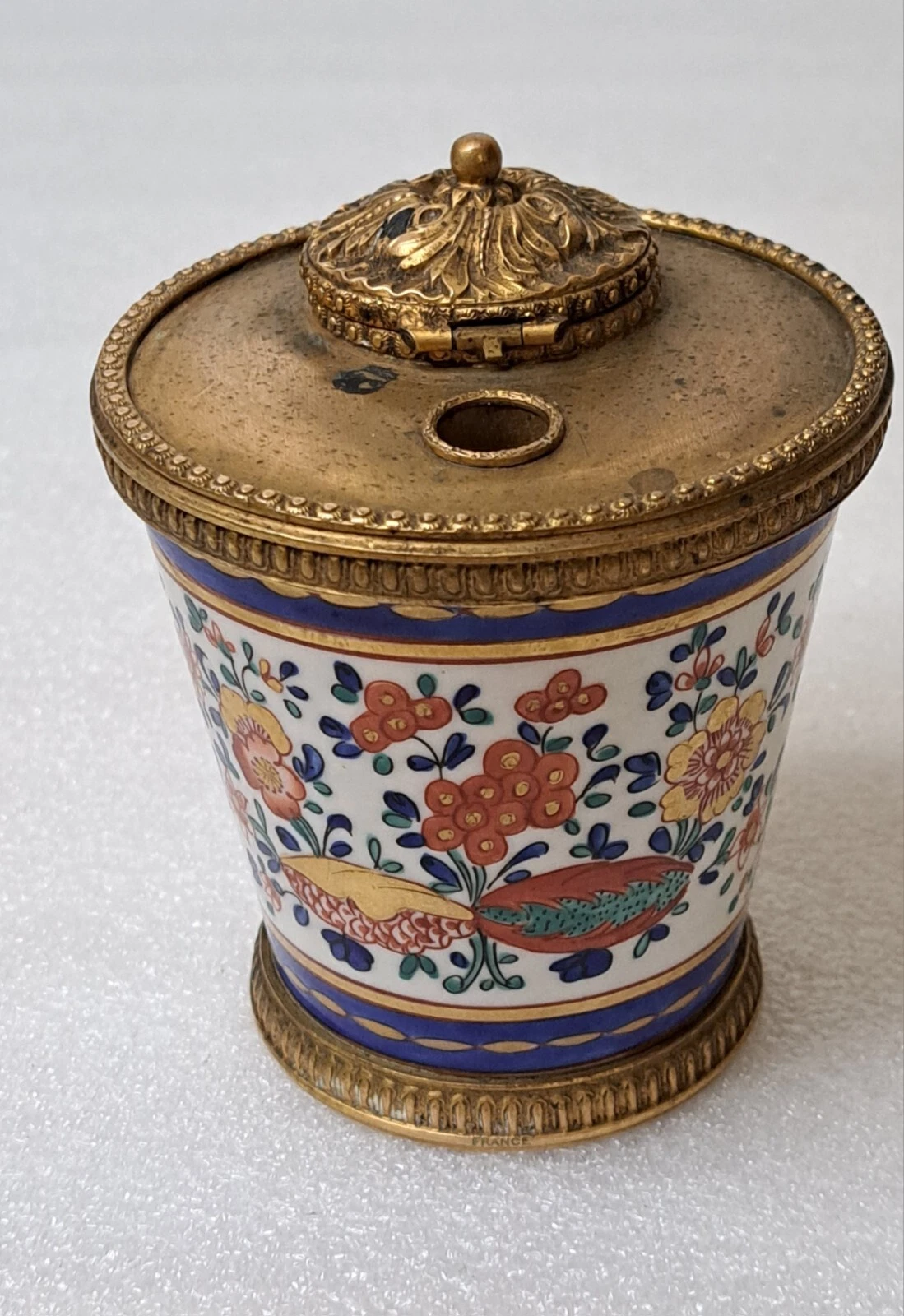
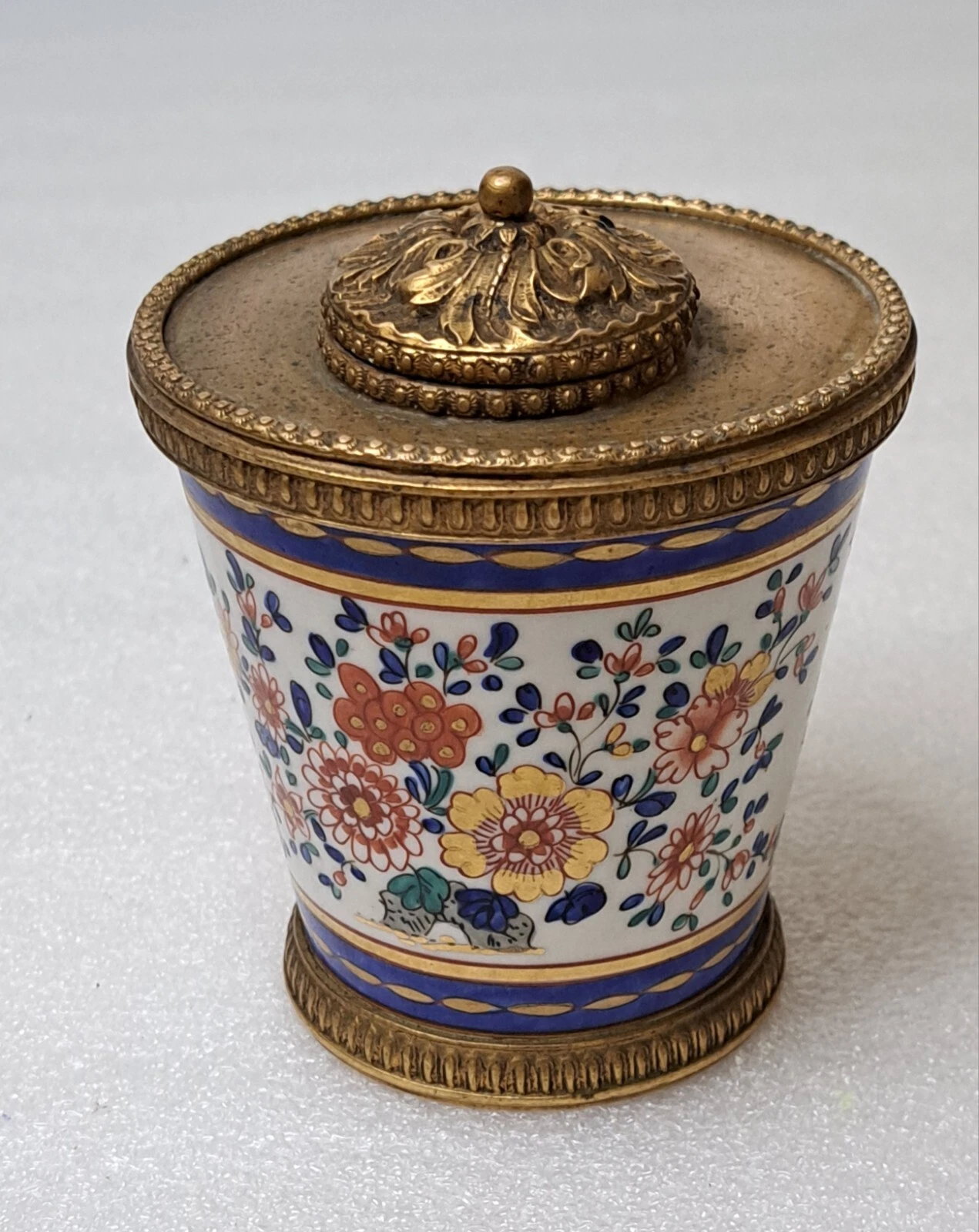
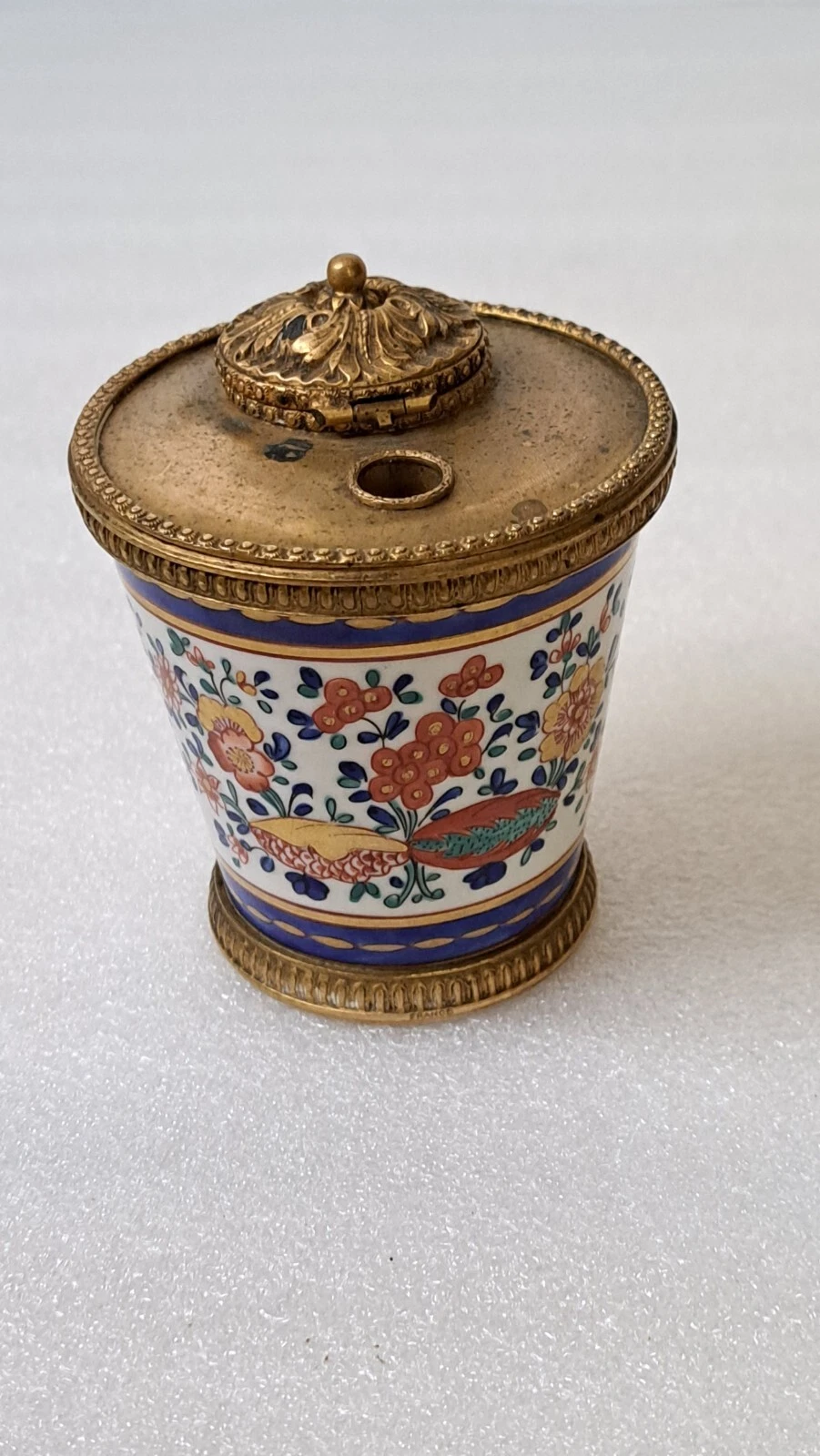
Old Paris Porcelain Inkstand
| Categories | Ceramics/Porcelain non-Figural |
| Material | Gilt Bronze, Porcelain |
| Markings | See Narrative |
| Manufacturer | Samson Edmé et Cie |
| Origin | France |
| Date or Era | circa 1900 |
| Measuring | 4 ½” diameter; 4” high |
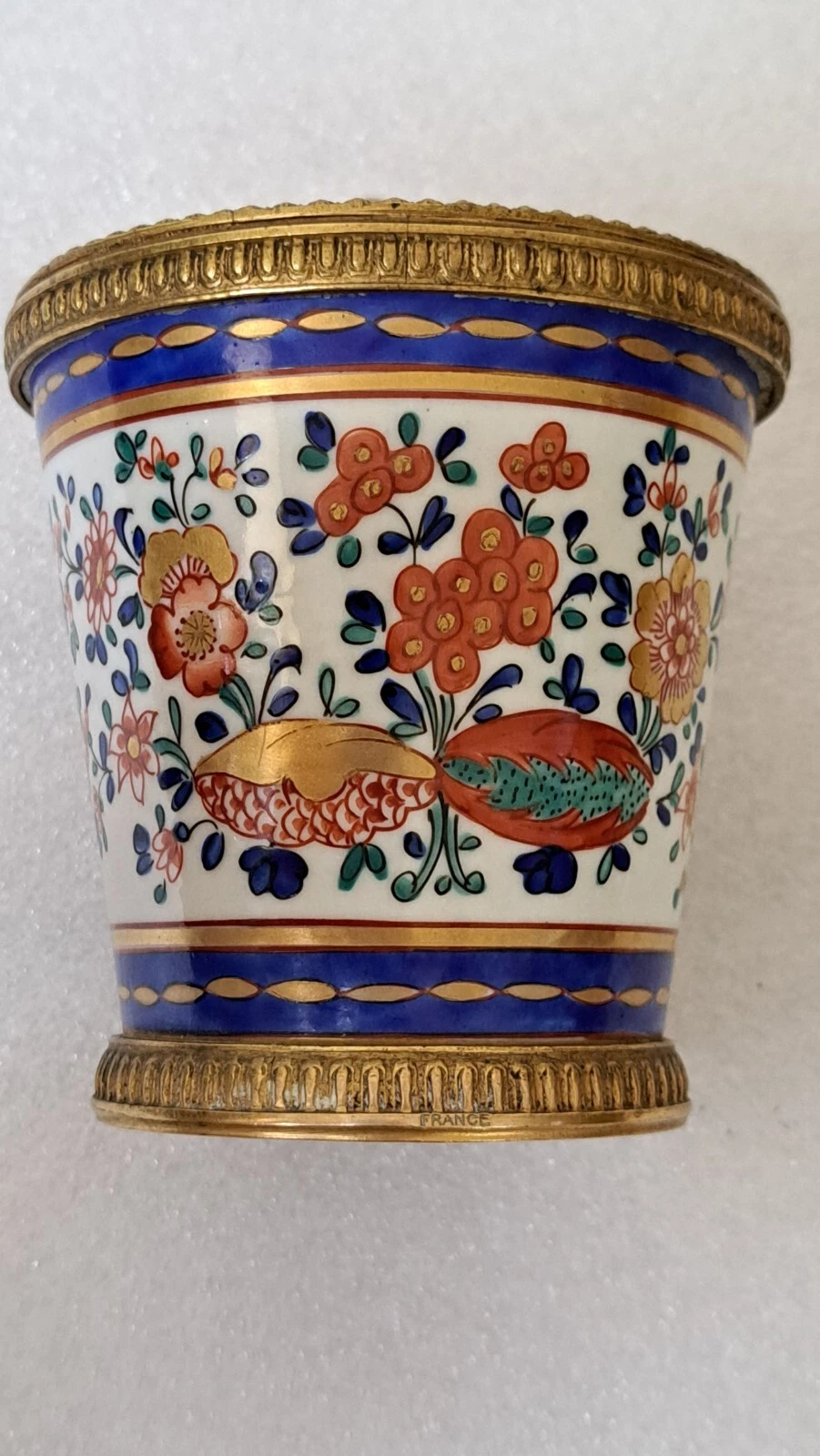
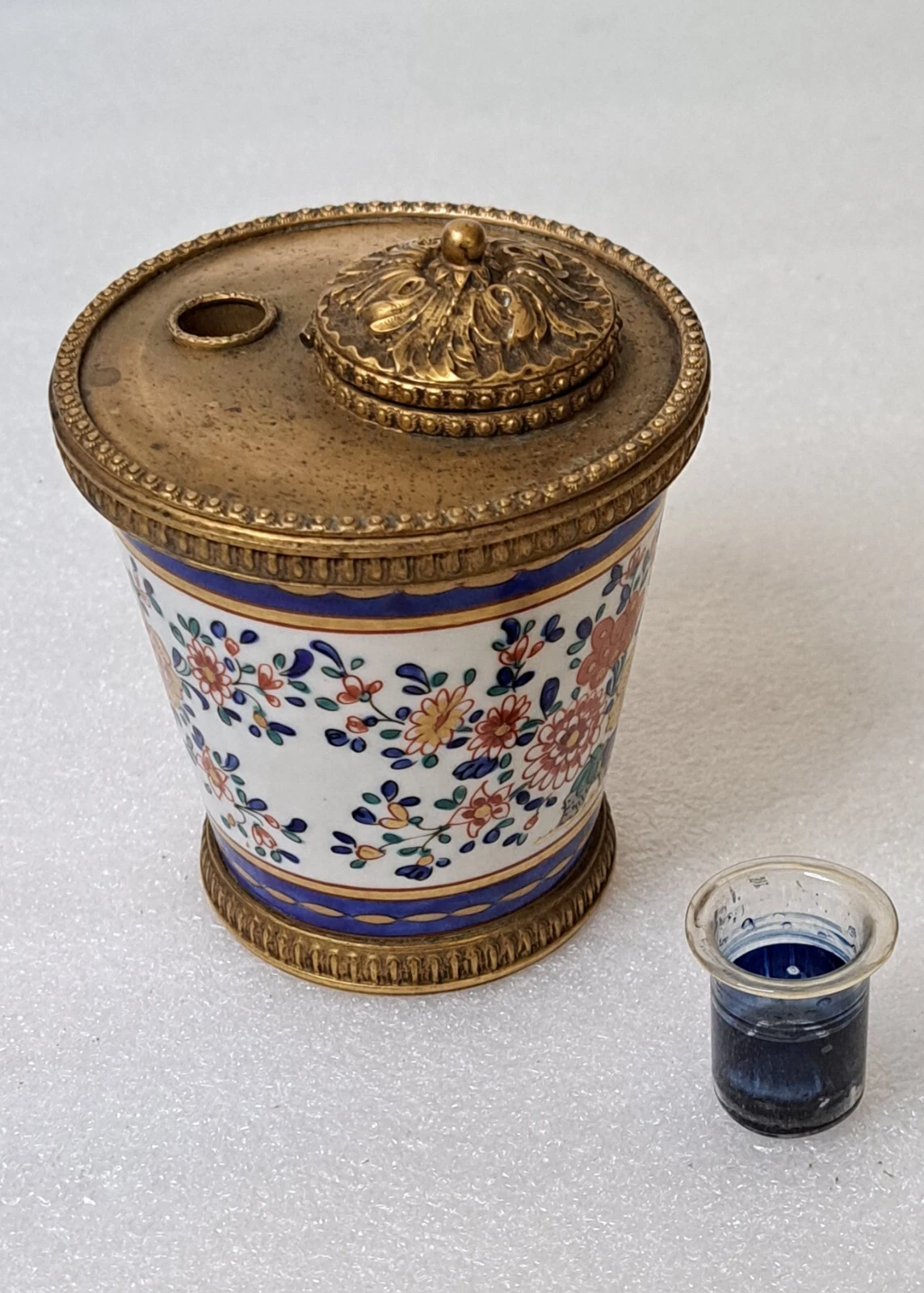
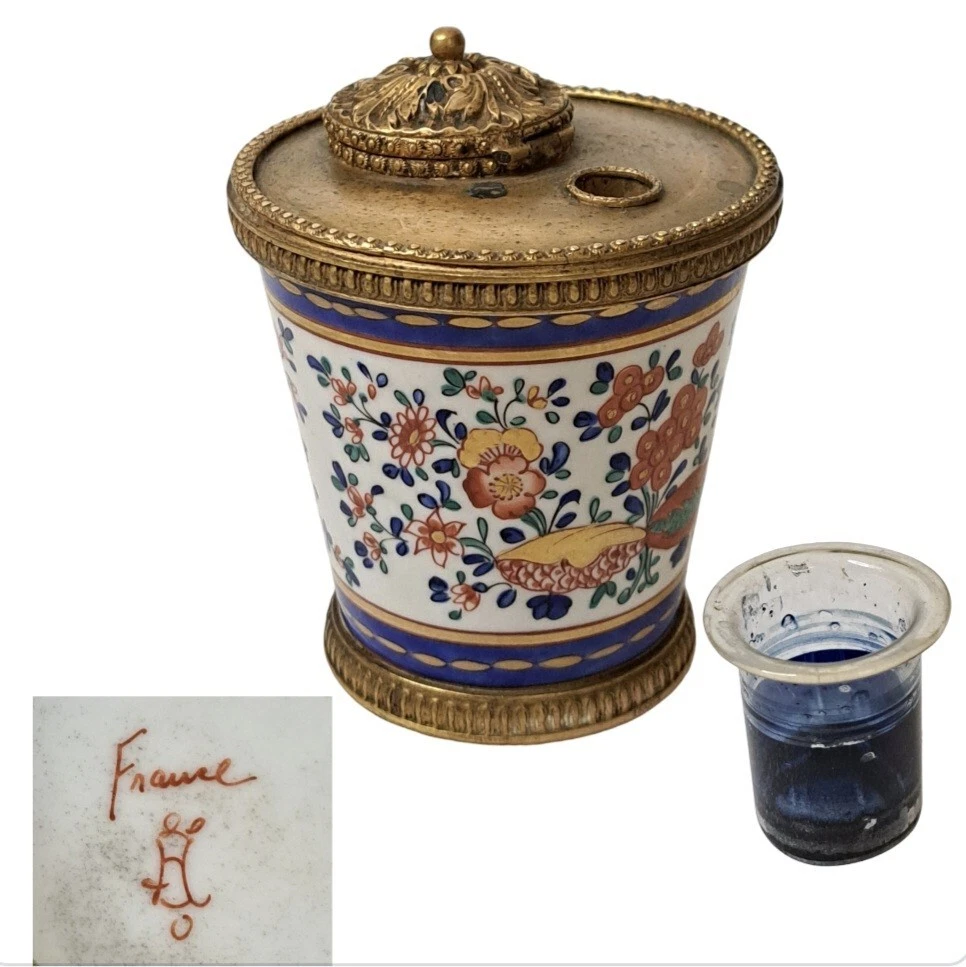
This 19th-century French inkwell is an example of Vieux Paris (Old Paris) porcelain combined with high-quality ormolu (gilt bronze) mounts.
Description
- Porcelain Body: The tapered cylindrical reservoir features a brilliant white ground hand-painted with an intricate “Chantilly” or “Imari” style floral pattern. The design utilizes a palette of iron-red, orange, and green, framed by rich lapis-blue borders and hand-applied gold scrollwork.
- Ormolu Mounts: The piece is finished with heavy gilt bronze accents:
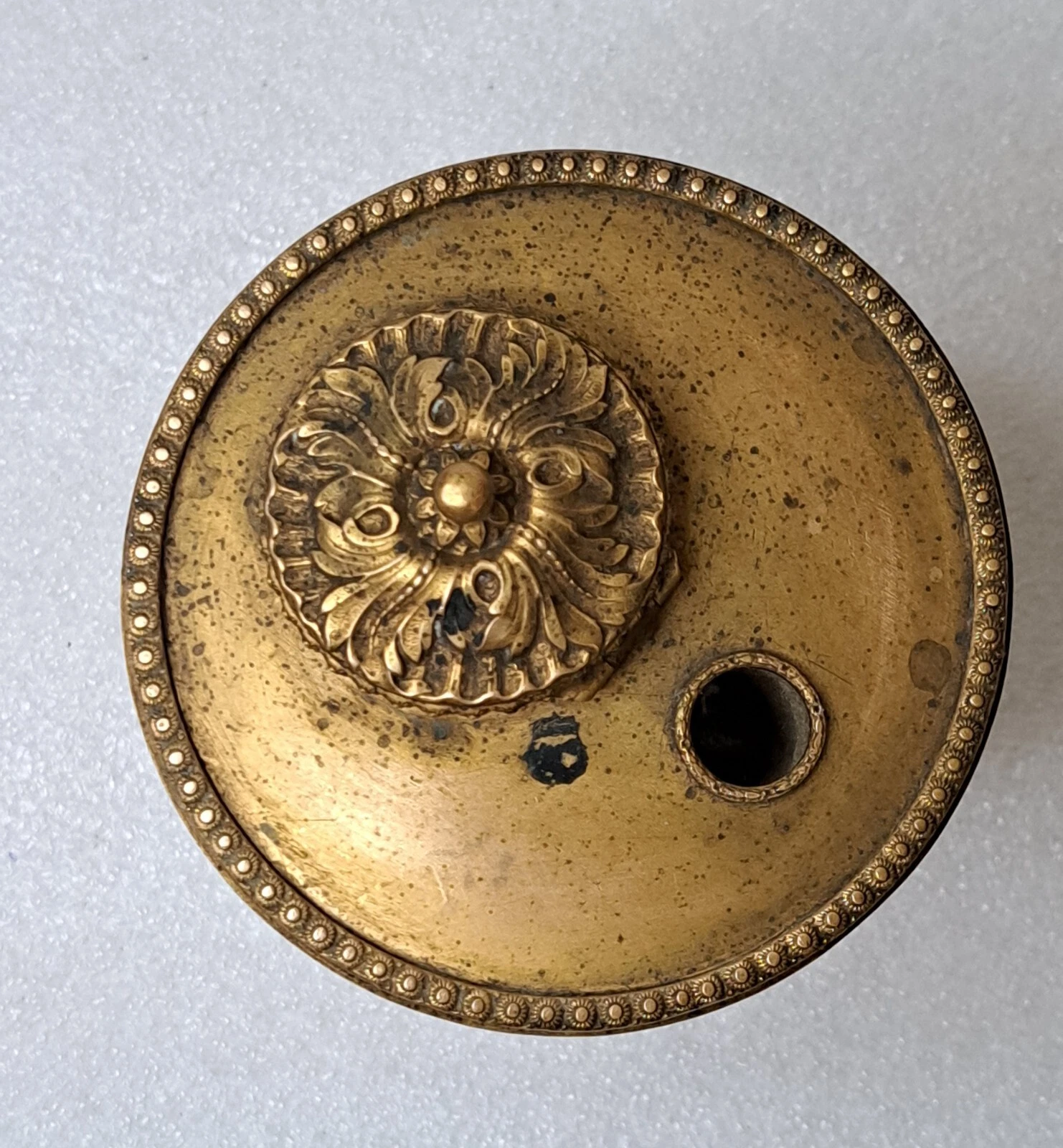
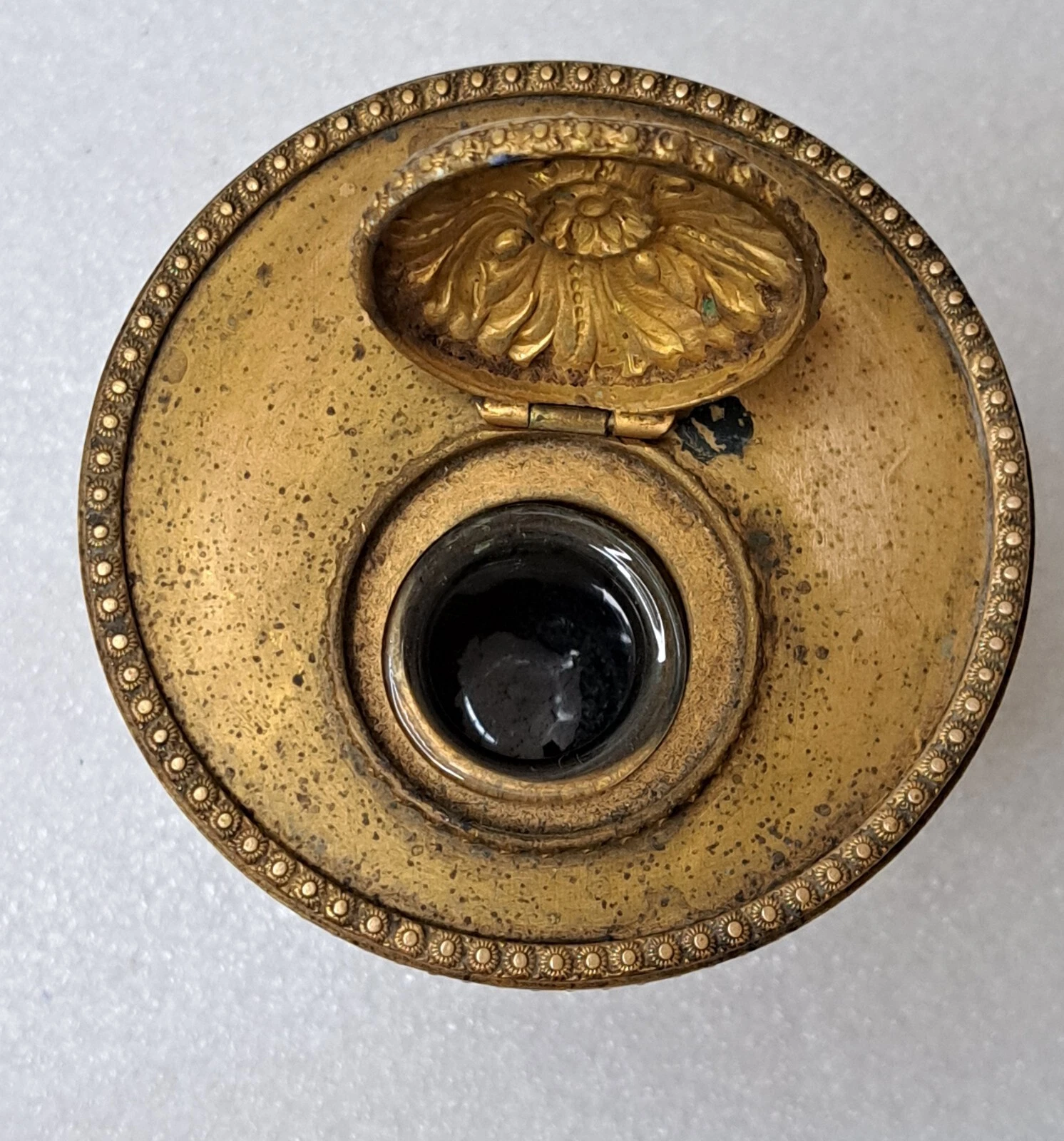
- The Lid: A hinged, domed lid decorated with high-relief repoussé acanthus leaves and a central beaded finial.
- The Base: A thick, tiered bronze foot with gadrooned (ribbed) detailing.
- Functional Features:
- Quill Hole: A circular opening is located on the bronze top plate, allowing a pen to rest upright.
- Internal Well: The lid opens to reveal the original clear glass insert, which remains stained with deep blue-black ink from historical use.
Marking and Identification
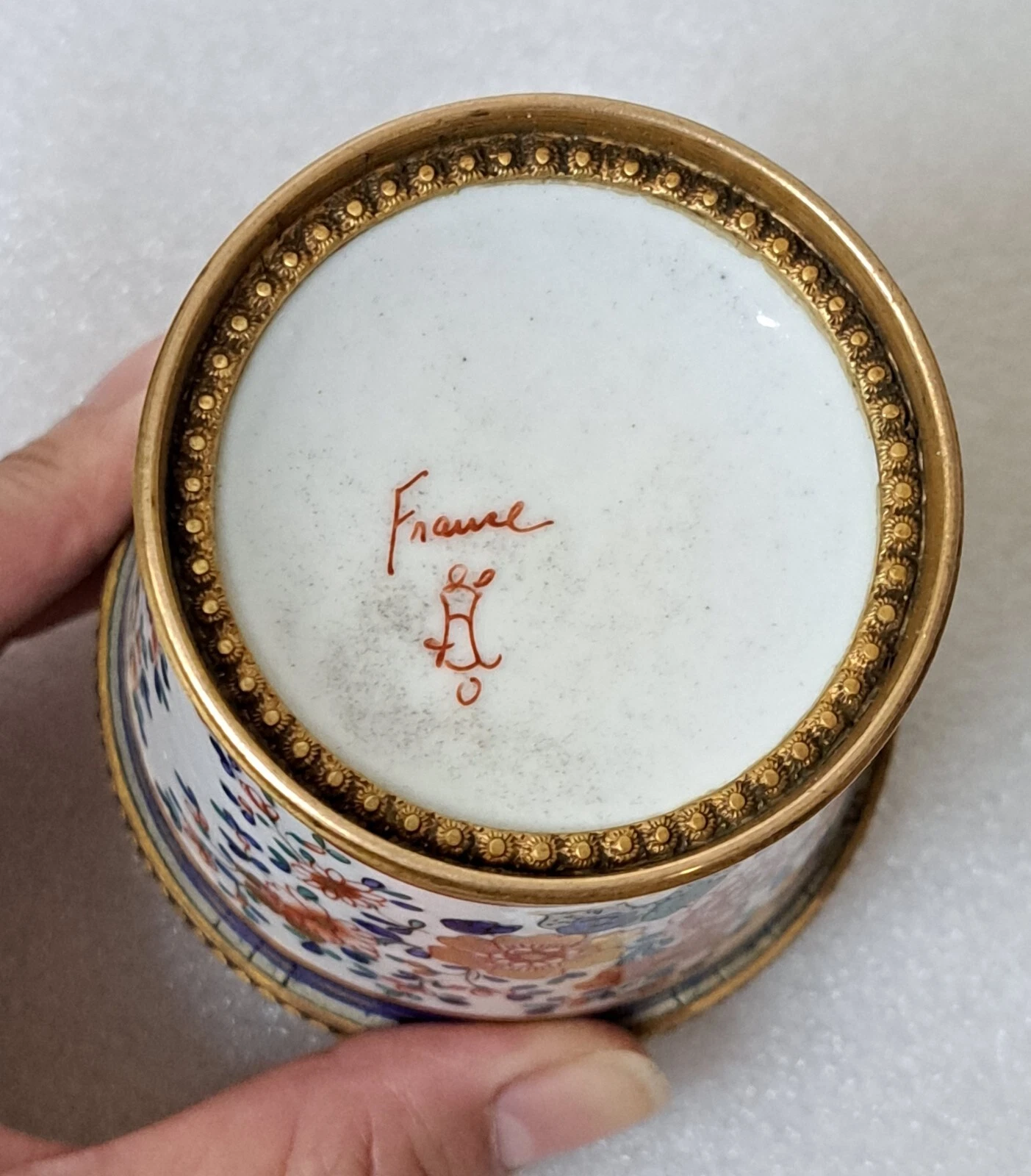
The underside of the porcelain bears a hand-painted mark in iron-red:
- The Name: The word “France” is written in a cursive script.
- The Maker’s Mark: Below the name is a stylized symbol resembling a monogram or a bell-shaped crest with a small circle below it. This mark belongs to a Parisian decorating studio, likely that of Samson, Edmé et Cie or a contemporary “Old Paris” workshop that specialized in emulating 18th-century Sèvres and Chantilly patterns.
- Significance: The inclusion of “France” indicates the piece was intended for the export market, specifically following the trade regulations of the late 19th century.
Age and Origin
- Origin: Paris, France.
- Date: Circa 1890 – 1905.
- Style: It is a premier example of the Neo-Rococo revival that flourished during the Second Empire and the early Third Republic. During this time, French craftsmen combined the technical durability of hard-paste porcelain with the opulent aesthetic of earlier royal periods to create luxury desk accessories for the international elite.
The specific hand-painted red mark on the underside of this inkwell identifies it as the work of Samson, Edmé et Cie (Samson of Paris), a world-famous decorating firm active in the 19th and early 20th centuries.
The Maker’s Mark: Samson, Edmé et Cie
- Identification: The stylized symbol below the “France” script is a variation of the Samson “Bell” or “Crest” mark. This mark was used by the factory to identify their high-quality reproductions of earlier 18th-century porcelain.
- The “France” Script: The presence of the word “France” in a matching hand-painted cursive script is a vital dating clue. This was added to comply with the McKinley Tariff Act of 1890, which required all imported goods to the United States to be marked with their country of origin.
Design and Artistry
Samson was renowned for “honorable” imitations of rare porcelain patterns. This inkwell is a masterclass in their style:
- Chantilly/Imari Pattern: The floral motifs in iron-red, orange, and gold are inspired by 18th-century Chantilly porcelain, which itself was influenced by Japanese Imari designs.
- Quality of Materials: Samson used hard-paste porcelain (pâte dure), which was more durable than the soft-paste used in the original 18th-century French factories.
- Ormolu Work: The factory often collaborated with Parisian foundries to create the heavy ormolu (gilt bronze) bases and lids, ensuring the metalwork was as high-quality as the porcelain itself.
Estimated Age and Rarity
- Production Date: Circa 1891–1905. The combination of the specific Samson mark and the export “France” script places it firmly at the turn of the century.
- Significance: Samson pieces are documented, high-art “fakes” that capture the spirit of much older, royal porcelain that is often only found in museums.
Sold for $243 in December 2025
Content disclaimer. The information posted is the owner’s best knowledge and may not have been vetted by the SOIC. We welcome comments, corrections, and additions, working to make our website information comprehensive and accurate.
Join the Society of Inkwell Collectors (SOIC) – it’s free!
Founded in 1981 as a non-profit organization,
we are documenting inkwells (and accessories).
We’re here to help and inform!