







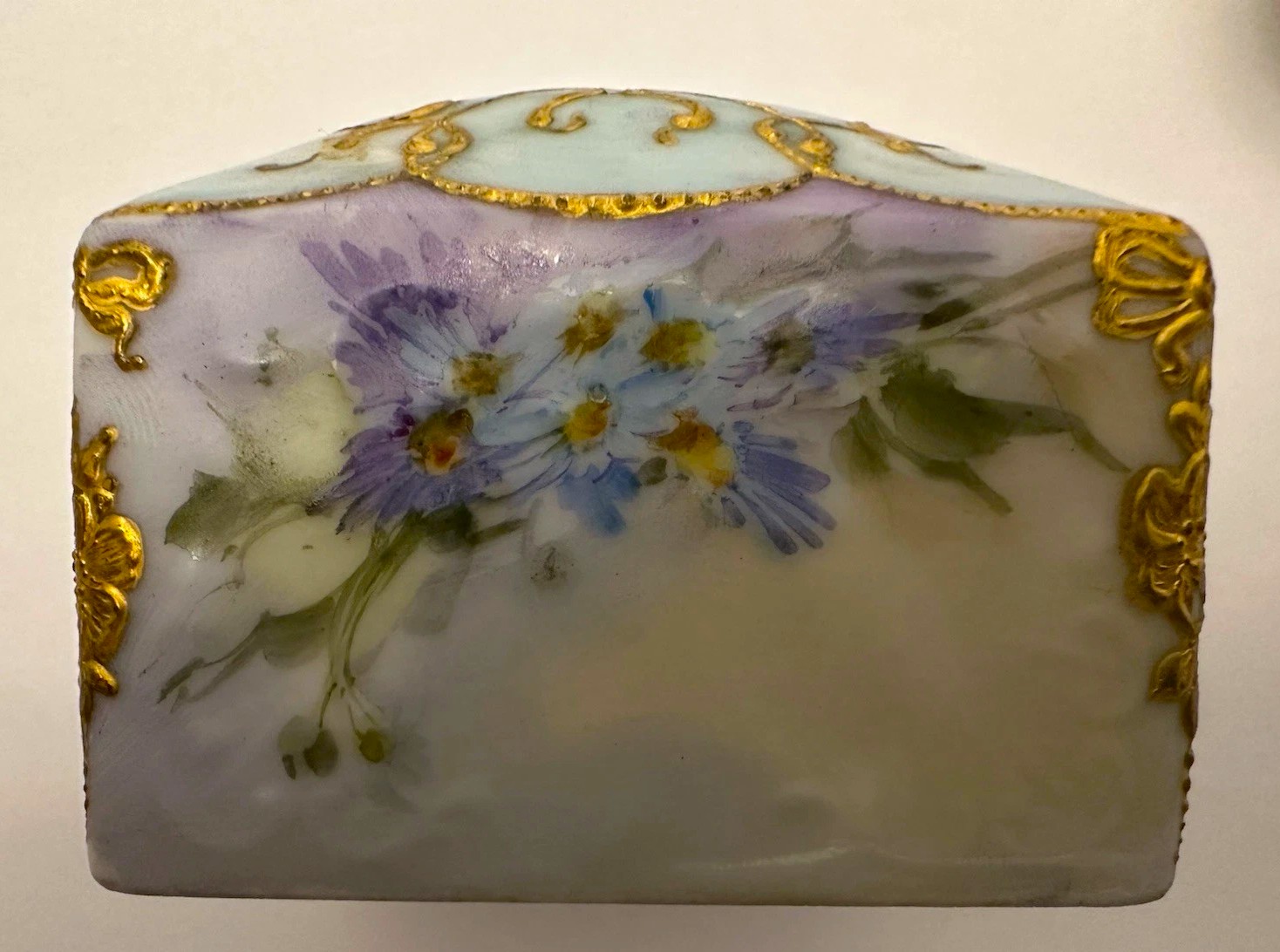

Nippon Moriage & Jeweled Inkwell
| Categories | Far East / Oriental |
| Type | Moriage |
| Material | Porcelain |
| Markings | Unmarked |
| Manufacturer | Nippon |
| Origin | Japan |
| Date or Era | circa 1915 |
| Measuring | 2 ½” x 2 ½” x 2 ¾” high |
This is a nice example of turn-of-the-century Japanese export porcelain. The combination of “Heavy Moriage” (the raised beadwork) and “Coralene-style” or turquoise jeweling is characteristic of the Nippon era, particularly pieces intended for the Western market.
Antique Japanese Nippon Moriage & Jeweled Inkwell
Circa 1891–1921
This exquisite porcelain inkwell is a masterclass in the Moriage and jeweling techniques that defined the Nippon era. While unmarked—common for pieces where the paper label has worn away or the maker opted for a clean unglazed base—the quality of the slip-decoration and the specific “tapestry” feel of the hand-painted florals strongly suggest a high-end Japanese workshop.
Artistry & Technical Details
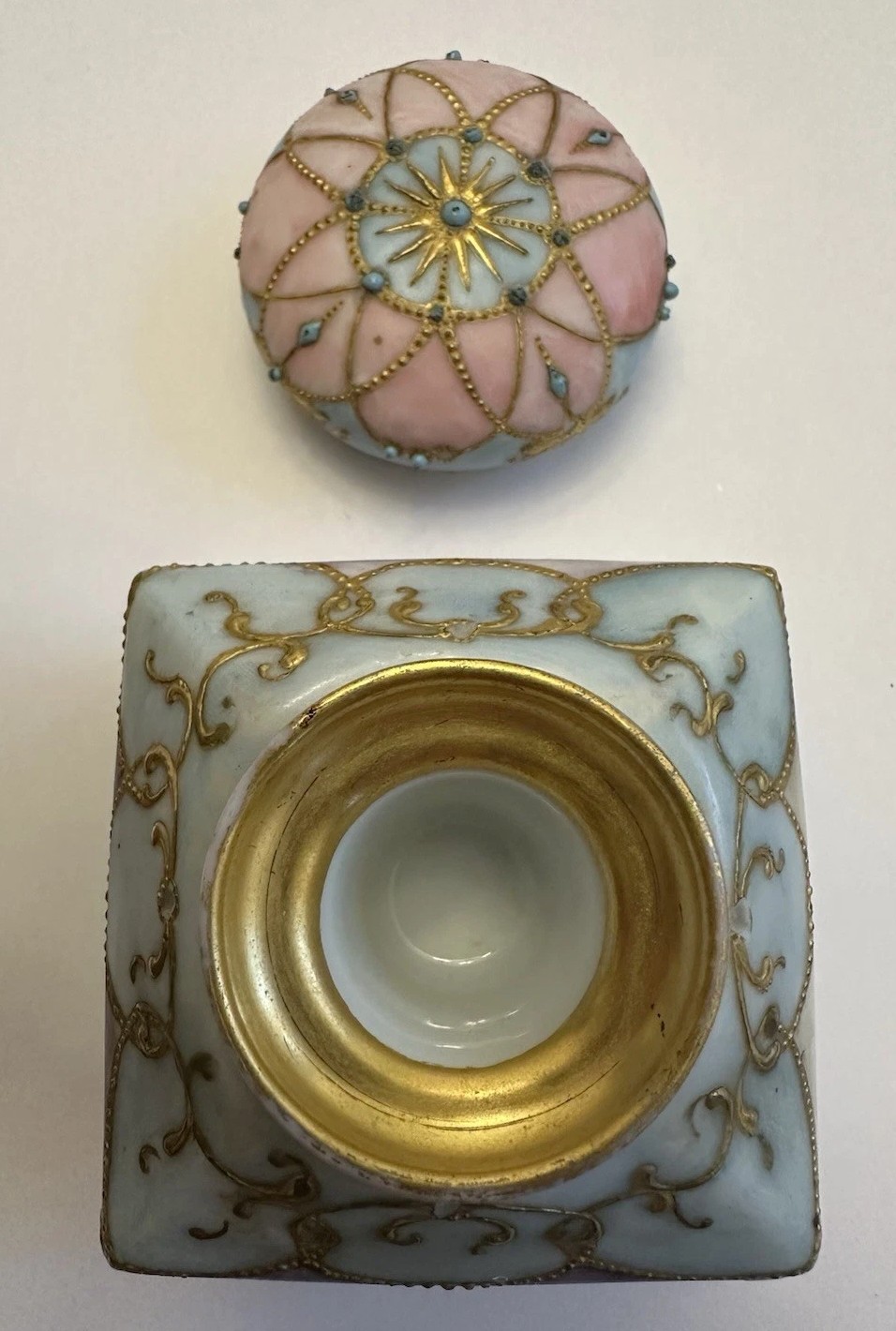
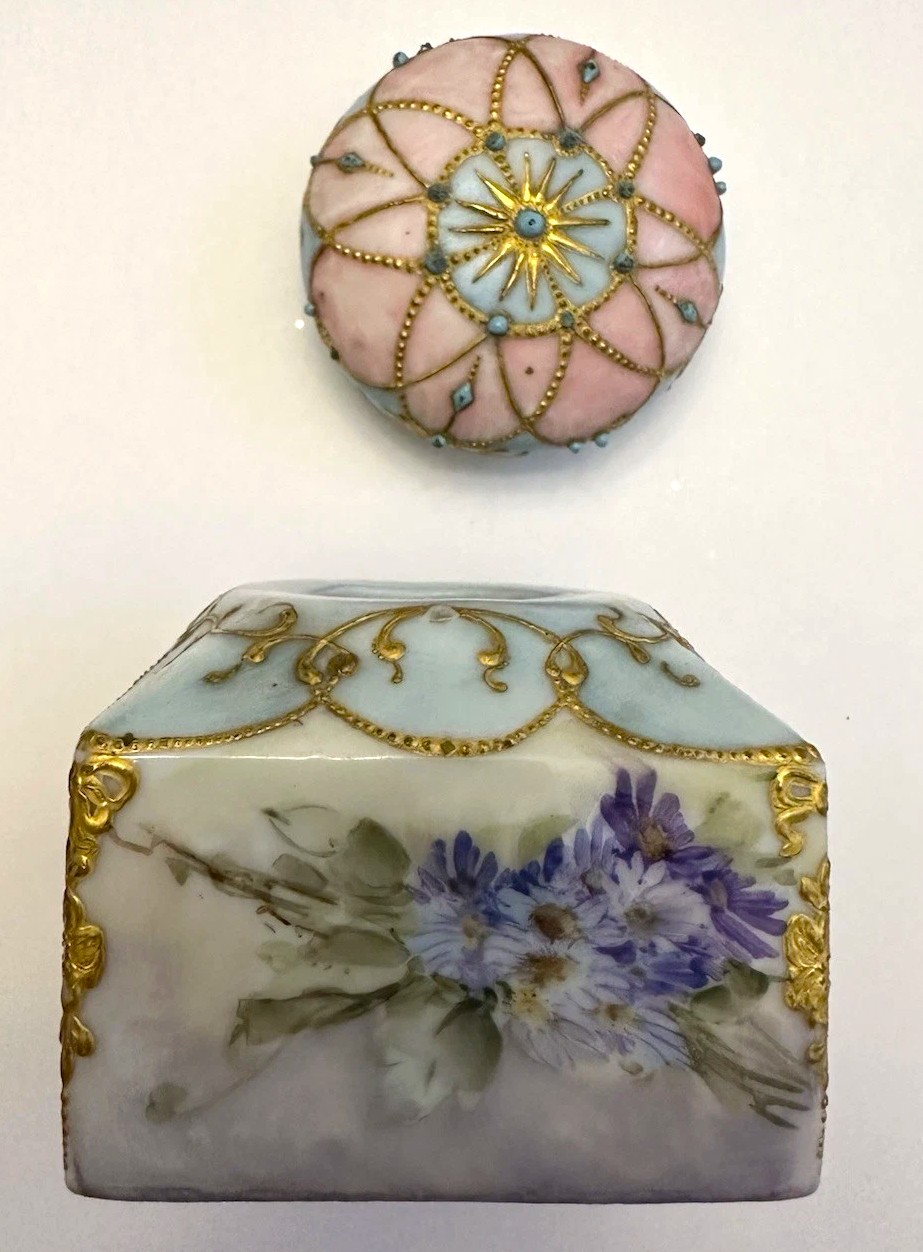
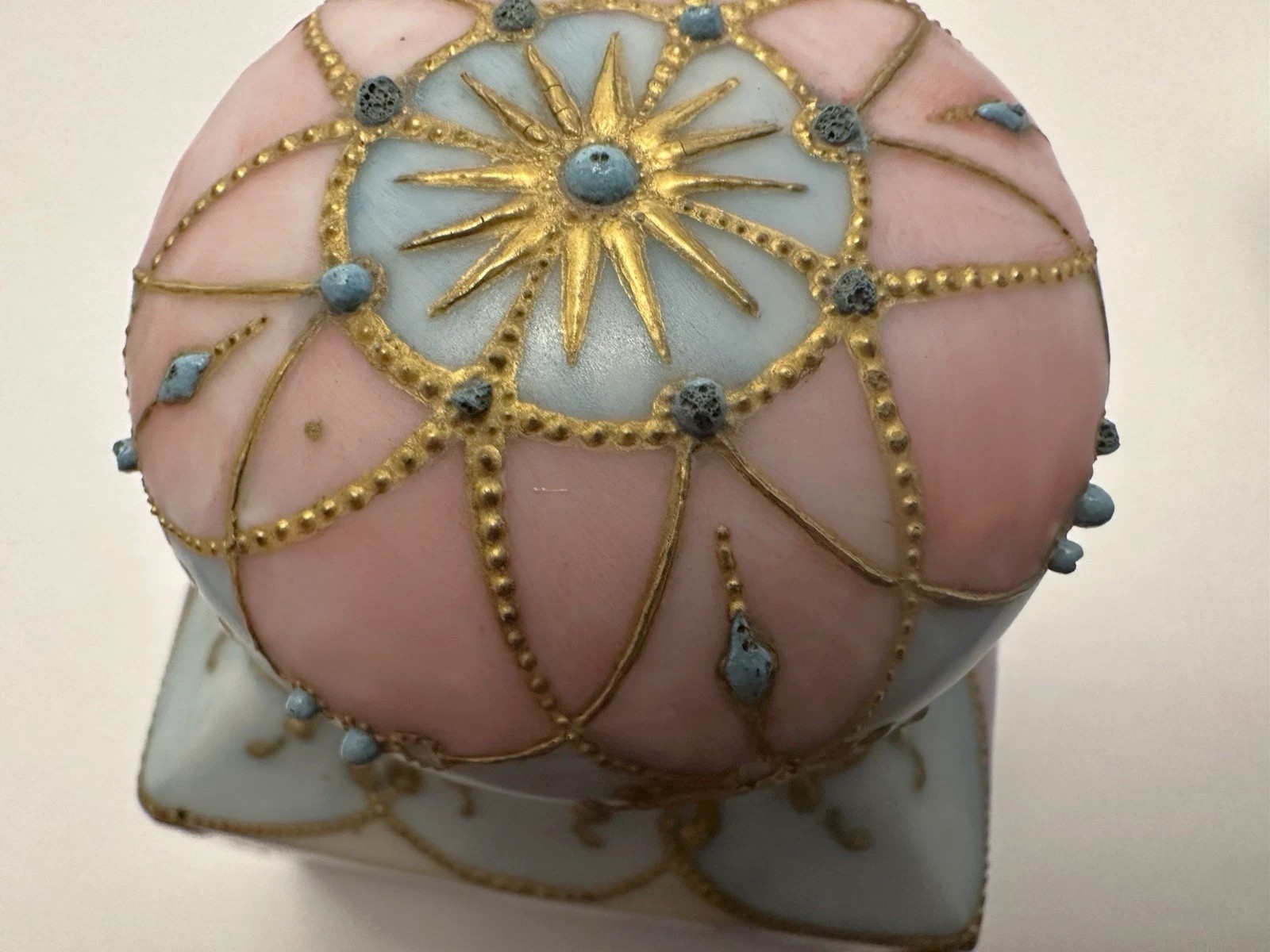
- The Lid: A domed, circular cover featuring a central gilded starburst set against a pale celadon-blue ground. It is meticulously decorated with raised gold beadwork (Moriage) in a radial medallion pattern, accented with hand-applied turquoise enamel “jewels.”
- The Body: A square, architectural base transition from a soft blue shoulder to a cream-toned lower body. The shoulders are adorned with intricate gilded scrollwork and delicate gold beading.
- Floral Motif: Each face of the well features hand-painted purple asters or chrysanthemums with soft green foliage, executed in a delicate, naturalistic style.
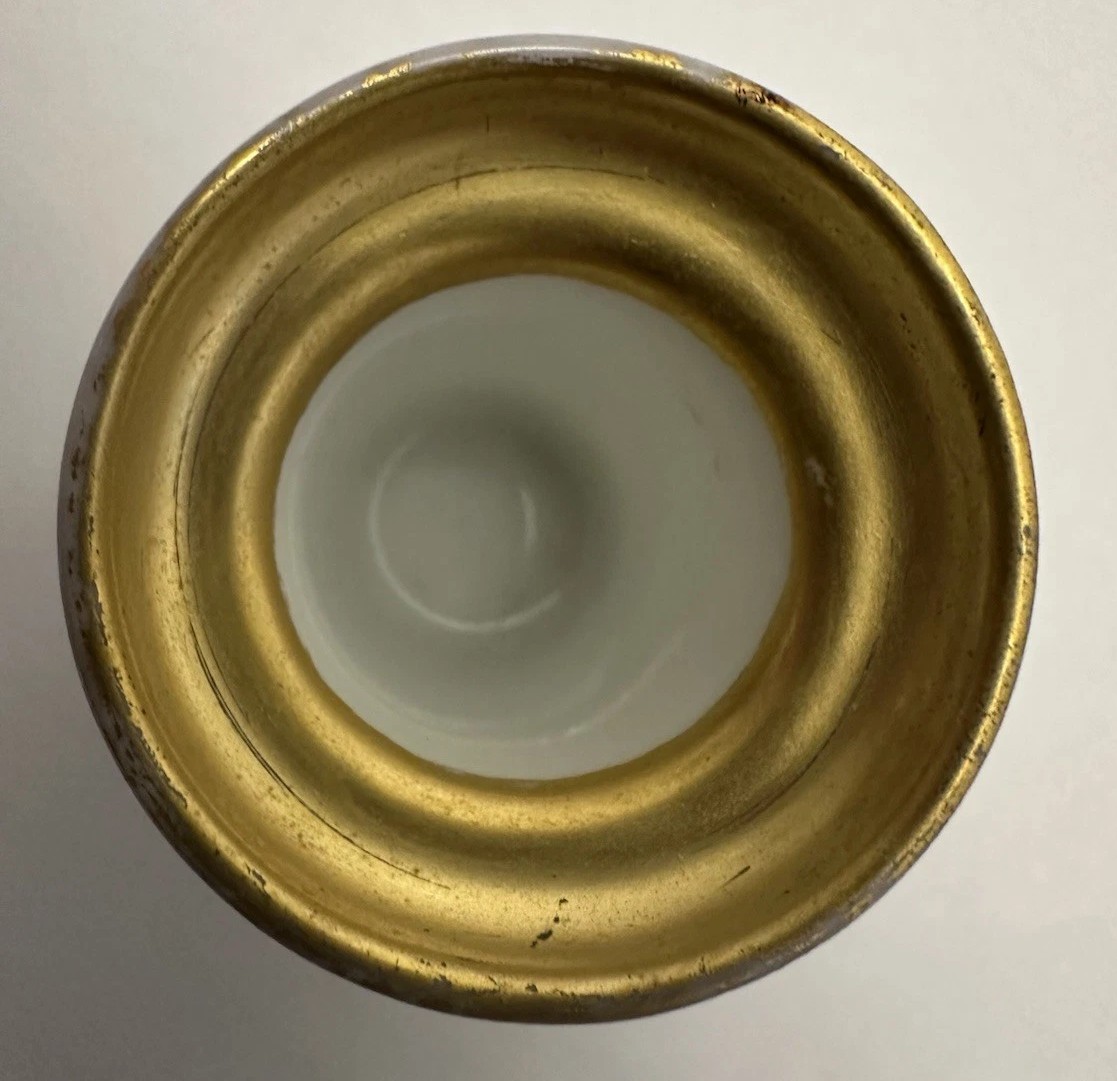
- Gilded Accents: The corners are finished with ornate gold “bracket” motifs, and the interior rim of the ink reservoir is fully gilded, adding a layer of hidden luxury.
- Construction: Three-piece assembly including the primary square well, the removable gold-lined porcelain insert, and the domed lid.
Dimensions
- Base: Approximately 2.5” Square
- Lid: Approximately 2” Diameter
- Condition: Excellent antique condition with notable preservation of the fragile Moriage beads and enamel jeweling.
Determining the exact manufacturer for unmarked Nippon porcelain is a classic puzzle. Because “Nippon” was a term required by US import laws (the McKinley Tariff Act) rather than a brand name, hundreds of independent workshops in the Nagoya and Seto regions produced these wares.
However, based on the specific decorative DNA of this piece, we can narrow down the likely origin and date.
The Likely Manufacturer: The Morimura Brothers (Noritake)
The high quality of the Moriage (the raised “beading”) and the precise “jeweling” on this inkwell are hallmarks of the Morimura Brothers (who later became Noritake).
- Why them? They were the premier exporters of the era and held patents on various decorating processes. Their artists were known for this specific style of “heavy Moriage” combined with Western-style florals like the purple asters on this piece.
- The Mark Mystery: Often, these pieces had “paper labels” that were washed off over the last century, or they were part of a larger desk set where only the tray or the primary stand was marked.
Refining the Date: 1911–1921
While the general Nippon era is 1891–1921, we can get more specific with this inkwell:
- The “Jeweling” Technique: The use of turquoise-colored enamel “jewels” (seen on the lid) became height-of-fashion in Japanese export porcelain between 1910 and 1915.
- The McKinley Tariff Update (1921): In 1921, the US government ruled that “Nippon” was no longer an acceptable country-of-origin mark and required “Japan” instead. Given the complexity of the Moriage and the floral style, this piece likely dates to the latter half of the Nippon era (approx. 1911–1921).
Sold for $77 in April 2026
Content disclaimer. The information posted is the owner’s best knowledge and may not have been vetted by the SOIC. We welcome comments, corrections, and additions, working to make our website information comprehensive and accurate.
Join the Society of Inkwell Collectors (SOIC) – it’s free!
Founded in 1981 as a non-profit organization,
we are documenting inkwells (and accessories).
We’re here to help and inform!