

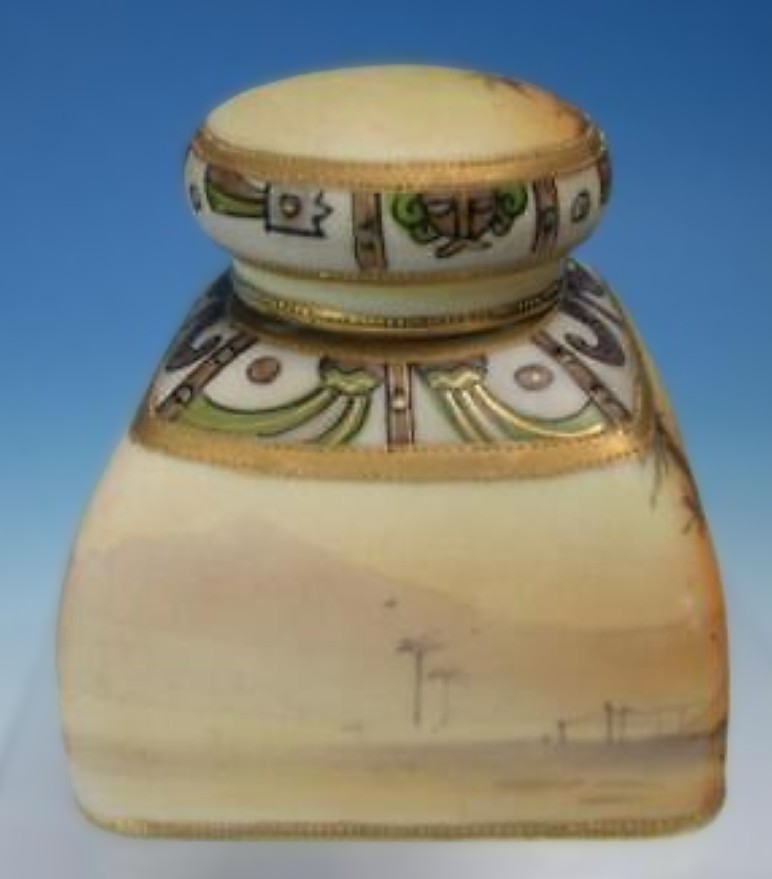
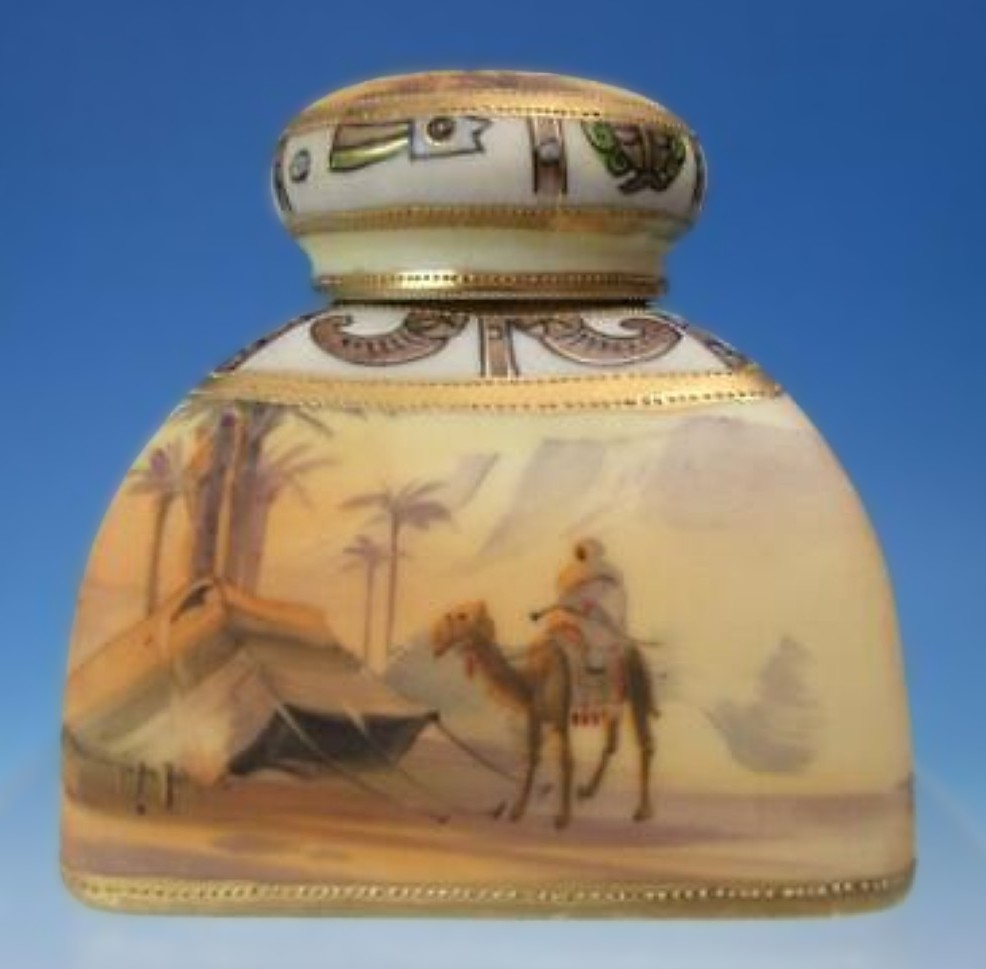
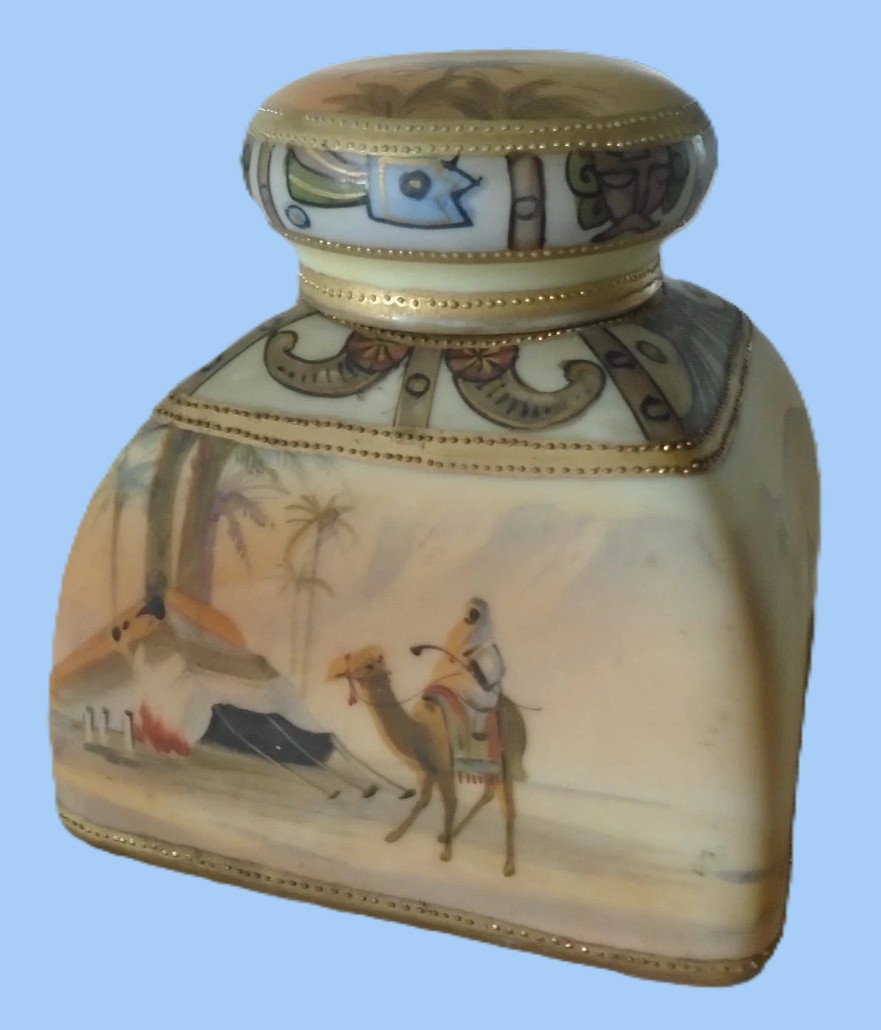
Nippon Desert Scene Porcelain Inkwell
| Categories | Far East / Oriental |
| Material | Porcelain |
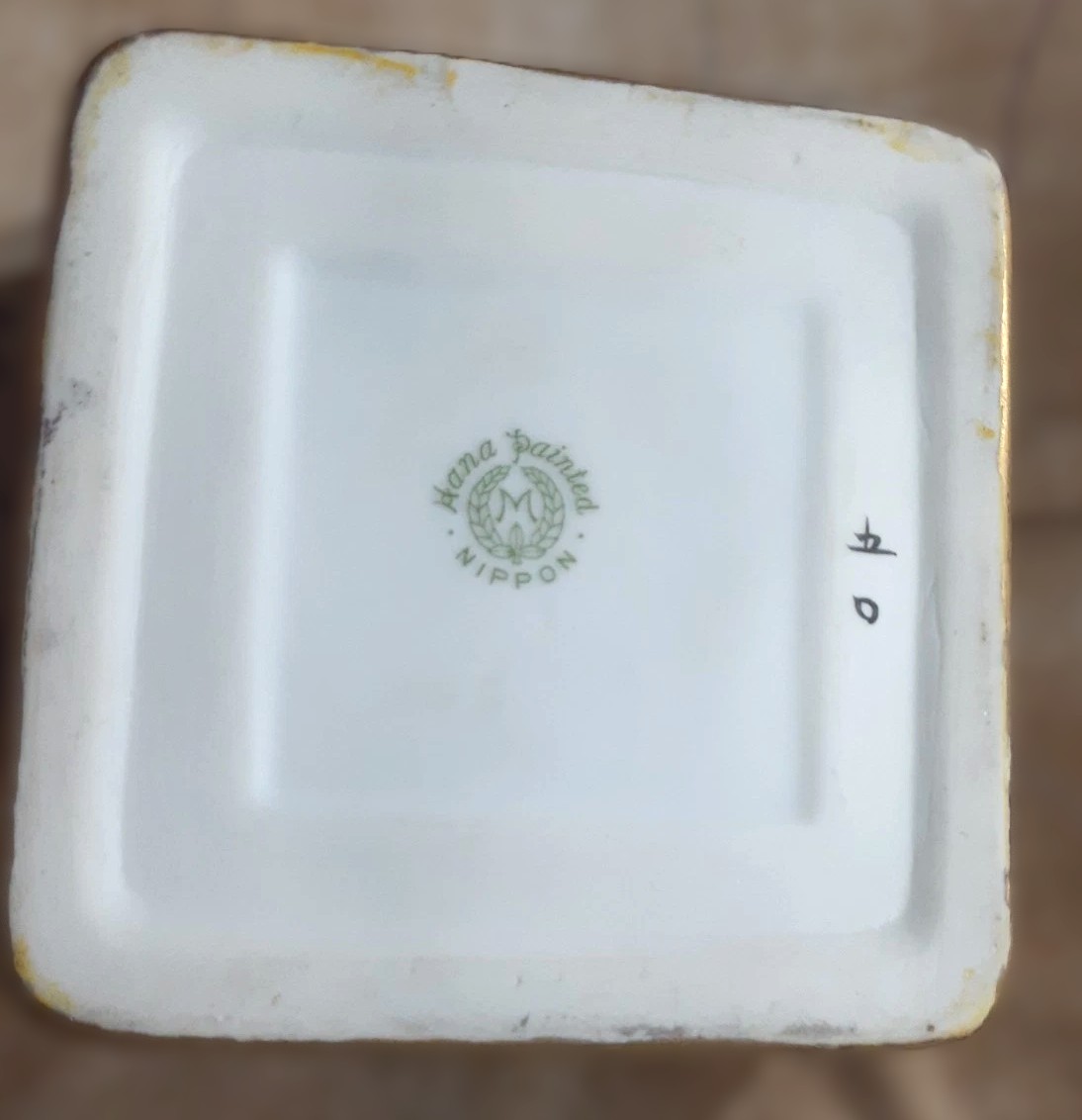
| Markings | See Narrative |
| Manufacturer | Nippon |
| Origin | Japan |
| Date or Era | circa 1915 |
| Measuring | 3 ½” x 3 ½” x 3 ¾” high |
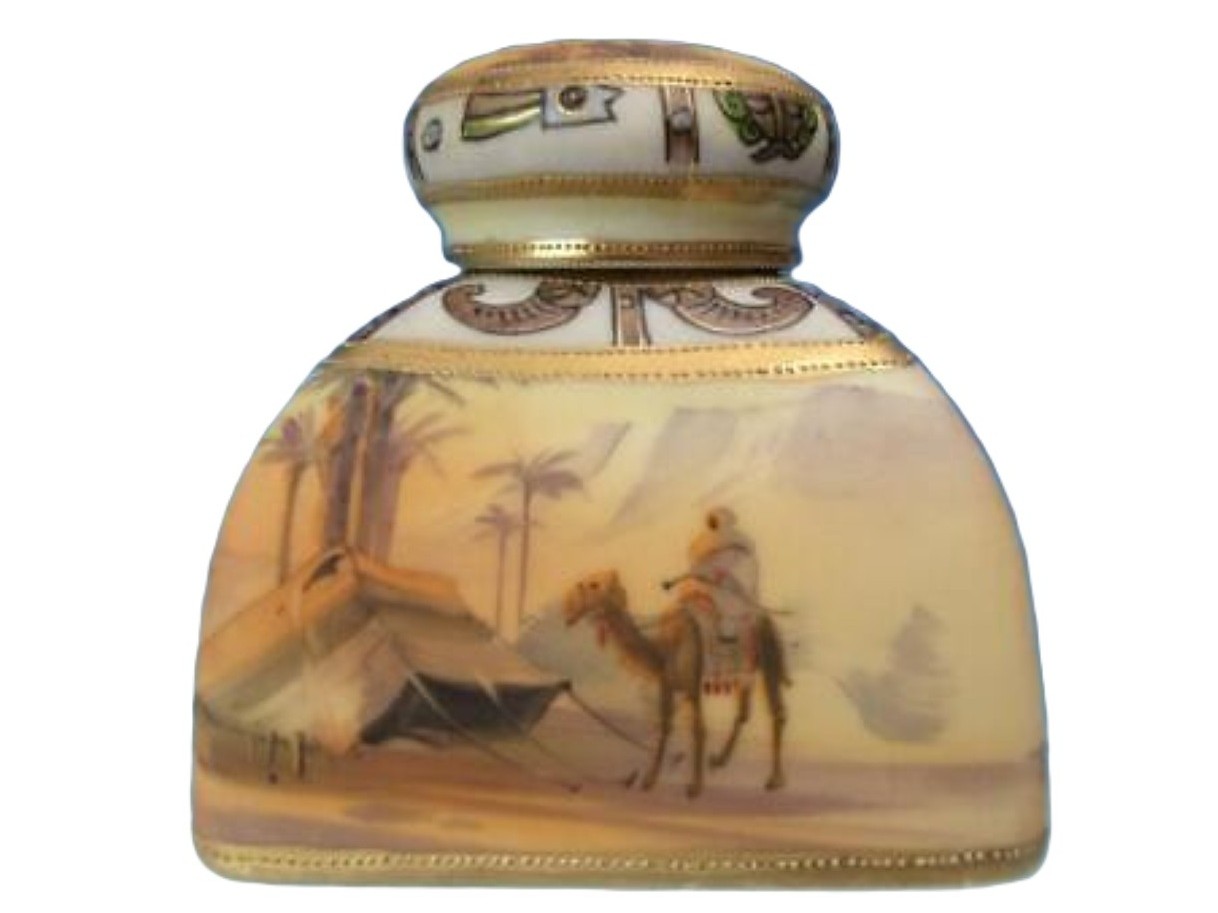
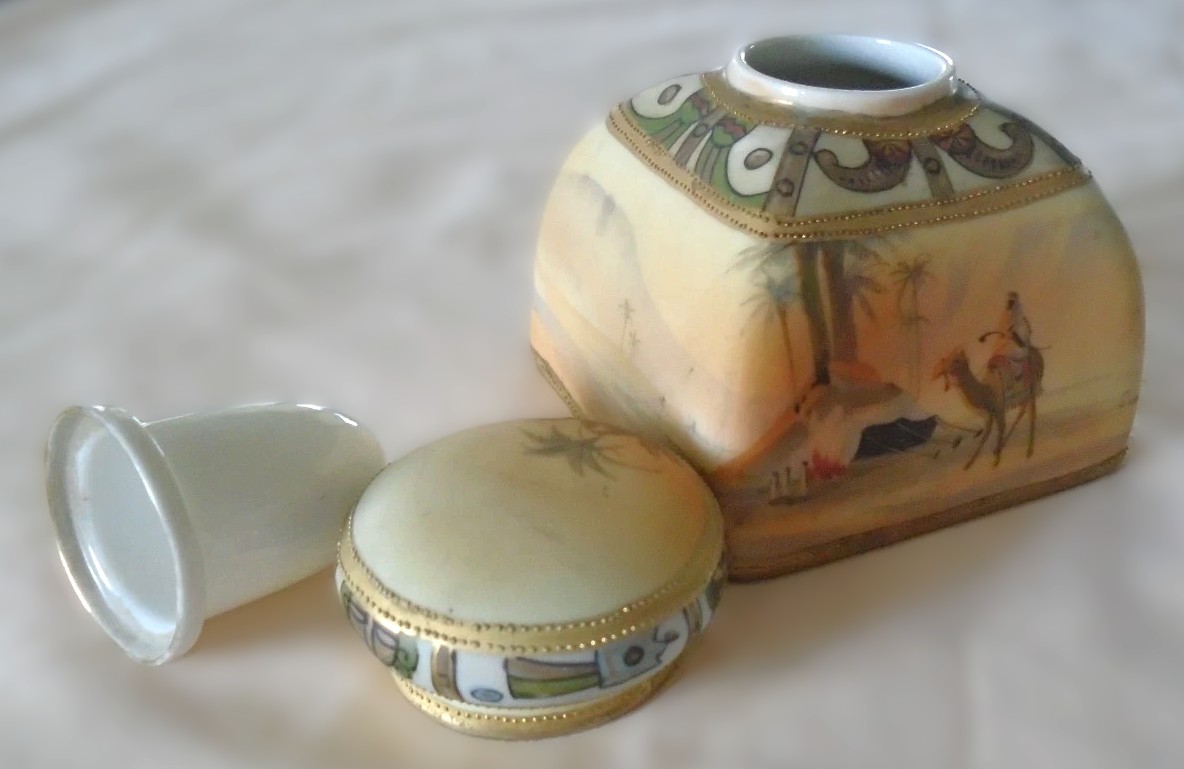
This is a fine example of Nippon porcelain featuring the “Desert” or “Egyptian” motif. The atmospheric painting combined with the intricate texture of the gold work makes it a standout piece.
Description
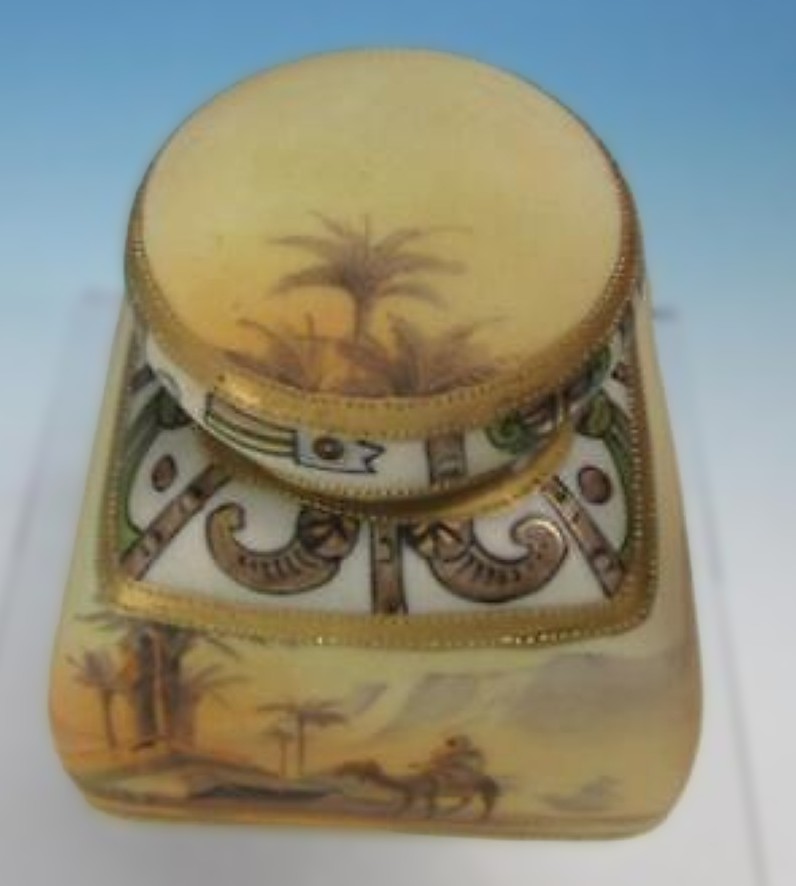
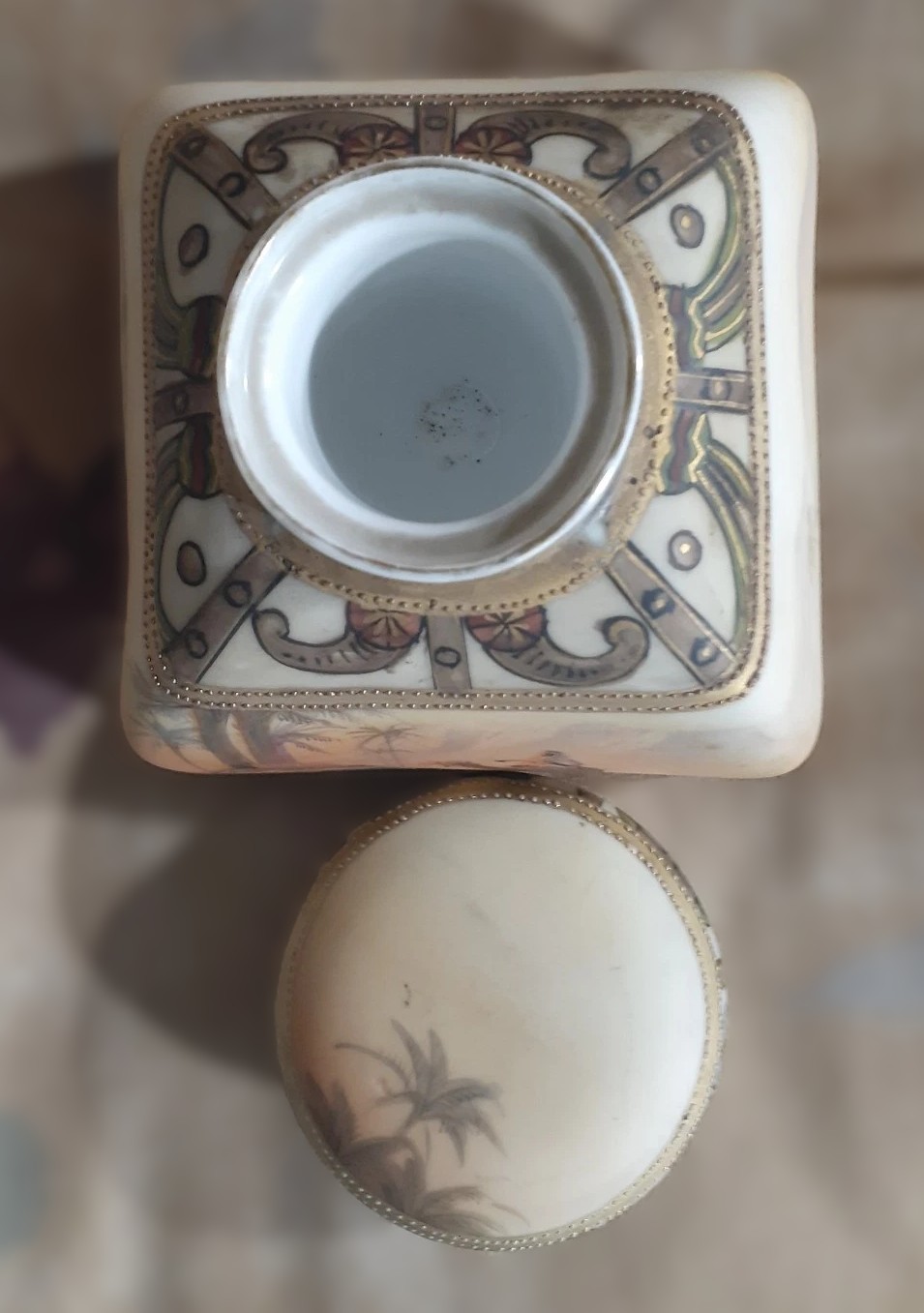
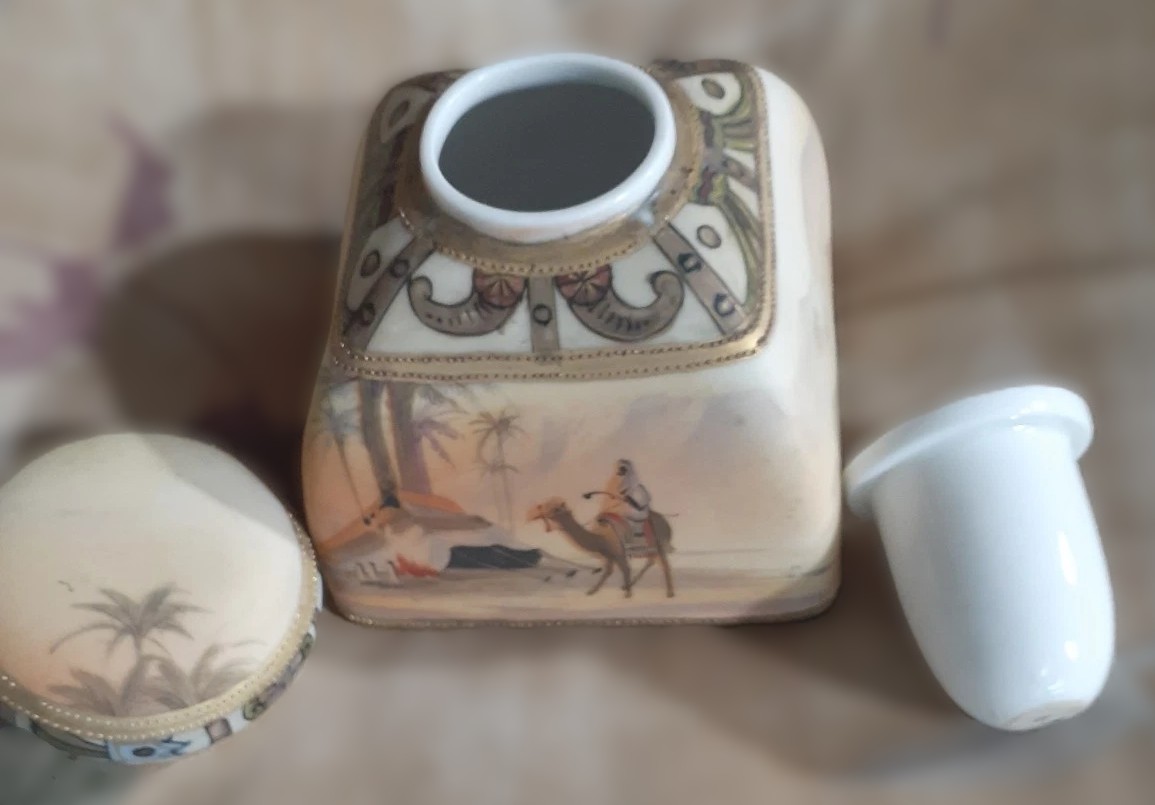
- Form & Structure: This is a square, pyramidal inkwell with gently sloping sides and a matching circular, domed lid. The porcelain is a high-quality white paste, common to the Morimura Brothers’ production. It includes a removable white porcelain ink insert.
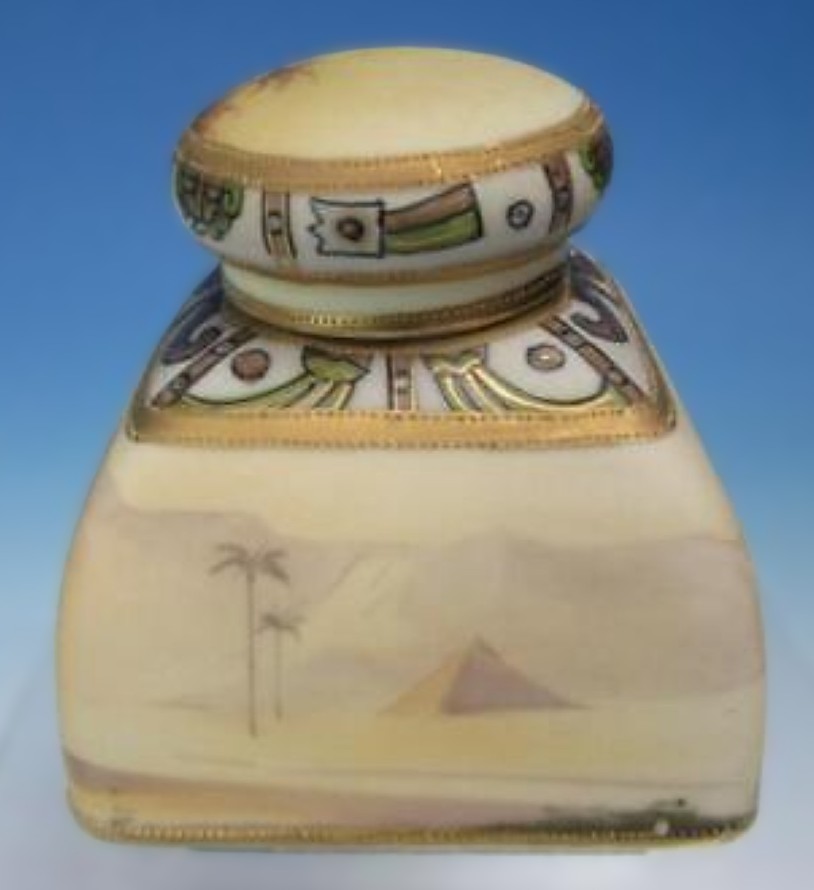
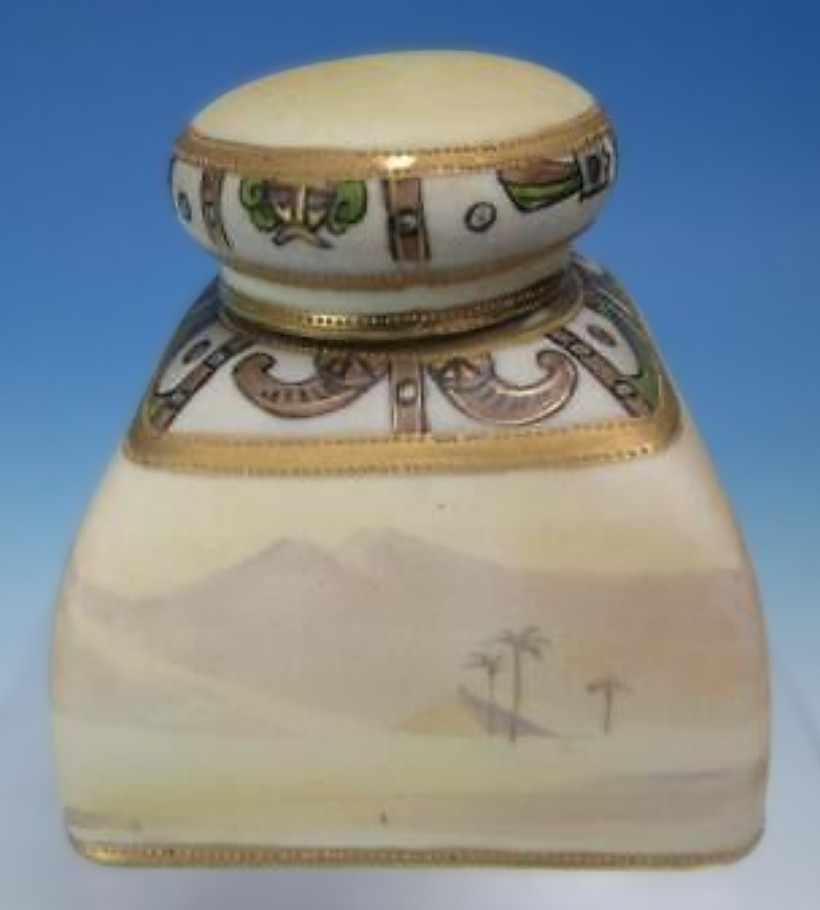
- The Desert Scene: The hand-painted “Oasis” scene wraps around the body of the inkwell. It depicts a classic Orientalist landscape:
- Foreground: A figure in traditional robes sits atop a camel near a desert tent and a cluster of palm trees.
- Background: Faint, hazy silhouettes of pyramids and distant sand dunes under a soft, golden-hued sky.
- The Lid: The scene continues on the top of the lid with additional palm trees, creating a seamless visual transition.
- Moriage & Decoration: Gold Beading: The piece features extensive Moriage (raised enamel/clay decoration). Fine gold “beaded” work outlines the shoulder of the inkwell and the rim of the lid.
- Geometric Accents: The shoulder and the sides of the lid are decorated with Art Deco-influenced geometric patterns in green, brown, and gold, providing a sophisticated frame for the softer landscape paintings.
Mark & Dating Confirmation
The backstamp is the “M in Wreath” mark, printed in green.
- The “M” stands for Morimura Bros. (the predecessors to Noritake).
- Dating: This specific green wreath mark was used from 1911 to 1921.
- Historical Context: In 1921, the U.S. government began requiring that imports be marked with the country of origin in English (“Japan” instead of “Nippon”), which effectively ended the “Nippon” era of marking for the American market.
Background on Nippon Porcelain
Nippon is literally the Japanese word for “Japan.” In the world of antiques, “Nippon” refers specifically to Japanese porcelain made for export to the West between 1891 and 1921.
| Feature | Description |
| The McKinley Tariff | In 1890, the U.S. passed a law requiring all imports to be marked with their country of origin. Japan chose to use “Nippon.” |
| The Morimura Brothers | Most high-quality Nippon was handled by the Morimura Brothers. They established an office in New York in 1876 and helped design pieces that specifically appealed to Western tastes. |
| Decorative Techniques | Nippon is famous for Moriage (the beaded “slip” decoration seen on this lid), Tapistry (a fabric-like texture), and Coralene (tiny glass beads). |
| The “Desert” Appeal | During the late 19th and early 20th centuries, “Egyptomania” and fascination with the Middle East were at a peak in the West. This influenced everything from architecture to the hand-painted scenes on porcelain like this one. |
Sold for $85 in March 2026
Content disclaimer. The information posted is the owner’s best knowledge and may not have been vetted by the SOIC. We welcome comments, corrections, and additions, working to make our website information comprehensive and accurate.
Join the Society of Inkwell Collectors (SOIC) – it’s free!
Founded in 1981 as a non-profit organization,
we are documenting inkwells (and accessories).
We’re here to help and inform!