

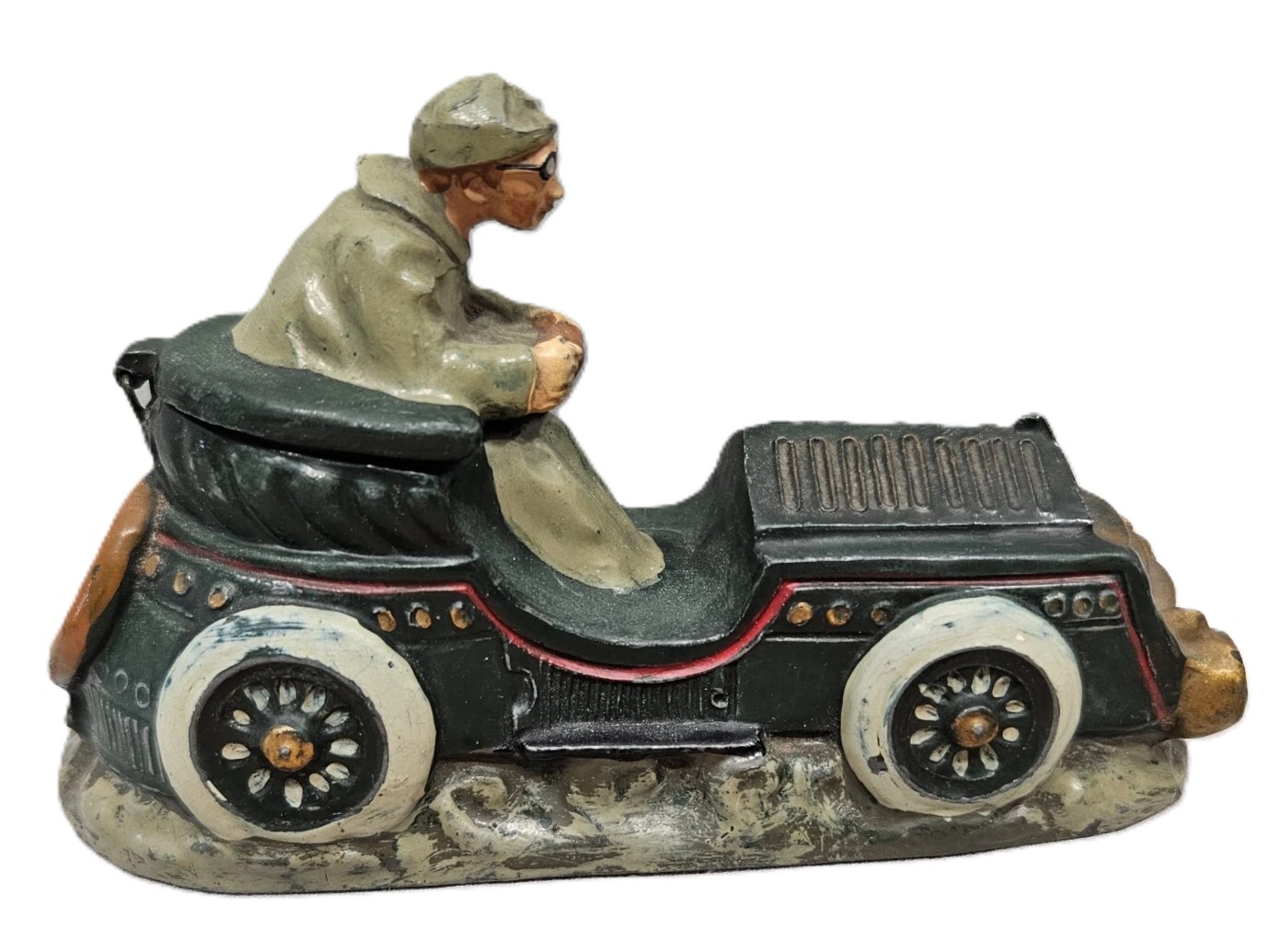
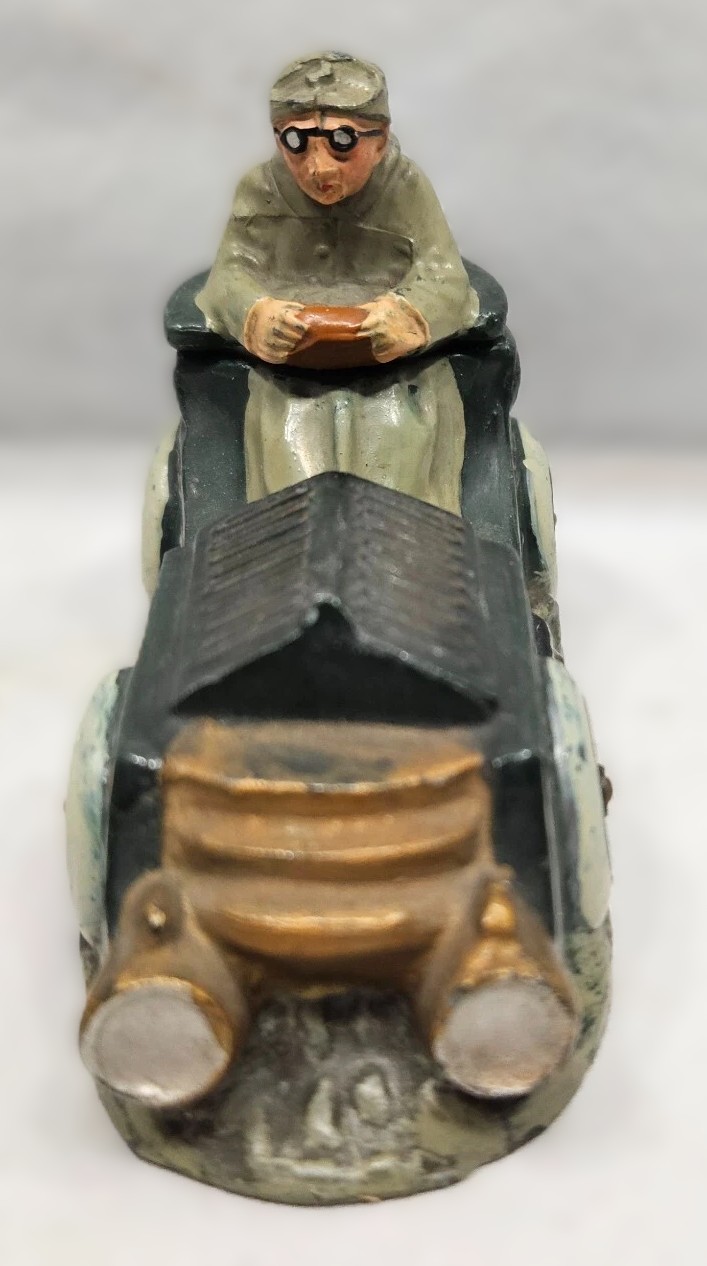
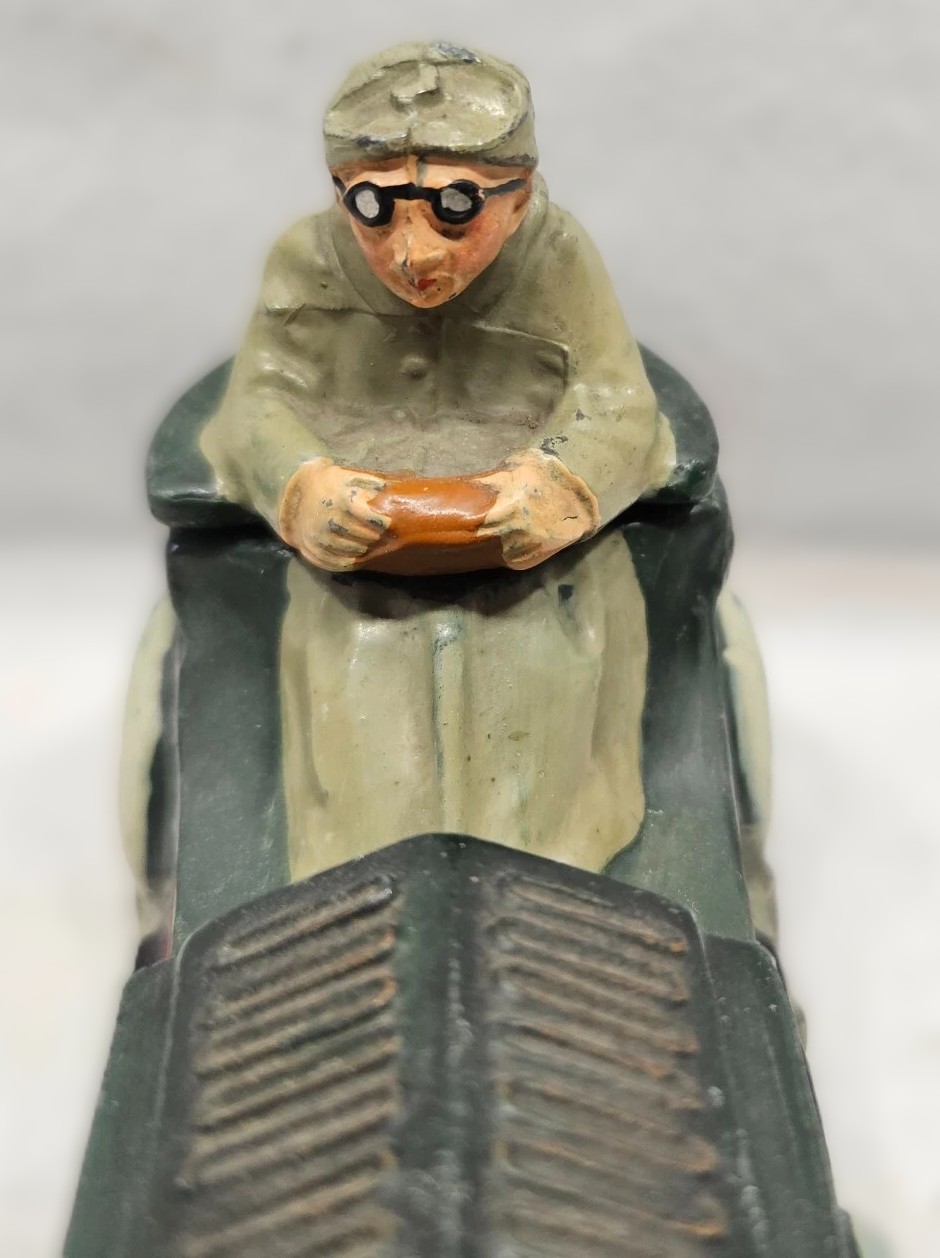
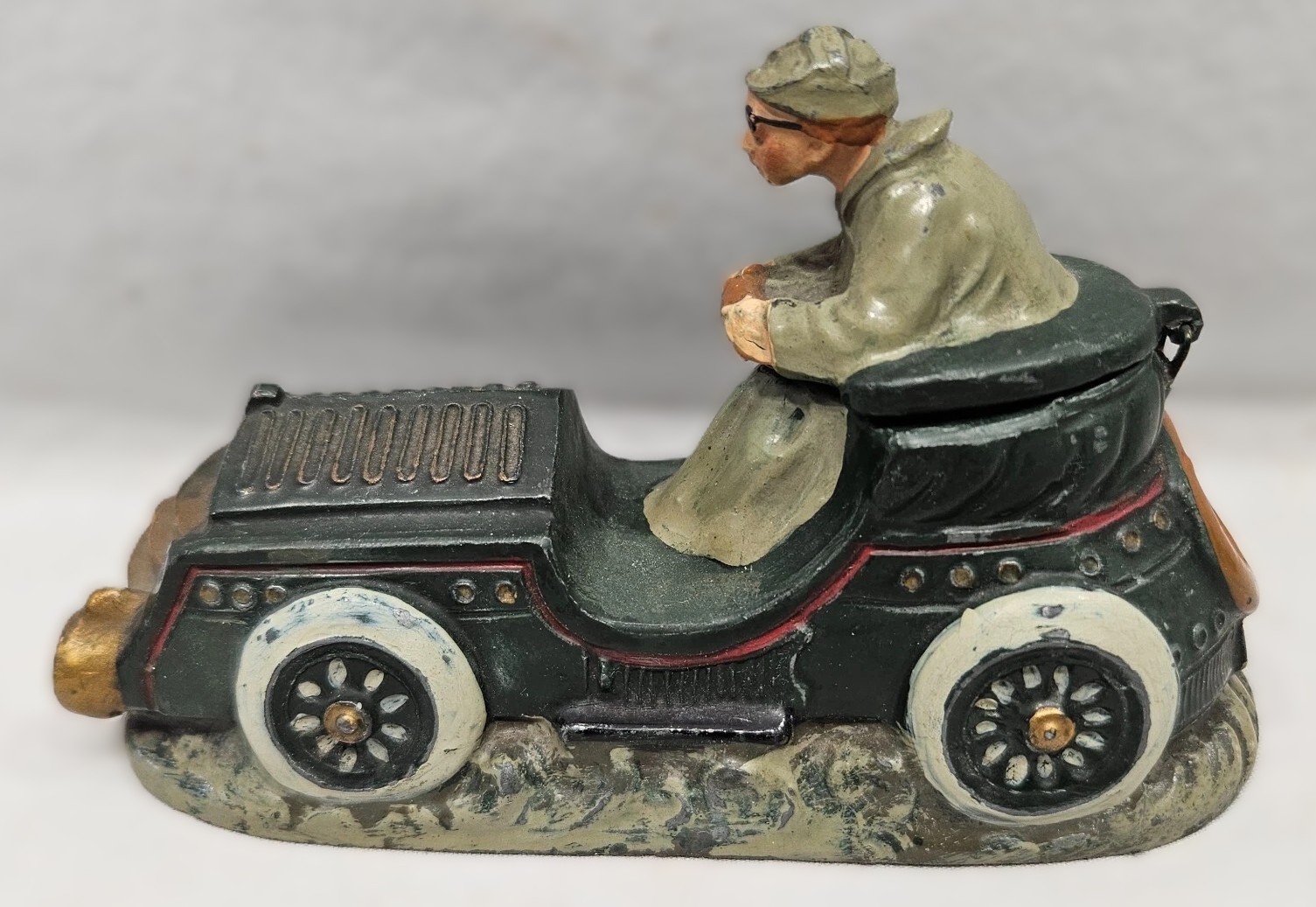
Motorist Figural Race Car Inkwell
| Categories | Figural - Inanimate |
| Type | Transportation |
| Material | White metal |
| Markings | Unmarked |
| Manufacturer | Jennings Brothers |
| Origin | United States |
| Date or Era | circa 1904 |
| Measuring | 5 ¼” x 2” x 3” high |
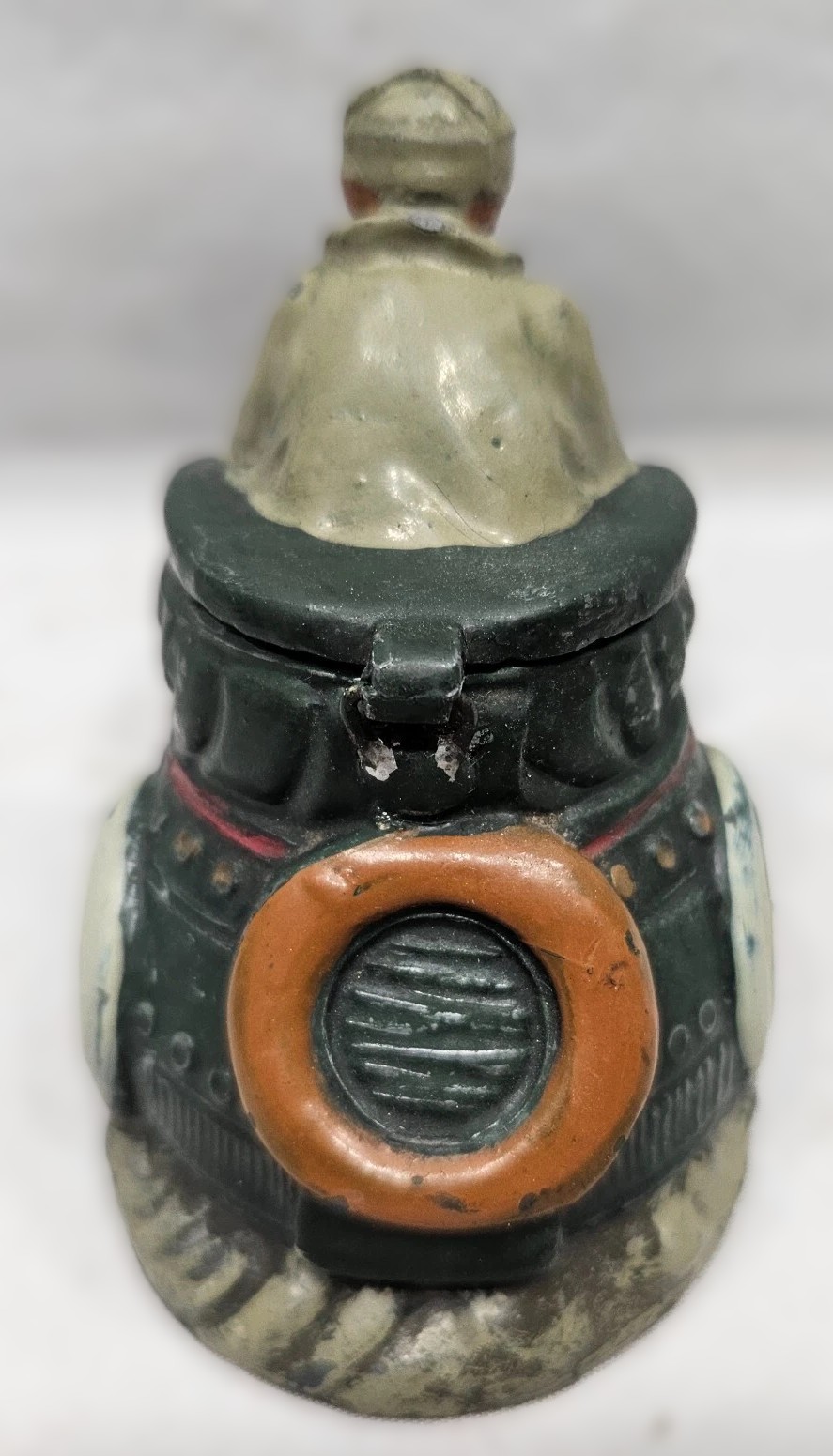
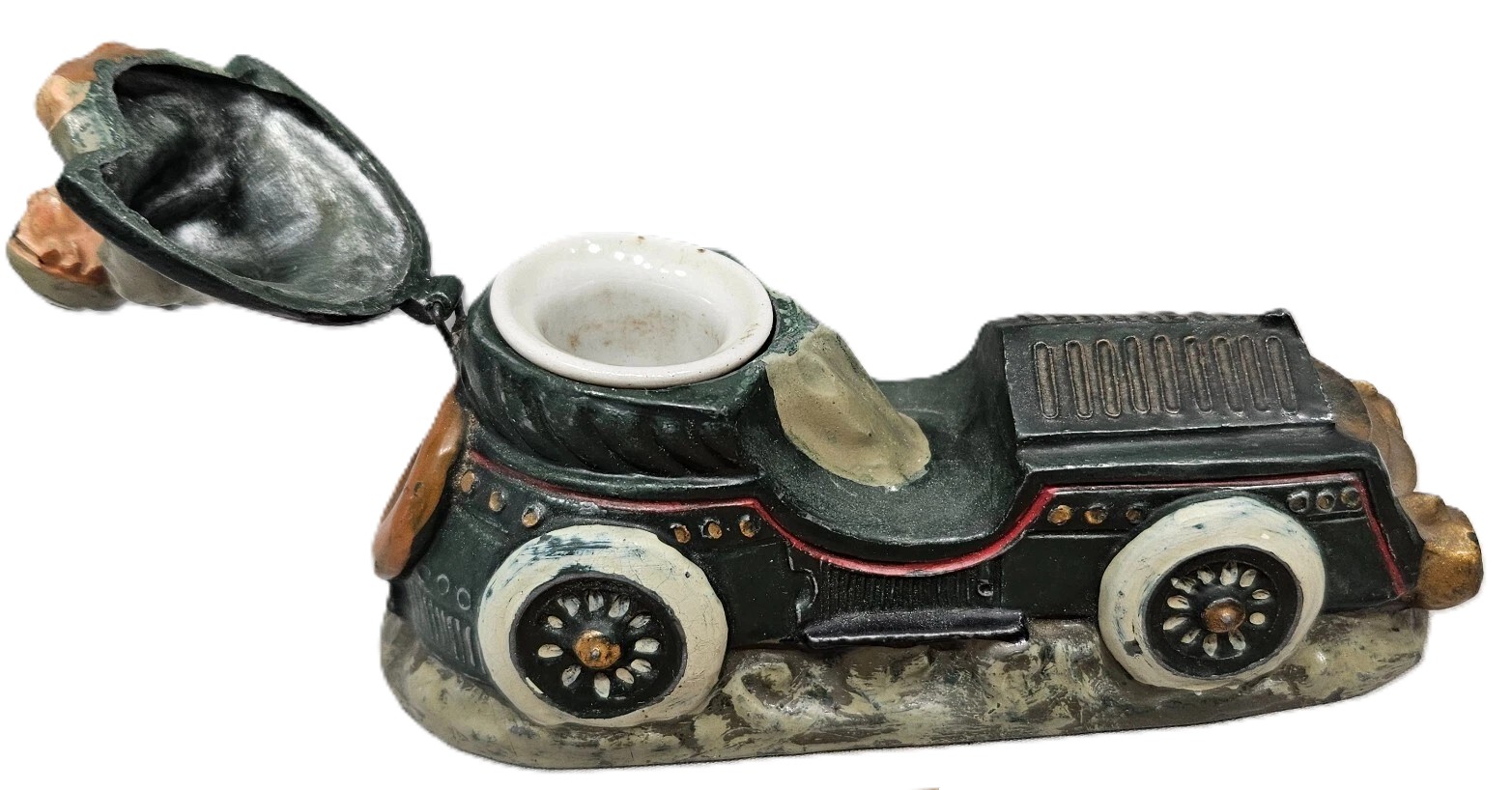
This painted inkwell is an exact match for the unpainted version featured in another Society of Inkwell Collectors (SOIC) Inkipedia entry. Here is the link: Early Race Car Inkwell – The Society of Inkwell Collectors (SOIC) . The casting details—including the specific side vents on the hood, the position of the driver’s gloved hands on the steering wheel, and the spare tire mounting—confirm they are from the same mold.
Description
- Manufacturer: This piece was produced by the Jennings Brothers Manufacturing Company (JB) of Bridgeport, Connecticut. They were the preeminent makers of high-quality “Art Metal” desk novelties and were known for using the same intricate figural castings for multiple purposes.
- Production Date: Circa 1902–1905.
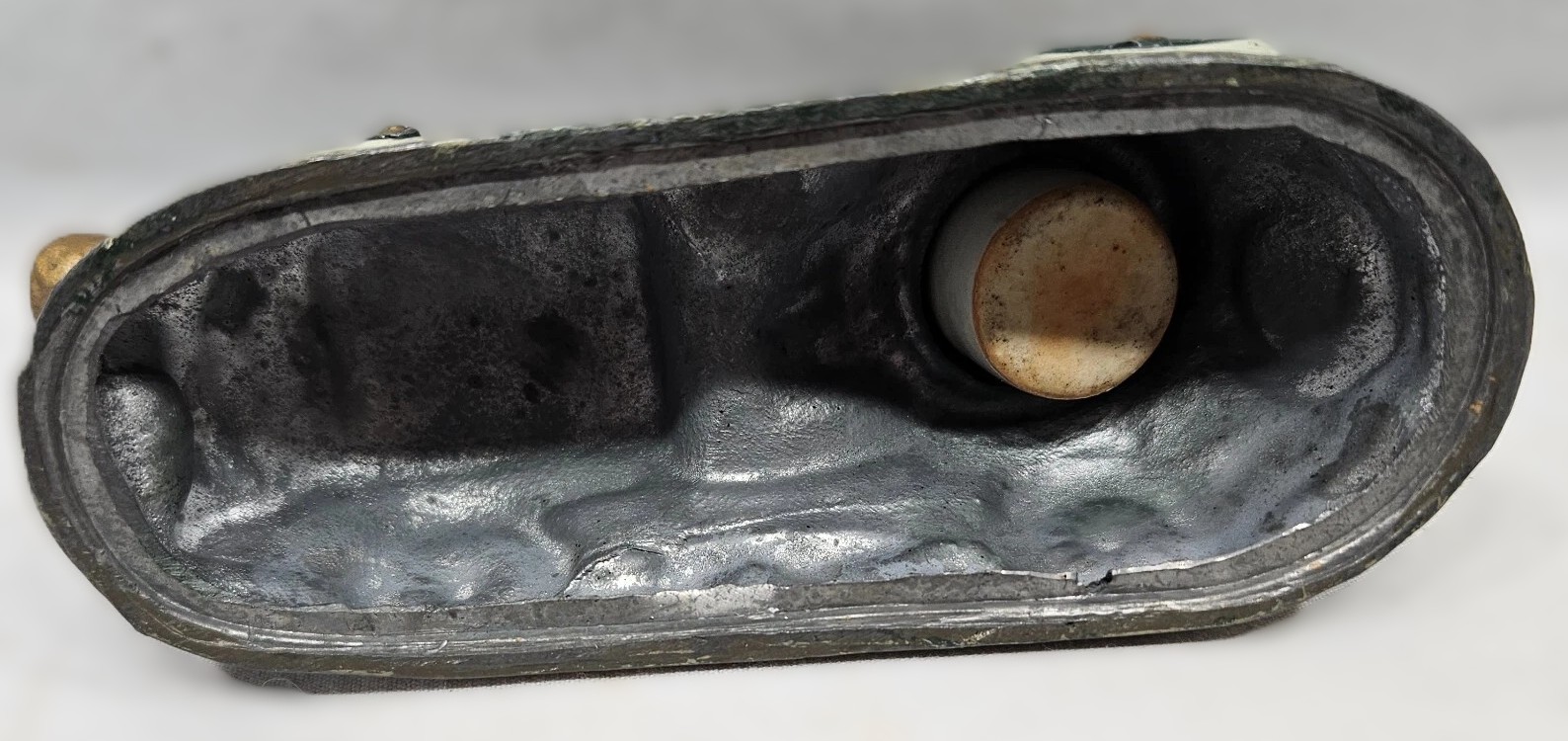
- Material & Technique: The item is made of cold-painted spelter (a white metal alloy of zinc, lead, and tin). Unlike fired enamel, “cold-paint” was applied to the metal after casting, which is why this inkwell shows the authentic wear typical of this era.
- The “Motorist” Design: The driver is depicted in period-correct “motoring” attire: a flat cap and large goggles with black-painted rims. The car’s “boat-tail” rear and exposed chassis reflect the transition from early “horseless carriages” to purpose-built racing machines.
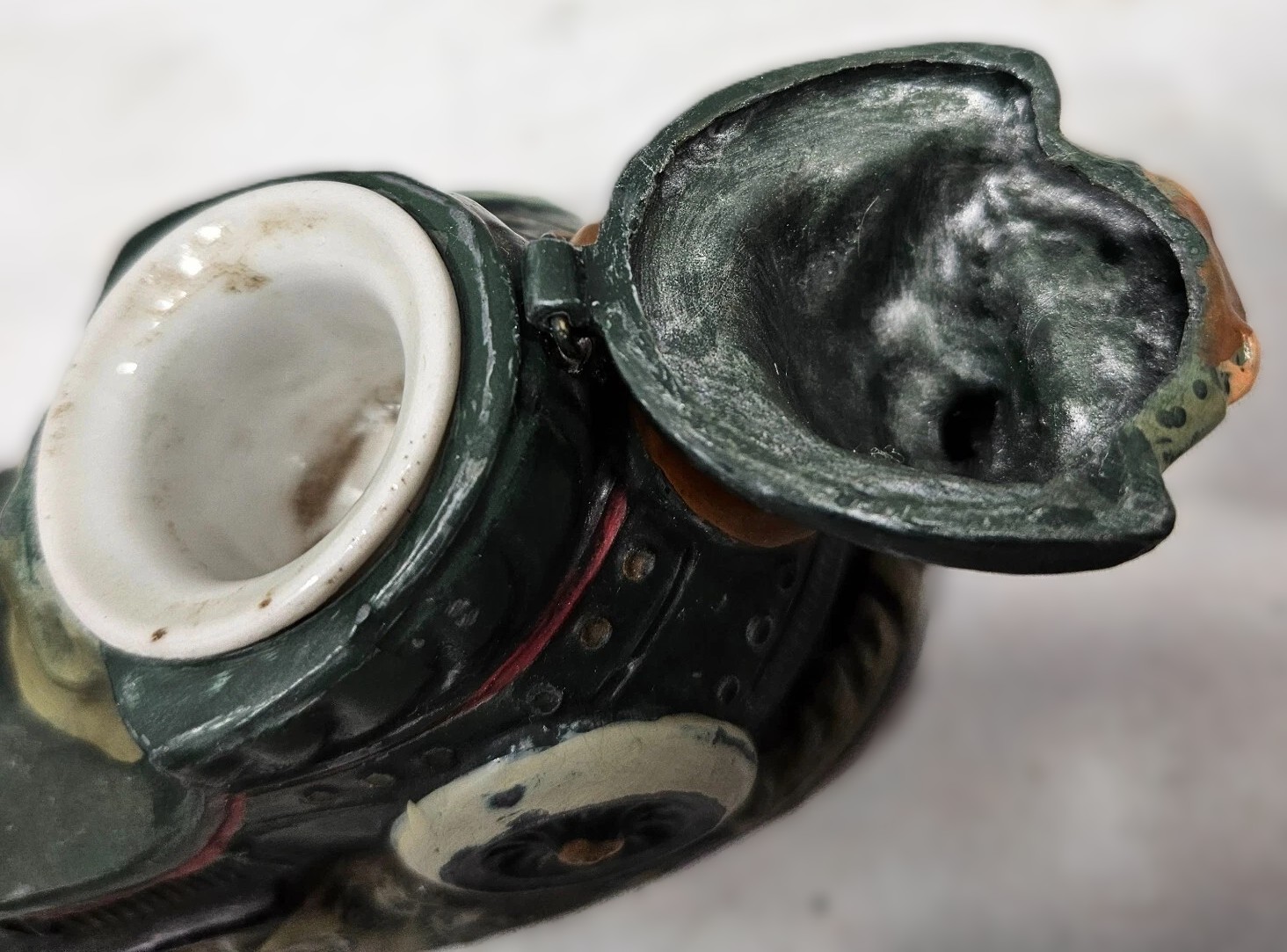
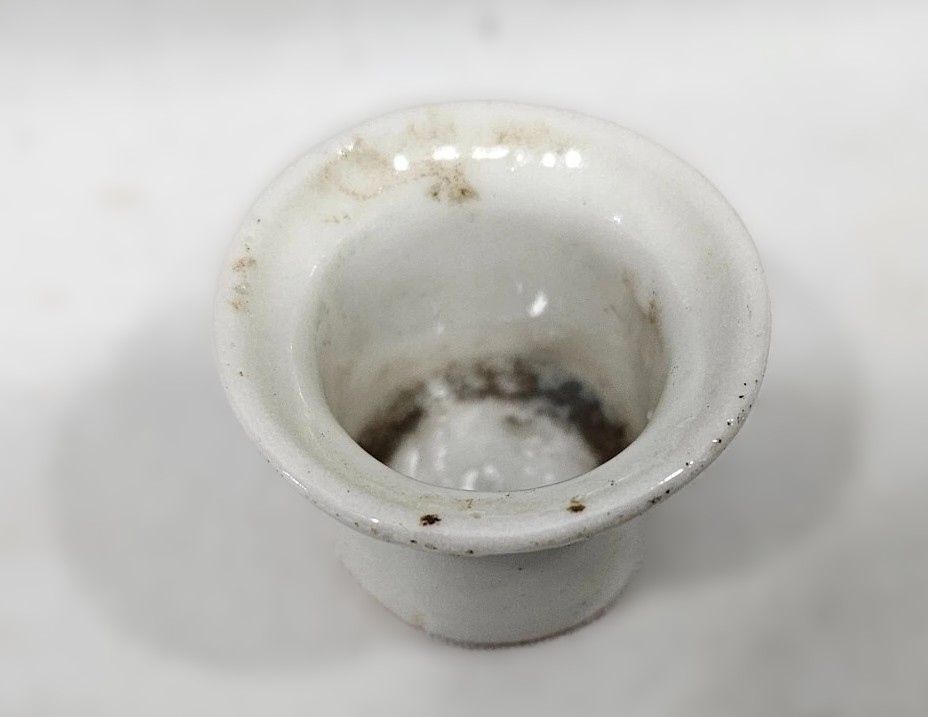
- Functionality: The driver hinges backward at the seat to reveal a removable white porcelain insert.
“Bank” Connection
A bank exists which looks exactly like this. It is known in the toy-collecting world as “The Motorist Still Bank.”
- Dual-Purpose Casting: In the early 1900s, companies like Jennings Brothers maximized their molds by offering the same figure in different formats.
- The Inkwell: Featured the hinged driver and porcelain insert.
- The Still Bank: The driver was fixed in place, and a coin slot was cast into the back of the driver’s coat or the rear of the car.
- The $2,880 Auction: At Morphy Auctions, the “Motorist” in its bank form sold for $2,880 in June 2025. (Here is the link: Lot Detail – PEWTER PAINTED MOTORIST DESK COIN BANK). The auction reflects the rarity of the “Motorist” in its bank form. While the inkwell is also a prized collector’s item, the bank version is considered a “top tier” still bank due to its intricate paint and crossover appeal to both toy and auto collectors.
Historical Significance: The Gordon Bennett Cup
The attribution to the Gordon Bennett Cup (1900–1905) is strong. These races were the first truly international automobile competitions, where each country entered three cars painted in national colors.
- The Green Color: This inkwell’s dark green body is particularly interesting. Following the 1903 race in Ireland, the color green became synonymous with “British Racing Green.”
- James Gordon Bennett Jr.: As the publisher of the New York Herald, his races sparked a massive wave of “automobilia” merchandise. This inkwell was likely sold as a high-end desk accessory for a “modern” gentleman of the era who followed the exploits of early racing legends like Selwyn Edge or Camille Jenatzy.
Summary
- Title: The Motorist Figural Race Car Inkwell
- Maker: Jennings Brothers Mfg. Co., Bridgeport, CT
- Date: c. 1904
- Material: Cold-painted white metal with porcelain well
- Style: Early 20th-century Automobilia / Gordon Bennett Cup Commemorative
Sold for $1,100 in April 2026
Content disclaimer. The information posted is the owner’s best knowledge and may not have been vetted by the SOIC. We welcome comments, corrections, and additions, working to make our website information comprehensive and accurate.
Join the Society of Inkwell Collectors (SOIC) – it’s free!
Founded in 1981 as a non-profit organization,
we are documenting inkwells (and accessories).
We’re here to help and inform!