




Moroccan Inkstand
| Categories | Middle East / Africa |
| Material | Earthenware, Metal |
| Markings | Unmarked |
| Manufacturer | Undetermined |
| Origin | Morocco |
| Date or Era | circa 1900 |
| Measuring | 5 ¾” across |
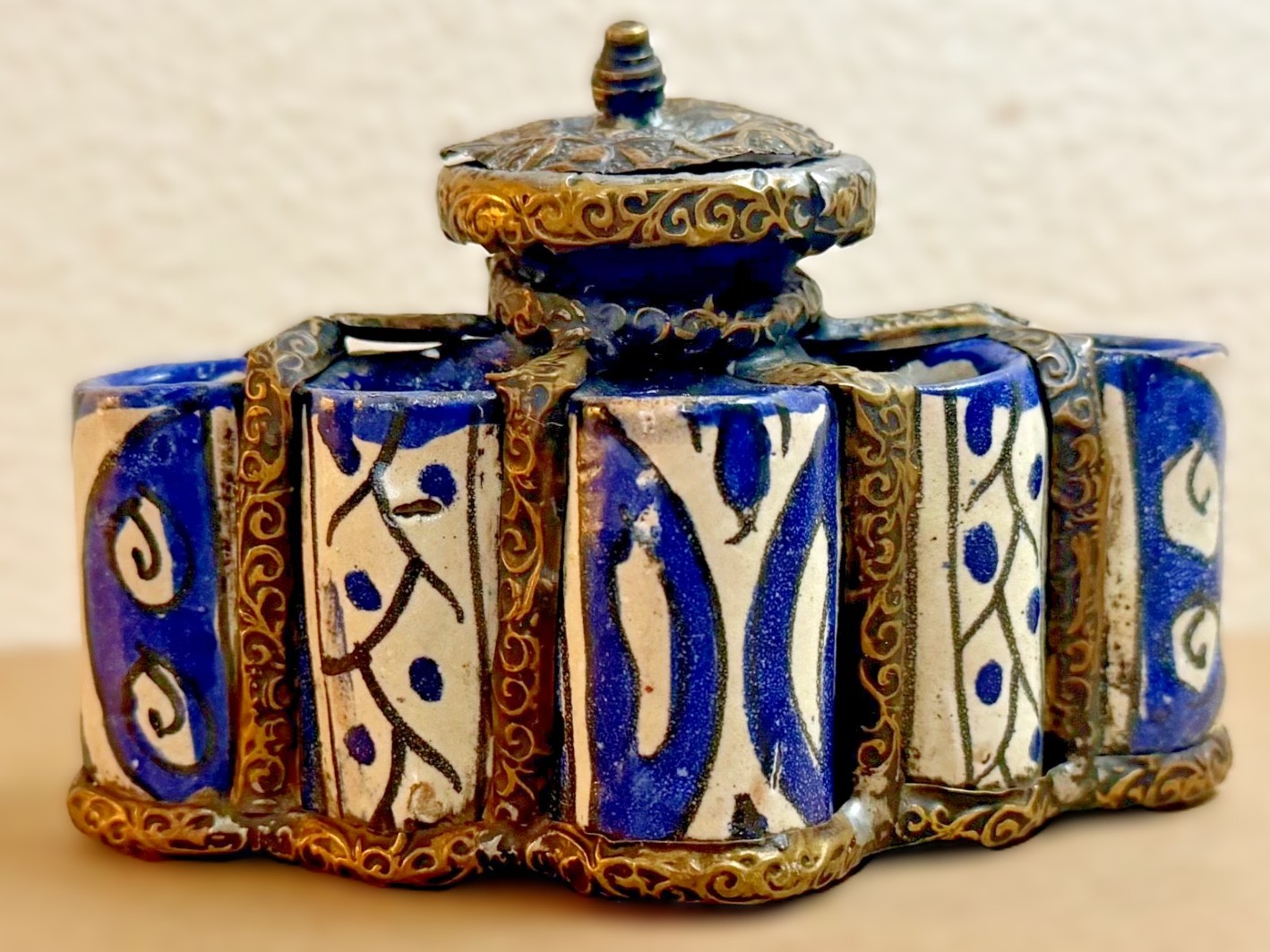
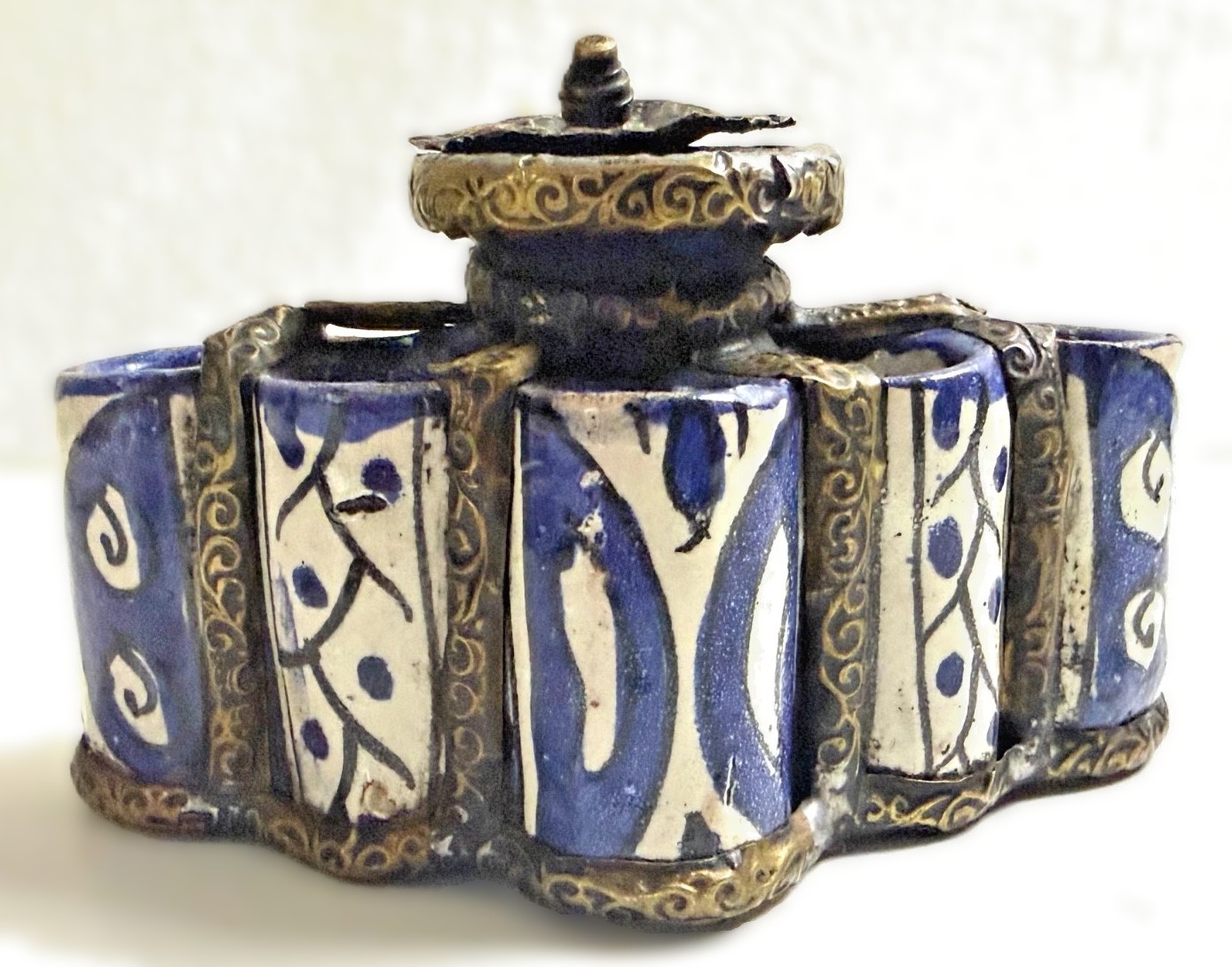
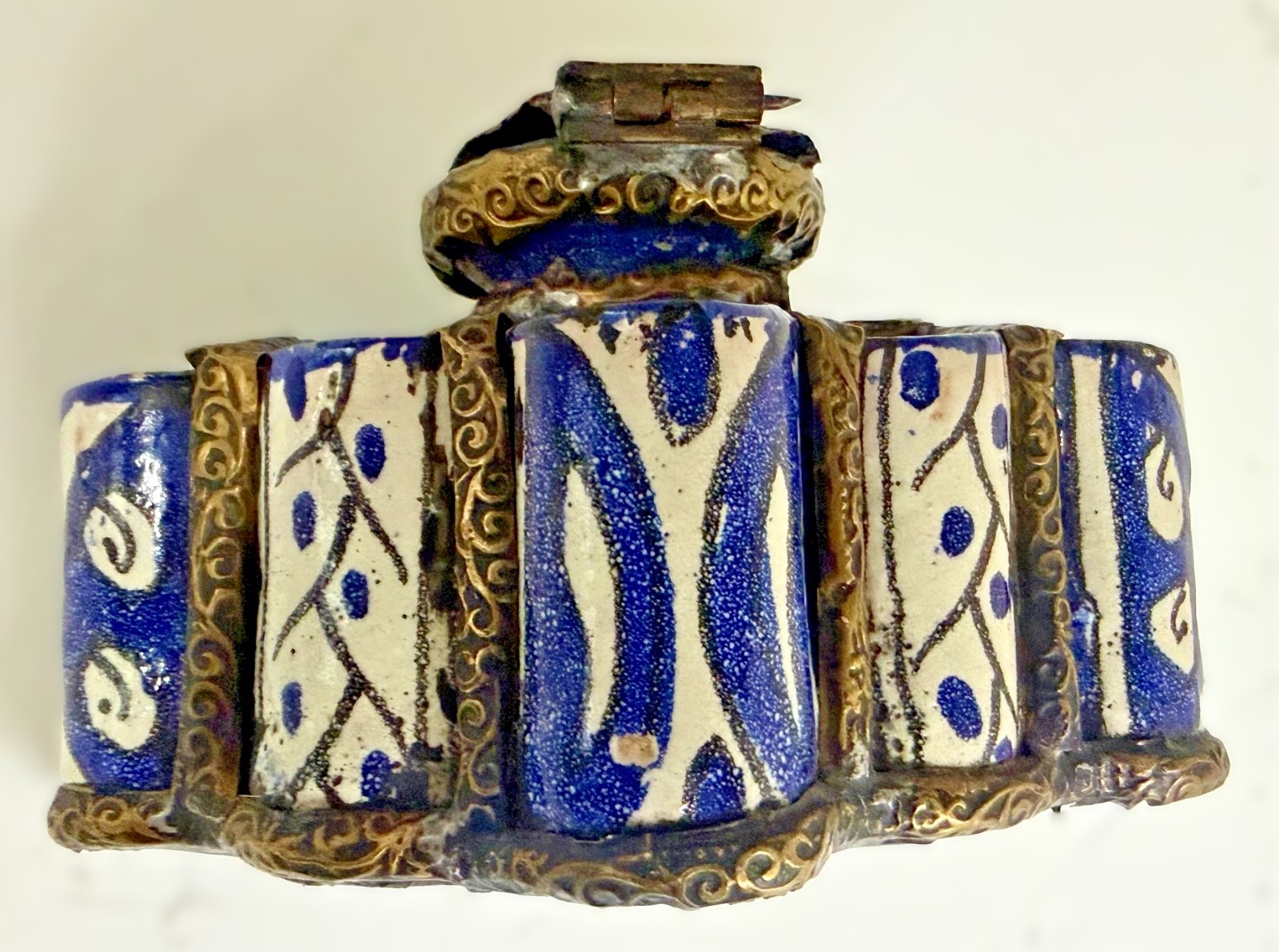
This is a fascinating example of a late 19th or early 20th century Moroccan “Douïa” (Illuminator’s Inkwell), most likely originating from the city of Fez.
Because Fez was a historic center for Islamic scholarship and the production of illuminated manuscripts, these inkwells were designed as professional tools for scribes and artists. Here is the breakdown of its history, materials, and function:
Origin and Age
- Origin: Fez, Morocco. The blue-and-white hand-painted pattern is the signature style of Fez pottery (known for its “cobalt blue” pigment).
- Age: Circa 1880–1920. During this period, the addition of ornate metal “armature” or encasement became a popular way to protect and decorate these ceramic pieces.
Materials and Construction
- Ceramic Body: The core is made of glazed terracotta (earthenware). The white background is a tin-glaze, and the blue motifs are hand-painted using cobalt.
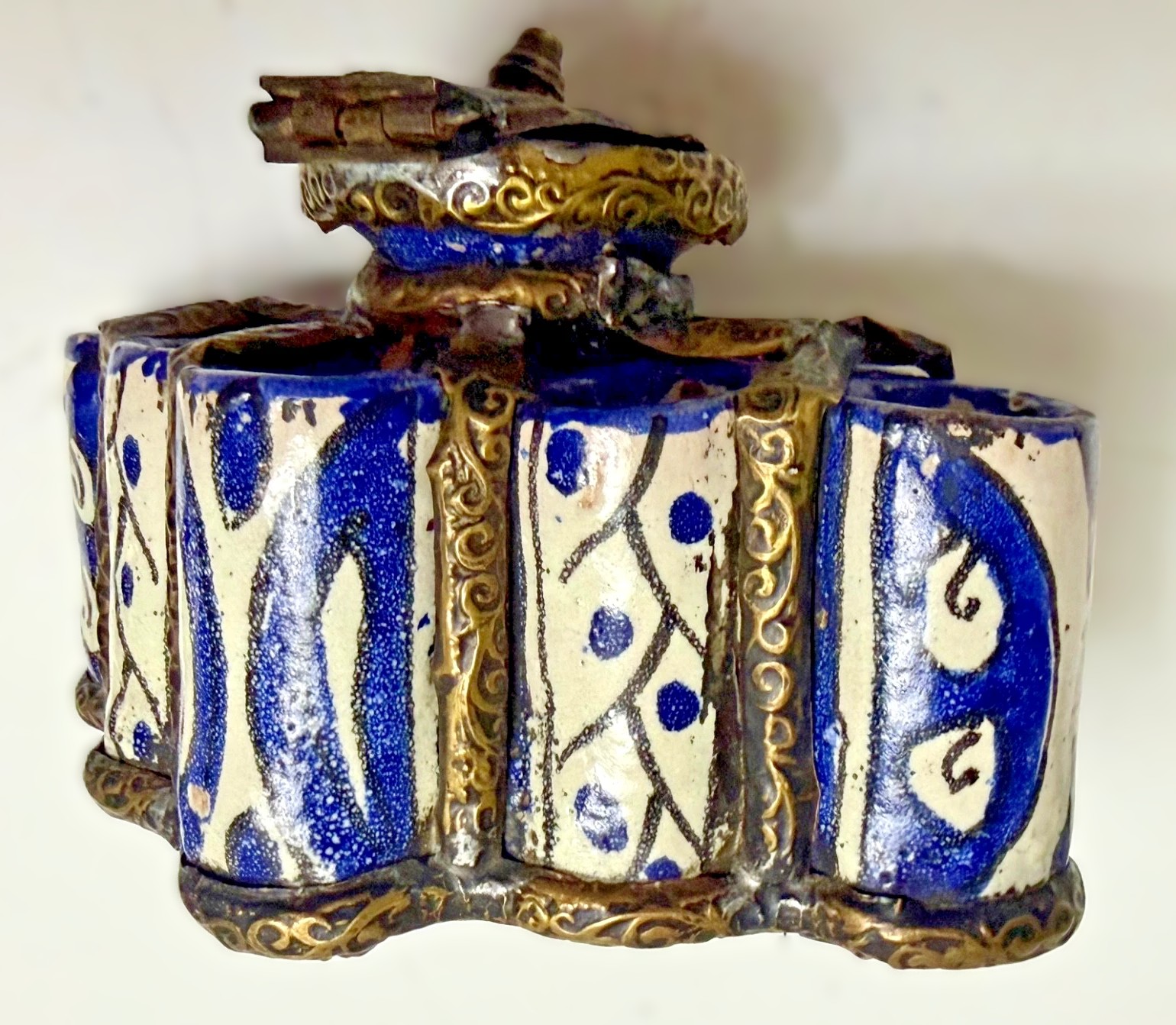
- Metal Framework: The metal is typically a chiseled brass or a yellow metal alloy. It was handcrafted to fit the specific shape of the ceramic base. You can see the hand-chiseled scrollwork and floral “repoussé” style on the central lid and the vertical straps.
- The Base: The bottom is reinforced with metal to ensure the inkwell wouldn’t tip over while a scribe was dipping their heavy reed pen.
The Function of the Compartments
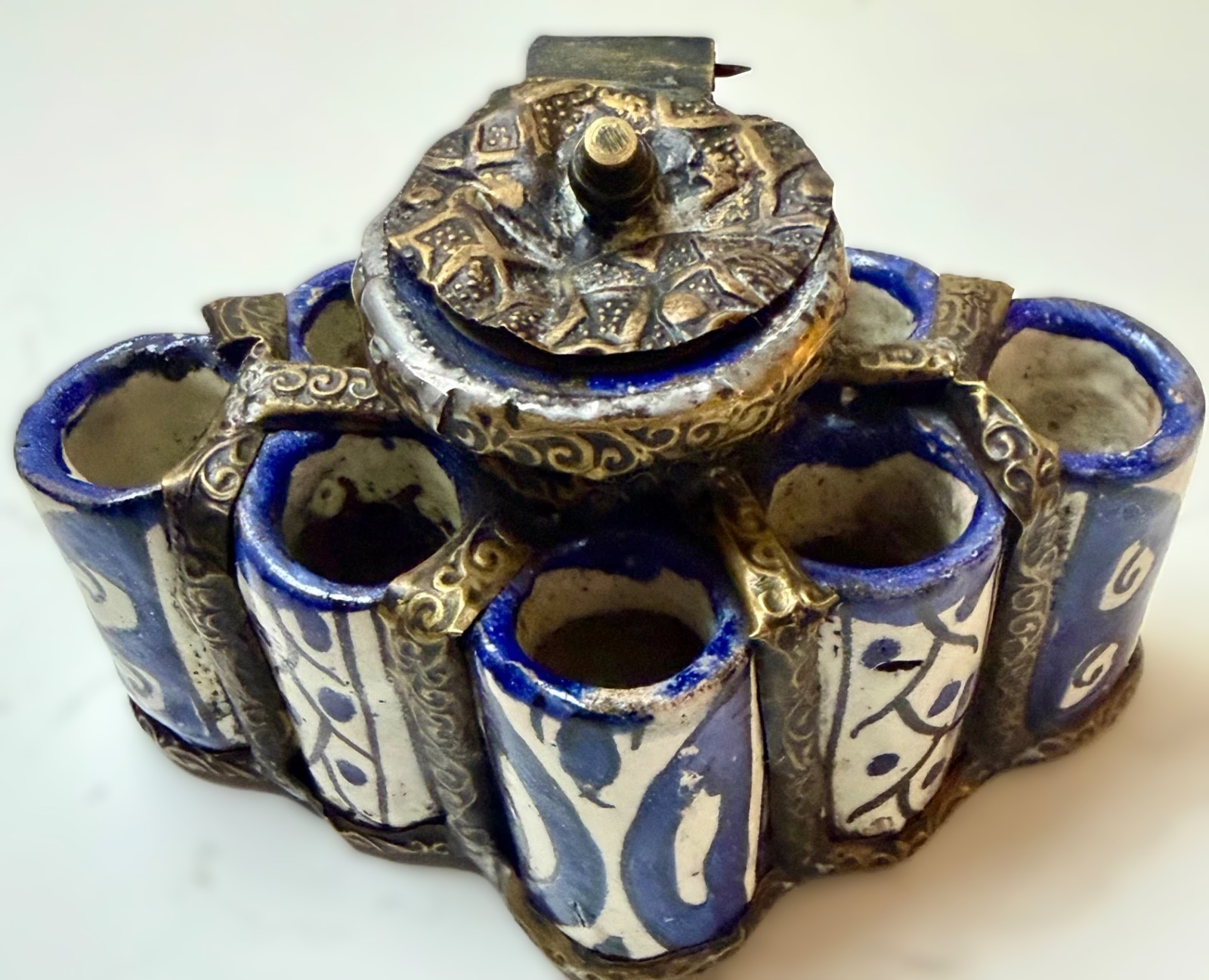
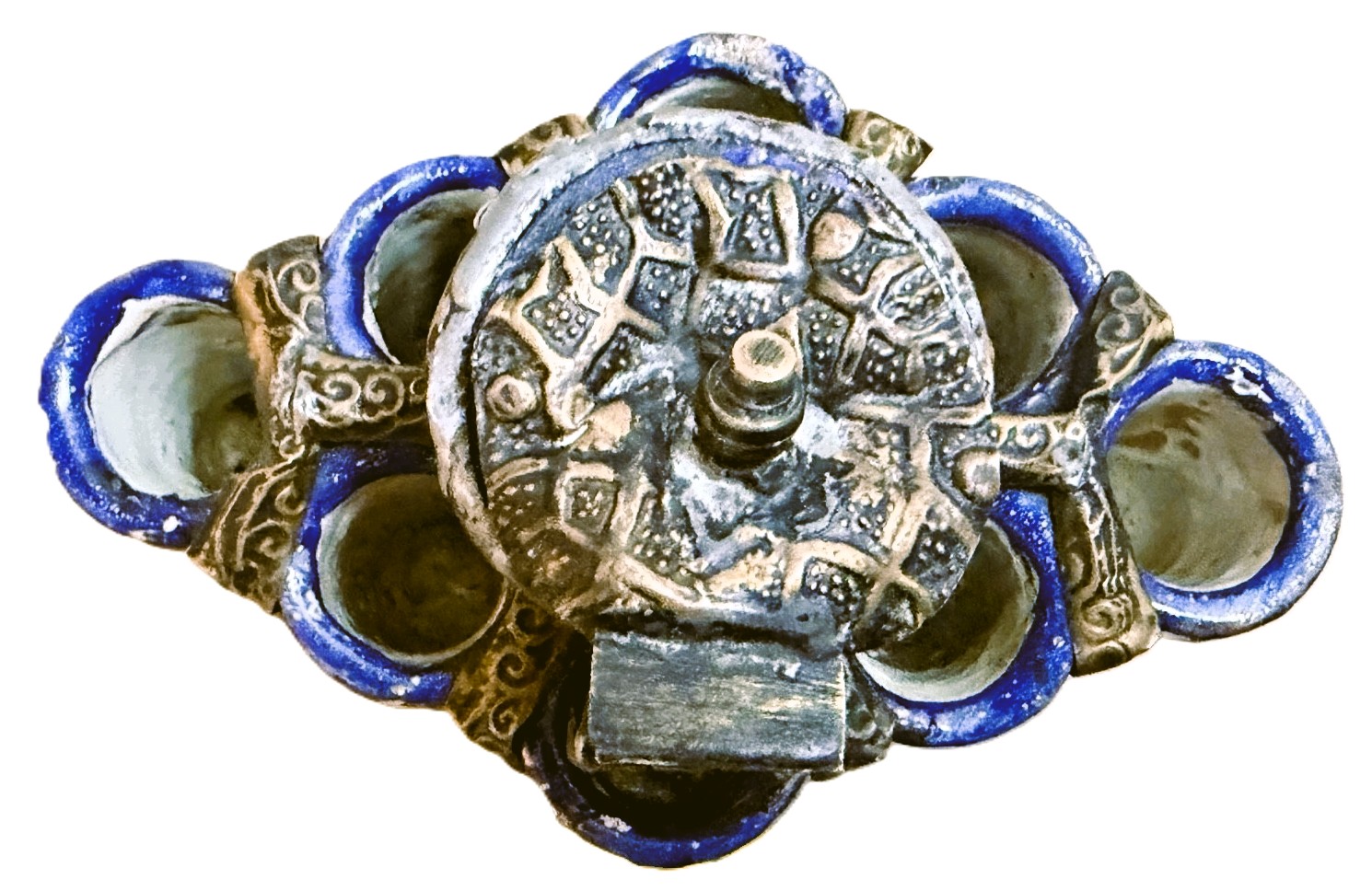
The most striking feature of this piece is the eight peripheral wells surrounding the center. This design is specialized:
- Central Well: The large, lidded central compartment held the primary ink, usually black. The lid prevented the ink from evaporating or collecting dust.
- Peripheral Wells: These were used for different colored inks (red, gold, green, or blue) required for “illumination” – the art of decorating the borders and capital letters of manuscripts.
- Alternative Uses: Occasionally, one or two of these outer wells might hold fine sand (used as a “pounce” to dry wet ink) or water for cleaning the tips of pens.
Summary Information
This piece is a polychrome ceramic and brass-mounted standish. It features a central, elevated ink reservoir with a hinged, domed metal lid topped with a tiered finial. The ceramic body is composed of eight cylindrical wells fused together in a lobed, architectural shape.
The decoration consists of traditional Islamic geometric and floral motifs, including scrolls and dots in a rich cobalt blue on a creamy white ground. The brass framework provides structural support through vertical chiseled bands and a decorative “filigree” border along the base. The wear on the metal and the slight crazing (fine cracks) in the glaze are characteristic of an authentic 19th-century utility object from the Maghreb region.
It’s a wonderful collector’s piece that represents the intersection of North African pottery traditions and the scholarly history of the Islamic world.
Sold for $85 in March 2026
Content disclaimer. The information posted is the owner’s best knowledge and may not have been vetted by the SOIC. We welcome comments, corrections, and additions, working to make our website information comprehensive and accurate.
Join the Society of Inkwell Collectors (SOIC) – it’s free!
Founded in 1981 as a non-profit organization,
we are documenting inkwells (and accessories).
We’re here to help and inform!