




Morgan’s Patented Mucilage-Stand
| Categories | Accessories |
| Material | Glass |
| Markings | See Narrtive |
| Origin | United States |
| Date or Era | circa 1867 |
| Measuring | 5” x 3” x 3” high or 4 ½” high with brush inserted |
| Patent | Patent No. 66,868 dated July 16, 1867 |
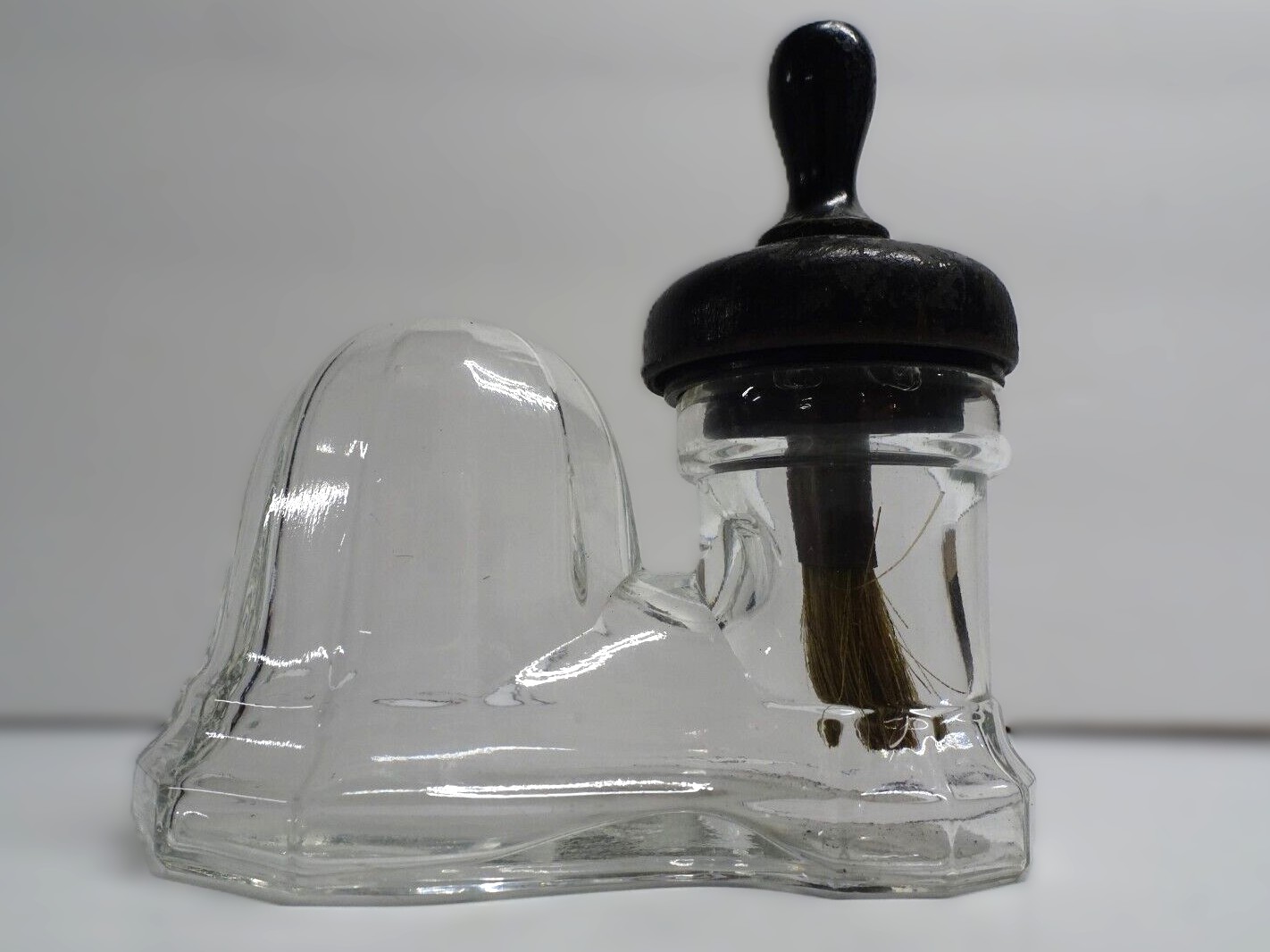
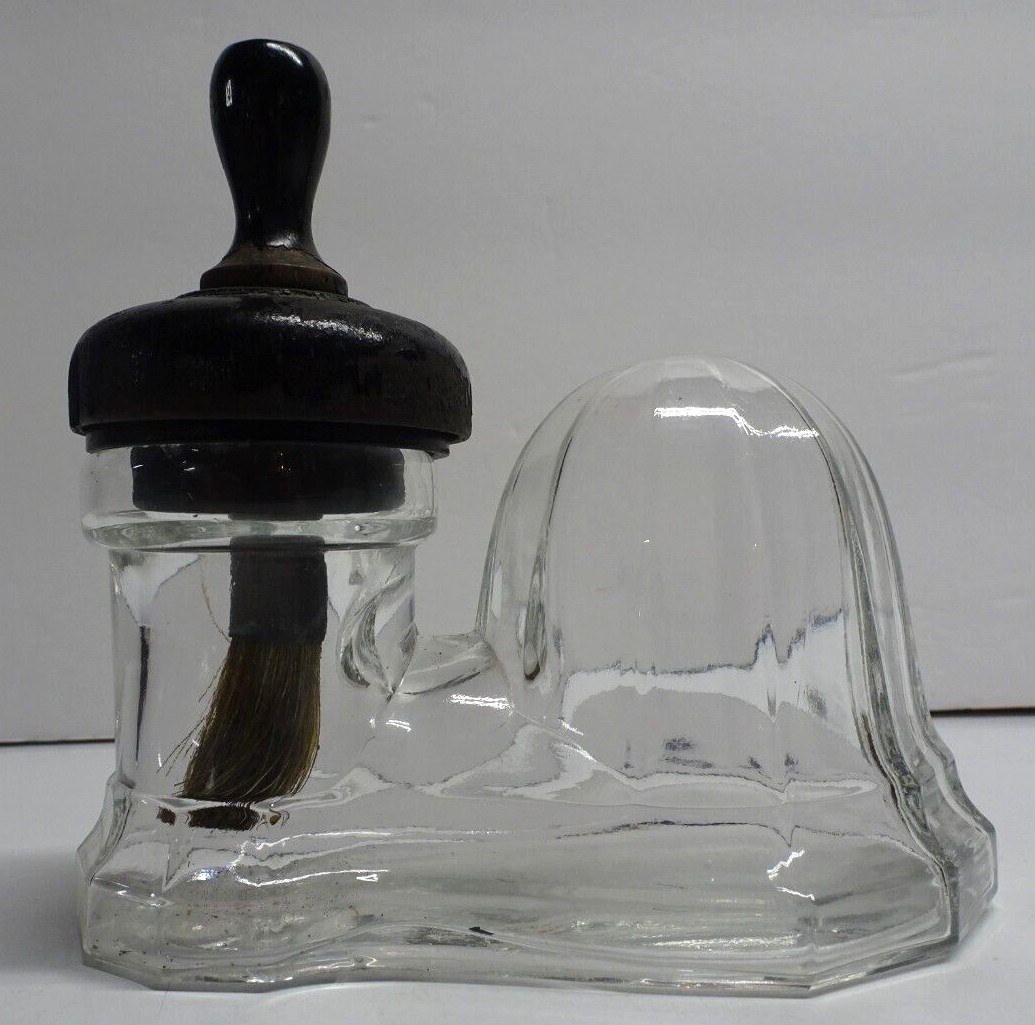
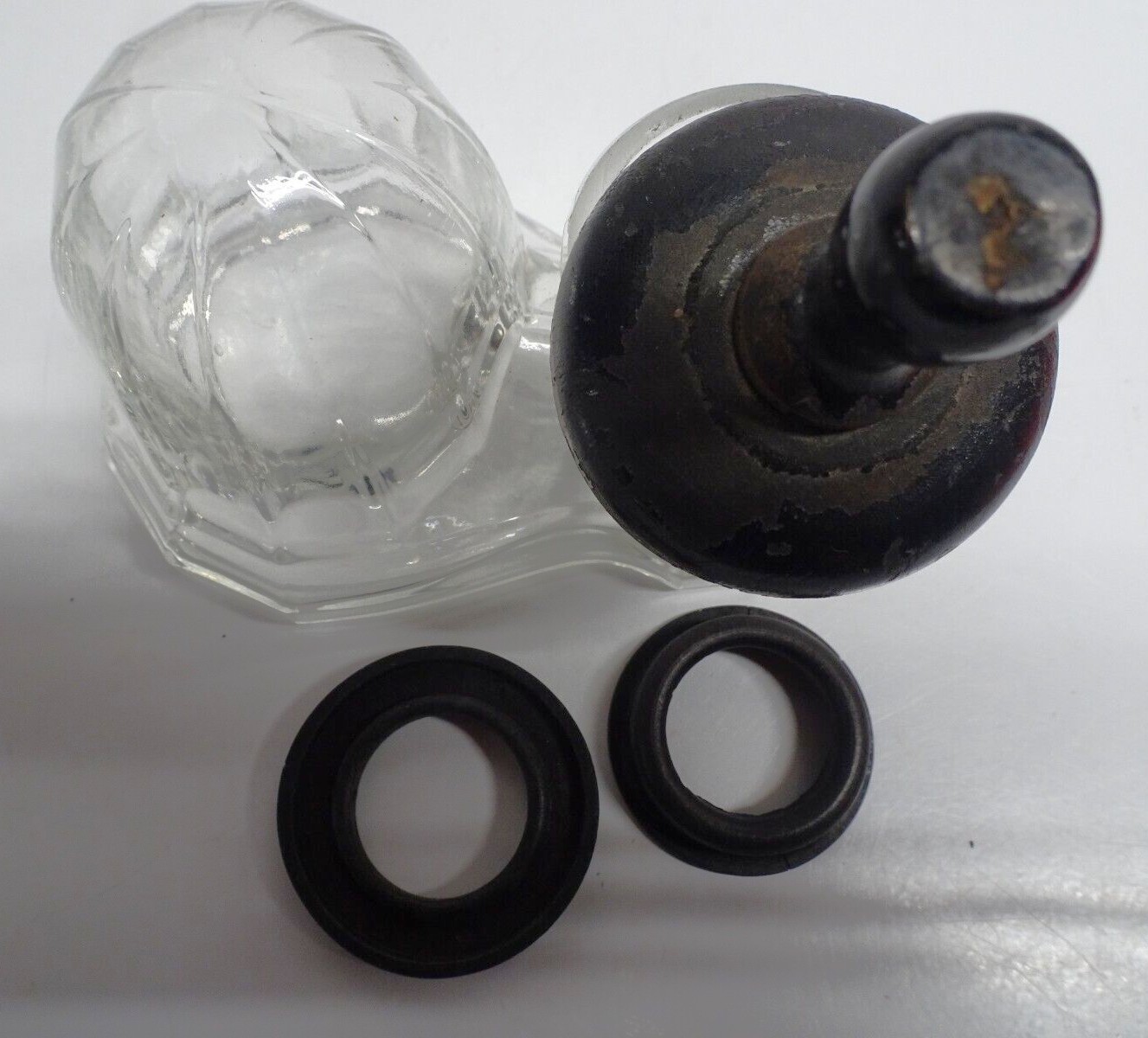
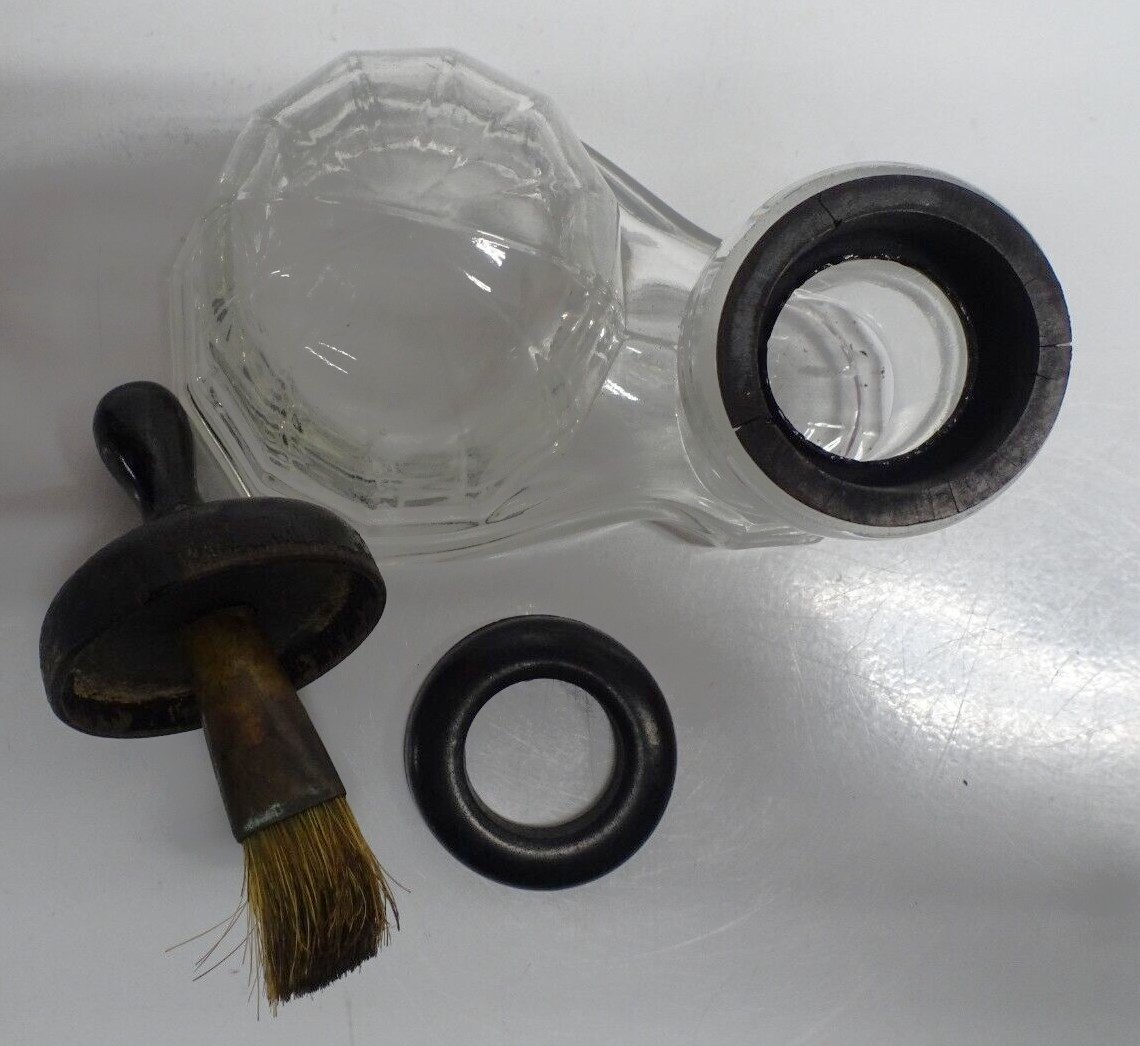
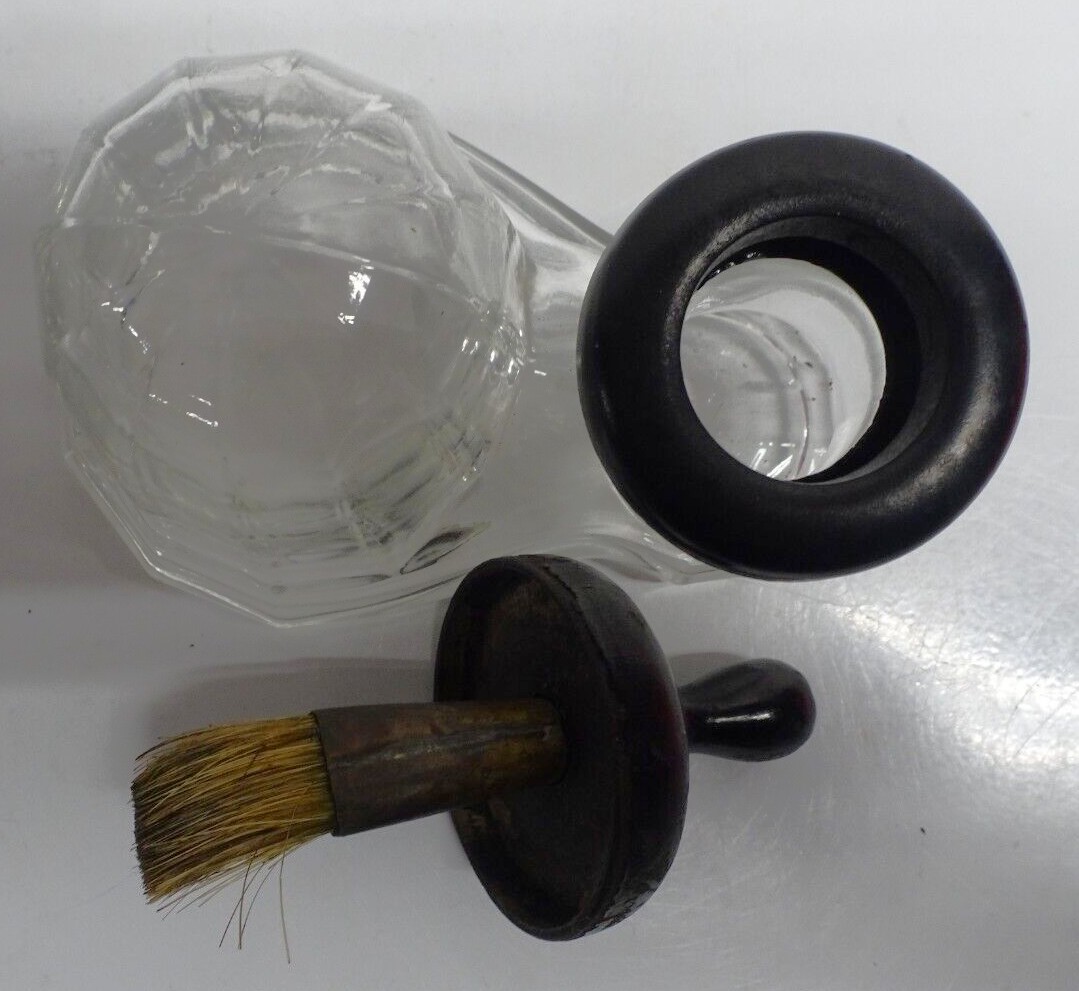
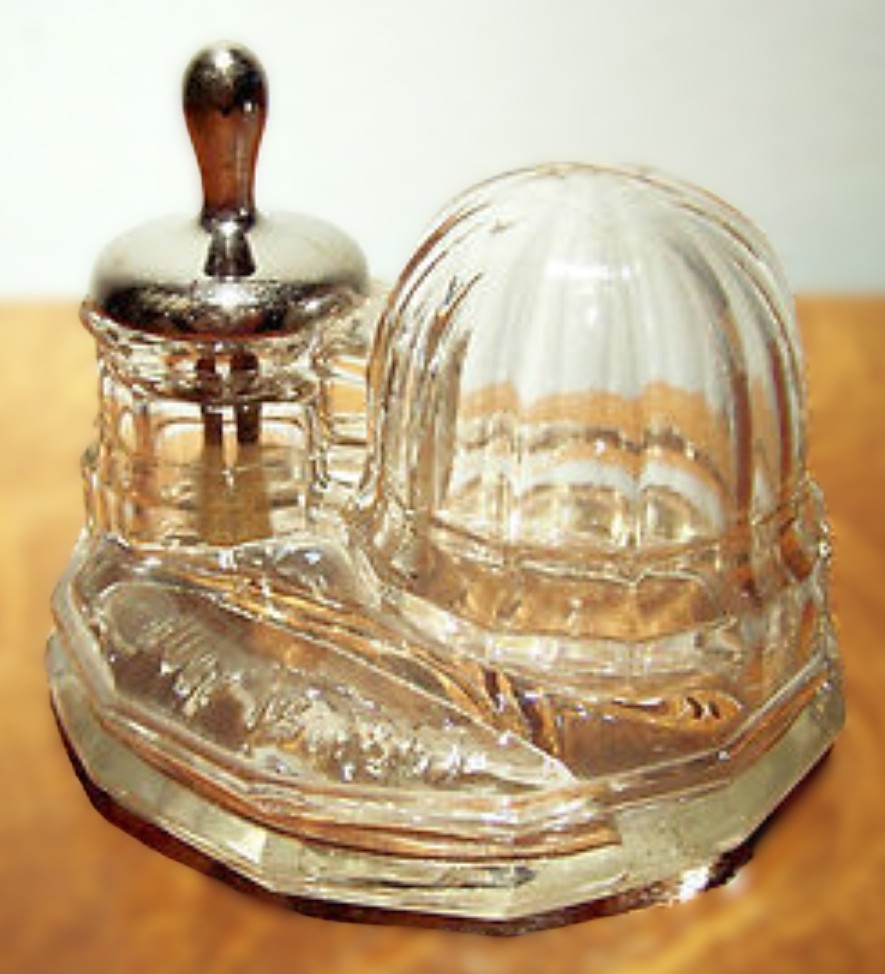
Mucilage bottles such as this one, when missing the applicator brush, are often confused with inkwells, given they work on the same principle of atmospheric pressure (the “fountain” principle). Two examples of Elisha Morgan’s patented mucilage bottle are shown.
Description of the Bottle
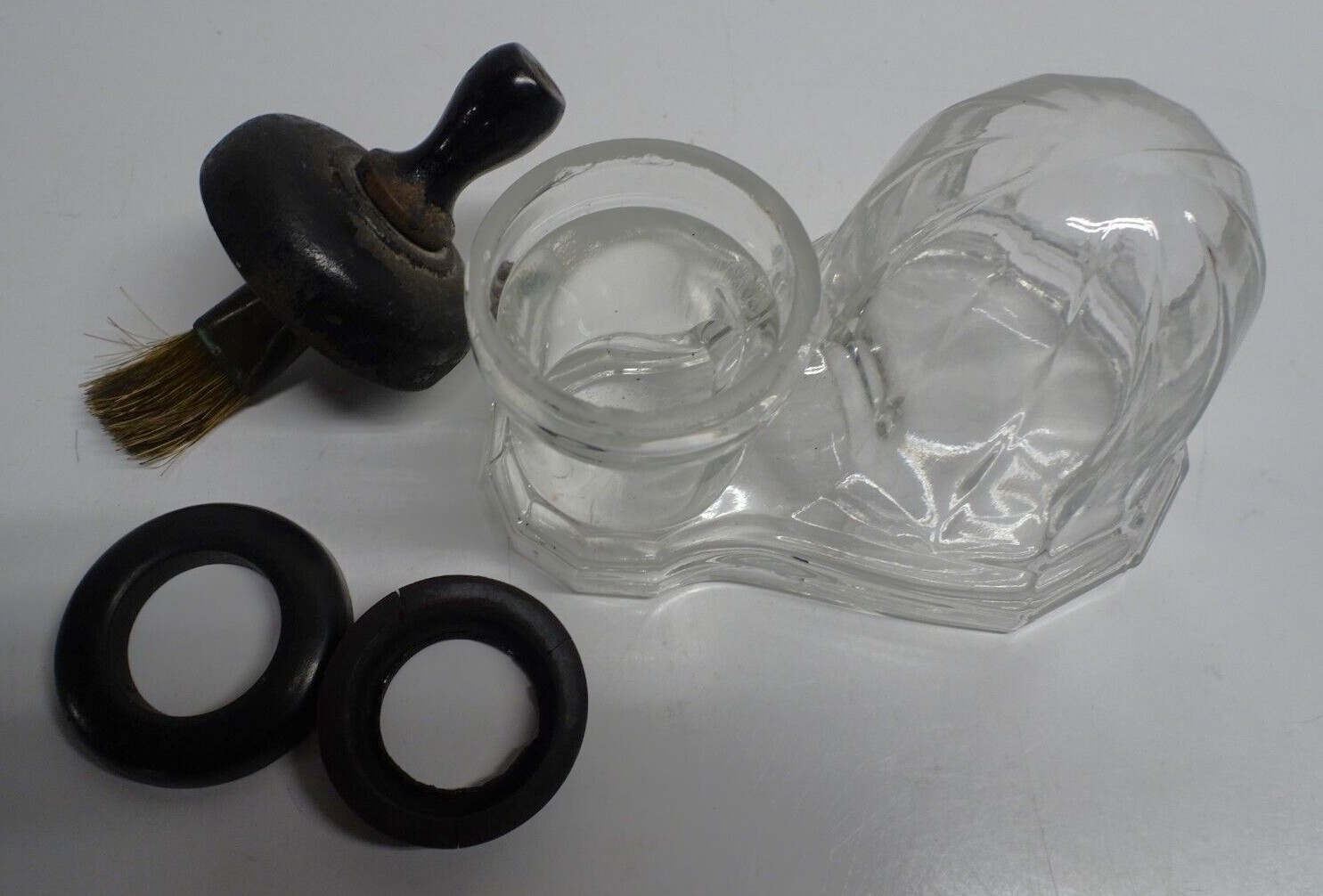
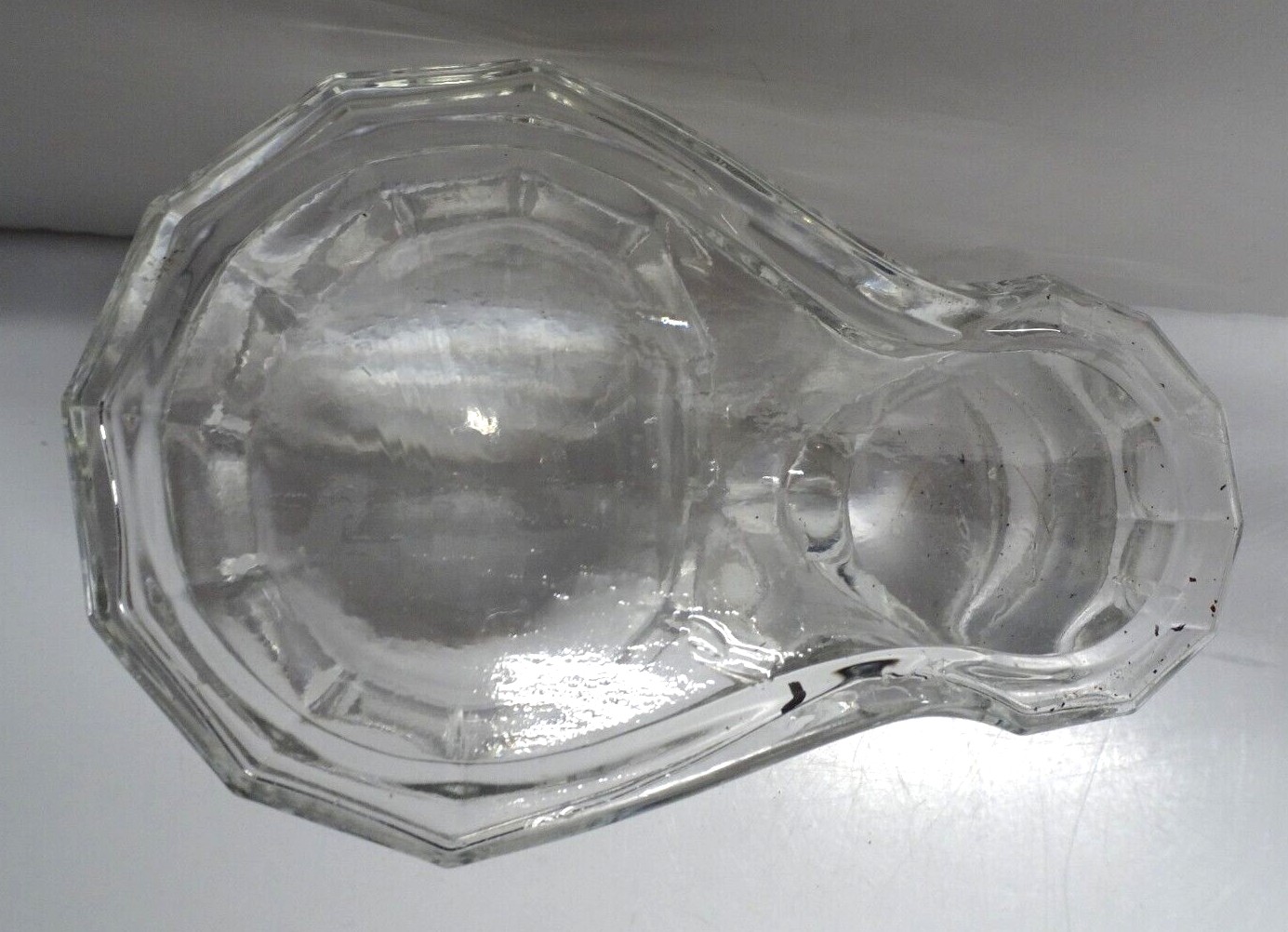
The bottle is a specialized dual-chamber glass vessel designed to hold mucilage (a liquid adhesive made from gum arabic and water). Its design is distinctively asymmetrical:
- The Reservoir (A): A large, dome-shaped fountain on one side that holds the bulk of the adhesive.
- The Well (C): A smaller, cylindrical chamber on the other side where the brush is kept.
- The Connecting Neck (B): A small passage at the base that allows the liquid to flow between the two chambers.
- The Cap & Brush (D): A wooden or metal cap with an integrated brush. The cap is designed to sit snugly over the well to prevent the adhesive from drying out.
How to Use It
Using this stand was much cleaner than using a standard vertical bottle. Here is the workflow for a 19th-century clerk:
- Filling: You would fill the large reservoir (A) with mucilage. Because of the airtight nature of the dome, the liquid would only flow into the well (C) until it reached the top of the connecting neck (B).
- Self-Leveling: As you used the glue from the small well, the level would drop. Once it fell below the neck, a bubble of air would enter the reservoir, releasing just enough fresh mucilage to refill the well back to its “fixed” level.
- Application: You simply lift the cap and use the brush. Because the liquid level in the well stays constant, you never have to “fish” for glue at the bottom of a nearly empty bottle or deal with a brush handle covered in sticky residue.
Summary of the Patent
Elisha Morgan’s patent (No. 66,868, dated July 16, 1867) focuses on efficiency and cleanliness. Before this invention, brushes in standard bottles had to be adjusted constantly as the glue level dropped, leading to messy hands and dried-out brushes.
The patent highlights three primary innovations:
- Constant Supply: It uses atmospheric pressure (the “fountain” principle) to keep a steady amount of glue in the well.
- Regulated Depth: It ensures the mucilage stays at a specific height around the brush bristles, so the brush is always “fed and ready for use.”
- Ease of Maintenance: Morgan specifically mentions that making the stand out of a single piece of glass makes it much easier to keep clean than metal versions.
Sold for $52 in January 2025
Content disclaimer. The information posted is the owner’s best knowledge and may not have been vetted by the SOIC. We welcome comments, corrections, and additions, working to make our website information comprehensive and accurate.
Join the Society of Inkwell Collectors (SOIC) – it’s free!
Founded in 1981 as a non-profit organization,
we are documenting inkwells (and accessories).
We’re here to help and inform!