


Monastery of Montserrat – Religious Souvenir
| Categories | Souvenir |
| Type | Religion |
| Material | Spelter |
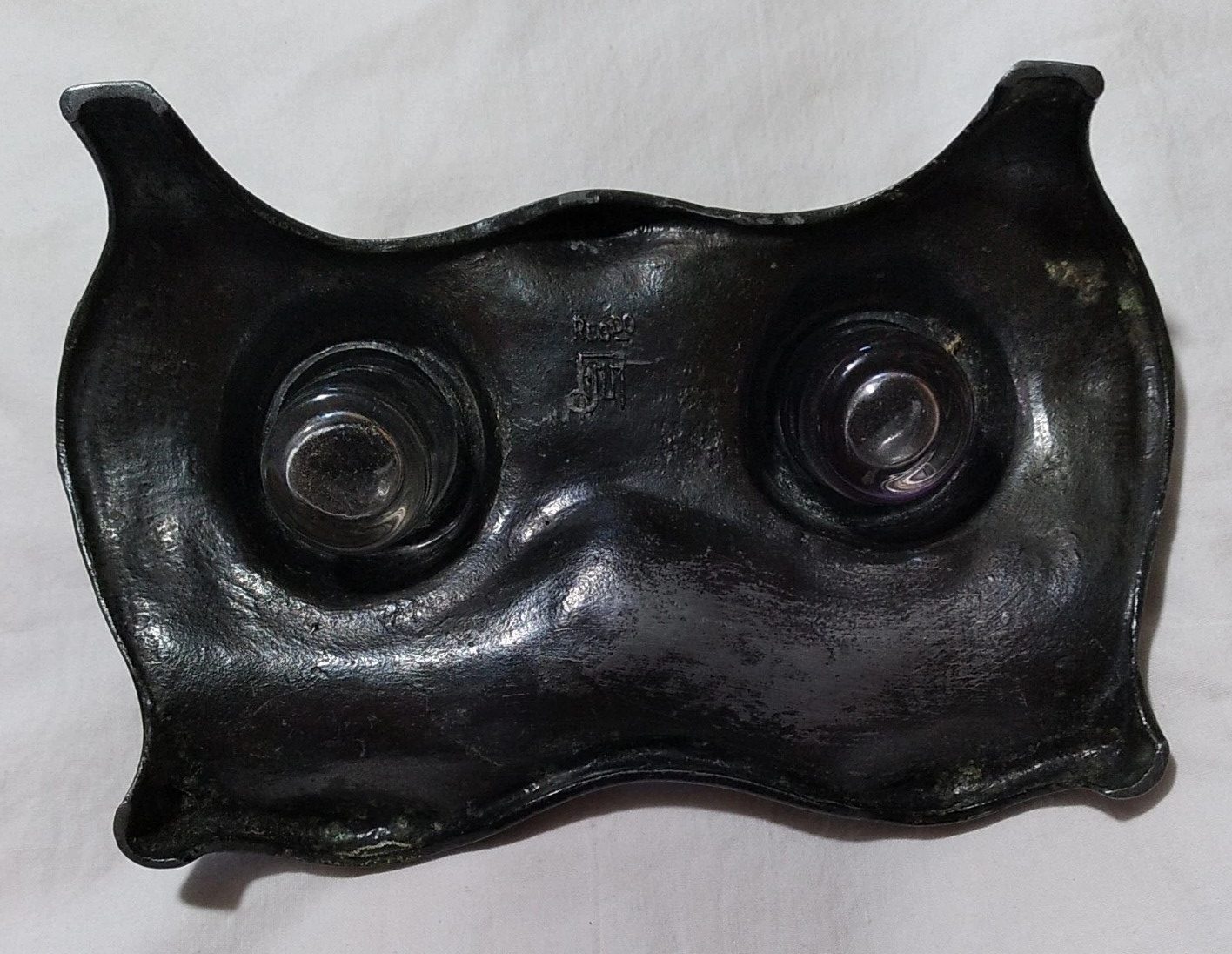
| Markings | See Narrative |
| Manufacturer | Undetermined |
| Origin | Spain |
| Date or Era | circa 1900 |
| Measuring | 6 ½” x 4 ½” x 2 ½” high |
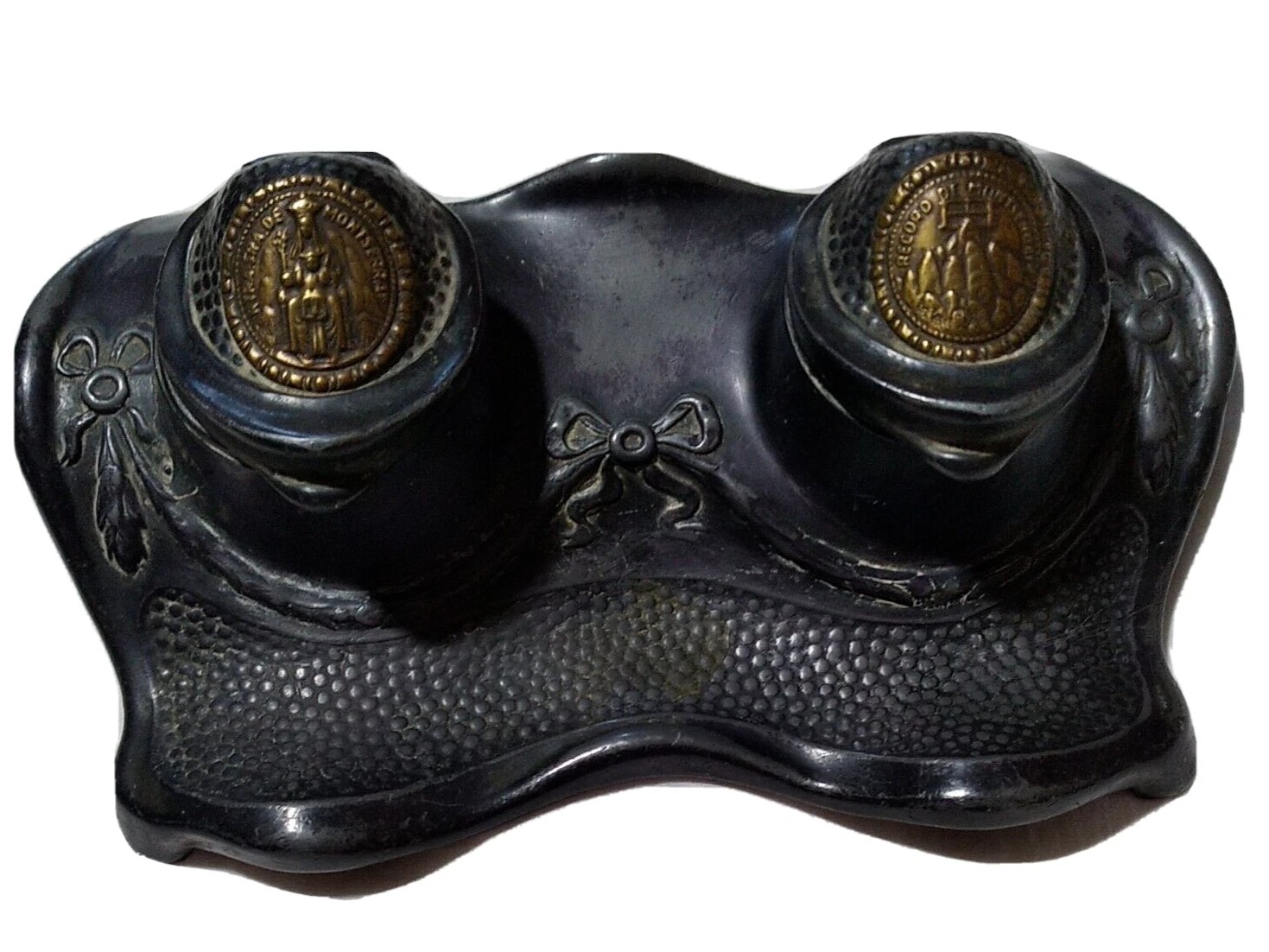
This twin-well inkstand is a religious souvenir metalware from the late 19th or early 20th century (circa 1895–1910), specifically designed for the pilgrims and tourists visiting the Monastery of Montserrat in Catalonia, Spain.
Materials & Construction
The metal is almost cast spelter (a zinc alloy), which has been given a dark, chemically oxidized patina. Spelter was the preferred material for these items as it could be cast with high detail at a lower cost than bronze.
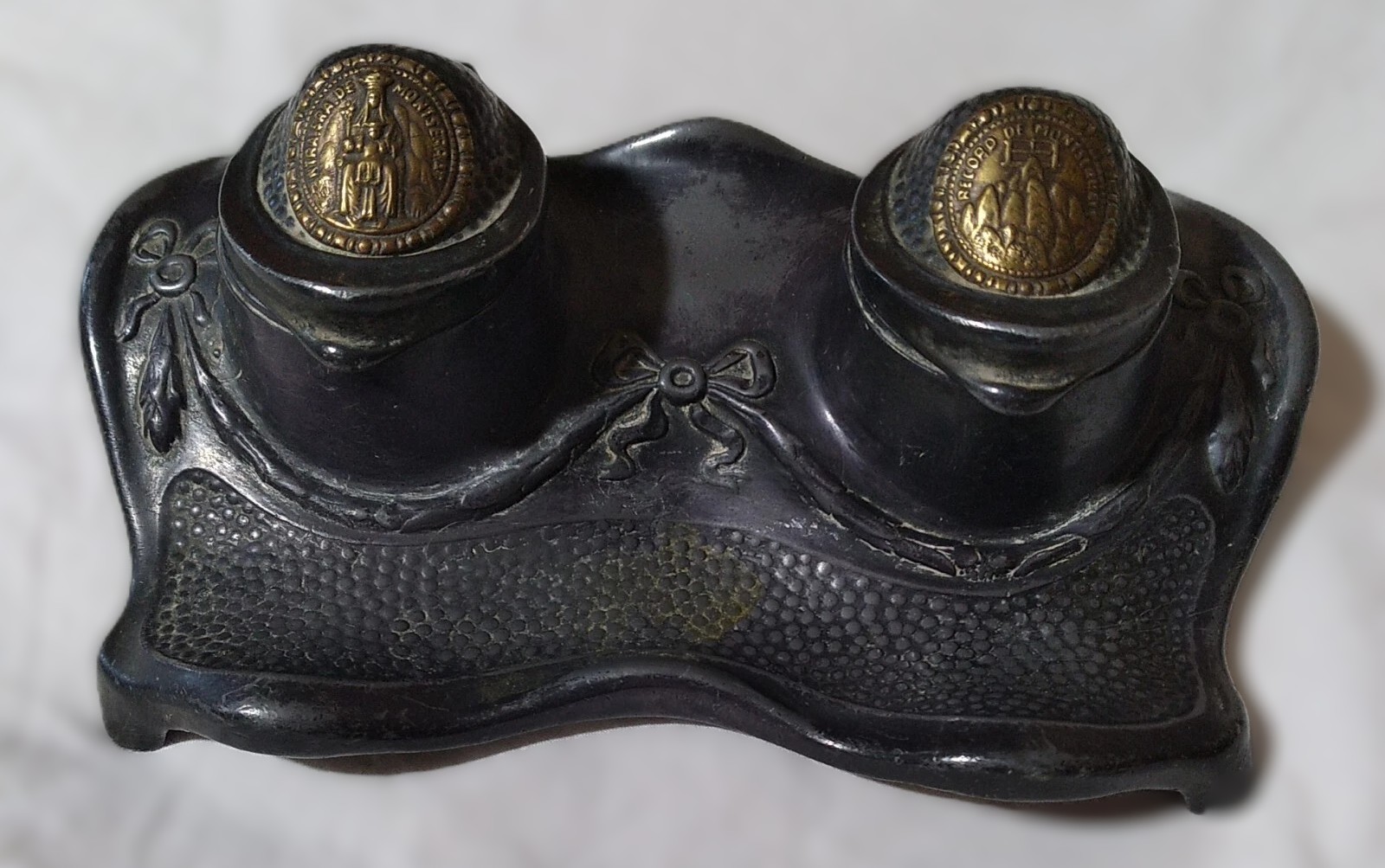
- The “Stamped” Look: While the base is cast, the textured, pebbled area of the pen tray is a design feature intended to hide casting imperfections and provide a decorative contrast to the smooth, flowing “bow and swag” patterns.
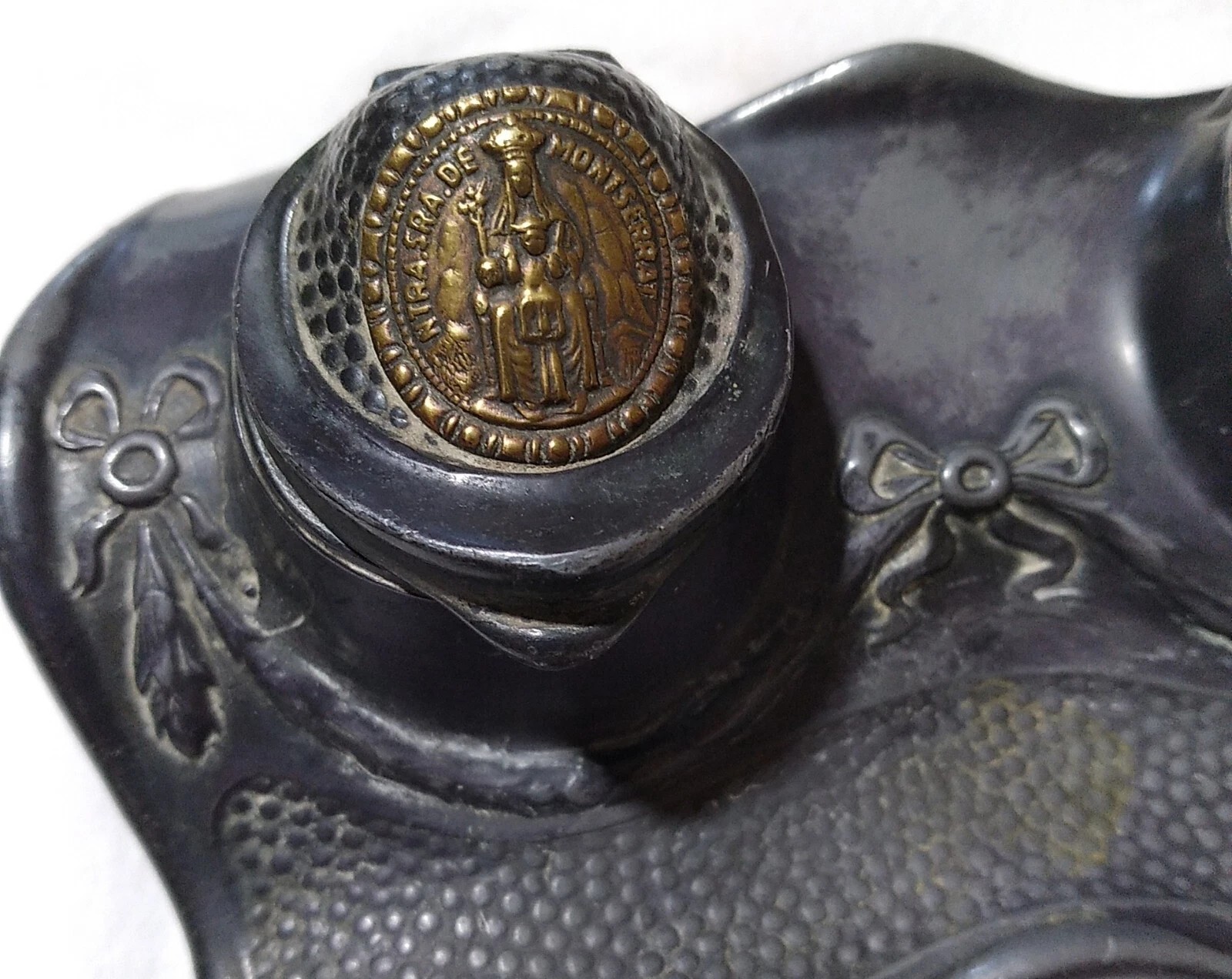
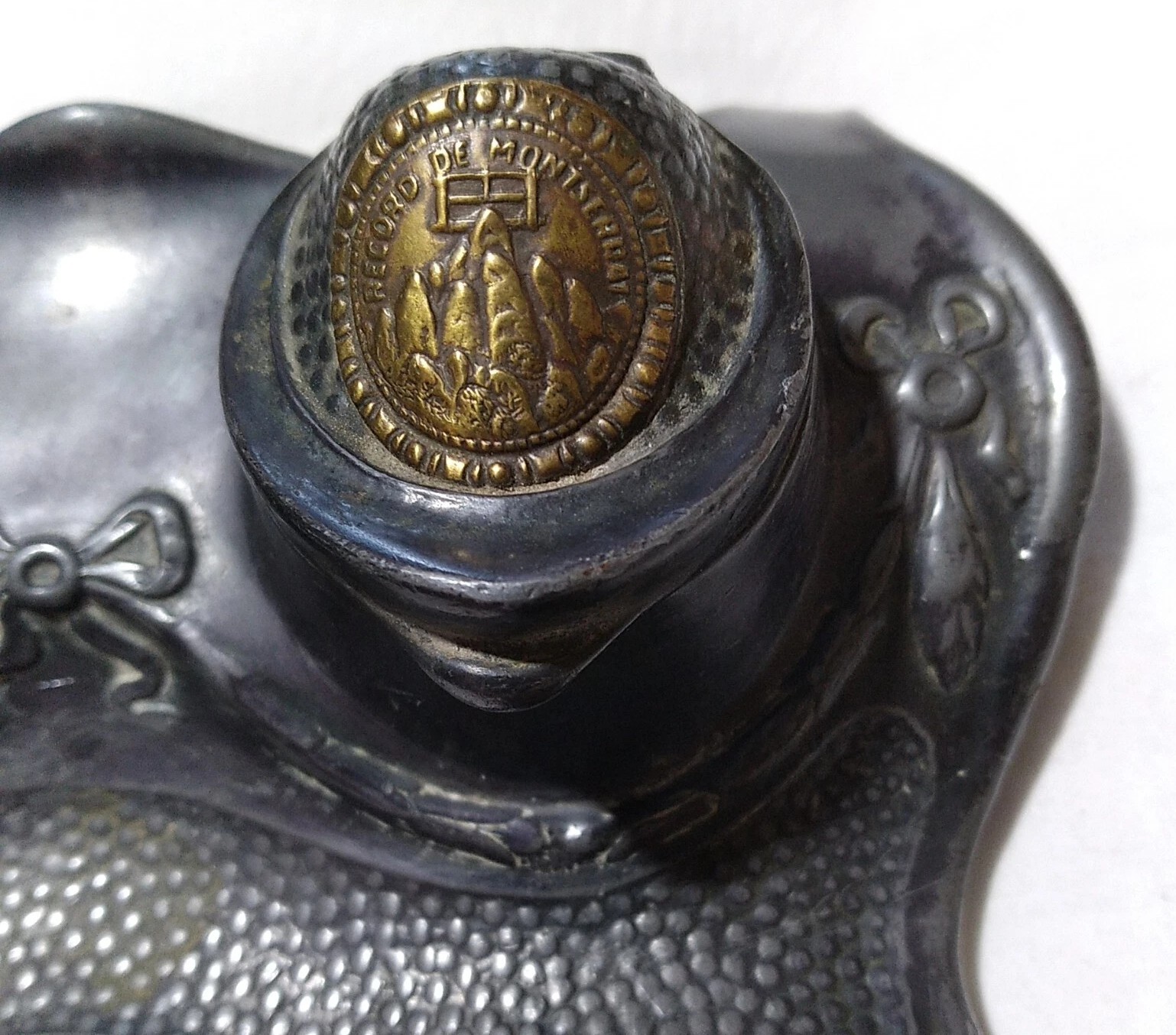
- The Medallions: The circular emblems on the lids are embossed brass plaques set into the spelter caps.
Iconography & Destination History
The Monastery of Montserrat is one of Spain’s most significant religious and tourist sites.
- Lid 1 (Left): Depicts “Ntra. Sra. de Montserrat” (Our Lady of Montserrat), also known as the “Black Madonna” or La Moreneta. She is the patron saint of Catalonia.
- Lid 2 (Right): Labeled “Recuerdo de Montserrat” (Memory/Souvenir of Montserrat), it depicts the famous serrated mountain peaks (Montserrat means “serrated mountain”) and the Benedictine monastery nestled in the cliffs.
- Tourism Context: Montserrat has been a pilgrimage site for centuries, but tourism exploded after the opening of the Cremallera de Montserrat (rack railway) in 1892. This inkstand was produced during this peak period of “pilgrim-tourism,” serving as both a functional desk accessory and a religious devotional object.
The Mark & Originality
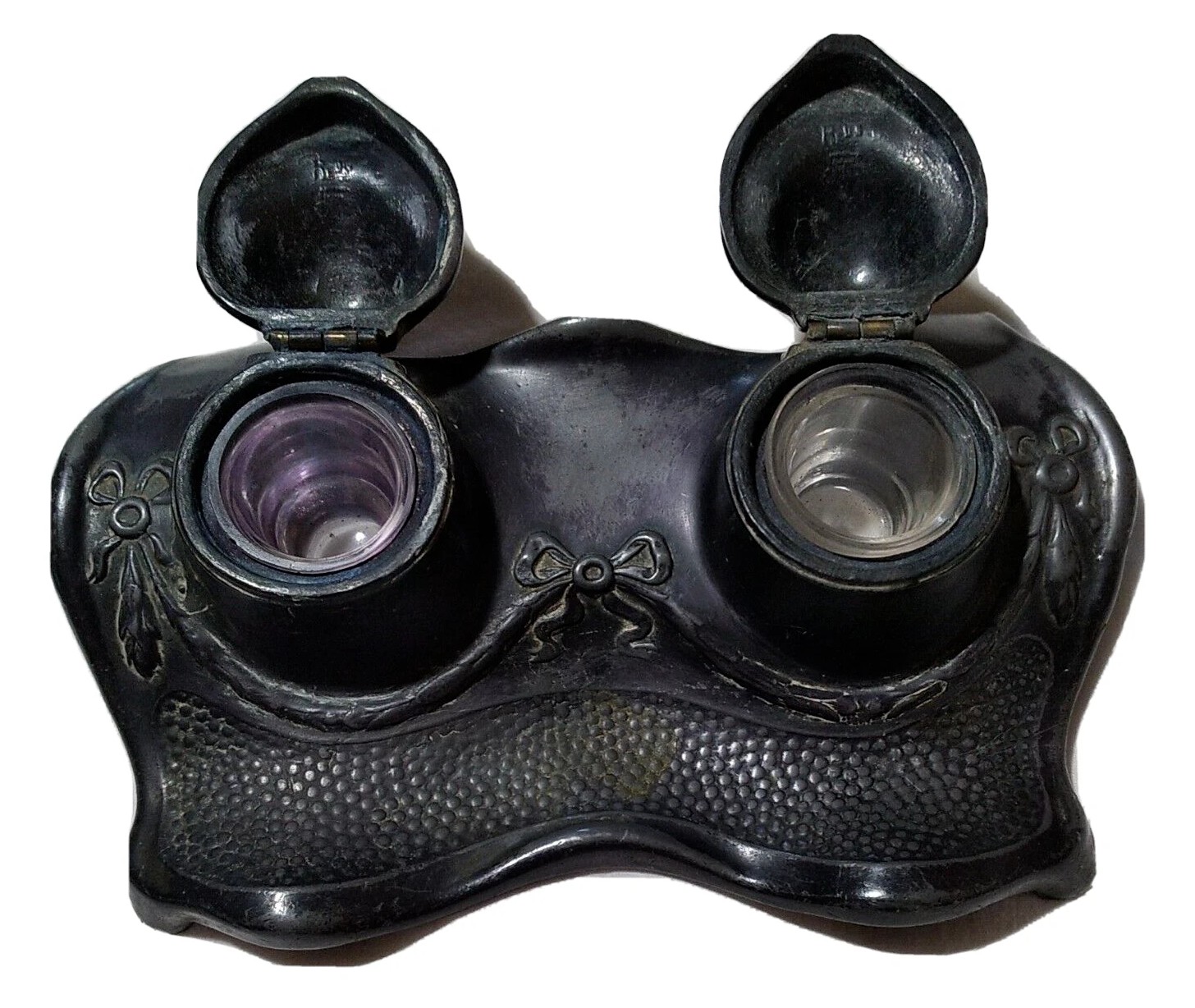
- The Underside Mark: The mark “REGDO” is a Spanish abbreviation for “Registrado” (Registered), indicating that the design was legally protected under Spanish patent/trademark law.
- The Monogram: The stylized “JB” likely refers to a manufacturer based in Barcelona, the hub for Catalan metalwork. The “REGDO” mark and the specific local subject matter indicate a Spanish foundry—potentially Juan Bagué, a known maker of metal souvenirs in Barcelona during this era.
- Glass Inserts: These are original. The slight purplish tint in one of the wells is a hallmark of age; it occurs when manganese (used as a de-colorizer in glass before 1915) is exposed to UV light over many decades—a process known as “solarization.”
Summary
Title: Antique Art Nouveau “Recuerdo de Montserrat” Twin-Well Inkstand Date: c. 1895–1910 Origin: Barcelona, Spain Description: A cast spelter (white metal) inkstand with a dark bronze patina, featuring a scalloped base decorated with Neoclassical bows and ribbon swags. The twin hinged lids are inset with brass medallions depicting the Black Madonna and the Montserrat Monastery. Includes the original clear glass inserts, one showing characteristic manganese solarization. Marked “REGDO” with a “JB” monogram on the underside.
Sold for $100 in April 2026
Content disclaimer. The information posted is the owner’s best knowledge and may not have been vetted by the SOIC. We welcome comments, corrections, and additions, working to make our website information comprehensive and accurate.
Join the Society of Inkwell Collectors (SOIC) – it’s free!
Founded in 1981 as a non-profit organization,
we are documenting inkwells (and accessories).
We’re here to help and inform!