

Inkipedia
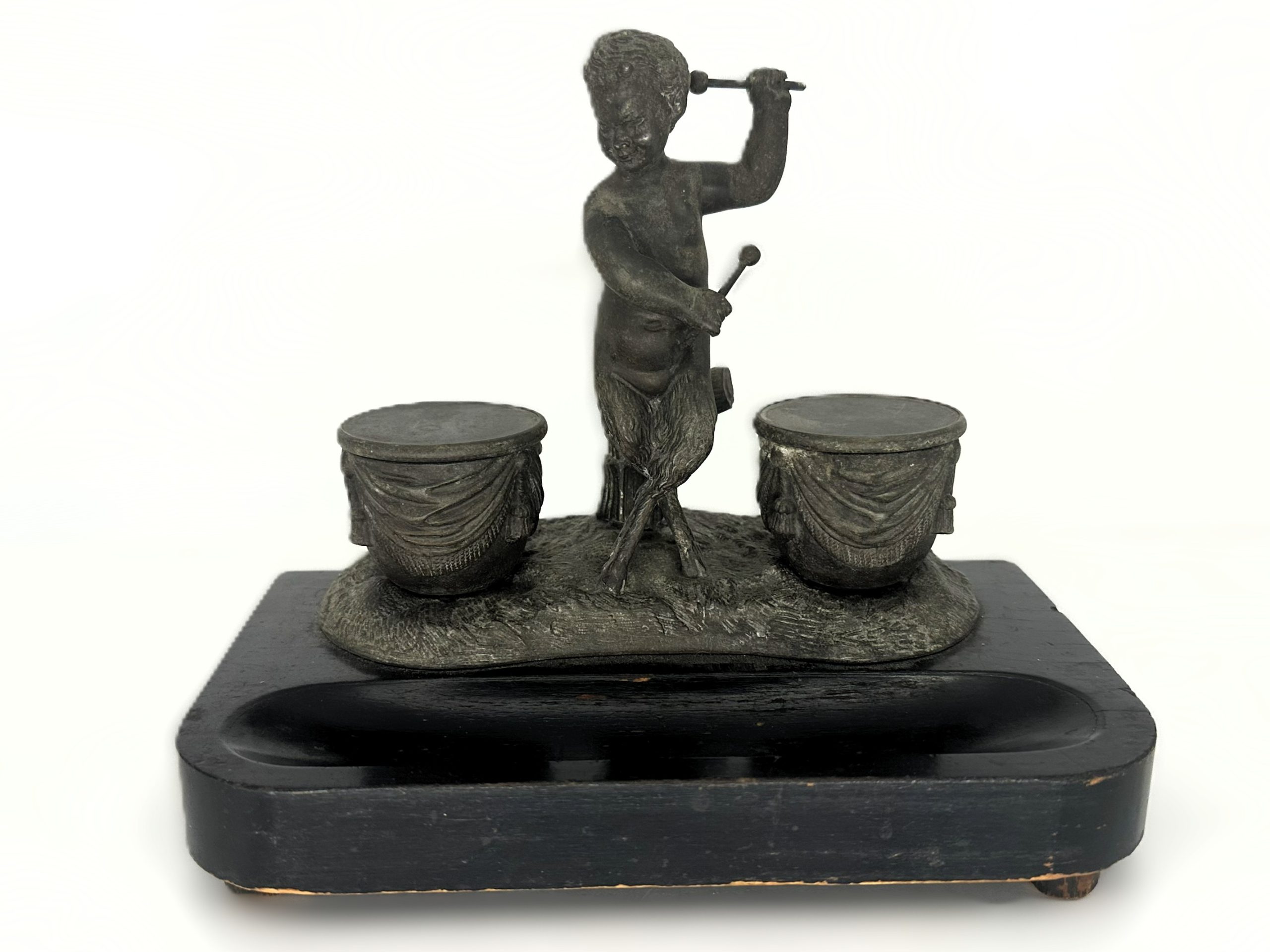
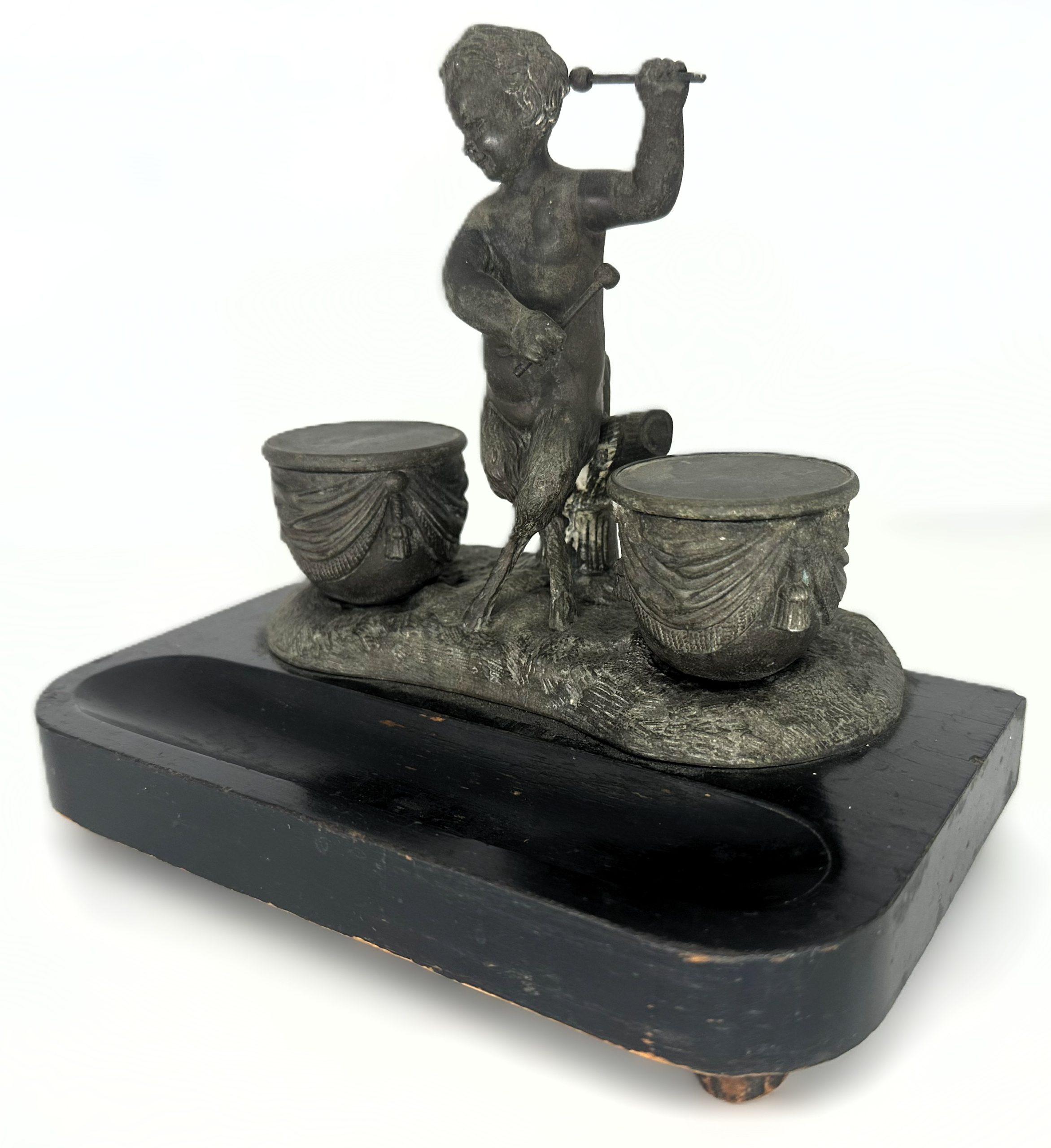
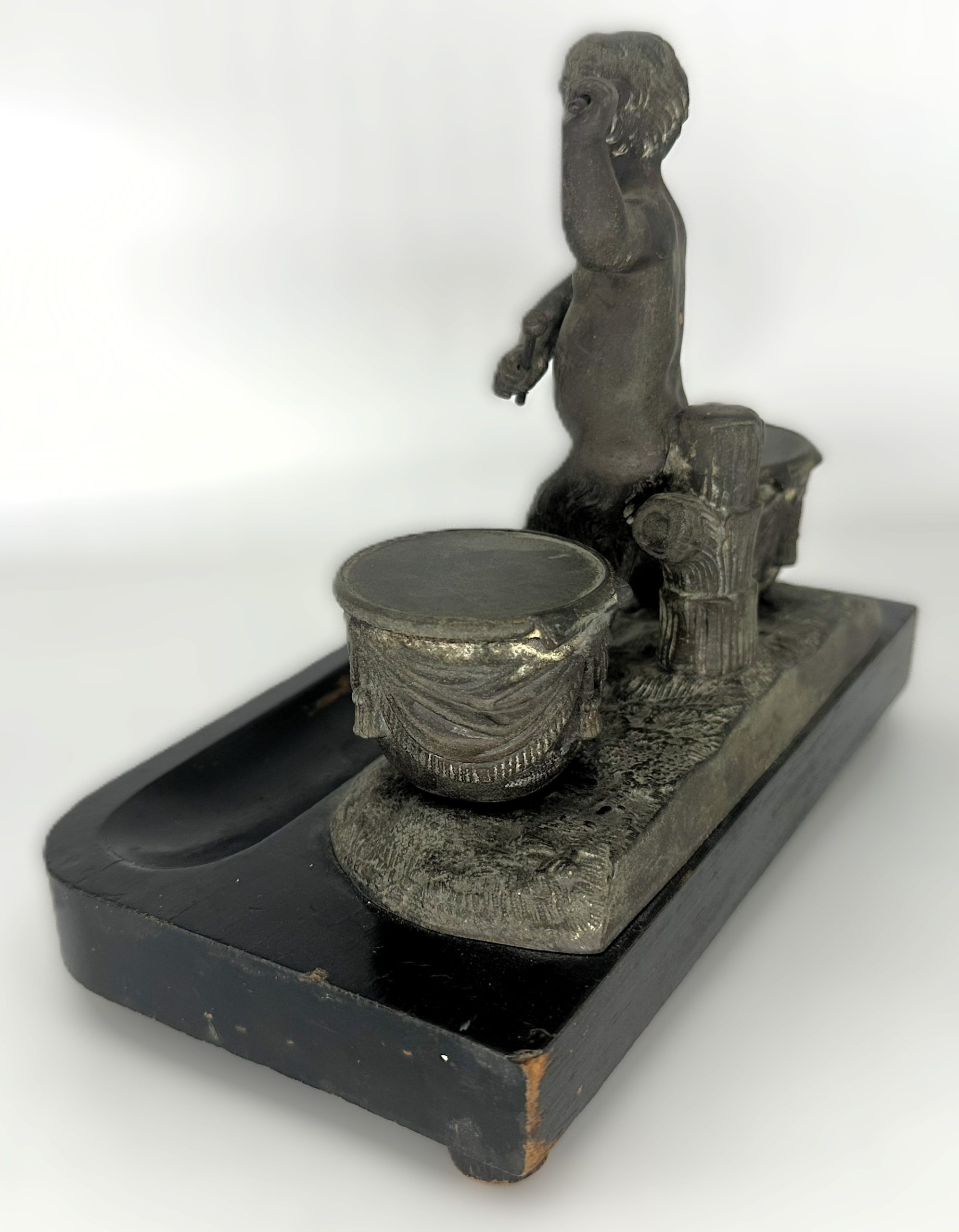
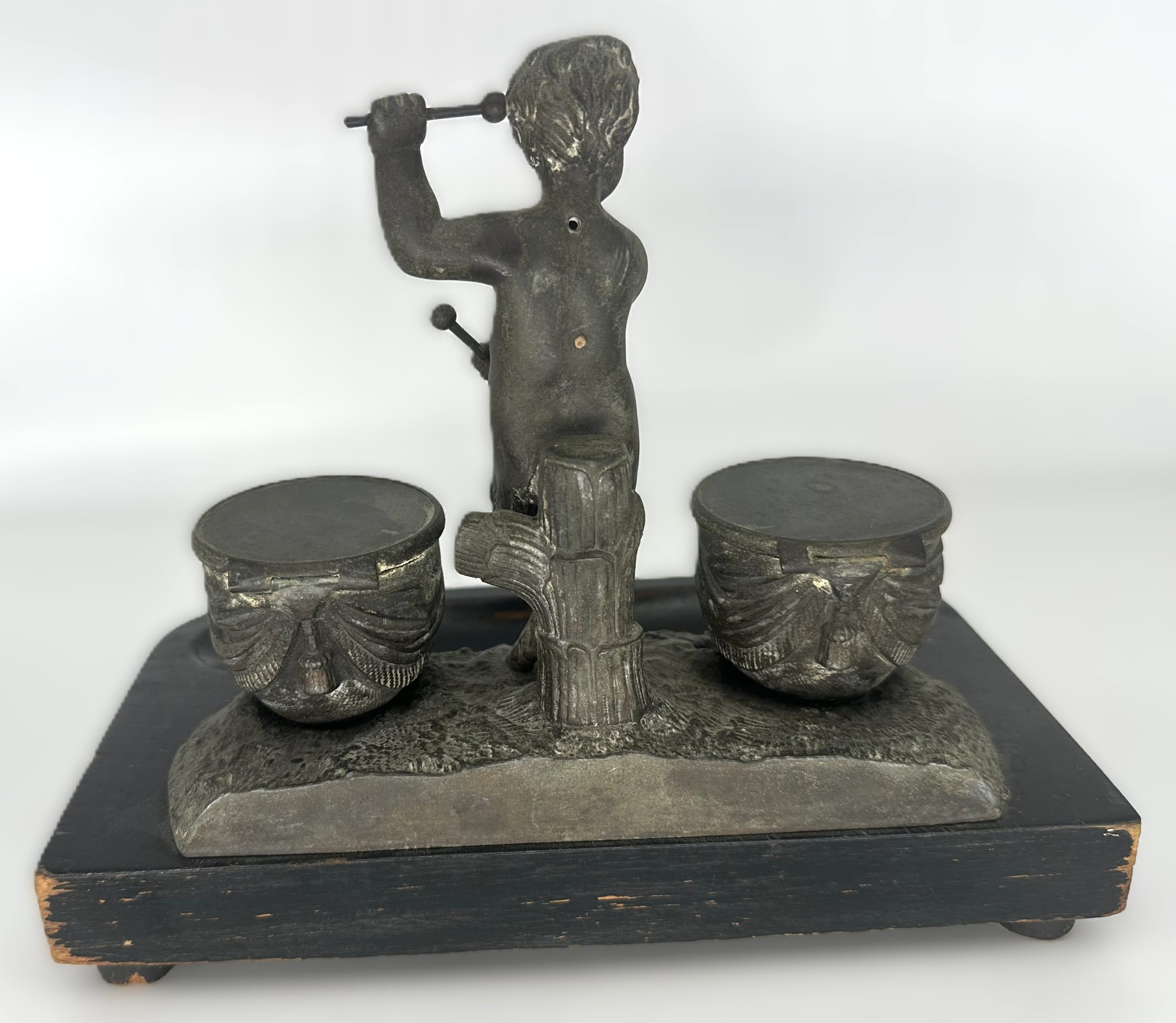
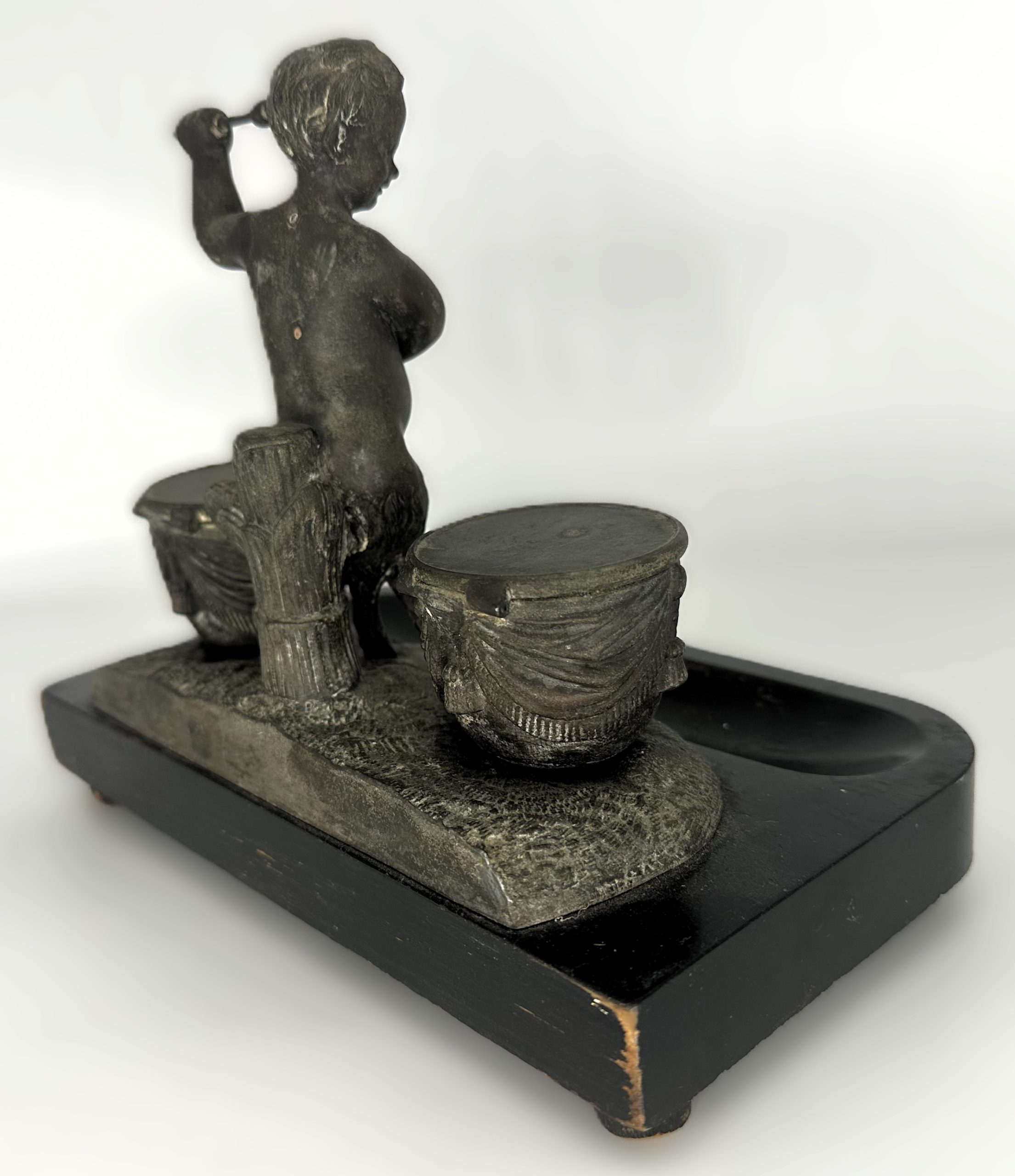
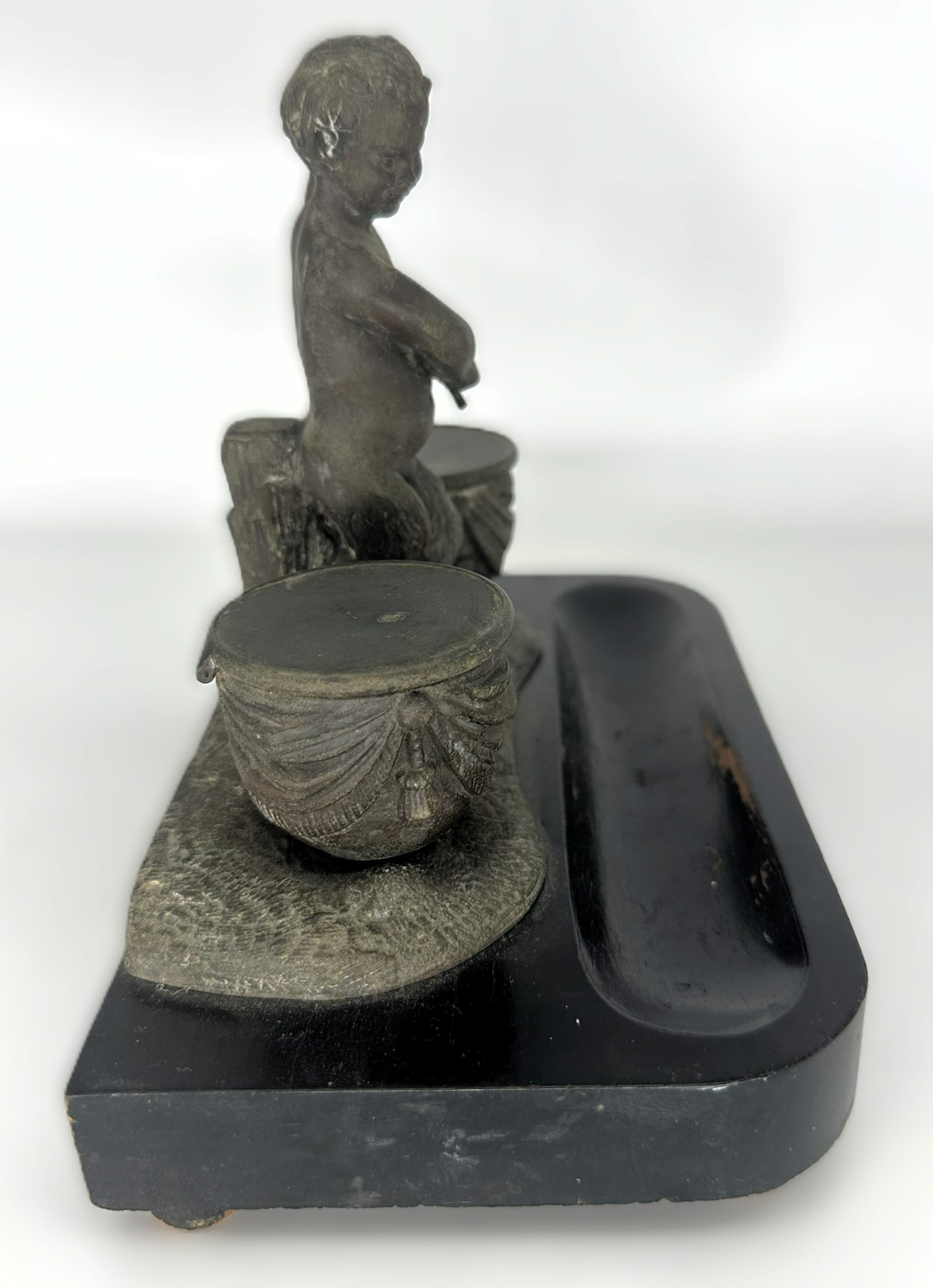
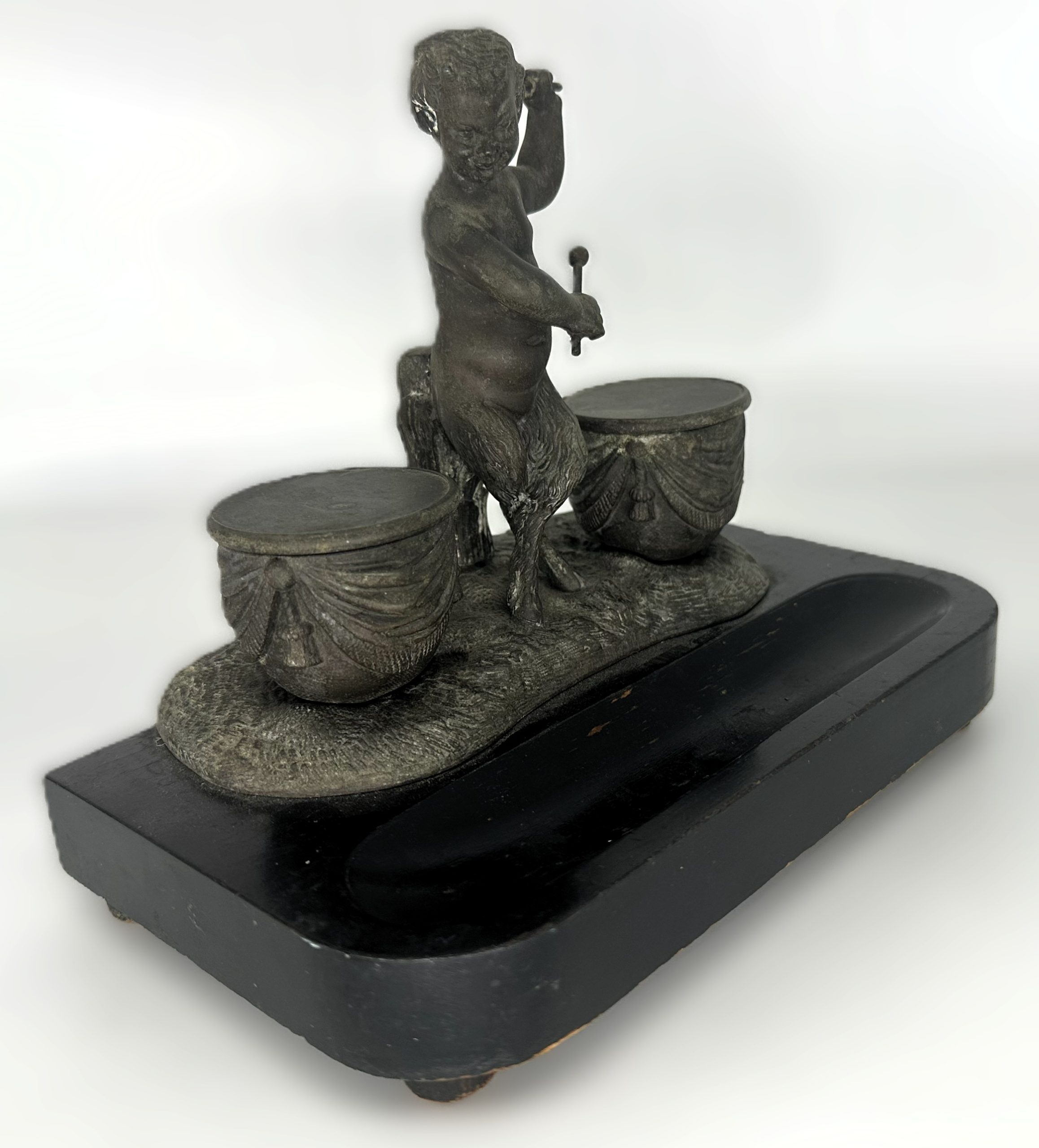
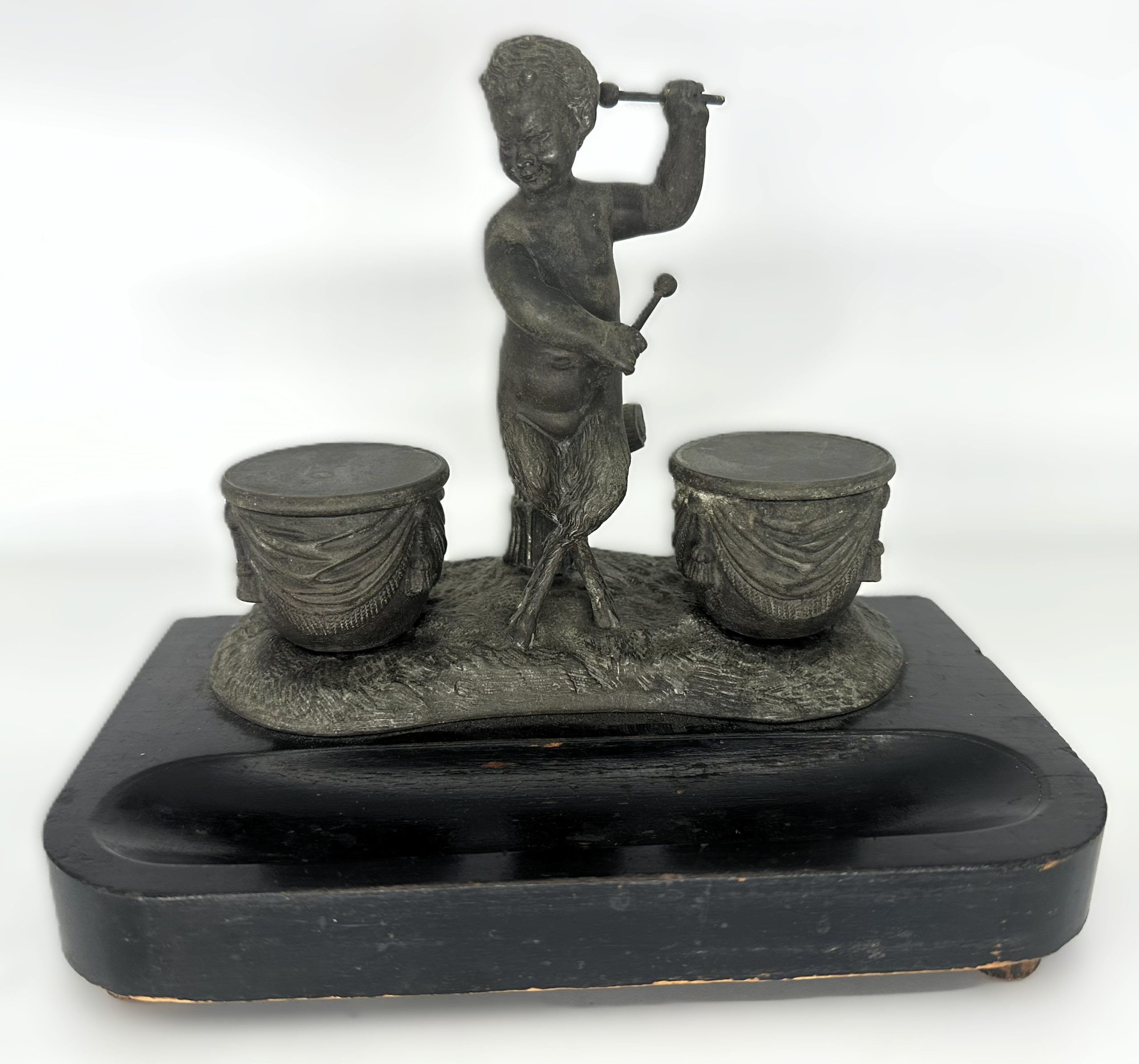
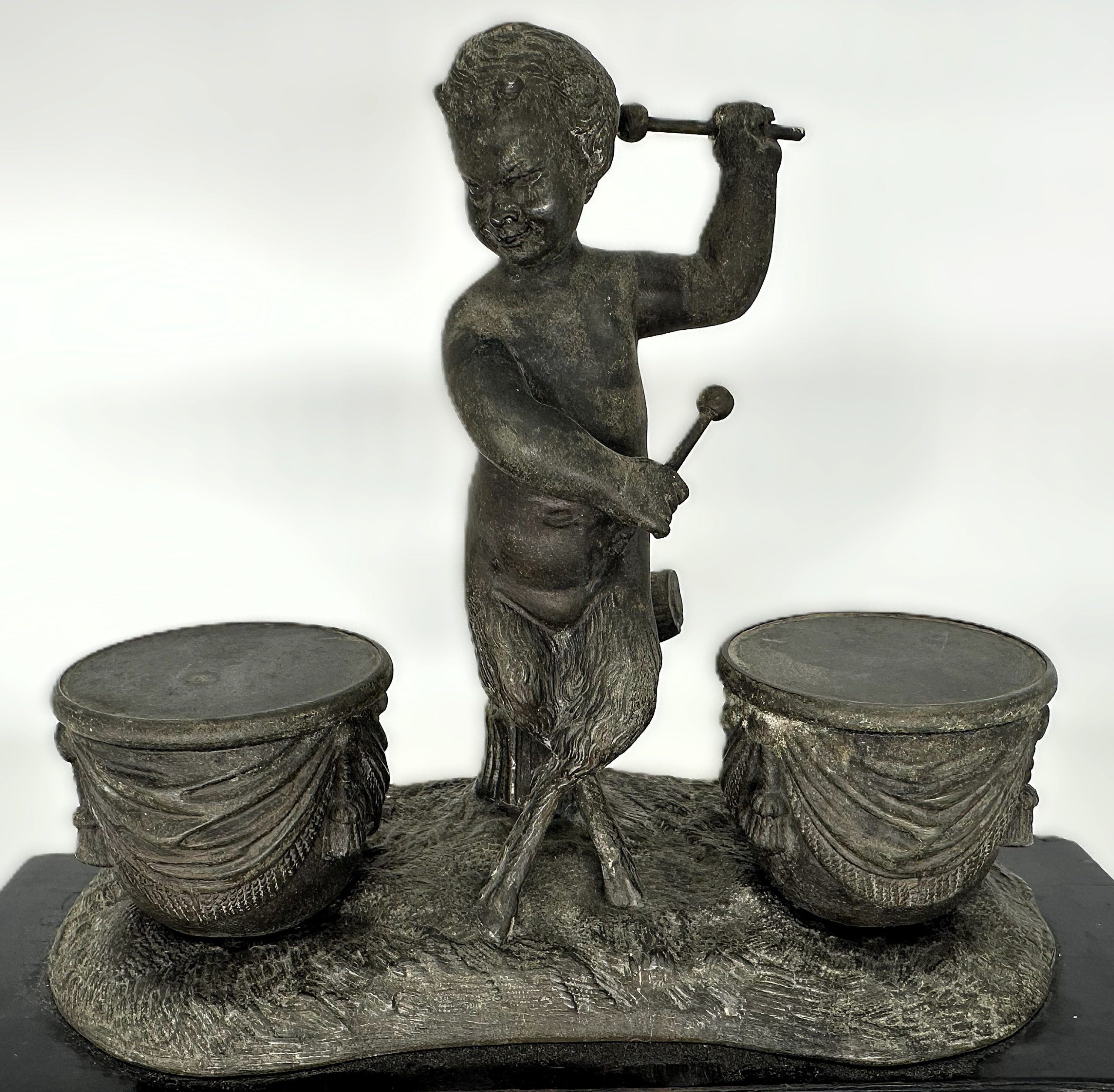
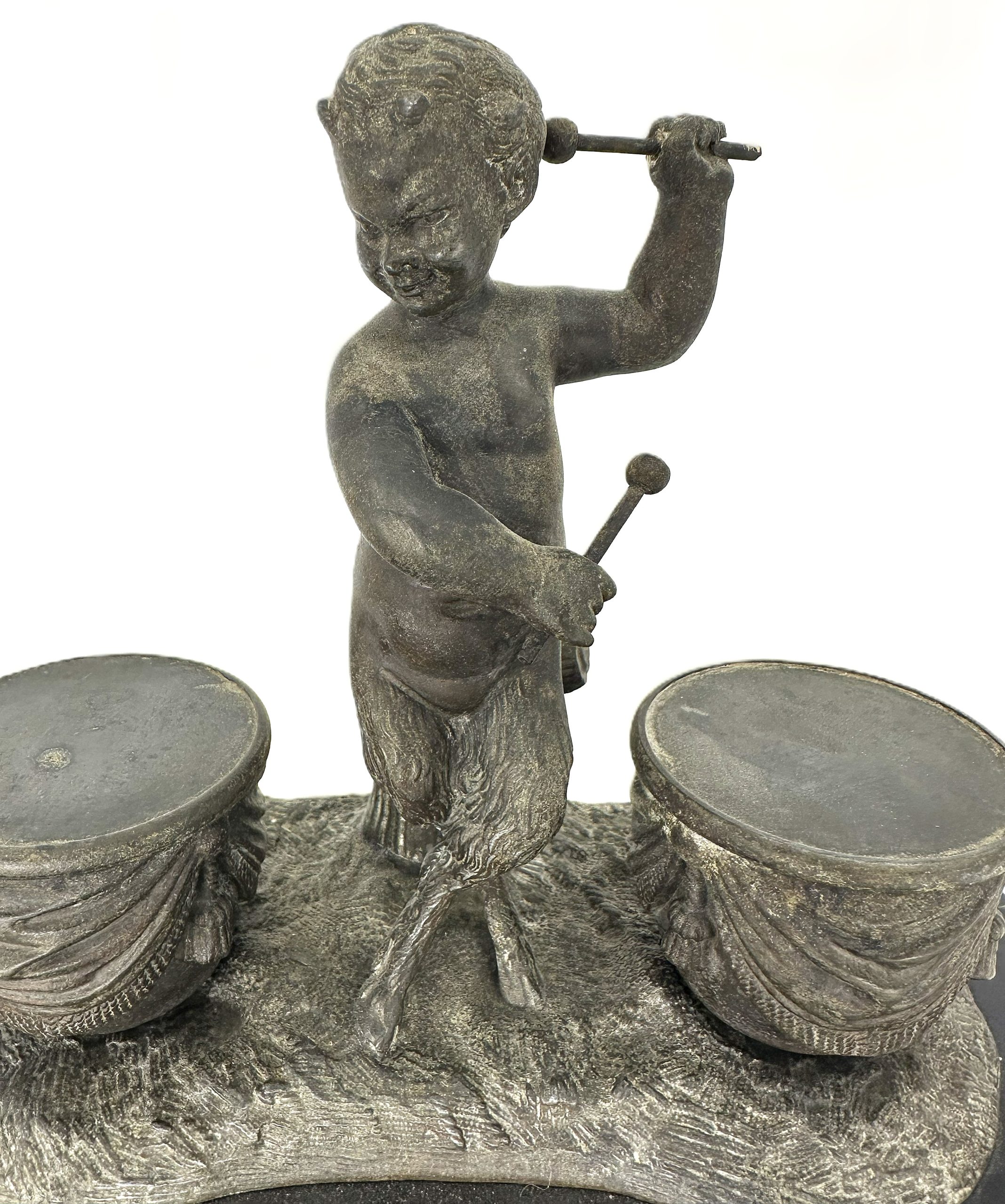
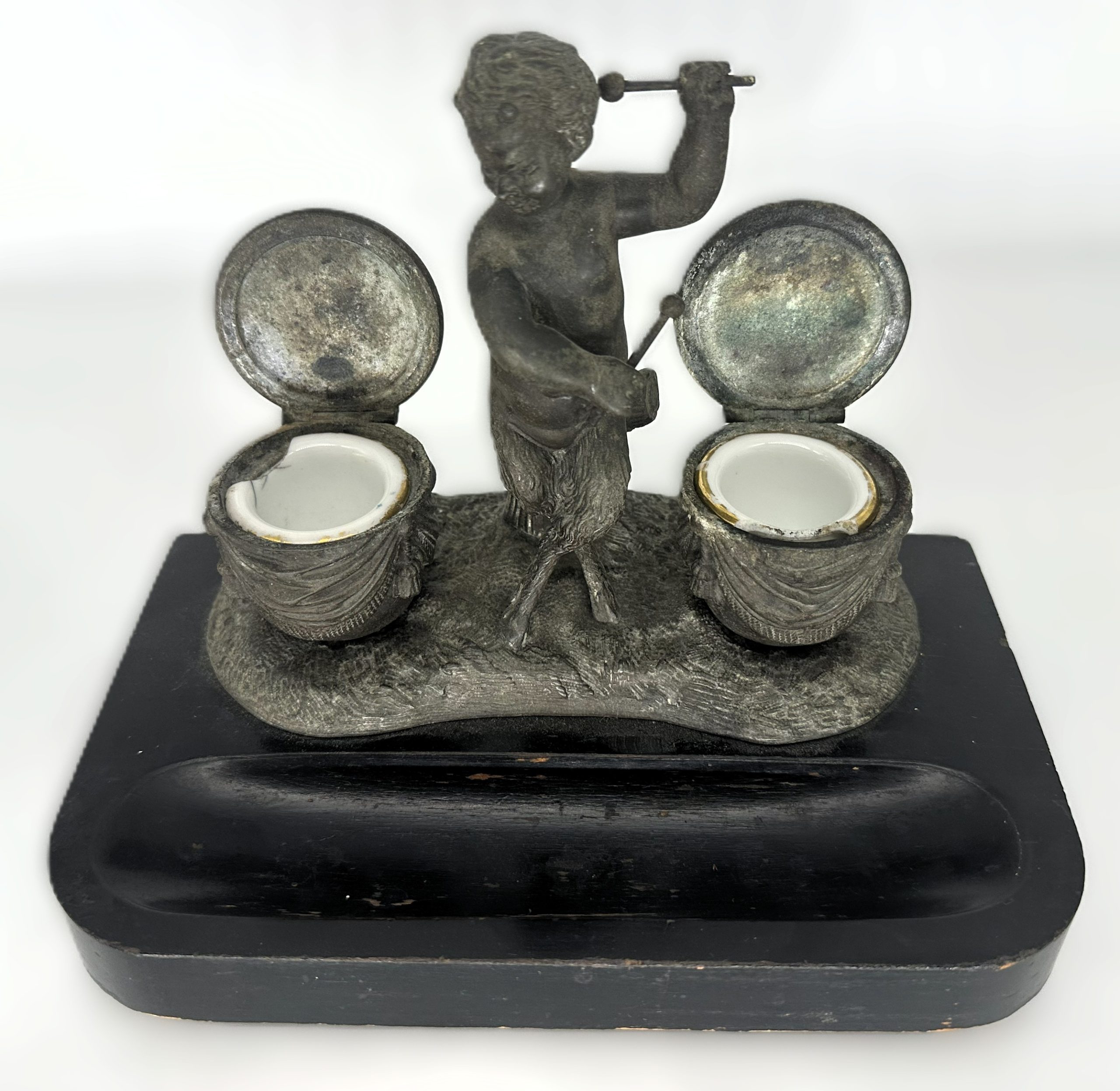
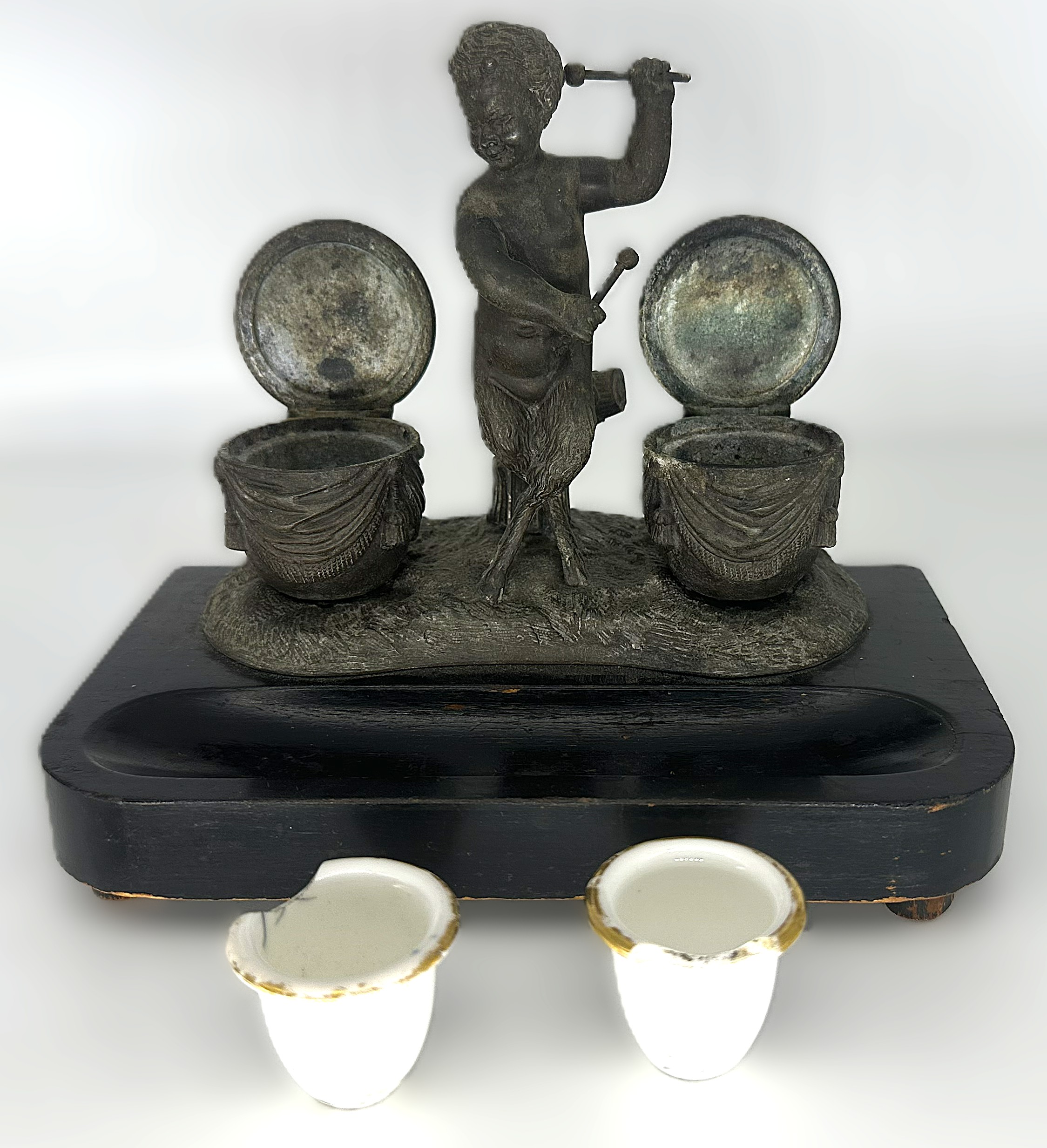
Mischievous Baby Satyr Drummer
| Categories | Figural - Mythology; Literature; Religion; Fictional |
| Type | Satyr |
| Material | White metal |
| Markings | Unmarked |
| Manufacturer | Undetermined |
| Origin | France |
| Date or Era | circa 1880 |
| Measuring | 6 ½” x 2 ¾” x 5 ¾” high |
Figure Identification & Mythology
- Identity: This figure is an infant satyr (often called a satyriskos in Greek art or an infant faun/paniscus in Roman art).
- Pan vs. Satyr/Faun: Pan is a specific, singular ancient Greek god of the wild, shepherds, and rustic music. Satyrs (Greek) and Fauns (Roman) are a mythological race of nature spirits characterized by goat legs, hooves, pointed ears, budding horns, and a notoriously playful, mischievous disposition.
- Art Historical Background: During the 18th and 19th centuries—heavily popularized by French sculptors like Clodion (Claude Michel)—infant satyrs became iconic decorative motifs. They symbolized carefree revelry, music, wine, and humor, making them popular subjects for Grand Tour souvenirs and whimsical desk accessories.
Instruments & Accessories
- The Drums: These are kettledrums (timpani is simply the Italian/orchestral term for kettledrums). They feature hemispherical bowls adorned with neoclassical draped cloth swags and hanging tassels.
- The Sticks: They are called drum mallets (or timpani beaters), distinguished by their rounded, ball-shaped heads.
Materials & Construction
- Sculptural Mount: Cast in patinated spelter (régule, a zinc alloy).
- Lacquered Wooden Base: The base is ebonized hardwood (solid wood stained and lacquered black to mimic costly African ebony, a standard 19th-century cabinetmaking technique). The wood is likely ebonized beech, pearwood (fruitwood), or walnut.
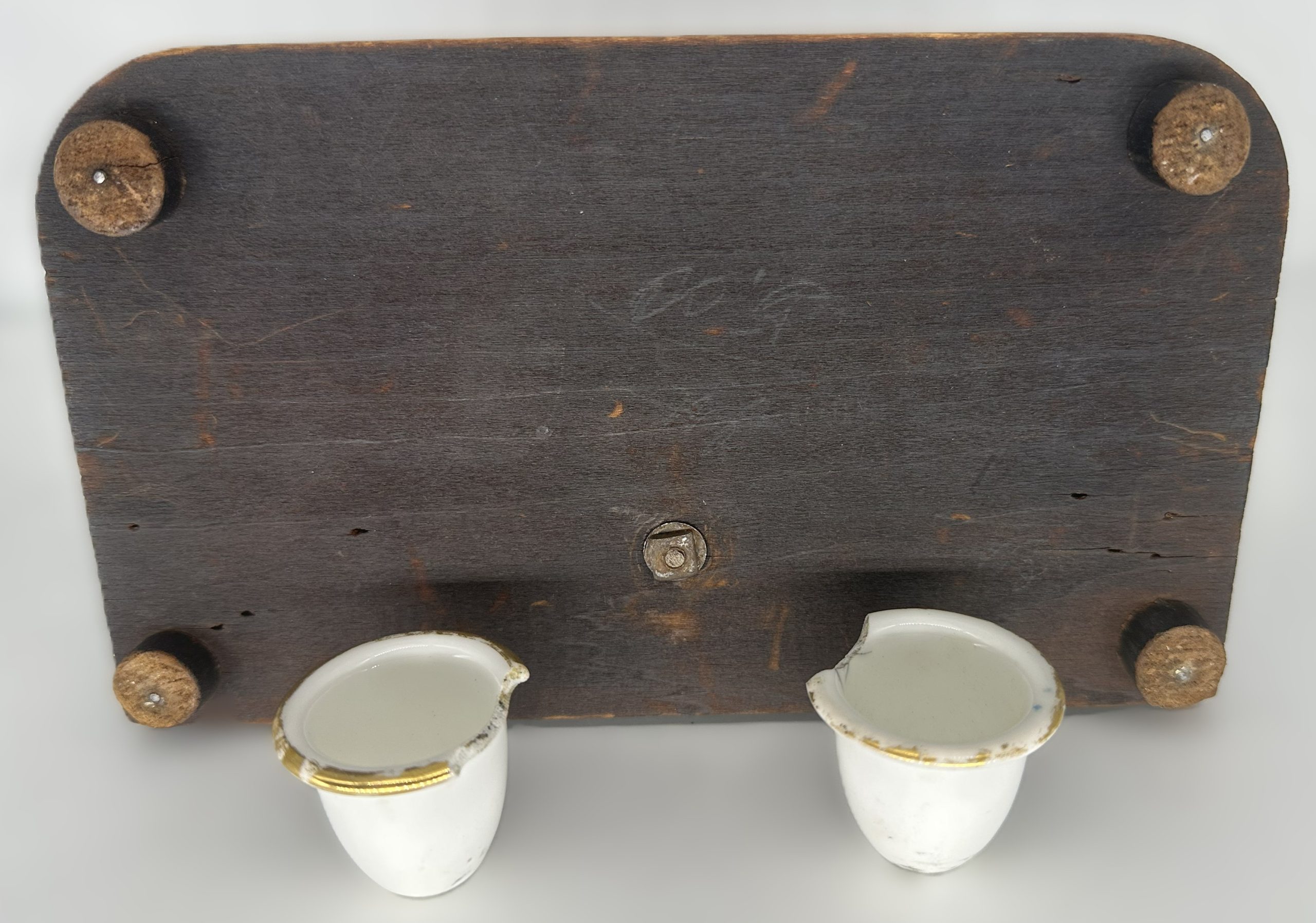
- Features: A carved front pen channel (pen trough), four turned wooden disc feet, and two original glazed white porcelain inkwell inserts with gilt rims.
- Underside: Assembled with a period square nut on the central threaded rod securing the casting to the base.
Origin & Date
- Origin: France French foundries dominated the production of high-end, classically inspired figural inkstands.
- Period: Circa 1870–1895
Estimated value: $200
Content disclaimer. The information posted is the owner’s best knowledge and may not have been vetted by the SOIC. We welcome comments, corrections, and additions, working to make our website information comprehensive and accurate.
Join the Society of Inkwell Collectors (SOIC) – it’s free!
Founded in 1981 as a non-profit organization,
we are documenting inkwells (and accessories).
We’re here to help and inform!