

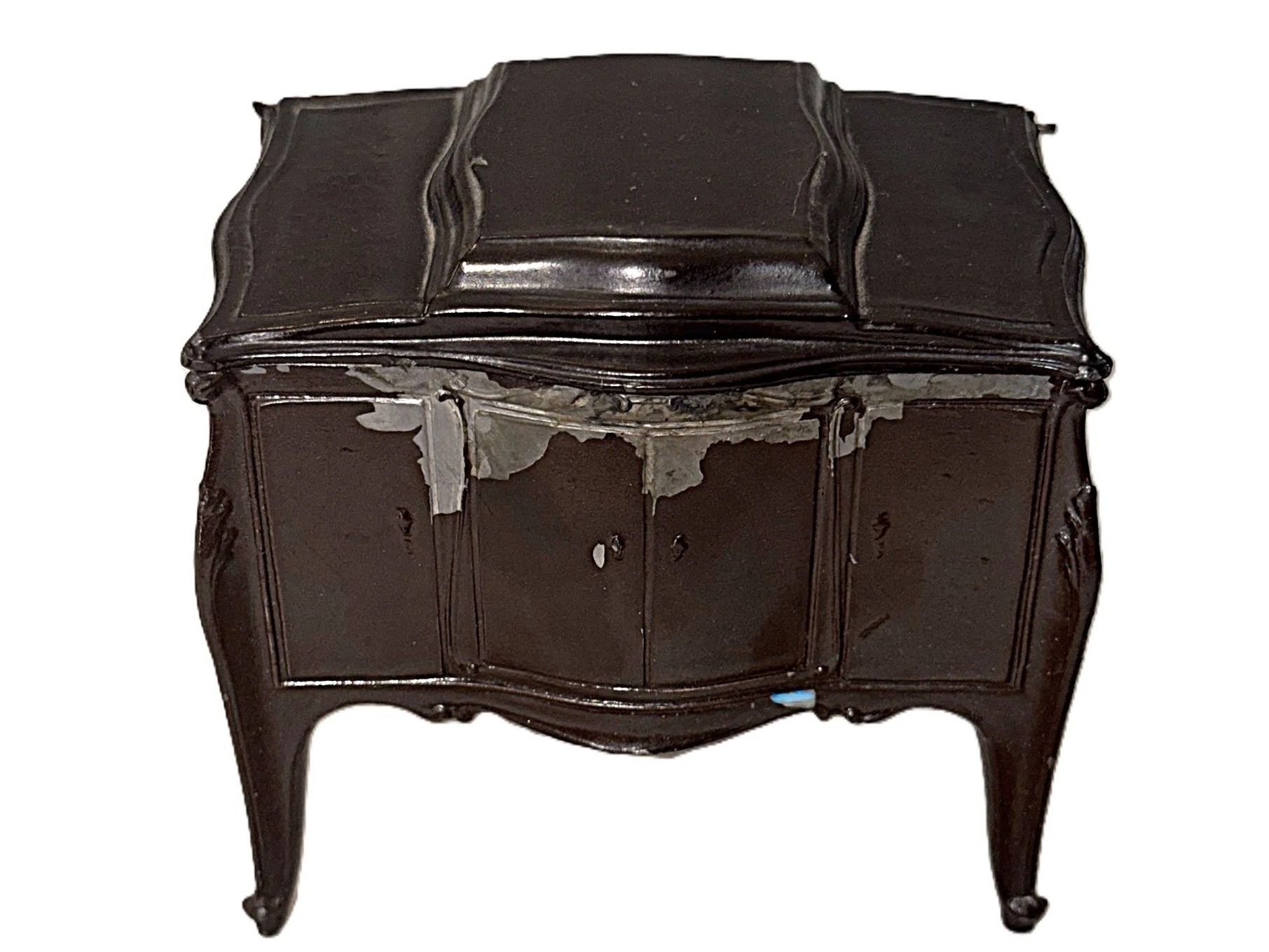
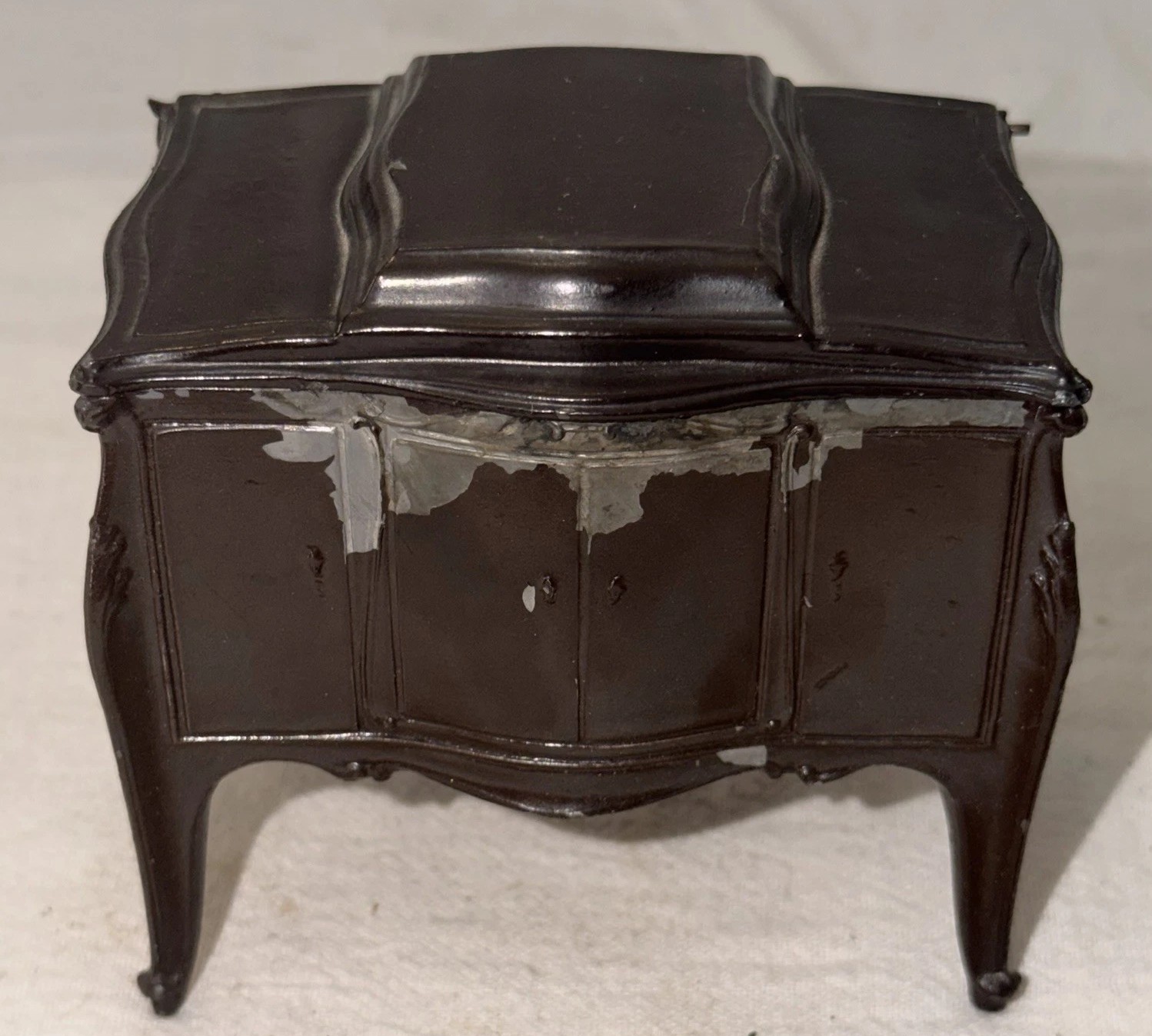
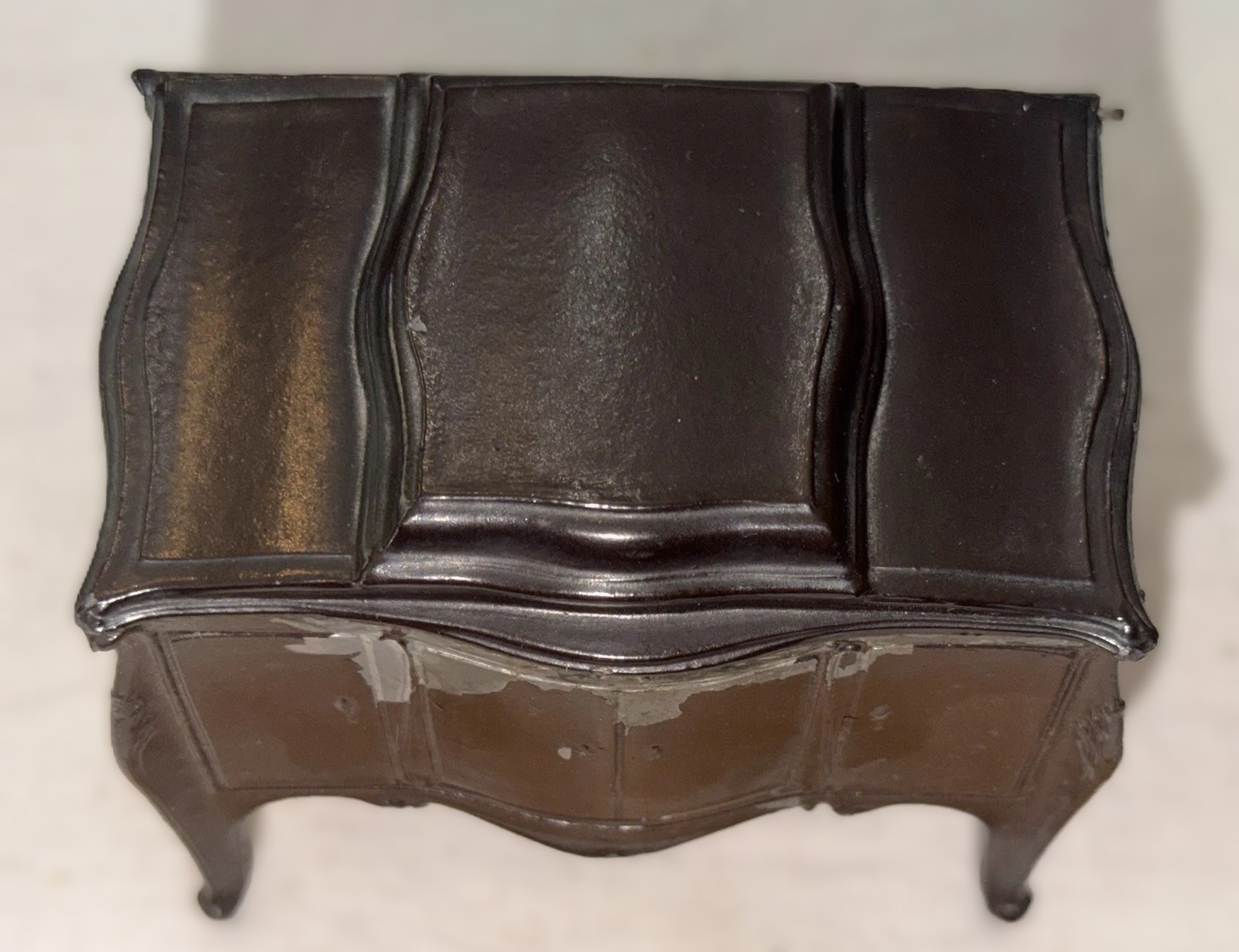
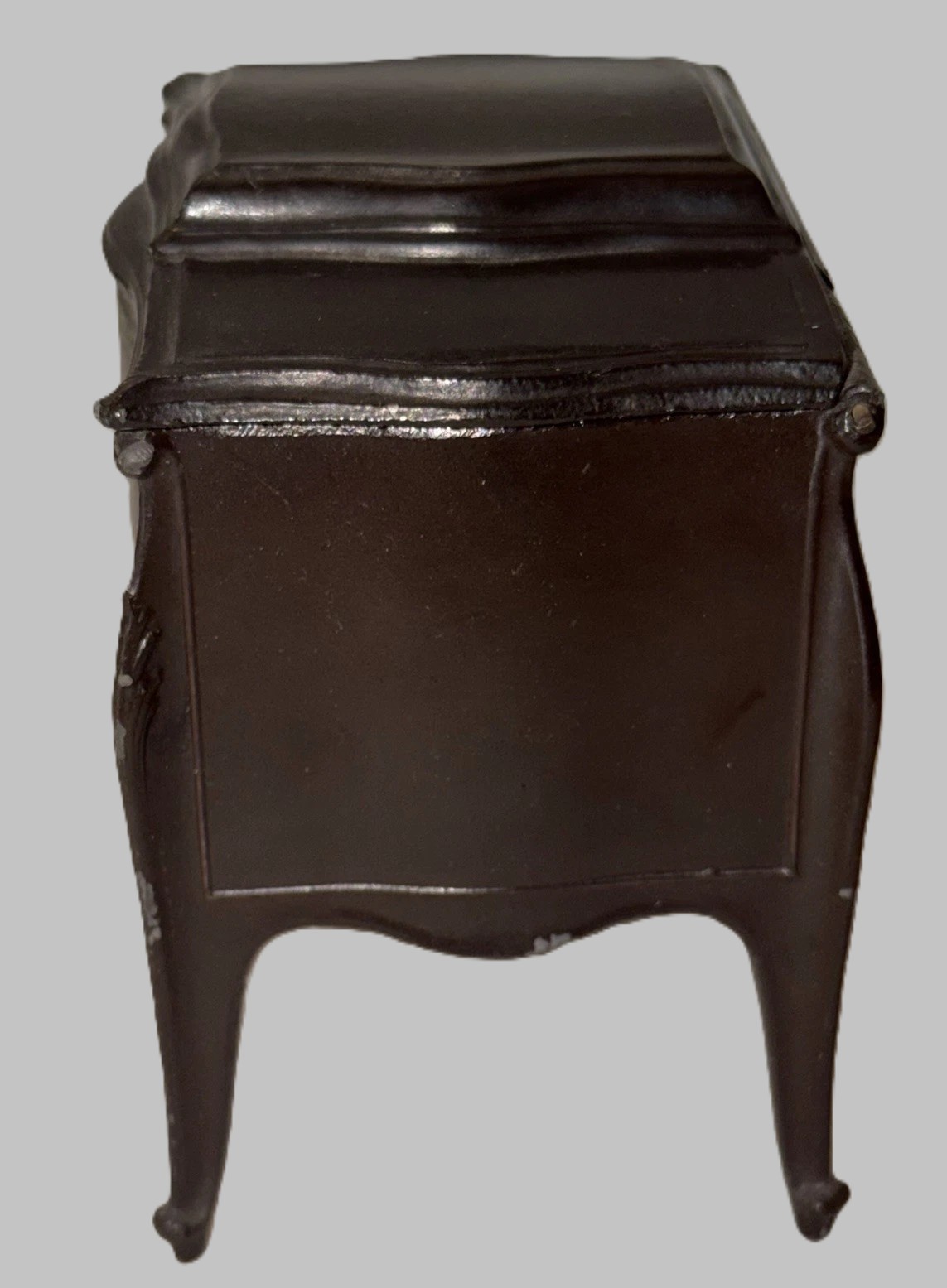
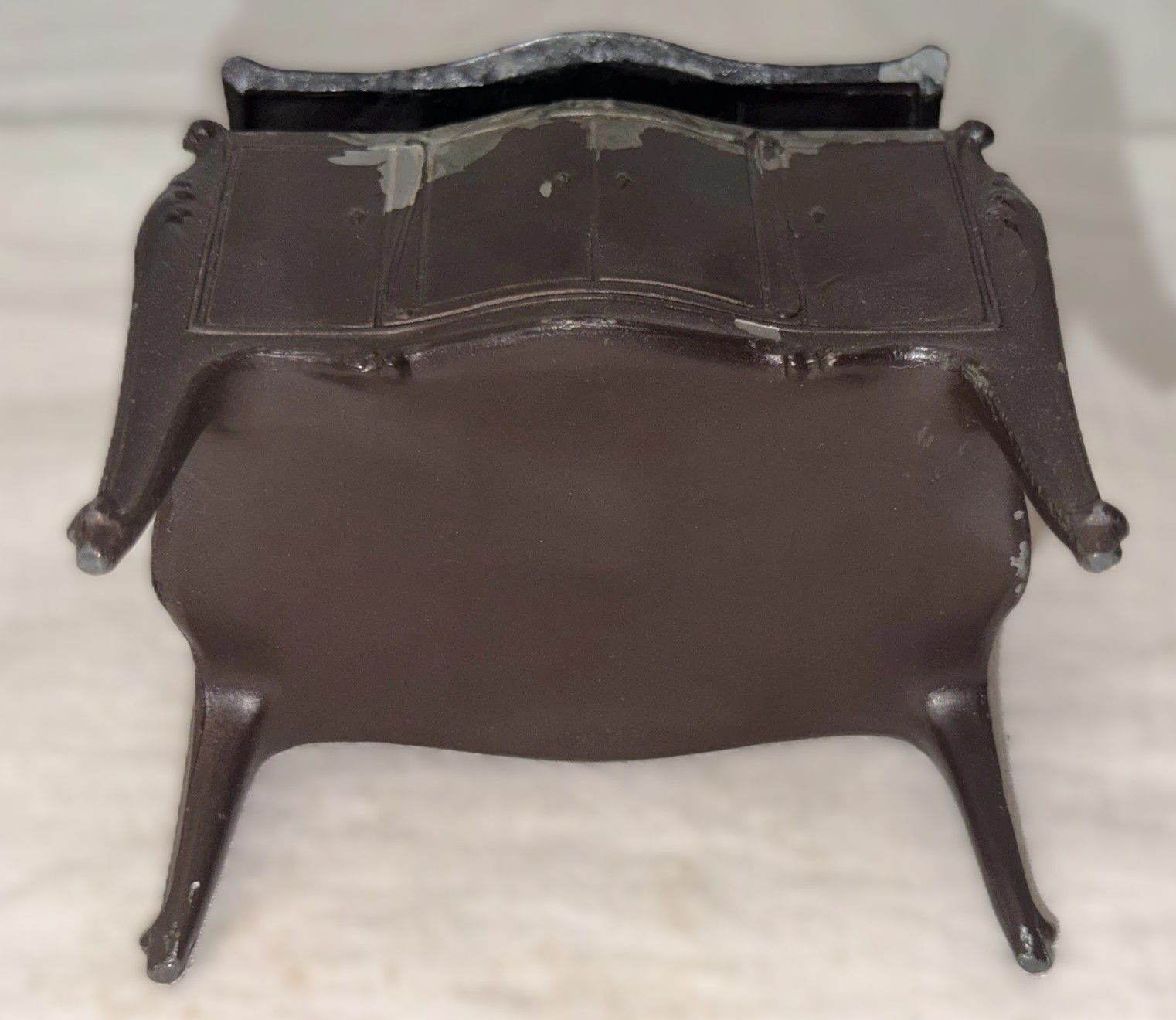
Miniature Cabinet Figural Double Inkstand
| Categories | Advertising, Figural - Inanimate |
| Type | Furniture |
| Material | White metal |
| Markings | See Narrative |
| Manufacturer | Cushman & Denison |
| Origin | United States |
| Date or Era | circa 1910 |
| Measuring | Approximately 4 inches across the base, standing on four curved cabriole legs; 3 ½” high. |
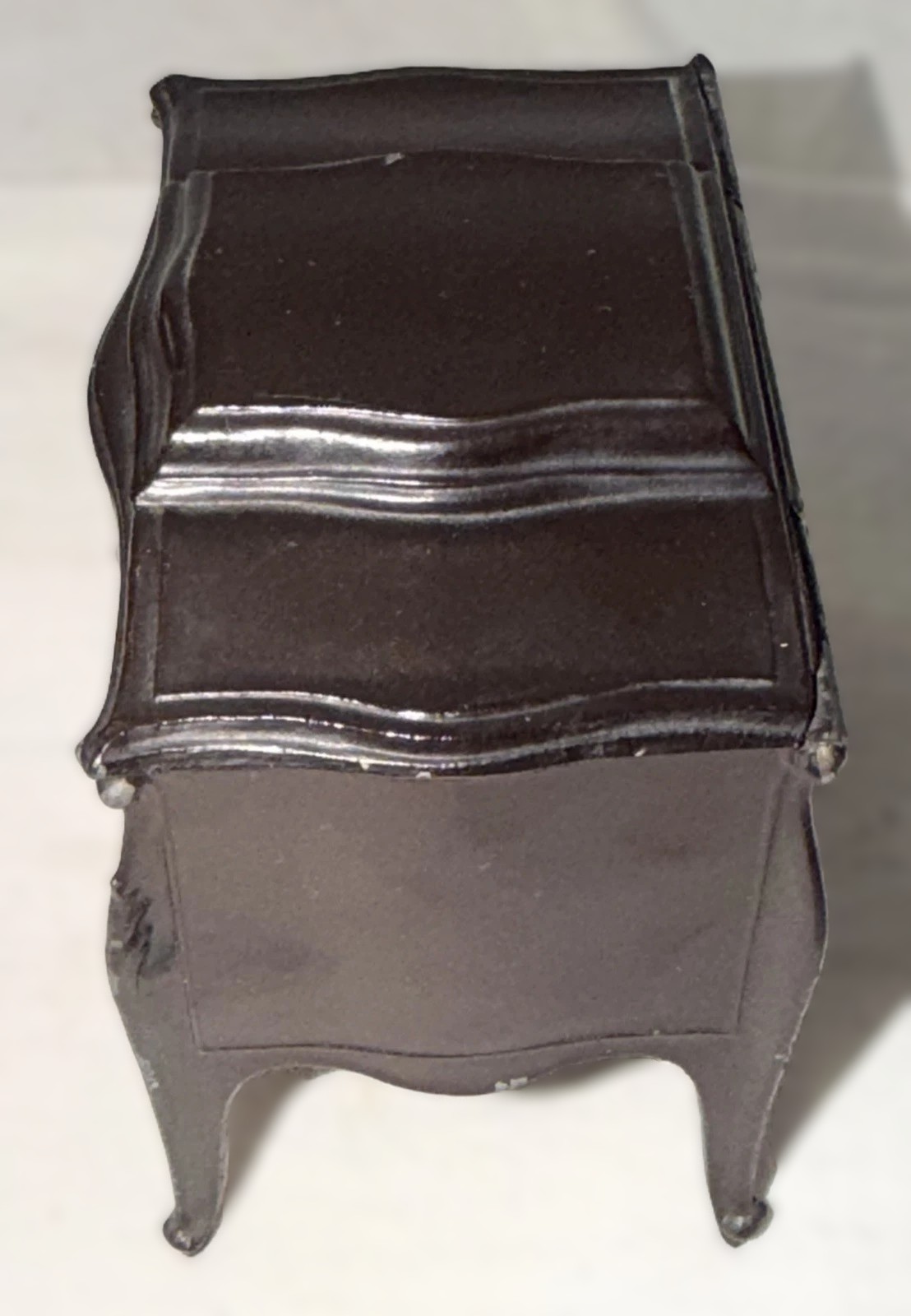
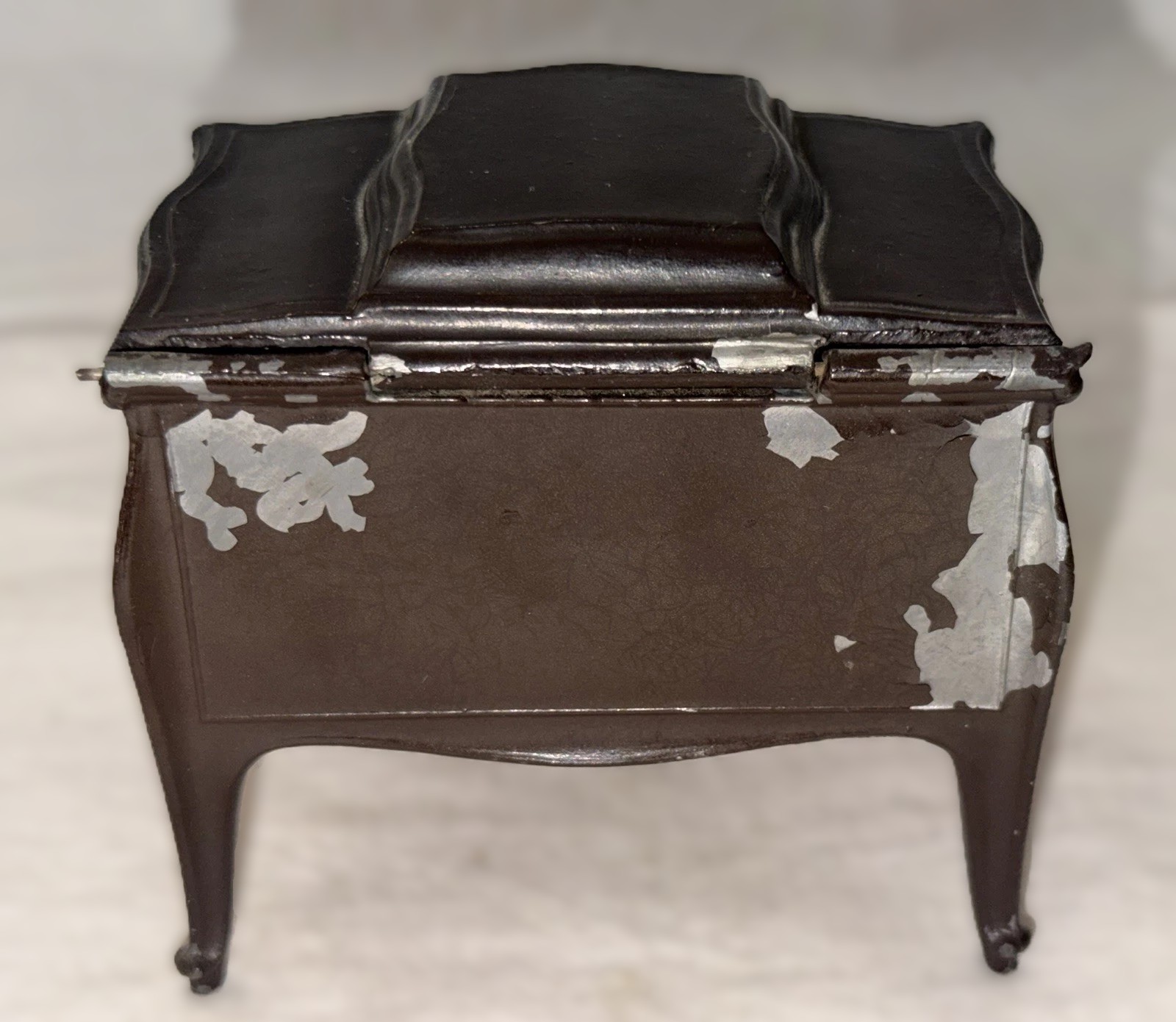
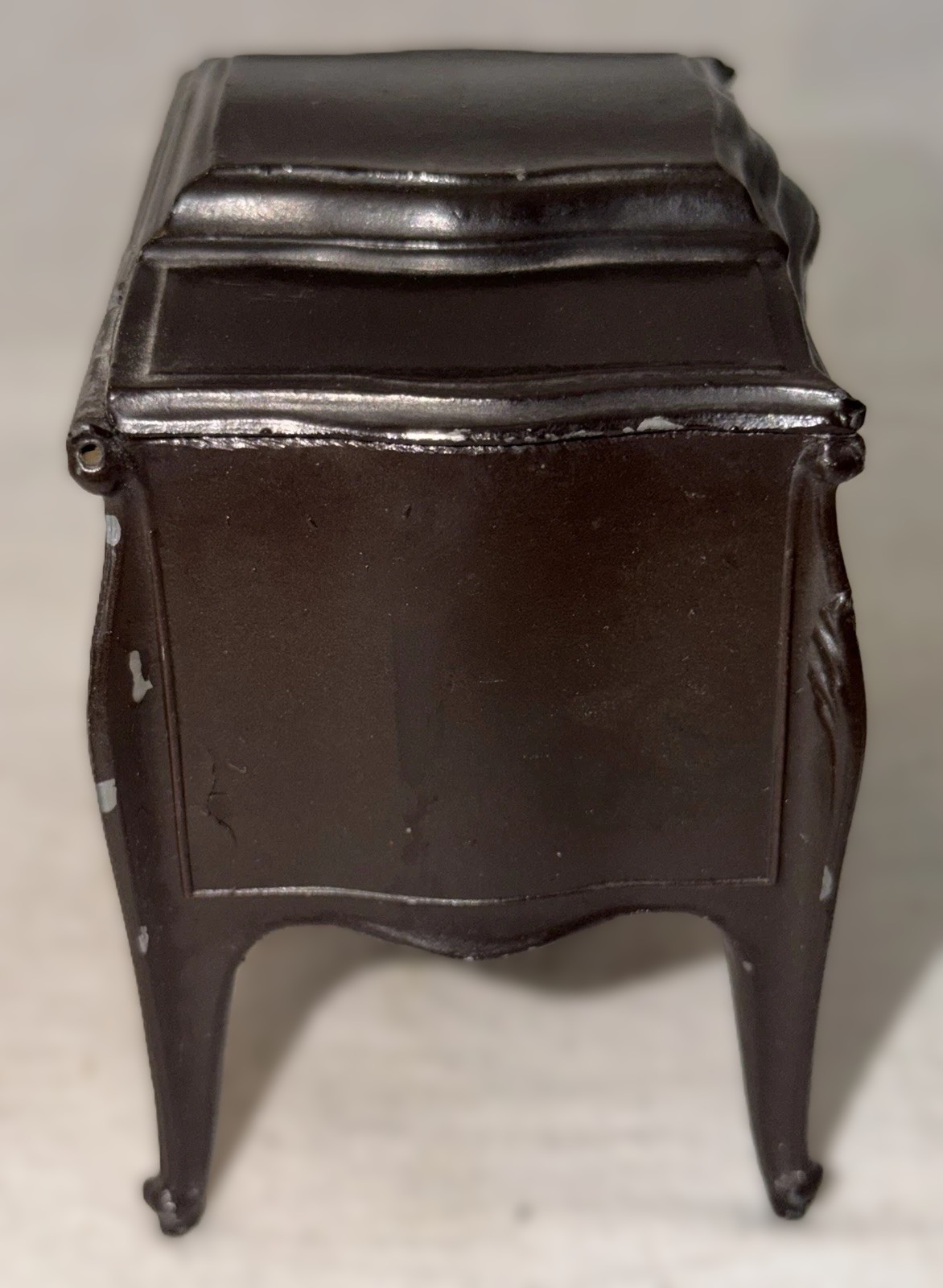
This early 20th-century inkwell is designed to mimic a miniature piece of high-end period furniture—specifically, a Louis XV or Rococo Revival-style commode, credenza, or parlor cabinet, complete with a serpentine bowed front, delicate cabriole legs with scroll feet, and paneled cabinet door detailing.
Description
- Object Type: Figural novelty double inkstand.
- Period/Era: Circa 1905–1920.
- Materials: Cast metal (white metal alloy) with a deep brown factory enameled finish and a paper manufacturer label affixed to the interior lid.
- Dimensions: Approximately 4 inches across the base, standing on four curved cabriole legs; 3 ½” high.
- Design & Features:
- Exterior: Styled as a miniature furniture commode featuring a shaped, molded top lid, a serpentine bowed front cabinet door motif with simulated vertical panels and tiny hardware accents, and gracefully curved sides and back panels.
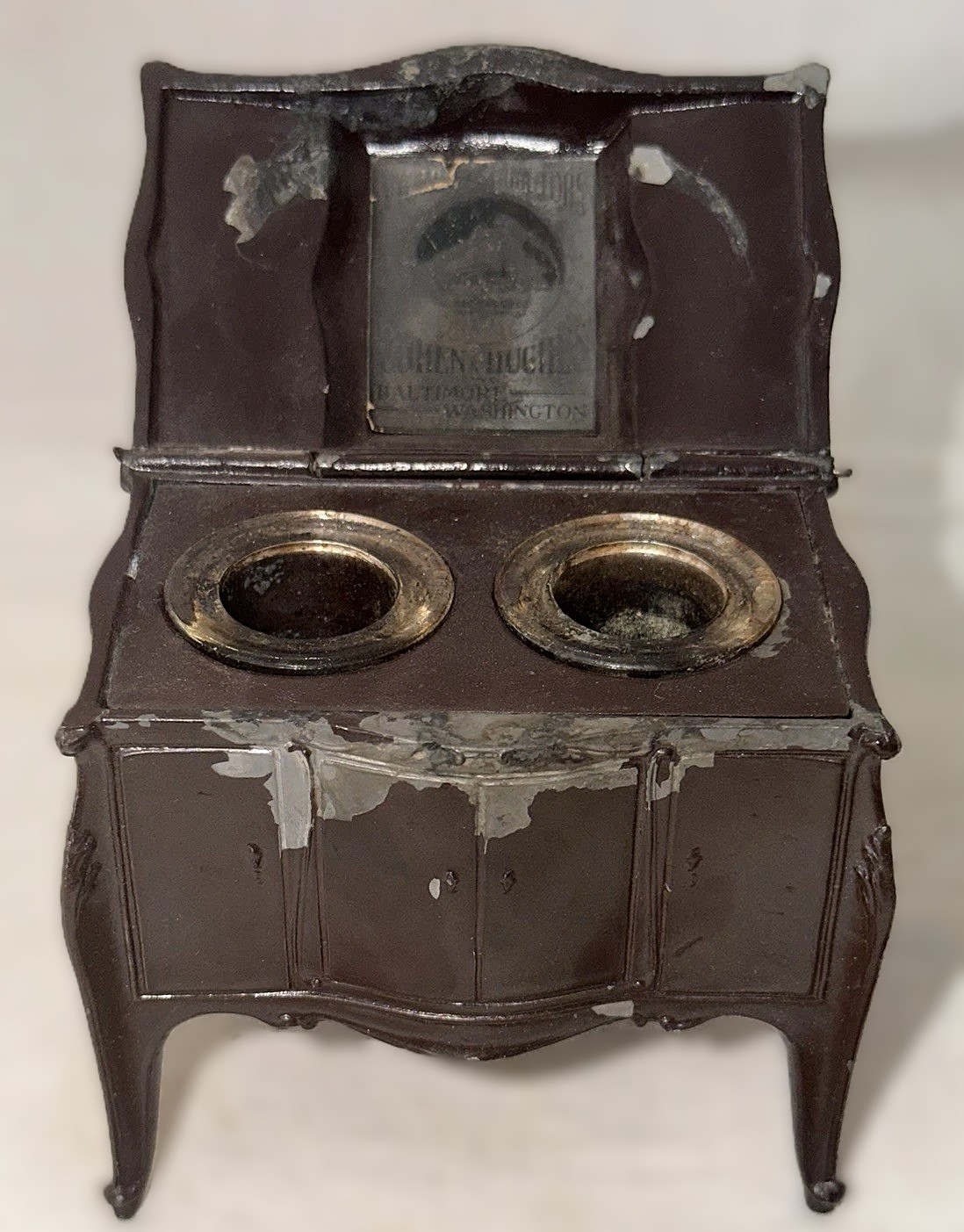
- Interior: Lifting the hinged top reveals two inset glass inserts.
- The Label: Mounted on the inside of the lid is a paper trade label featuring a graphic vignette (depicting the Washington Monument in Baltimore, Maryland) and company typography reading CUSHMAN & DENISON / BALTIMORE / WASHINGTON.
History of Cushman & Denison
Company Background
The Cushman & Denison Manufacturing Company (often abbreviated as C&D) was a prominent New York-based manufacturer of stationers’ supplies, office hardware, and novelties founded in the late 19th century (with corporate roots dating back into the 1880s/1890s). They are most historically famous for introducing the Gem Paper Clip to the U.S. market in 1892, revolutionizing office administration. Over the decades, they expanded heavily into patented office gadgets, numbering machines, pocket oilers, binders, stapling equipment, and specialized inkstands. (Later in the 20th century, the company was acquired and became part of the famous Swingline brand lineage).
Did C & D Manufacture These?
Yes and no. Like many major turn-of-the-century stationery houses, Cushman & Denison acted both as a direct manufacturer of proprietary goods (like their wire clips and staplers) and as a primary distributor/jobber for specialized desktop novelties sourced from foundries and specialty makers. Because office supply catalogs of the era catered heavily to executive desks, ornate figural inkstands—shaped like safes, roll-top desks, stoves, and miniature furniture—were popular luxury novelties.
The Baltimore & Washington Connection on the Label
The mention of Baltimore and Washington on the interior label typically points to regional sales agents, major wholesale distributing branches, or regional trade offices through which Cushman & Denison marketed their high-end executive catalog lines in the Mid-Atlantic region. (For instance, early 20th-century advertisements and exhibition records frequently tied their regional commercial reach to major trade hubs like Baltimore and Washington, D.C.).
On an executive’s desk around 1910, a piece like this bridged the gap between functional utility and whimsical status decor—disguising messy inkwells inside an elegant miniature art-furniture cabinet.
Sold for $131 in September 2026
Content disclaimer. The information posted is the owner’s best knowledge and may not have been vetted by the SOIC. We welcome comments, corrections, and additions, working to make our website information comprehensive and accurate.
Join the Society of Inkwell Collectors (SOIC) – it’s free!
Founded in 1981 as a non-profit organization,
we are documenting inkwells (and accessories).
We’re here to help and inform!