

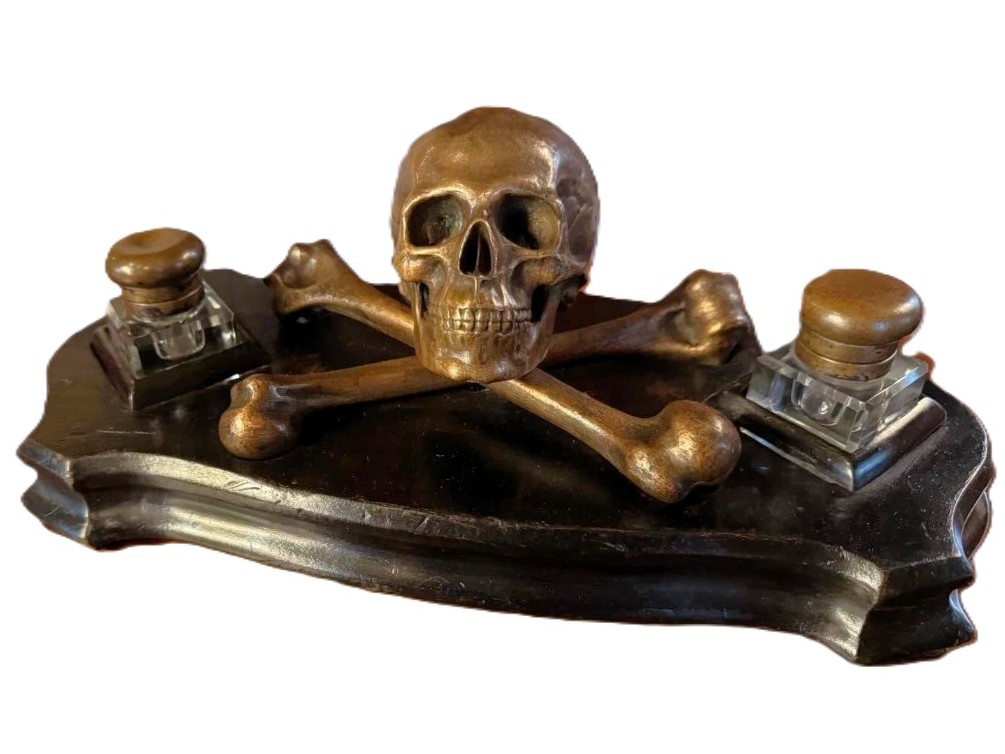
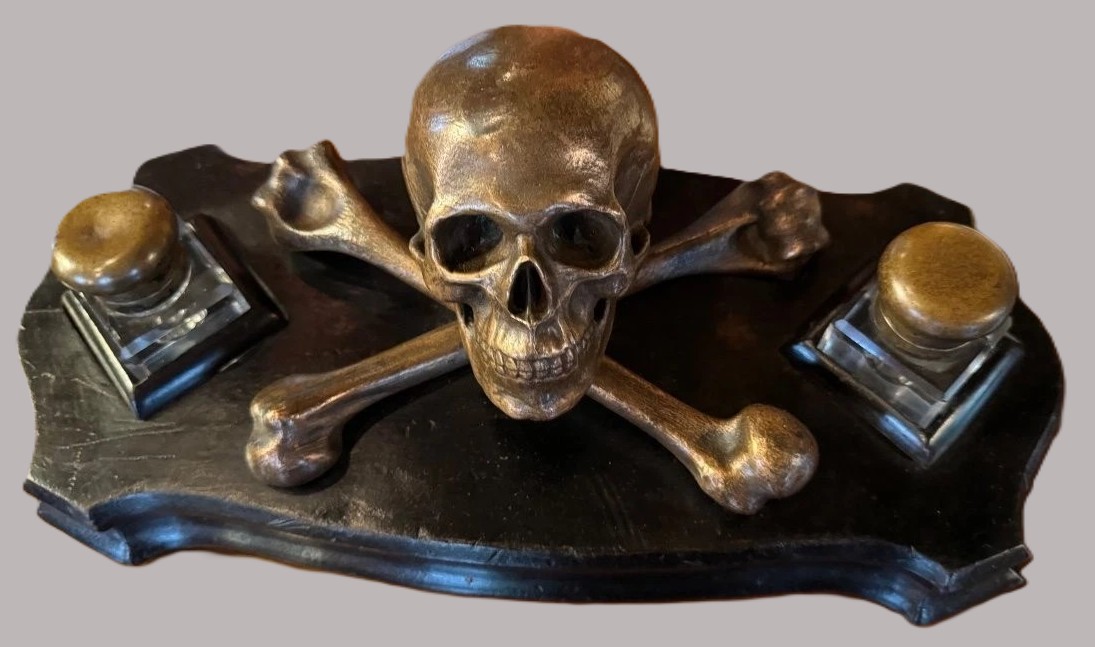
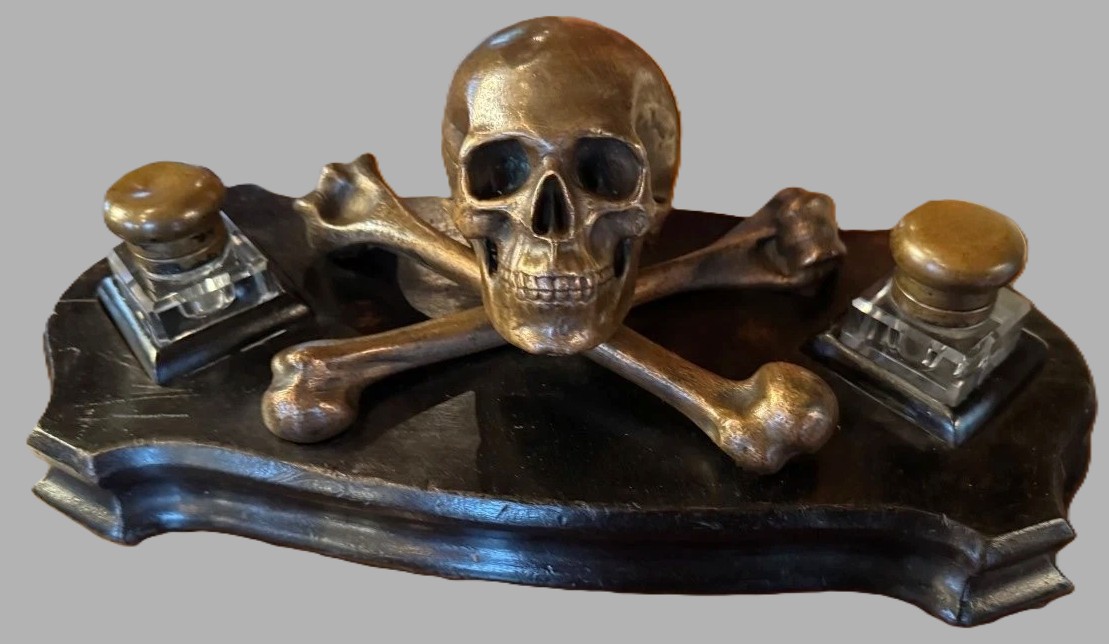
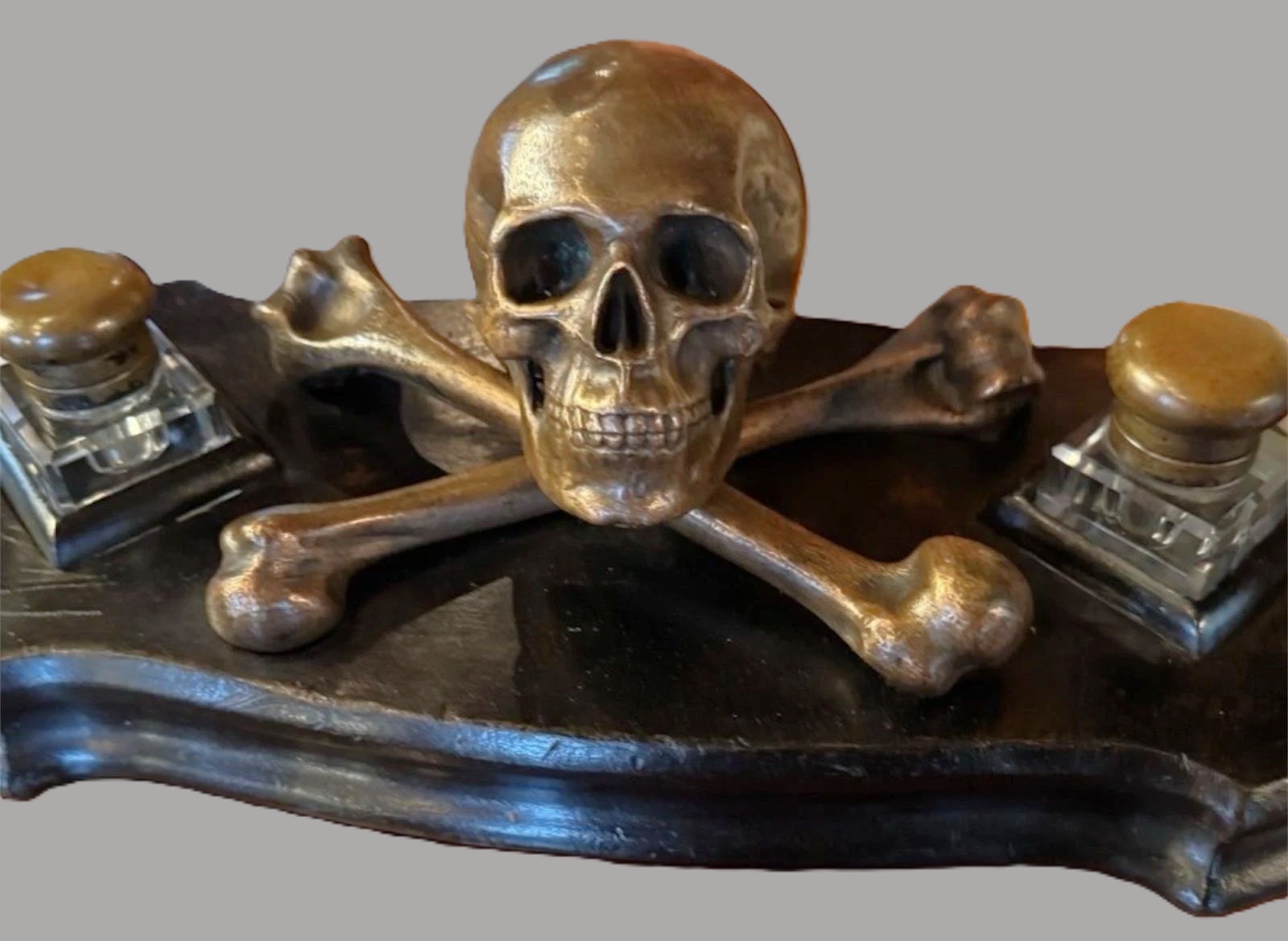
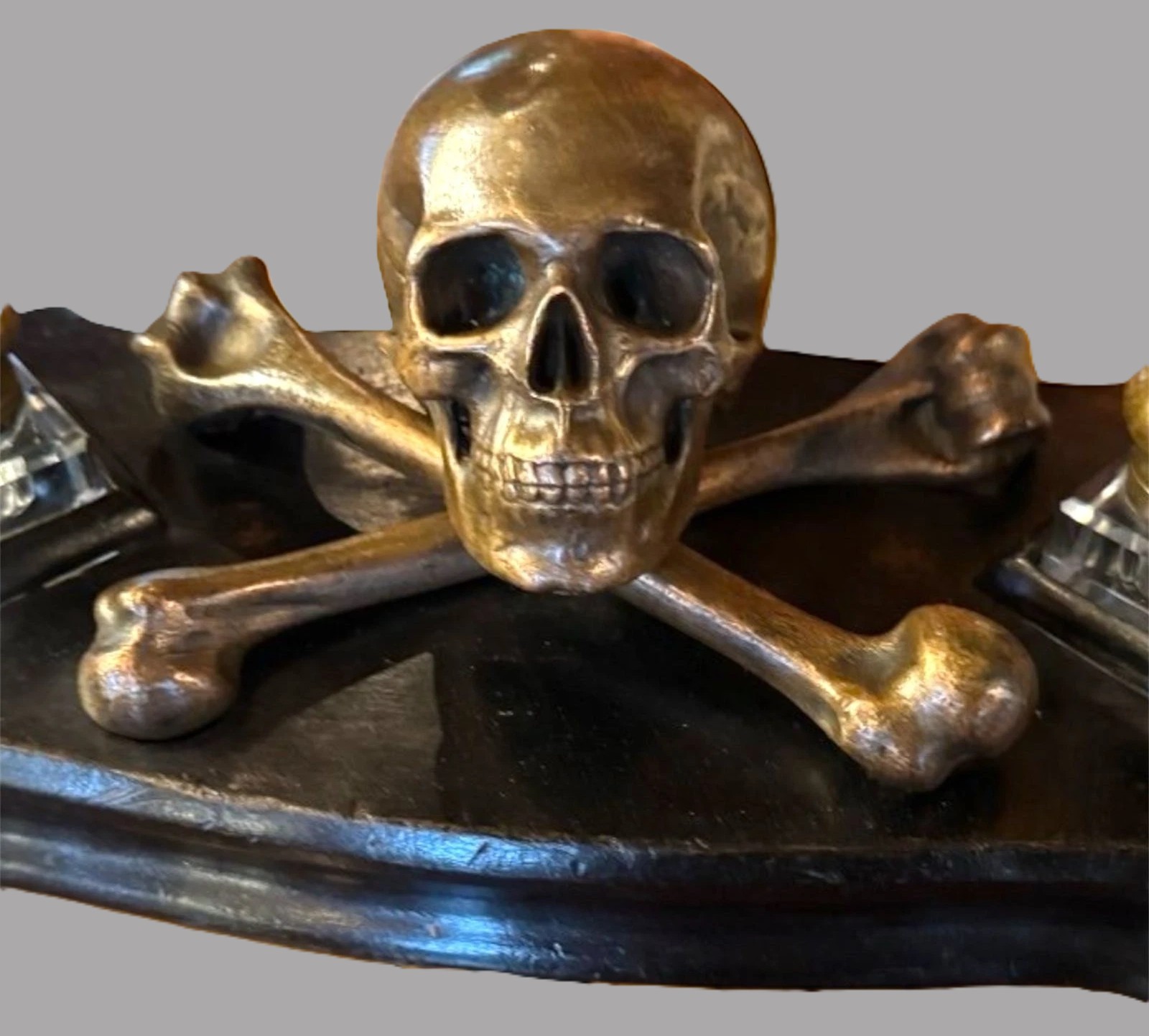
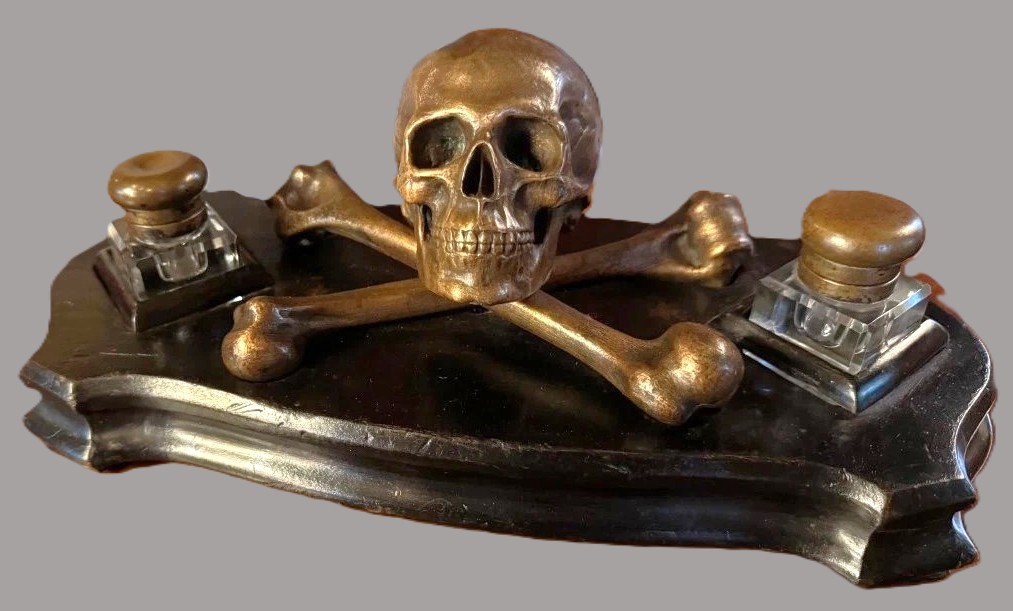
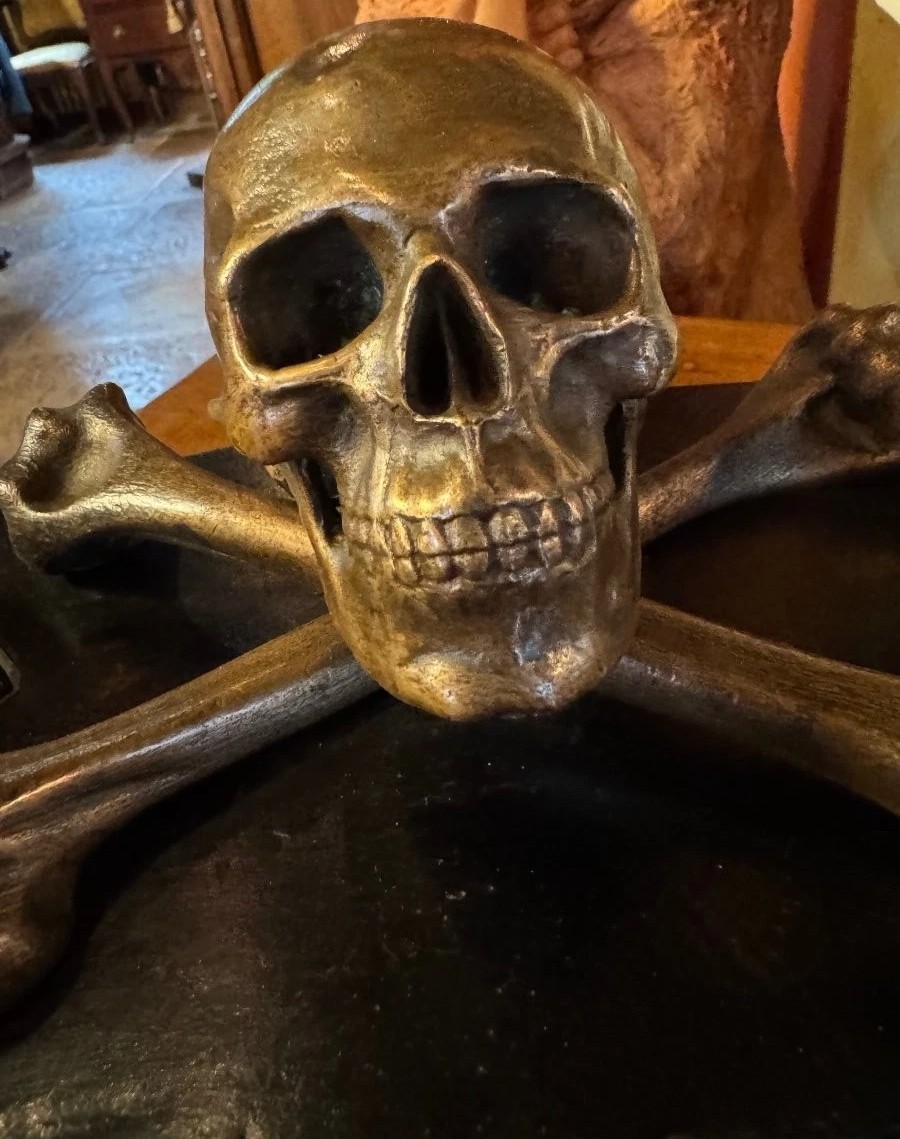
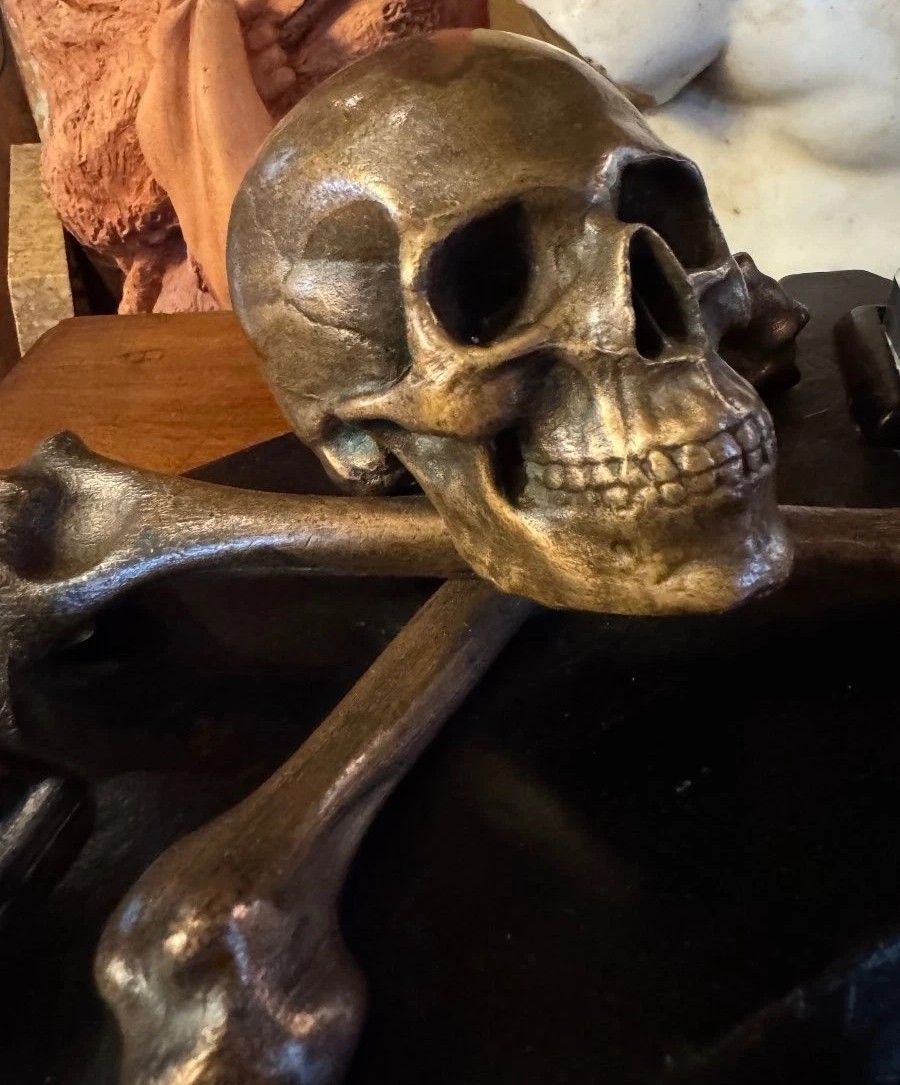
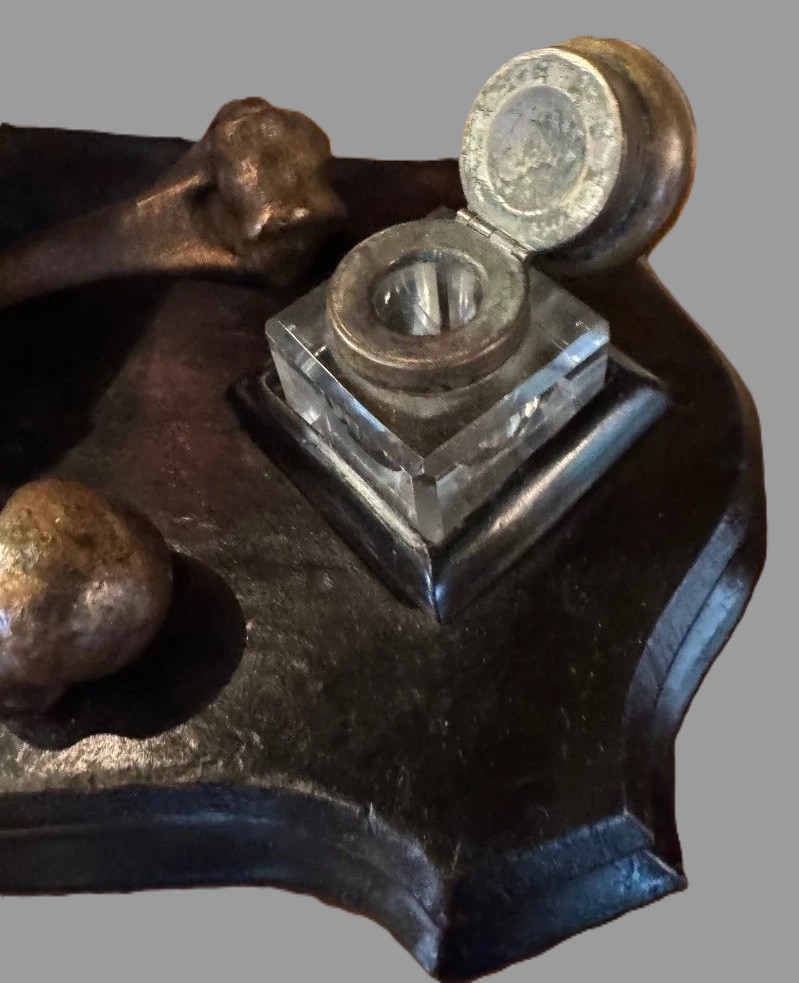
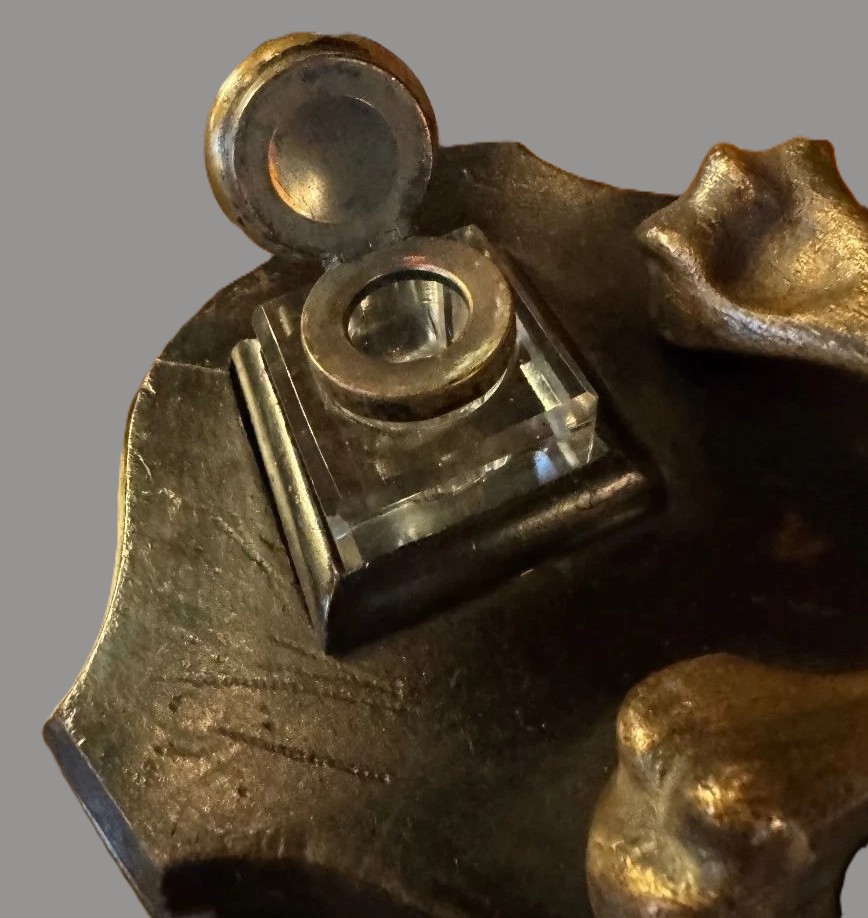
Memento Mori Skull Inkstand
| Categories | Figural - Inanimate |
| Type | Skeleton |
| Material | Bronze, Glass, Wood |
| Markings | Unmarked |
| Manufacturer | Undetermined |
| Origin | Undetermined |
| Date or Era | circa 1890 |
| Measuring | 14 ⅛” x 6 ⅝” x 5 ⅛” high |
This is a striking Memento Mori (Latin for “remember you must die”) inkstand. Its design is a quintessential example of late 19th-century European craftsmanship, blending the macabre with the highly functional.
Detailed Description
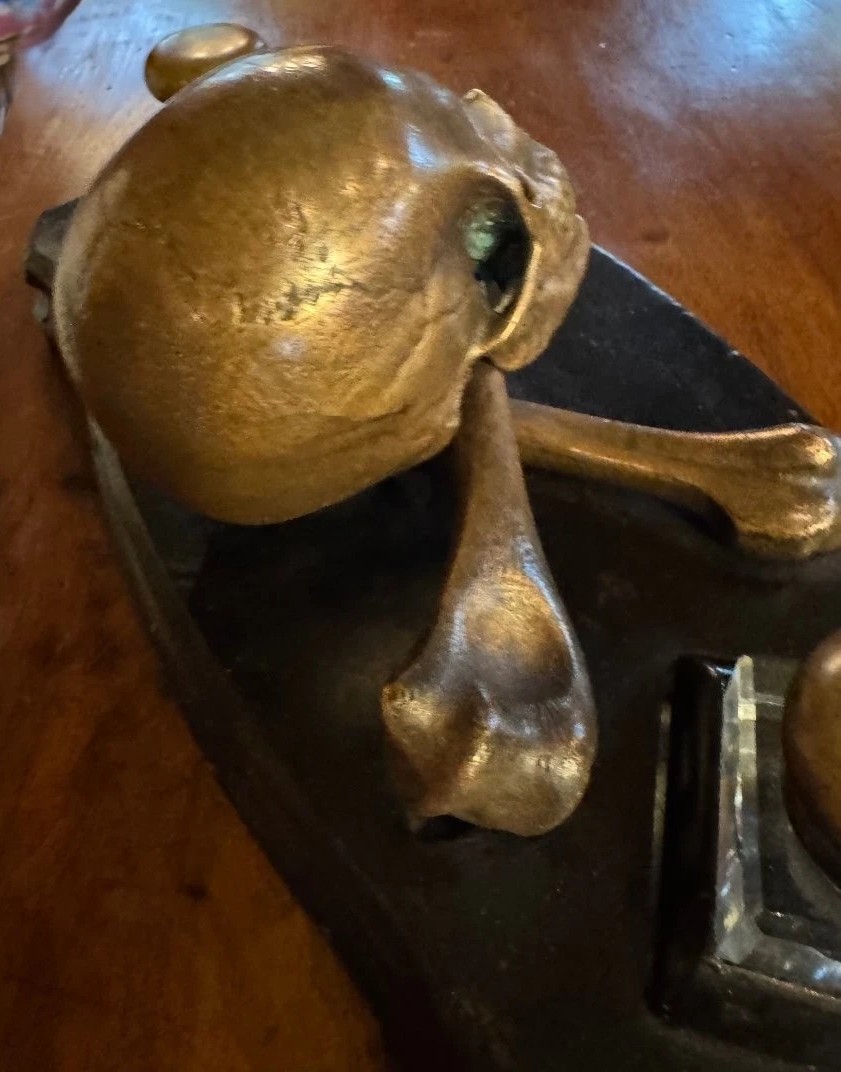
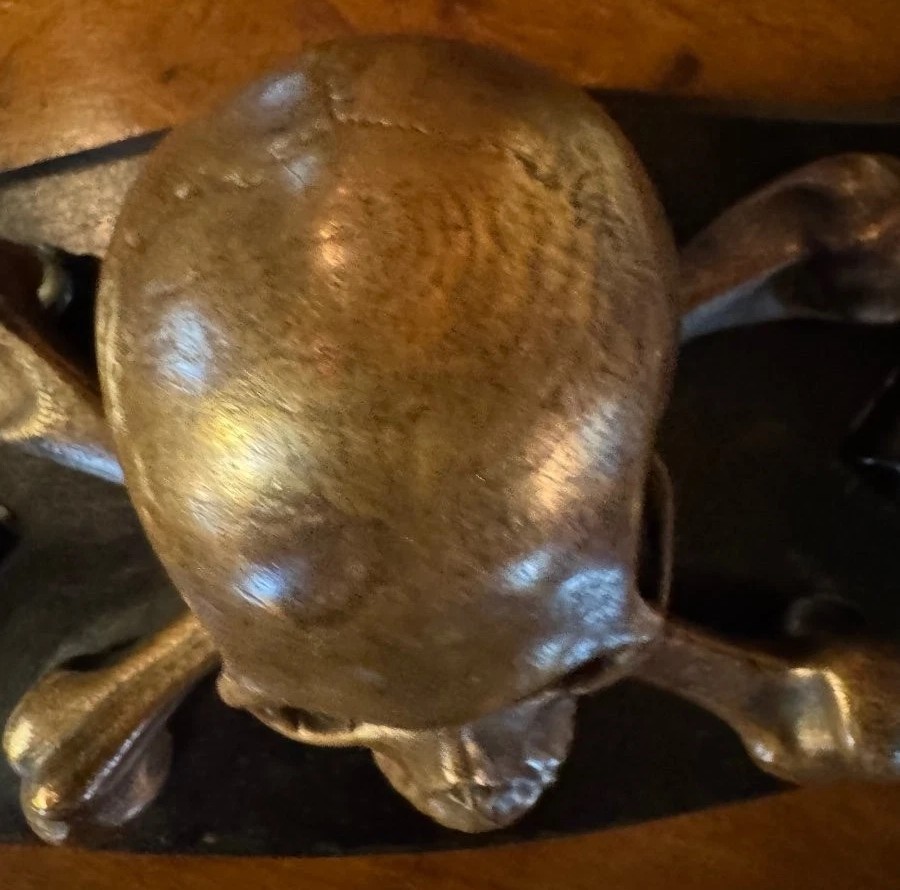
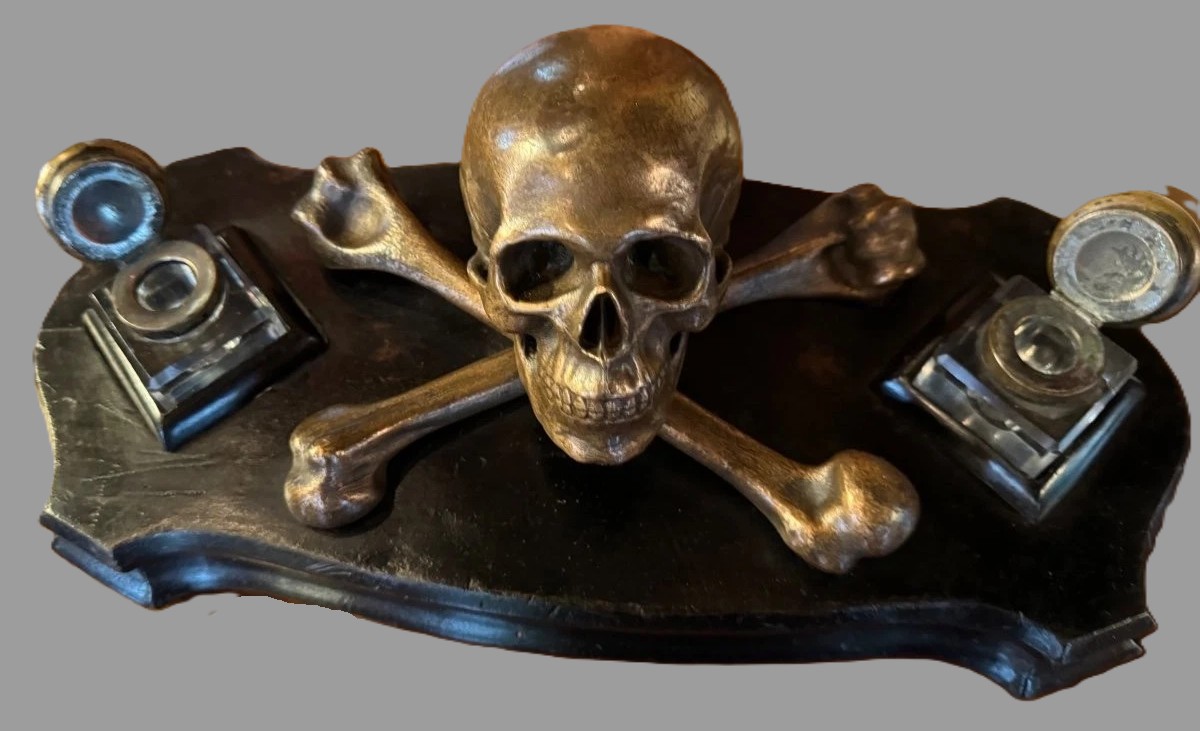
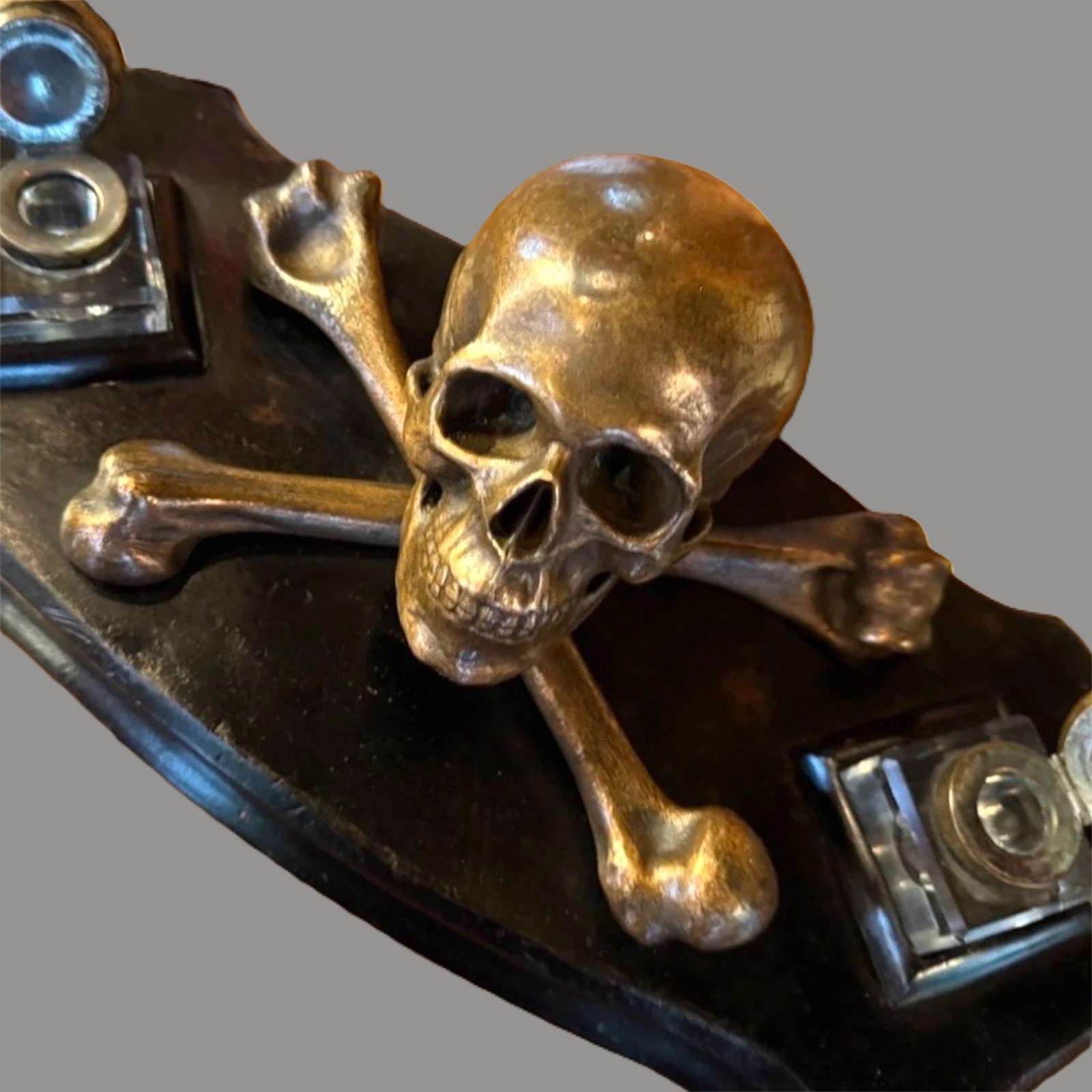
- Central Motif: The centerpiece is a finely cast patinated bronze skull resting atop crossed femurs. The level of anatomical detail—specifically the cranial sutures and the articulation of the jaw—suggests it was intended for a sophisticated audience, likely a scholar, physician, or a member of a fraternal order.
- The Base: The base is crafted from ebonized wood. The serpentine, molded edges are characteristic of the Victorian Gothic or Napoleon III (French) styles popular between 1870 and 1890.
- Inkwells: The two square, cut-glass wells are positioned symmetrically. The metal lids match the patina of the central skull. The entire structure is removable.
Historical Context & Symbolism
The “Skull and Crossbones” was a powerful allegorical symbol during the Romantic and Symbolist movements. While often associated today with piracy, in the 19th century it served a more philosophical purpose:
- Intellectual Contemplation: Such pieces were common in private libraries or “Wunderkammers” (cabinets of curiosities) as a reminder to the writer of the transience of life and the importance of leaving a legacy through their words.
- Masonic Influence: This inkstand may reflect Masonic iconography. The skull and bones are central to the Chamber of Reflection, where a candidate would sit alone to contemplate their mortality before initiation. An inkstand of this quality could easily have graced a Lodge’s secretary desk or the private study of a high-ranking Freemason.
Date and Origin
- Estimated Date: Circa 1880–1900. The combination of ebonized wood and heavy bronze/glass desk accessories reached its peak during this window.
- Likely Origin: Continental Europe, specifically France or Germany. French foundries (like those in Paris) were famous for high-quality memento mori bronzes, while German “Golgotha” and fraternal items frequently utilized this specific ebonized wood and bronze combination.
Sold for $4987 in March 2026
Content disclaimer. The information posted is the owner’s best knowledge and may not have been vetted by the SOIC. We welcome comments, corrections, and additions, working to make our website information comprehensive and accurate.
Join the Society of Inkwell Collectors (SOIC) – it’s free!
Founded in 1981 as a non-profit organization,
we are documenting inkwells (and accessories).
We’re here to help and inform!