


Inkipedia

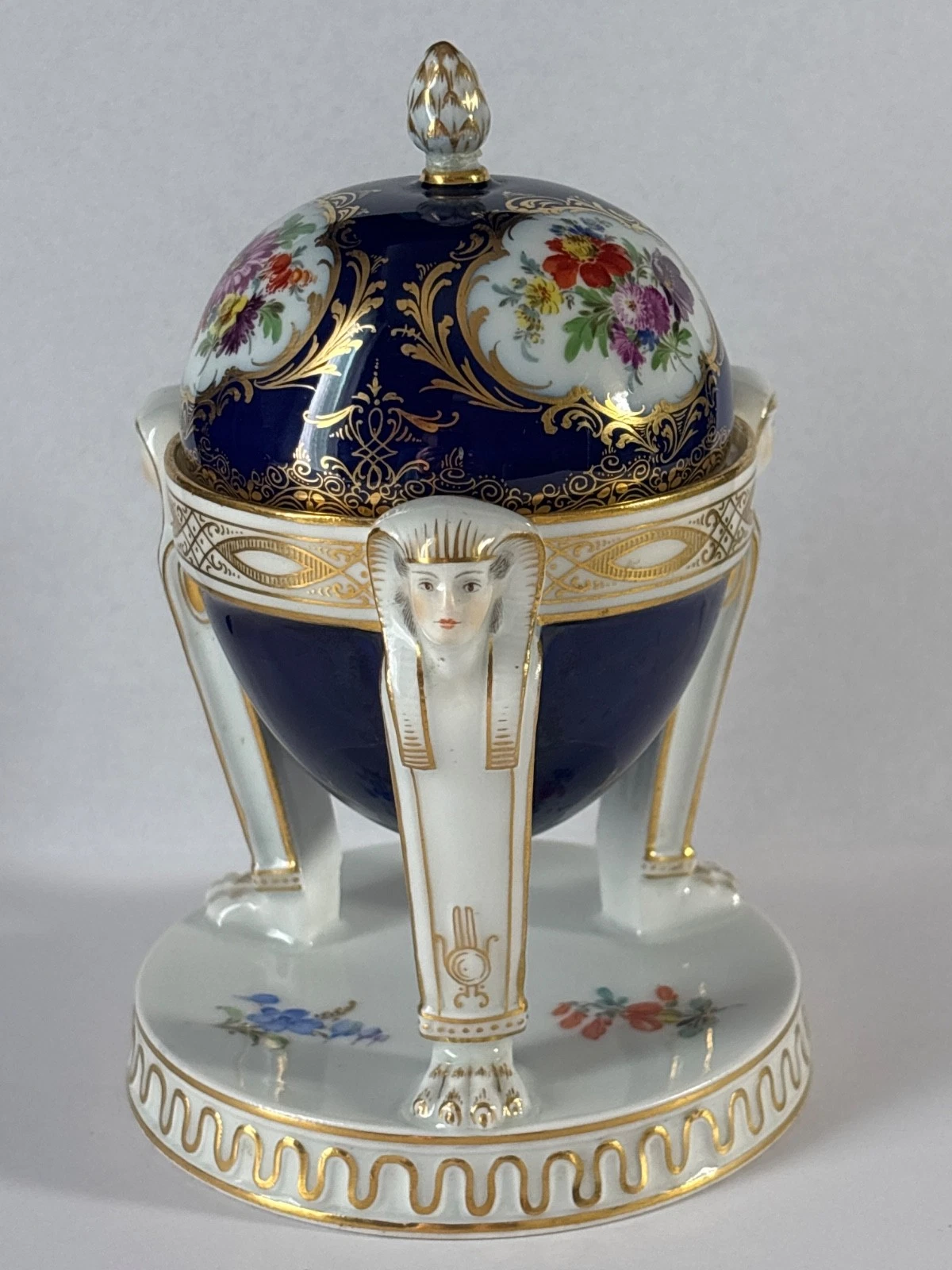
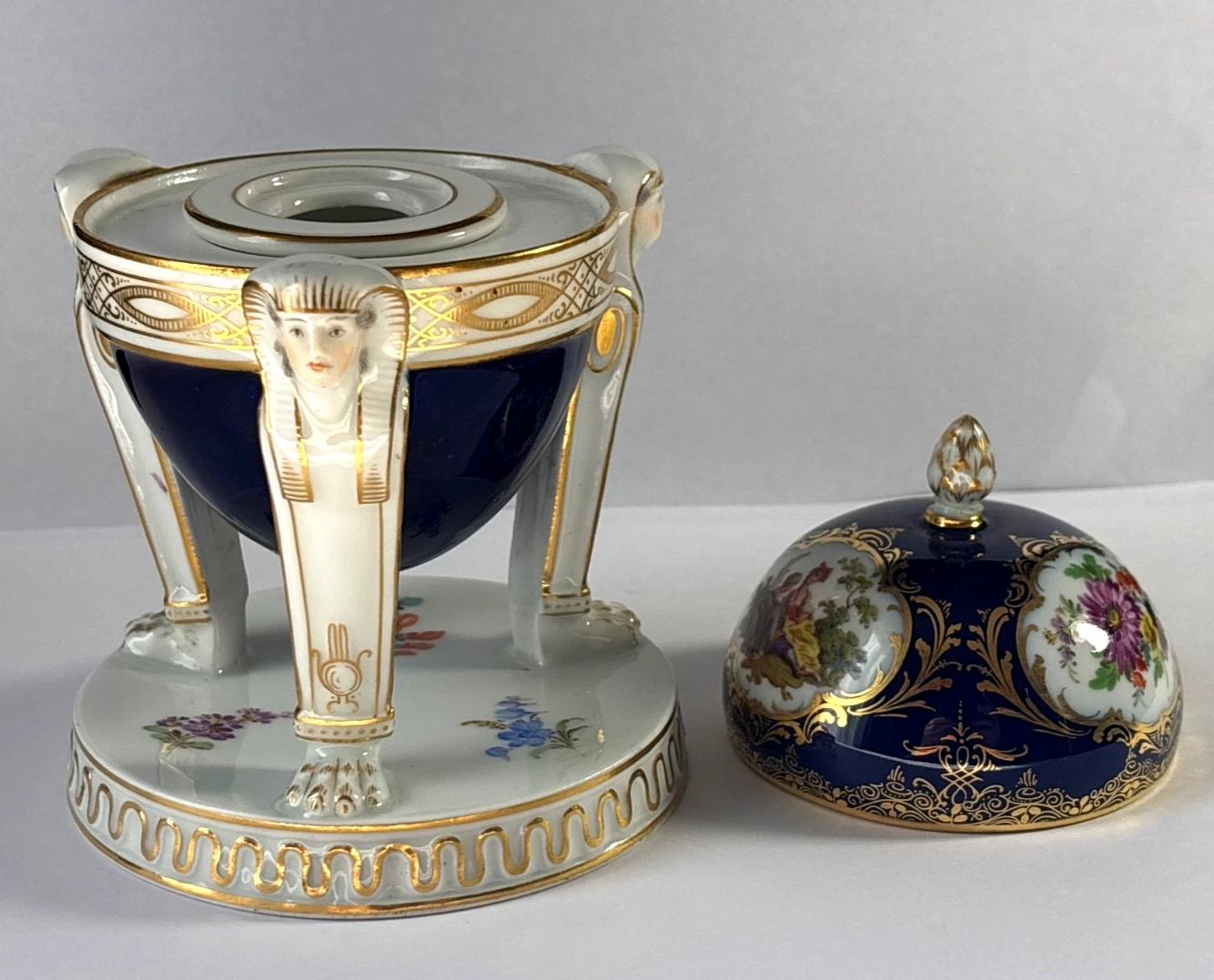
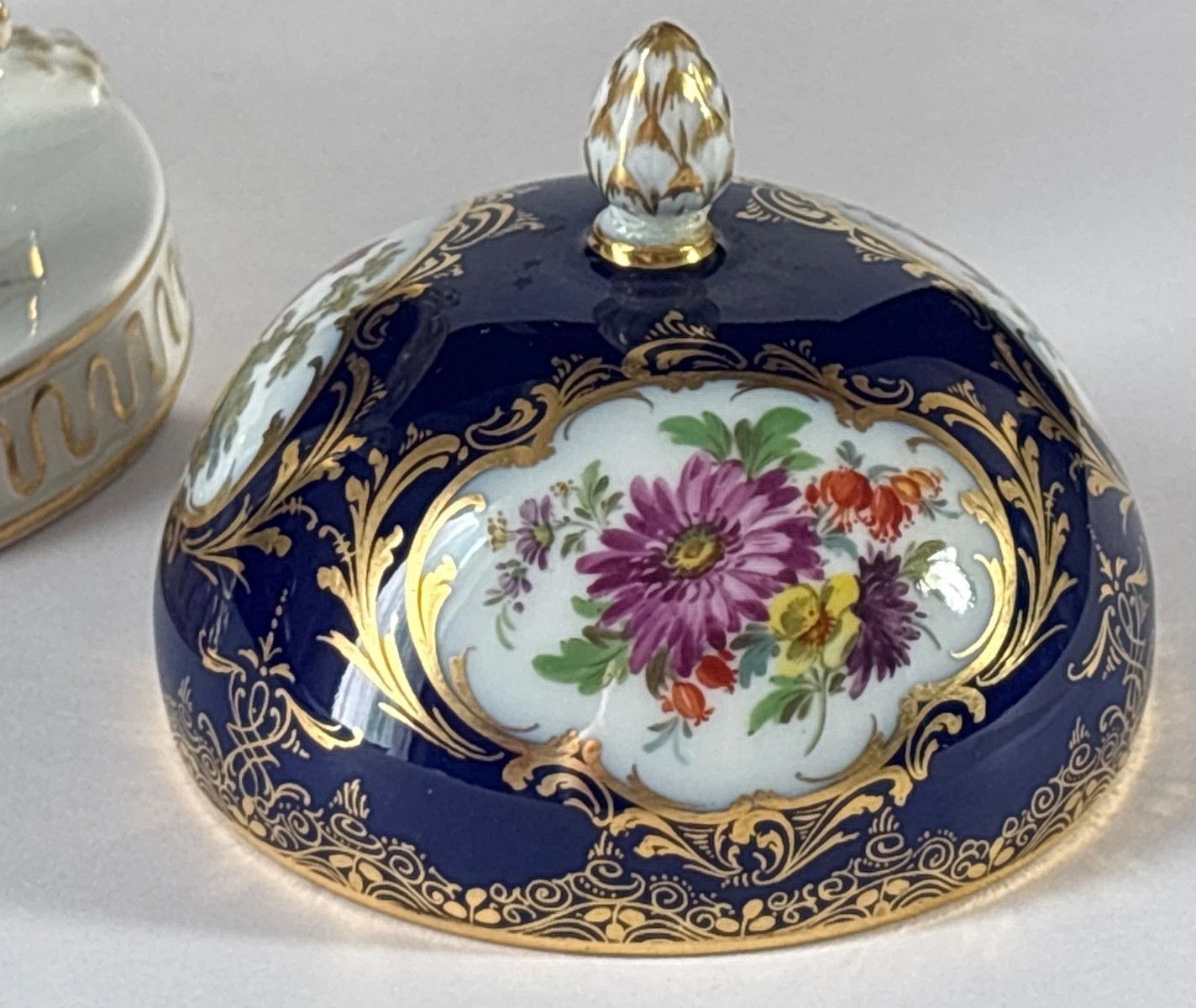
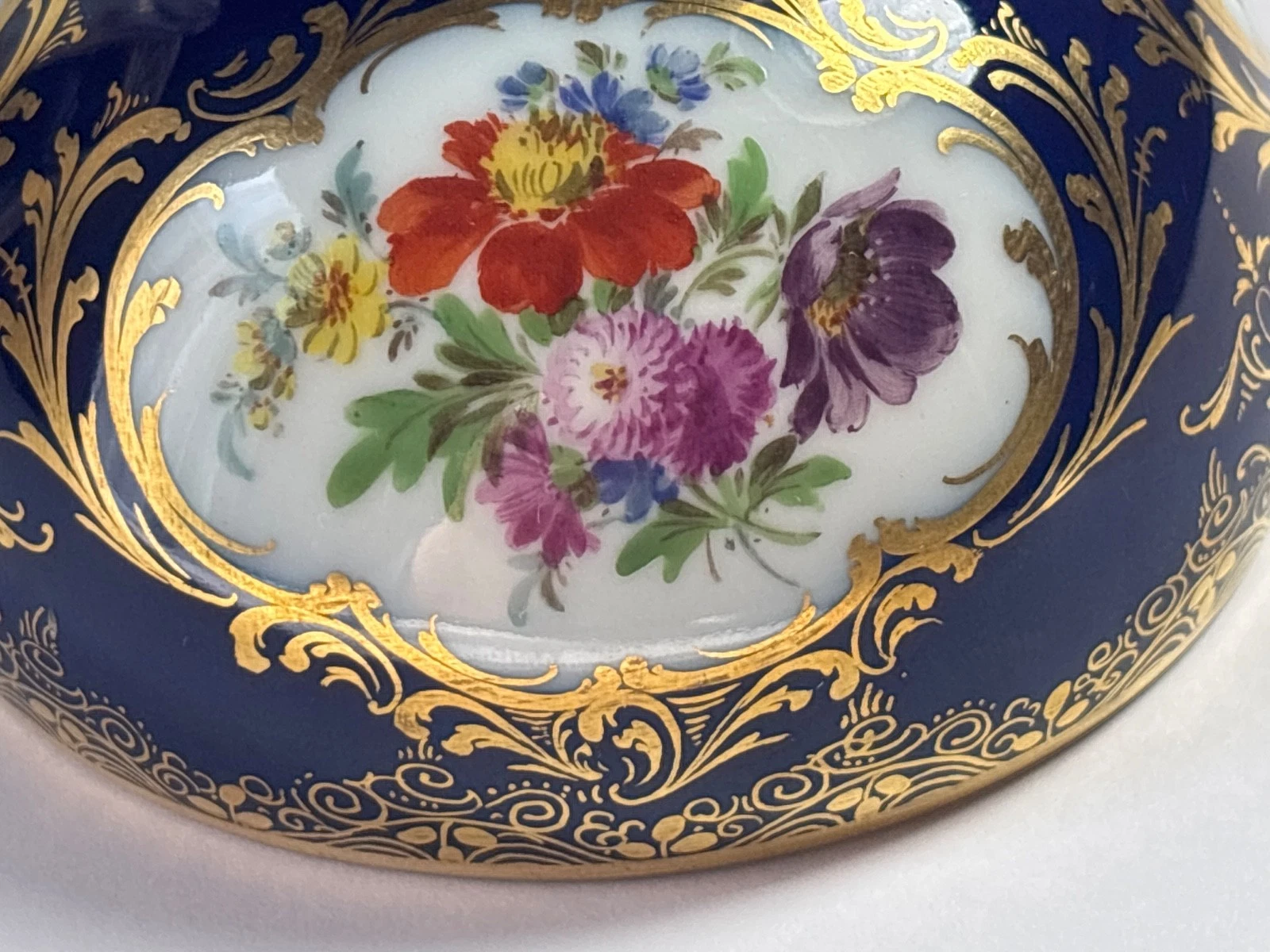




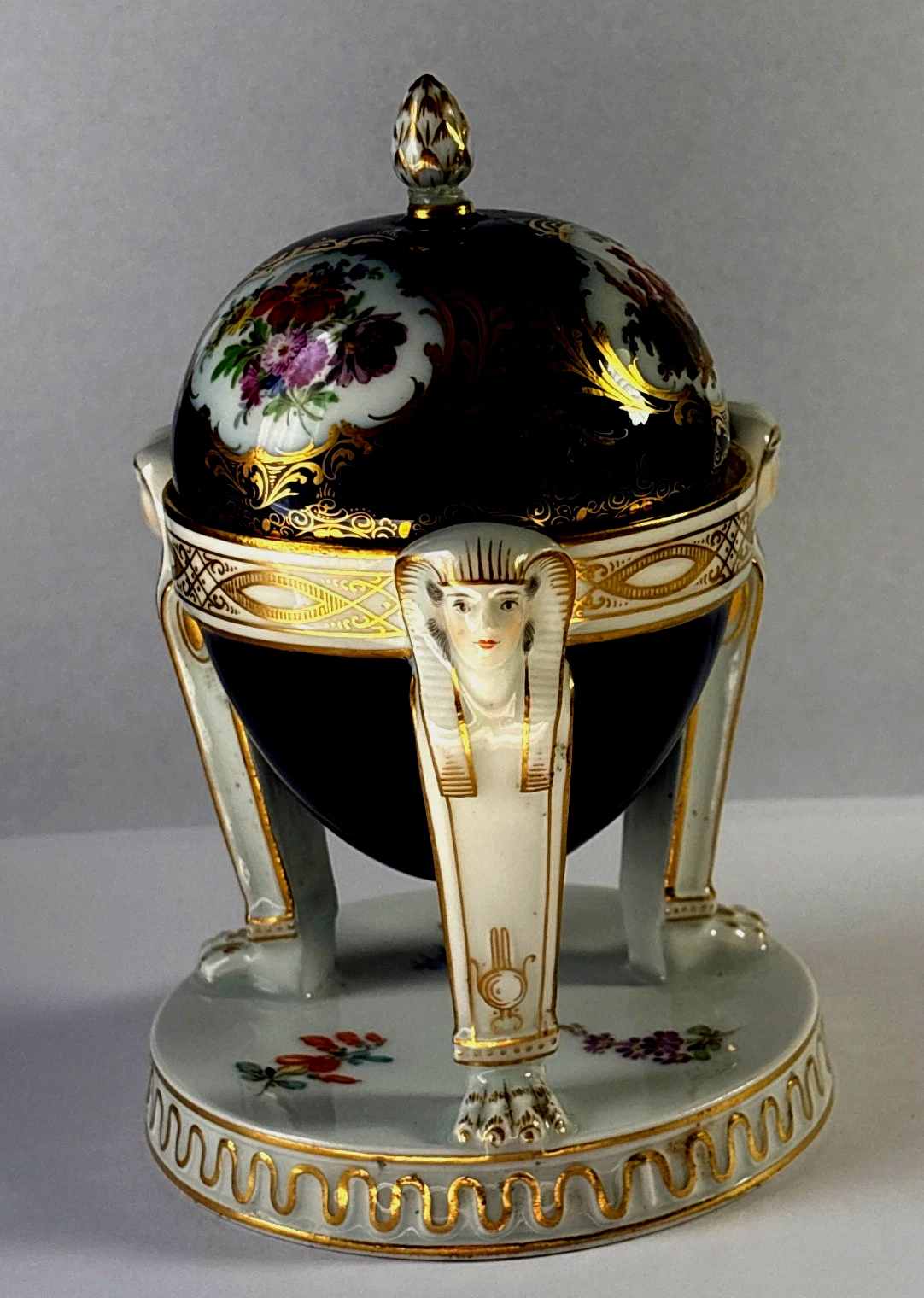

Meissen Egg-Form Inkwell
| Categories | Ceramics/Porcelain "Named" Makers |
| Material | Porcelain |
| Markings | See Narrative |
| Manufacturer | Meissen |
| Origin | Germany |
| Date or Era | circa 1830 |
| Measuring | 4” diameter base; 6” high |
Form and Structure
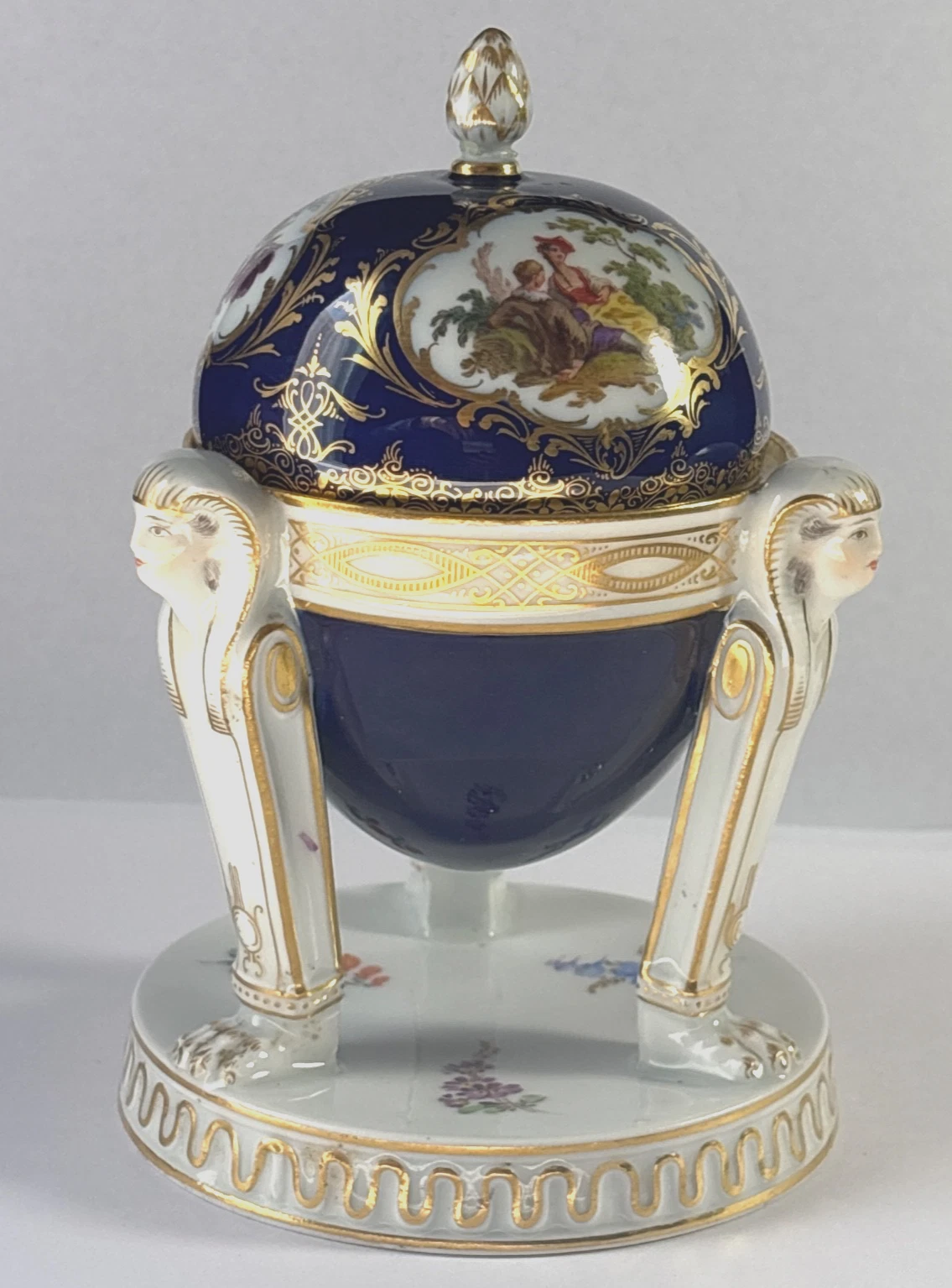
- Overall Form: The inkwell takes an elegant, vertical egg-form shape, which is supported on a circular architectural base.
- Supports (Caryatids): The egg-form body is supported by three Egyptian-style caryatids (sculpted female figures serving as columns). These figures stand on the circular base and hold the egg-shaped well above their heads. The use of Egyptian motifs is characteristic of the Neoclassical style, particularly the Empire period.
Materials, Color, and Decoration
- Material: Fine hard-paste porcelain.
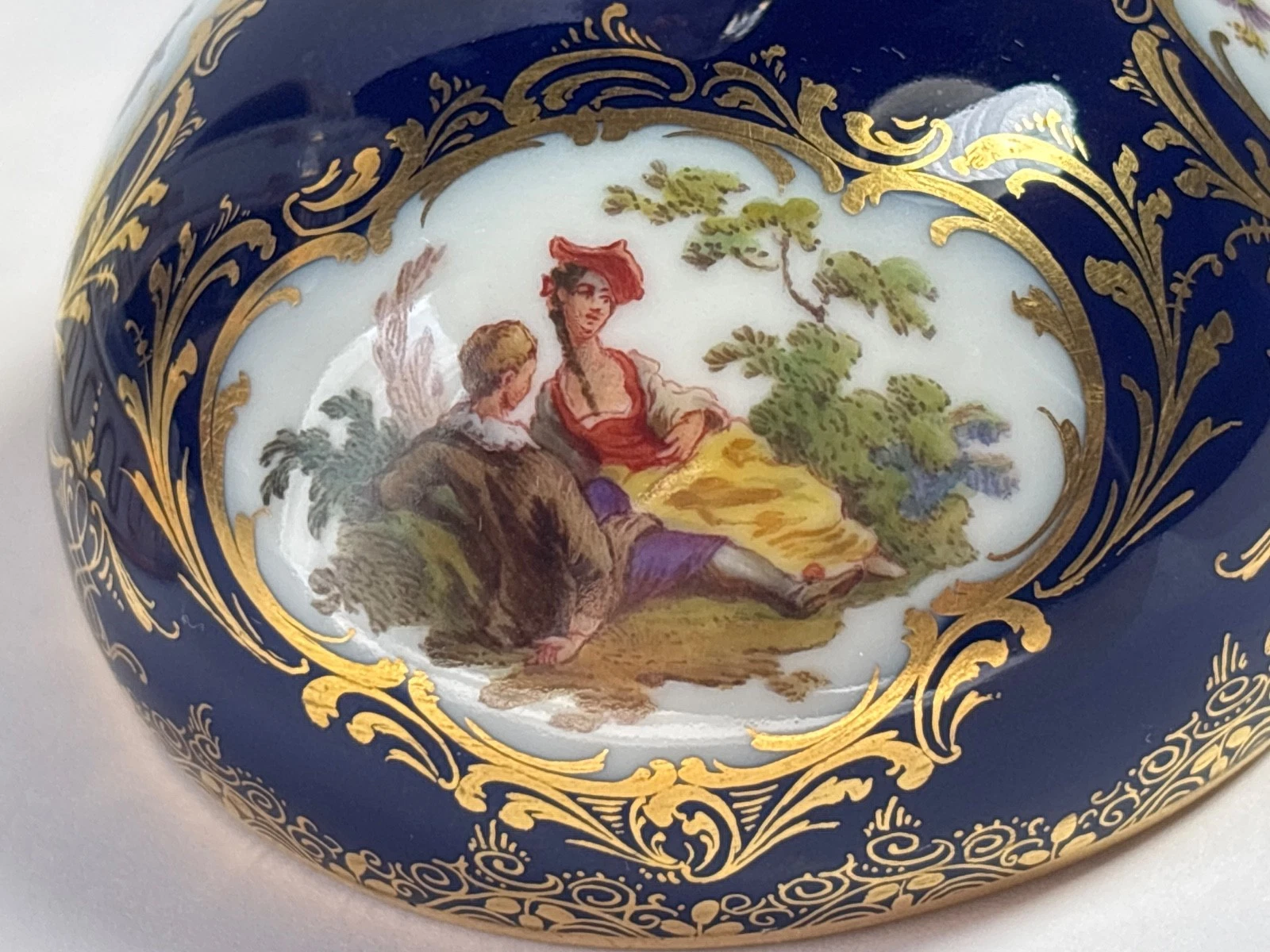
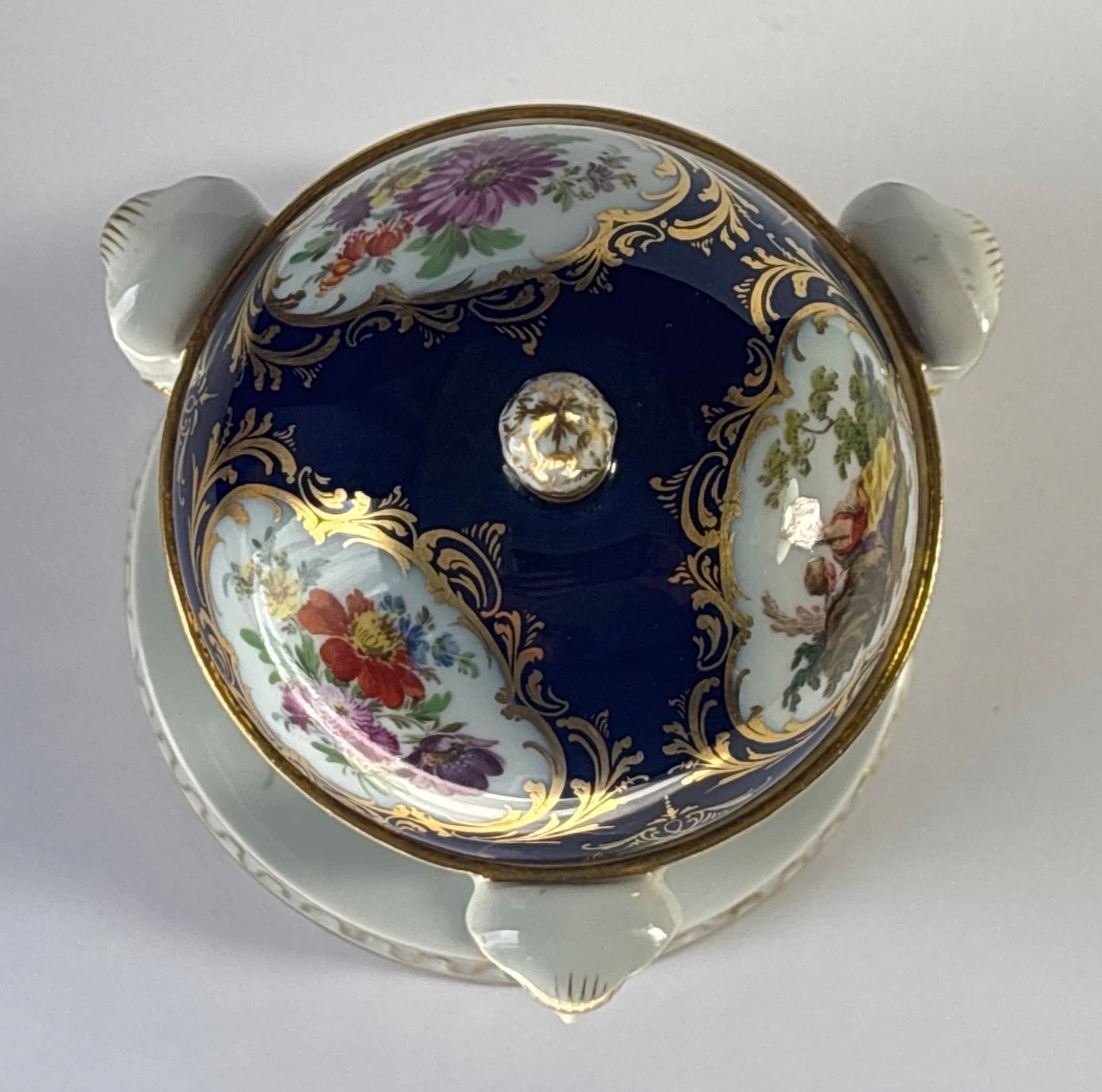
- Glaze and Color: The main body and components feature a rich, deep cobalt blue glaze (often referred to as bleu de roi or simply cobalt blue).
- Gilding: Extravagant gilded trim (gold decoration) is applied throughout, highlighting the edges, molded elements, and the base. This provides a luxurious contrast to the deep blue.
- Hand-Painted Decoration: The circular base is adorned with delicate hand-painted floral decoration — small sprays or groups of naturalistic flowers—placed in the reserved white porcelain sections.
Function and Details
- Lid and Finial: The top of the egg-form inkwell is fitted with a removable lid, which is topped by an ornamental acorn finial.
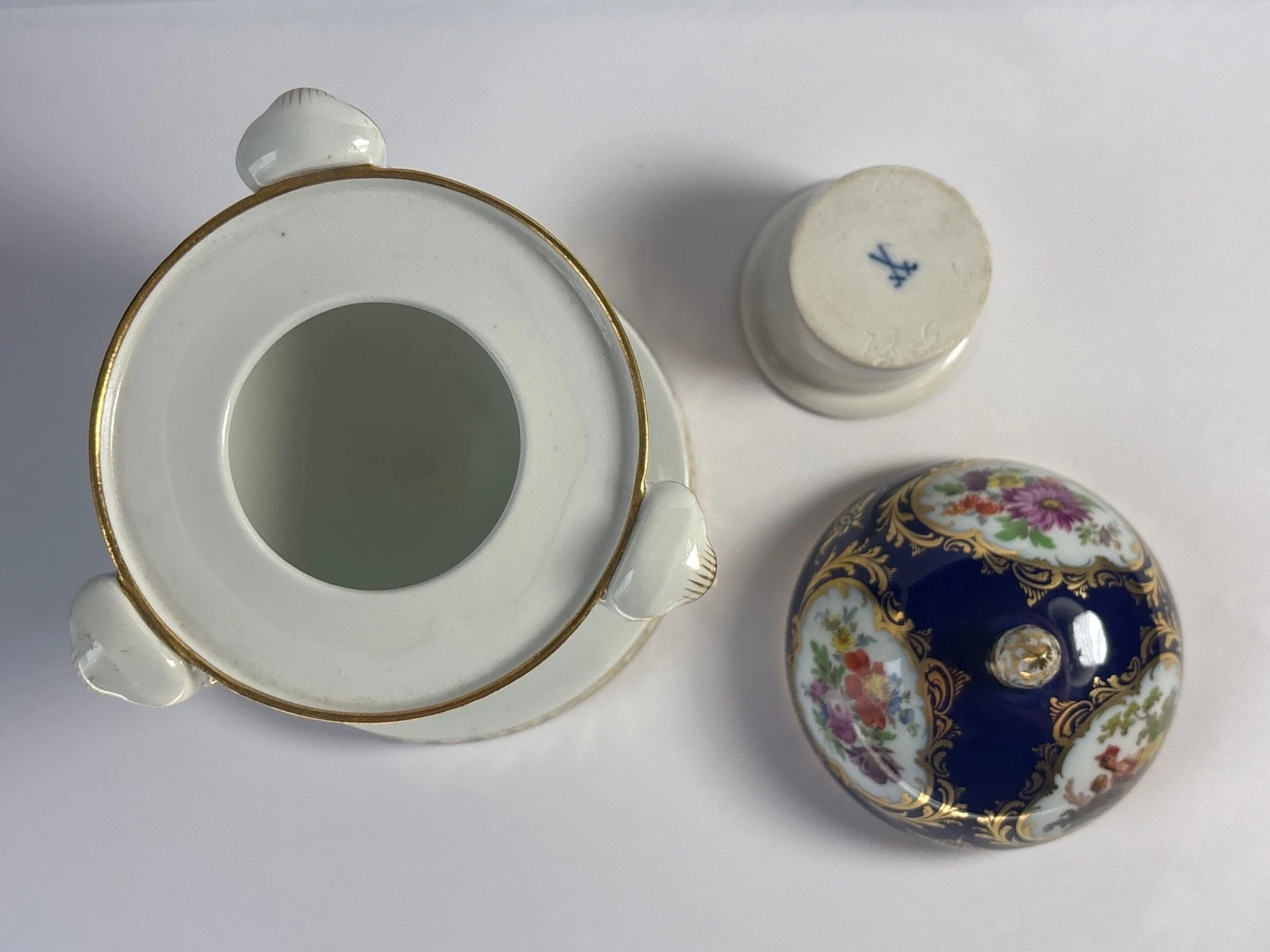
- Interior: The lid covers the inner compartment, which contains the inkpot.
Maker’s Mark
- Mark: The undersides of the piece are marked with the cross-swords in blue underglaze, the famous trademark of the Meissen Manufactory.
Estimated Period of Manufacture
The combination of the Egyptian caryatid motif (Neoclassical/Empire style), the rich cobalt blue and heavy gilding, and the design complexity points to a specific period in Meissen’s history.
The Egyptian revival style was highly fashionable after Napoleon’s campaign in Egypt (1798–1801) and was prominent during the Empire and Biedermeier periods.
- Period: Based on the style, this Meissen inkwell was most likely made during the late 18th century to the first half of the 19th century. A more precise estimate places it within the Early 19th Century (circa 1815–1850).
- Note: Meissen did reissue some historical styles later in the 19th century, but the complexity of the molding and the specific execution of the Empire-style caryatids are strongly indicative of a piece made earlier in the 19th century.
Sold for $677 in September 2025
Content disclaimer. The information posted is the owner’s best knowledge and may not have been vetted by the SOIC. We welcome comments, corrections, and additions, working to make our website information comprehensive and accurate.
Join the Society of Inkwell Collectors (SOIC) – it’s free!
Founded in 1981 as a non-profit organization,
we are documenting inkwells (and accessories).
We’re here to help and inform!