

Inkipedia
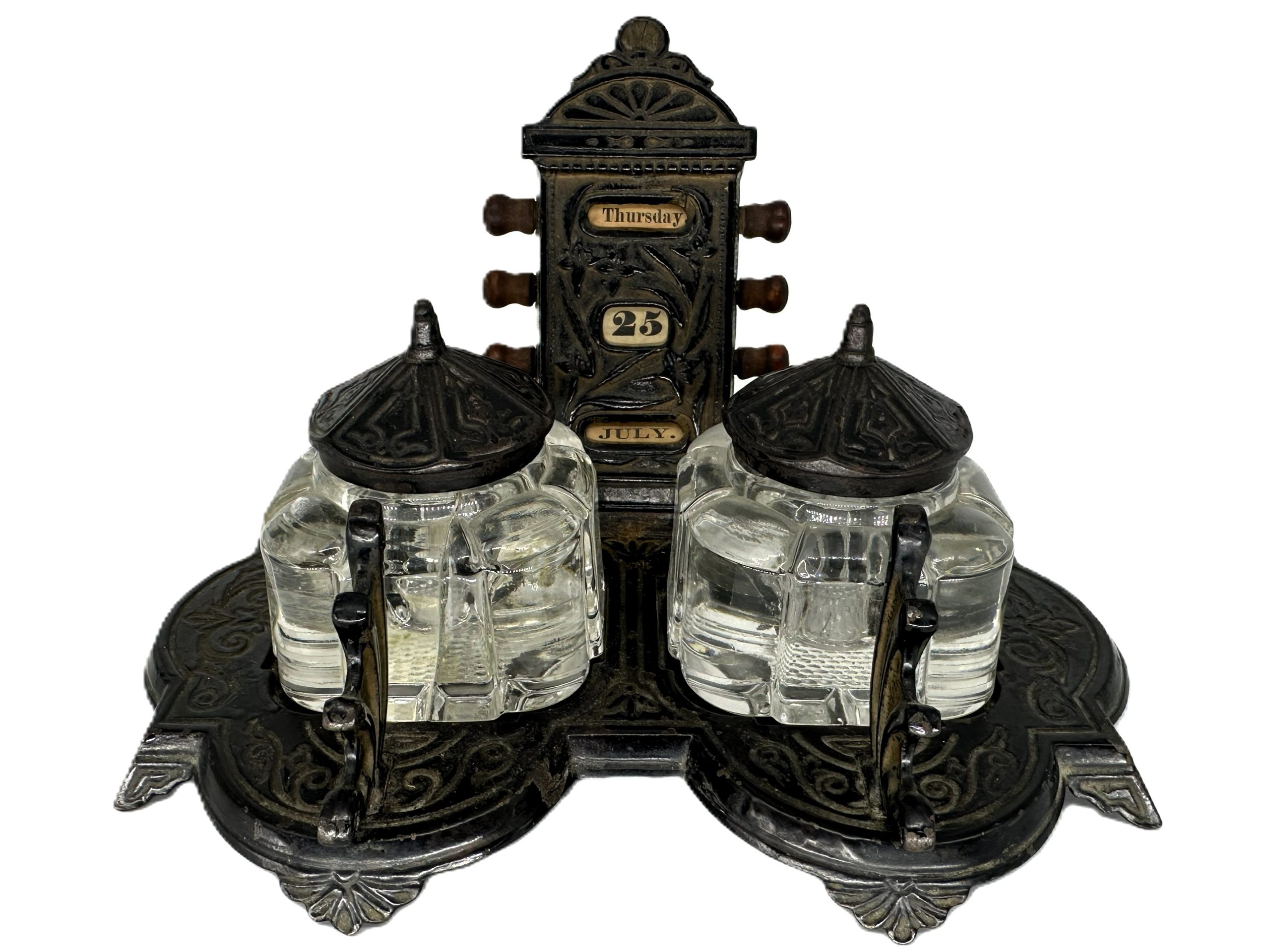
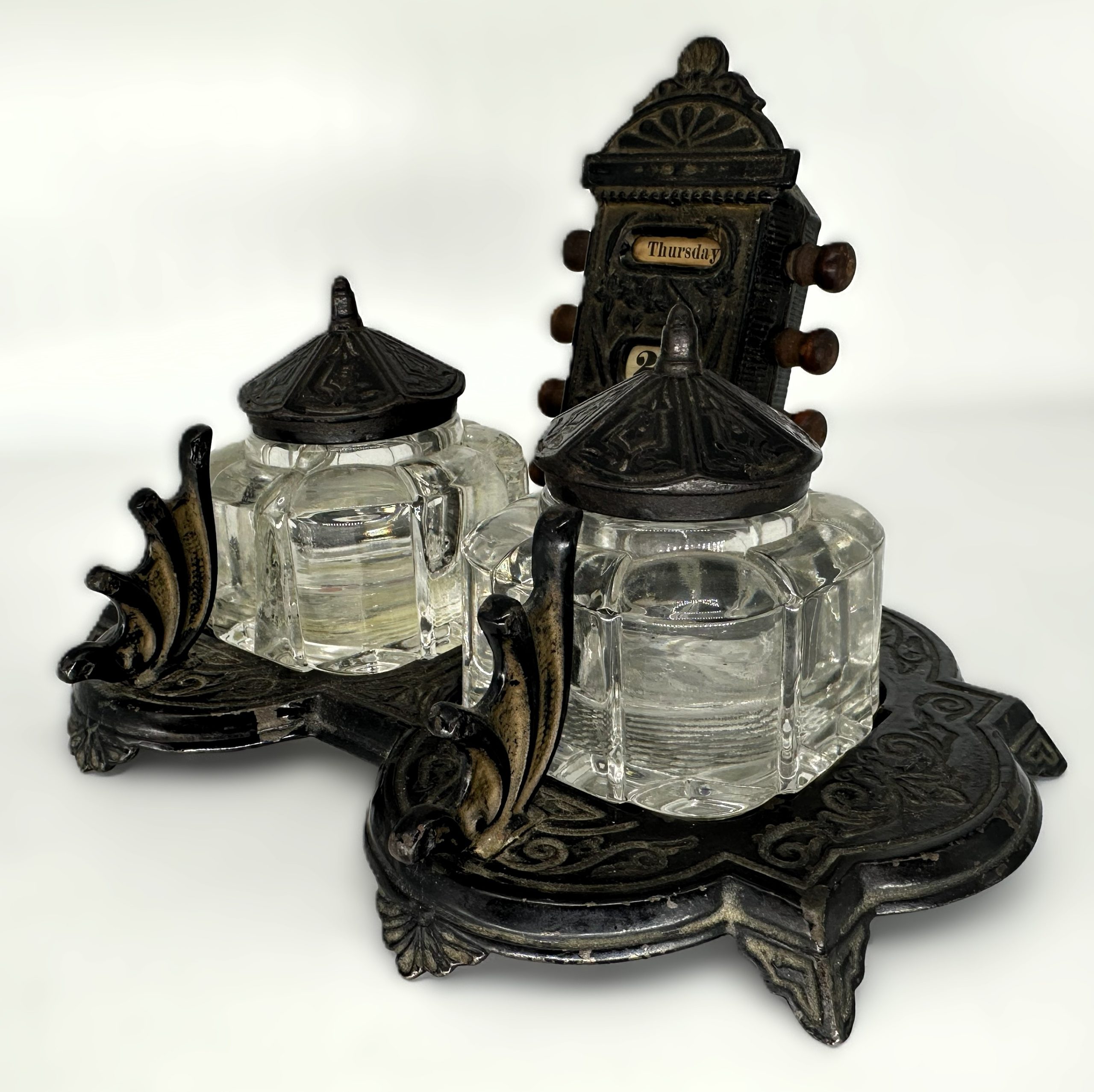
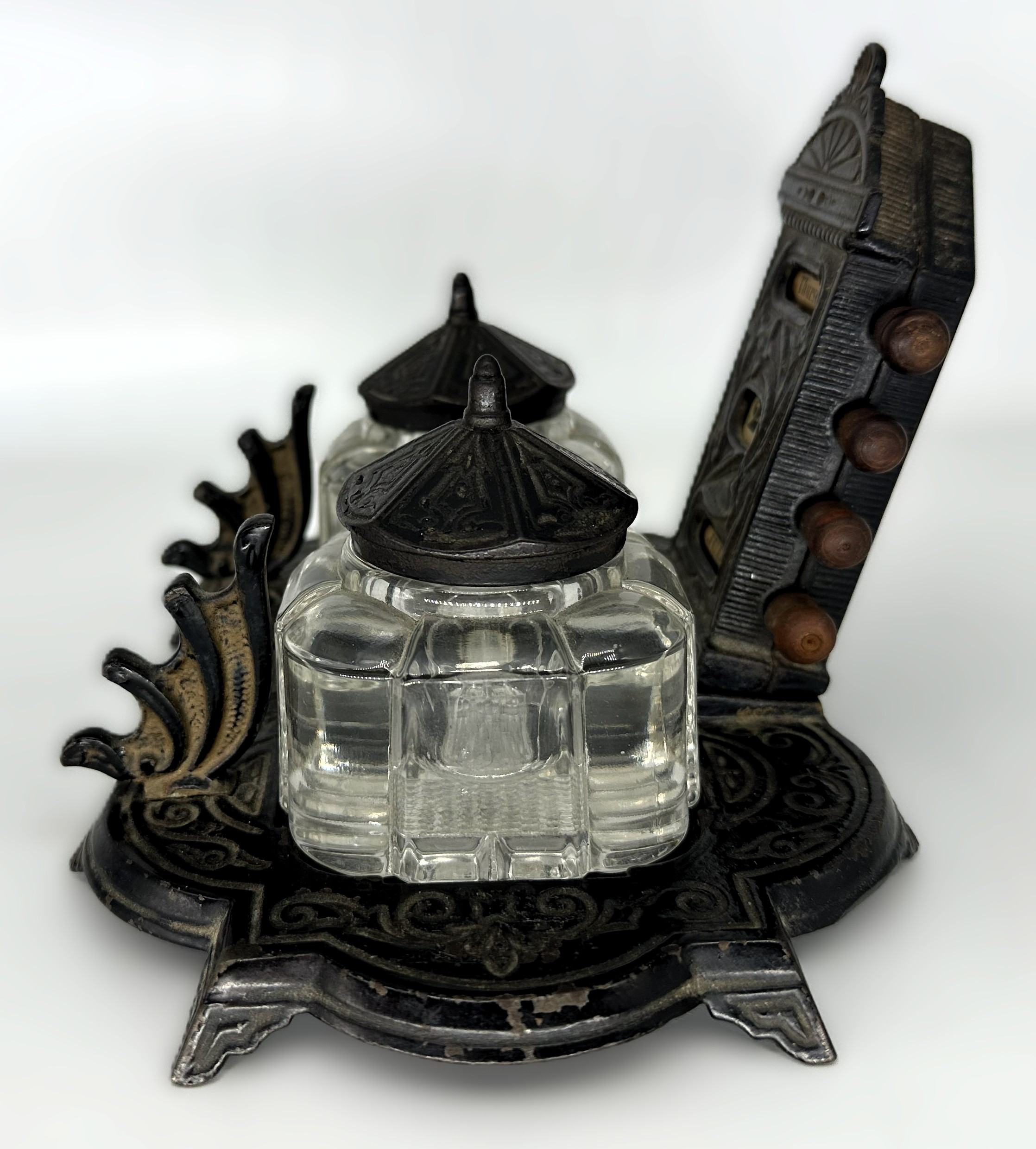
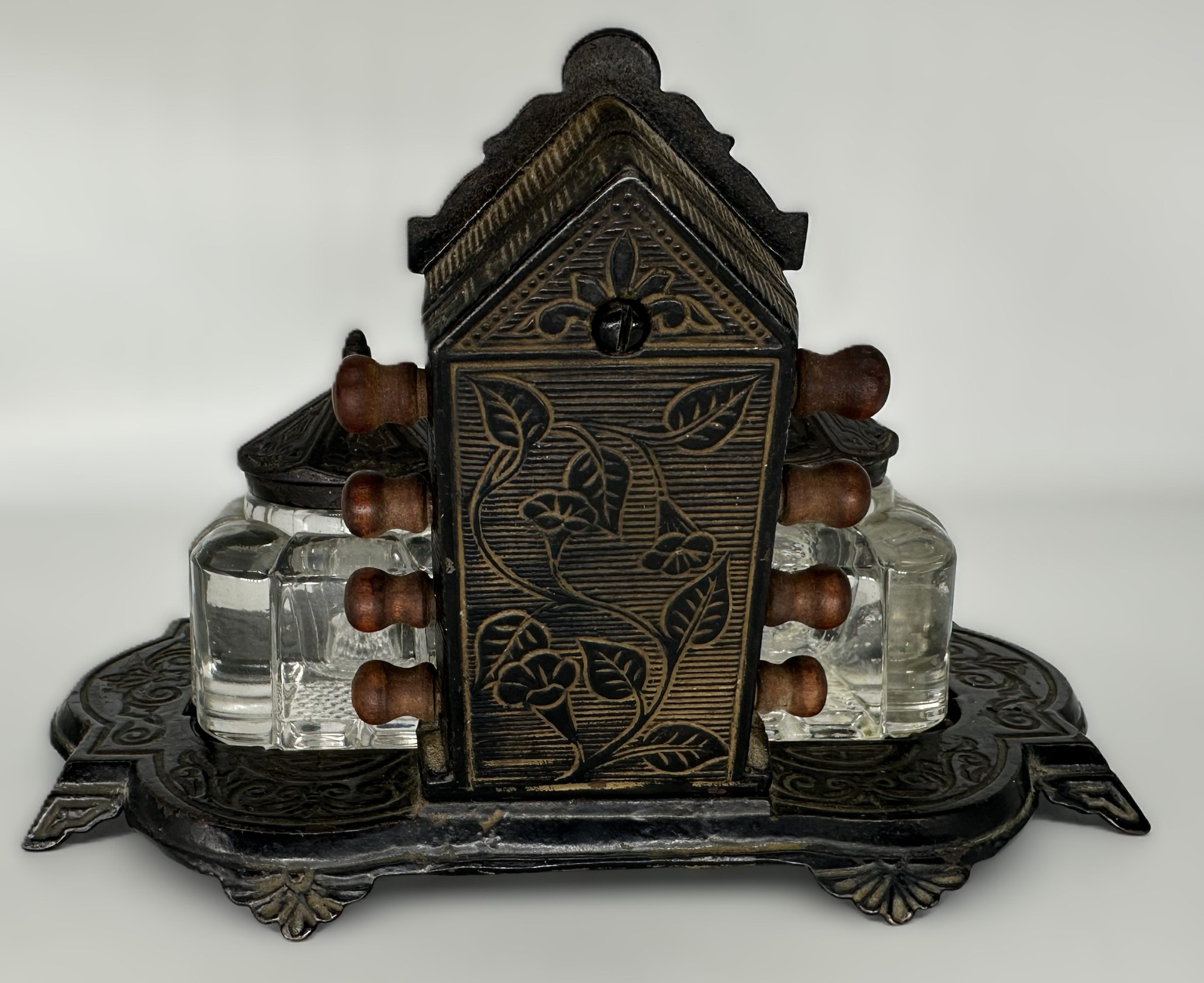
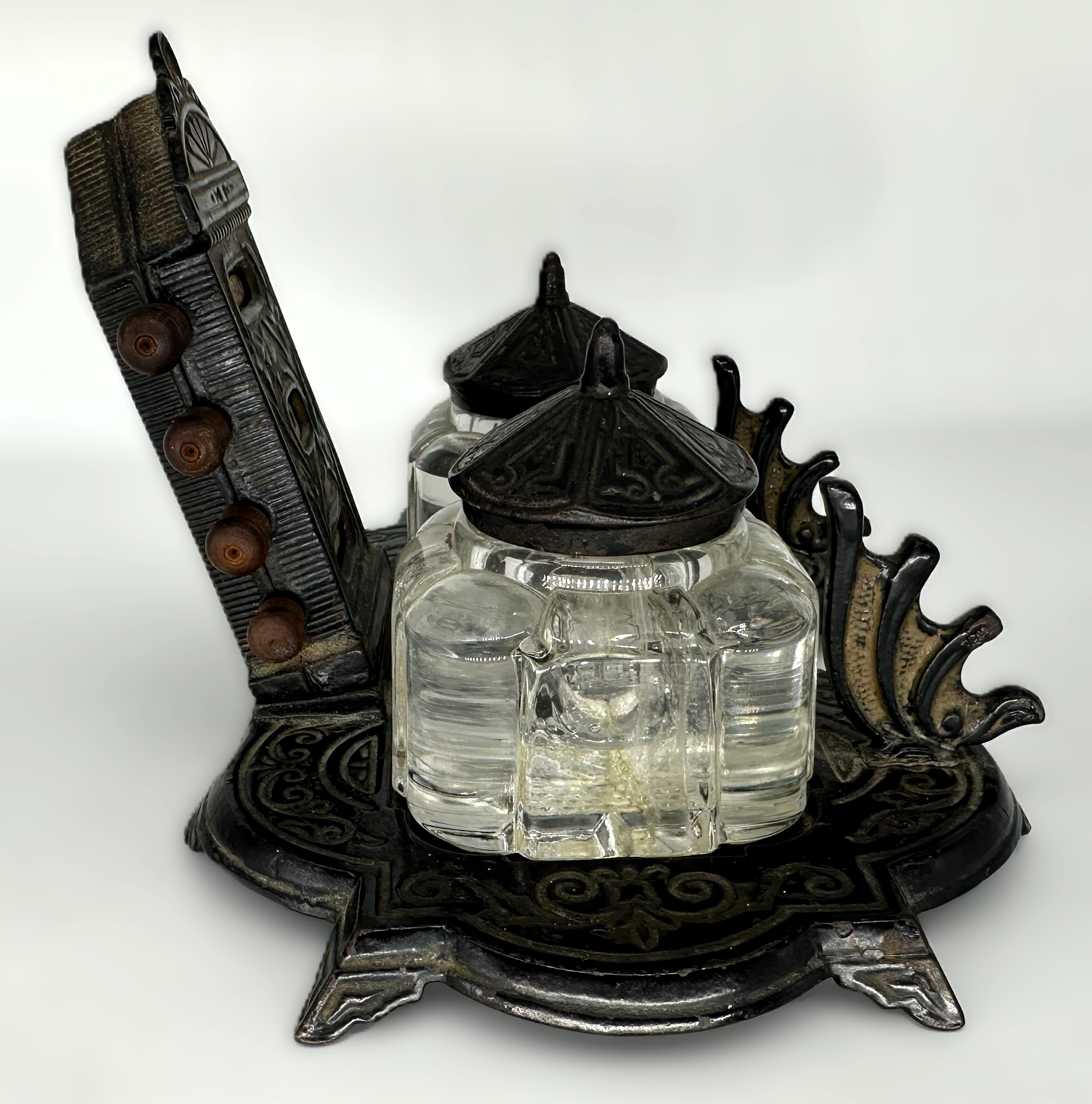
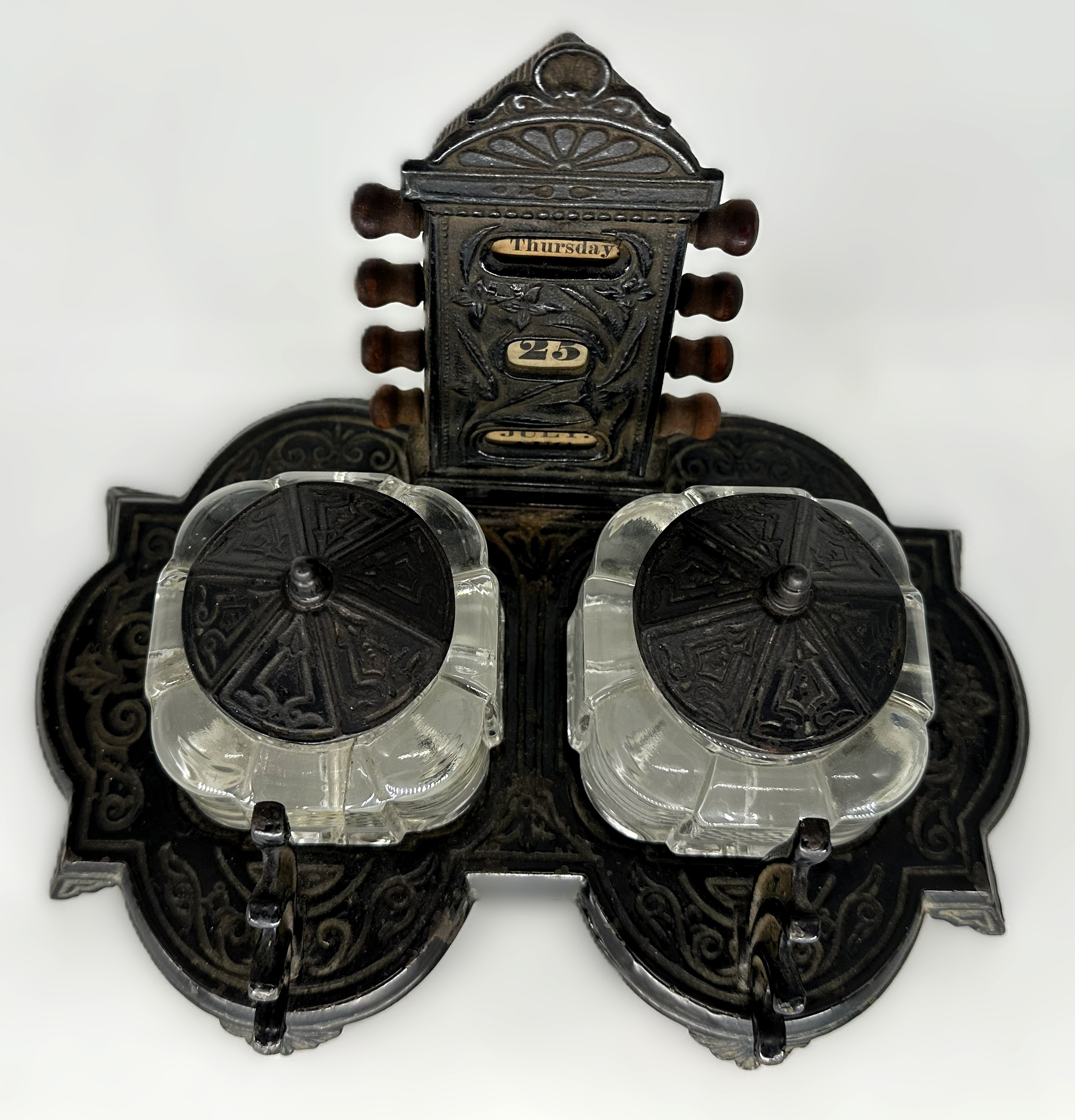
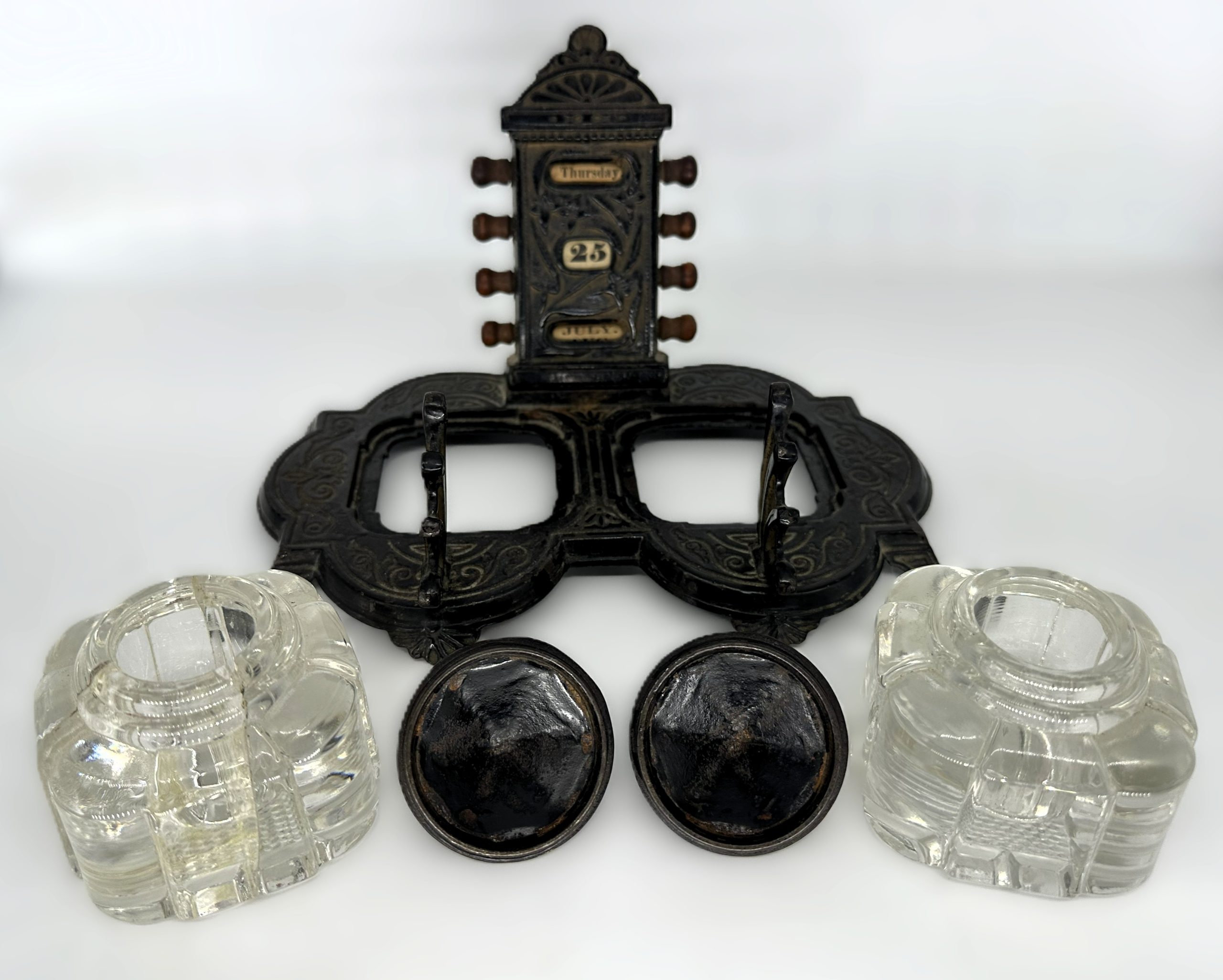
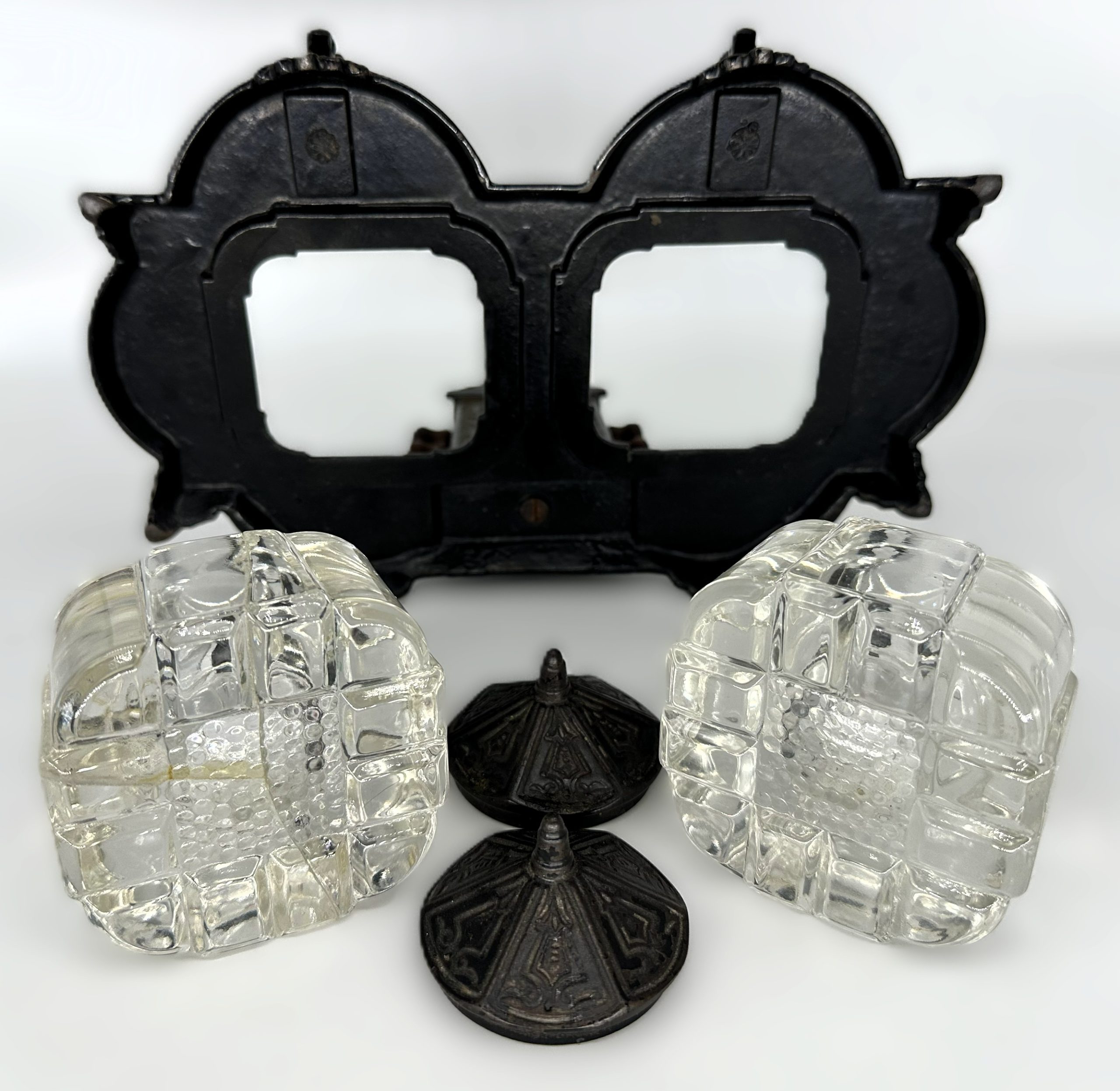
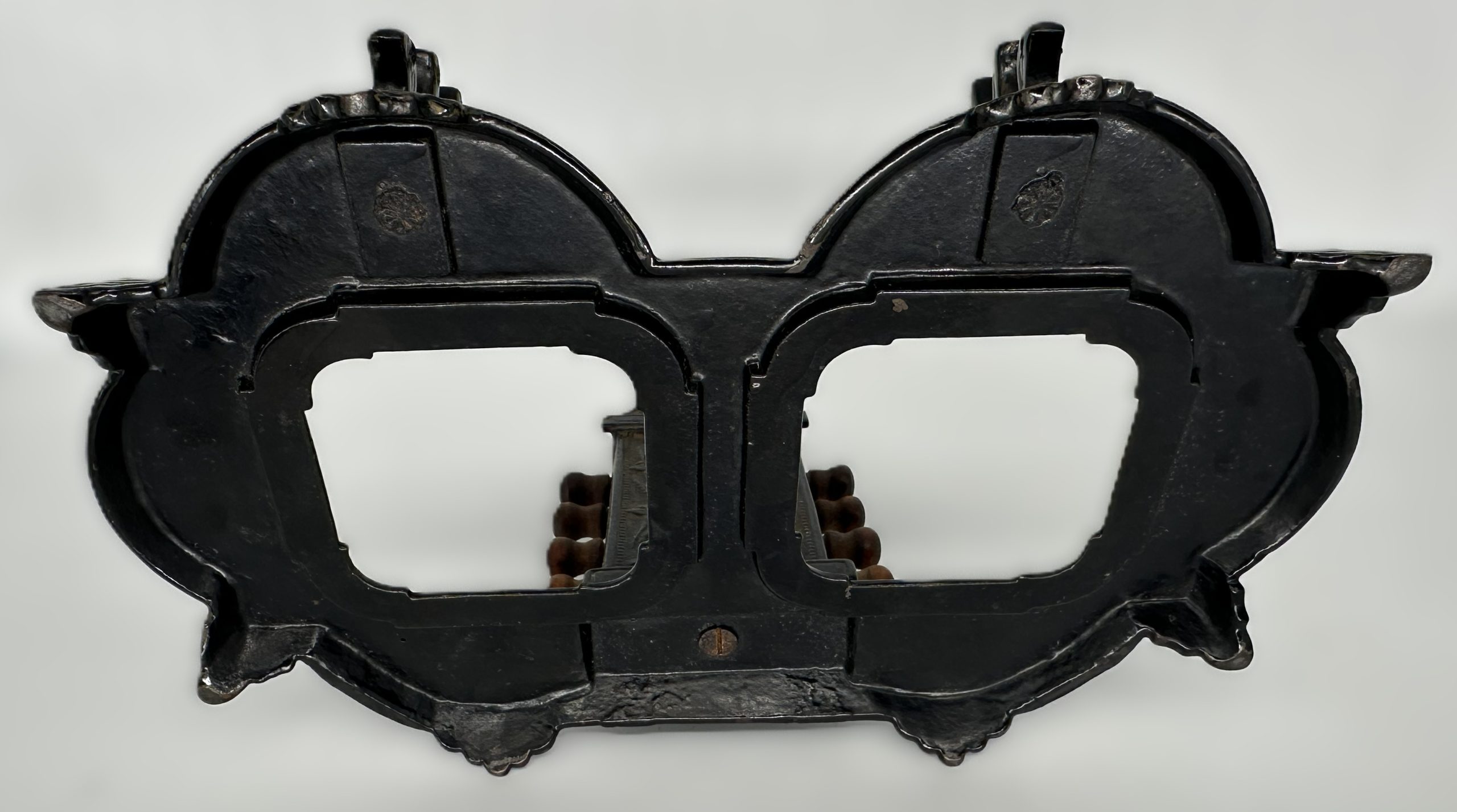
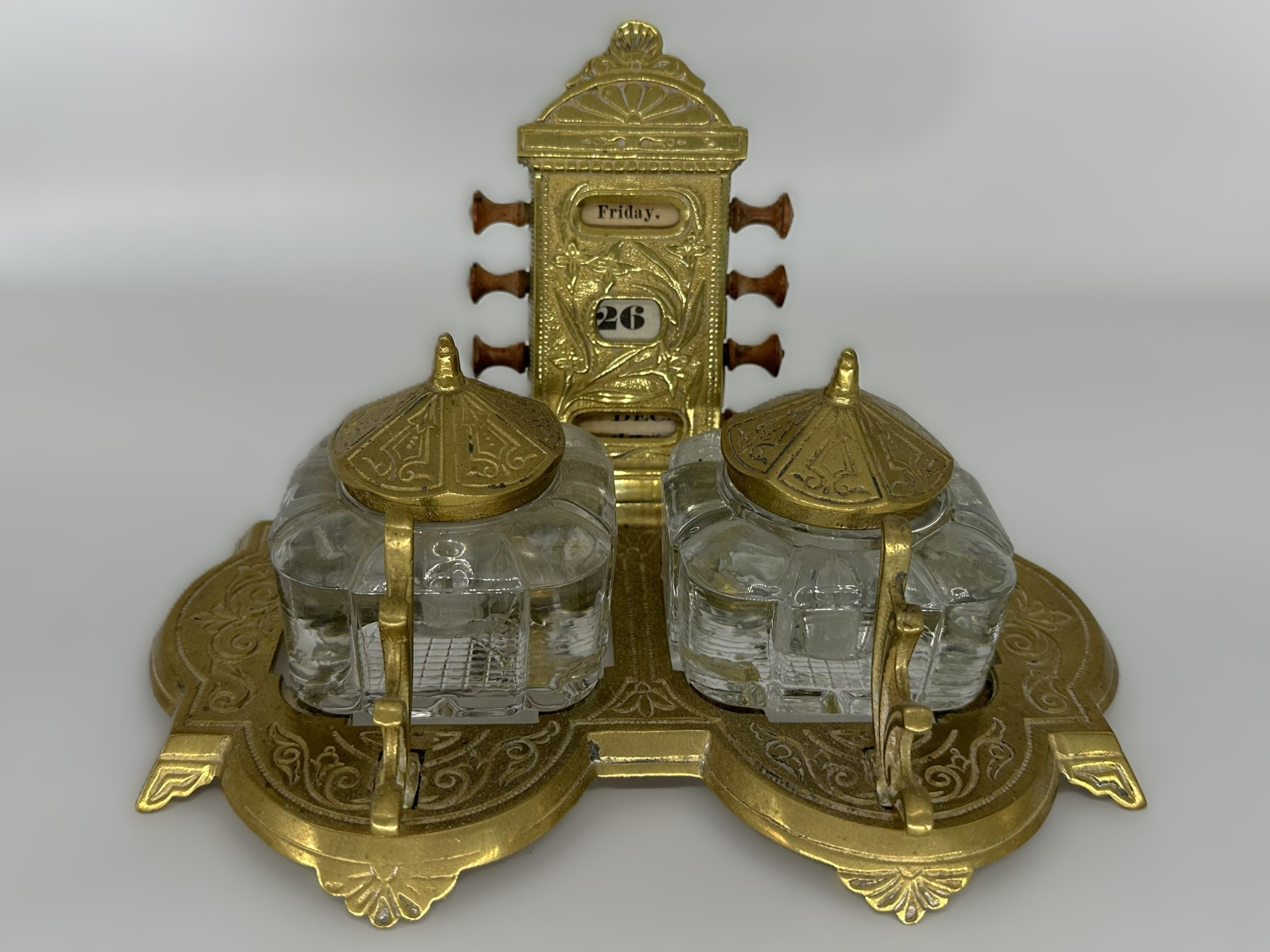
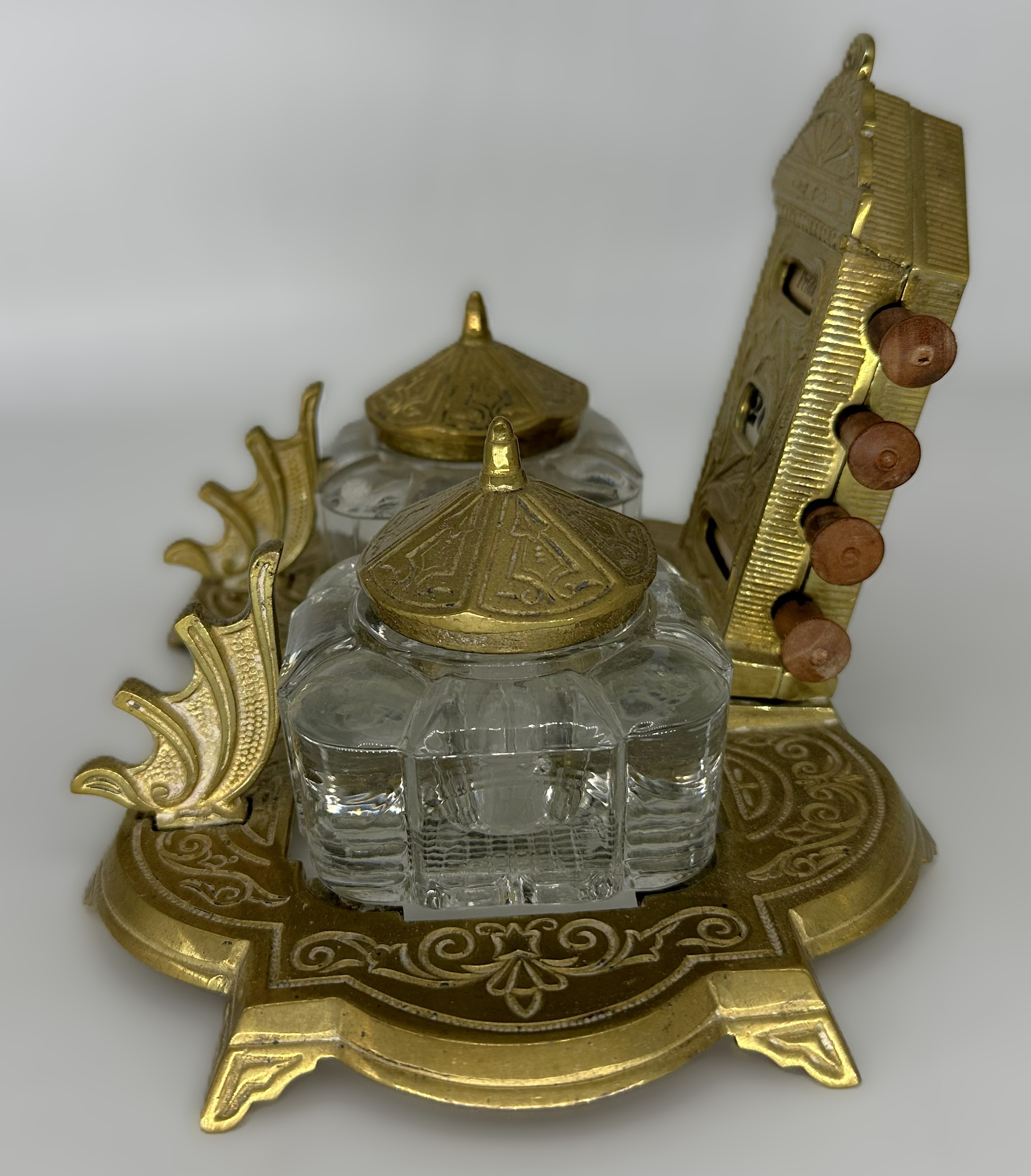
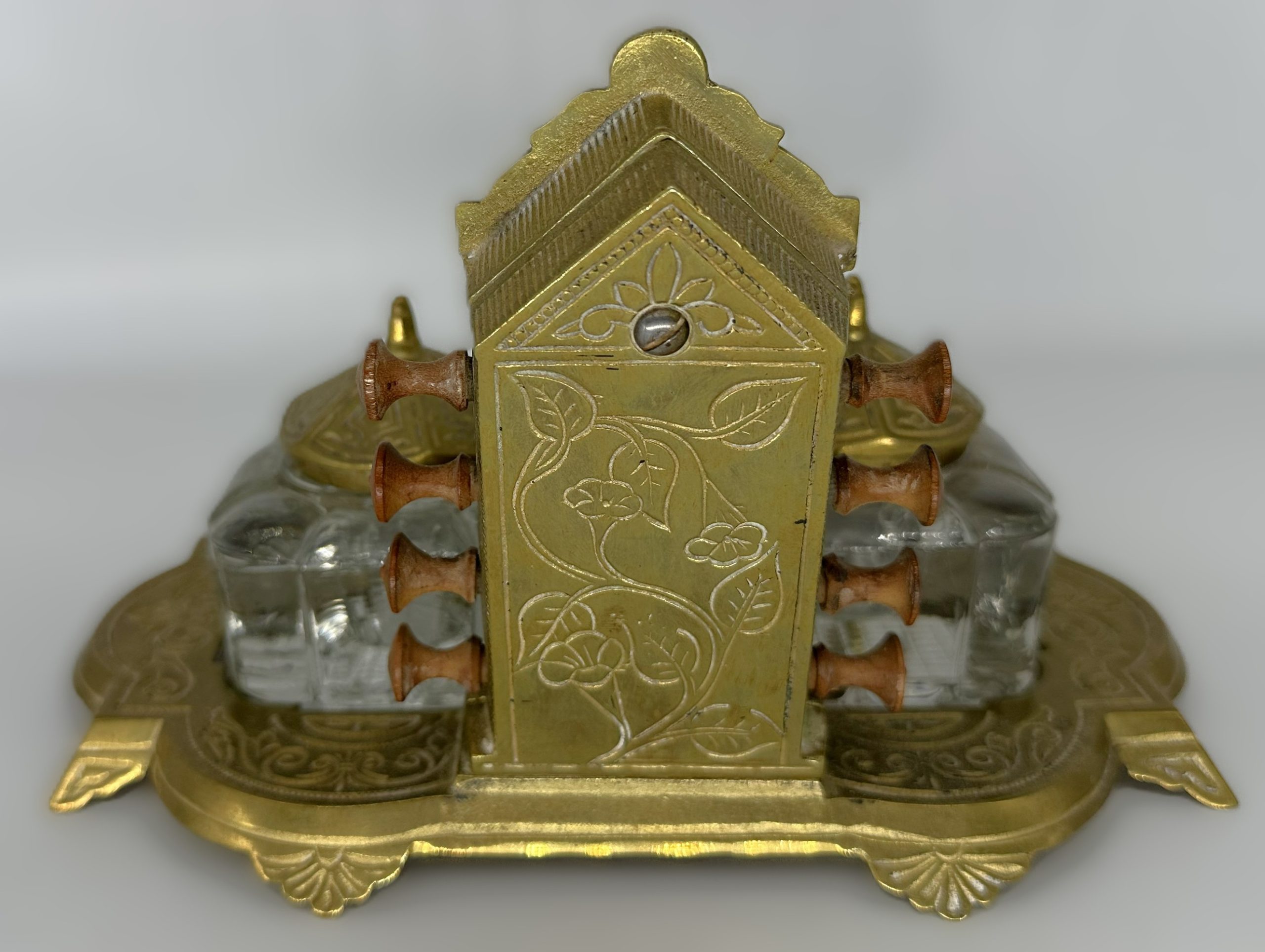
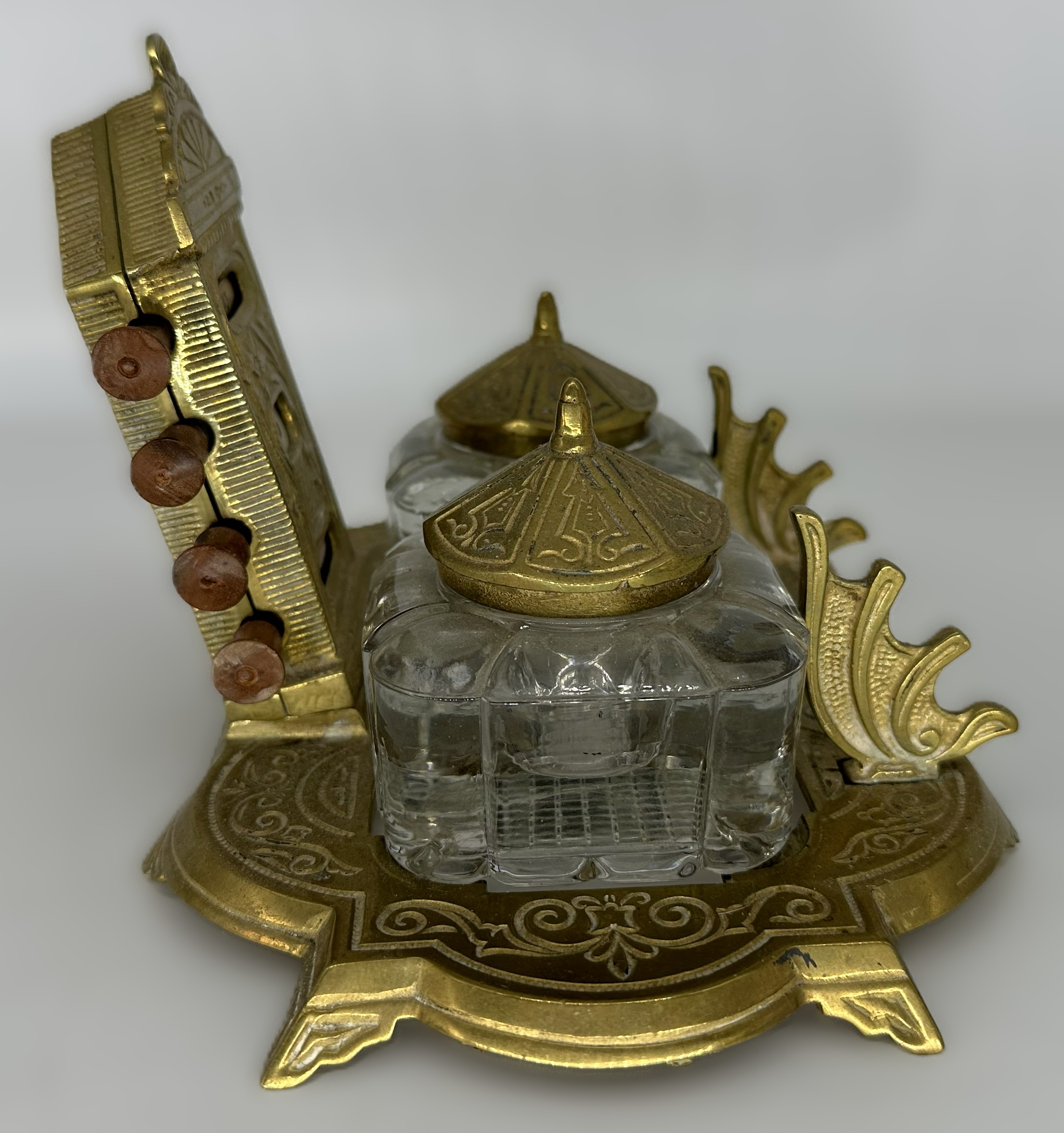
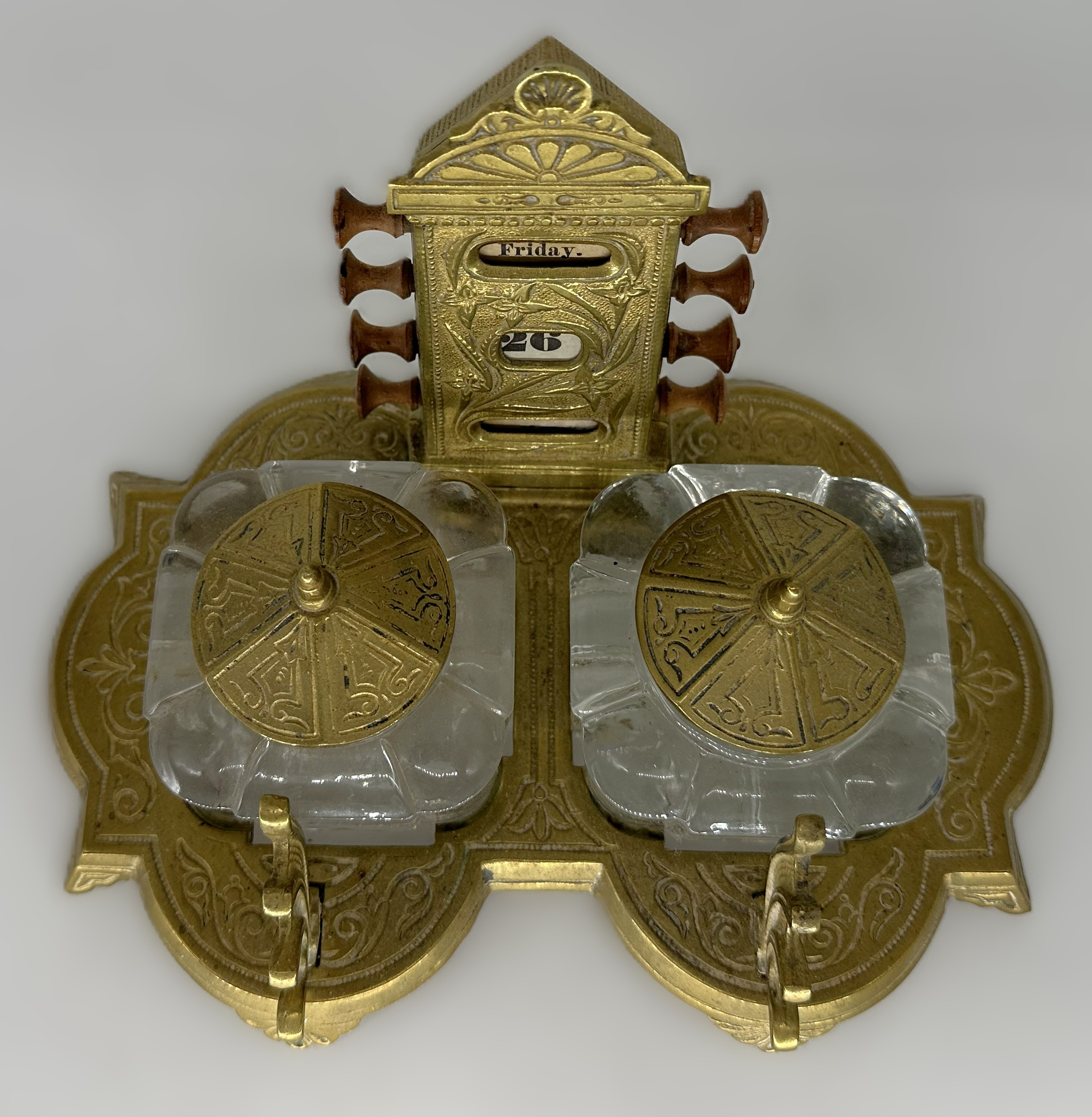
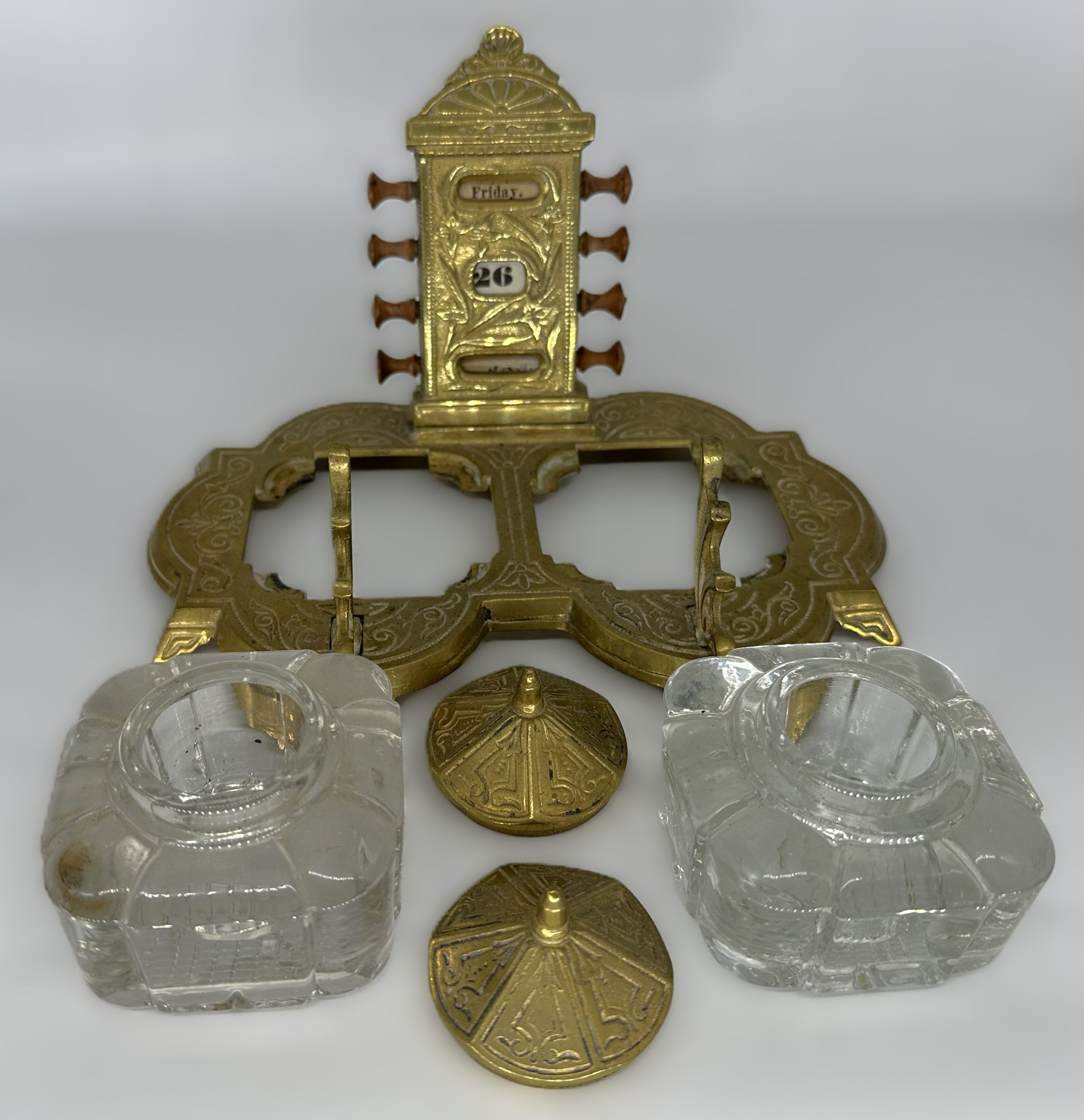
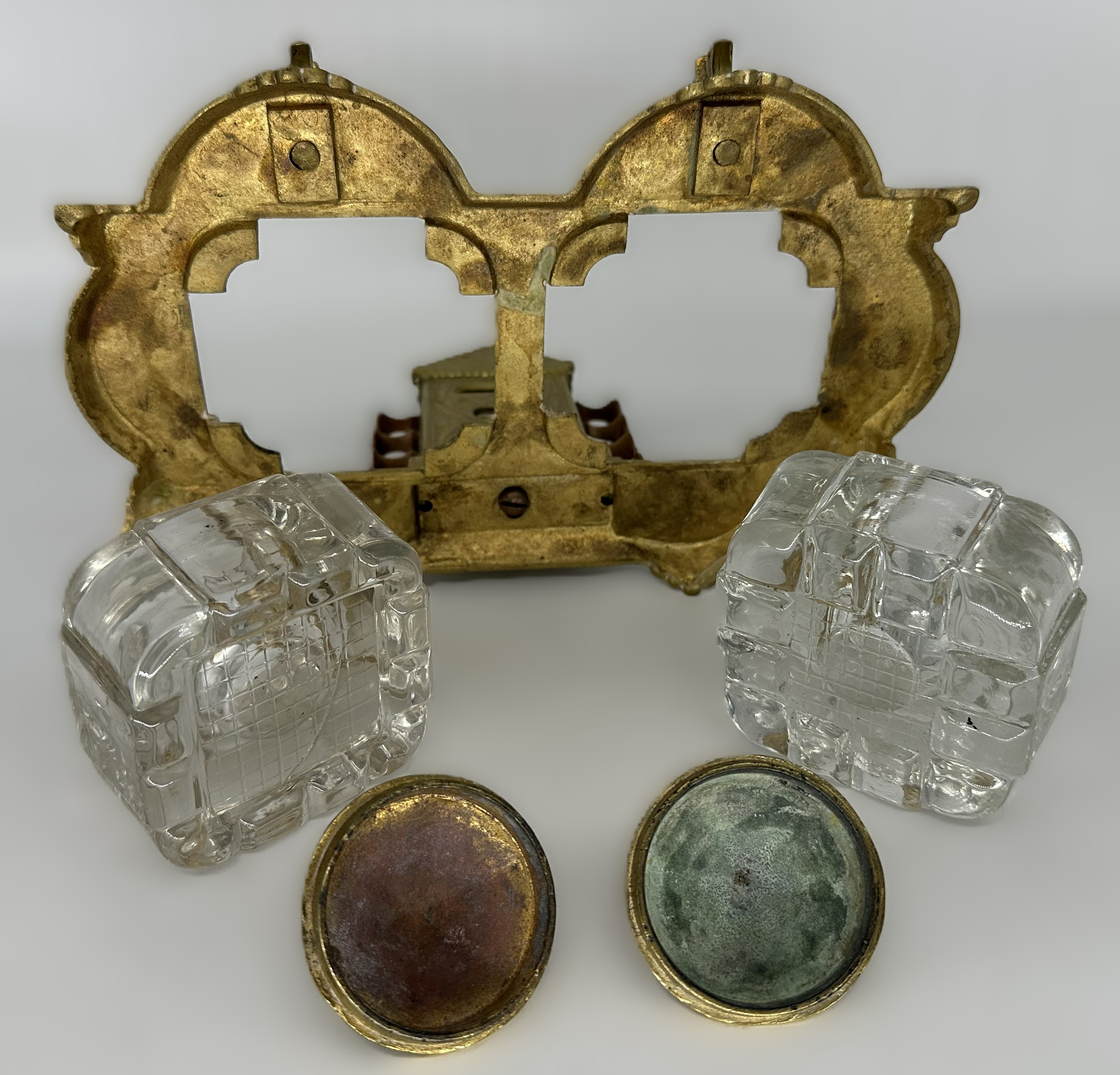
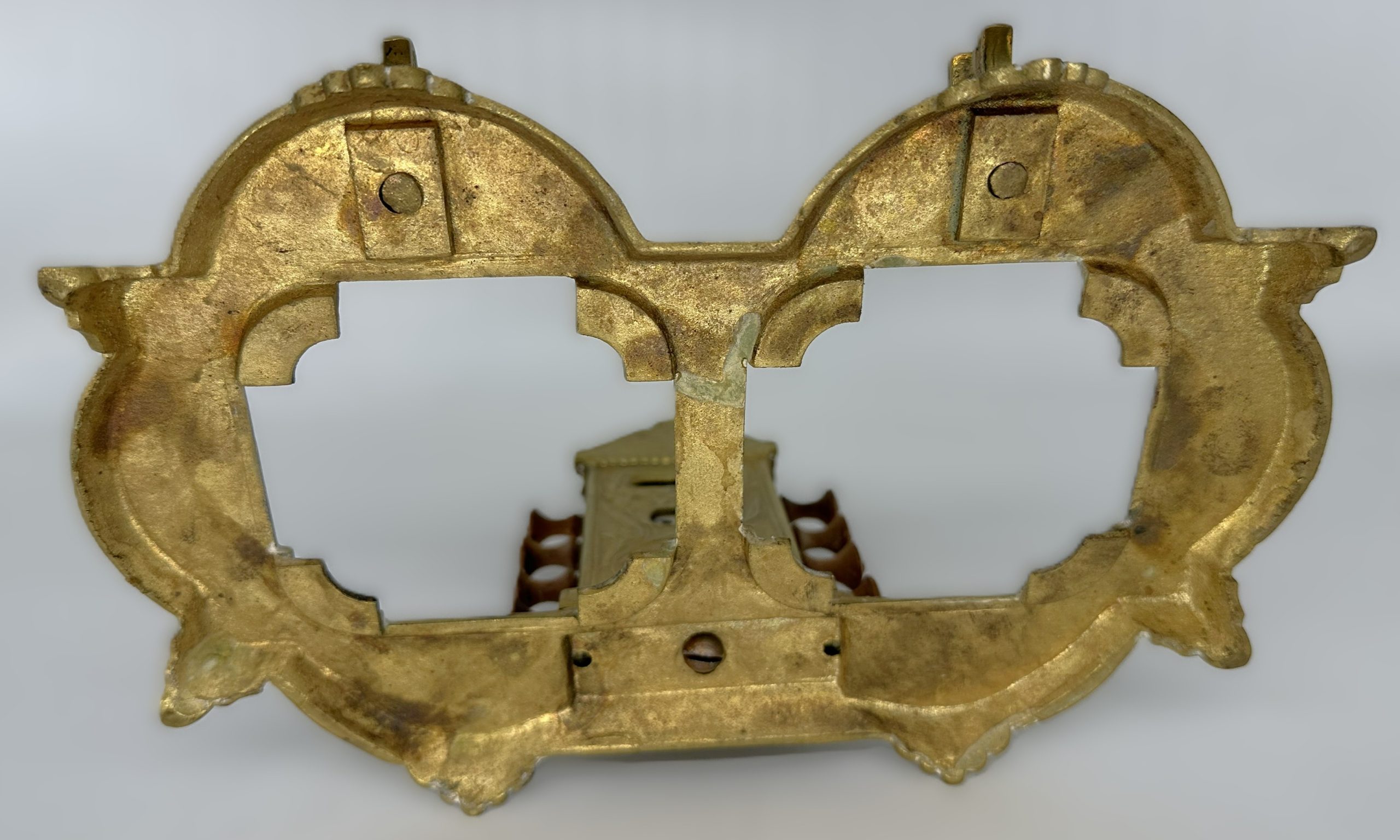
Mechanical Perpetual Calendar & Double Inkstand
| Categories | Cast Iron, Dual Purpose Inkstands |
| Type | Calendar |
| Material | Brass, Cast iron, Glass |
| Markings | Unmarked |
| Manufacturer | Undetermined |
| Origin | United States |
| Date or Era | circa 1880 |
| Measuring | 8 ½” x 6” x 5 ½” high |
Description
This ornate double inkstand with an integrated tower perpetual calendar is designed in a distinctive Victorian/Eastlake Aesthetic Movement style.
Base & Framework
- Form & Structure: The base features a scalloped, bilobed contour with four decorative flared feet and two cut-out areas designed to securely hold standard square glass inkwells. Two versions are pictured: one made of brass, the other made of cast iron.
- Ornamentation:
- The top of the base is relief-molded with stylized Victorian scrollwork and arabesques.
- The front features a two-tiered, leaf-form pen rack (pen rest) integrated directly in front of the inkwells.
- Rear Plate Decorative Pattern: The reverse side of the calendar housing features a detailed, relief-molded morning glory vine complete with leaves, stems, and bell-shaped flowers set against a fine horizontal hatch-textured field.
Perpetual Calendar Mechanism
- Housing: A central tower angled backward for easy viewing from a seated desk position. The front panel framing the date apertures is accented with relief-molded floral/foliate sprigs and a fan-palmette cresting at the peak.
- Knobs & Roller Drums: Set into the sides of the tower are four turned wooden knobs (eight ends visible total) connected to internal paper roller scrolls:
- Top Knob: Rotates the day-of-the-week drum.
- Second Knob: Advances the numeric day drum forward.
- Third Knob: Rolls back the numeric day drum.
- Bottom Knob: Rotates the month drum.
Inkwells & Lids
- Glass Insets: Two heavy, clear pressed-glass inkwells featuring a bold, square profile with stepped/faceted corners and a textured grid pattern on the underside.
- Lids: Matching unattached, loose-fitting metal lids with stepped, faceted conical domes topped with finials that rest directly over the glass collars without hinges or threads.
Maker, Origin, and Date of Manufacture
- Manufacturer / Foundries: Unmarked cast-iron and brass desk items of this specific pattern were produced by major American hardware manufacturers and foundries operating during the late 19th century. Prominent makers of similar Eastlake/Victorian cast-iron desk accessories include firms like J. & E. Stevens Co. (Cromwell, CT), Bradley & Hubbard (Meriden, CT), and Peck, Stow & Wilcox Co.
- Country of Origin: United States.
- Date Range: Circa 1875–1890 (Late Victorian / Eastlake Aesthetic Era).
- During this period, foundries routinely offered the exact same pattern molds in multiple metal options—primarily black-enameled or cold-painted cast iron as the standard option, and solid cast brass or bronze-finished spelter as a premium tier.
Estimated value: $200
Content disclaimer. The information posted is the owner’s best knowledge and may not have been vetted by the SOIC. We welcome comments, corrections, and additions, working to make our website information comprehensive and accurate.
Join the Society of Inkwell Collectors (SOIC) – it’s free!
Founded in 1981 as a non-profit organization,
we are documenting inkwells (and accessories).
We’re here to help and inform!