

Inkipedia
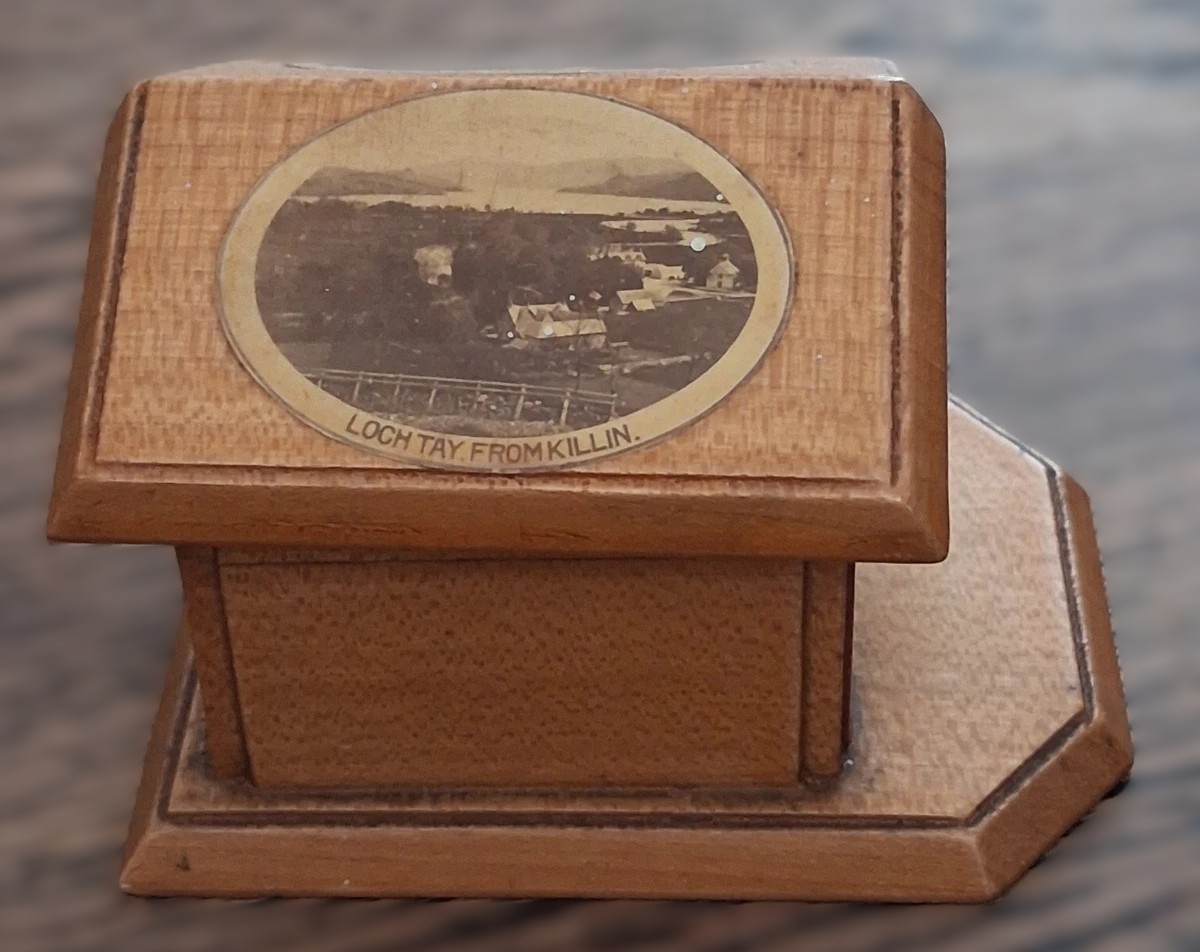
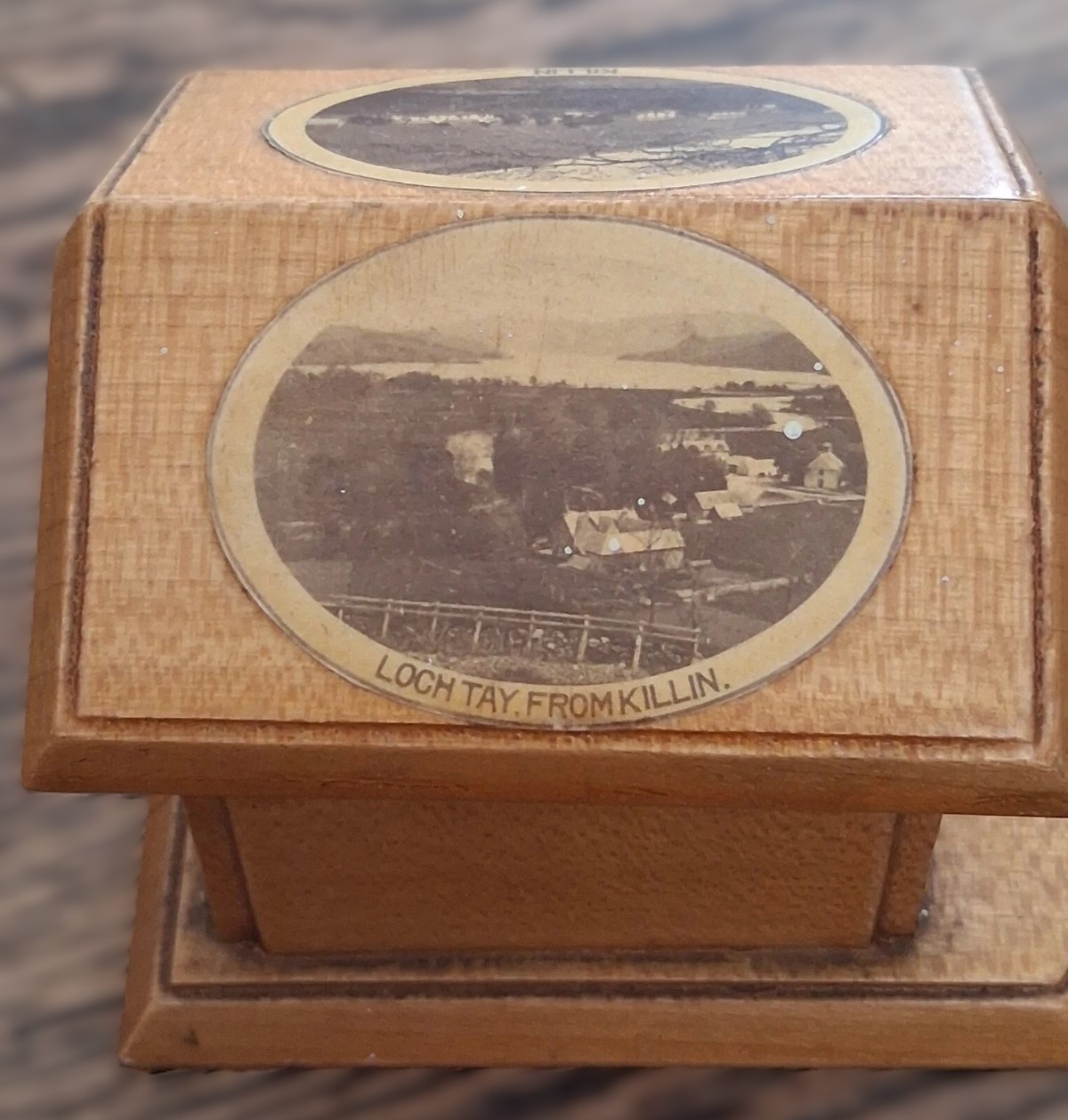
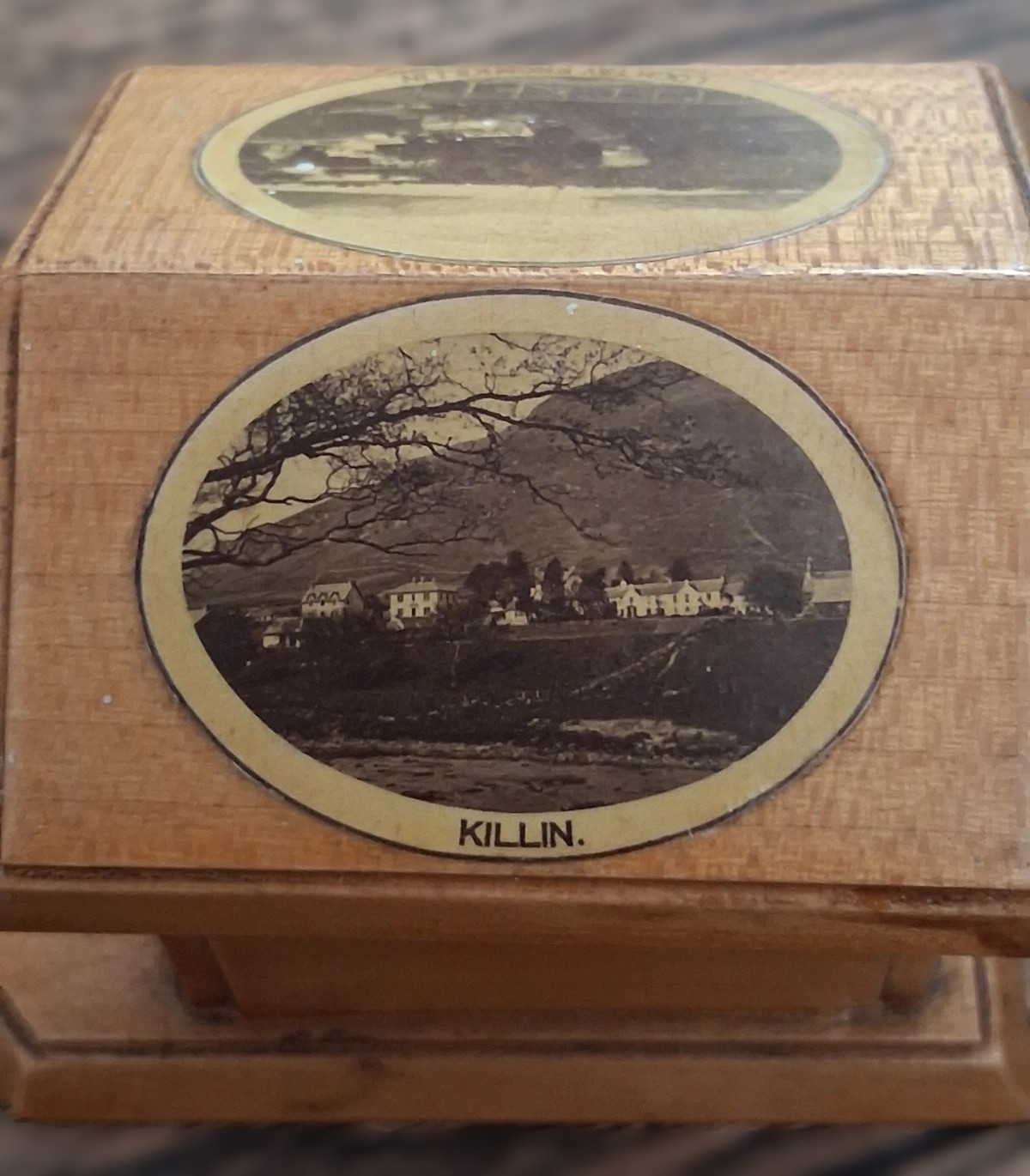
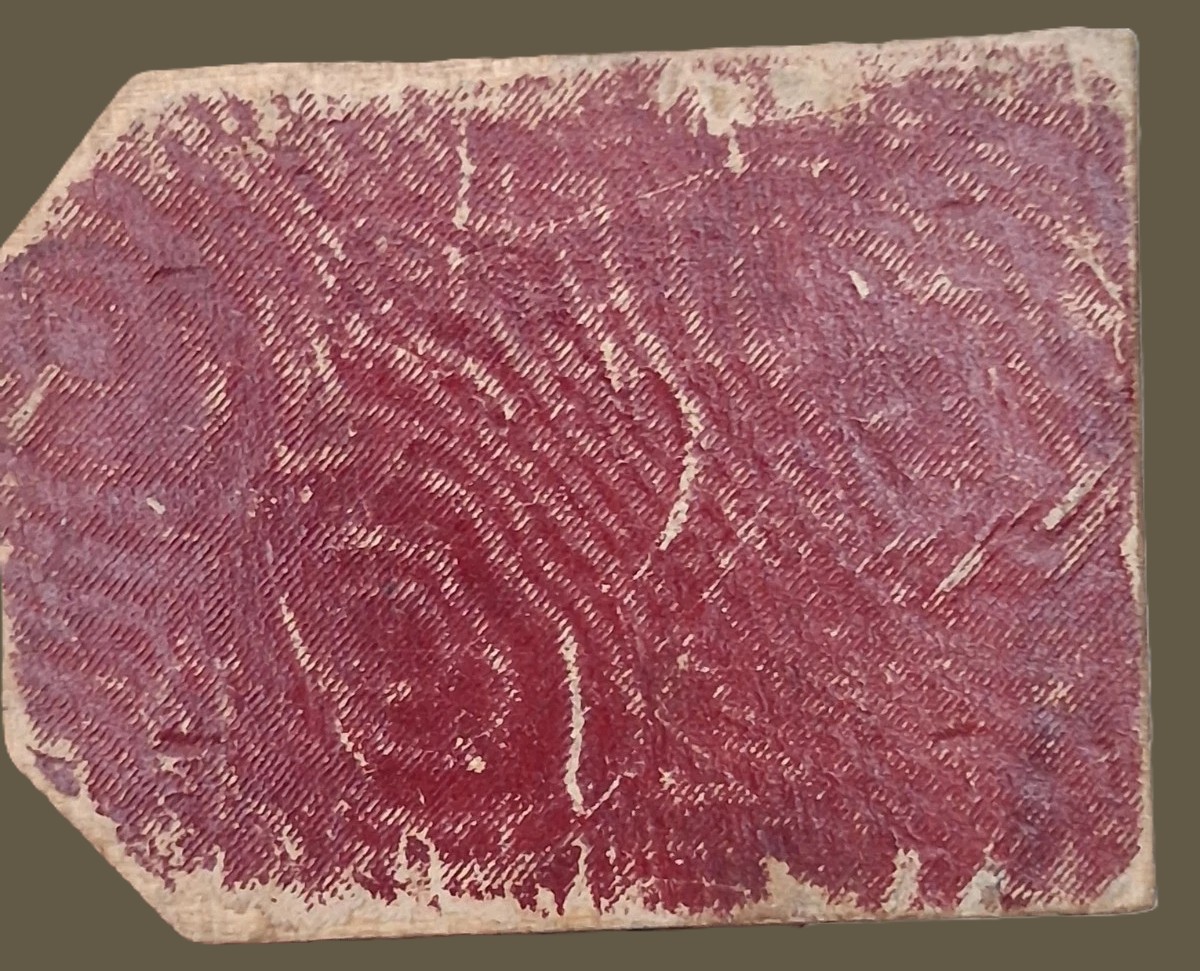
Mauchline Ware Transfer-printed Souvenir Inkwell
| Categories | Souvenir, Wood Inkstands |
| Material | Wood |
| Markings | See Narrative |
| Manufacturer | Undetermined |
| Origin | Scotland |
| Date or Era | circa 1900 |
| Measuring | 3 ⅜” x 2 ½” x 2 ⅛” high |
Description
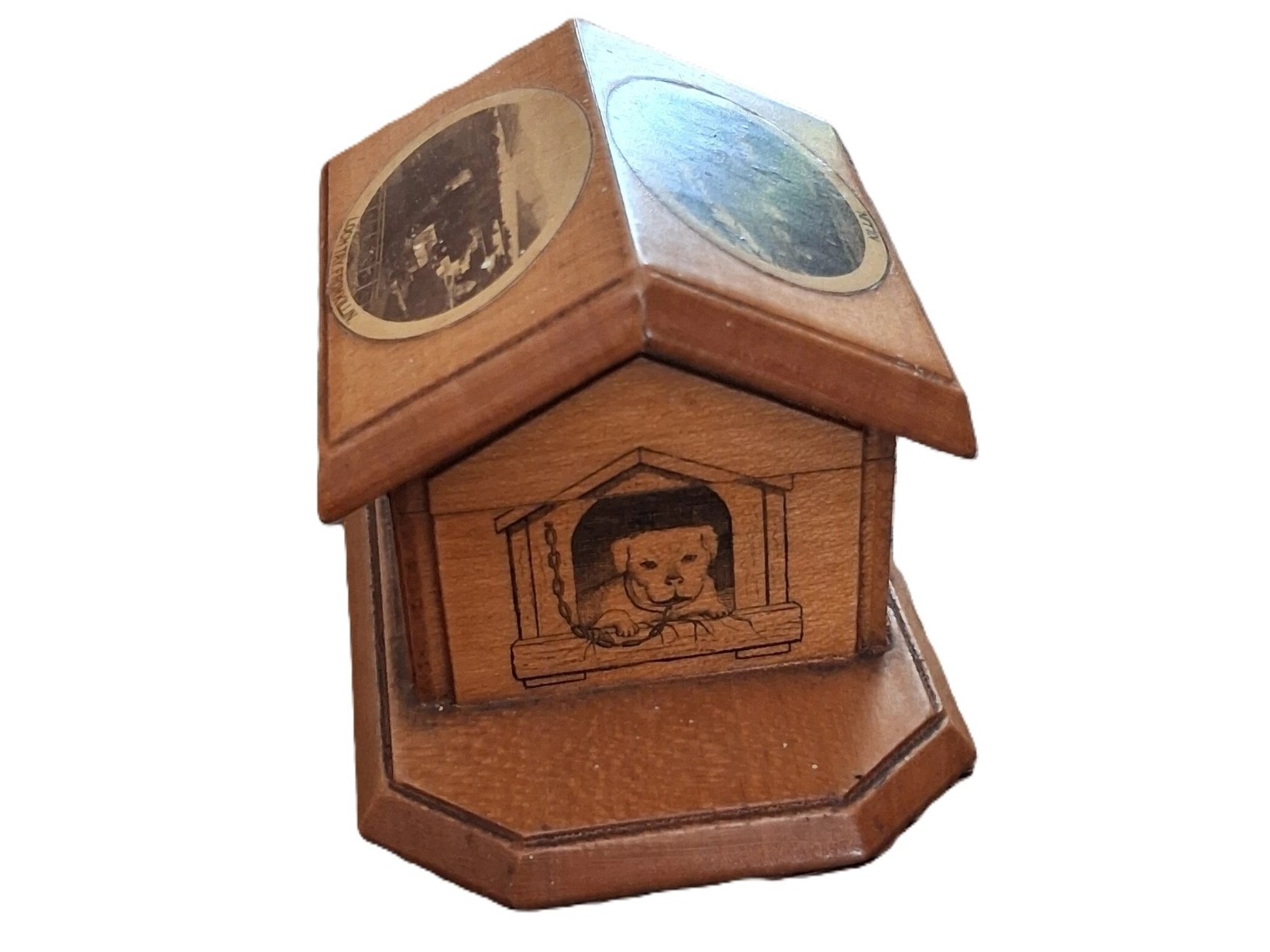
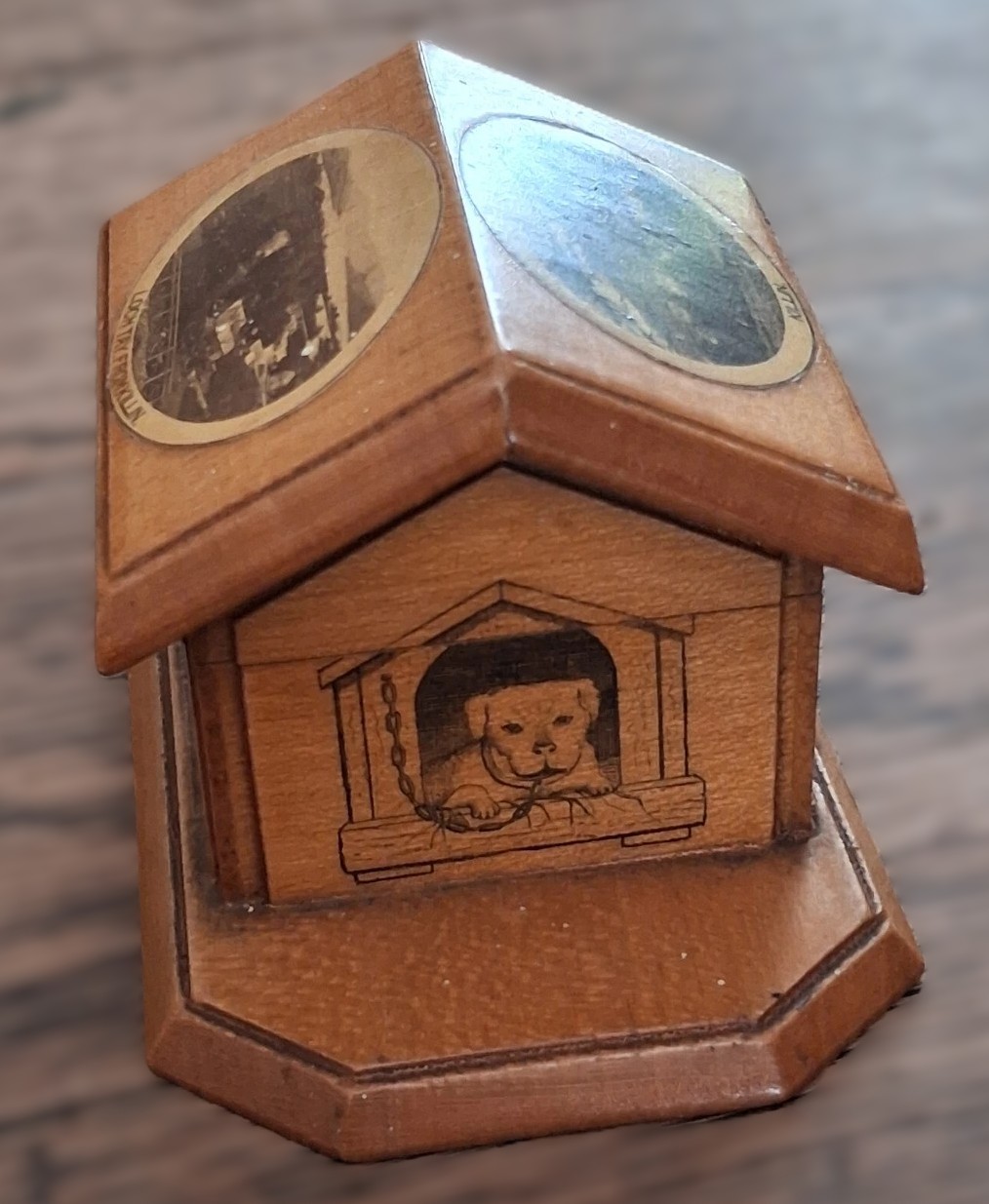
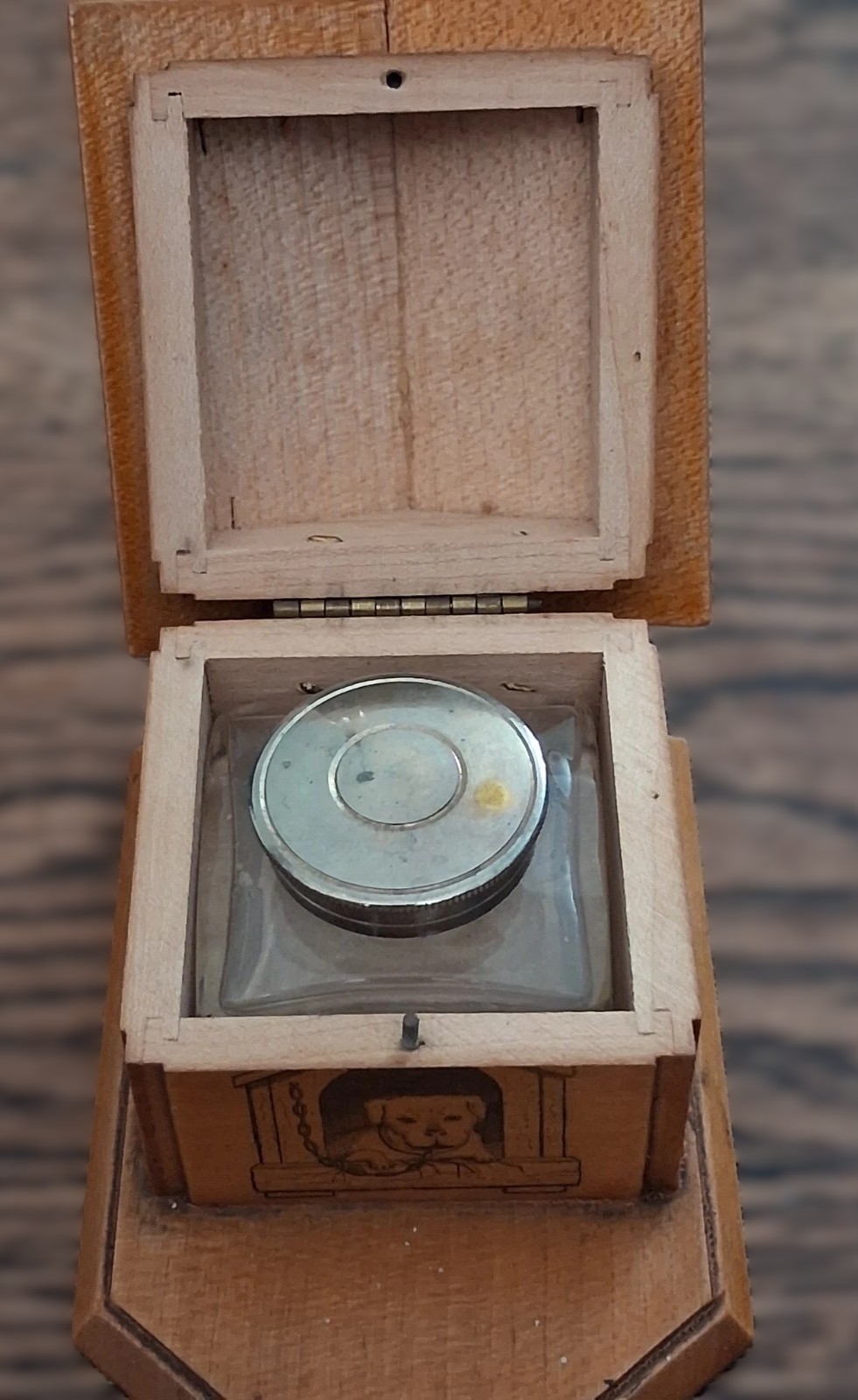
The Doghouse Base & Box
- Form & Wood: Crafted from fine-grained, light-colored sycamore or birch wood (typical of Mauchline manufacture) shaped as a charming miniature doghouse on a chamfered base.
- Front Transfer: Features a line-art transfer print depicting a bulldog peering out of a kennel opening, complete with a heavy chain tethered to the doorway.
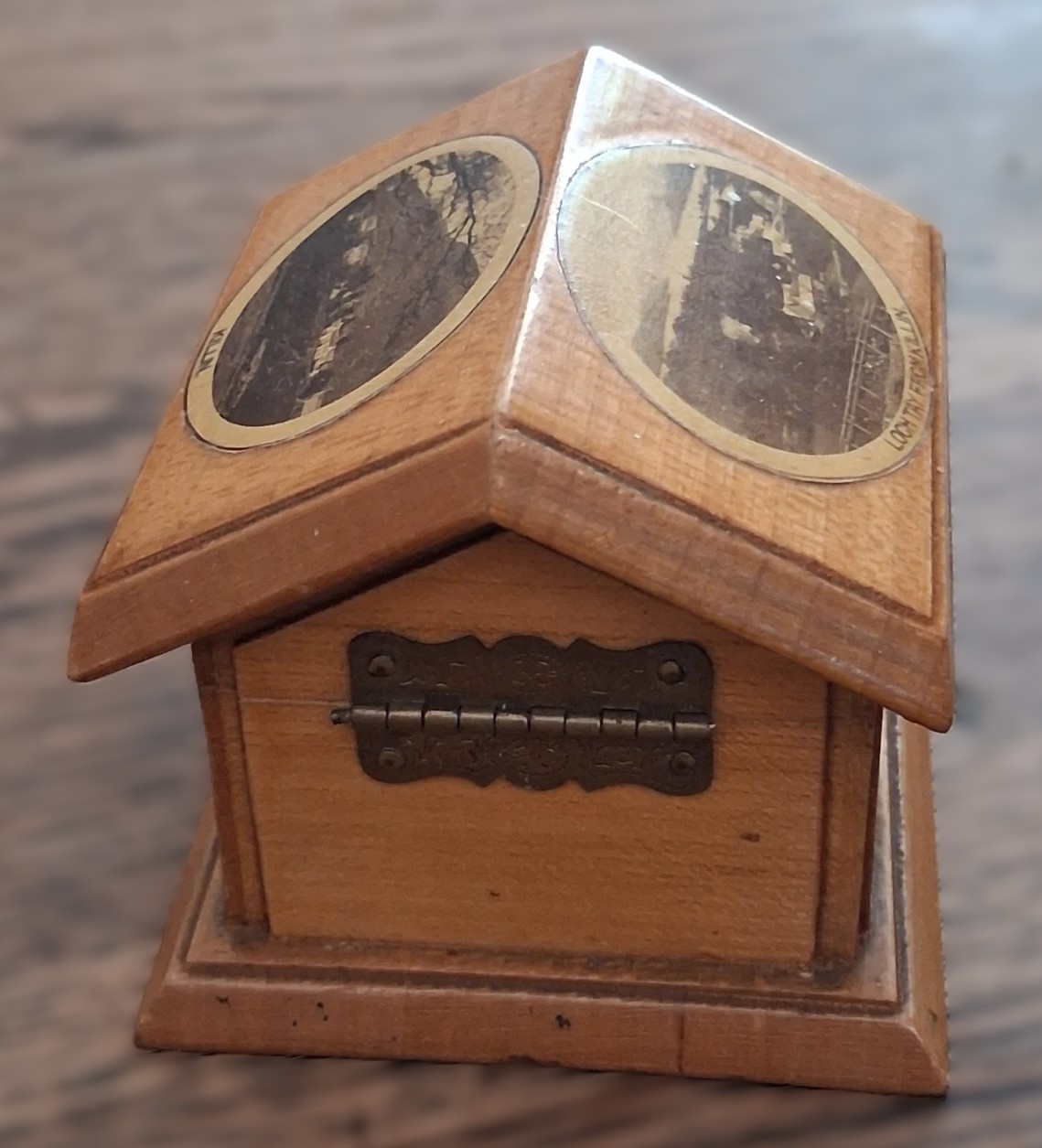
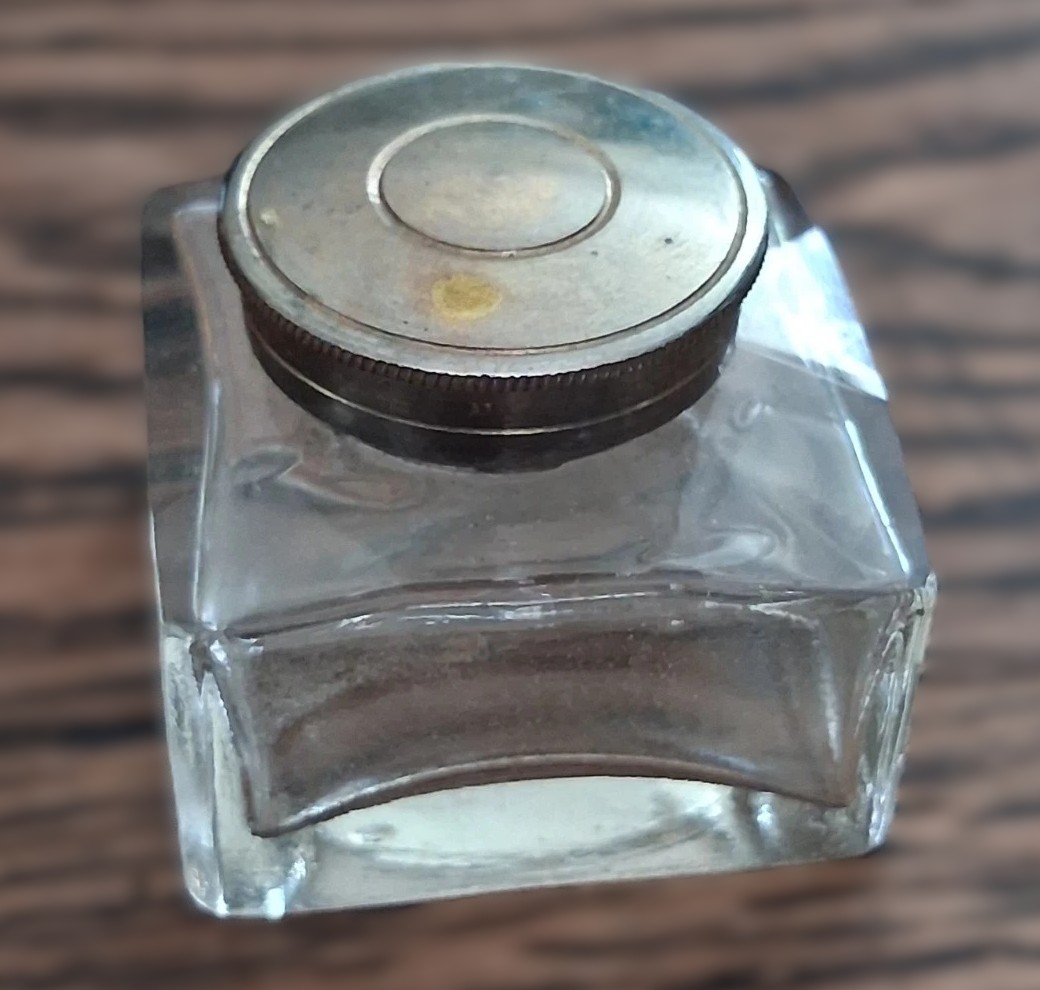
- Hinged Roof & Interior: The gabled roof acts as a lid attached by a brass butterfly hinge at the rear. Inside sits a square clear glass traveling ink bottle equipped with a screw-top metal cap.
The Roof Transfers
- Left Panel (“Loch Tay from Killin”): An oval sepia photo-transfer capturing a wide landscape view looking out across the waters of Loch Tay from the village of Killin, with hills lining the horizon and a wooden post-and-rail fence framing the foreground.
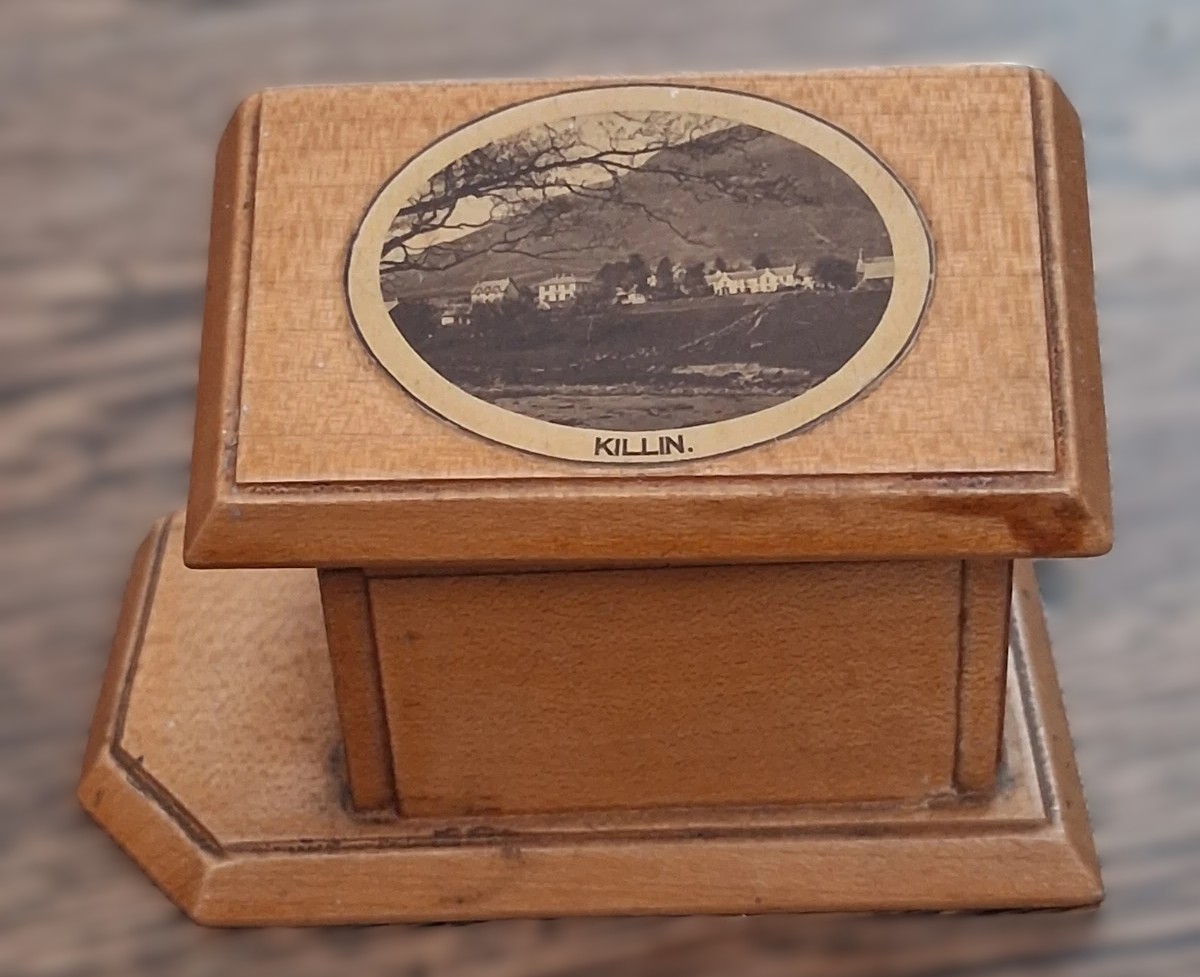
- Right Panel (“Killin”): An oval photo-transfer depicting the village of Killin itself, showing a line of whitewashed stone cottages nestled along the terrain beneath a sloped hillside, framed by the bare branches of an overhanging tree.
Geographic Context: A Scottish Landmark
Killin and Loch Tay are in Perthshire, Scotland.
Why This Region Attracted Victorian Tourists
- Picturesque Scenery: Situated at the western end of Loch Tay near the Falls of Dochart, Killin became a quintessential stop for Victorian holidaymakers seeking romantic Highland views.
- The Railway Boom: The opening of the Killin Railway line in 1886 connected the remote village to major routes, allowing tourists to easily travel into the Scottish Highlands.
- Literary & Cultural Appeal: Victorian travelers flocked to Scotland fueled by Sir Walter Scott’s romantic novels and Queen Victoria’s own famous affection for the Scottish Highlands. Local artisans produced these “useful souvenirs” to capture that bustling tourist market.
Estimated Age and Dating
- Estimated Date: Circa 1890–1905.
- Dating Evidence:
- Photographic Transfers: Mauchline manufacturers began transitioning from black line-art/engraving transfers toward actual sepia photo-transfers (real view prints) in the late 1880s and 1890s.
- Screw-Top Ink Insert: The combination of a metal screw-capped square glass bottle housed inside a brass-hinged lid aligns with traveling/novelty inkwells produced by W. & A. Smith and contemporary Mauchline factories right around the turn of the century.
Sold for $65 in July 2026
Content disclaimer. The information posted is the owner’s best knowledge and may not have been vetted by the SOIC. We welcome comments, corrections, and additions, working to make our website information comprehensive and accurate.
Join the Society of Inkwell Collectors (SOIC) – it’s free!
Founded in 1981 as a non-profit organization,
we are documenting inkwells (and accessories).
We’re here to help and inform!