

Mauchline Ware Souvenir Inkstand
| Categories | Souvenir, Wood Inkstands |
| Material | Glass, Wood |
| Markings | See Narrative |
| Manufacturer | Undetermined |
| Origin | Scotland |
| Date or Era | circa 1880 |
| Measuring | 5” x 3 ⅜” x 2 ¾” high |
Description
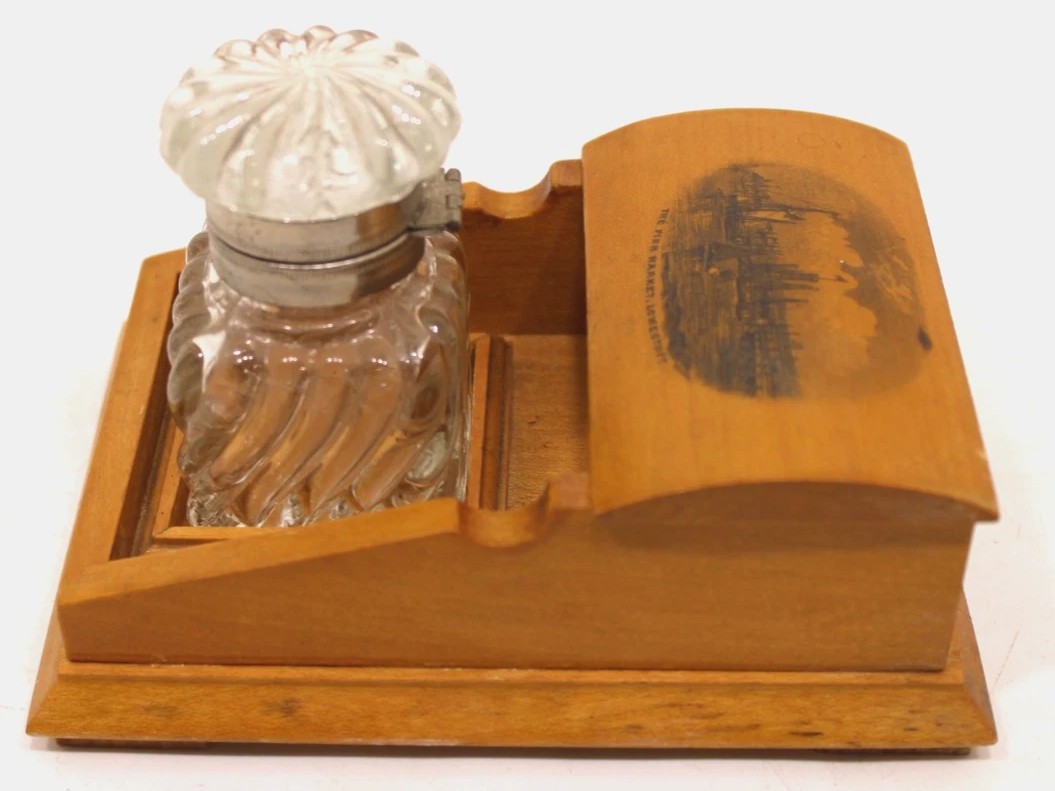
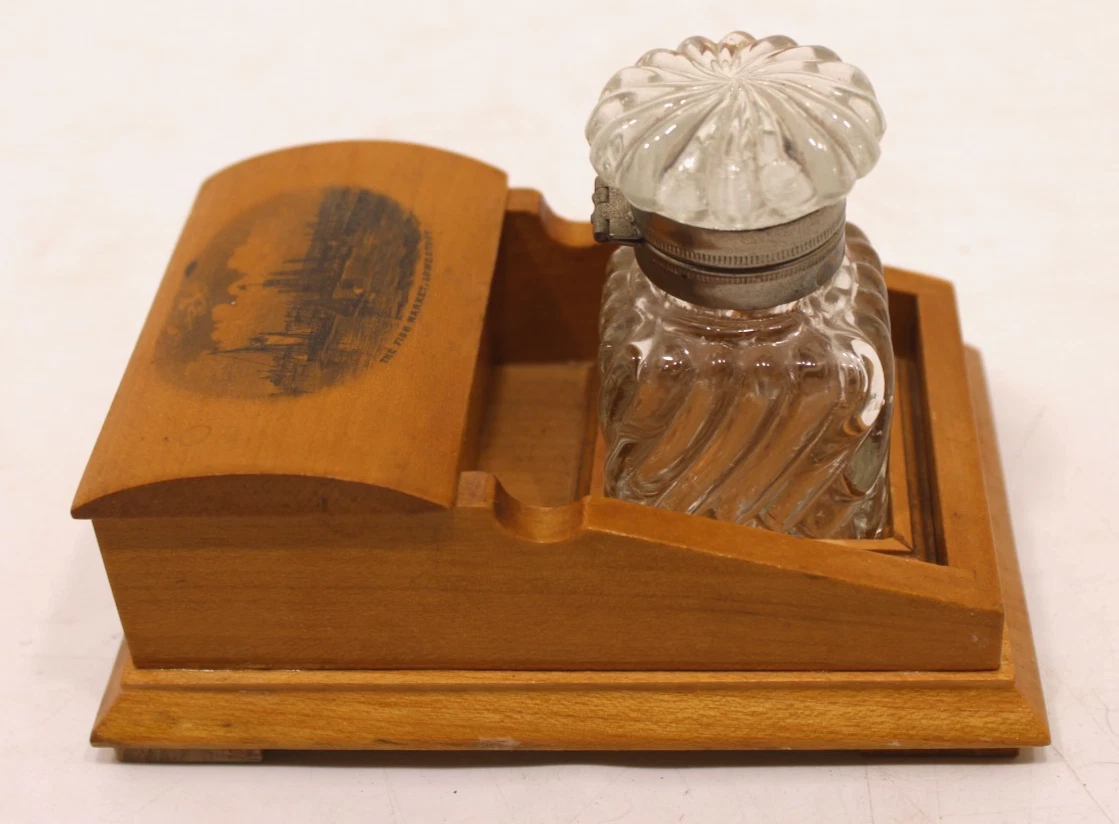
This Victorian souvenir inkstand is a classic example of Mauchline ware featuring a black transfer print design.
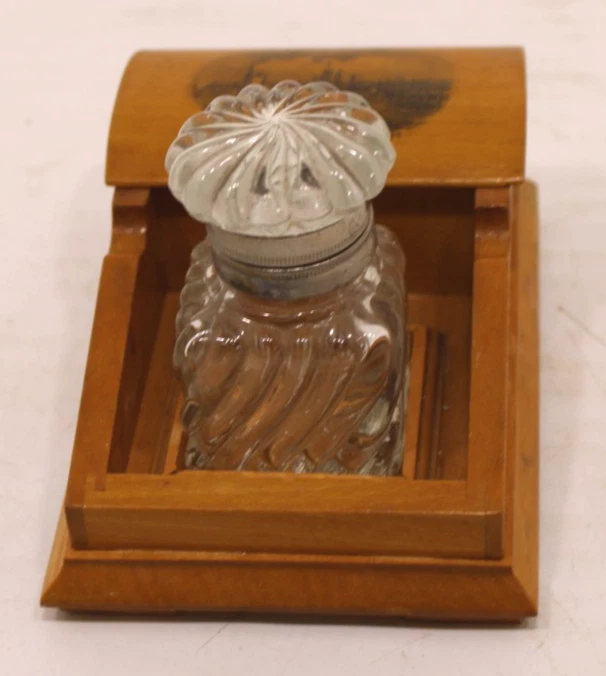
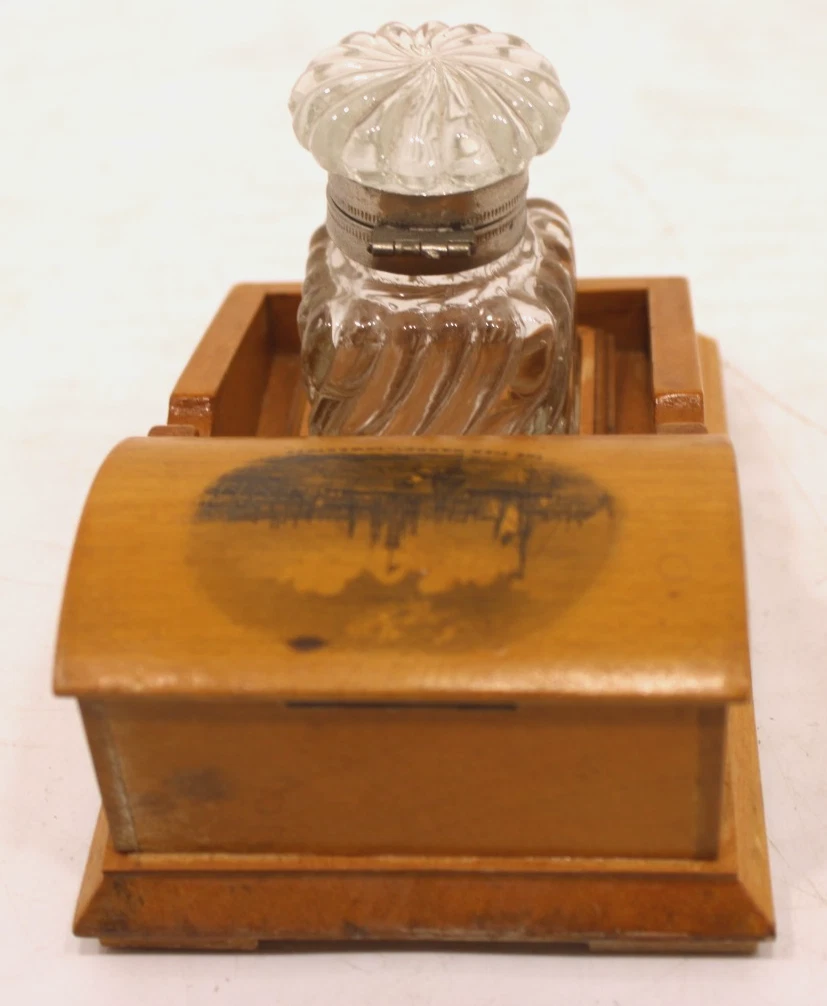
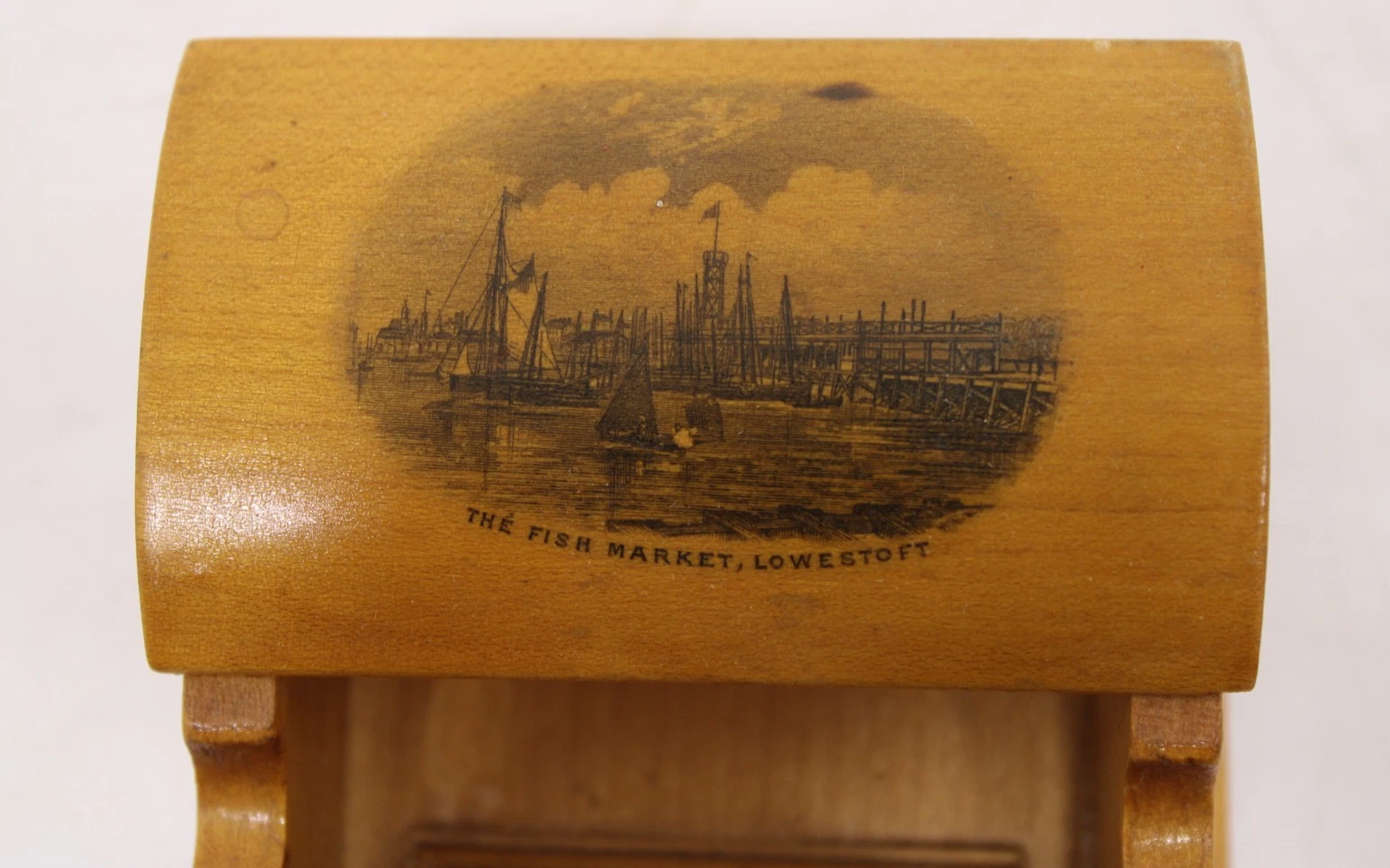
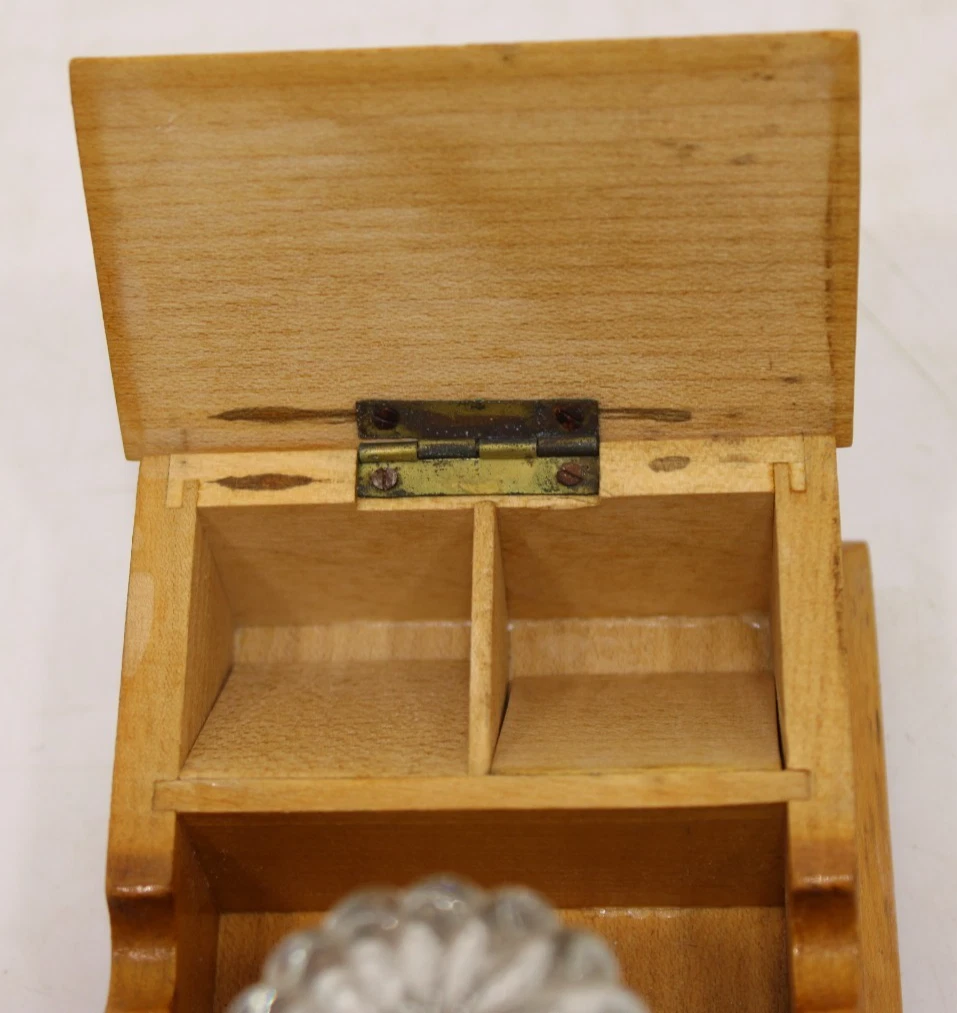
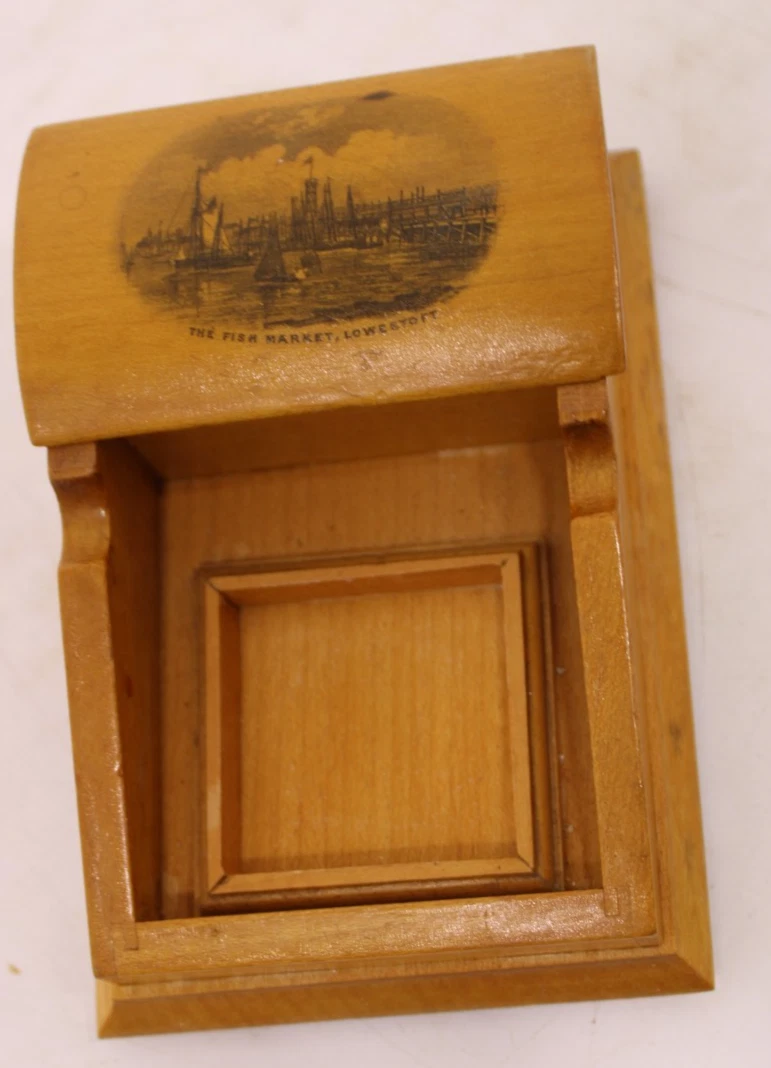
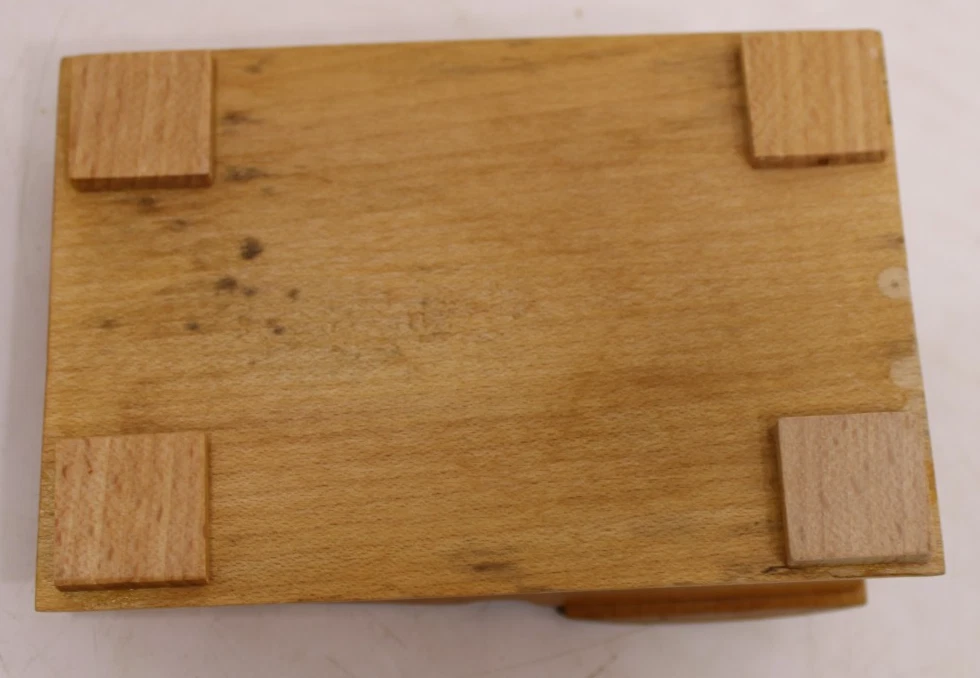
- Wooden Stand & Stamp Box: Crafted from smooth sycamore wood, the contoured base incorporates a hinged lid that opens to reveal a small, two-compartment interior designed for storing postage stamps. The top of the lid displays an oval transfer print titled “THE FISH MARKET, LOWESTOFT”, showing a bustling harbor scene filled with sailing vessels and dockside structures.
- Pen Rest: The wooden sides feature carved dual-curved grooves designed to hold pens horizontally across the top of the tray.
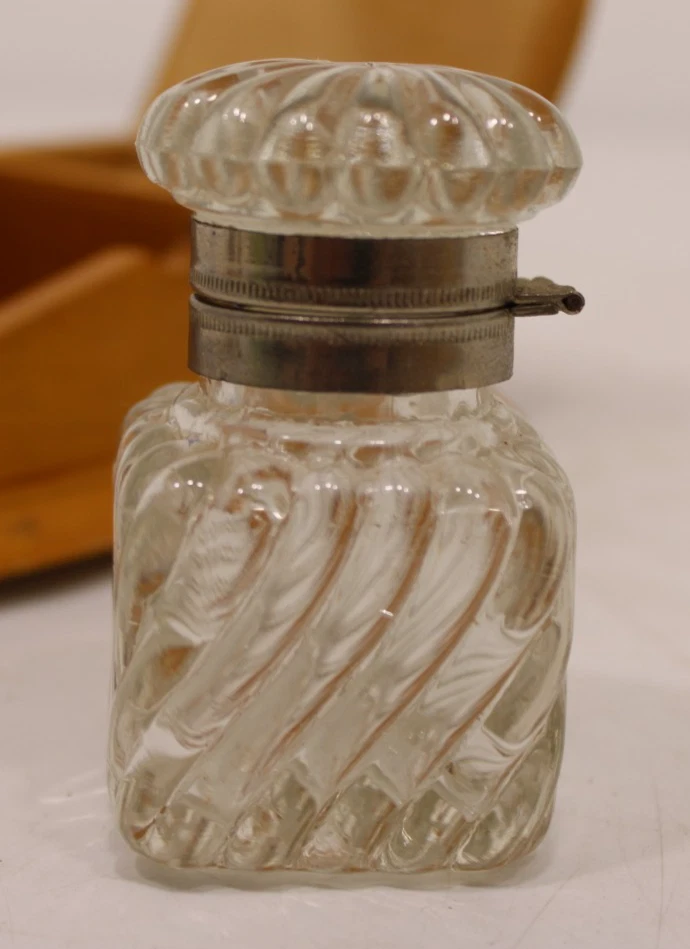
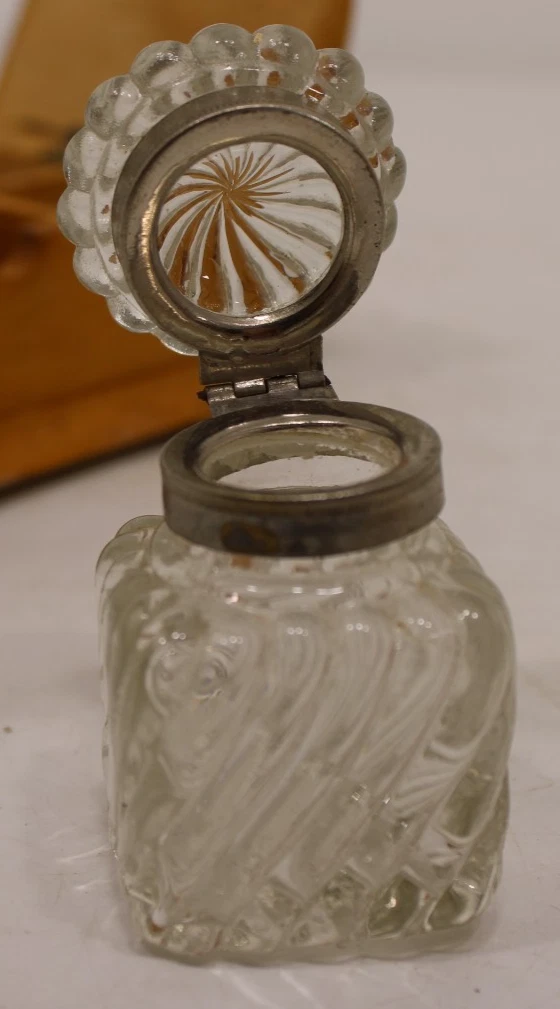
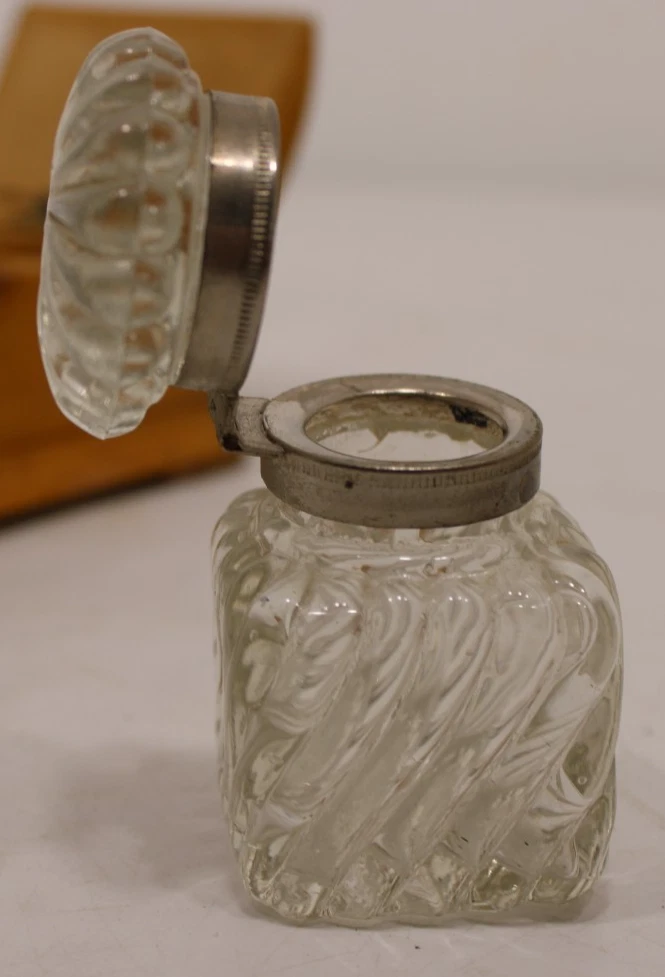
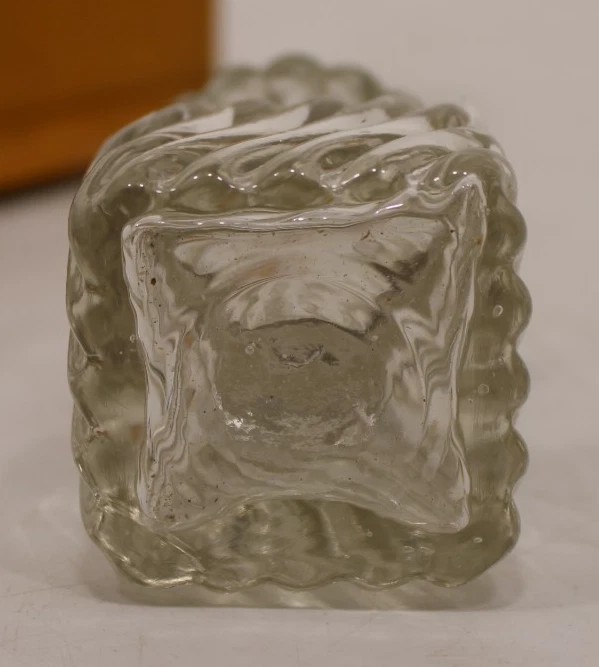
- Glass Inkwell: Set into a raised wooden well in front of the stamp box sits a square glass inkwell. It features a prominent diagonal swirl pattern molded into the clear glass, topped with a silver-plated hinged collar and a decorative, lobed/fluted glass top cap.
Origin & Date of Manufacture
- Where was it made? Mauchline, Ayrshire, Scotland. Mauchline was the global hub for Scottish souvenir woodware, led by major manufacturers such as W. & A. Smith at the Box Works.
- When was it made? Circa 1870s–1890s (Victorian Era). While transfer printing on Mauchline ware began in the 1850s, the combination of two-compartment stamp boxes, silver-plated hinged mounts, and standard resort transfer plates peaked in popularity between 1870 and 1890.
About Lowestoft & Its Appeal to Tourists
Lowestoft is an historic coastal town located in Suffolk, England, famous for being the easternmost town in Great Britain.
Did Lowestoft Attract Tourists?
Yes, immensely. During the 19th century, Lowestoft transformed from a modest fishing community into one of East Anglia’s most popular Victorian seaside resorts.
Why It Attracted Visitors:
- The Arrival of the Railway (1847): Entrepreneur Sir Samuel Morton Peto redeveloped the harbor and connected Lowestoft to the railway network in 1847. This allowed city dwellers from London and Norwich to travel quickly to the coast for holiday getaways.
- Victorian “Seaside Health” Culture: Victorians favored coastal towns for sea bathing, fresh air, and promenade walks. Lowestoft provided sandy beaches, grand Italianate hotels, formal gardens, and pier entertainment.
- The Romance of the Fishing Industry: Unlike purely quiet beach towns, Lowestoft offered tourists the lively spectacle of a thriving commercial port. Visitors enjoyed watching the herring fleet return and visiting The Fish Market—the very scene depicted on this inkstand’s lid—to take in the maritime culture before buying a wooden souvenir to take home.
Sold for $75 in July 2026
Content disclaimer. The information posted is the owner’s best knowledge and may not have been vetted by the SOIC. We welcome comments, corrections, and additions, working to make our website information comprehensive and accurate.
Join the Society of Inkwell Collectors (SOIC) – it’s free!
Founded in 1981 as a non-profit organization,
we are documenting inkwells (and accessories).
We’re here to help and inform!