






Majolica Pottery Inkwell
| Categories | Ceramics/Porcelain non-Figural |
| Material | Majolica |
| Markings | See Narrtive |
| Manufacturer | Undetermined |
| Origin | Italy |
| Date or Era | circa 1950 |
| Measuring | 7” diameter; 4 ¼” high |
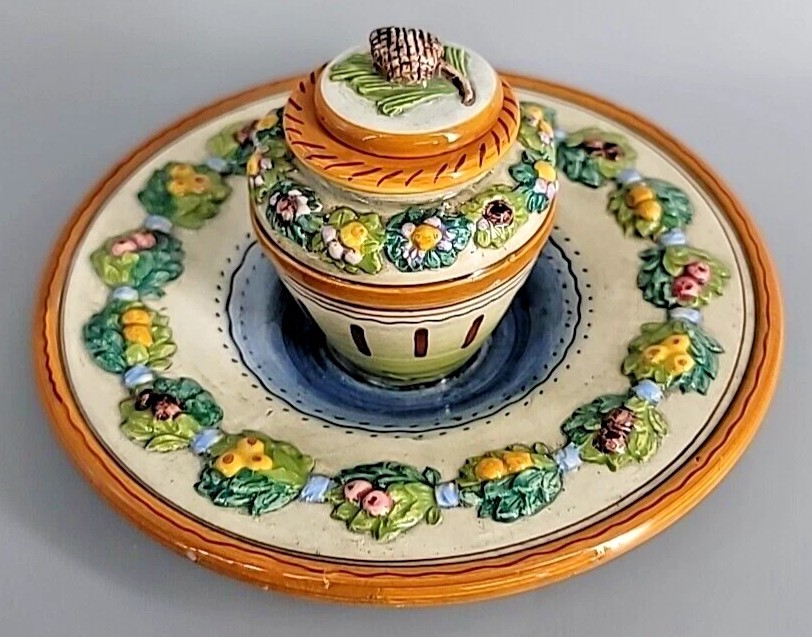
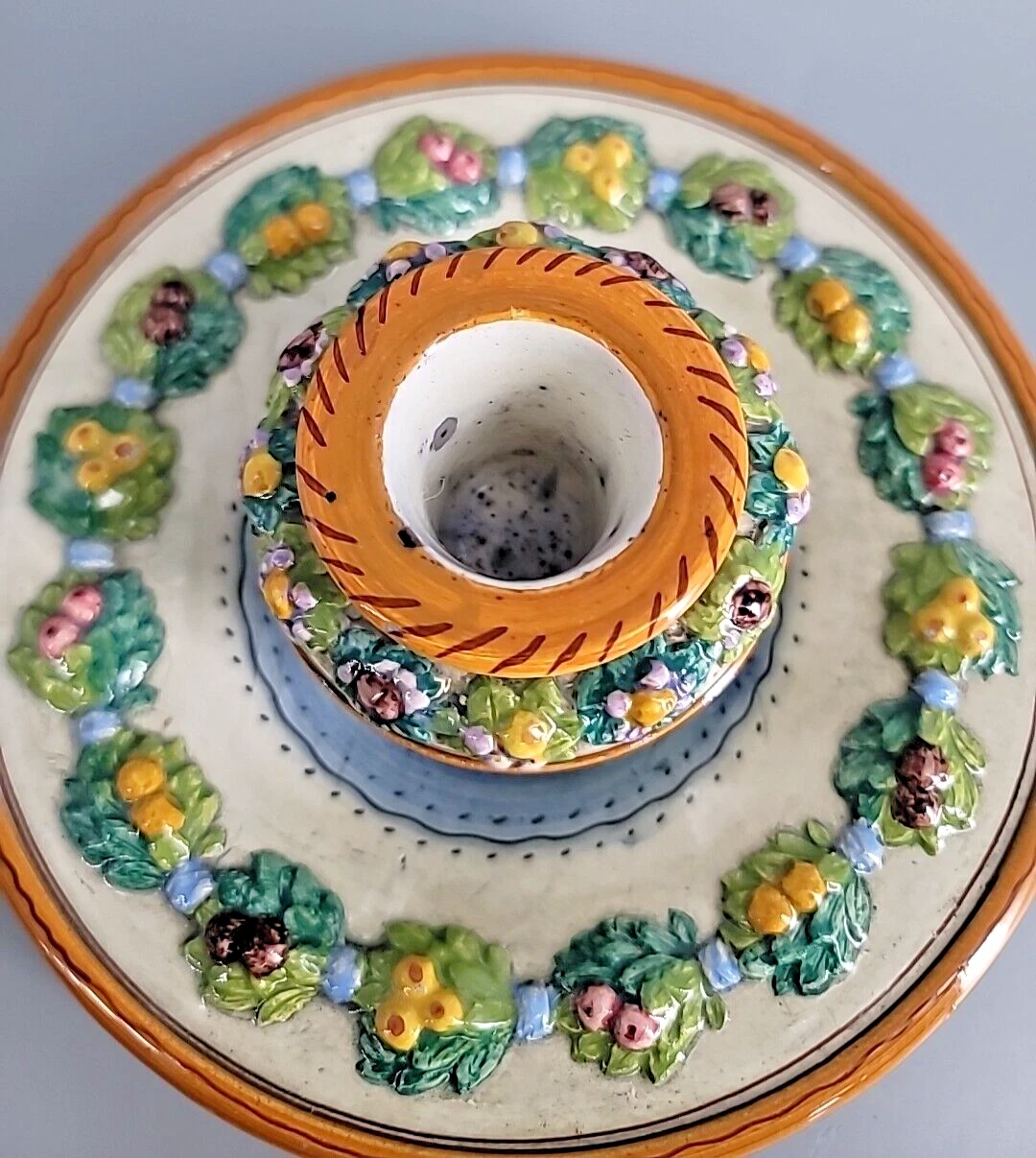
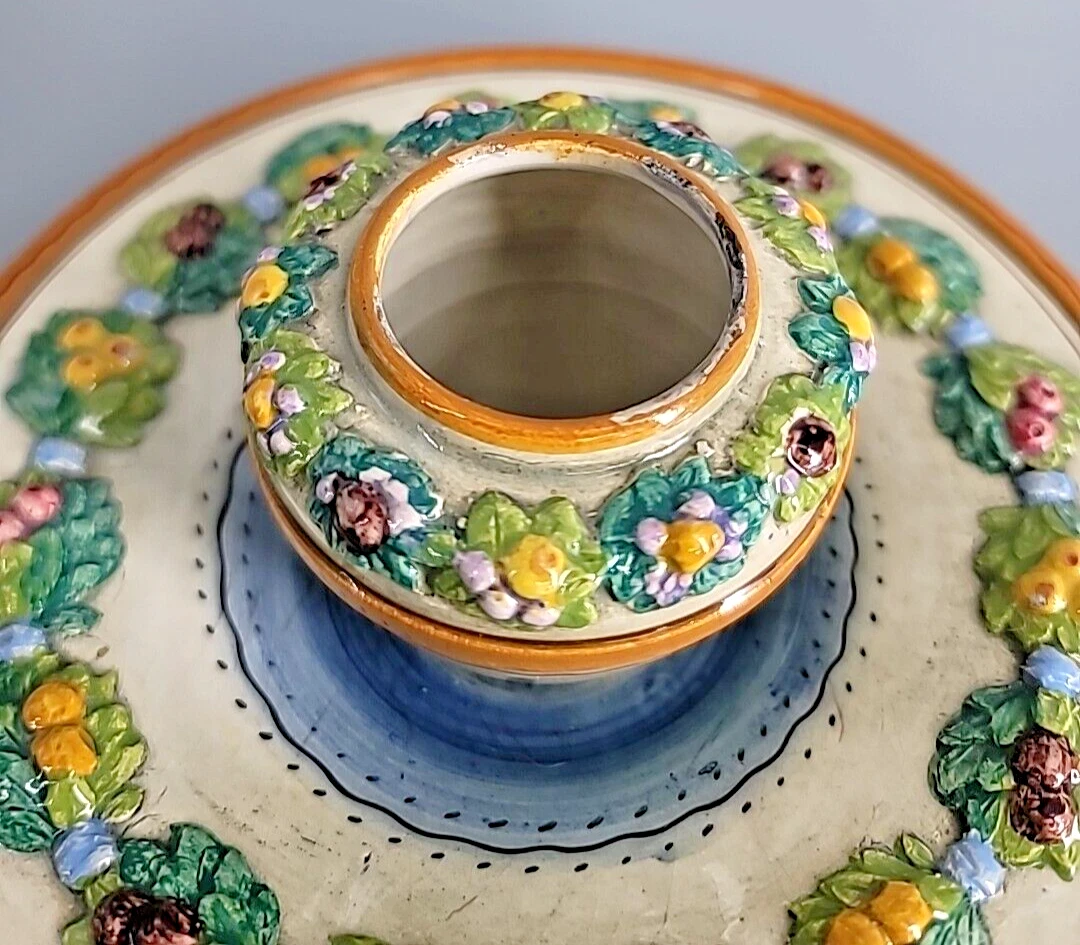
This hand-painted majolica pottery features a vibrant, rustic aesthetic. It consists of a central, chalice-like inkwell set into a wide, shallow drip tray.
Description
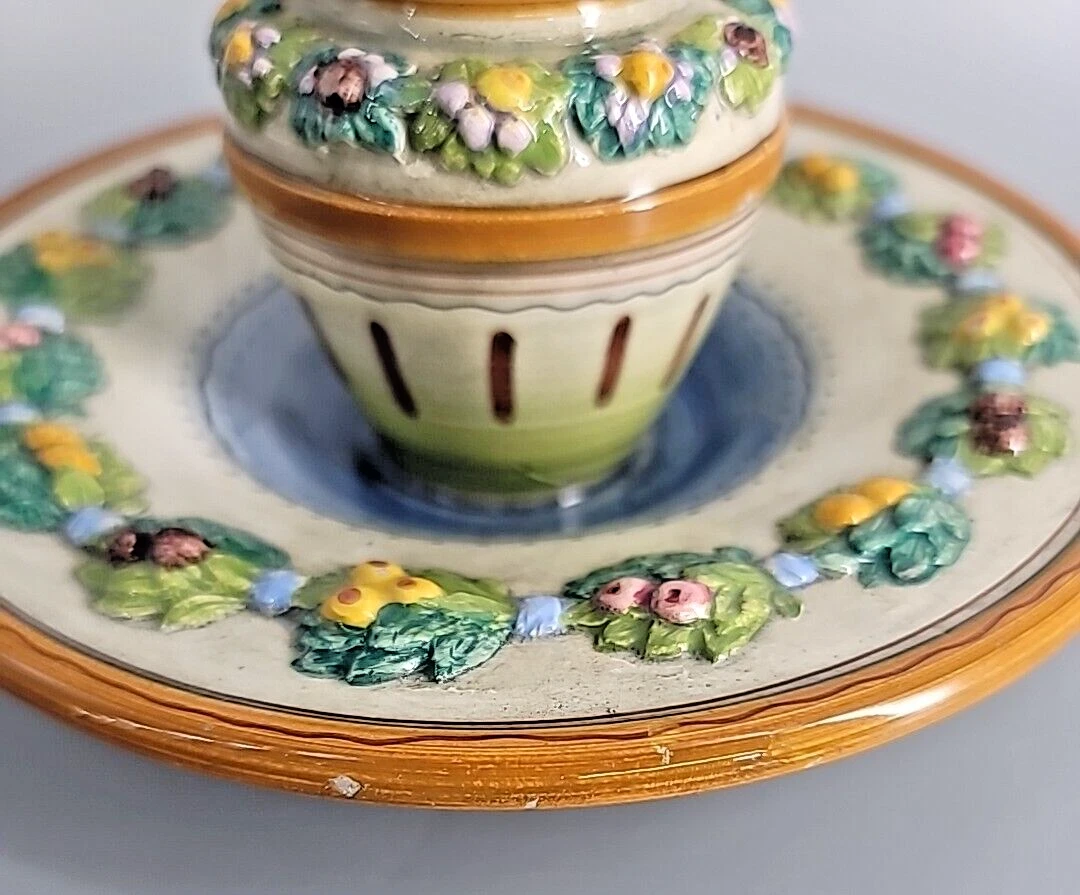
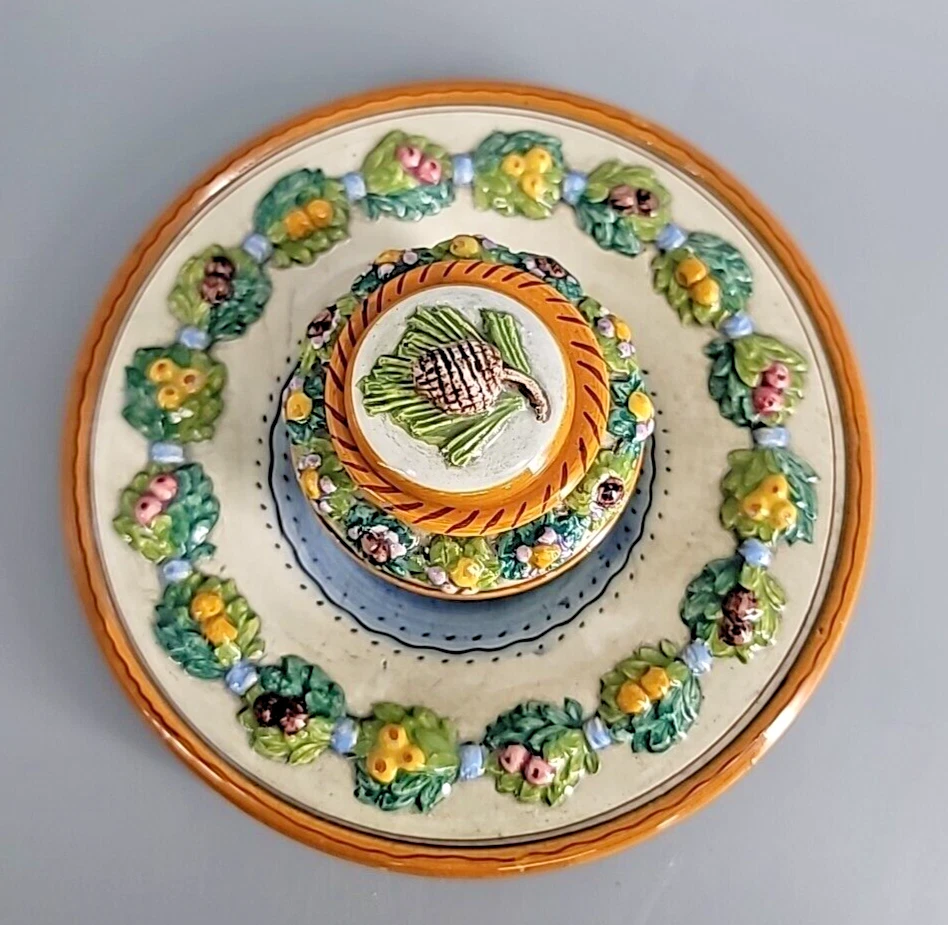
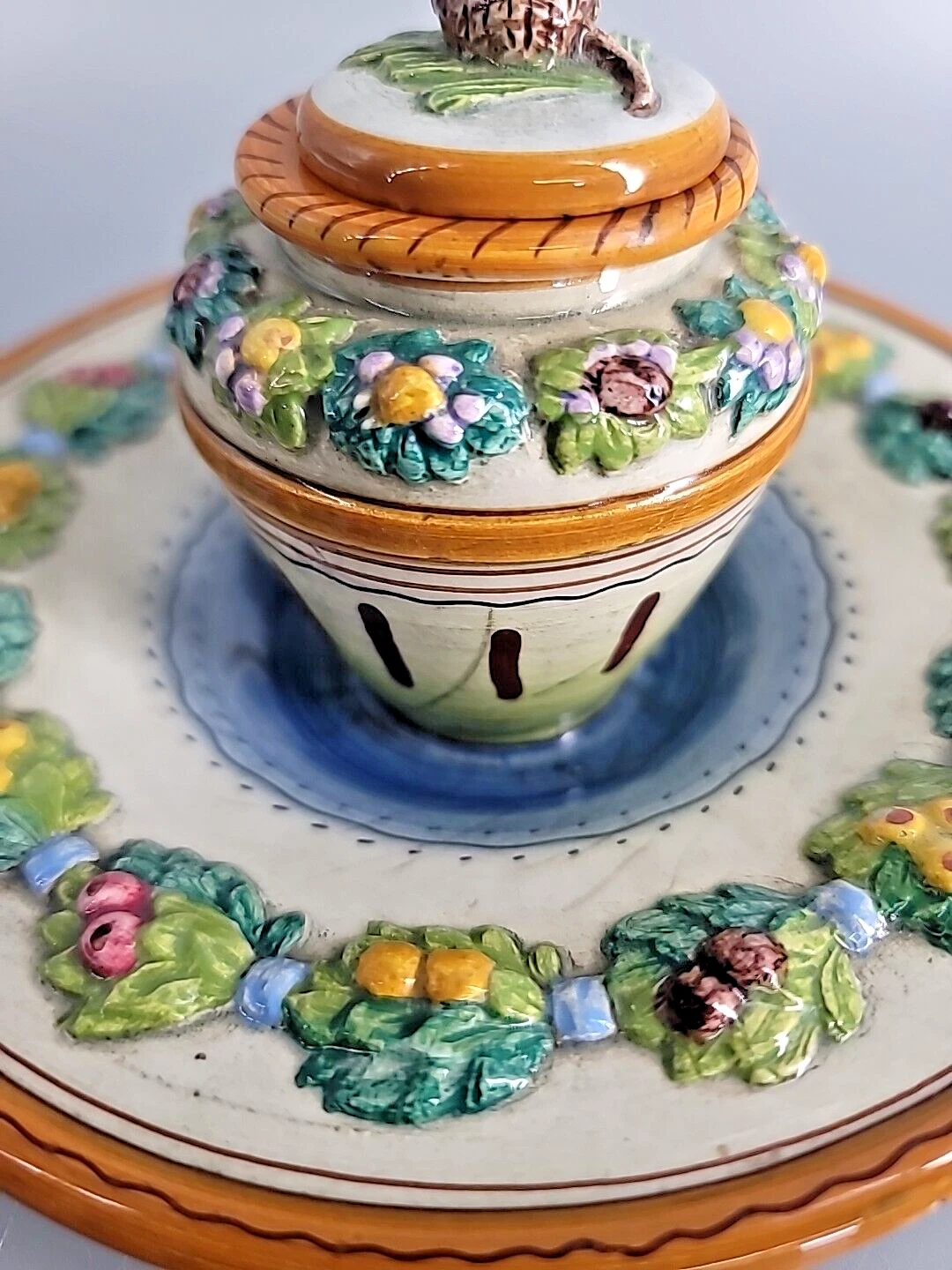
The inkwell and tray are decorated with a relief (embossed) floral and fruit garland. This wreath includes small blossoms – possibly daisies or marguerites – and clusters of yellow and pink fruits (berries or lemons) nestled among green leaves.
Key Features:
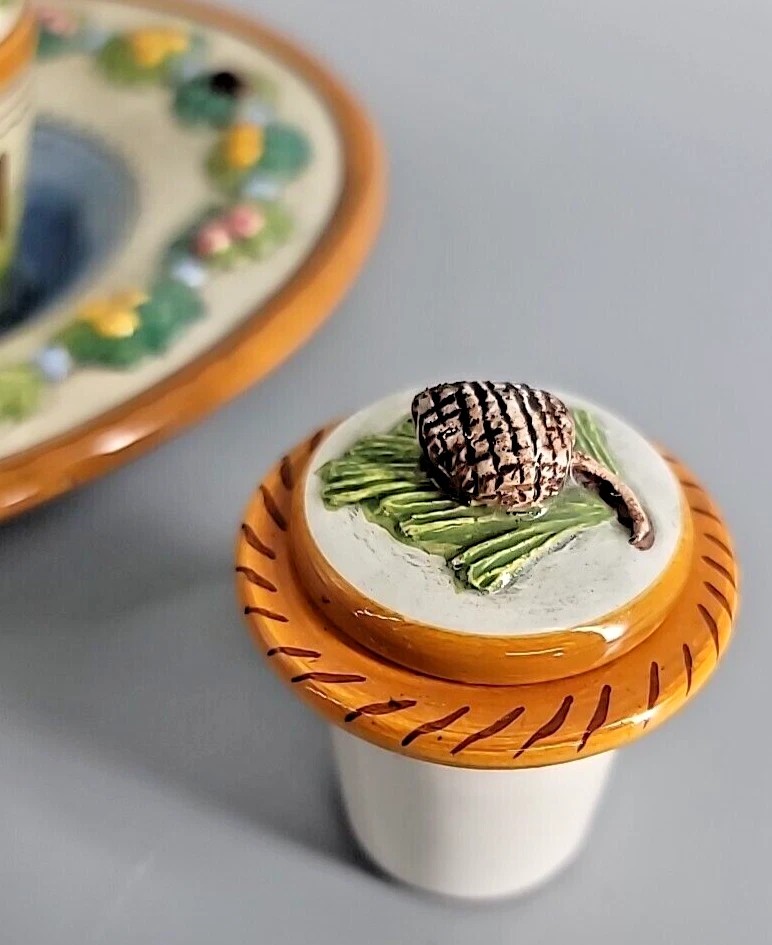
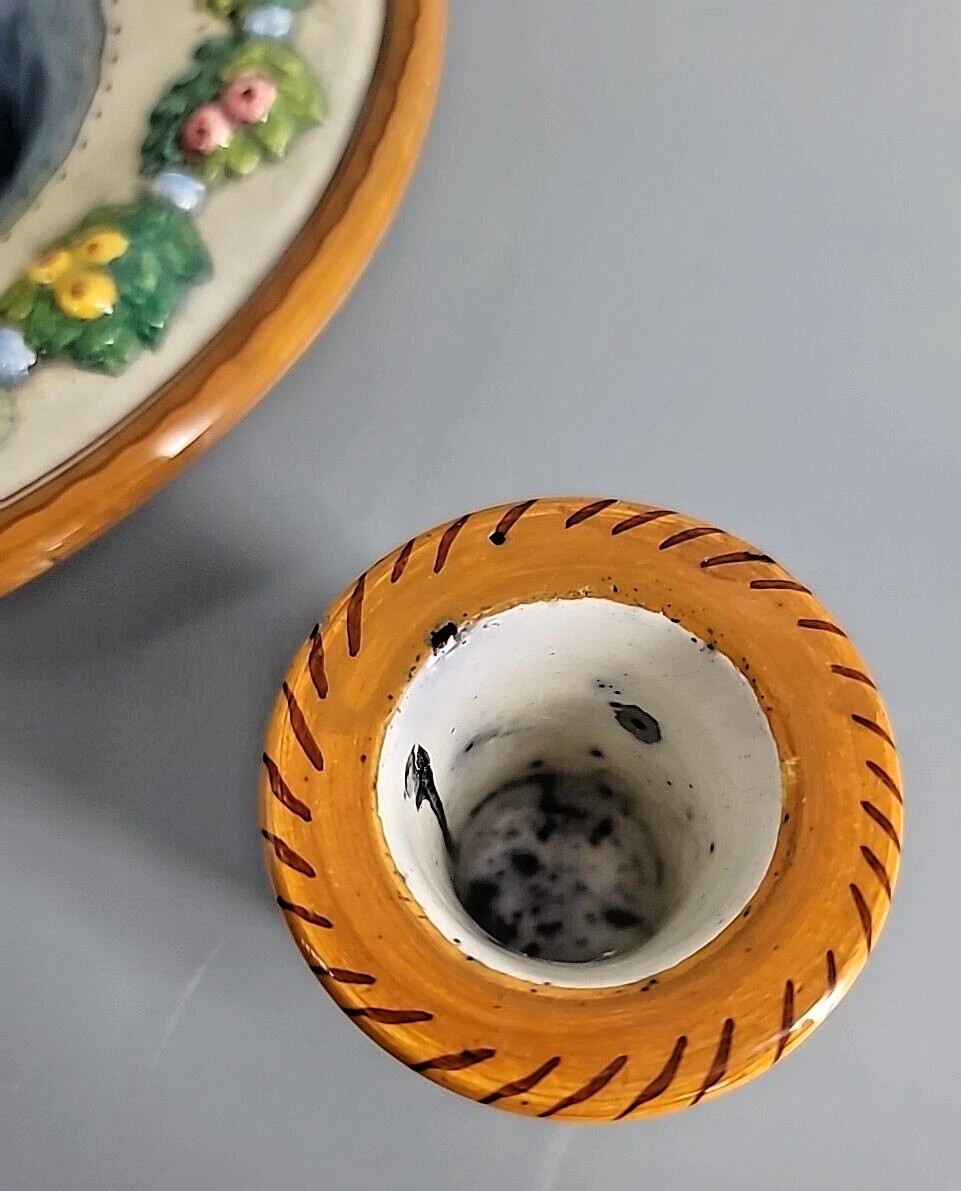
- The Lid: The lid features a central finial in the shape of a pinecone. The edge of the lid has a “rope” or twisted border in a warm ochre yellow.
- The Inkwell: The body of the well has vertical brown “slashes” or indentations around the lower half, creating a textured, organic look.
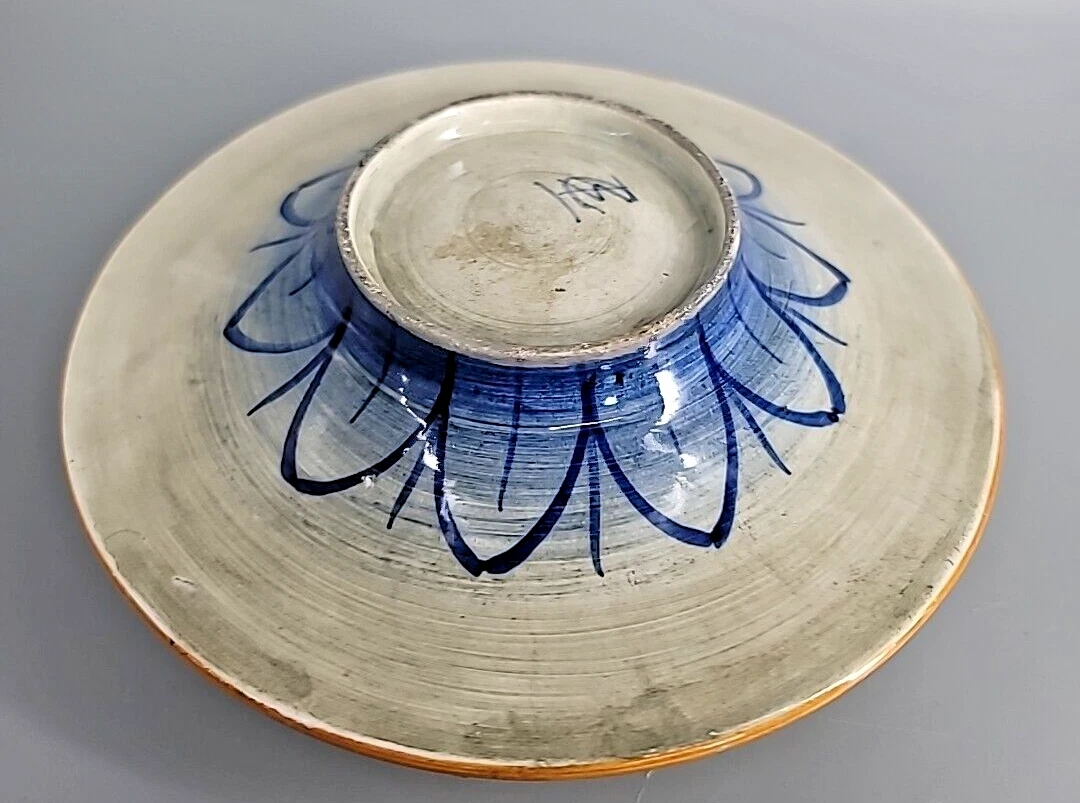
- The Tray: The wide rim is finished with an ochre-orange border. The underside reveals a large, hand-painted blue floral motif and a handwritten artist’s mark.
The monogram on the base of this inkwell is a hand-painted artist’s or decorator’s mark, which was common for mid-20th-century pottery from Mediterranean regions. While “MH” does not correspond to a major industrial factory (like Minton or Wedgwood), its presence—along with the distinctive blue flower painted around the foot—provides some clues about its origin.
Identification of the Mark
- The Signature: The handwritten “MH” is typical of an individual decorator in a small Italian workshop. In the 1940s through the 1960s, many artisan “bottegas” in Italy produced these highly decorated pieces for the giftware and export markets.
- The Blue Flower Base: The large, stylized blue flower on the underside (often called a “mandala” or “sunflower” base) is a signature flourish used by certain workshops in Deruta (Umbria) or Caltagirone (Sicily). It serves as a secondary decorative mark, indicating a higher level of craftsmanship than mass-produced souvenir pieces.
- The Pinecone Finial: This is the most telling clue. The pinecone (pigna) is the iconic symbol of Caltagirone, Sicily. It represents health, luck, and prosperity. Traditional Sicilian inkwells often incorporate these motifs.
Summary of Origin
- Made In: Italy, most likely in the region of Sicily (Caltagirone) or Umbria (Deruta).
- Who Made It: A small artisan workshop or studio potter. The “MH” is the personal signature of the master painter who decorated the piece.
- Style: Majolica (Maiolica). This specific type, with high-relief (embossed) flowers and fruits, is sometimes referred to as “Barbotine” style due to the applied clay decorations.
- Age: Circa 1950s–1960s. The handwritten mark and the specific “rope” border and palette are characteristic of Italian “Provincial” or “Artisan” ware from this era.
Sold for $39 in February 2026
Content disclaimer. The information posted is the owner’s best knowledge and may not have been vetted by the SOIC. We welcome comments, corrections, and additions, working to make our website information comprehensive and accurate.
Join the Society of Inkwell Collectors (SOIC) – it’s free!
Founded in 1981 as a non-profit organization,
we are documenting inkwells (and accessories).
We’re here to help and inform!