

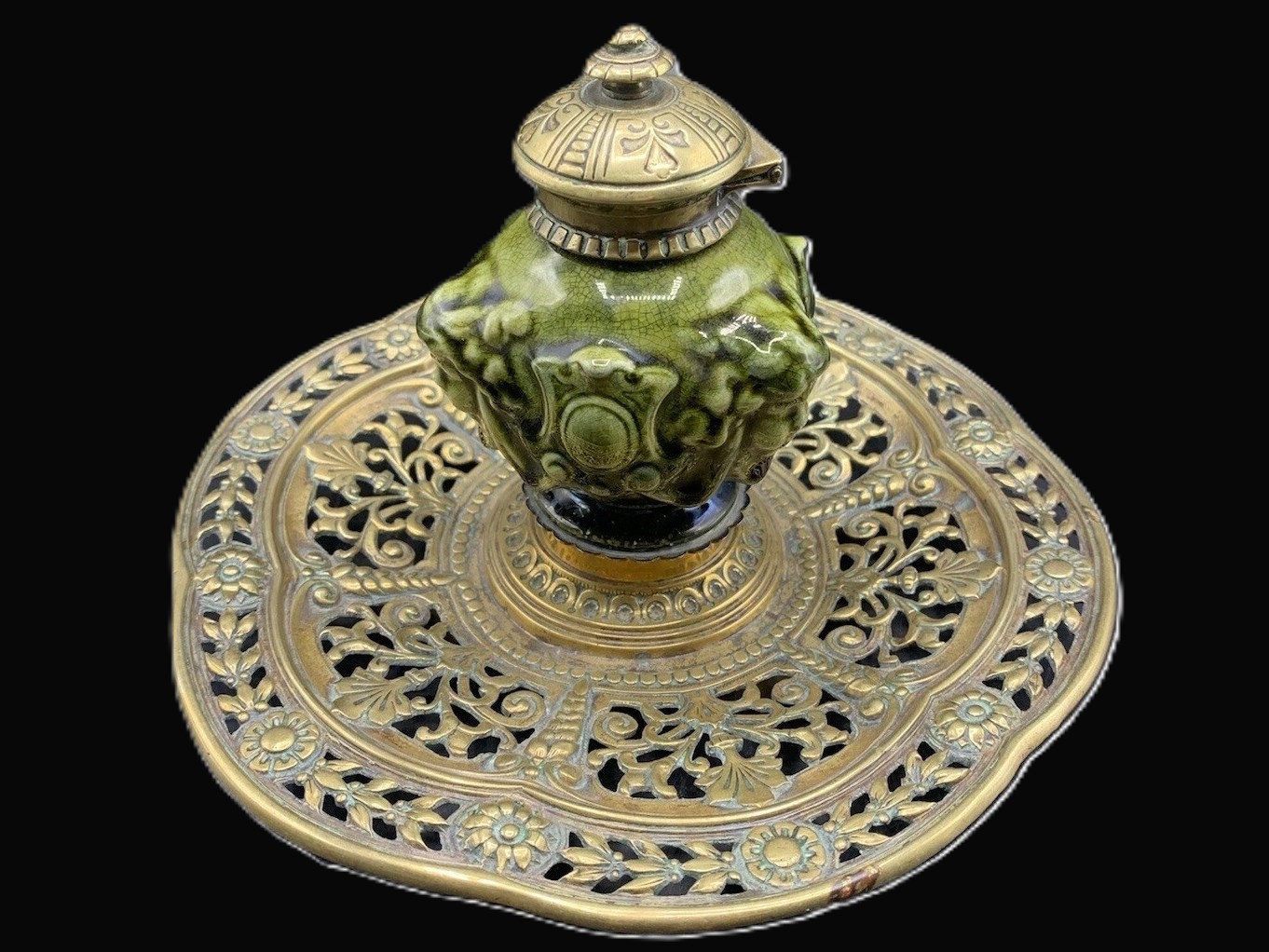
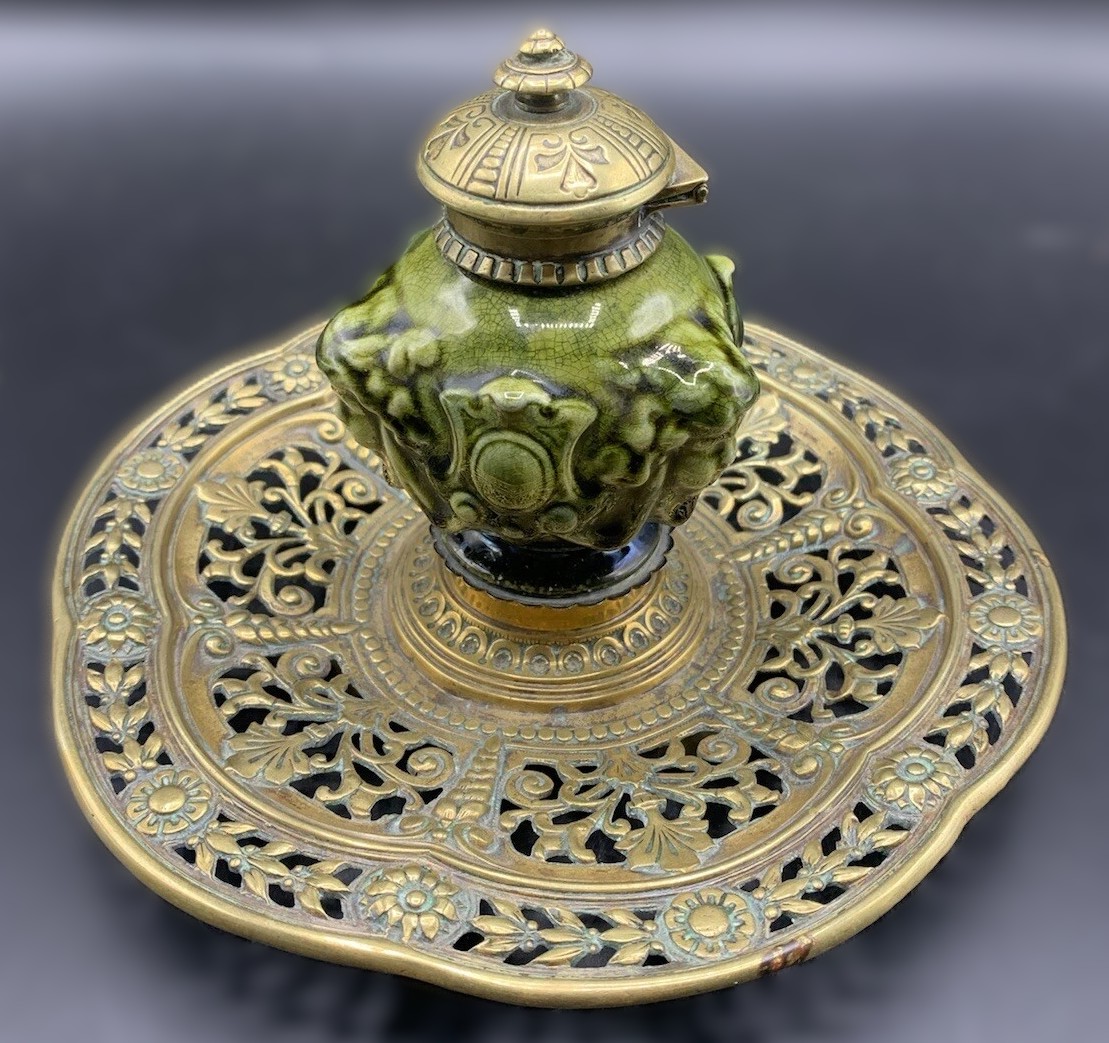
Linthorpe Pottery Inkwell
| Categories | Ceramics/Porcelain non-Figural |
| Material | Brass, Majolica |
| Markings | Unmarked |
| Manufacturer | Linthorpe Art Pottery Co. |
| Origin | England |
| Date or Era | circa 1885 |
| Measuring | 8” diameter |
This majolica piece combines art pottery with intricate brass mountings.
Description
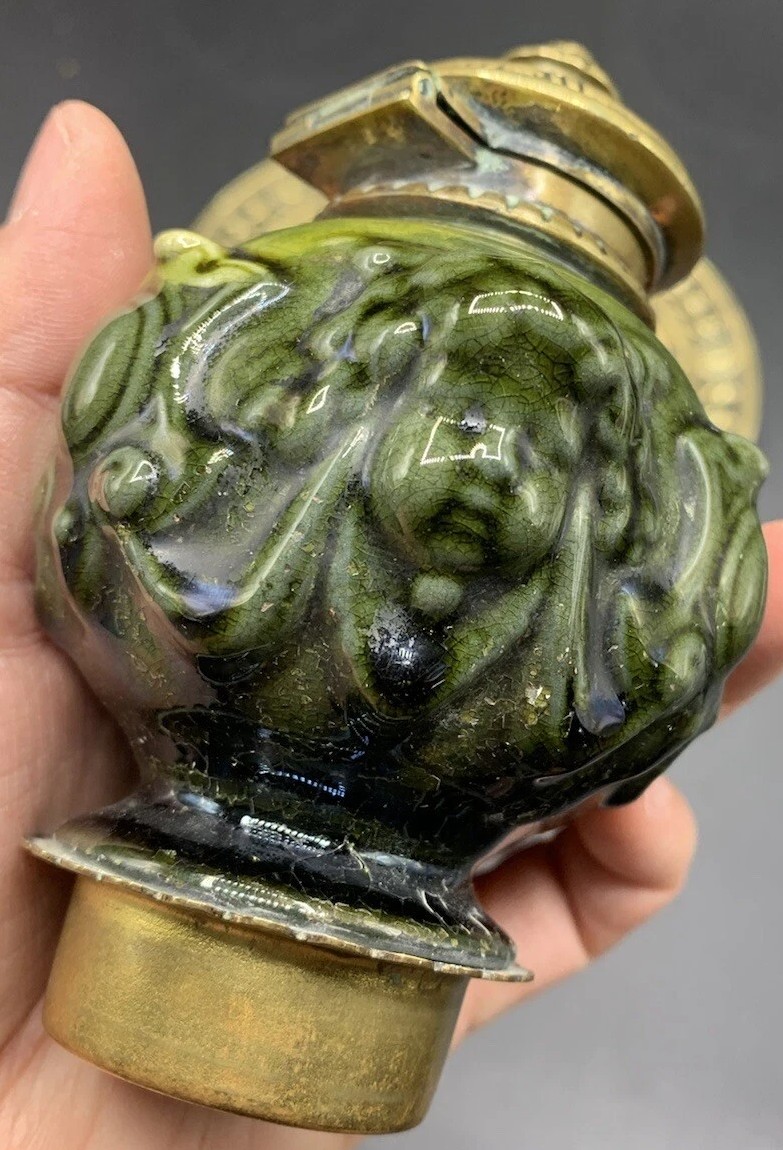
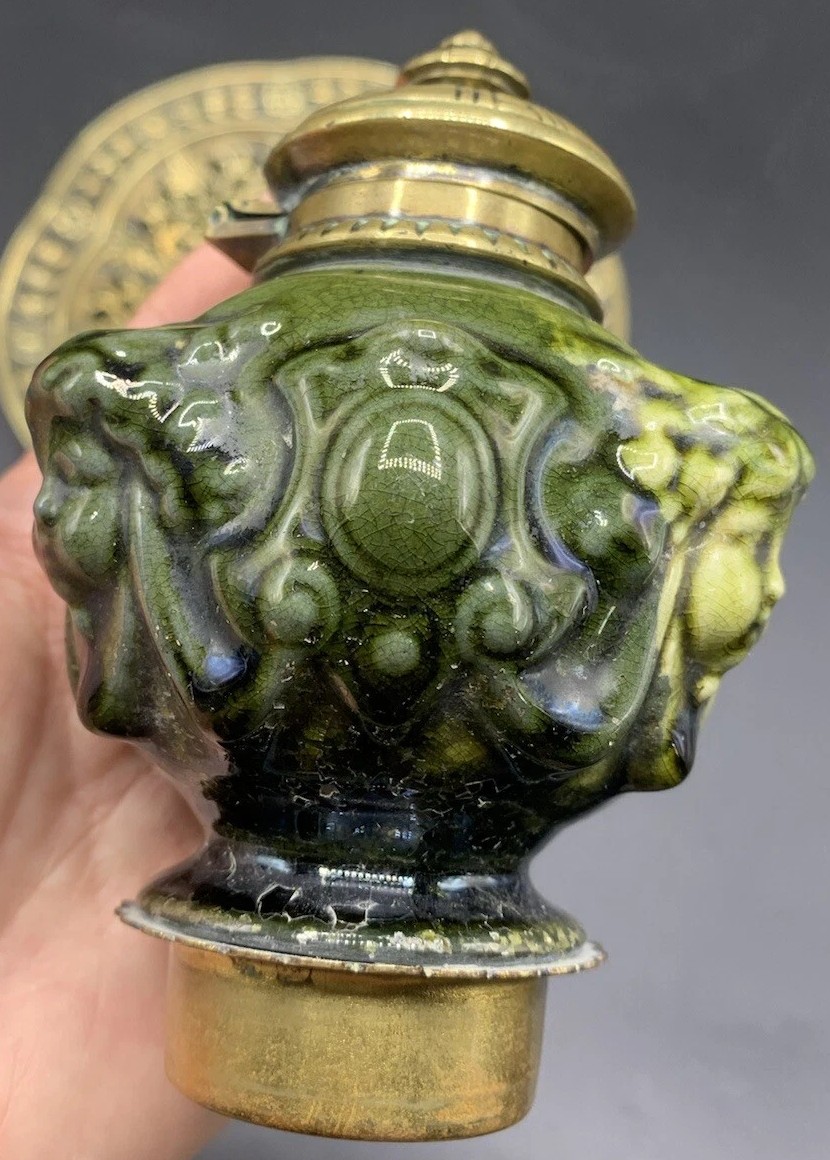
This art pottery inkwell consists of a single central ceramic well housed within a heavy, ornate brass framework:
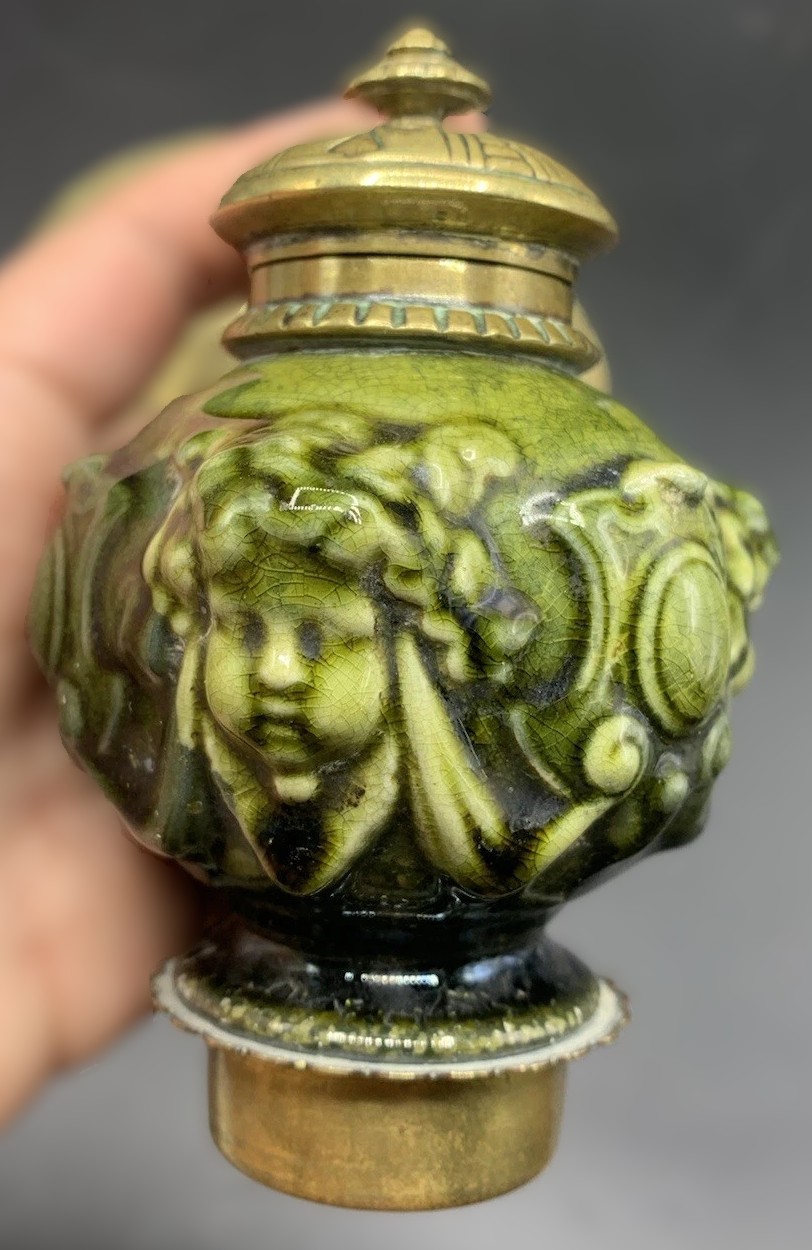
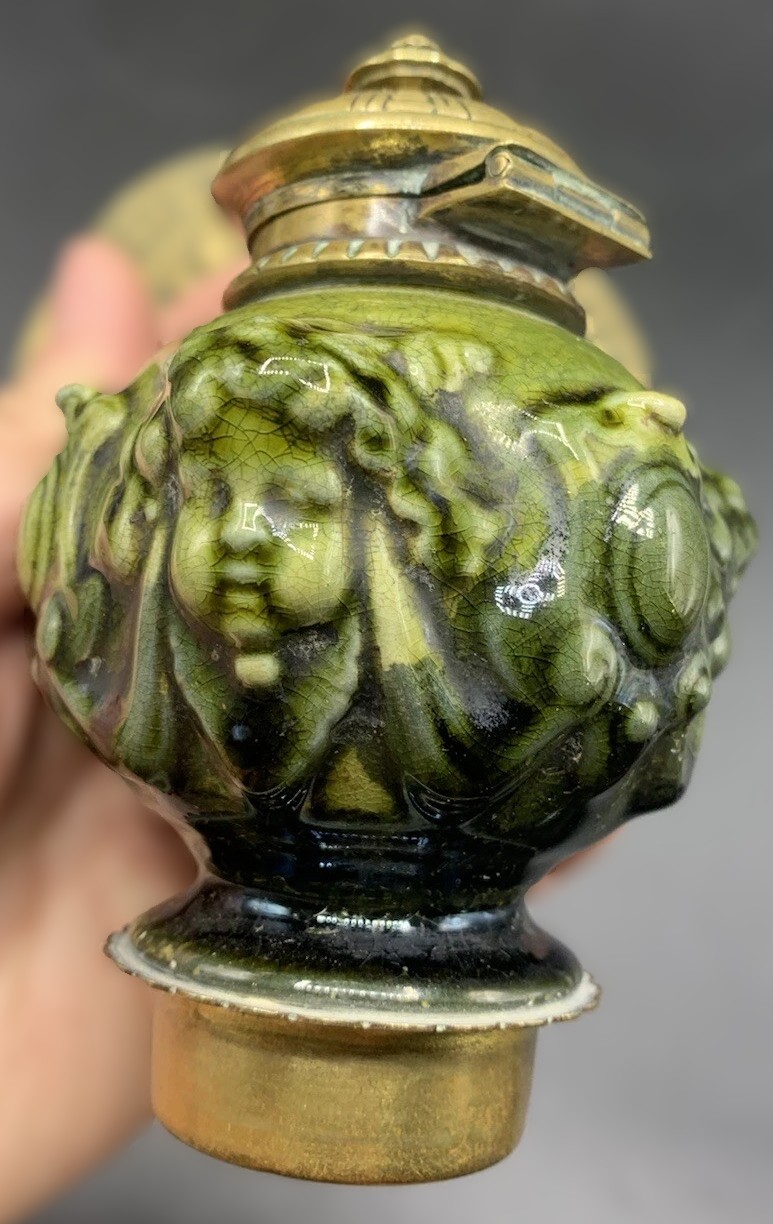
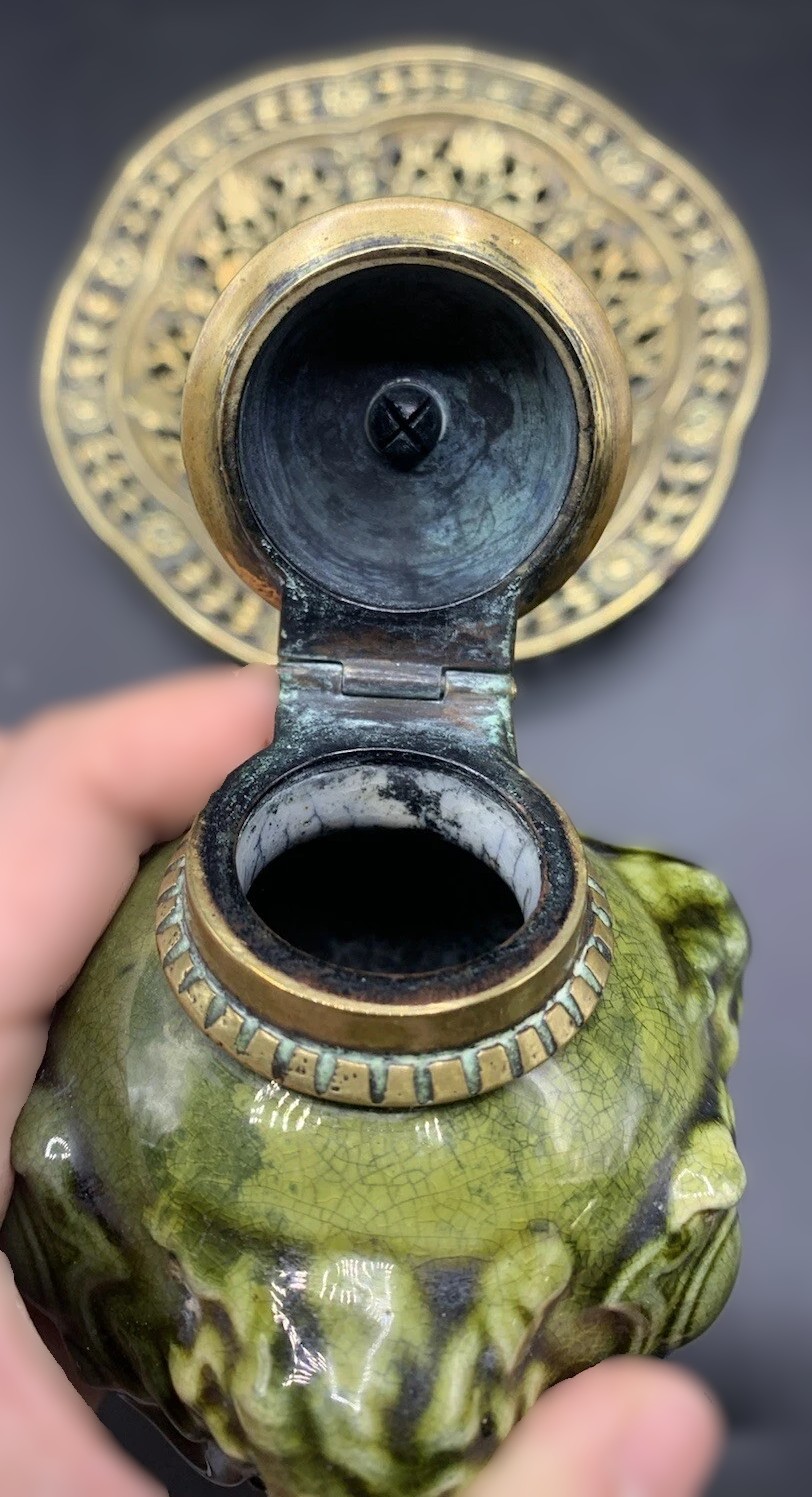
- The Ceramic Inkwell: The body of the inkwell features a vibrant, multi-toned olive-green majolica glaze over low-relief molded decoration. The central motif consists of molded stylized cherub or child-like faces surrounded by foliage and scrollwork. The glaze exhibits a distinct, tight crackle pattern (crackle glaze) throughout the glossy finish.
- The Brass Fittings:
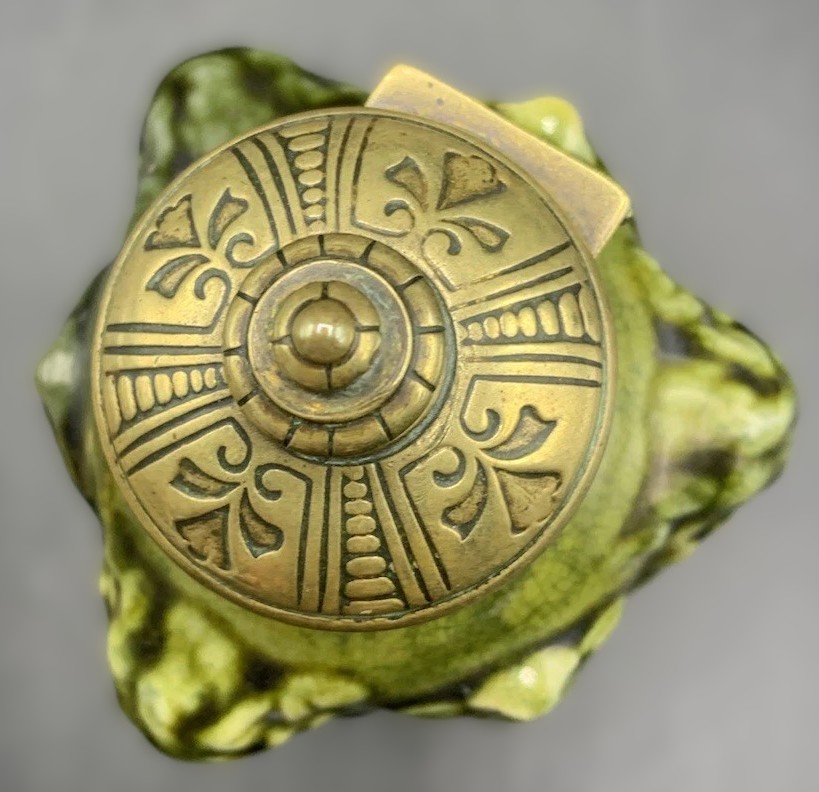
- The Lid: The inkwell is fitted with a hinged, dome-shaped brass lid featuring incised geometric and floral motifs. Opening the lid reveals the interior of the well lined with ceramic/porcelain.
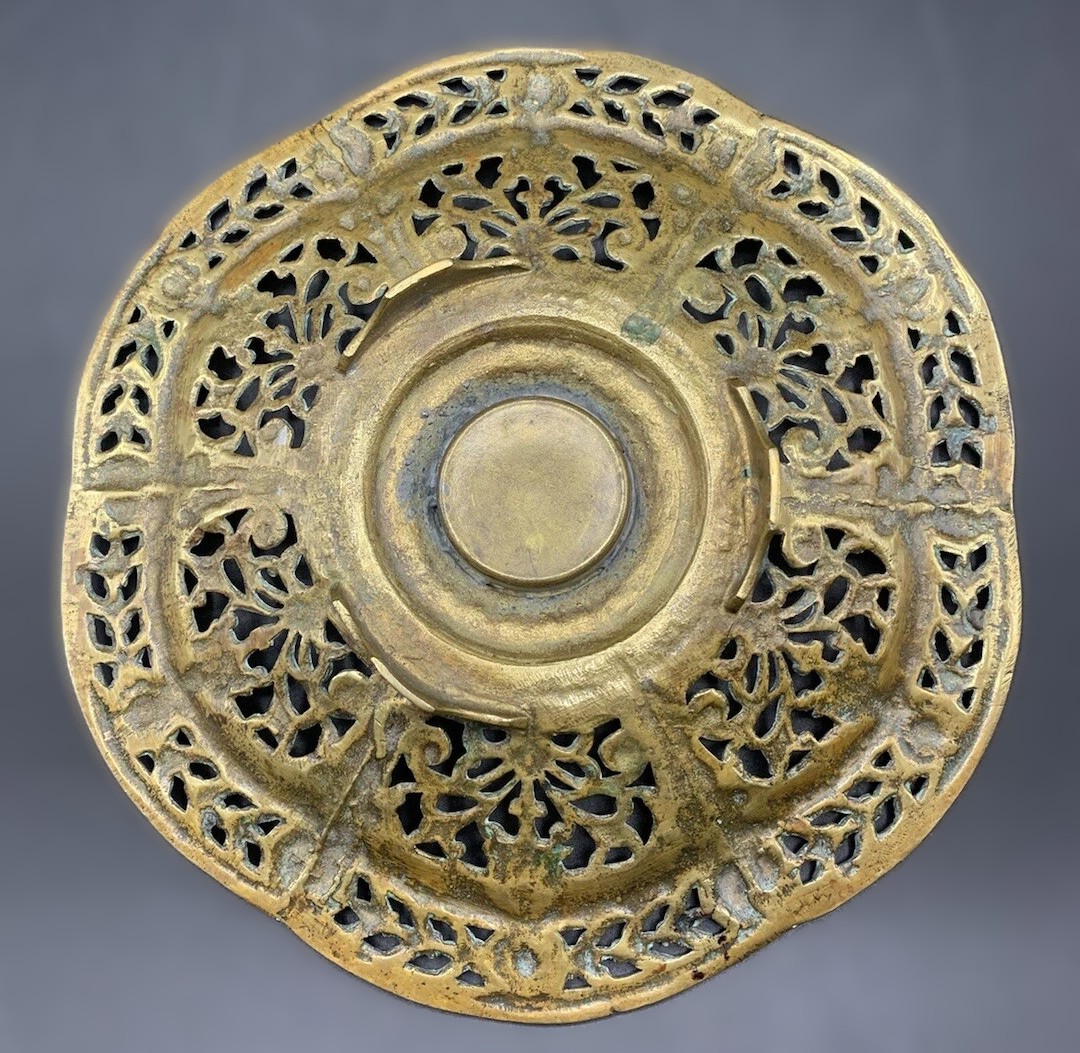
- The Base/Tray: The inkwell sits inside a wide, circular brass tray featuring intricate pierce-work (openwork) detailing, combining scrolled leaf patterns and flower heads.
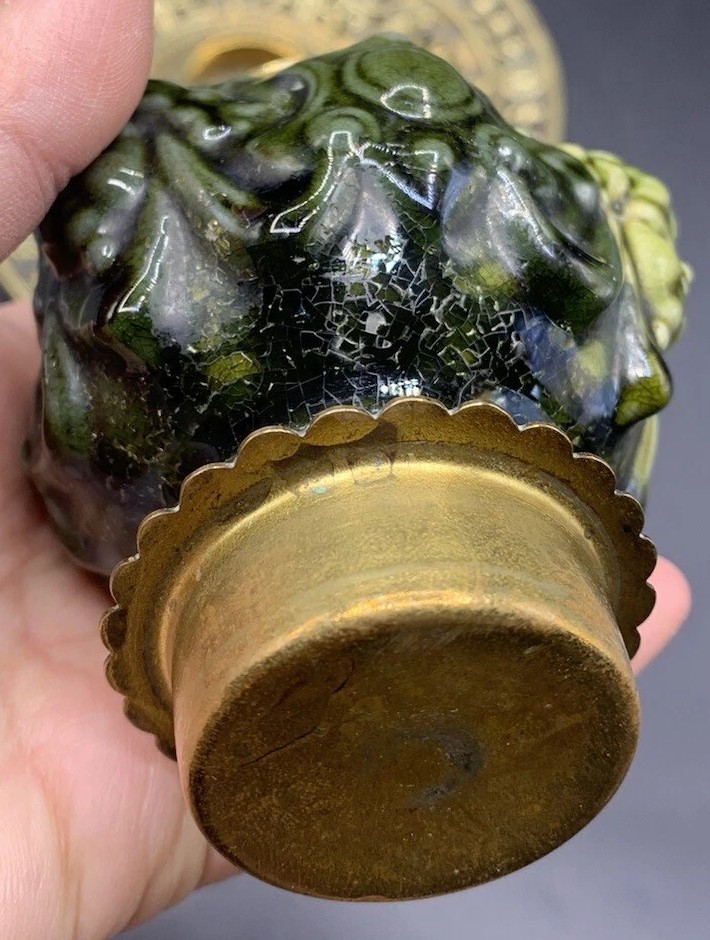
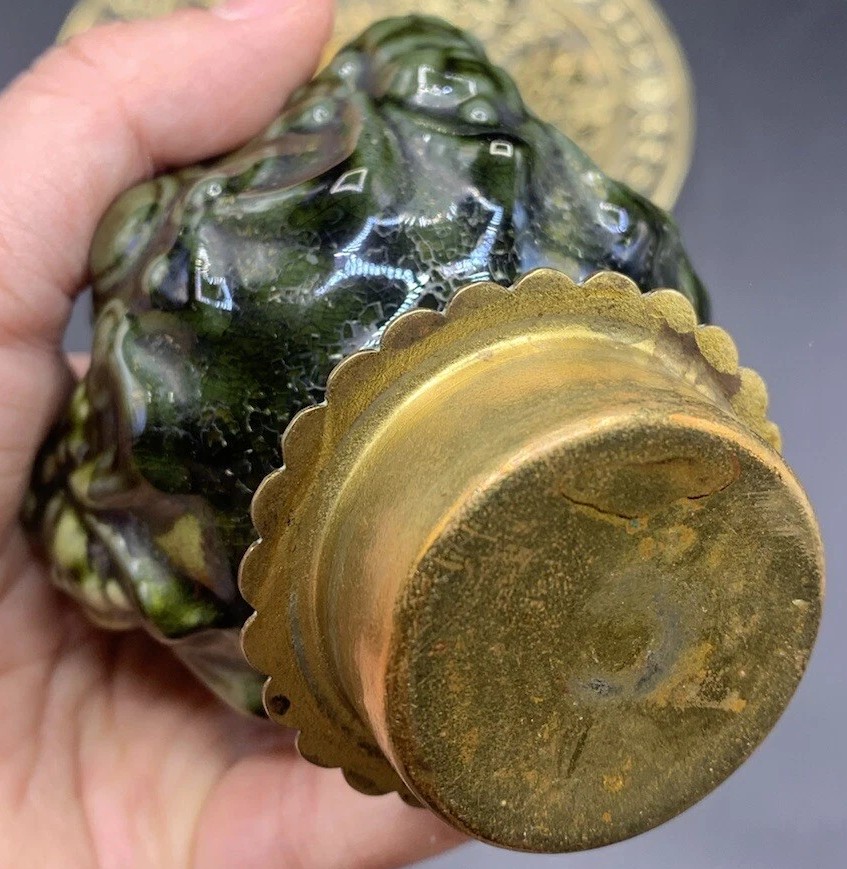
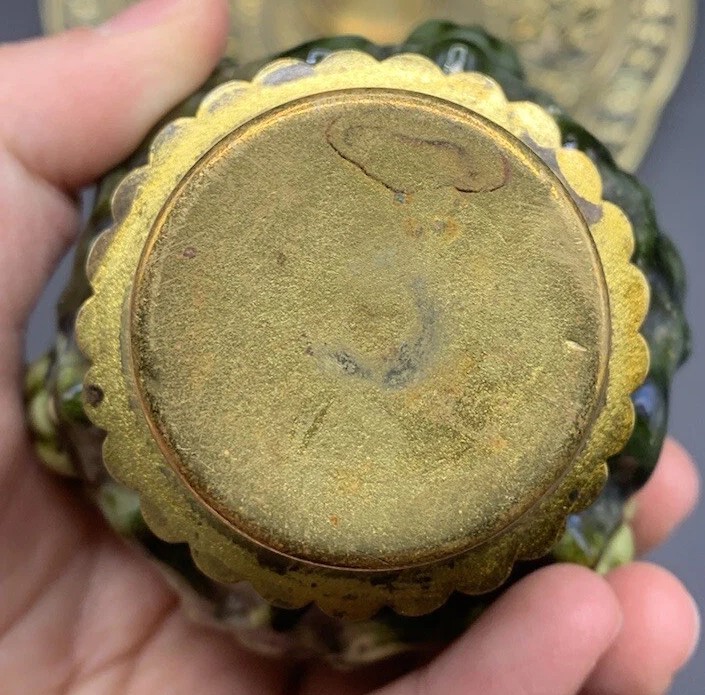
- The Underside: The bottom of the ceramic piece is mounted into a smooth, un-marked cylindrical brass foot. The underside of the ornate brass pierced tray featurrs structural casting ribs and a recessed center to secure the inkwell.
How Old Is It?
This inkwell was manufactured between 1879 and 1889.
Because the Linthorpe Art Pottery company had an exceptionally brief operational lifespan of just over a decade, pieces can be dated with precision. Given the specific aesthetic, it most likely dates closer to the early-to-mid 1880s, when the pottery heavily exhibited its innovative running and majolica-style glazes internationally.
About the Linthorpe Art Pottery Co.
Despite its brief existence, the Linthorpe Art Pottery company holds a place in the history of the British Aesthetic and Art Pottery Movements.
- Founding and Mission: The pottery was established in 1879 in Linthorpe, Middlesbrough, England, by a local businessman named John Harrison. Harrison originally owned the Sun Brick Works, which had fallen on tough times. To repurpose the site and—crucially—to help alleviate severe local unemployment, he pivoted to art pottery.
- The Christopher Dresser Connection: Harrison partnered with the legendary Dr. Christopher Dresser, who is widely considered one of the world’s first independent professional industrial designers. Dresser served as the Art Superintendent from 1879 to 1882. He brought a wealth of global influences to the pottery, infusing designs with Japanese, Peruvian, Egyptian, and Celtic motifs. Many Linthorpe pieces from this era bear his impressed signature.
- Technical Innovation: Linthorpe was progressive. It was the first pottery in Britain to utilize gas-powered kilns. This allowed the potters unparalleled control over firing temperatures, enabling them to pioneer magnificent, unpredictable “running glazes,” tortoiseshell effects, and rich majolica finishes. They initially built their pieces using the local red brick clay before later supplementing it with Cornish white clay.
- Management: On Dresser’s recommendation, an artist named Henry Tooth was hired as the first manager. Tooth had no prior pottery experience but excelled at execution, often marking early pieces with his own “HT” monogram. When Tooth left in 1882 to co-found Bretby Pottery, Richard Patey took over the manager role.
- Abrupt Closure: The pottery won numerous international awards and even caught the eye of royalty (Princess Alexandra was a notable collector). However, financial ruin struck when John Harrison was forced into bankruptcy in 1889 due to the sudden collapse of a local building society. Harrison died of pneumonia shortly after, and the pottery’s remaining stock and equipment were auctioned off in April 1891, closing the chapter on Linthorpe forever.
Sold for $65 in May 2026
Content disclaimer. The information posted is the owner’s best knowledge and may not have been vetted by the SOIC. We welcome comments, corrections, and additions, working to make our website information comprehensive and accurate.
Join the Society of Inkwell Collectors (SOIC) – it’s free!
Founded in 1981 as a non-profit organization,
we are documenting inkwells (and accessories).
We’re here to help and inform!