




Limoges Porcelain Inkstand
| Categories | Ceramics/Porcelain "Named" Makers |
| Material | Porcelain |
| Markings | Limoges France |
| Manufacturer | Limoges |
| Origin | France |
| Date or Era | circa 1920 |
| Measuring | 7 ½” x 4 ¼” x 1 ¼” high |
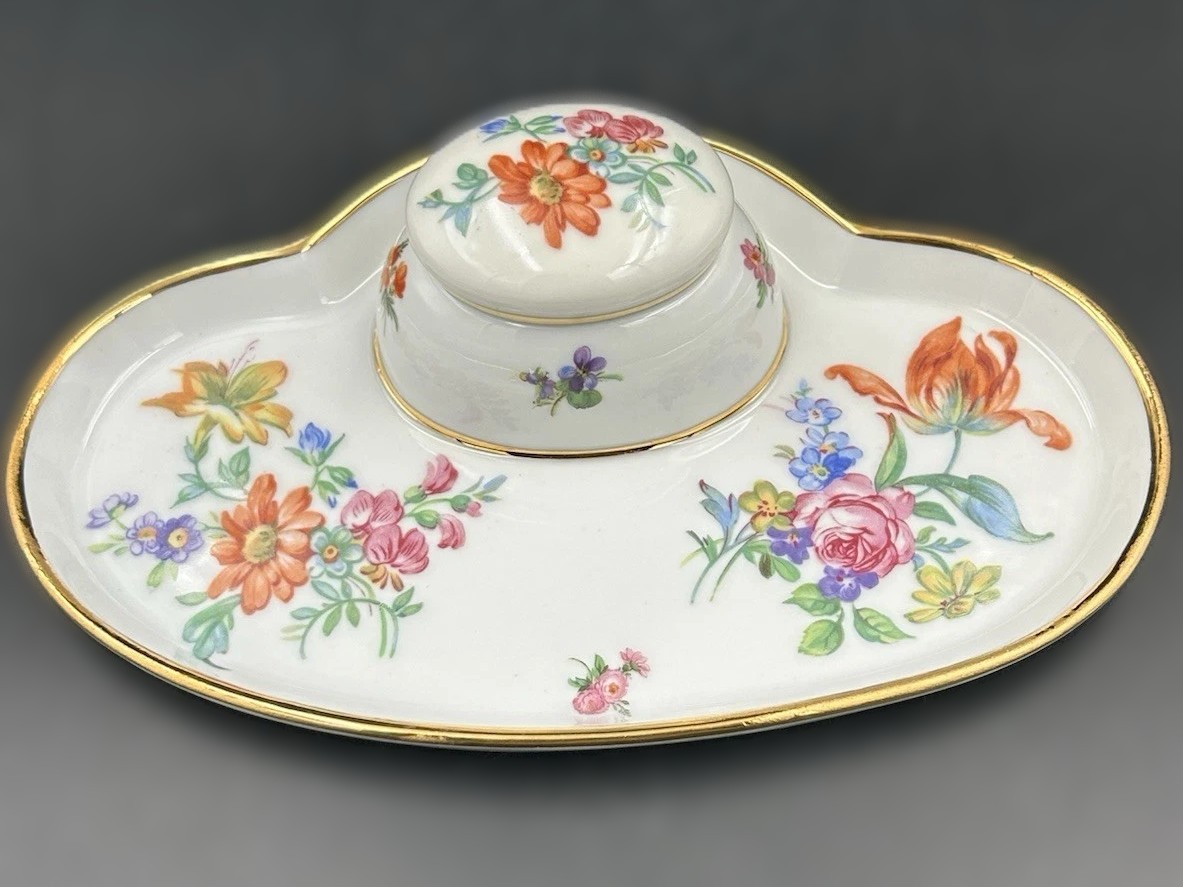
This porcelain desk inkstand is sometimes called a blotter stand or pen tray and inkwell set.
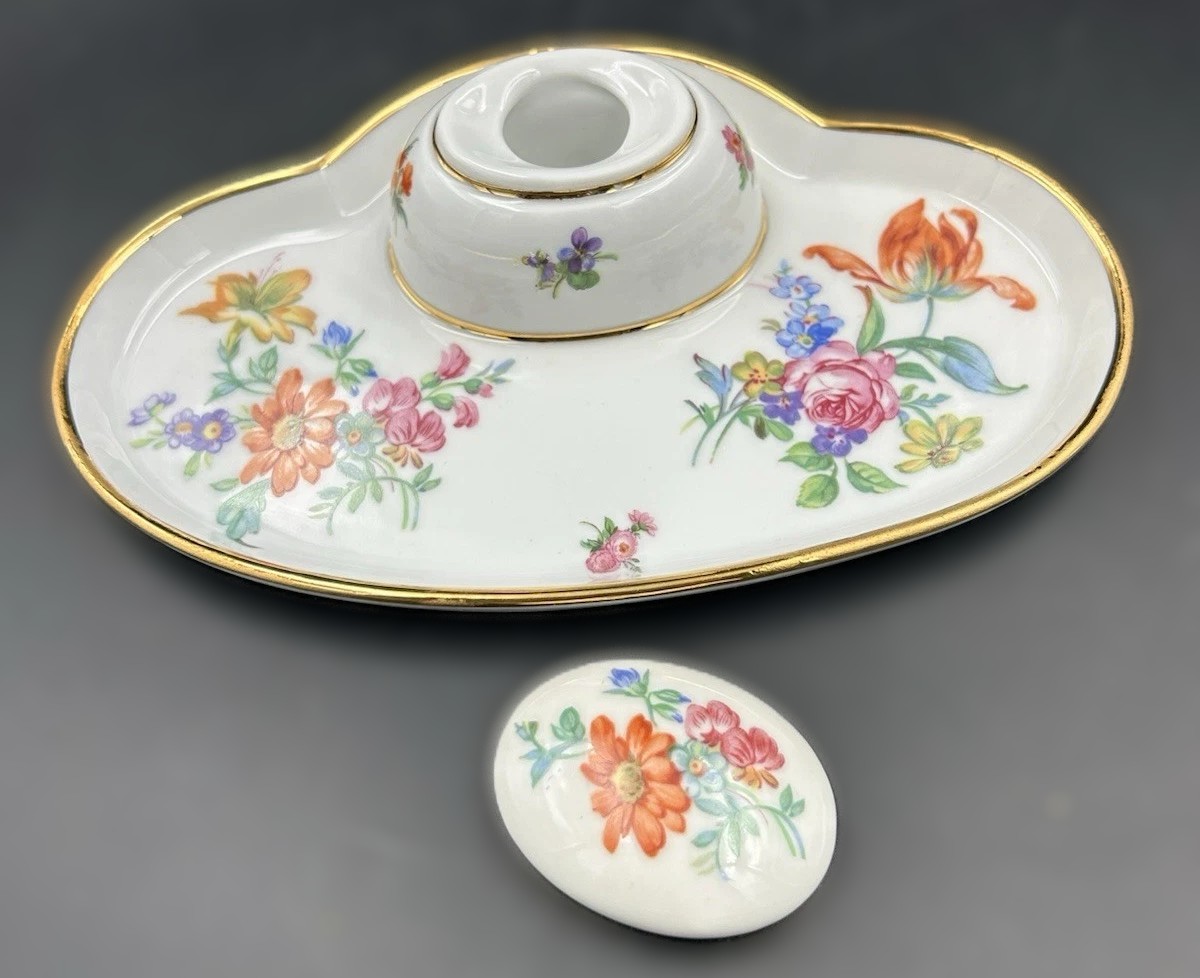
- Overall Form: The piece consists of an elongated, cloud-shaped tray that serves as a pen tray (or rest) and features a central, integrated, raised inkwell. The design is flowing and somewhat baroque or rococo in inspiration.
- Decoration: It is hand-painted (transfer-printed and hand-finished) with vibrant polychrome floral arrangements (scattered bouquets). The flowers appear to be a mix of traditional European designs, including roses, tulips, daisies, and smaller sprigs.
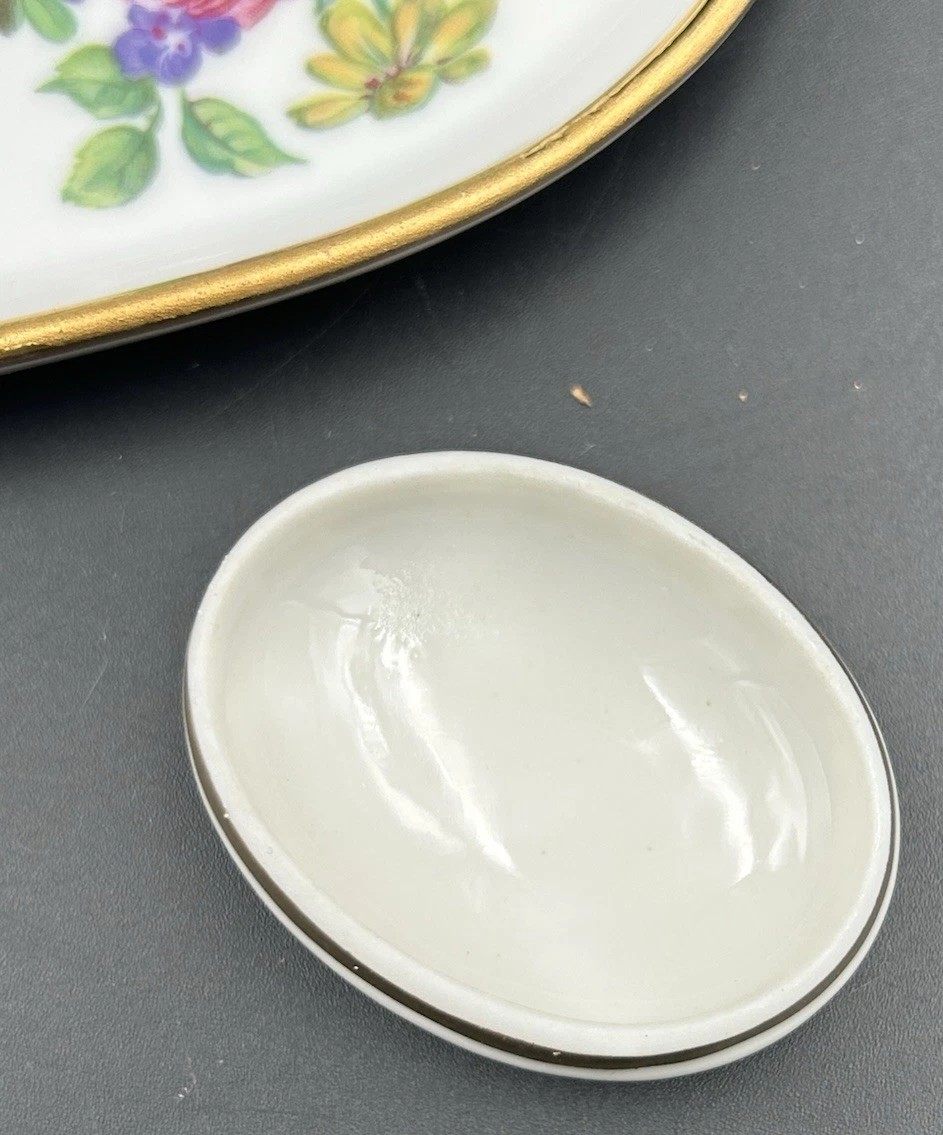
- Inkwell: The central inkwell has a gold-rimmed opening and is topped with a separate, lift-off lid. The lid is oval or round and features a matching floral motif.
- Detailing: The entire rim of the tray and the rim of the inkwell base are highlighted with a heavy band of gold trim.
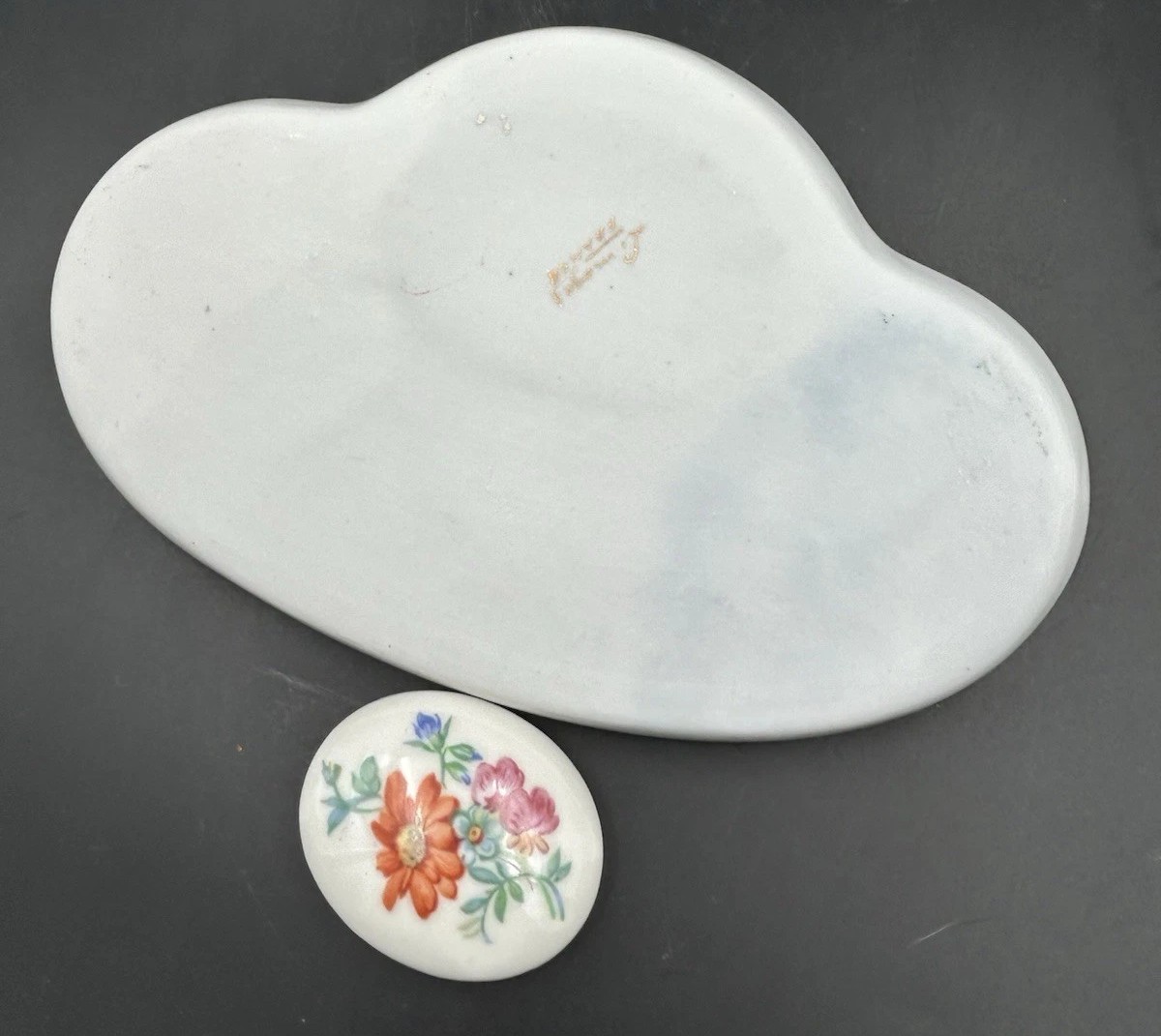
- Material and Mark: The piece is identified by its mark as Limoges porcelain from France. The mark “Limoges France” is visible on the underside in gold script.
Estimating the Age of the Limoges Inkstand
The mark “Limoges France” in gold script gives a clue about the piece’s age, though the precise year is difficult to pinpoint without the specific factory mark (which often accompanies the “Limoges France” designation).
Key Factors for Estimation:
- The “Limoges France” Mark: The phrase “Limoges France” on its own, especially in a gold script or simple font, was widely used after the passing of the McKinley Tariff Act in 1890 in the United States. This act required all imported goods to clearly state their country of origin.
- Lack of a Specific Factory Mark: Most Limoges porcelain was made by specific factories (like Haviland, T&V, Ahrenfeldt, etc.) that used their own distinct “factory marks” or “blank marks” alongside the “Limoges France” or “Limoges” designation. The absence of a clear, recognizable factory mark, and the simple gold script, often suggests that the piece may have been decorated by a studio decorator or an importer who purchased “blanks” (undecorated porcelain) from a Limoges factory and then added their own decoration and mark.
- Style: The colorful, scattered floral bouquet (known as a “Schleuder-bouquet” or “scattered flower”) combined with the ornate gold edging is typical of a style popular from the late 19th century into the early 20th century (e.g., the Belle Époque or Edwardian eras).
Age Estimate:
Based on the style, the “Limoges France” mark, and the general presentation, this inkstand most likely dates from the period of 1890 to 1930.
- Earliest: 1890 (when import marking became mandatory)
- Likely Peak: 1900s–1920s
Sold for $40 in October 2025
Content disclaimer. The information posted is the owner’s best knowledge and may not have been vetted by the SOIC. We welcome comments, corrections, and additions, working to make our website information comprehensive and accurate.
Join the Society of Inkwell Collectors (SOIC) – it’s free!
Founded in 1981 as a non-profit organization,
we are documenting inkwells (and accessories).
We’re here to help and inform!