


Limoges Inkwell with Bee Design
| Categories | Ceramics/Porcelain "Named" Makers |
| Material | Porcelain |
| Markings | See Narrative |
| Manufacturer | Limoges |
| Origin | France |
| Date or Era | See Narrative |
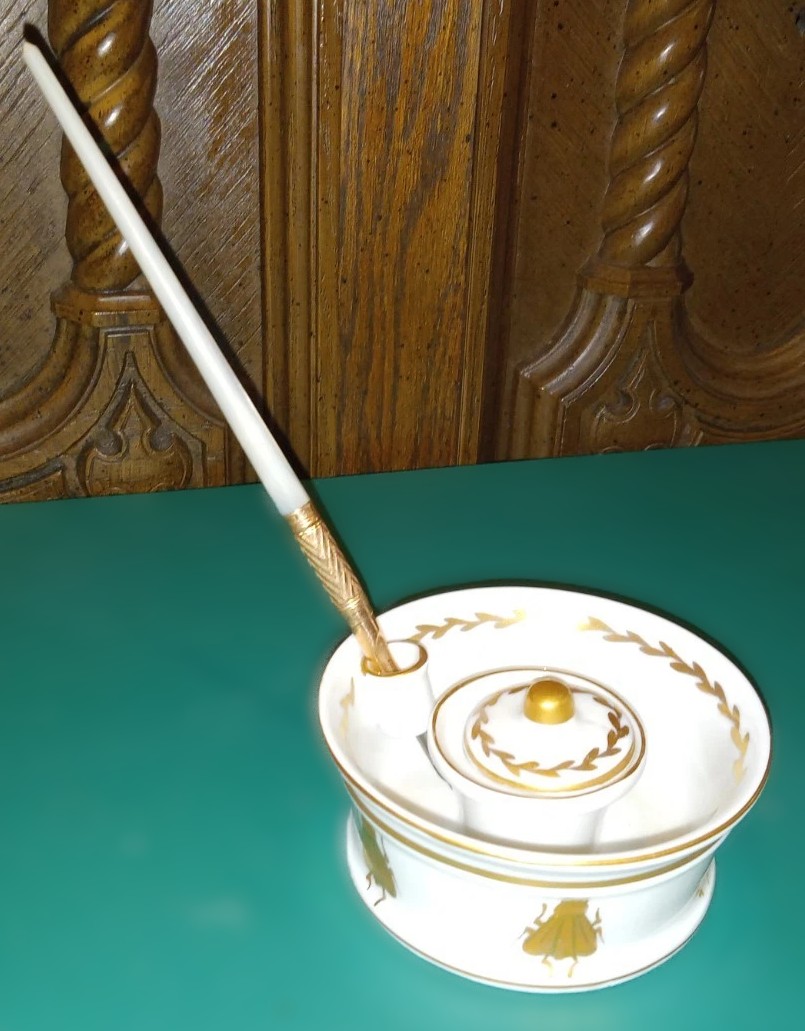
Pictured are two similar inkwells marked Limoges. Based on the bottom marks and the “bee design” motif (a symbol famously associated with Napoleon Bonaparte), these two inkwells come from different production eras and manufacturers.
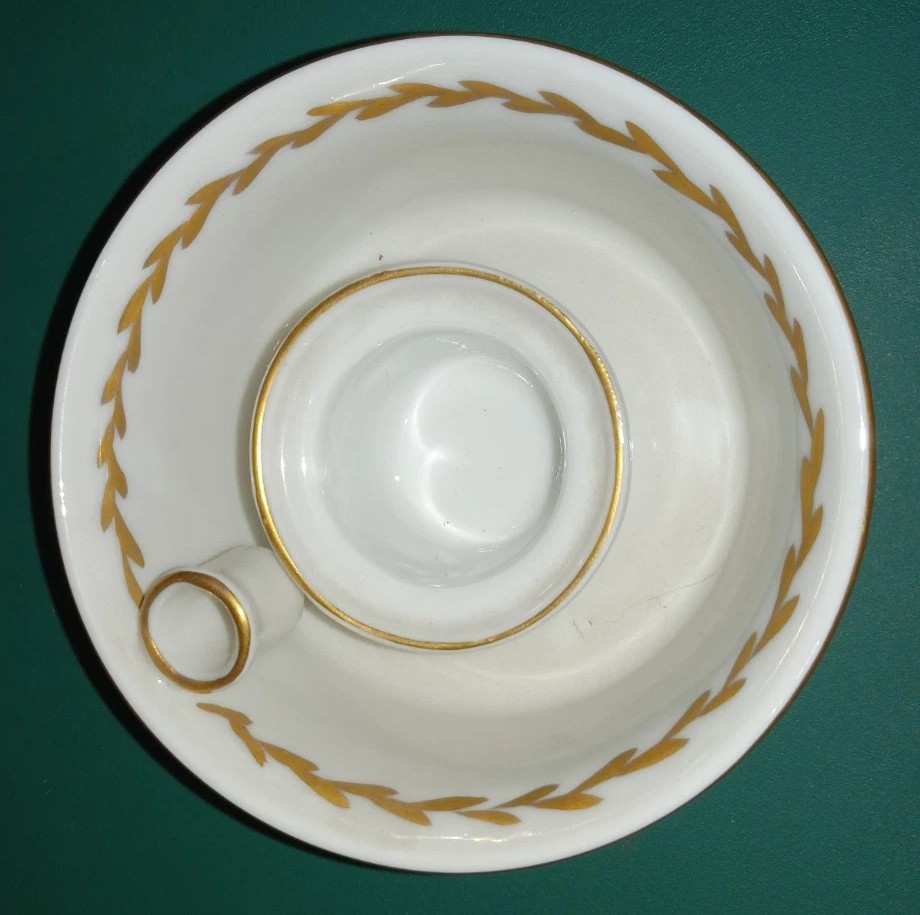
Inkwell 1 (1st Set of Pictures)
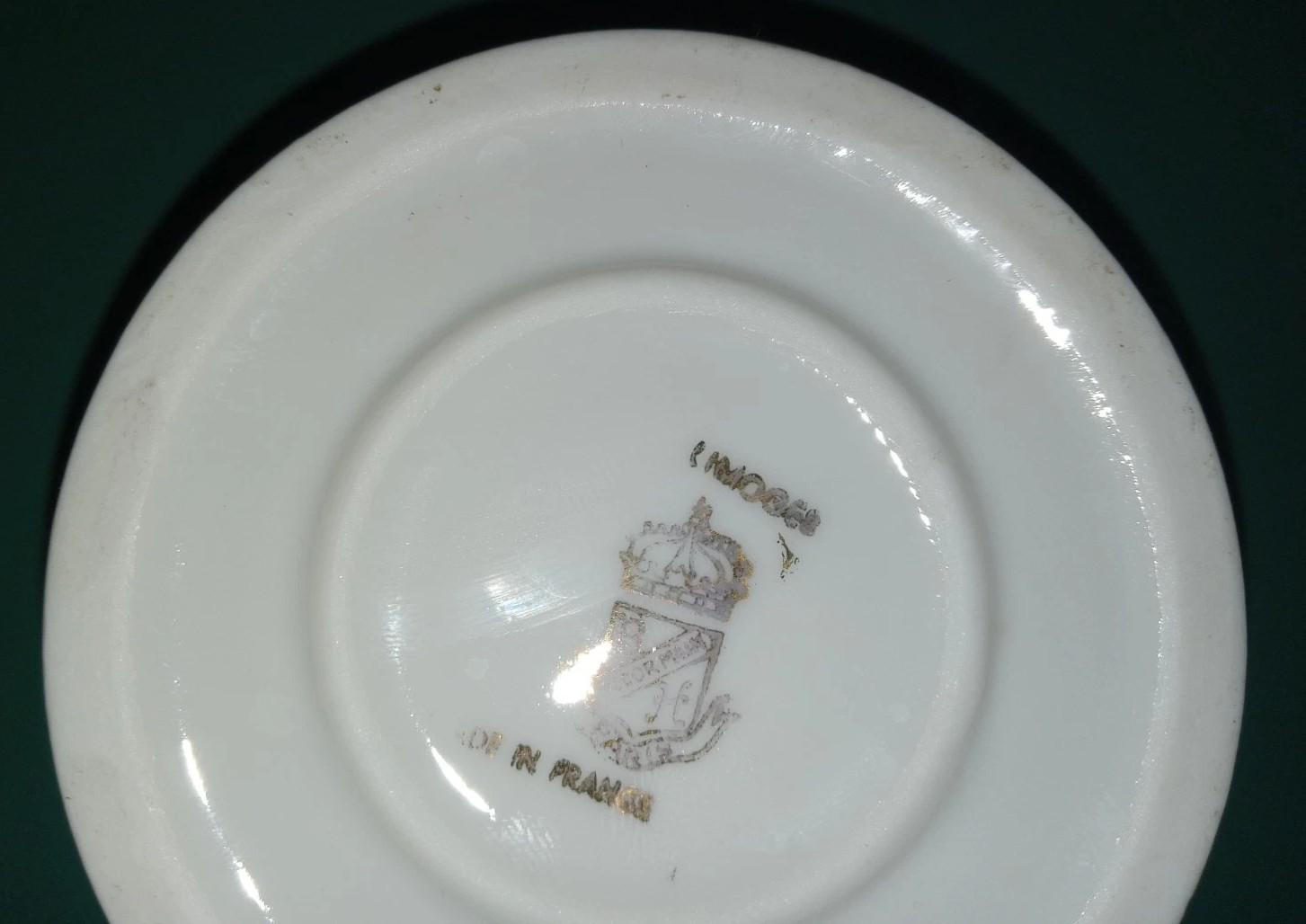
Its mark features a crown, shield, and banner with the word “LIMOGES” above and “MADE IN FRANCE” below.
- Manufacturer: This is the mark of Coronet Limoges, which was a decorating brand for the American importing firm George Borgfeldt & Co.
- Age: Circa 1921–1939.
- The “MADE IN” Clue: The use of the full phrase “MADE IN FRANCE” in block letters (rather than just “France”) specifically indicates the piece was produced after 1921. This change was mandated by amendments to the U.S. McKinley Tariff Act for imported goods.
- Context: Borgfeldt’s Limoges studio was highly active during the 1920s and 1930s, specializing in high-quality hand-painted pieces for the American market.
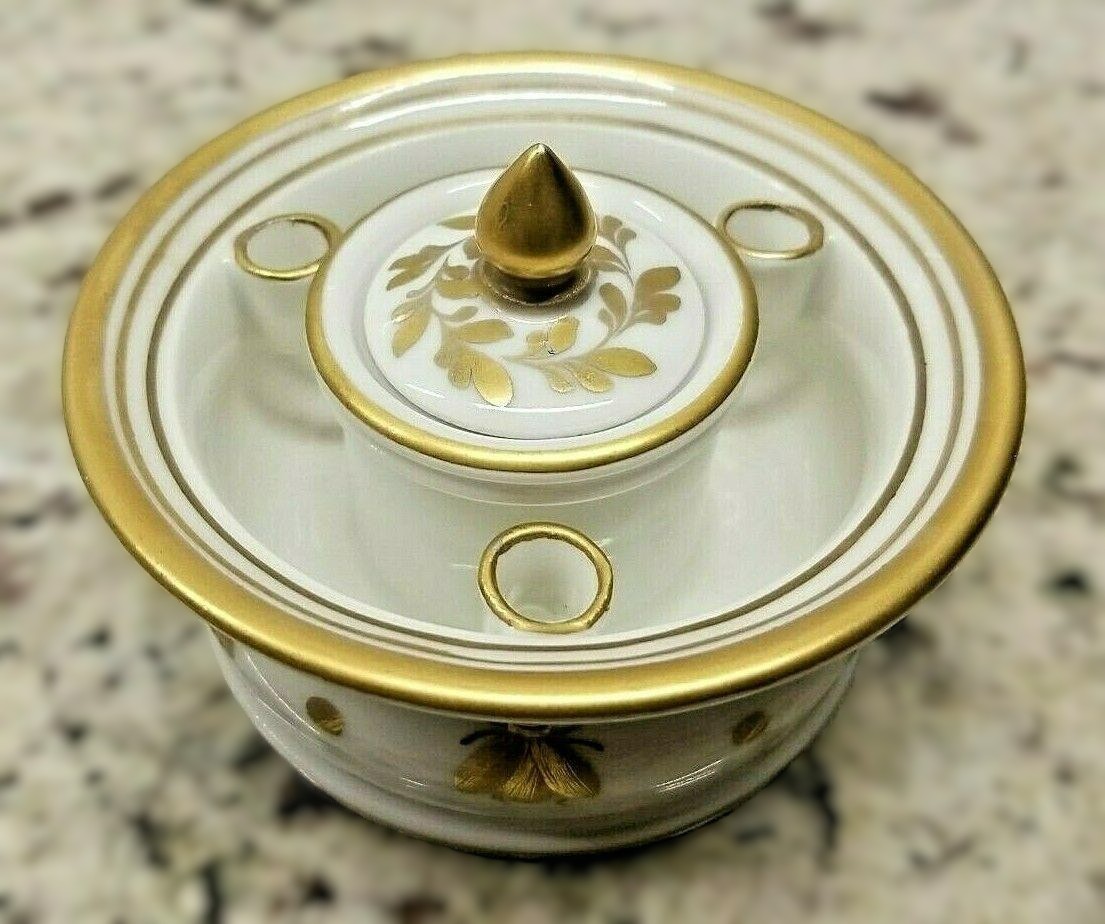
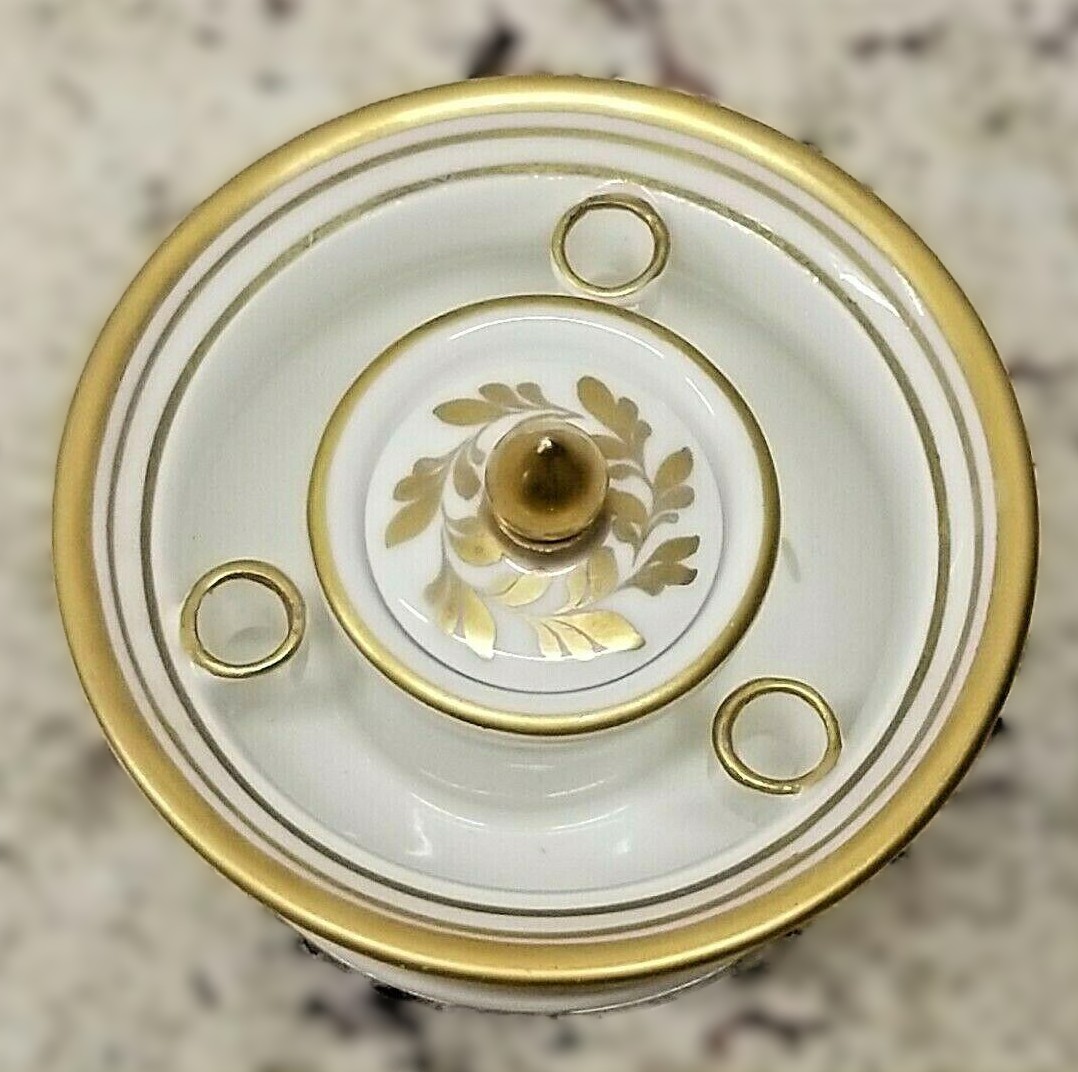
Inkwell 2 (2nd Set of Pictures)
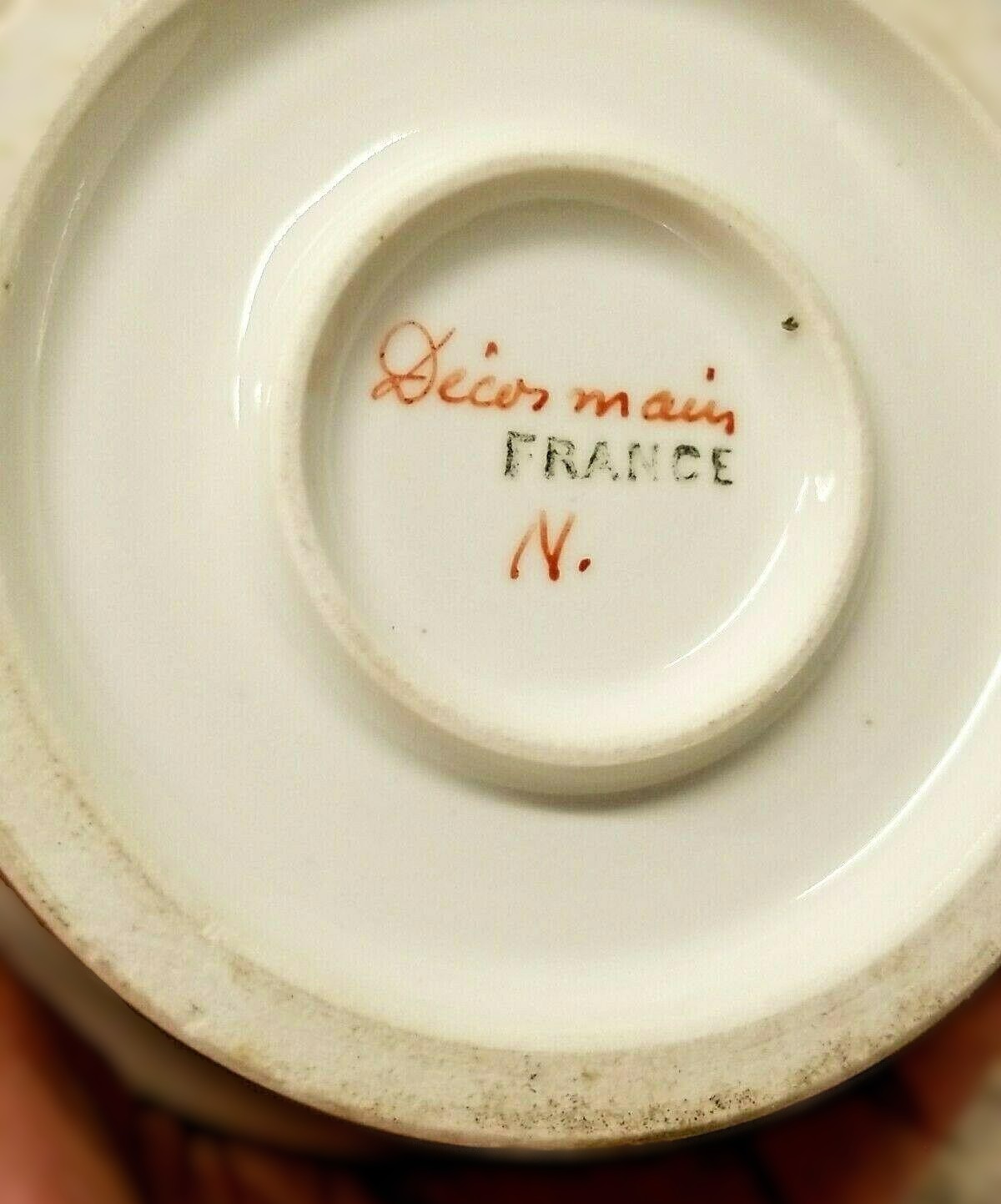
Its mark consists of the handwritten red script “Décor main” (Hand-decorated), “FRANCE,” and a prominent capital “N.” with a period.
- Manufacturer: The script “N.” refers to the Napoleon style of decoration. This specific mark is frequently associated with mid-to-late 20th-century Limoges decorators like NAS (Nadal & Seret) or other high-quality workshops that specialized in the “Empire Style” (bees and laurel wreaths).
- Age: Mid-to-late 20th Century (circa 1950–1980).
- “Décor main”: This specific style of orange/red script labeling is typical of French workshops from the post-WWII period through the 1980s.
- Theme: While the bee design itself is an antique Napoleonic motif, pieces marked with this handwritten “N.” are almost always high-quality boutique items from the second half of the 20th century rather than 19th-century antiques.
Summary Comparison
| Feature | Inkwell 1 (Coronet) | Inkwell 2 (Napoleon Style) |
| Era | 1920s – 1930s | 1950s – 1980s |
| Mark Type | Factory Decorating Mark | Studio Hand-Painted Mark |
| Significance | Early 20th-Century Export | Mid-Century Boutique Revival |
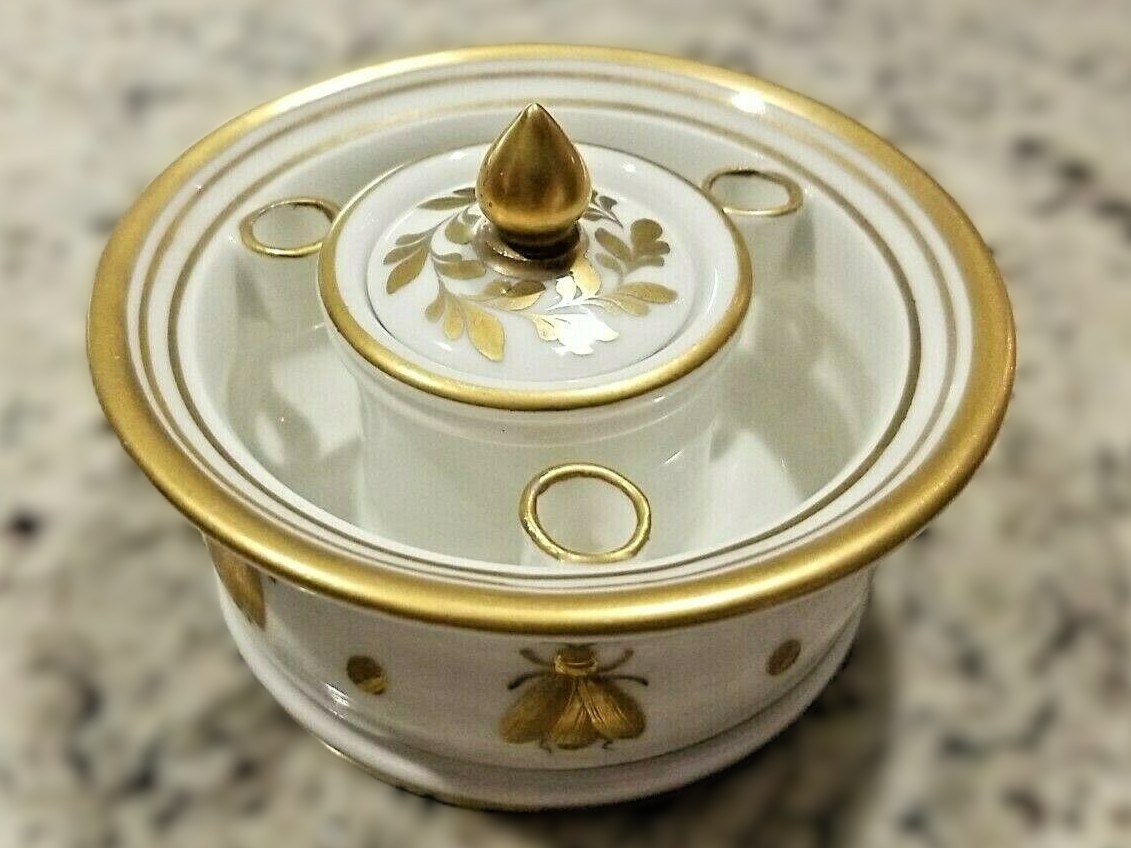
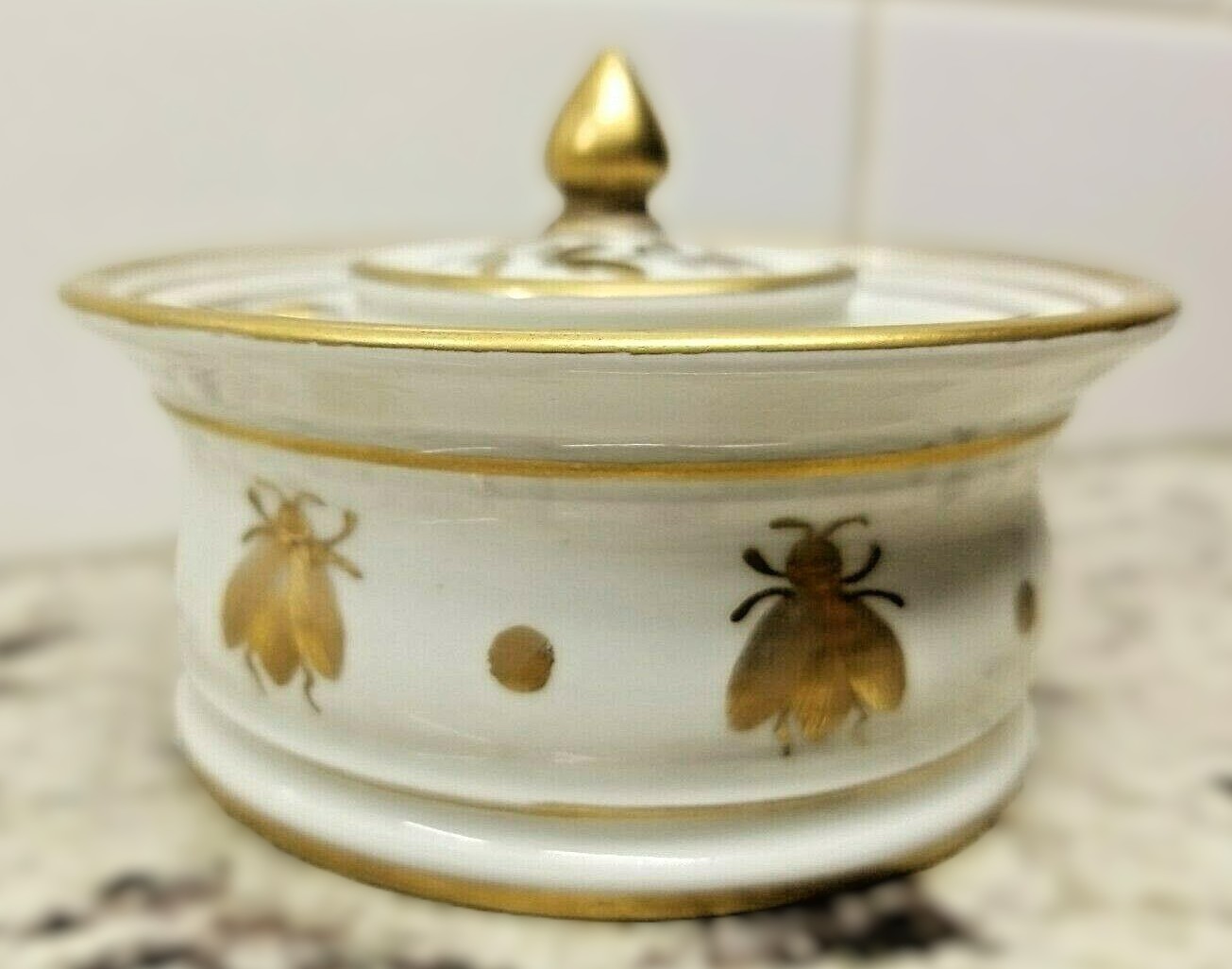
These two Limoges inkwells share a Napoleonic Empire aesthetic, primarily defined by the use of the gilded honeybee motif against a crisp white porcelain ground. Despite their thematic similarities, they differ significantly in their proportions, structural components, and decorative details.
Shared Characteristics: The Napoleonic Bee Design
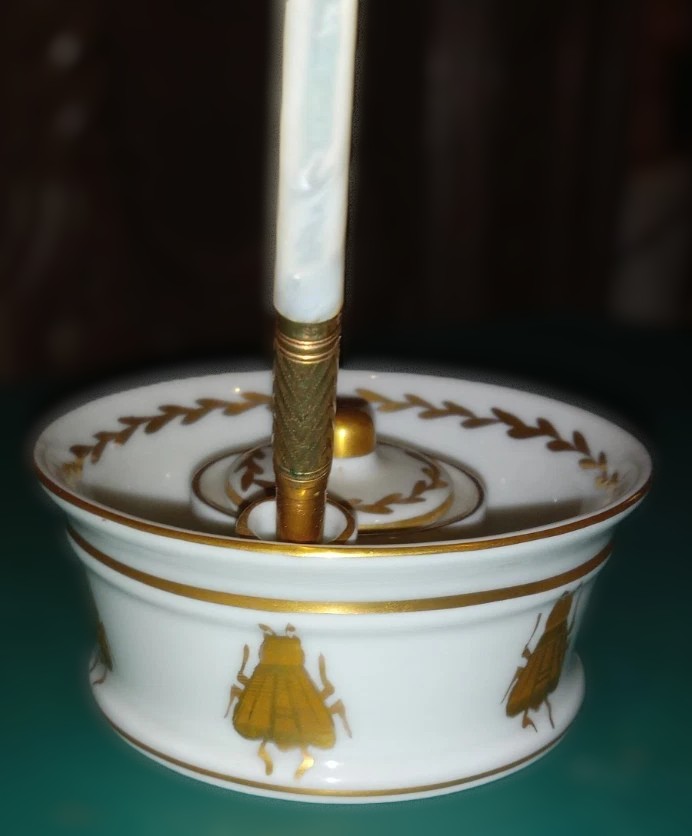
- Imperial Motif: Both pieces feature large, hand-painted or stenciled golden bees around the exterior of the main bowl. This symbol was famously adopted by Napoleon Bonaparte as a sign of industry and immortality.
- Color Palette: Both inkwells utilize a classic Empire Style color scheme, combining bright white glazed porcelain with heavy 24k gold gilding on the rims, base, and decorative accents.
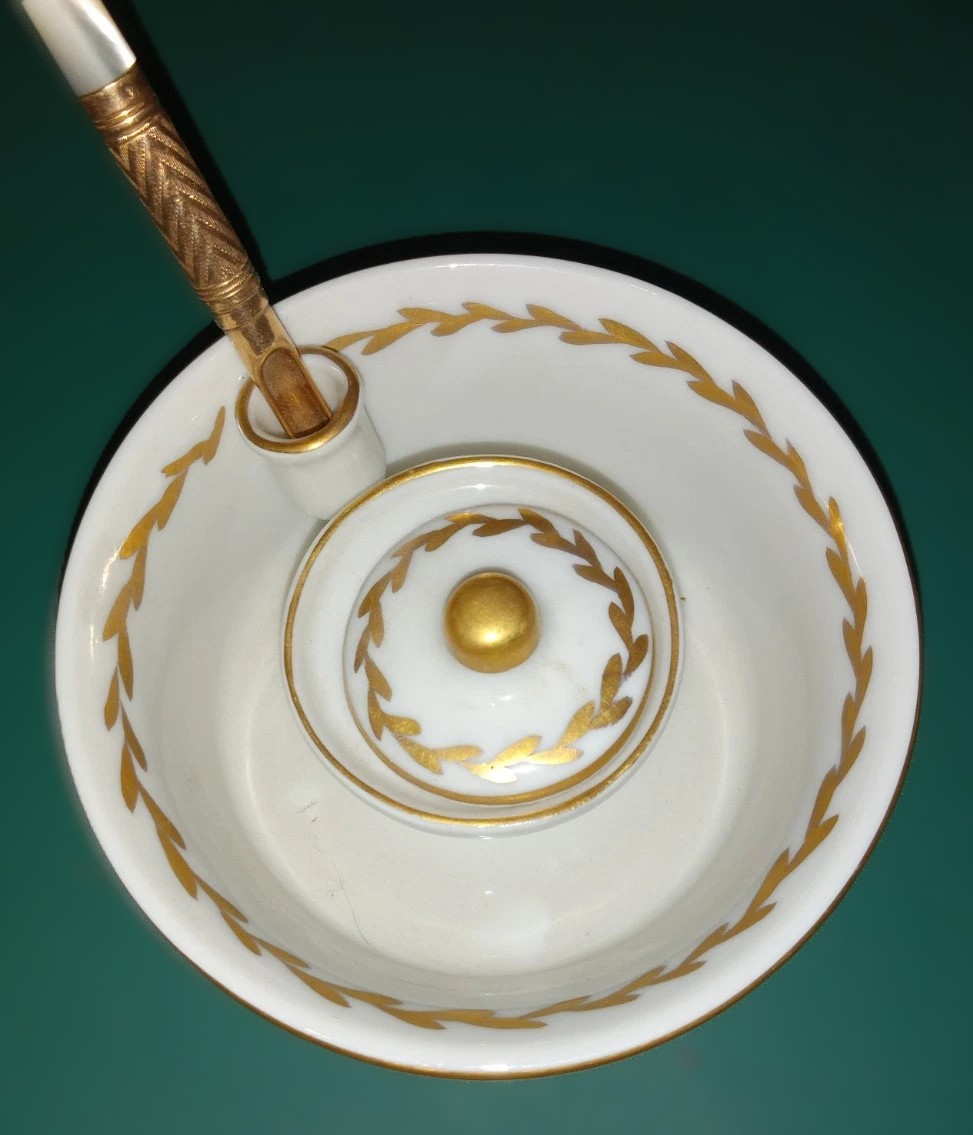
- Laurel Accents: Each lid features a circular laurel leaf wreath, another Napoleonic symbol for victory and honor.
Key Structural & Decorative Differences
The following table highlights the distinct features that separate the Coronet (Inkwell 1) from the Modern Studio (Inkwell 2) piece:
| Feature | Inkwell 1 (Coronet Limoges) | Inkwell 2 (Napoleon Studio) |
| Finial Design | Features a simple, rounded gold dome as the lid handle. | Features a more elaborate, spiked or pointed acorn-style finial. |
| Internal Reservoir | Lacks an internal insert; the ink is held directly in the main well area. | Includes a removable white porcelain inner insert for holding the ink. |
| Laurel Borders | Features a delicate laurel border along the inner rim of the bowl. | Laurel borders are focused primarily on the lid, with simple gold bands on the bowl. |
| Lid Design | The lid is designed to sit relatively flush with the bowl’s rim. | The lid features a stepped or tiered design that adds vertical height. |
| Outer Markings | The bees are spaced widely with clean porcelain between them. | The design includes gold dots (boules) placed between the bees around the bowl. |
Summary of Forms
Inkwell 1 (Lim) presents a more streamlined, understated silhouette typical of early 20th-century export porcelain. The rounded finial and inner-rim laurel border give it a balanced, classical feel.
Inkwell 2 (Bee) displays the more ornate characteristics of a mid-century boutique piece. The addition of an inner reservoir, the pointed finial, and the “dot” accents between the bees create a more complex visual texture.
Inkwell 1 sold for $163 in December 2025
Inkwell 2 sold for $40 in March 2022
Content disclaimer. The information posted is the owner’s best knowledge and may not have been vetted by the SOIC. We welcome comments, corrections, and additions, working to make our website information comprehensive and accurate.
Join the Society of Inkwell Collectors (SOIC) – it’s free!
Founded in 1981 as a non-profit organization,
we are documenting inkwells (and accessories).
We’re here to help and inform!