


Lead Crystal Inkwell with Sterling Silver Repoussé Lid
| Categories | Glass - Non-figural |
| Material | Glass, Silver |
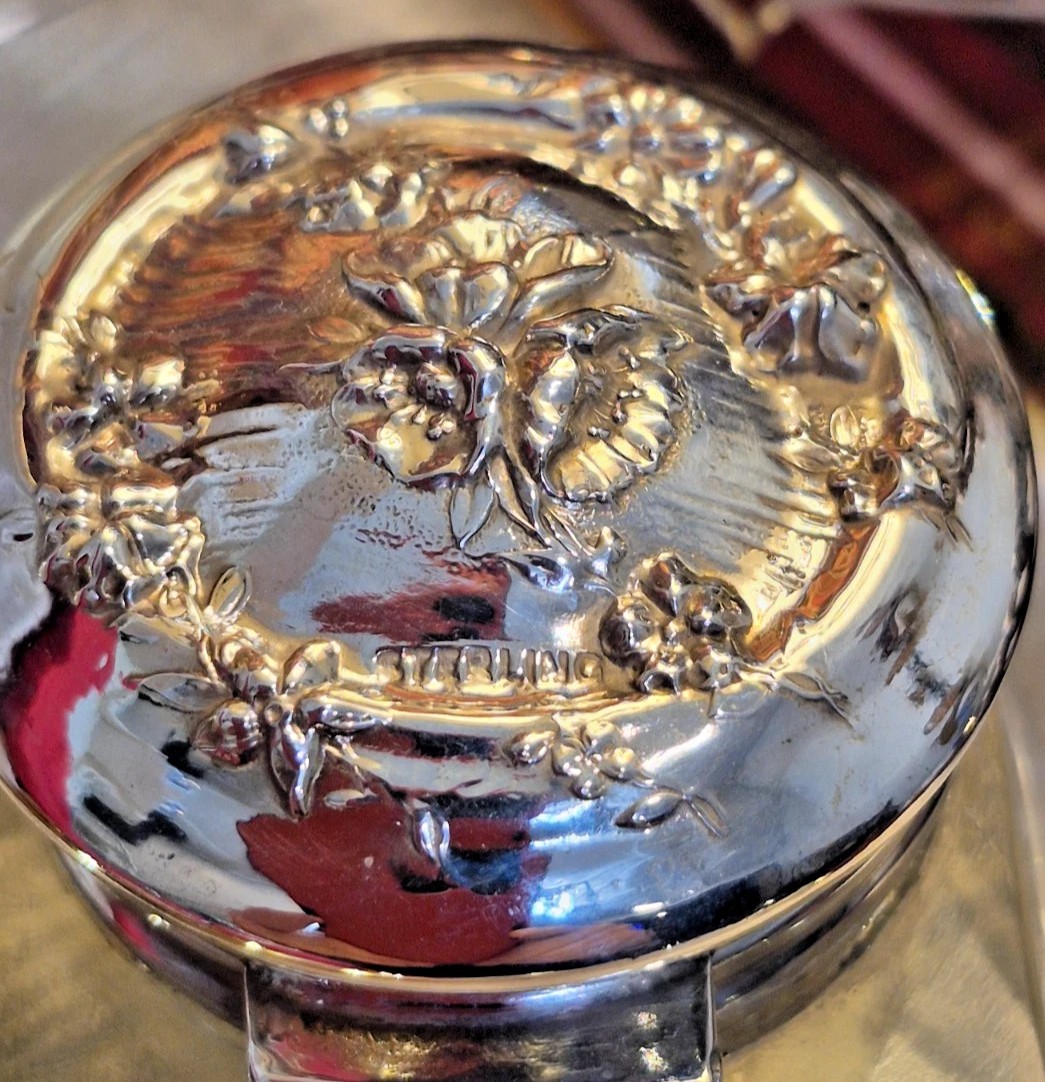
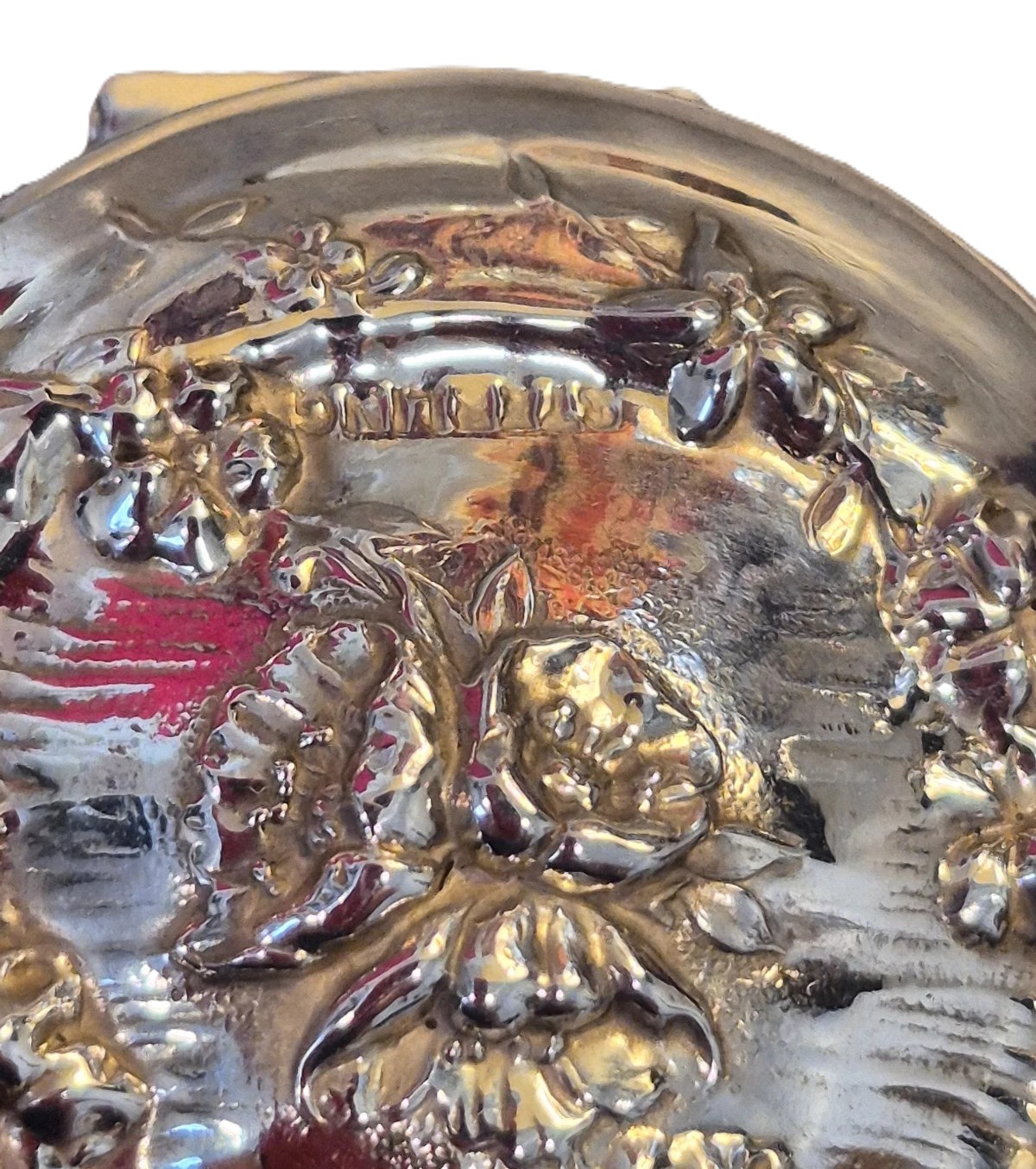
| Markings | Sterling |
| Manufacturer | Undetermined |
| Origin | United States |
| Date or Era | circa 1900 |
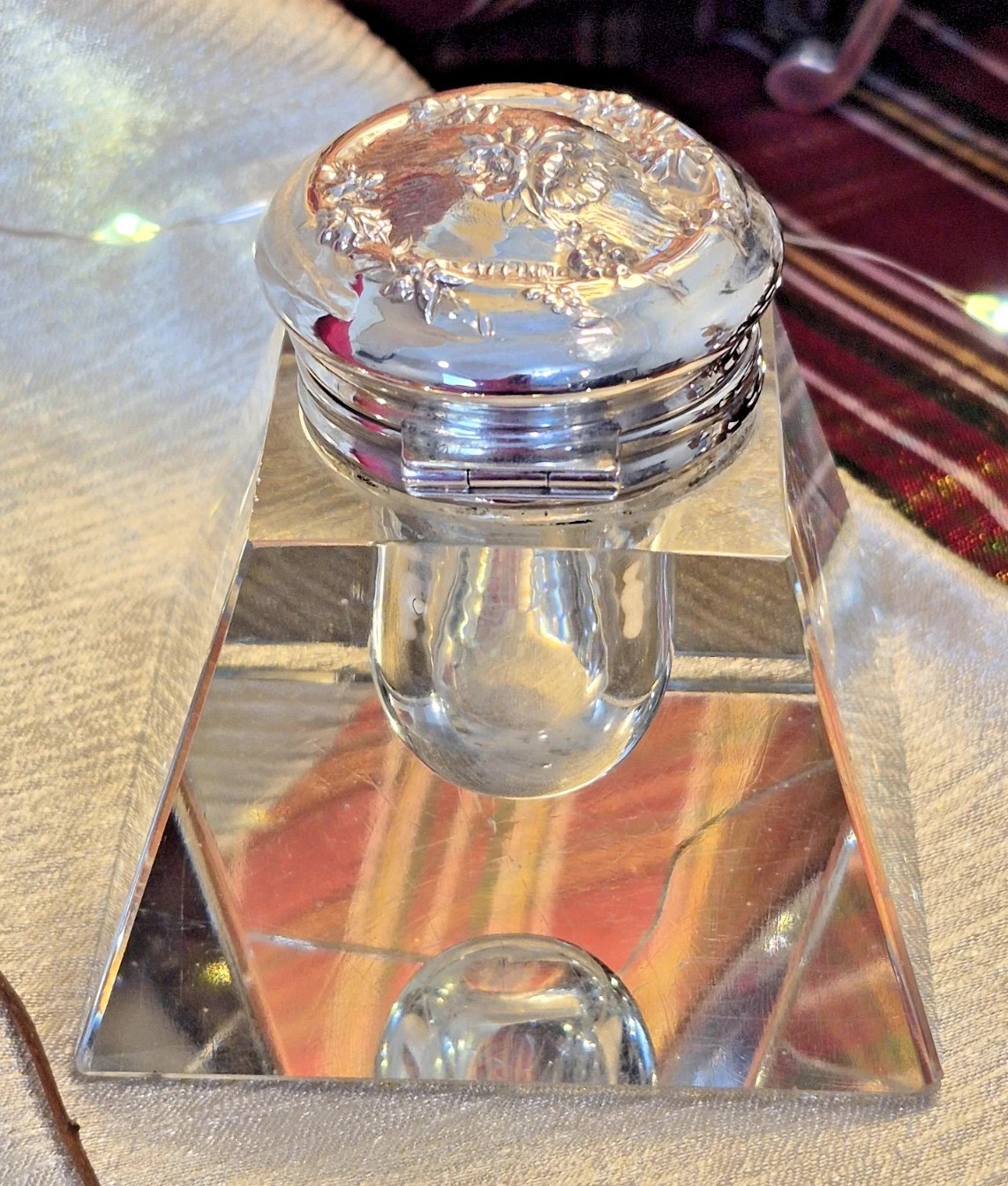
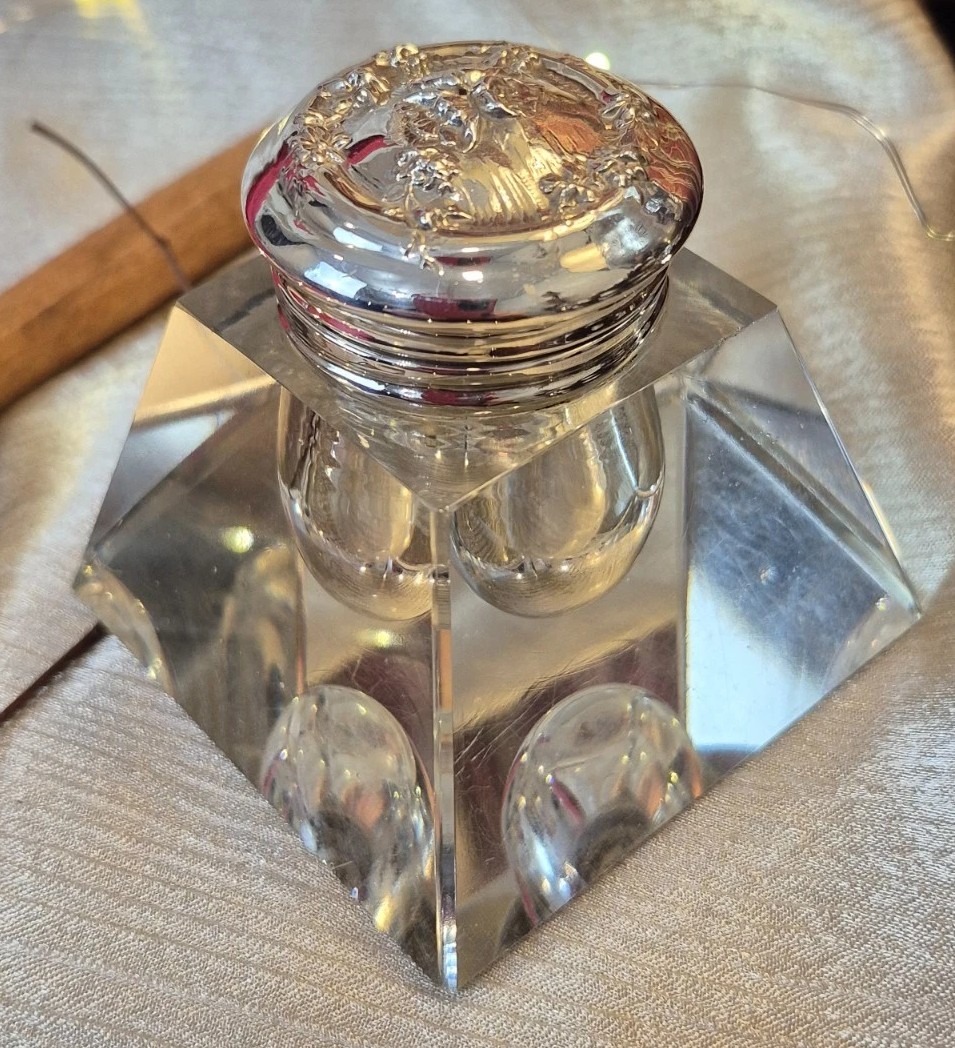
This lead crystal inkwell features a detailed sterling silver repoussé hinged lid. The piece is characterized by its substantial, blocky geometric form and the delicate contrast of the floral silverwork.
Description
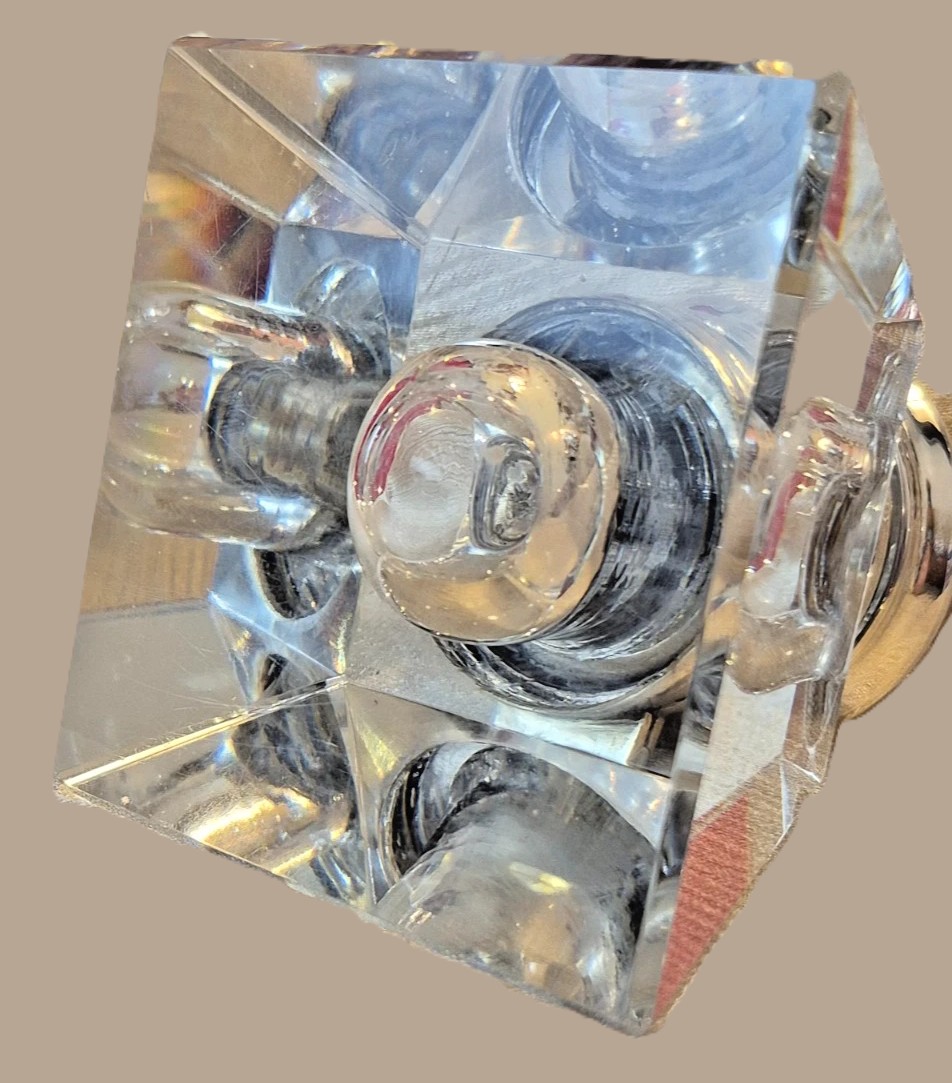
- The Base: The inkwell is crafted from a solid block of clear glass or crystal, cut into a truncated square pyramidal shape. The thick, beveled edges create brilliant light refraction, a hallmark of high-quality lead crystal. The interior ink reservoir is a deep, rounded bulb or “well” suspended within the solid glass block.
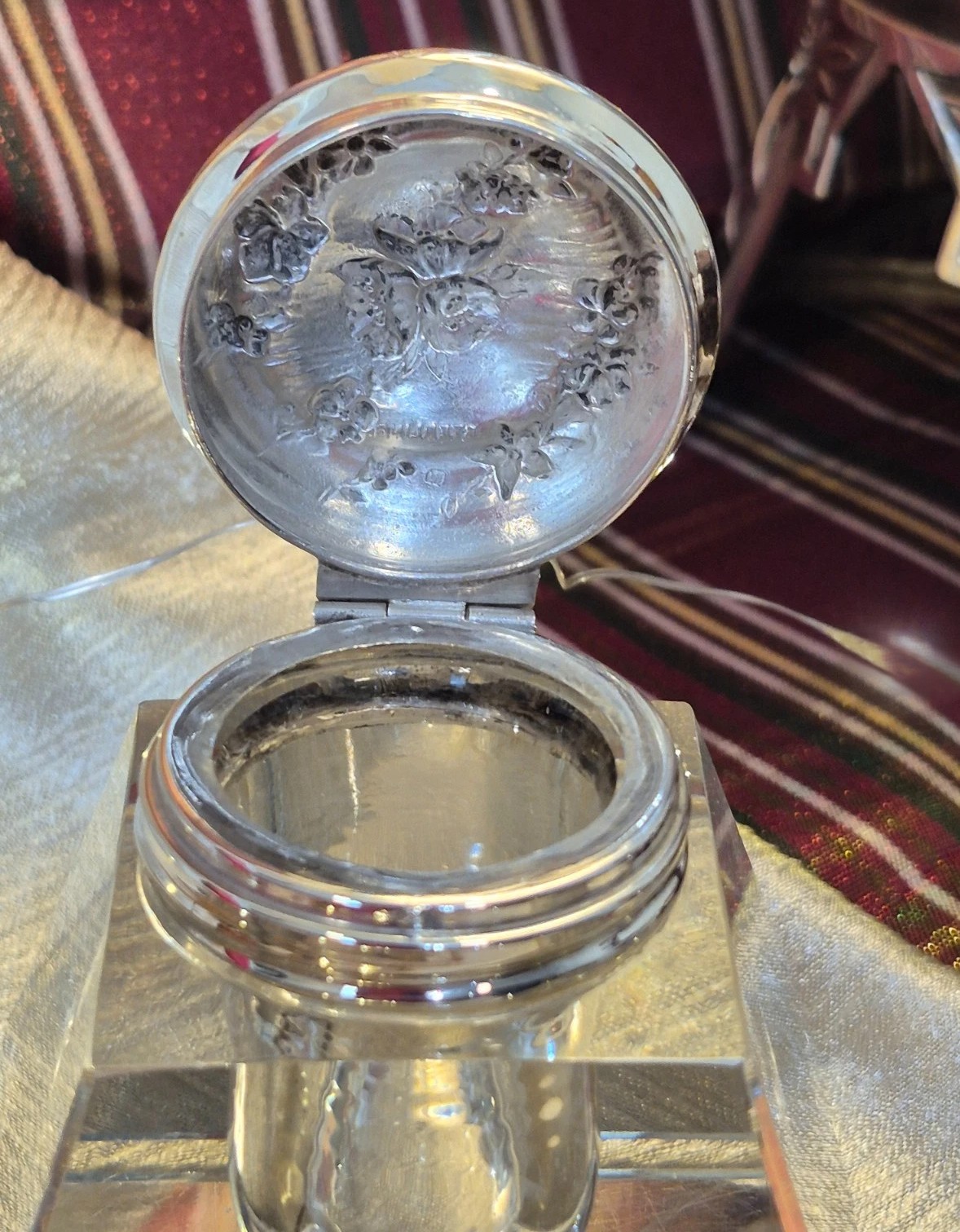
- The Lid: The lid is made of sterling silver (marked “STERLING” on the outer edge). It features a high-relief repoussé and chased design. The lid is hinged, attaching to a silver collar that wraps around the neck of the glass well.
Design on the Lid
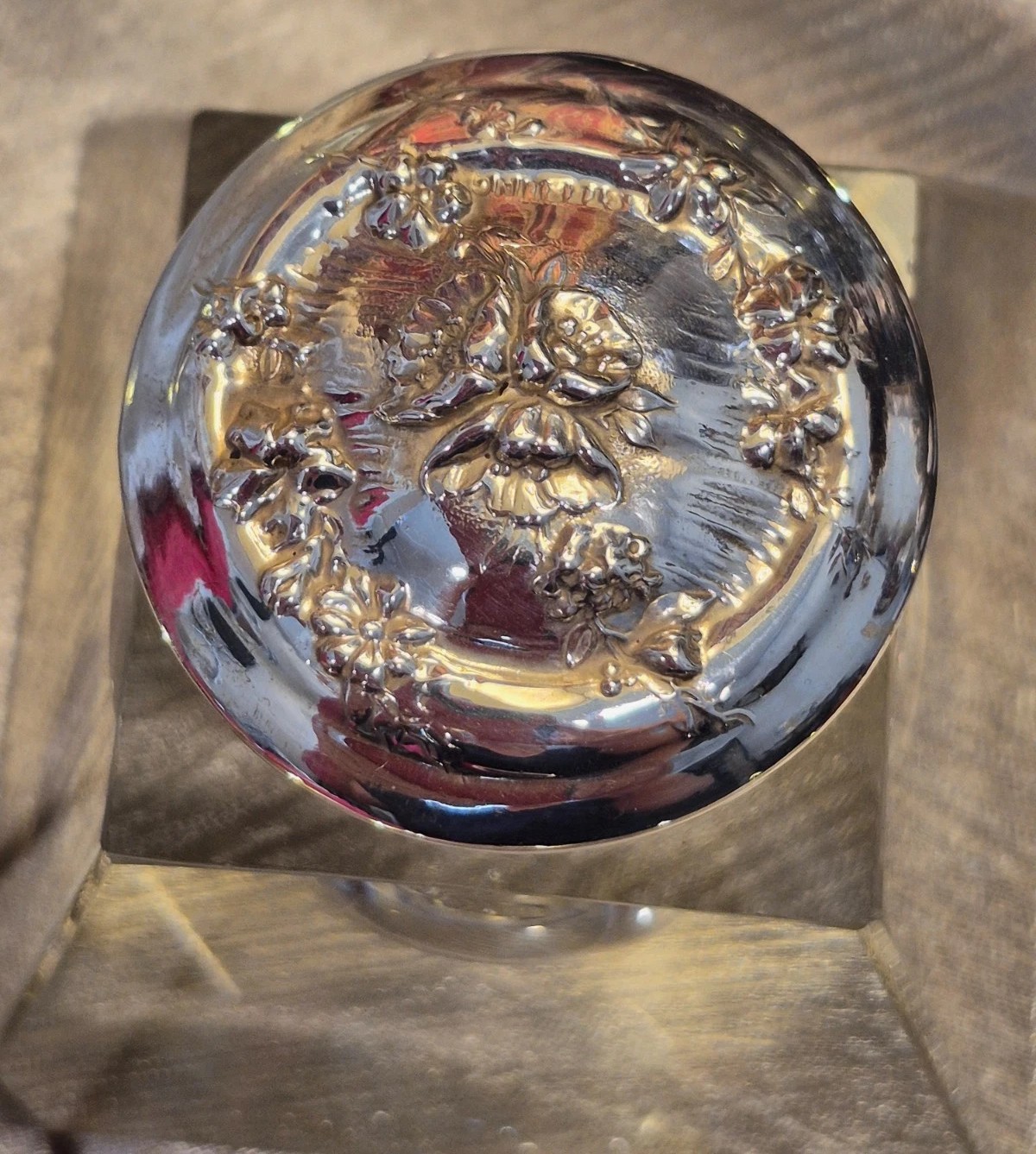
The lid features a lush Art Nouveau-inspired floral motif.
- Central Focal Point: A large, multi-petaled flower—Peony and Rose—occupies the center.
- Border: A circular wreath of smaller blossoms (possibly daisies or wild roses) and trailing foliage circles the central flower.
- Texture: The background of the silver is “chased” with fine radiating lines, which helps the polished floral elements stand out.
While there is no maker’s mark, the stylistic evidence and the specific placement of the “STERLING” stamp point toward a few prominent American silversmiths.
Potential Maker: The Webster Company or Unger Brothers
The combination of heavy lead crystal and a finely detailed repoussé lid is a hallmark of the American “Brilliant Period” (roughly 1880–1915). Two companies are the strongest candidates for this piece:
- The Webster Company (North Attleboro, MA): Webster was prolific in producing small sterling desk and vanity items. They frequently used a dense, high-relief floral pattern very similar to this. Their hallmark is often a small “W” inside a geometric bracket, which can sometimes be found near the word “STERLING” or hidden inside the lid’s rim.
- Unger Brothers (Newark, NJ): Known as the masters of Art Nouveau silver in America, Unger Brothers specialized in high-relief repoussé. This lid features the “chased” (fine-lined) background that Unger Brothers often used to make the floral elements “pop.”
Design Breakdown
The pattern on this lid is a classic Peony and Rose Wreath.
- Central Flower: A large, blooming peony (symbolizing prosperity and honor).
- Wreath: A circular garland of wild roses or daisies.
- Technique: The “STERLING” mark is unusual because it is stamped directly onto the top face of the lid rather than the rim. This placement was sometimes used by high-end makers to indicate that the silver was cast and finished as a single high-quality plate before being attached to the hinge.
Approximate Age and Origin
- Origin: United States. The “STERLING” mark without British hallmarks (like the lion or a town mark) confirms it is American.
- Era: Circa 1890–1905. This was the height of the Art Nouveau influence in the U.S., where organic floral forms were paired with the substantial geometric “ice block” crystal bases.
- Glass Maker: While the silver is the focal point, the glass itself was likely sourced from a top-tier American glass house such as Hawkes, Libbey, or Dorflinger, who often provided the blanks for silversmiths to mount.
Sold for $235 in January 2026
Content disclaimer. The information posted is the owner’s best knowledge and may not have been vetted by the SOIC. We welcome comments, corrections, and additions, working to make our website information comprehensive and accurate.
Join the Society of Inkwell Collectors (SOIC) – it’s free!
Founded in 1981 as a non-profit organization,
we are documenting inkwells (and accessories).
We’re here to help and inform!