






Lead Crystal Inkwell with “Blue John” Cabochon Lid
| Categories | Glass - Non-figural |
| Material | Semi-precious Stone, Glass, Silver |
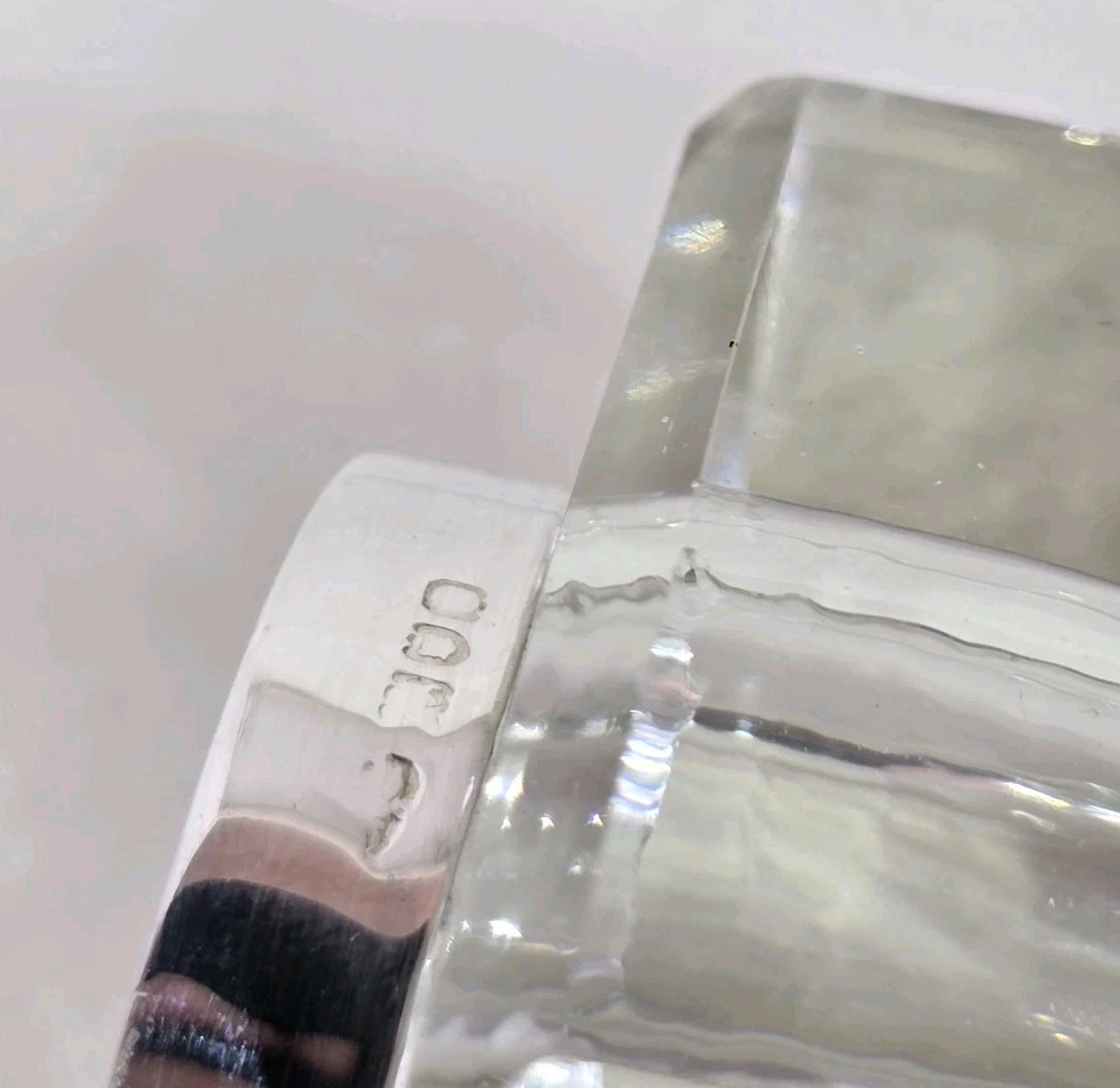
| Markings | See Narrative |
| Manufacturer | William Hutton & Sons |
| Origin | England |
| Date or Era | circa 1911 |
| Measuring | 2” x 2” x 2 ¼” high |
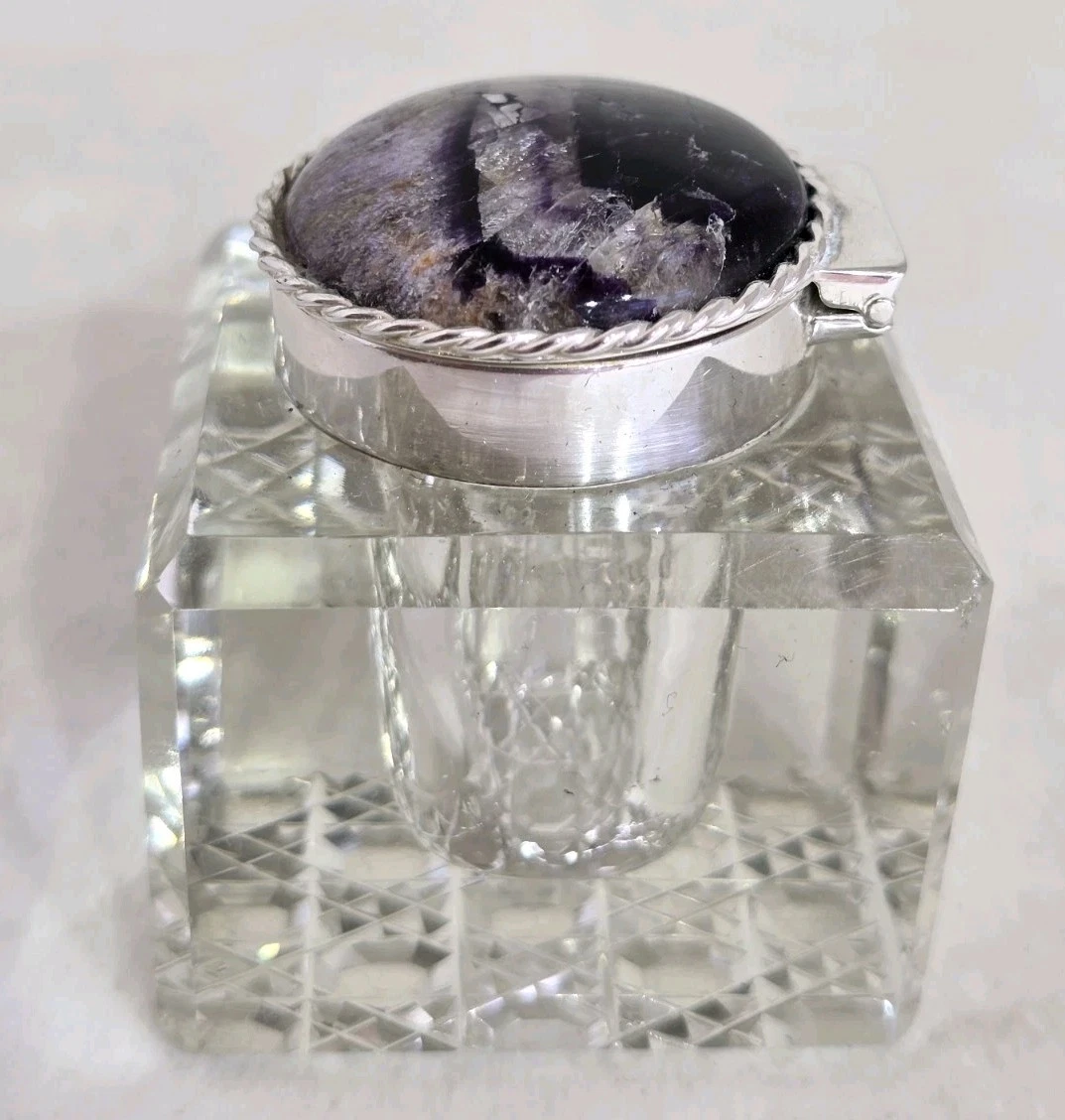
This George V sterling silver and lead crystal inkwell is a fine example of Edwardian desk luxury, combining the expertise of a renowned British silversmith with a rare, semi-precious mineral.
Detailed Description
- The Crystal Base: The inkwell is crafted from heavy, fine lead crystal with deep “Strawberry Diamond” and miter cuts. This geometric pattern was designed to refract light brilliantly, giving the glass a jewel-like “fire.” The underside features a polished radial star (or sunburst) cut.
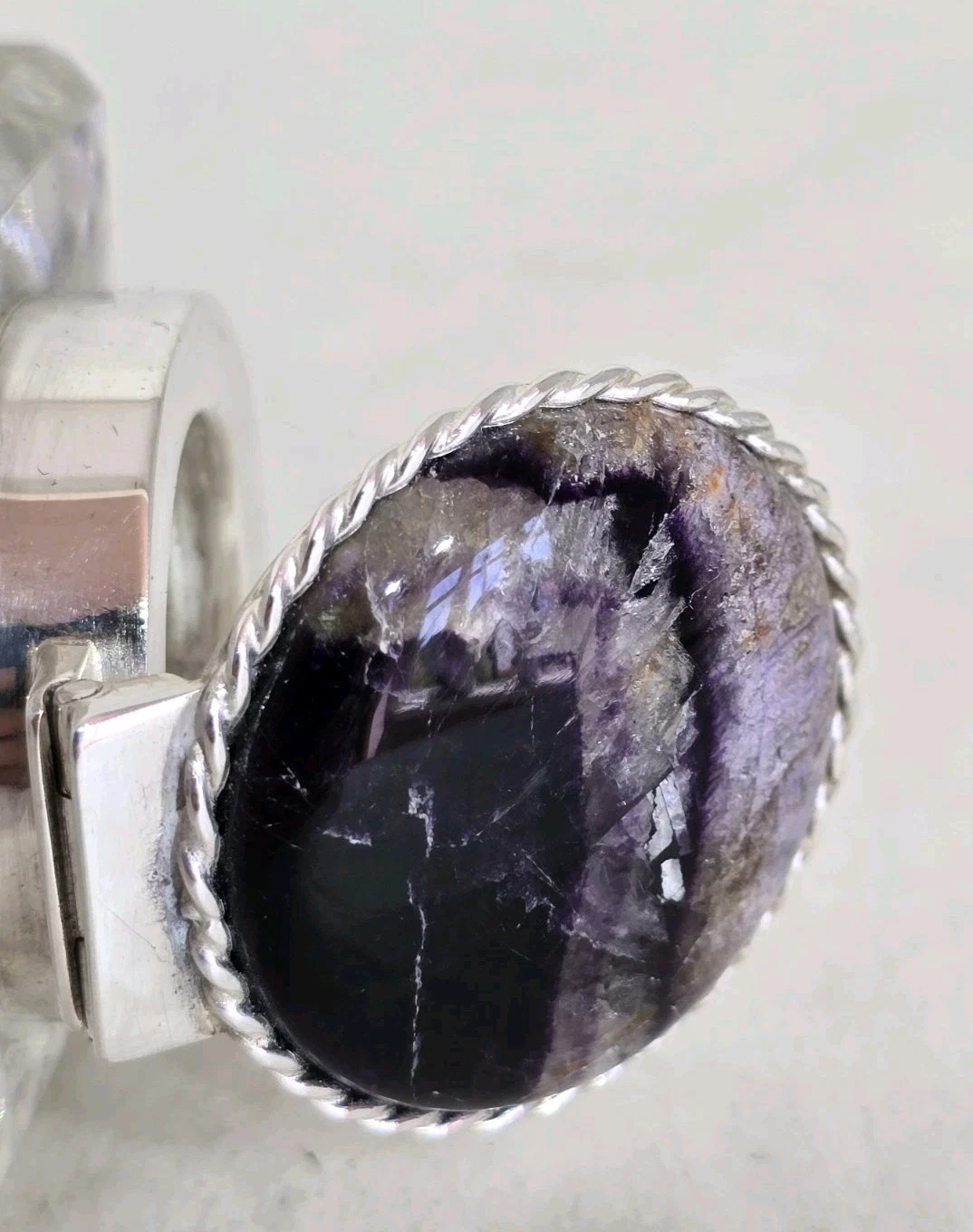
- Sterling Silver Mount & Hinge: The silver collar and lid are hallmarked for London 1911, the coronation year of King George V. The lid features a sturdy stop-hinge, a mechanical improvement that prevents the heavy lid from falling backward and straining the crystal mounting.
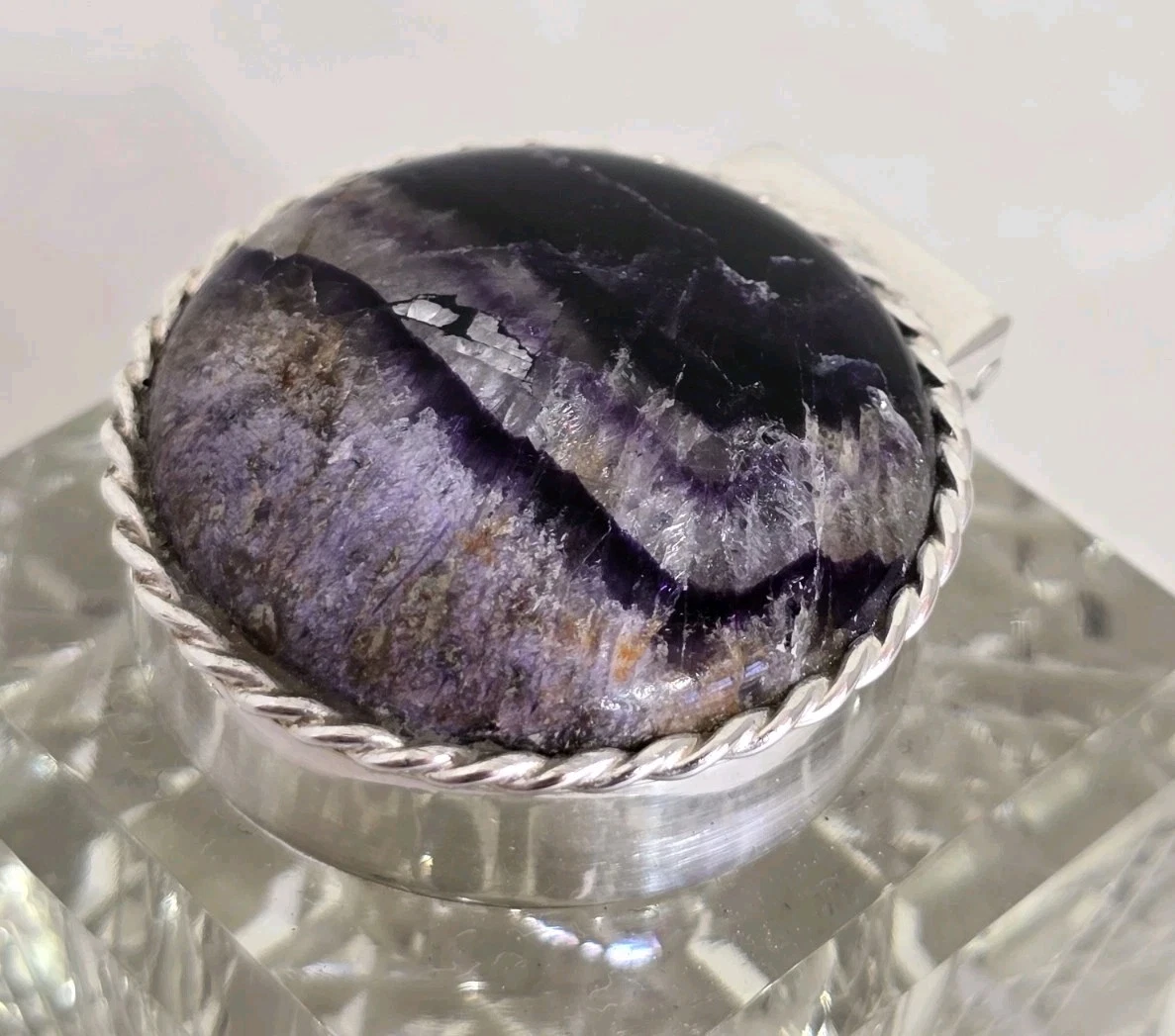
- The “Blue John” Cabochon: The standout feature is the large, domed Blue John cabochon collet-set into the lid. Blue John is a rare, banded variety of fluorite found only in the Blue John Cavern and Treak Cliff Cavern at Castleton in Derbyshire, England.
- Colors: The stone displays the classic deep purple, violet, and creamy-yellow banding that is highly prized by collectors.
- The Rope Border: The cabochon is secured by a decorative rope-twist silver border.
Manufacturer: William Hutton & Sons Ltd
By the time this piece was made in 1911, William Hutton & Sons had established themselves as one of the most prestigious firms in the British silver trade.
- Market Position: Operating out of Sheffield and London, they were known for high-end “Stationers’ Hardware.” This specific piece, combining silver with exotic minerals like Blue John, was likely sold as a luxury “Presentation Piece” in their London showroom.
- The Hallmarks: This piece bears the “W H & S Ld” mark, along with the Lion Passant (denoting .925 silver quality), the Leopard’s Head (for London), and the date letter ‘q’ for 1911.
Historical Background: Blue John in Silver
In the early 20th century, Blue John was becoming increasingly scarce. Using such a large, high-quality specimen for an inkwell lid was a significant statement of wealth. It transitioned the object from a functional desk tool to a “Standish Paperweight,” heavy enough to hold down documents while adding a splash of rare color to the mahogany desks of the Edwardian era.
Sold for $225 in December 2025
Content disclaimer. The information posted is the owner’s best knowledge and may not have been vetted by the SOIC. We welcome comments, corrections, and additions, working to make our website information comprehensive and accurate.
Join the Society of Inkwell Collectors (SOIC) – it’s free!
Founded in 1981 as a non-profit organization,
we are documenting inkwells (and accessories).
We’re here to help and inform!