

Inkipedia
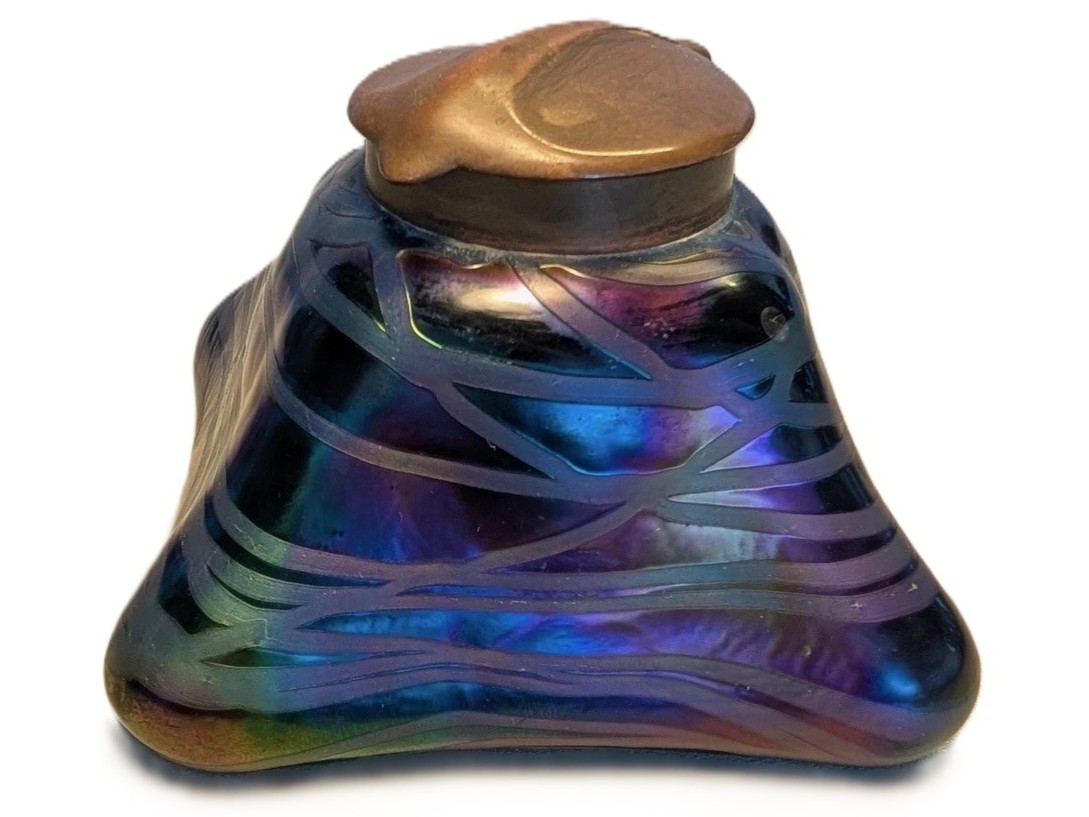
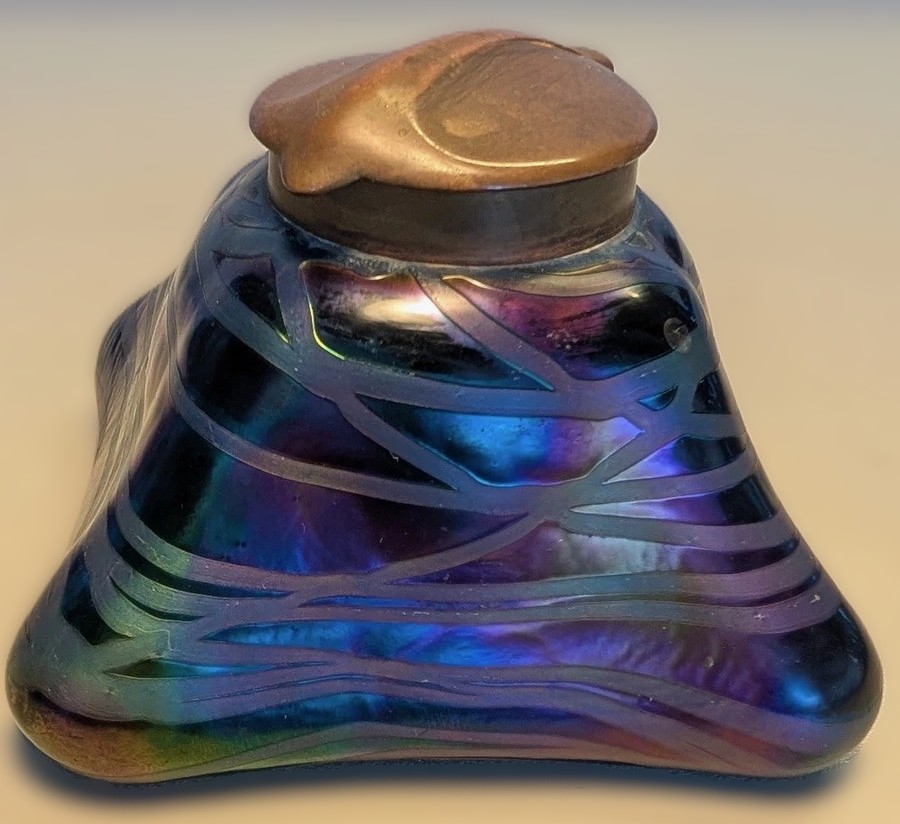
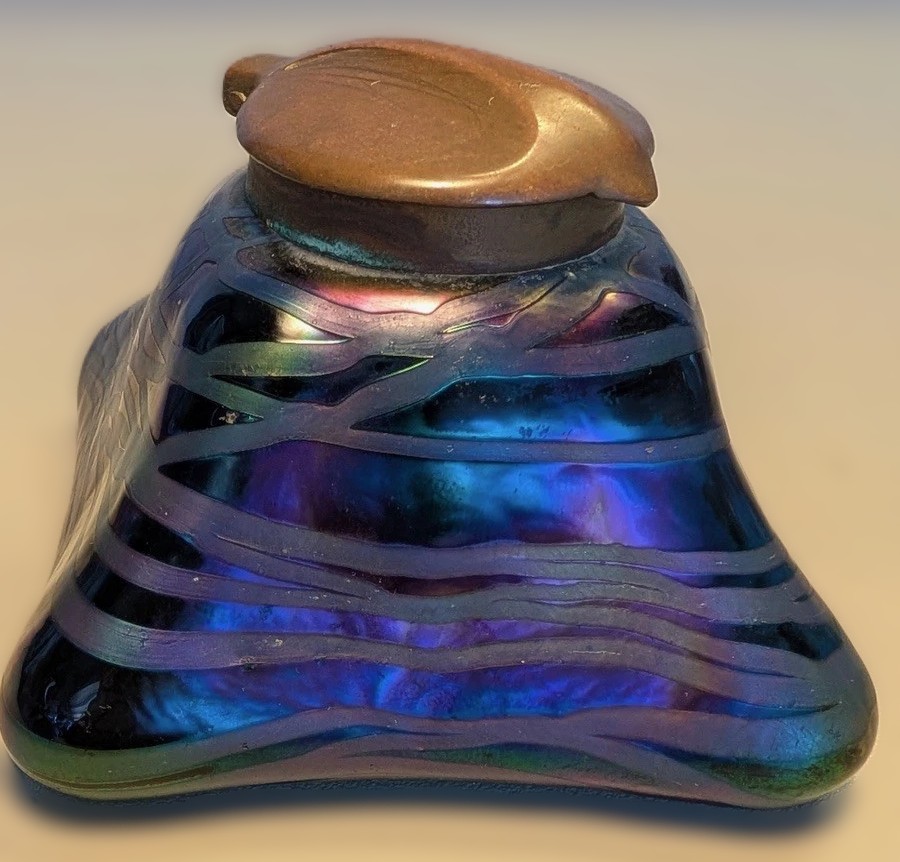
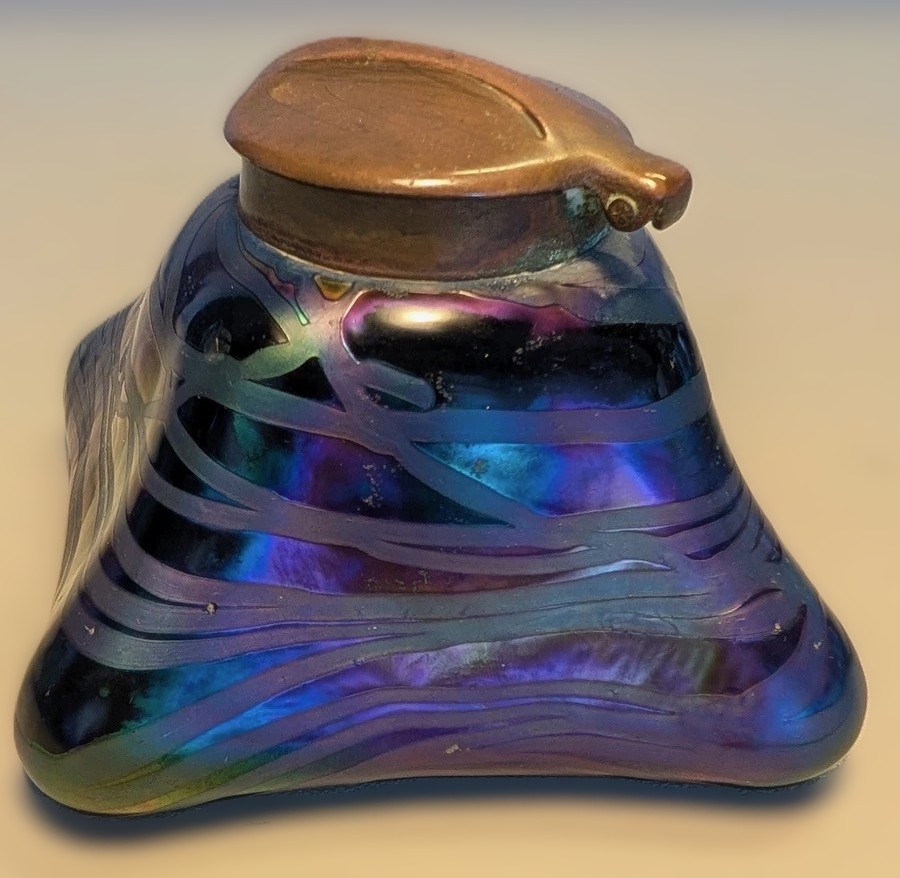
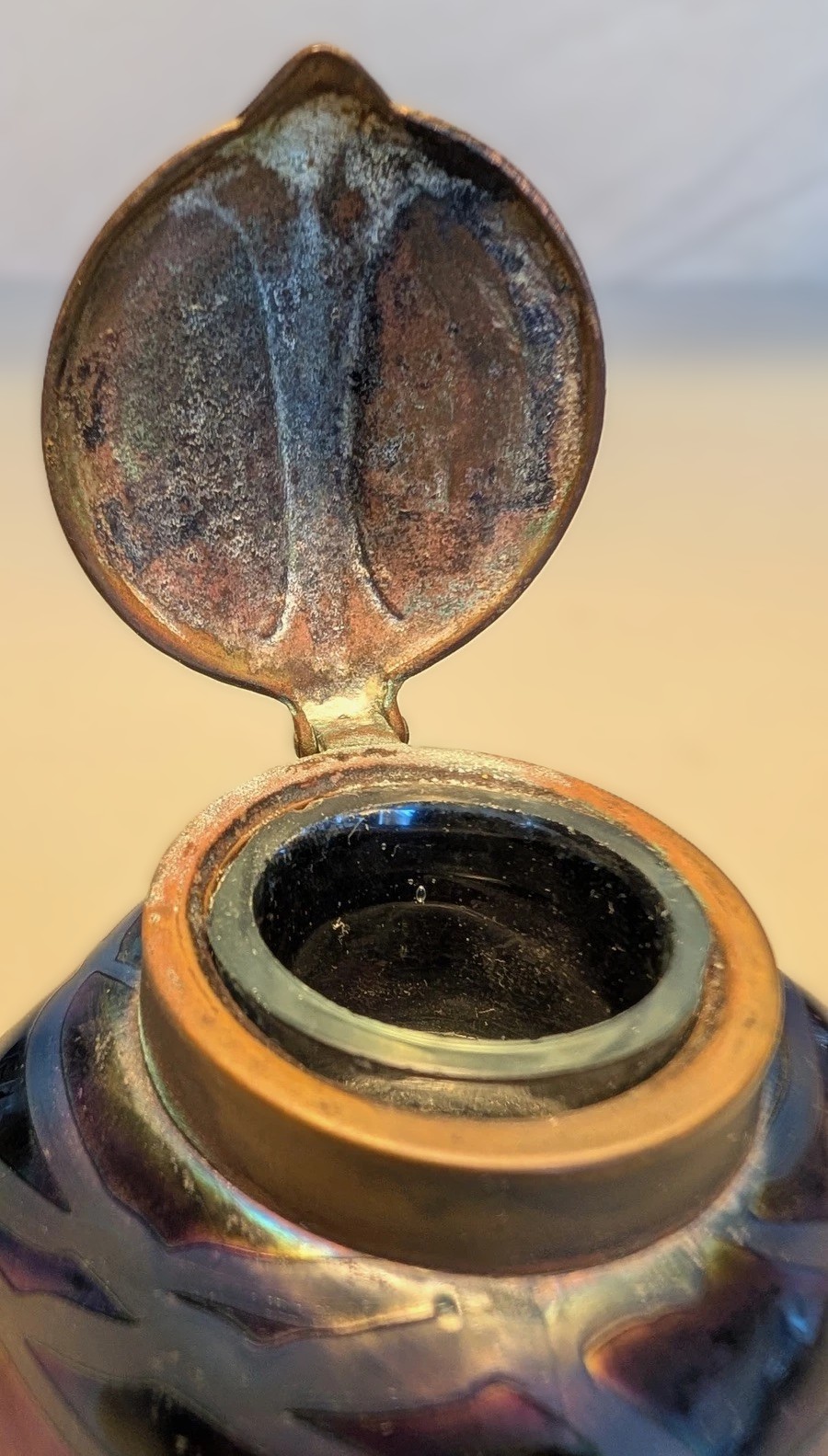
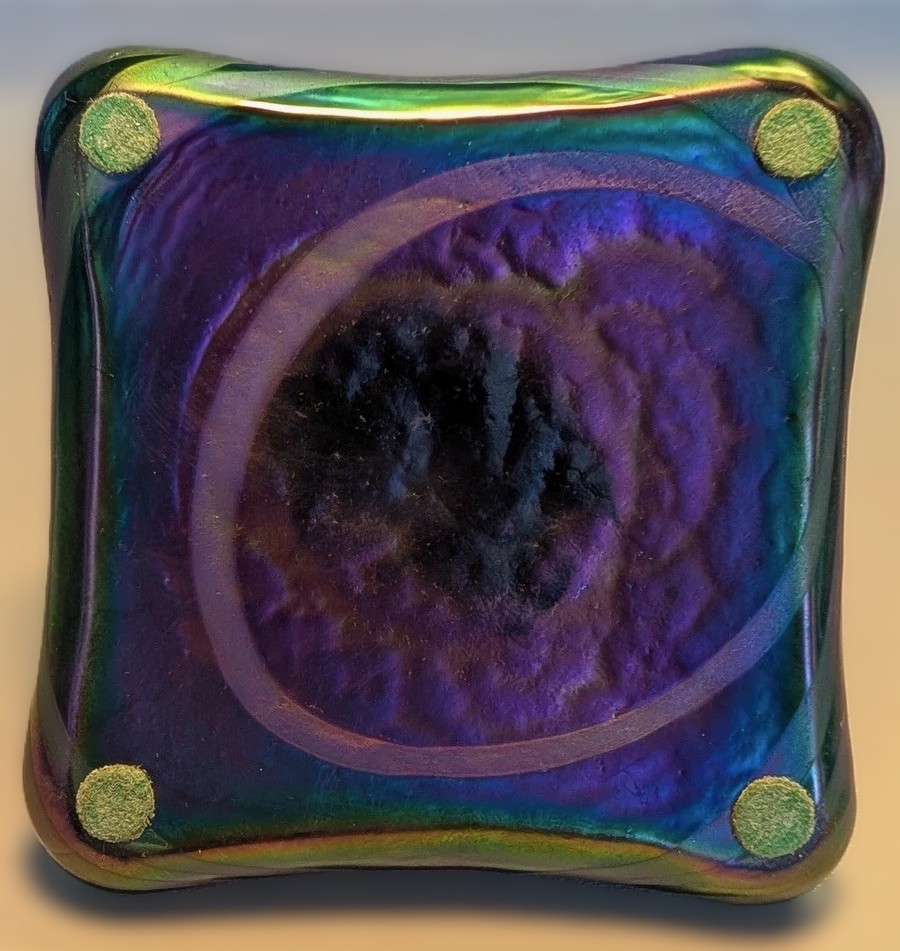
Kralik Iridescent “Veined” Inkwell
| Categories | Bohemian Art Glass |
| Material | Glass |
| Markings | See Narrative |
| Manufacturer | Kralik |
| Origin | Bohemia |
| Date or Era | circa 1900 |
| Measuring | 4 ½” x 4 ½” x 3 ½” high |
Description
- The Pattern: This specific decor is known as “Veined” (or sometimes “Threaded”). It was a hallmark of the Kralik glassworks during the Art Nouveau period (circa 1900–1910).
- Glass & Color: The body is made of deep cobalt blue glass treated with metallic oxides to create a high-sheen iridescent finish. This “oil-slick” effect causes the surface to shimmer with vibrant purples, electric blues, and emerald greens as it catches the light.
- The “Veins”: The identifying feature is the network of raised glass threads wrapped horizontally around the body. These were applied while the glass was still molten, creating a textured, organic look that mimics natural forms like vines or biological structures.
- The Hardware: The inkwell features a hinged brass or bronze lid in the Jugendstil (the German/Austrian version of Art Nouveau) style. The lid displays a stylized, repoussé design of organic “whiplash” curves and bud-like motifs typical of the era.
- Craftsmanship: The underside shows a ground-down pontil mark, confirming the piece was hand-blown. You can also see that the iridescence extends all the way to the base, a sign of high-quality fuming.
Background on Wilhelm Kralik Söhne
The Kralik glassworks was one of the most significant producers of Bohemian art glass, located in what is now the Czech Republic.
- Family Legacy: The company grew from a glassmaking lineage started by Josef Meyr in 1815. It officially became Wilhelm Kralik Söhne (Wilhelm Kralik’s Sons) in 1877.
- A Rivalry in Glass: Kralik was the primary competitor to the world-renowned Loetz factory. While Loetz is often more famous today, Kralik was equally innovative, producing a massive variety of complex iridescent techniques that are frequently mistaken for Loetz by new collectors.
- The “Unsigned” Mystery: Kralik almost never signed their glass. Identification relies entirely on recognizing their specific shapes, decors, and their metal hardware.
- Patent Marks: Kralik held specific patents for their inkwell lids. Looking closely at the underside of that hinged lid, one can faintly see stamped numbers preceded by “O.E.P.” (Austrian Patent) or “D.R.G.M.” (German design registry).
Sold for $327 in March 2026
Content disclaimer. The information posted is the owner’s best knowledge and may not have been vetted by the SOIC. We welcome comments, corrections, and additions, working to make our website information comprehensive and accurate.
Join the Society of Inkwell Collectors (SOIC) – it’s free!
Founded in 1981 as a non-profit organization,
we are documenting inkwells (and accessories).
We’re here to help and inform!