





Kralik Art Glass Inkwell
| Categories | Bohemian Art Glass |
| Material | Glass |
| Markings | Unmarked |
| Manufacturer | Kralik |
| Origin | Bohemia |
| Date or Era | circa 1902 |
| Measuring | Base: 2 ½” x 2 ½”; 3 ¼” high |
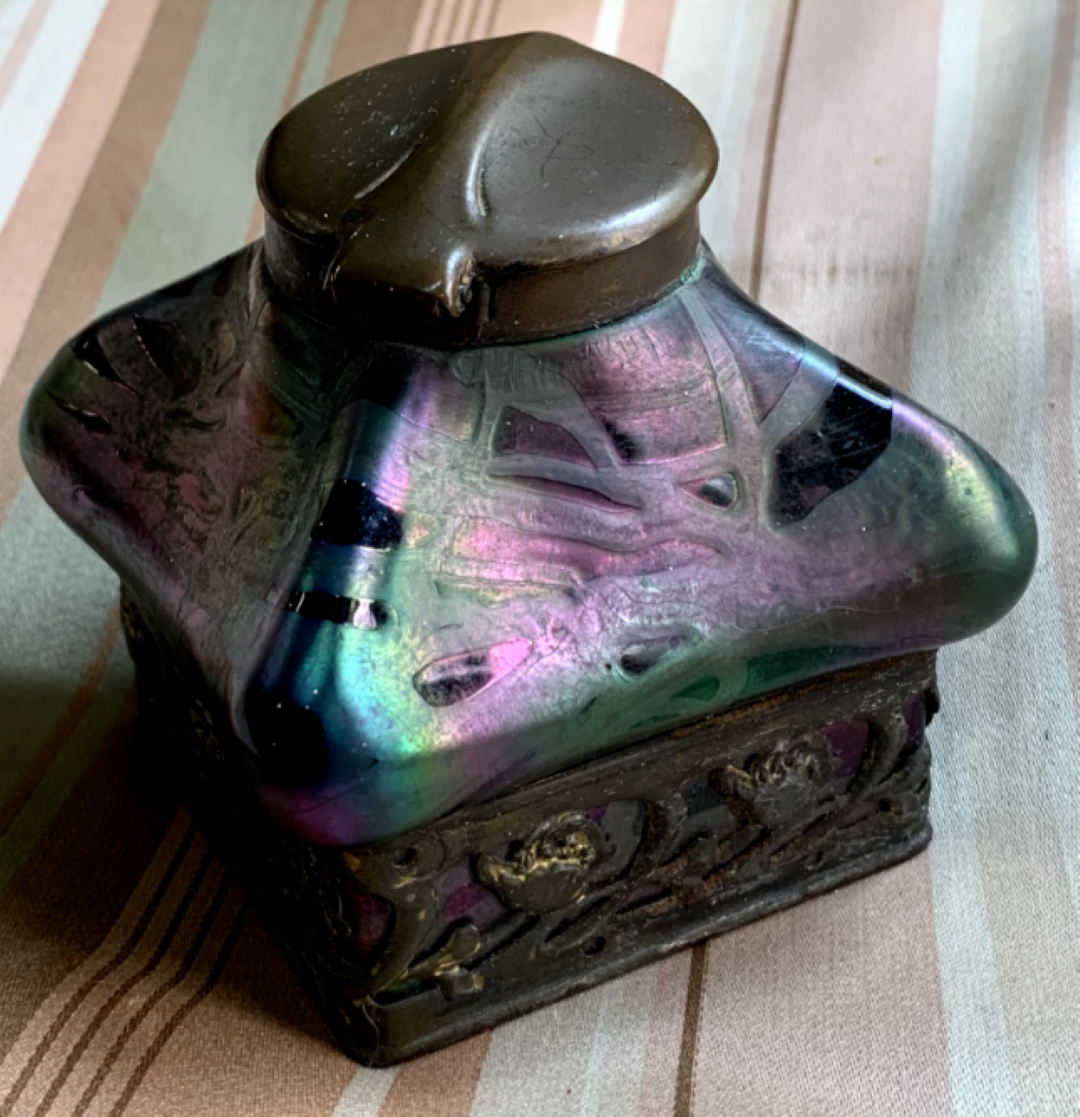
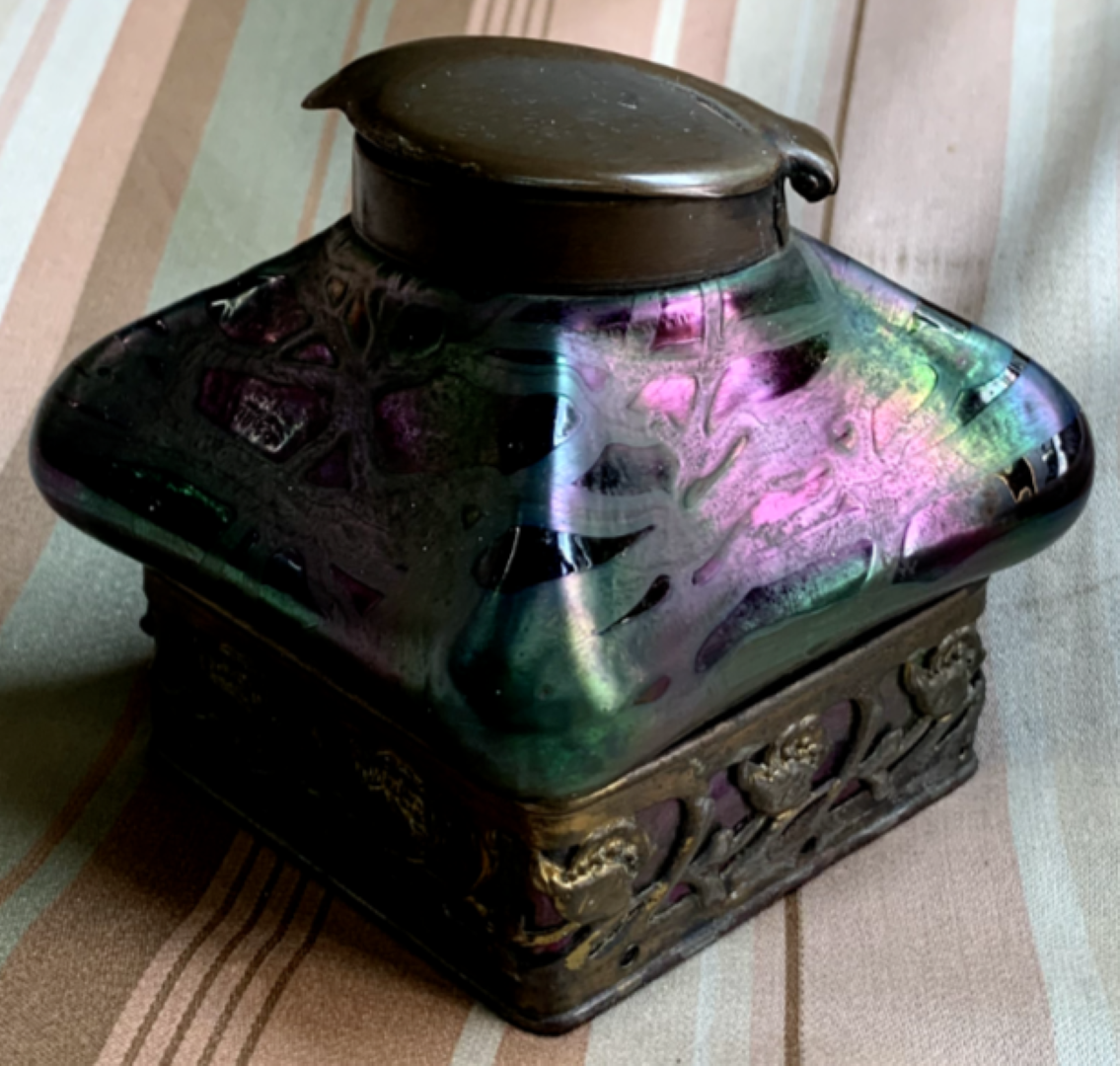
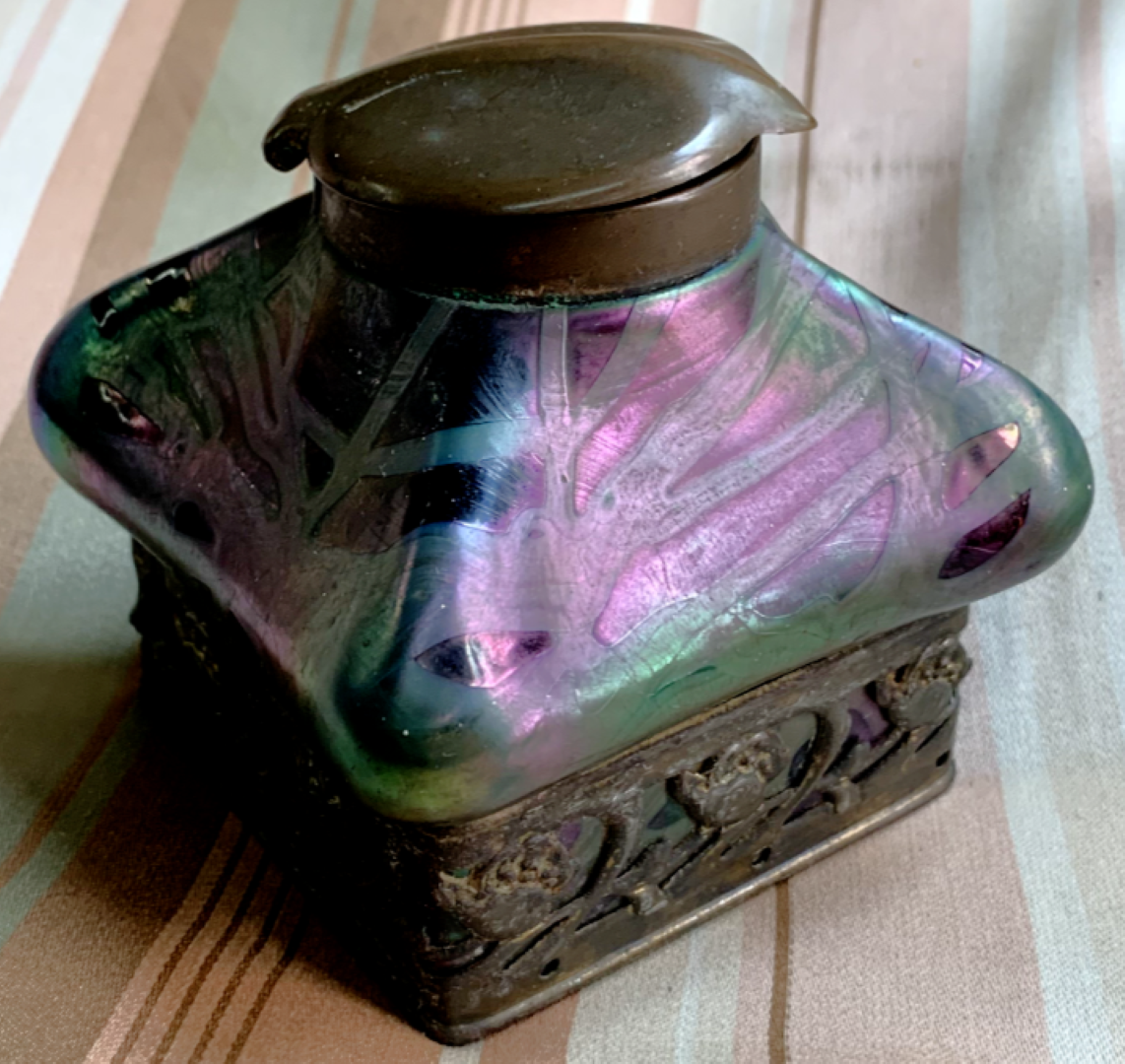
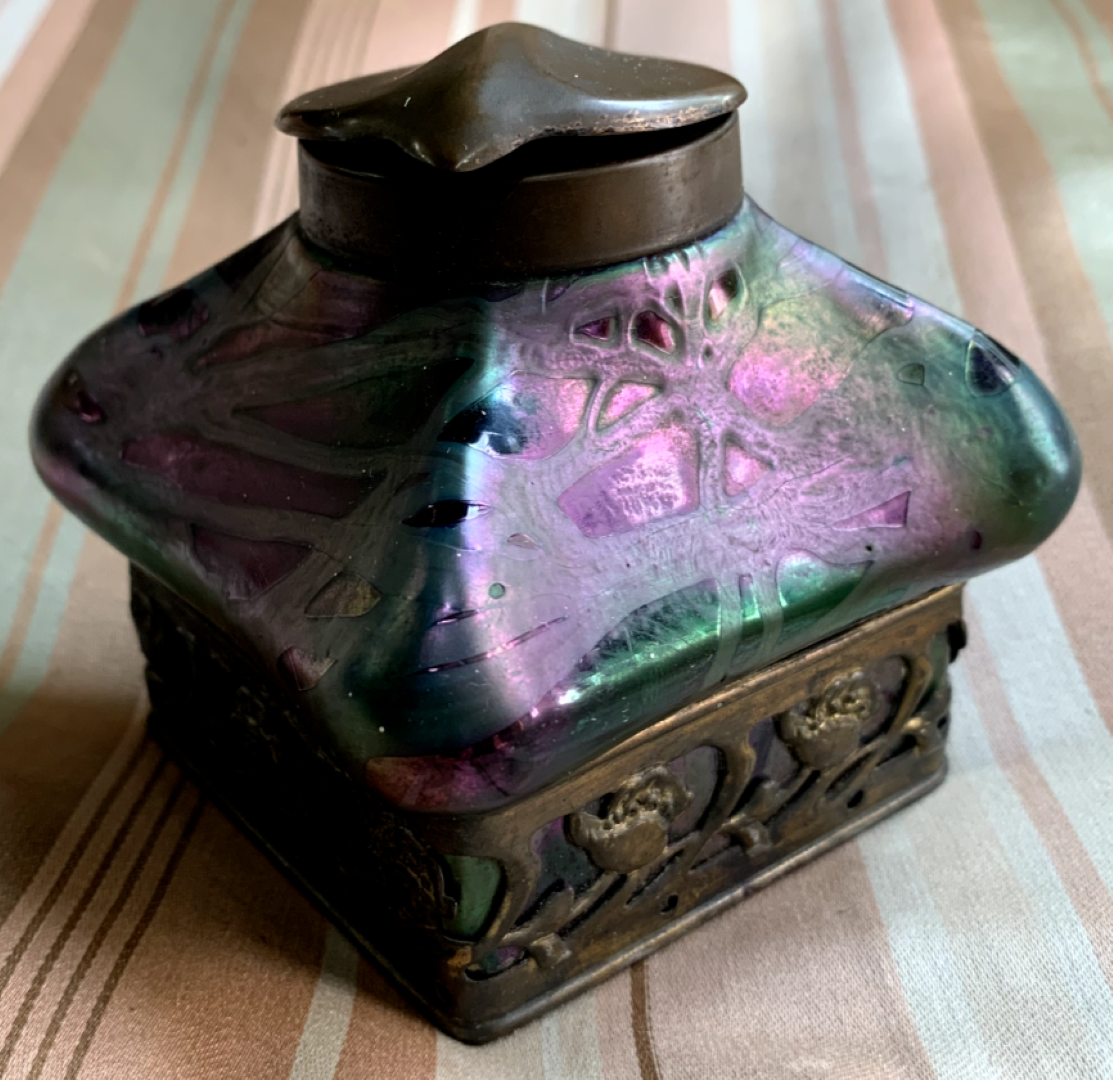
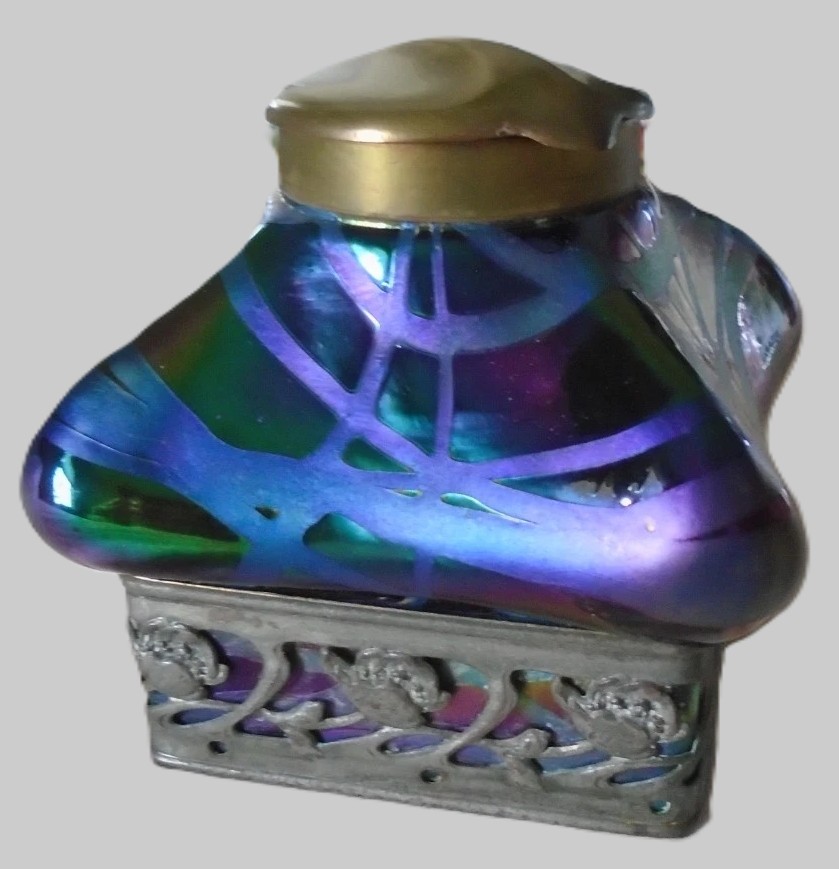
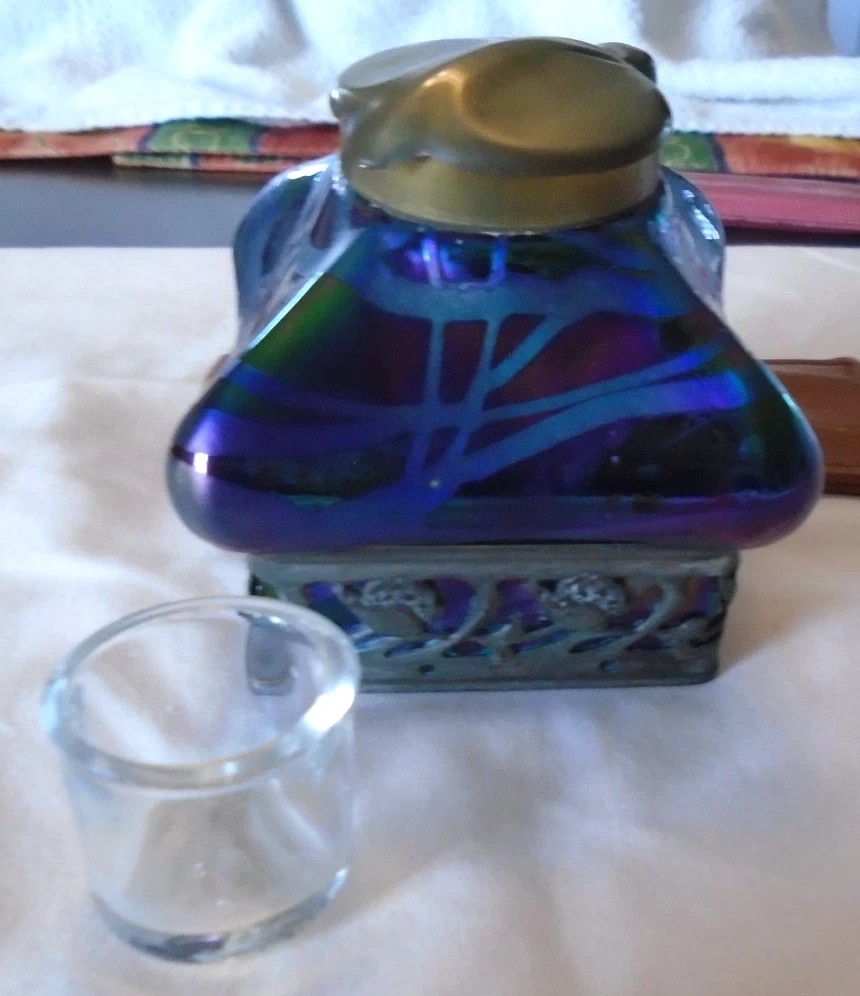
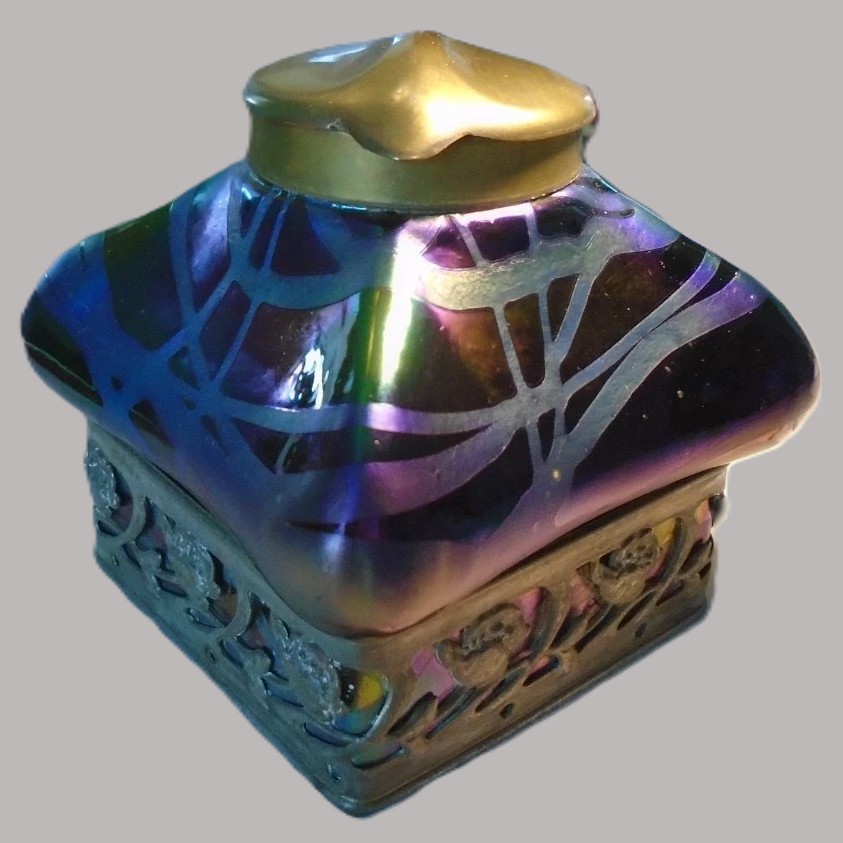
Pictured are two similar examples of Art Nouveau Bohemian glass by Kralik.
Description & Coloring
Example #1
The primary body of this piece displays a luminous, semi-translucent teal and emerald green base. Its iridescence leans heavily into the magenta and royal purple spectrum.
- The Upper Slope: The top sections of the glass body show deep, saturated pools of amethyst and violet.
- The “Oil Spot” Effect: There is a distinct “rainbow” or “soap bubble” effect where the colors transition from a soft, silvery-blue to a warm, pinkish-gold near the edges of the threading.
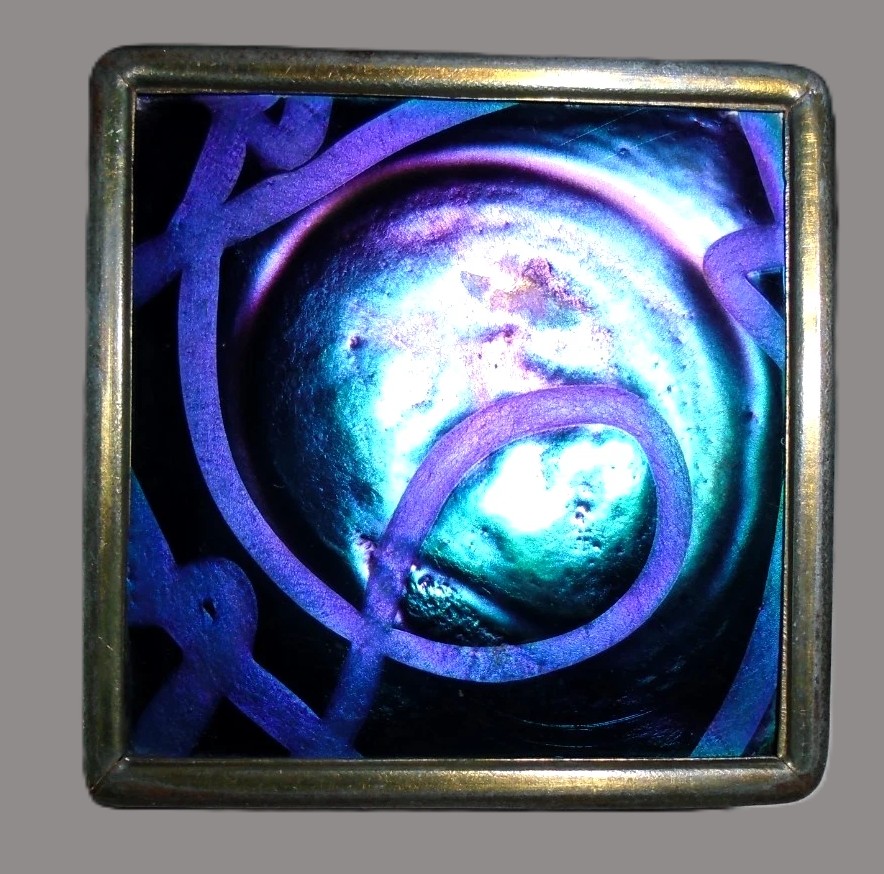
- The Veining: The threading on this piece appears as a silvery-lavender. These lines have a metallic sheen, almost looking like liquid mercury that has been tinted with a hint of lilac.
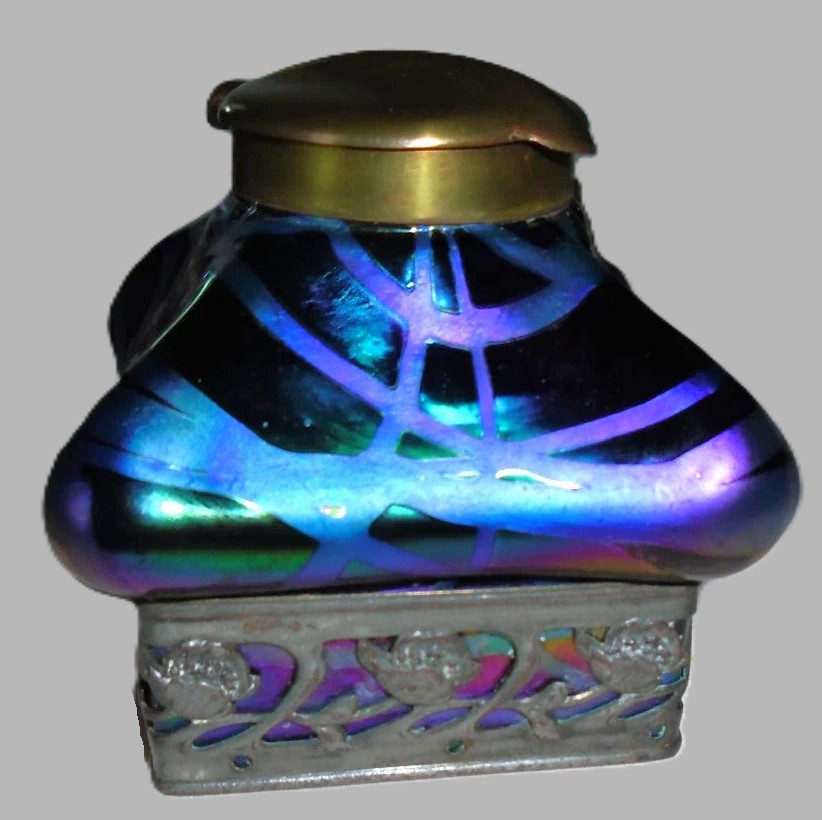
Example #2
This inkwell also features a hand-blown glass body with a rich, iridescent finish. The base color is a deep emerald green, which has been treated to exhibit a strong “oil spot” or peacock iridescence, flashing vibrant shades of violet, cobalt blue, and gold as it catches the light.
The most striking feature is the purple threading (often called “veining” or “webbing”). These are delicate, organic lines of glass trailed over the body while it was still molten, creating a look reminiscent of natural stone veins or root systems.
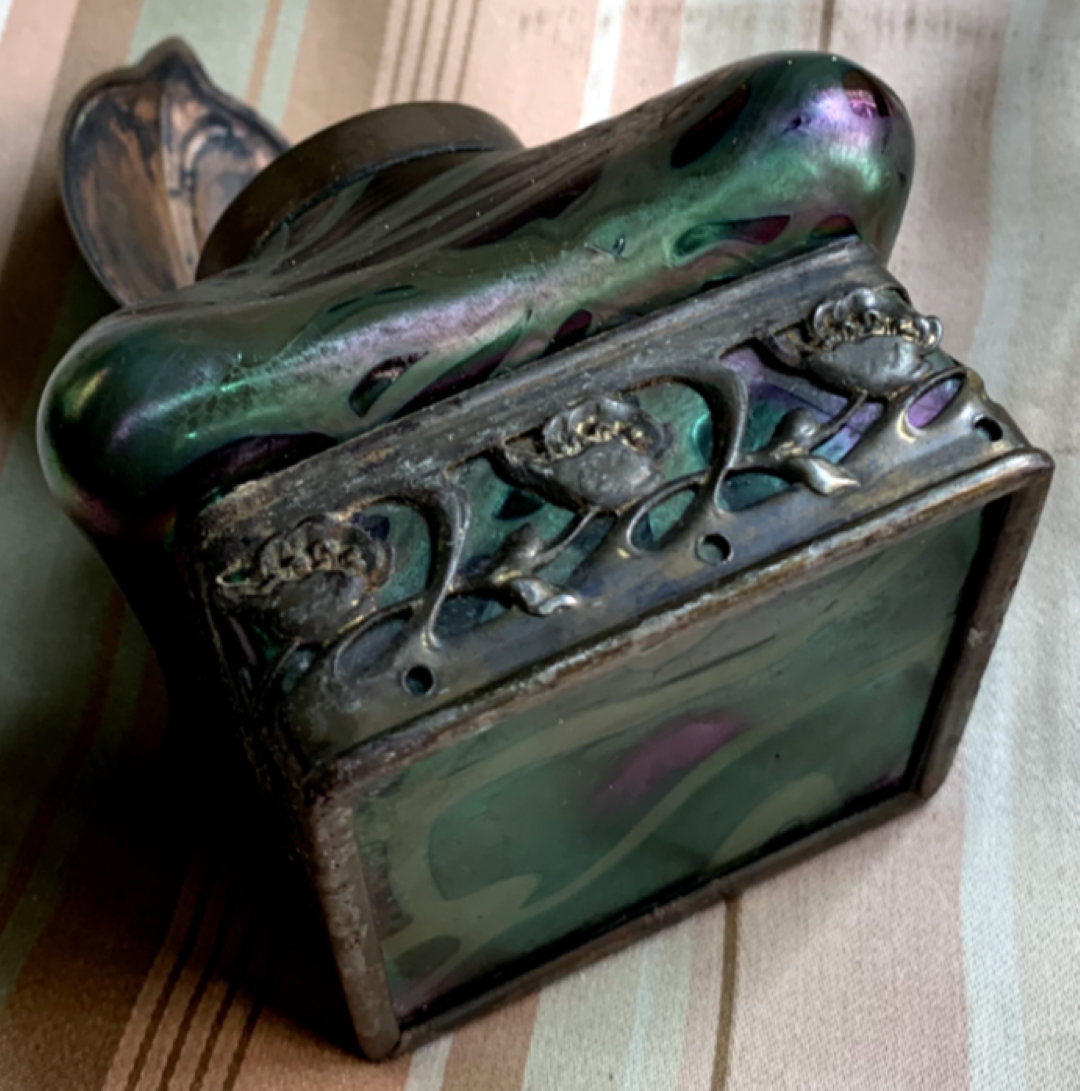
Both examples sit within a square metal base featuring an intricate Art Nouveau filigree of swirling floral and leaf motifs, executed in a “Secessionist” style typical of the early 1900s.
How These Effects Were Achieved
- Iridescence: This “oil slick” effect was achieved through a process called fuming. While the glass was still hot, it was exposed to metallic vapors (such as tin or iron chloride) in a specialized kiln. These vapors fused with the surface to create a microscopically thin, reflective metallic layer.
- Threading/Veining: A glassblower would “trail” thin strands of molten glass around the primary body. These threads were then lightly marvered (rolled on a flat surface) or reheated so they partially fused with the surface, maintaining a slight textural relief.
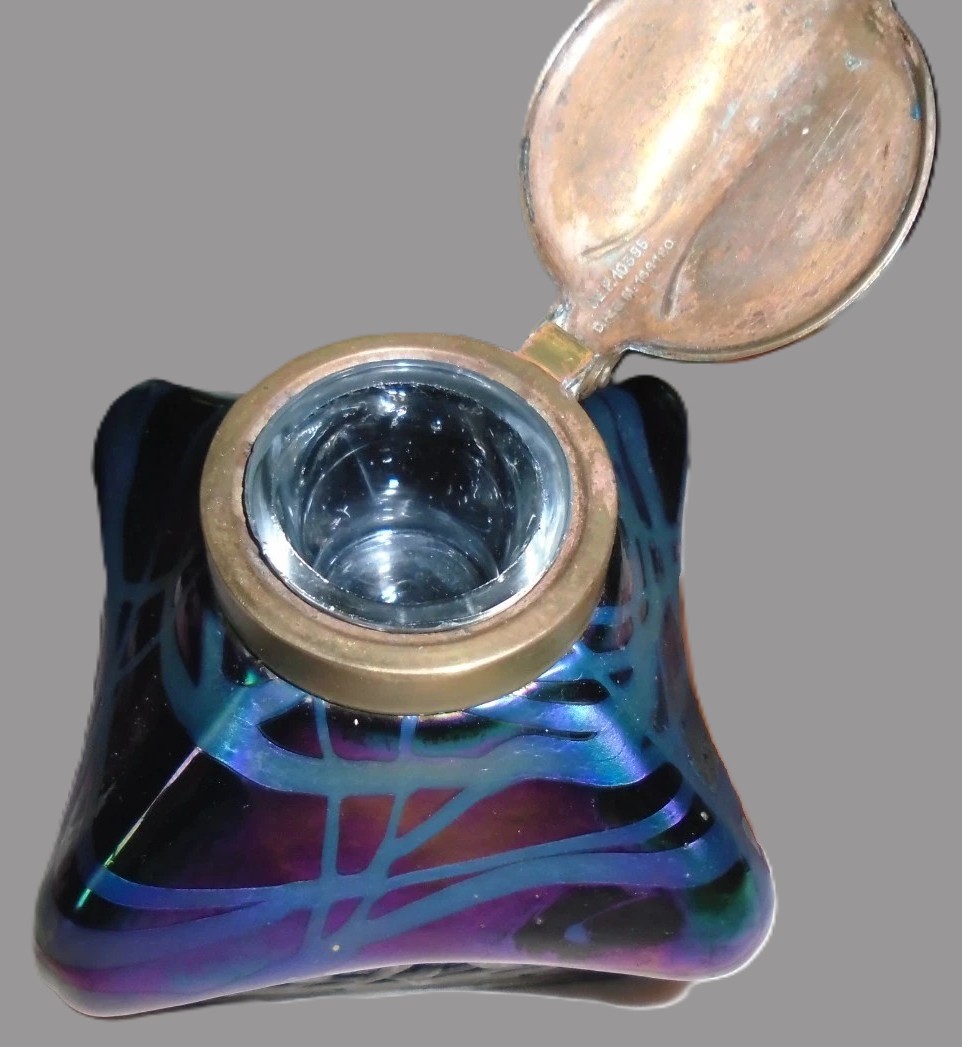
- Hand-Blown: The presence of the removable glass liner and the slight irregularities in the threading confirm this was hand-crafted rather than machine-made.
Transcription and Explanation of Lid Markings
The markings on the interior of the lid are:
G.E.P. 10535 D.R.G.M. 159180
What They Mean:
- G.E.P.: This stands for Gold Electro Plated. It indicates that the brass-colored lid was treated with a thin layer of gold via an electrolytic process to prevent tarnish and give it a more luxurious finish. The number 10535 is the manufacturer’s specific catalog or model number for this lid design.
- D.R.G.M.: This stands for Deutsches Reichsgebrauchsmuster (German Reich Registered Design). It was a form of “petty patent” used in Germany to protect a design or utility model for a period of up to six years.
- 159180: This registration number dates the design of the metal mount to approximately 1901–1902. This aligns perfectly with the height of the Art Nouveau movement and Kralik’s production of this specific glass decor.
Confirmation and History of Wilhelm Kralik Söhne
These inkwells were made by Wilhelm Kralik Söhne. This “Veined” decor is one of their most celebrated and well-documented patterns.
Company History:
- Origins: The company was founded in Bohemia (now the Czech Republic) by Wilhelm Kralik. It originated from the glassworks of Johann Meyr, Kralik’s uncle, who established the Eleonorahütte factory in 1833.
- Succession: Upon Wilhelm’s death in 1877, the company was split among his four sons. Two of them, Heinrich and Johann, formed Wilhelm Kralik Söhne.
- Artistic Rivalry: Kralik was a contemporary and primary competitor of the famous Loetz glassworks. While Loetz was often more experimental and high-end, Kralik excelled at producing high-quality, “threaded” and iridescent art glass that defined the Jugendstil (German Art Nouveau) era.
- Legacy: Unlike Loetz, Kralik rarely signed their glass pieces, which is why identifying them through specific decors like this “Veined” pattern and contemporary metal mounts (often sourced from Pforzheim, Germany) is required.
Example #1 sold for $265 in October 2023.
Example #2 sold for $212 in April 2026
Content disclaimer. The information posted is the owner’s best knowledge and may not have been vetted by the SOIC. We welcome comments, corrections, and additions, working to make our website information comprehensive and accurate.
Join the Society of Inkwell Collectors (SOIC) – it’s free!
Founded in 1981 as a non-profit organization,
we are documenting inkwells (and accessories).
We’re here to help and inform!