

King Oscar II of Sweden and Norway
| Categories | Figural - Persons |
| Type | Historical |
| Material | Spelter |
| Markings | See Narrative |
| Manufacturer | Undetermined |
| Origin | Sweden |
| Date or Era | circa 1900 |
| Measuring | 9” across; 8” high |
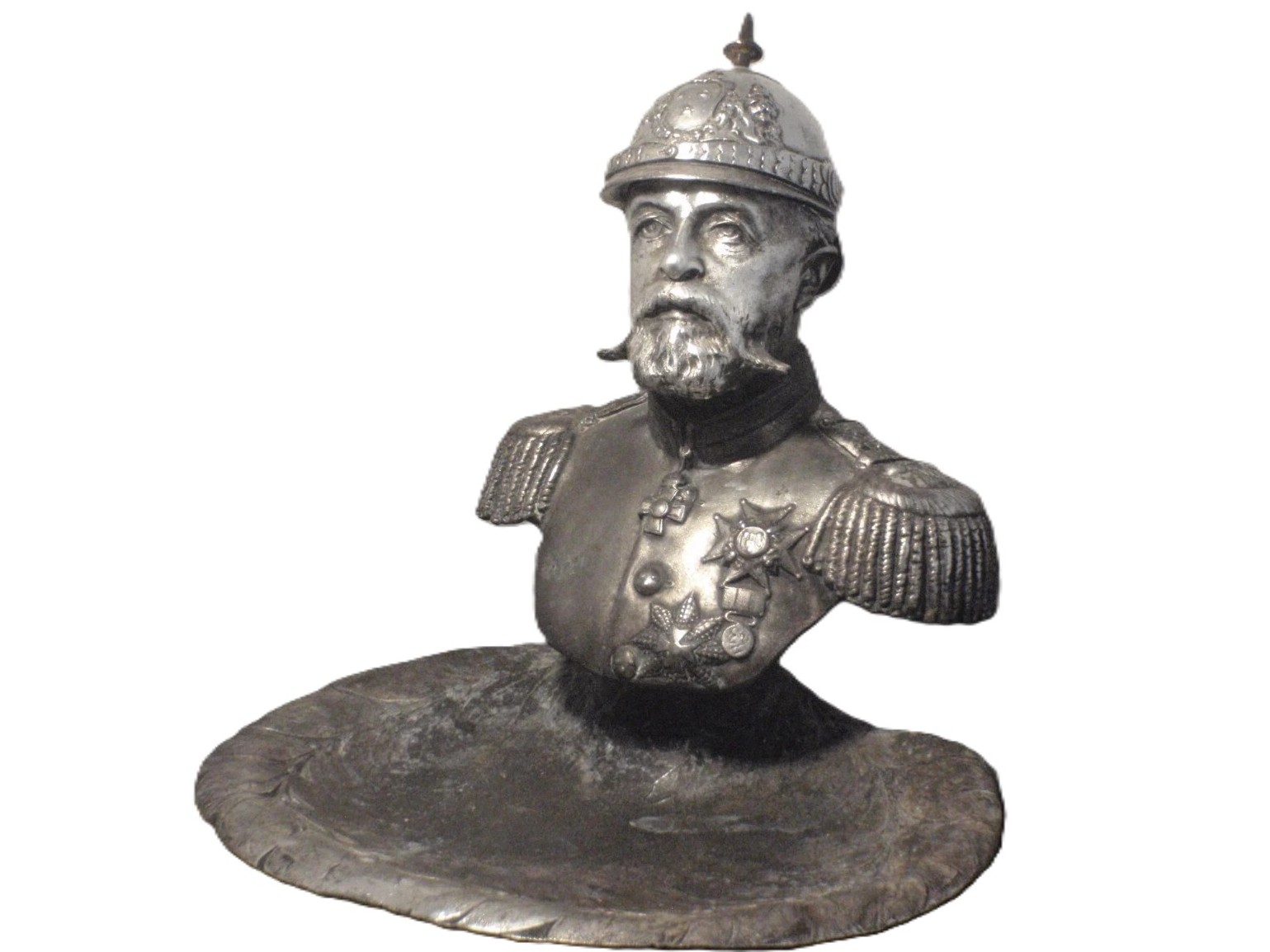
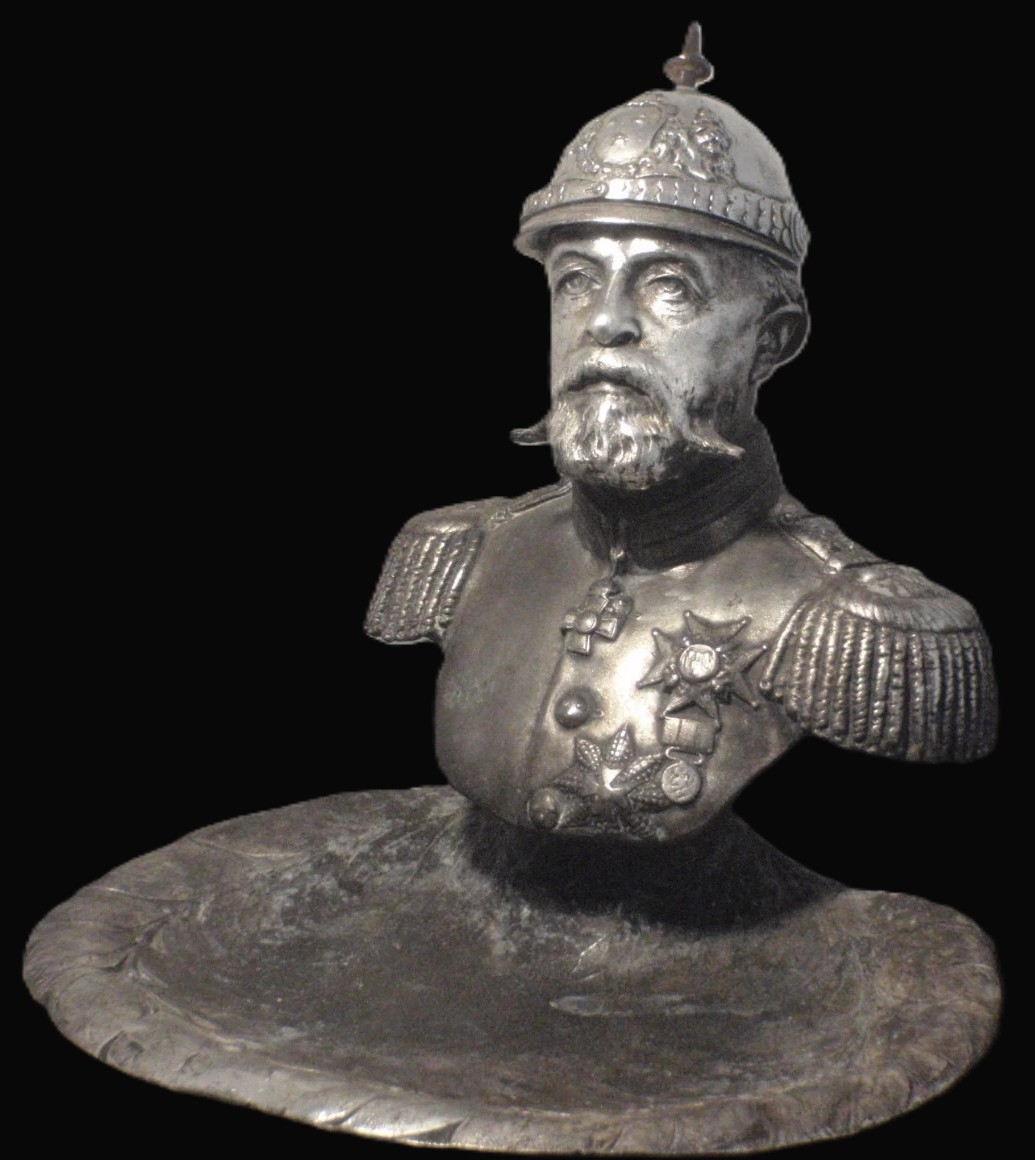
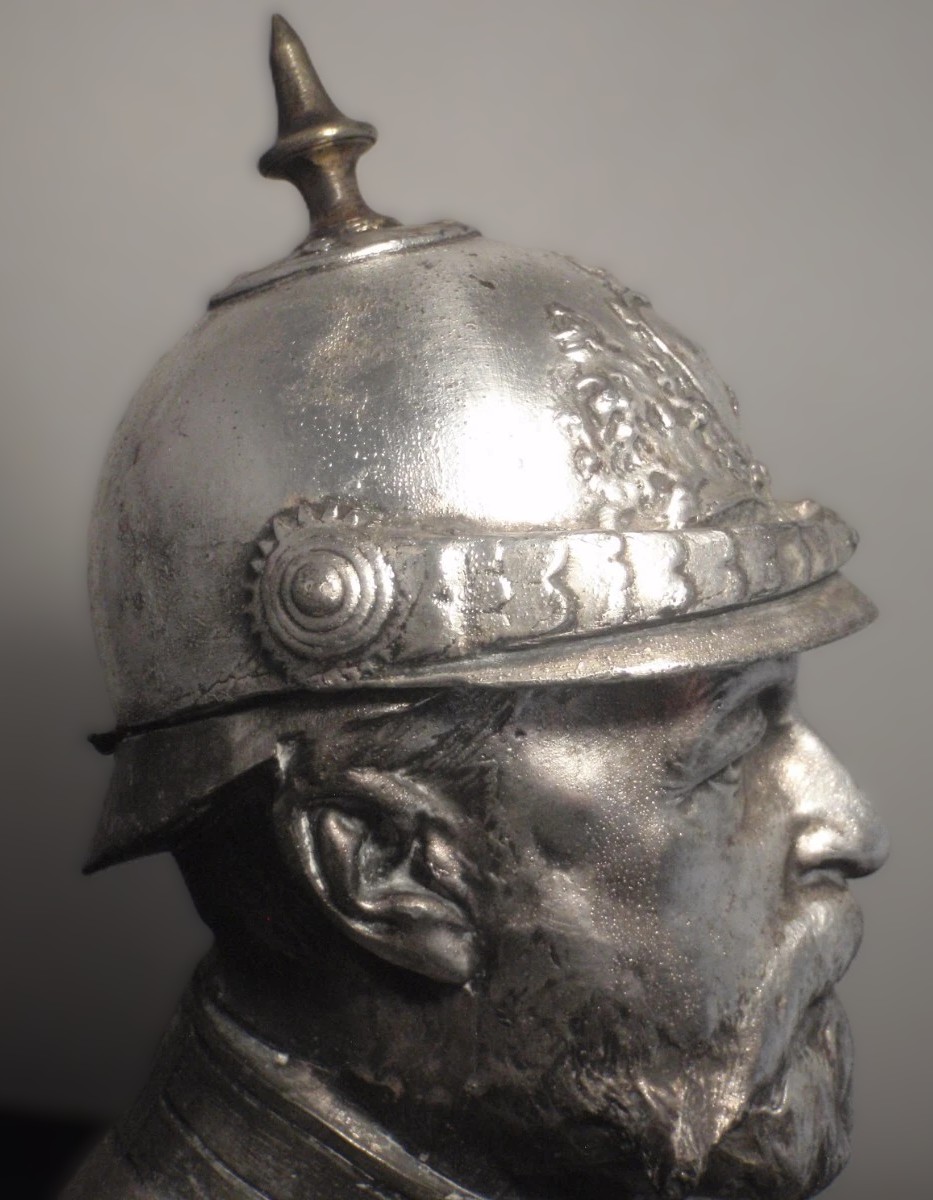
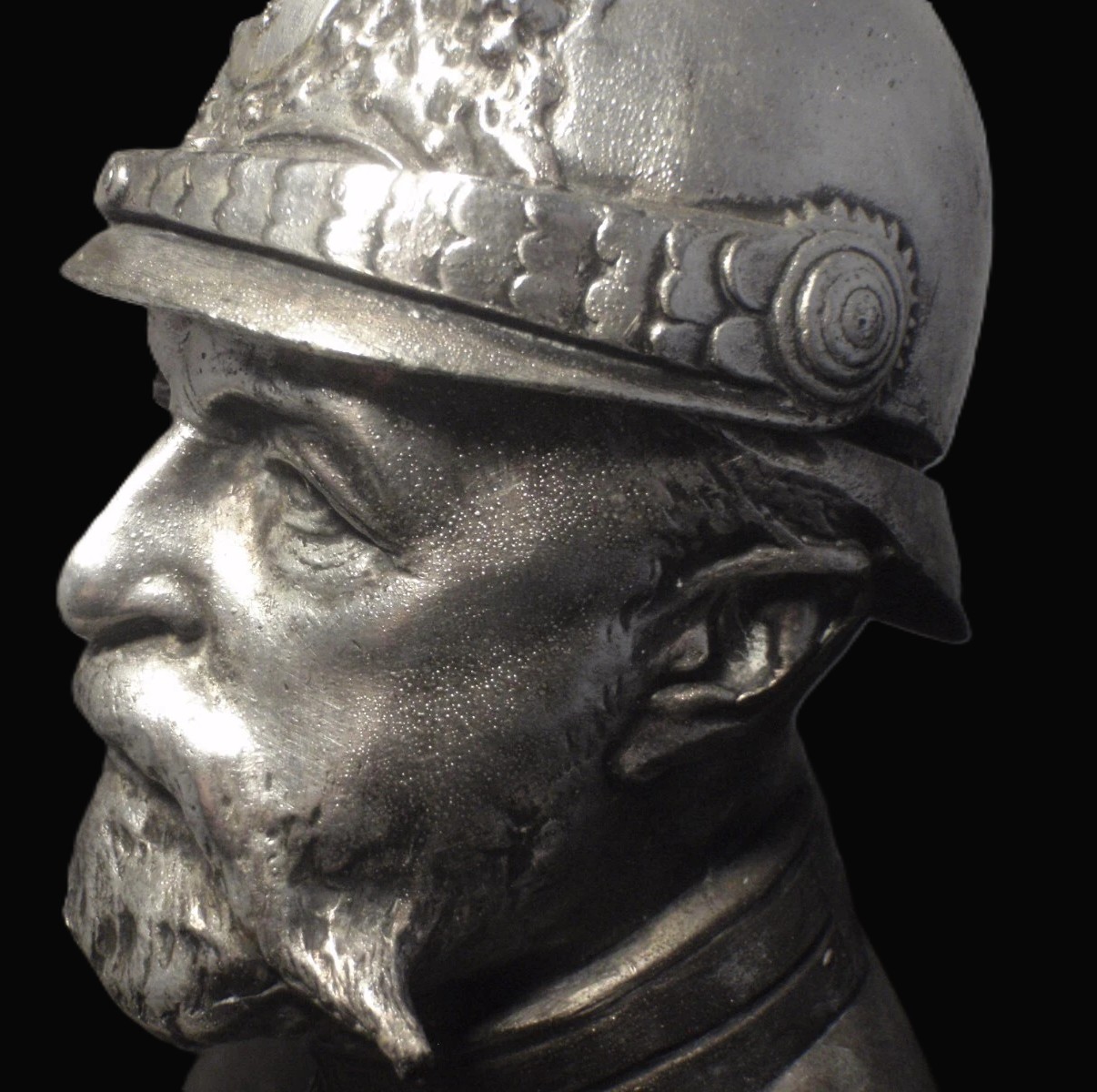
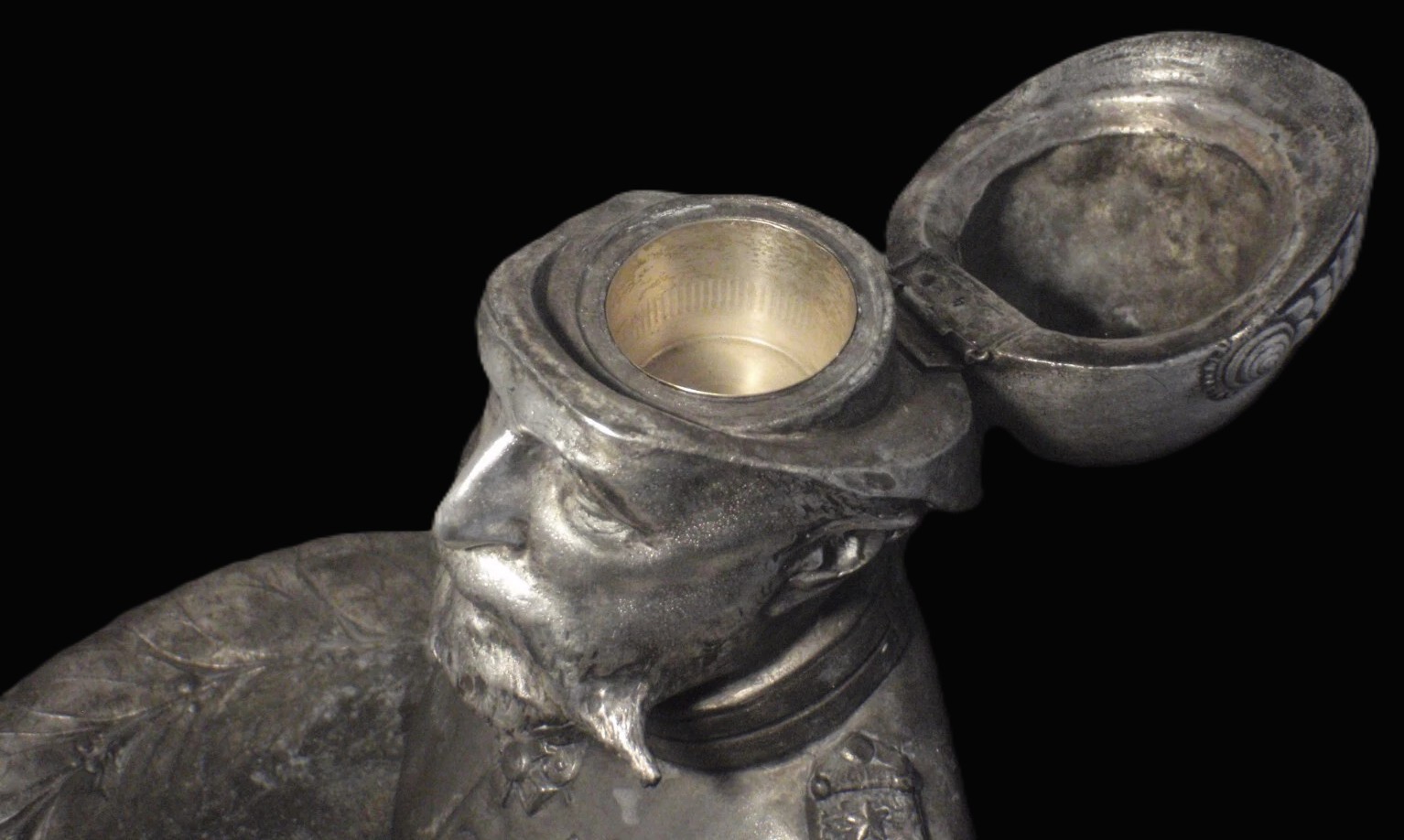
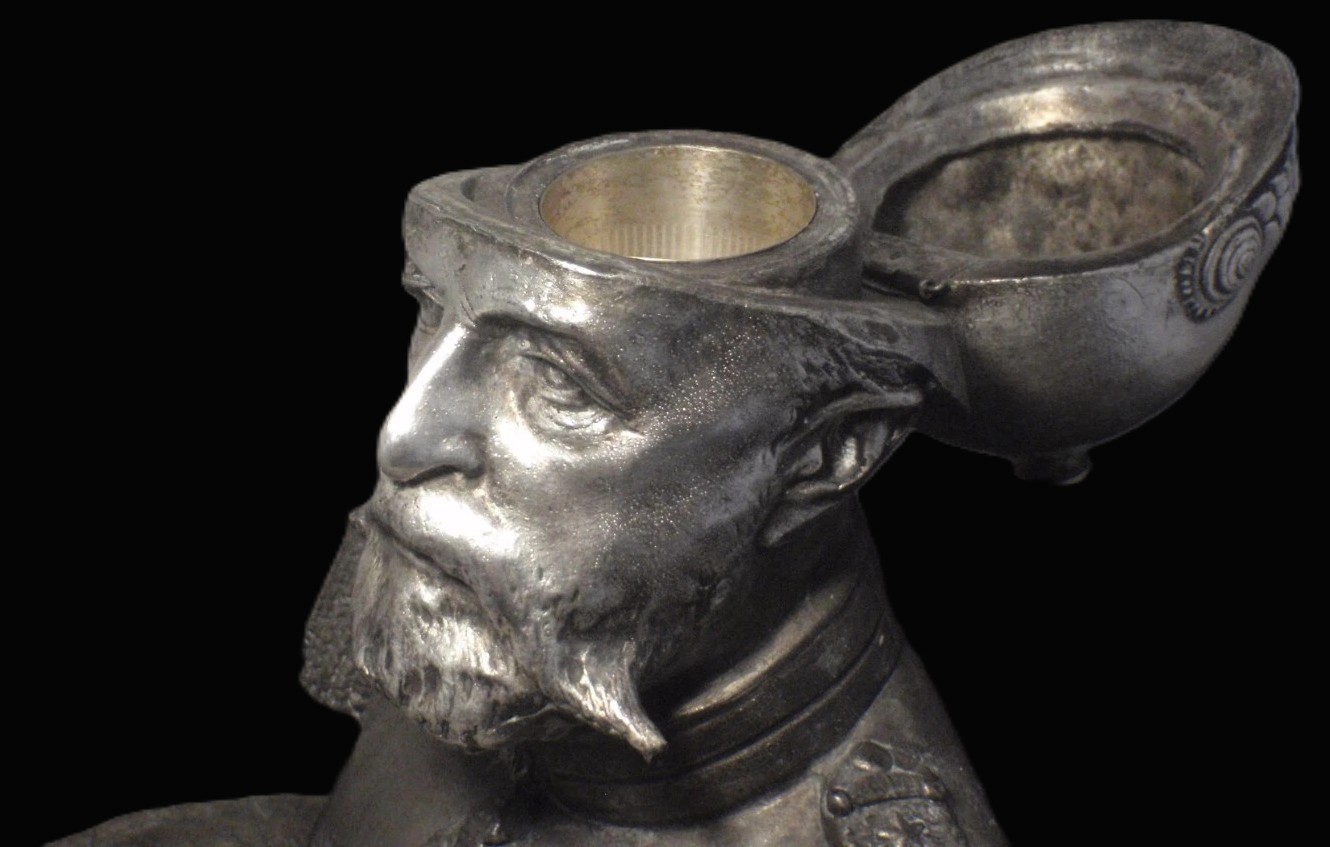
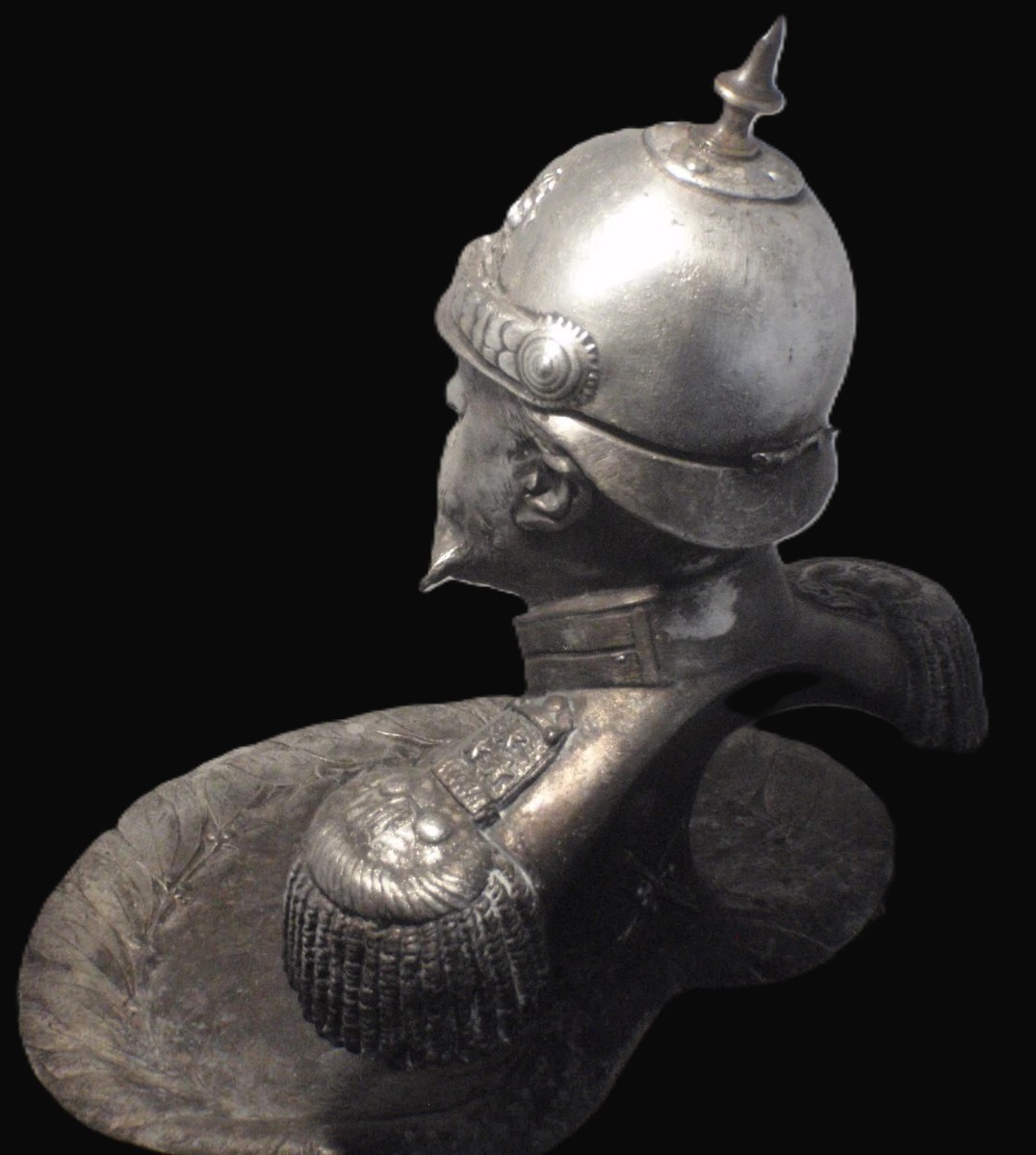
This is a late 19th or early 20th-century Swedish figural desk inkwell commemorating King Oscar II of Sweden and Norway.
Details
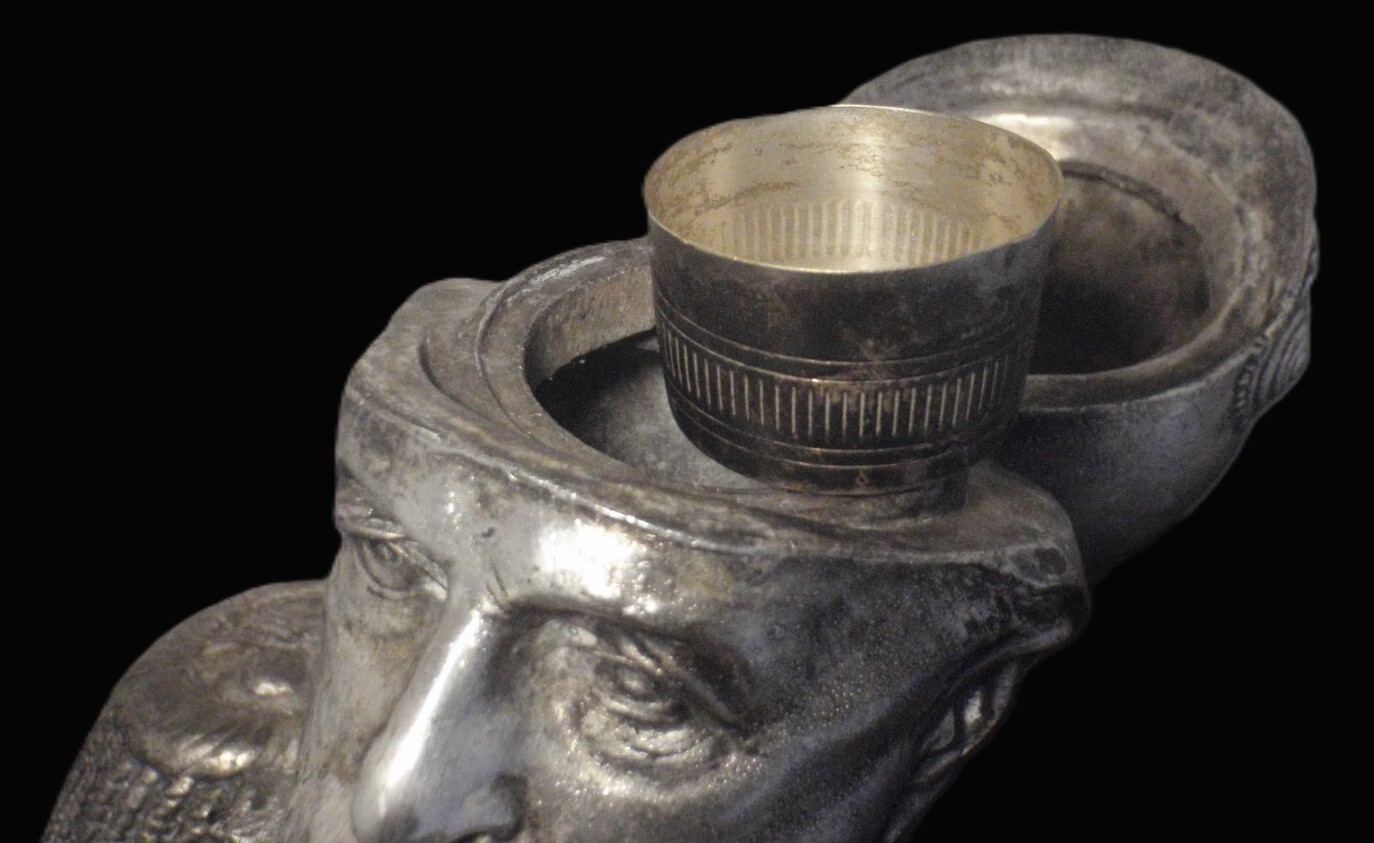
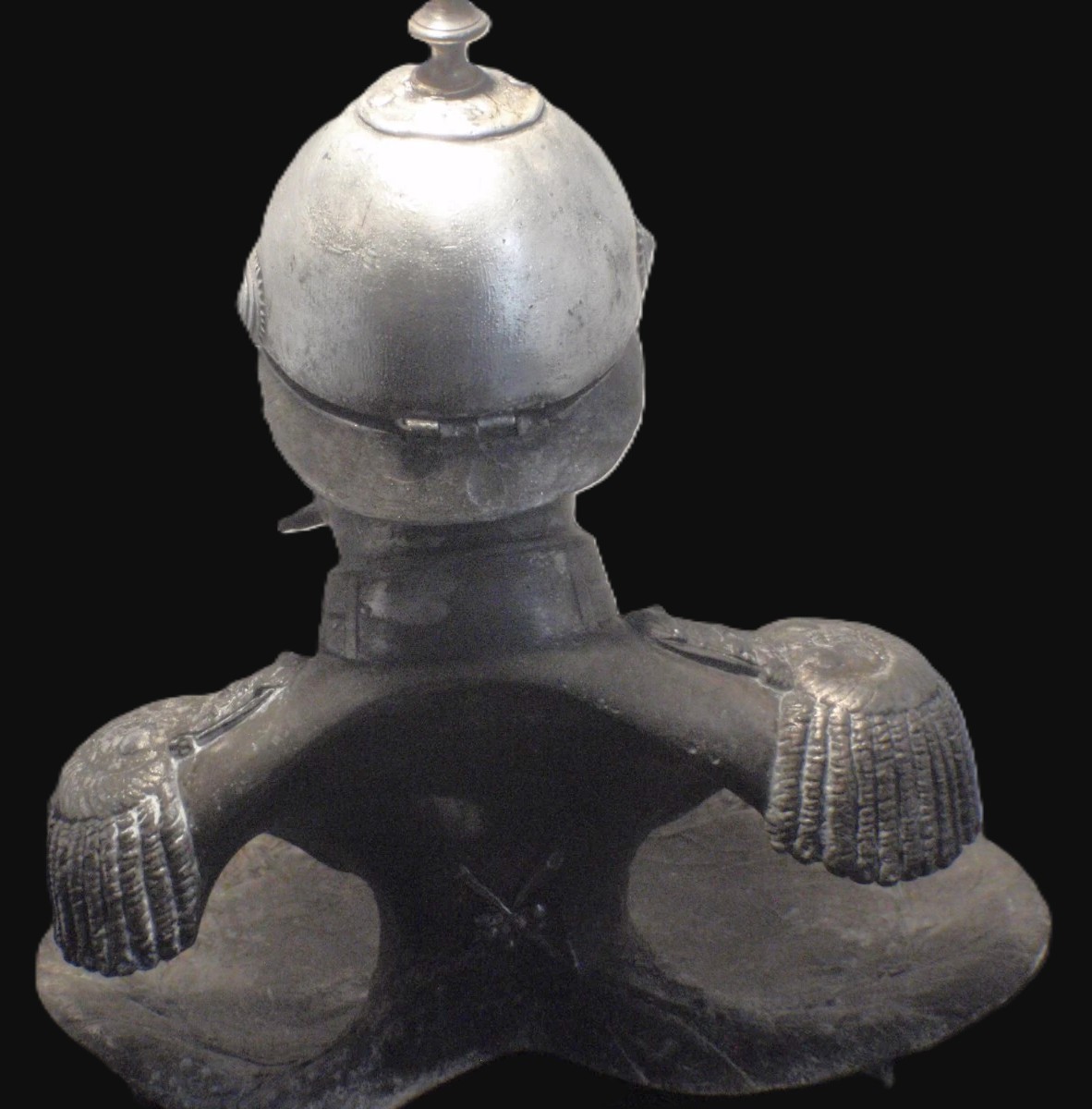
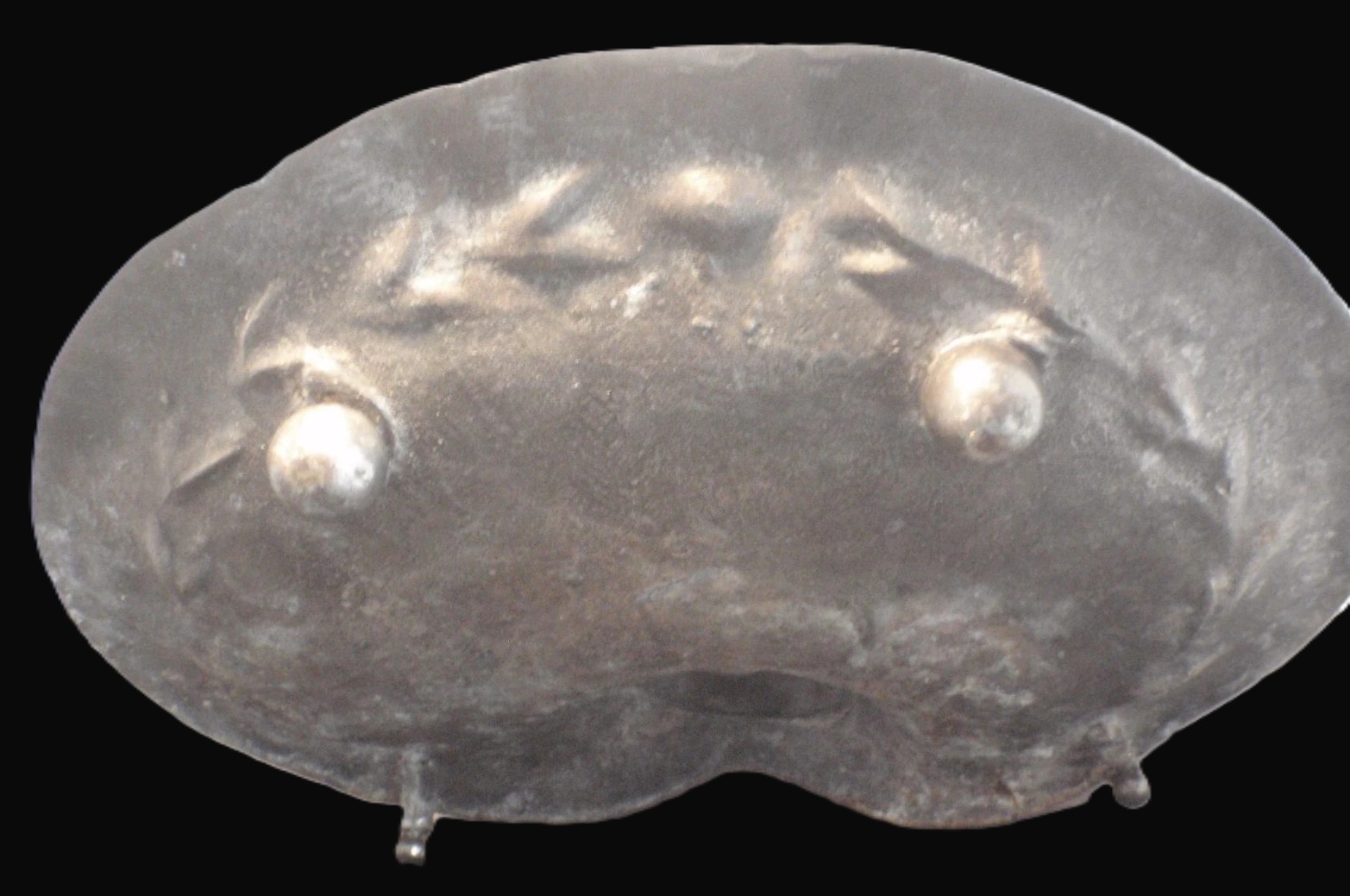
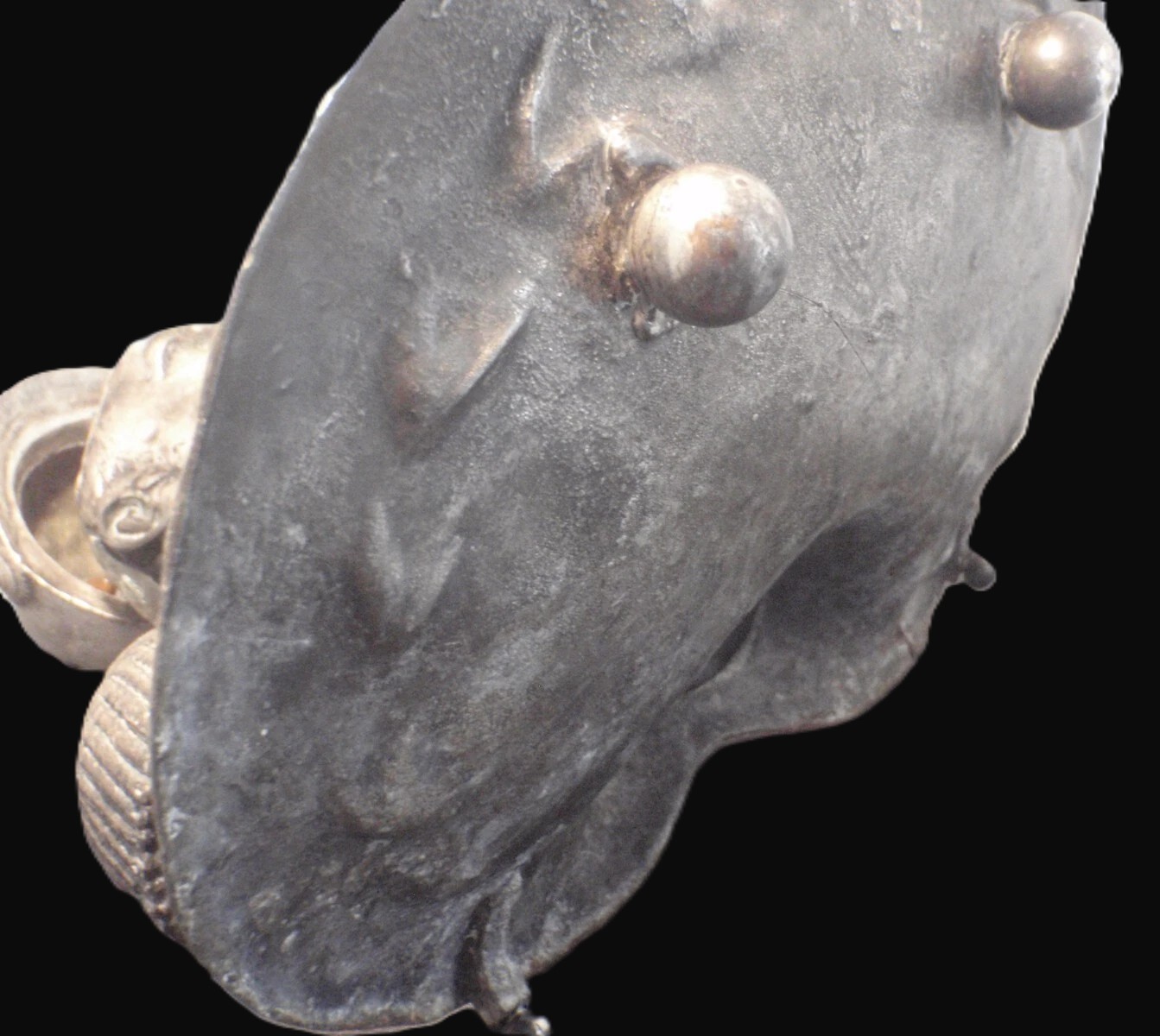
- Type: Figural desk inkwell featuring an integrated pen tray base, supported on the underside by two ball feet.
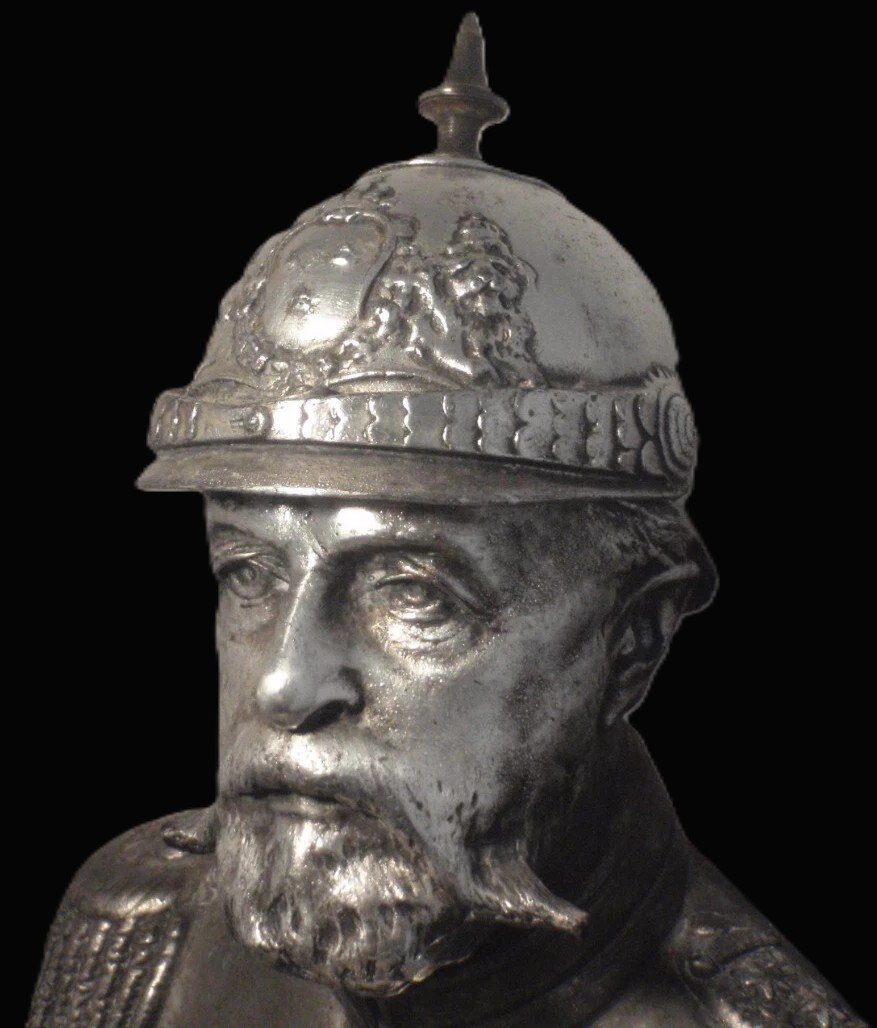
- Mechanism: The spiked helmet is hinged at the back and lifts upward to reveal a well that holds a removable cylindrical ink insert.
- Material: The piece is cast from a non-ferrous white metal alloy (spelter or cast zinc) and was originally silver-plated.
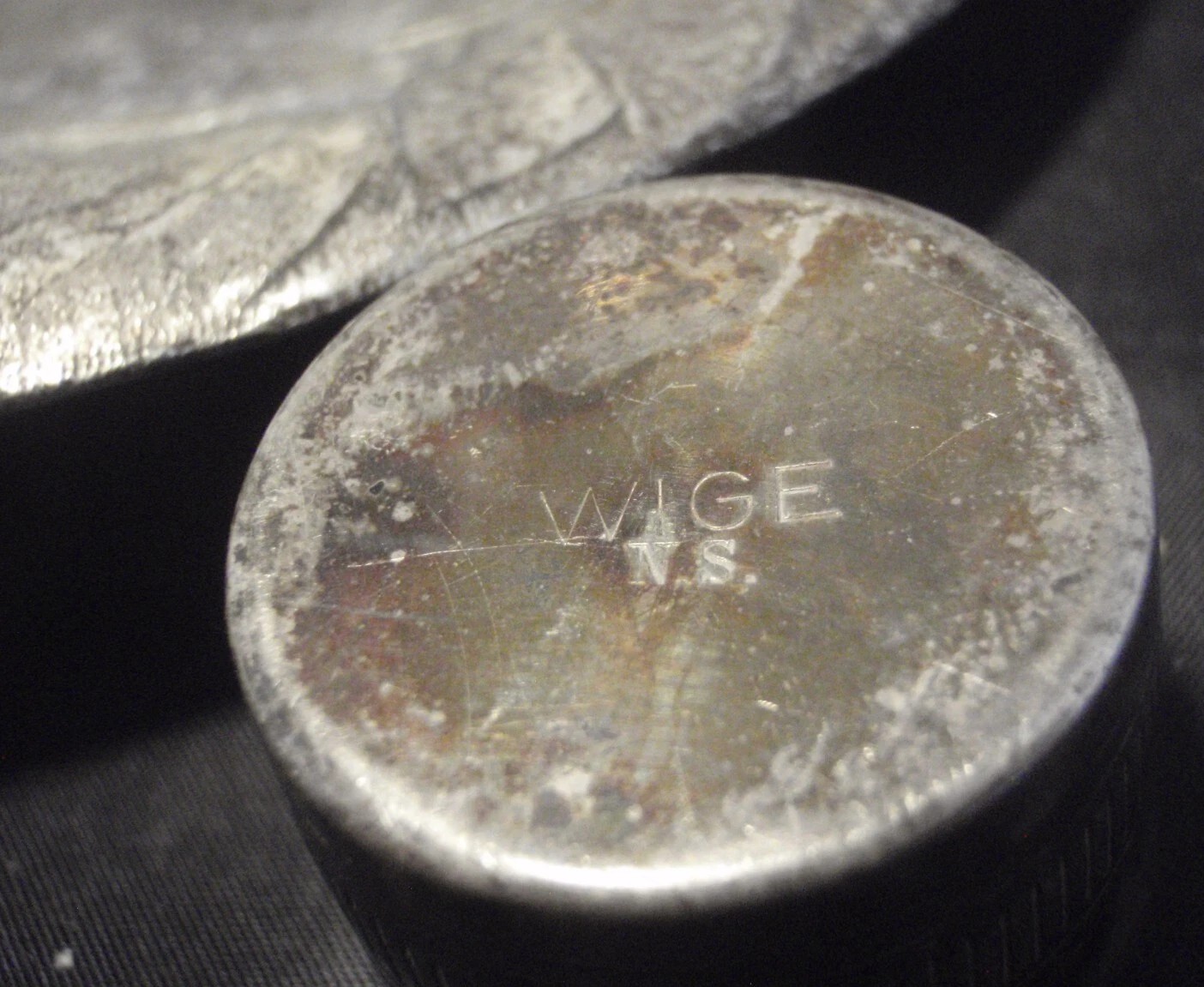
- The Maker’s Mark: The bottom of the removable insert cup is stamped “WIGE N.S.” The “N.S.” stands for Nysilver (literally “new silver”), the traditional Scandinavian term for nickel silver or silver-plated base metal.
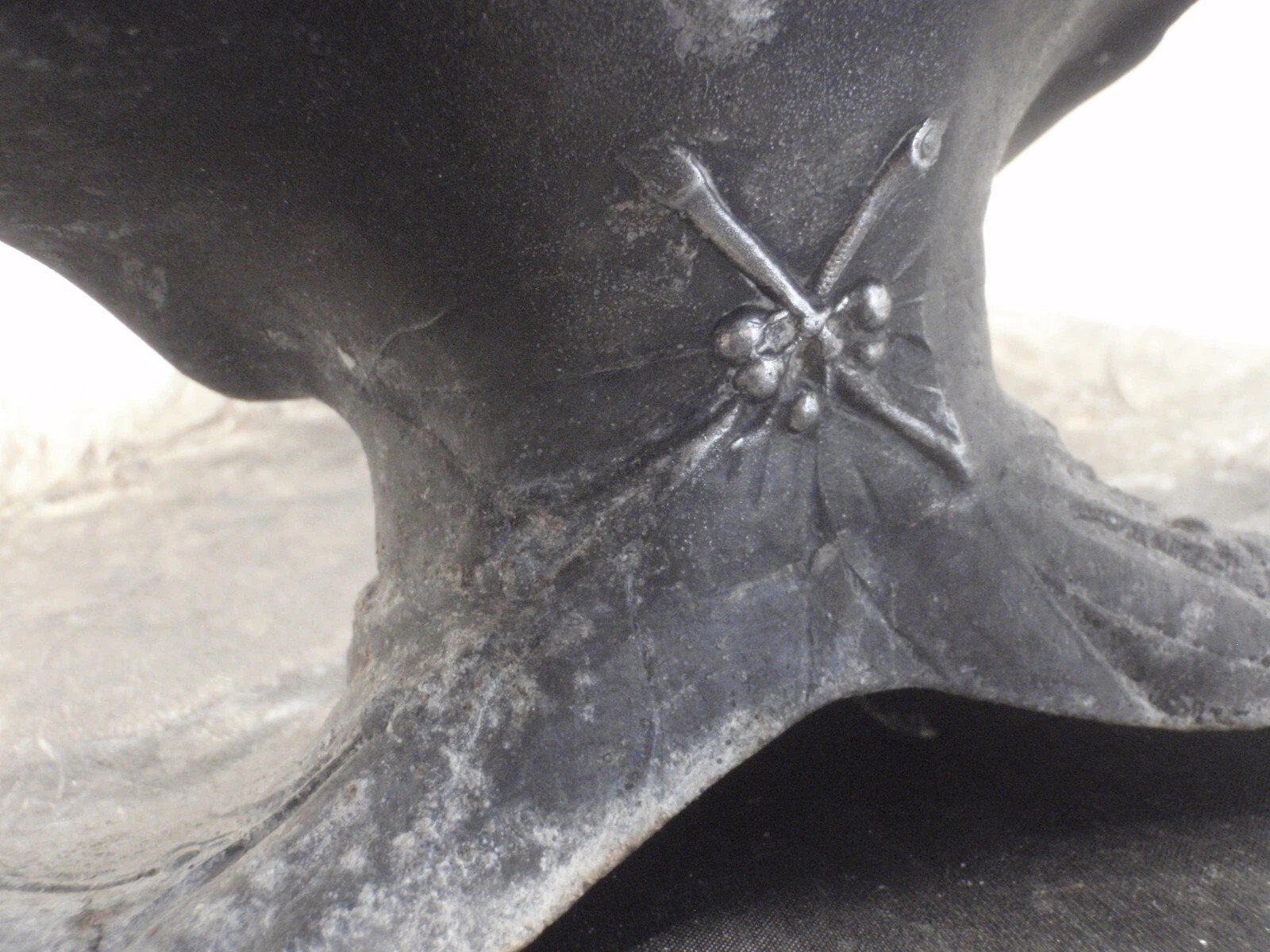
- Reverse Relief Emblem: On the rear support of the bust neck, there is a cast emblem of crossed commander batons or scepters interwoven with laurel leaves, denoting his supreme military rank.
Identification of the Uniform & Orders
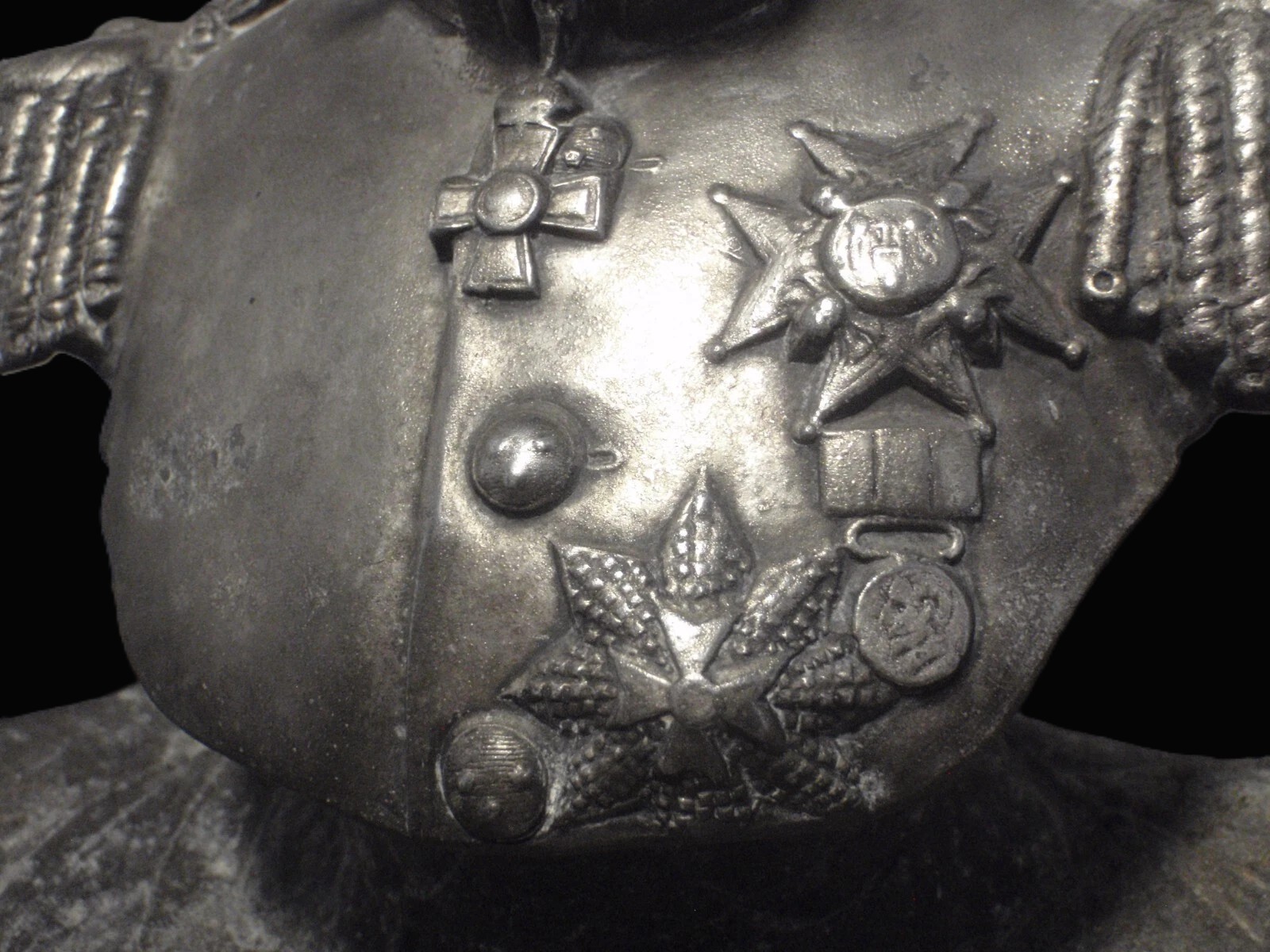
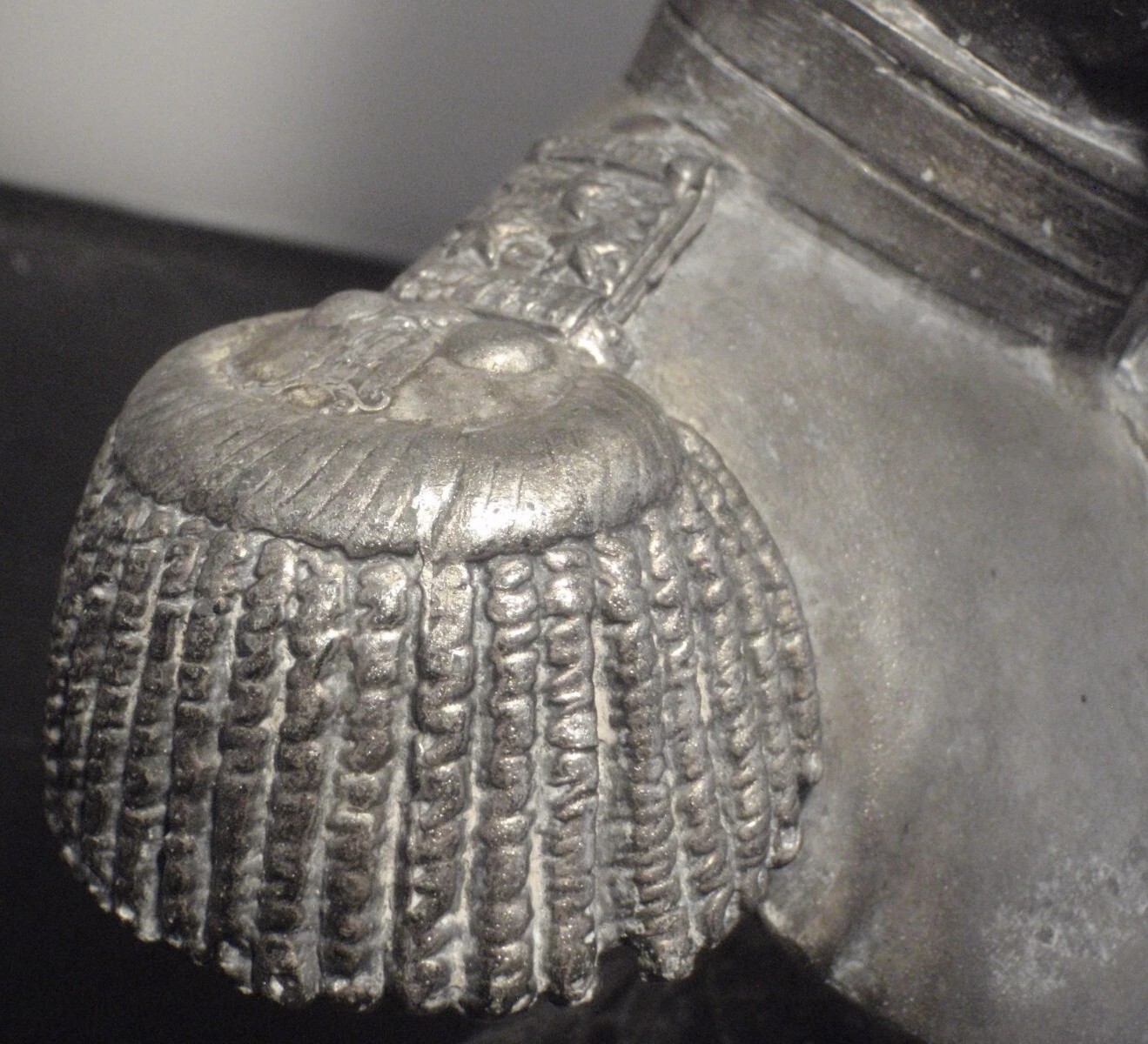
The military details cast into the bust provide definitive proof of the subject’s identity, featuring the specific honors worn by a Swedish monarch of this era:
- The Spiked Helmet (Kask): While famously associated with Prussia (Pickelhaube), spiked helmets were widely adopted across Europe in the late 19th century. This specific helmet replicates the Swedish General’s Kask (Model 1887 or 1894). The front plate features the crowned Swedish national coat of arms.
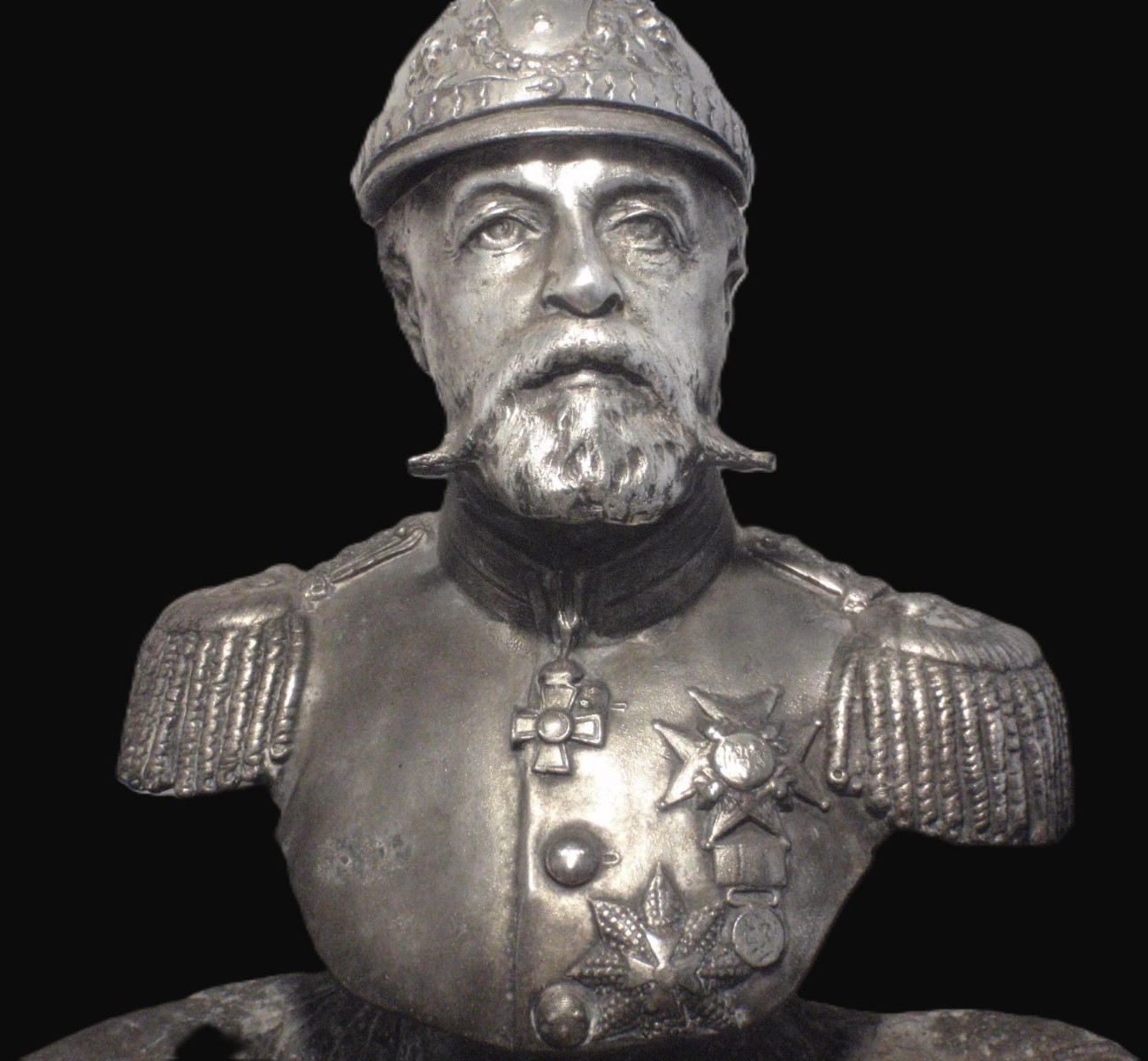
- The Order of the Seraphim (Top Star): On the viewer’s right (the King’s left breast), the uppermost star is Sweden’s highest chivalric order. If you look closely at the central medallion, it clearly displays the letters “IHS” (Iesus Hominum Salvator), which is the signature feature of the Order of the Seraphim breast star.
- The Order of the Sword (Lower Star & Neck Cross): Below the Seraphim star sits a secondary faceted 8-pointed star, representing the Grand Cross of the Order of the Sword (Svärdsorden), Sweden’s premier military order. The cross suspended from his collar is the commander’s badge of the same order.
Historical Background: King Oscar II (1829–1907)
Oscar II ascended to the dual throne of Sweden and Norway in 1872 and reigned until his death in 1907.
- The King in His Prime: This bust captures Oscar II during the height of his popularity in the 1880s and 1890s, showcasing his famously groomed, squared-off beard and upturned mustache.
- A Ruler of Two Nations: Oscar II was the last Swedish monarch to also serve as the King of Norway. His reign was defined by the increasing political strain between the two nations. He took great pride in trying to maintain the Union, but ultimately handled its dissolution peacefully in 1905, when Norway separated to become an independent kingdom under Haakon VII.
- An Intellectual Monarch: Beyond his military uniform, Oscar II was a highly educated man of arts and letters. He was an accomplished poet, translated works by Goethe, wrote extensive treatises on military history, and was a major benefactor of scientific exploration (including funding Fridtjof Nansen’s Arctic expeditions).
Context of the Piece
Desk sets and inkwells featuring the reigning monarch were highly popular luxury souvenirs and patriotic office decor in Sweden between 1887 and 1905, appealing to military officers, government bureaucrats, and loyal citizens alike.
Sold for $480 in June 2026
Content disclaimer. The information posted is the owner’s best knowledge and may not have been vetted by the SOIC. We welcome comments, corrections, and additions, working to make our website information comprehensive and accurate.
Join the Society of Inkwell Collectors (SOIC) – it’s free!
Founded in 1981 as a non-profit organization,
we are documenting inkwells (and accessories).
We’re here to help and inform!