

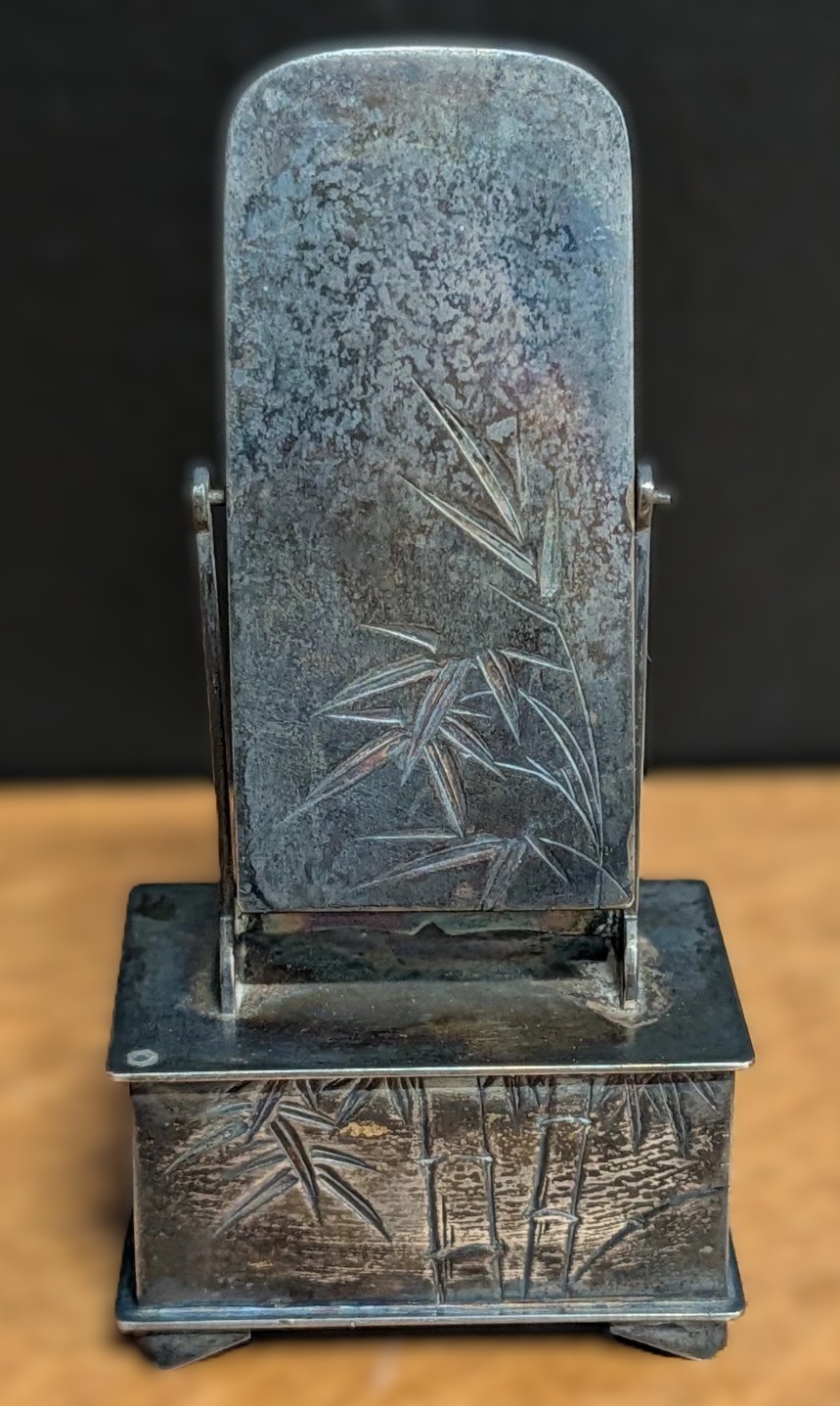
Japonesque Sterling Silver Miniature Cheval Mirror with Inkwell & Sander
| Categories | Far East / Oriental, Figural - Inanimate, Novelty |
| Type | Furniture |
| Material | Silver |
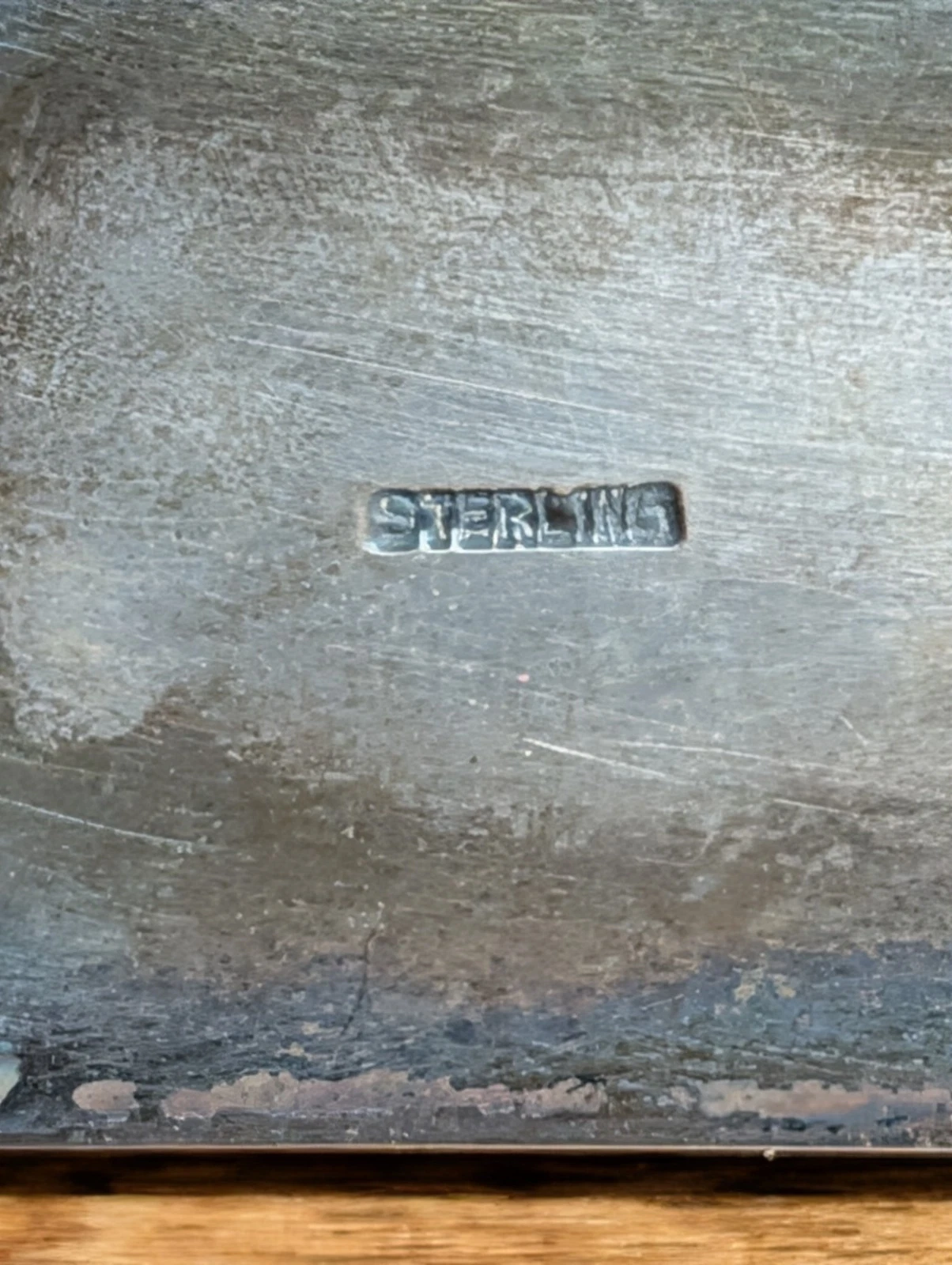
| Markings | Sterling |
| Manufacturer | Undetermined |
| Origin | Japan |
| Date or Era | circa 1900 |
| Measuring | 3 ½” high |
Overview
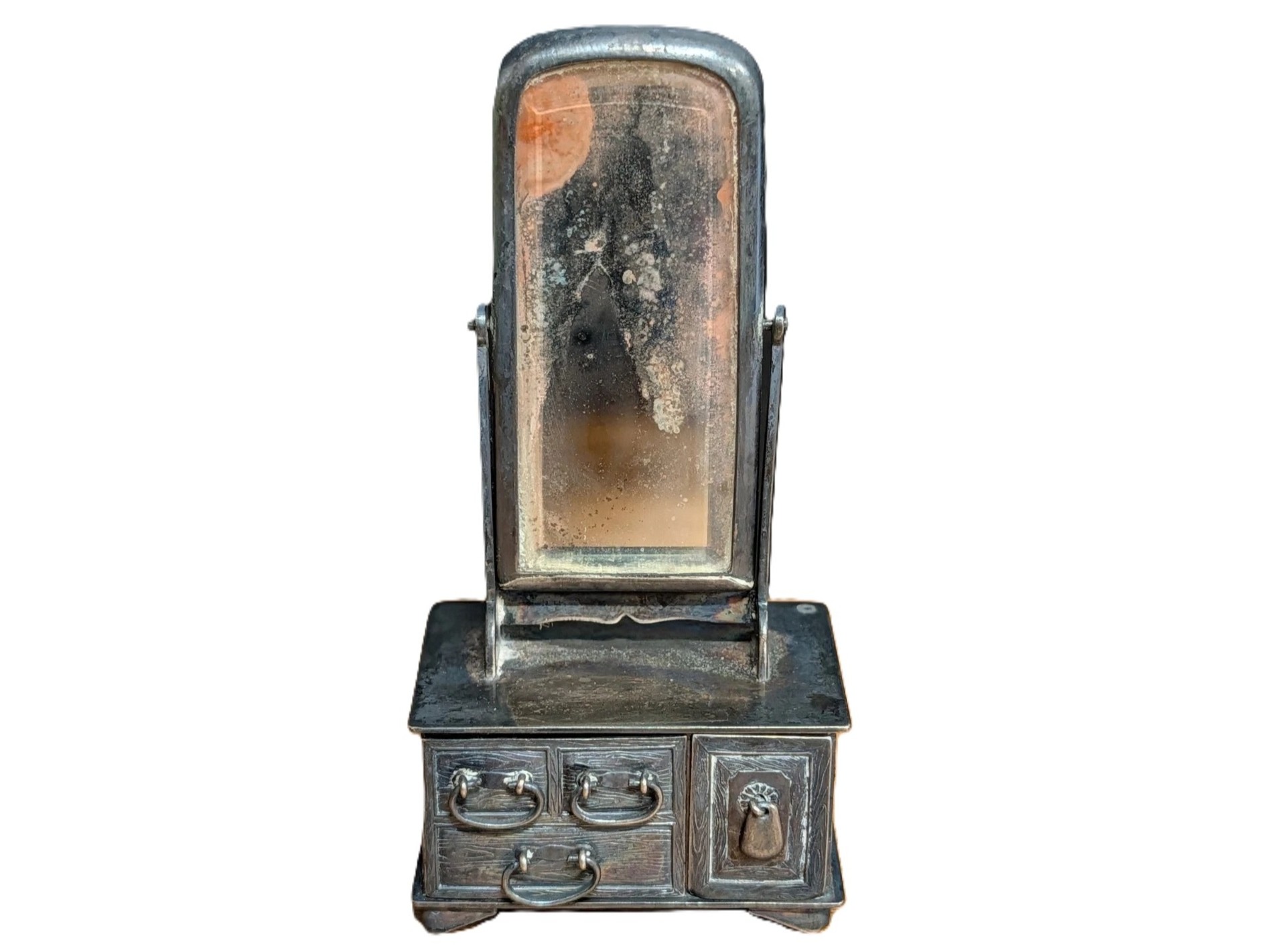
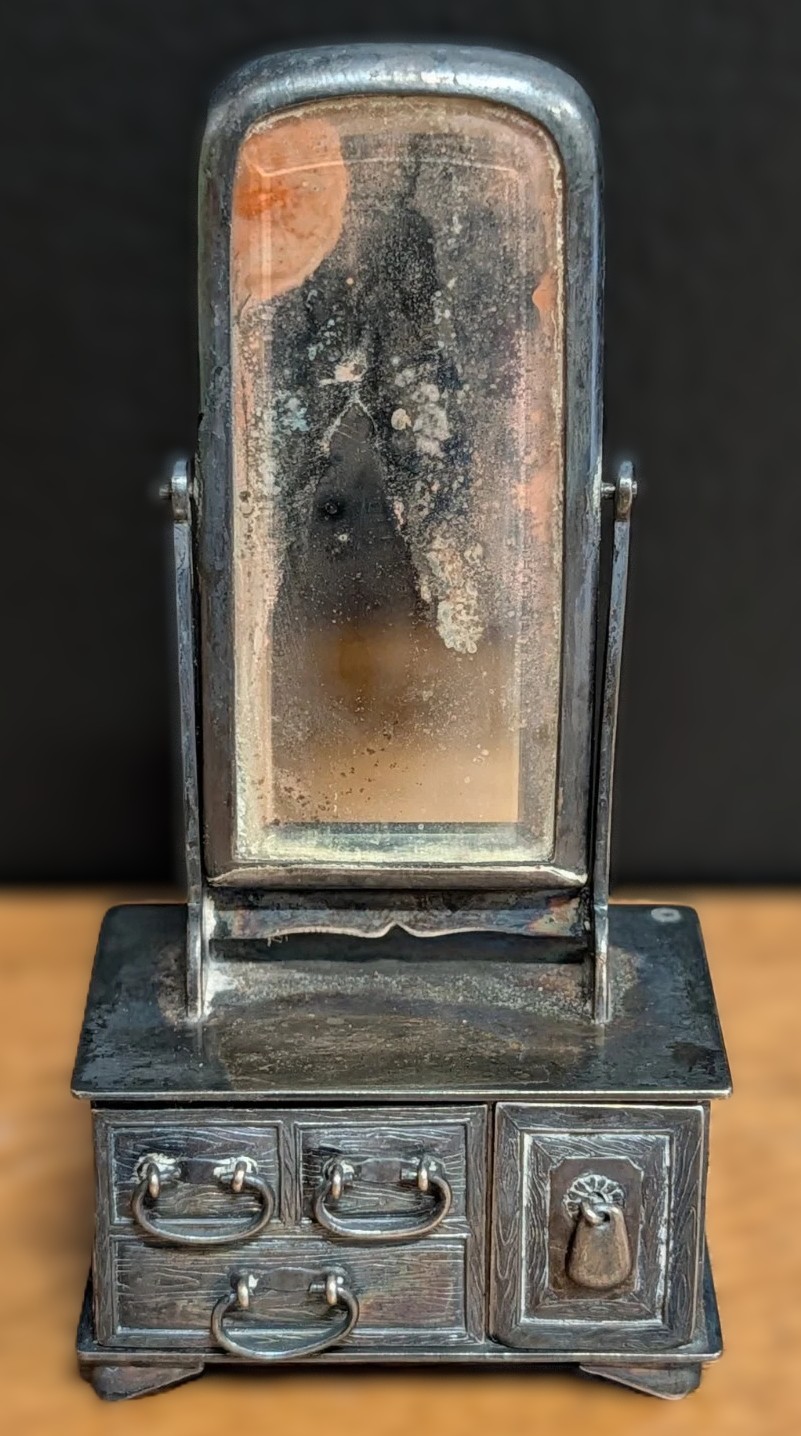
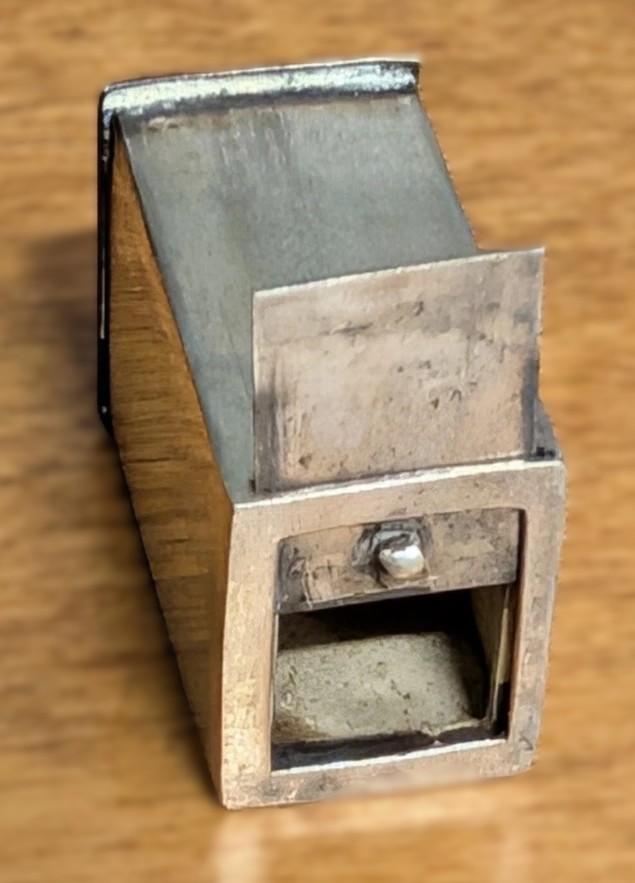
This is a nice example of a late Victorian/early 20th-century Japonesque Aesthetic Movement miniature novelty desk stand. It is designed in the form of a Japanese miniature vanity or sewing chest (haribako / ko-tansu) topped with a swinging cheval mirror.
Description & Features
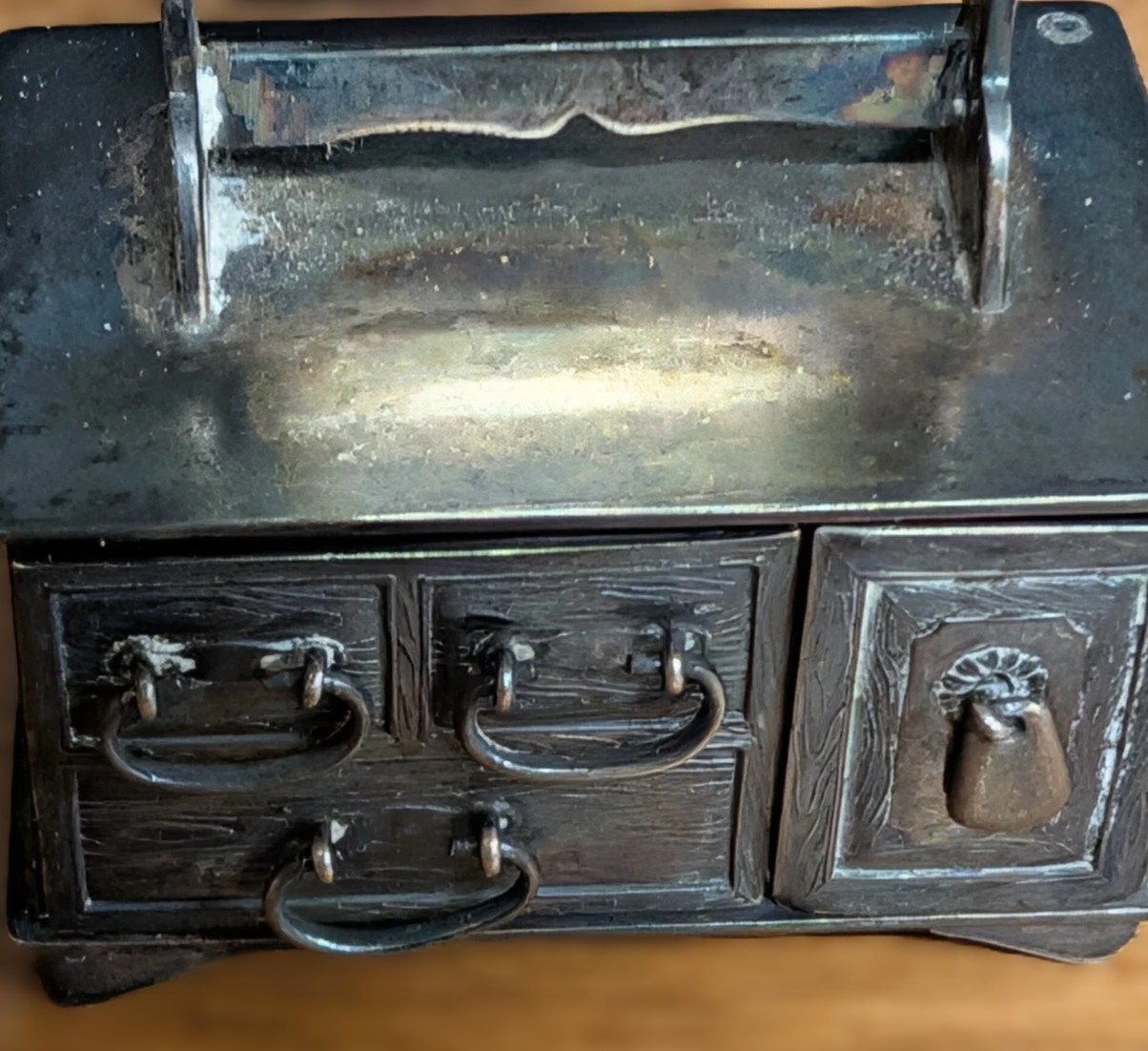
- Design & Artistry: The entire piece features chased and engraved detailing. The front imitates fine wood-grain paneling (faux boiserie) along with small applied bail handles and drawer fronts to complete the illusion of a full-sized dresser. The back of the swivel mirror and the rear of the vanity base are beautifully hand-engraved with an asymmetrical bamboo branch motif, typical of the nature-focused themes of the Aesthetic Movement.
- The Mirror: The rectangular cheval mirror retains its original glass and pivots smoothly between its two support posts. The discoloration you see is classic silver silvering degradation (foxing), common for mirror glass of this era.
The Writing Tools
Novelty miniatures like this hide their utilitarian elements within the “furniture” design:
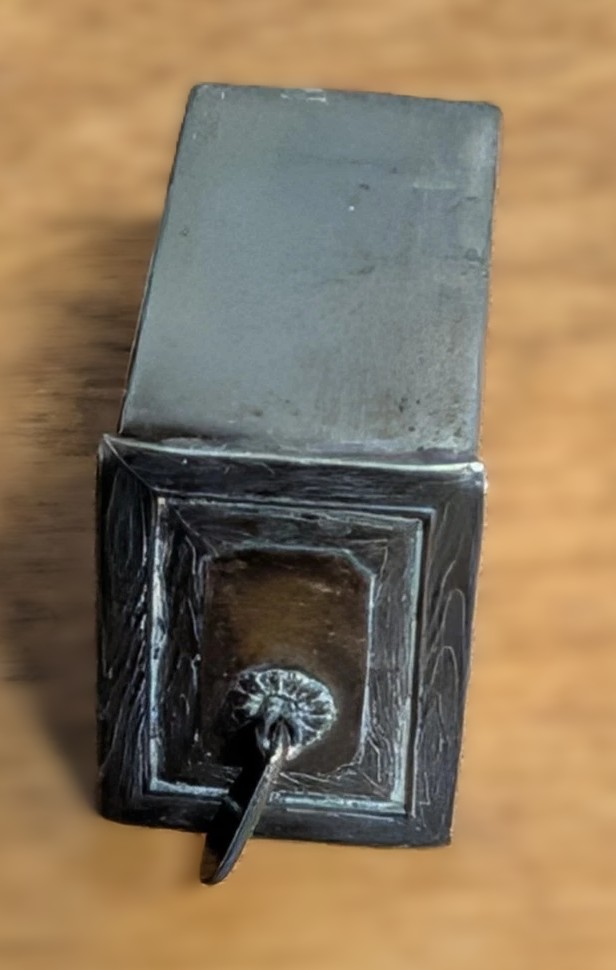
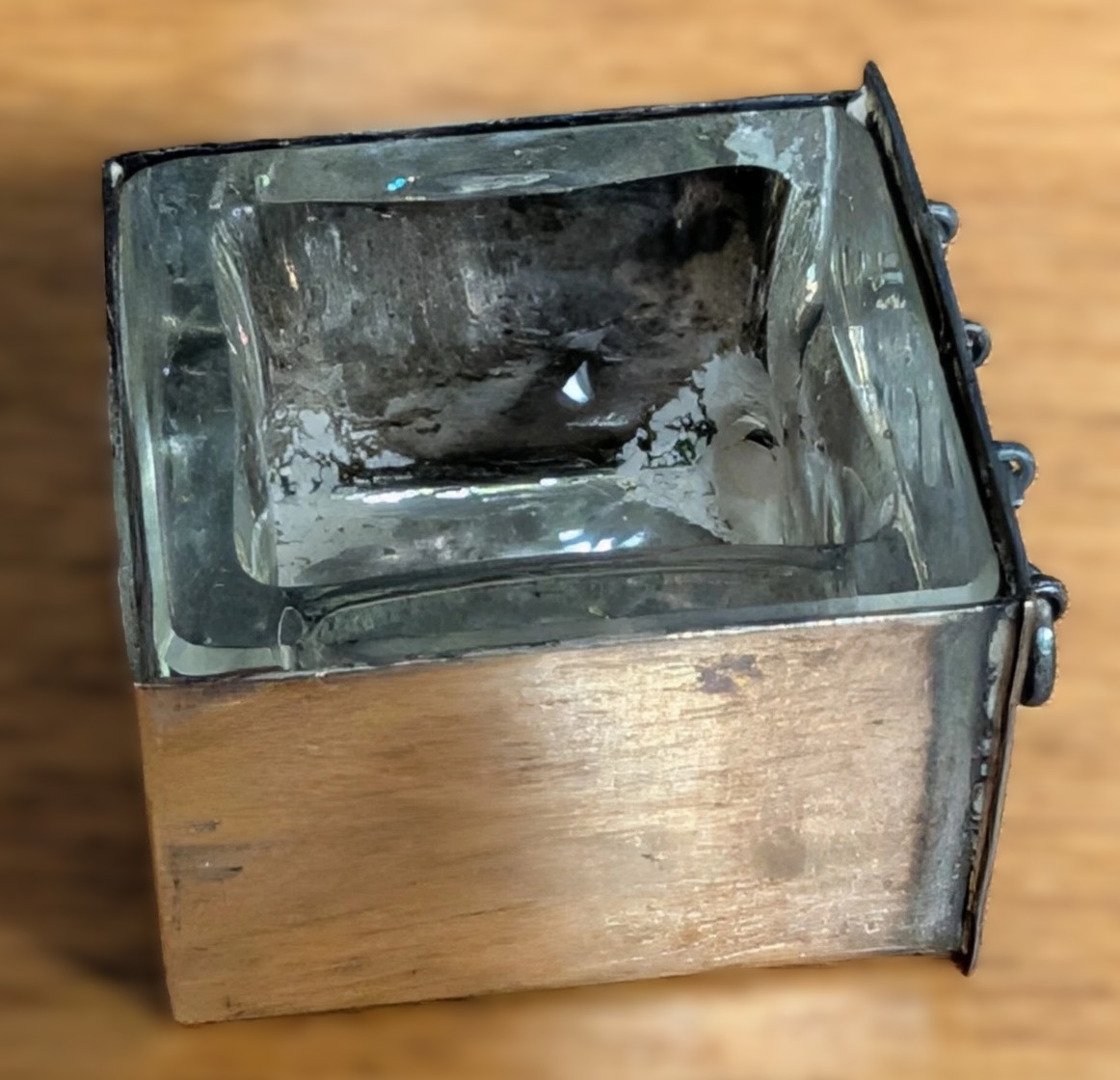
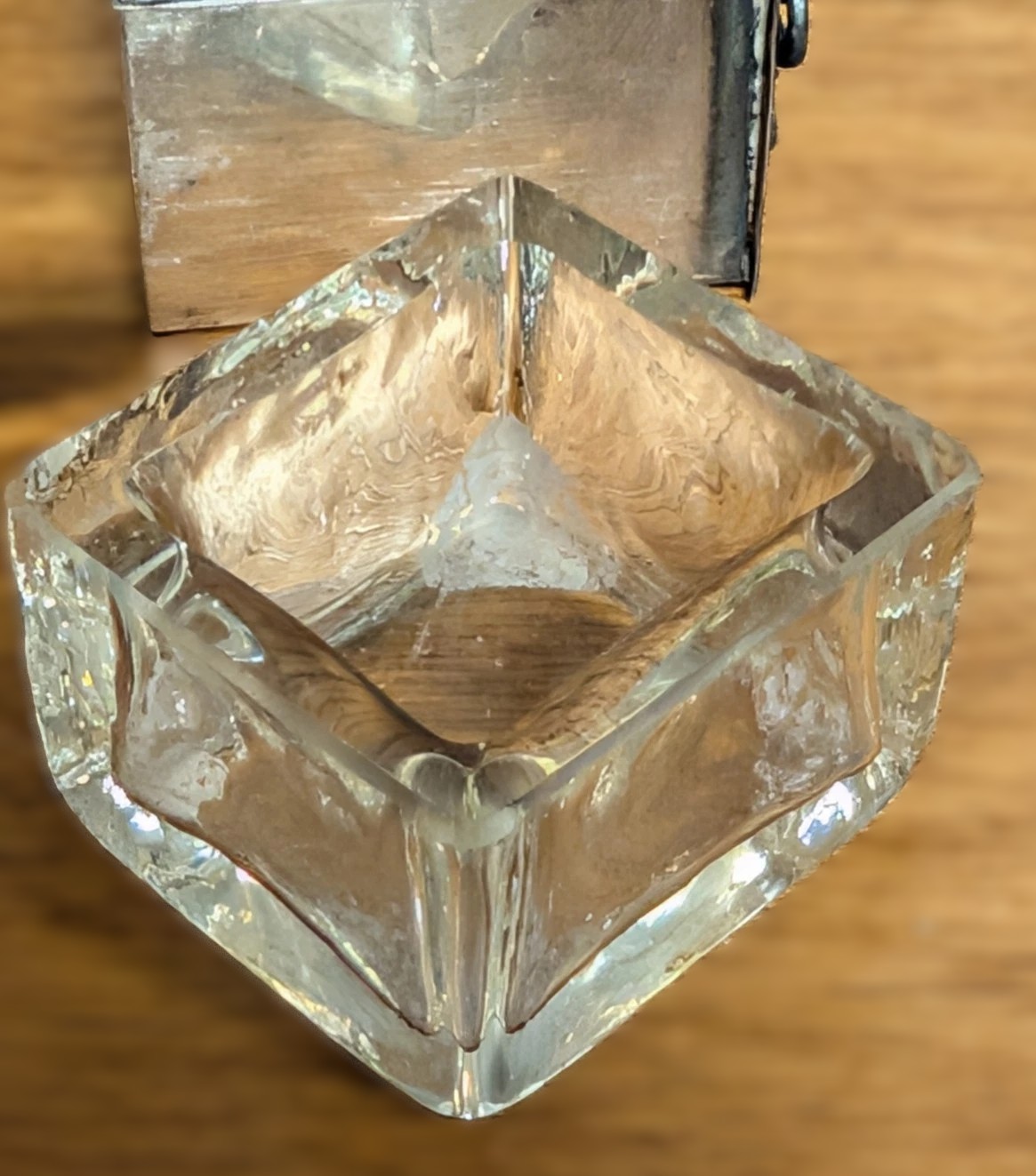
- The Inkwell: One side of the chest pulls out to house a heavy, square, original clear glass ink liner.
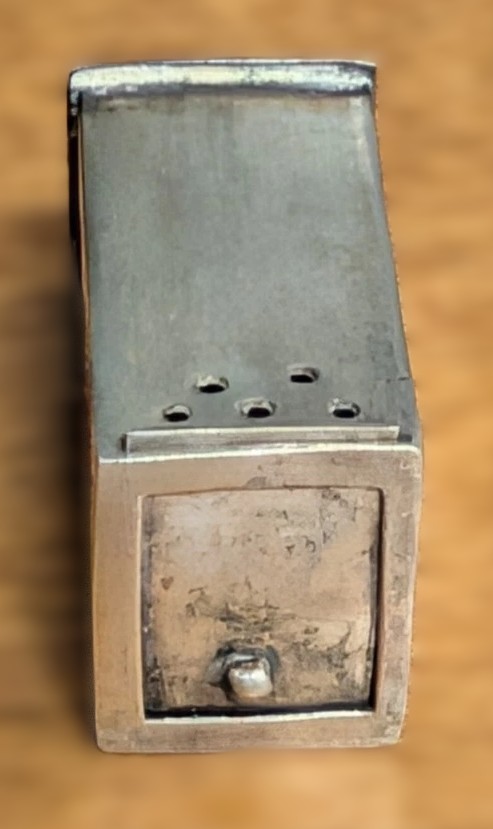
- The Sander / Pounce Pot: The other side functions as a sander (or pounce pot). The container with the five small holes on top was used to hold fine sand or powdered pounce (gum sandarac). Before blotting paper became widespread, a writer would sprinkle this powder over wet ink to dry it quickly and prevent smudging.
Period & Dating
- Style: Japonesque Aesthetic Movement / Early Shōwa Era style revival.
- Estimated Date: Circa 1890s to 1920s.
- Origin: The “STERLING” stamp indicates it was produced for the Western export market. Many of these intricate, miniature silver furniture novelty pieces were crafted in Japan during the late Meiji, Taishō, or early Shōwa periods specifically for export to European and American collectors who were enamored with Japanese style.
There are several telling clues built right into the craftsmanship and styling that point directly to Japanese manufacture during the late Meiji (1868–1912) or Taishō (1912–1926) periods:
- The Form Itself: The base is a precise miniature replica of a traditional Japanese haribako (a small sewing cabinet) or ko-tansu (a miniature chest of drawers), complete with the specific arrangement of small drawers alongside a taller vertical door or compartment.
- The “STERLING” Stamp: During this era, Japanese silversmiths produced intricate miniature furniture, tea sets, and novelties specifically for export to Europe and America. Rather than using traditional Japanese hallmarks (like the jungin pure silver mark), they stamped pieces meant for Western trade with the English word “STERLING” to guarantee its silver purity (.925) to foreign buyers.
- The Metalwork Techniques: The combination of the hand-engraved bamboo on the reverse and the fine faux boiserie (wood grain) texture chased onto the silver panels is characteristic of the masterful metal manipulations perfected by Japanese artisans during this golden age of export silver.
Sold for $158 in June 2026
Content disclaimer. The information posted is the owner’s best knowledge and may not have been vetted by the SOIC. We welcome comments, corrections, and additions, working to make our website information comprehensive and accurate.
Join the Society of Inkwell Collectors (SOIC) – it’s free!
Founded in 1981 as a non-profit organization,
we are documenting inkwells (and accessories).
We’re here to help and inform!