


Japanese Export Double Inkstand with Pen Wipe
| Categories | Far East / Oriental |
| Material | Bronze |
| Markings | Unmarked |
| Manufacturer | Undetermined |
| Origin | Japan |
| Date or Era | circa 1890 |
This is a fine, complete Japanese export inkstand, an unmistakable product of late 19th-century Japanese craftsmanship, combining traditional artistic mastery with a Western utilitarian format.
Description
- The Exterior Lid & Base
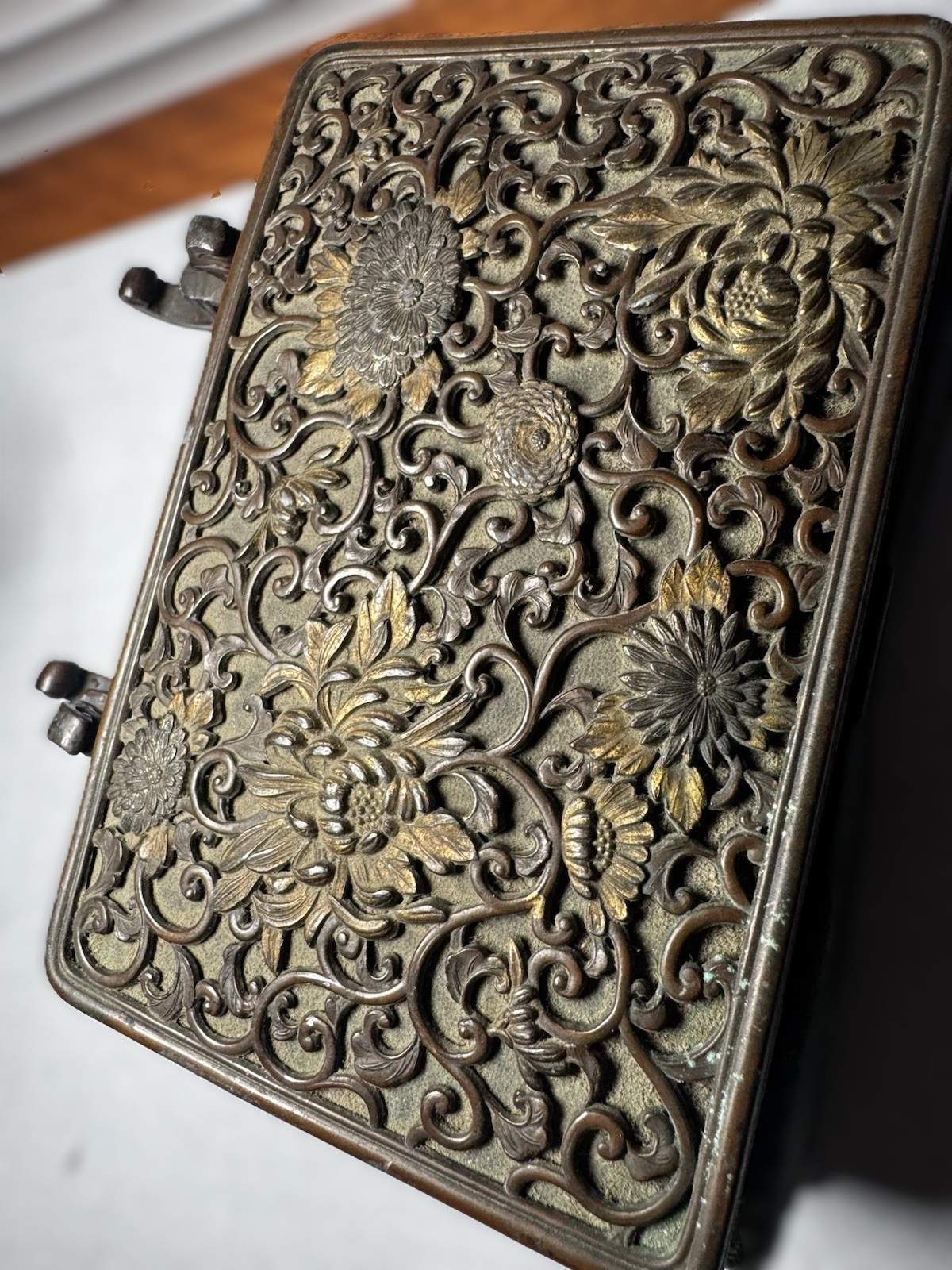
- The Lid: The outer lid features an intricate, pierced openwork (sukashibori) design of scrolling foliage and chrysanthemums (kiku-karakusa). The individual flower heads are highlighted with selective gold gilding. Chrysanthemums are deeply symbolic in Japan, representing longevity, rejuvenation, and the Imperial family.
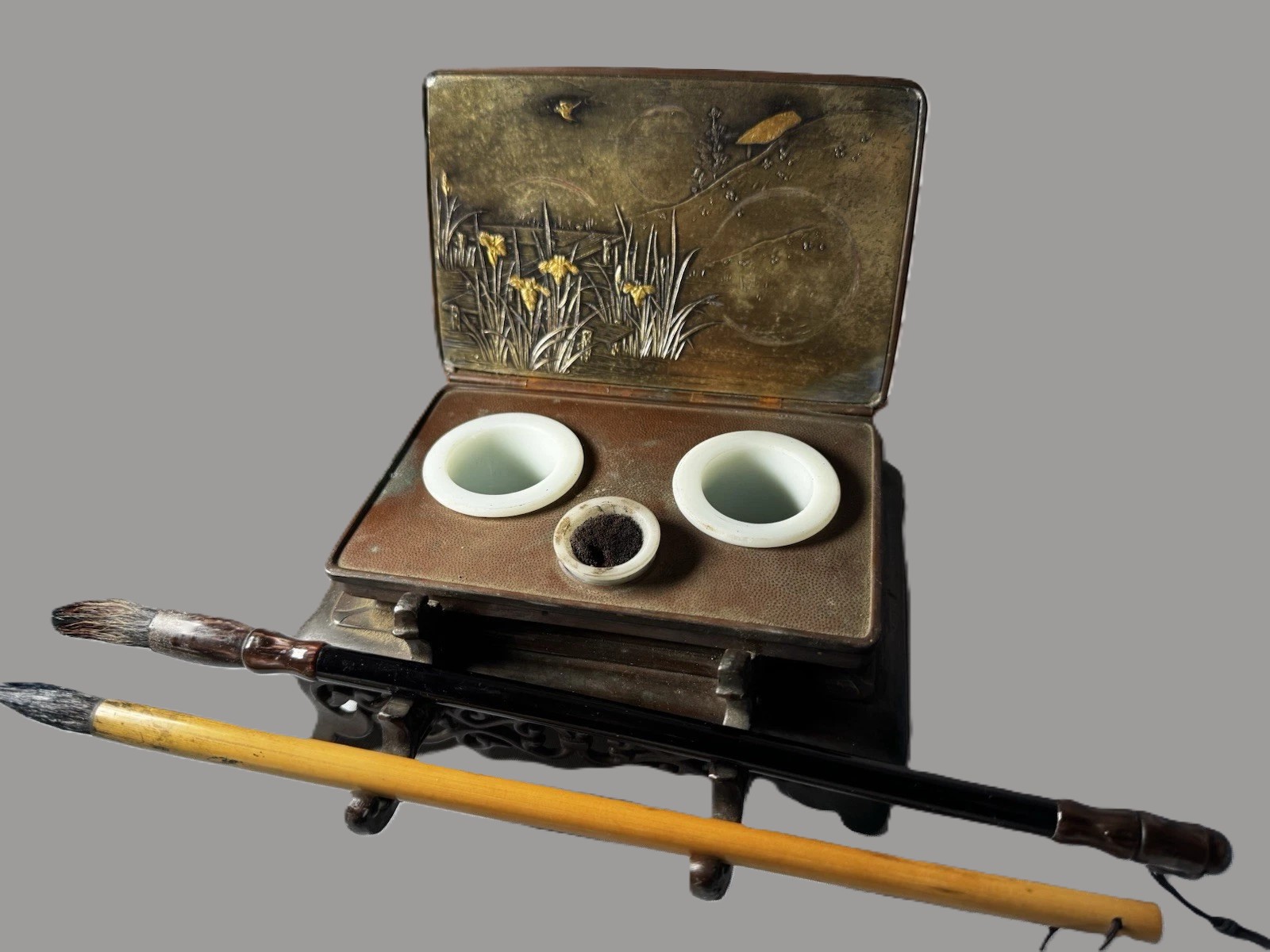
- The Base: The inkstand rests on an integrated, cast-bronze footed table or plinth with scrolled aprons. Extending from the front are two curved, bracket-shaped arms specifically designed to serve as a pen rest.
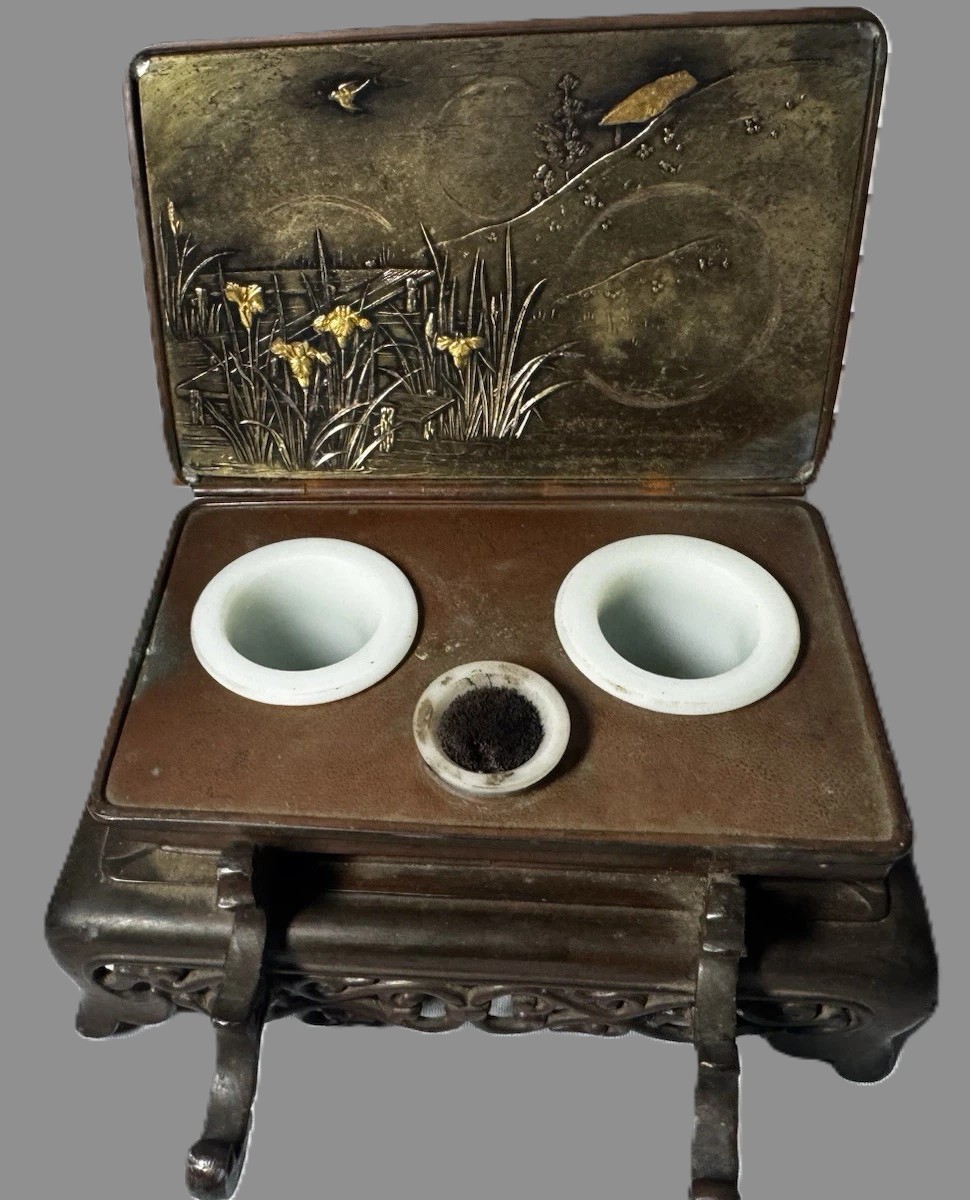
- The Interior Lid: The Yatsuhashi Motif
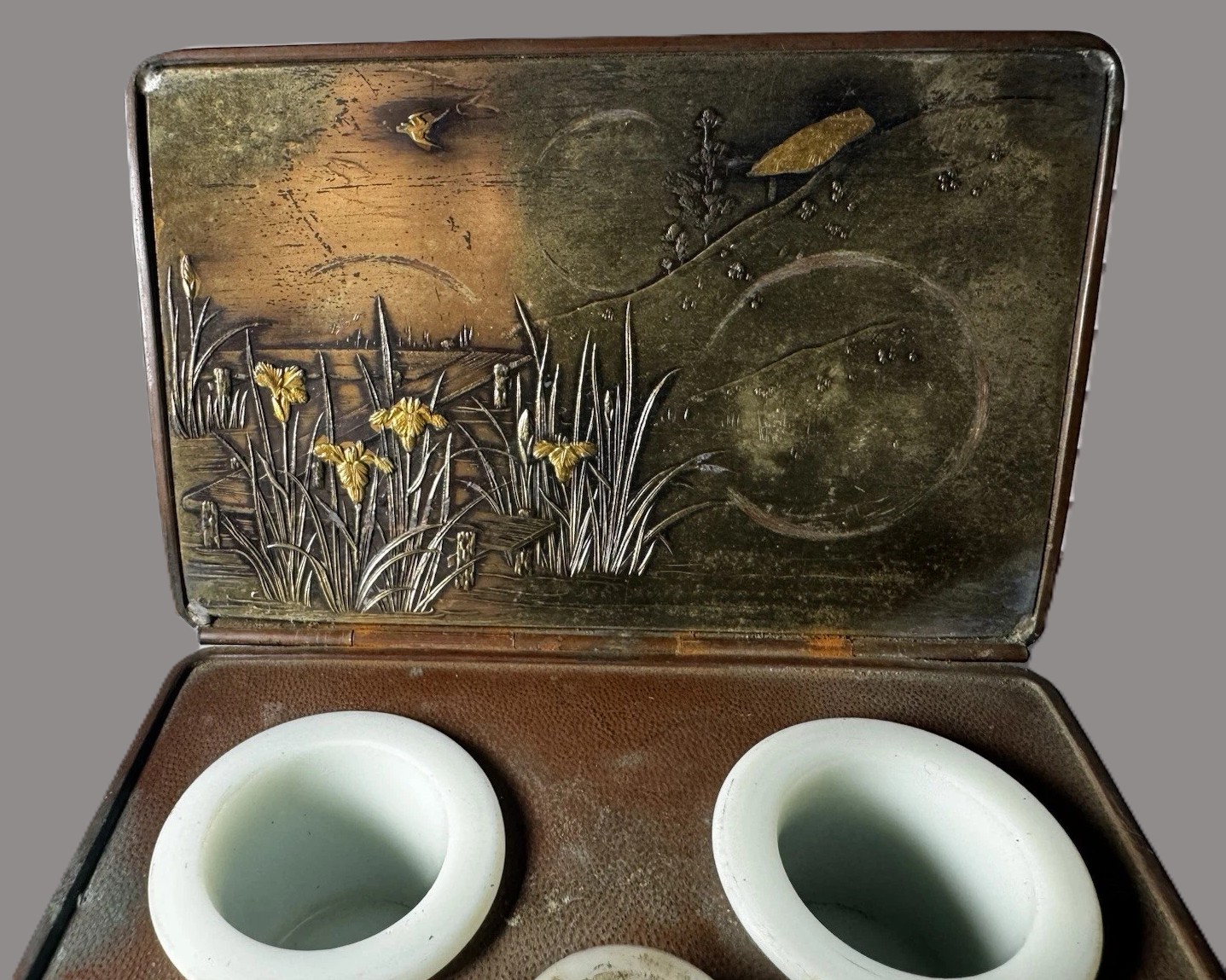
When opened, the interior lid reveals a mixed-metal relief panel (iro-e takazogan) utilizing bronze, copper, silver, and gold highlights. This scene is a famous depiction of Yatsuhashi (the Eight-Plank Zig-Zag Bridge) winding through a marsh of blooming irises (kakitsubata).
- The Literary Connection: This specific landscape is a direct allusion to Chapter 9 of the 10th-century classic The Tales of Ise (Ise Monogatari), where a traveling poet stops at a multi-plank bridge and writes a famous acrostic love poem about the irises. It was popularized globally by the Rinpa school artists (like Ogata Kōrin) and remains one of Japan’s most celebrated artistic themes.
- Background Details: The scene is framed by a stylized crescent moon, a bird in flight, and a distant thatched-roof cottage nestled against a rolling hillside.
- The Interior Desk Layout
- Inkwells: The interior housing features two opaque white milk glass liners. Double inkwells were standard for Western writing desks of the period, typically used to hold two different colors of ink (such as black and red) or ink and a drying agent.
- Pen Wipe: Nestled between the inkwells is a smaller, central circular well containing its original, tightly packed natural bristle pen wipe (likely hog bristle or horsehair), used to clean the metal nibs of dip pens or excess ink from brushes.
- The Ground: The wells are set into a dark, stippled or textured metal plate designed to mimic the grain of fine leather or nanako (fish-roe) metal patterning.
Where and When Was It Made?
- Origin: Japan (specifically manufactured for the Western export market, likely in an artistic hub like Tokyo, Kyoto, or Yokohama).
- Date: Late Meiji Period (Circa 1880–1905).
Why is it Unmarked?
During the Meiji Era (1868–1912), the collapse of the feudal samurai system left Japan’s elite metalworkers—who had spent generations crafting intricate sword fittings (tsuba, menuki)—suddenly unemployed. To survive, these master craftsmen pivoted to creating luxury decorative objects and desk sets for European and American consumers who were swept up in the global craze for Japonisme.
Many of these items were produced rapidly by specialized workshops for export trading companies. Because they were destined for department stores and high-end import boutiques overseas, they were frequently left without a chiseled metal signature, or they were originally sent out with paper or foil labels on the base that washed away over a century ago.
This piece is a magnificent crossover object—retaining elite Japanese metalworking techniques while beautifully serving the needs of a turn-of-the-century Western writing desk.
Sold for $225 in April 2026
Content disclaimer. The information posted is the owner’s best knowledge and may not have been vetted by the SOIC. We welcome comments, corrections, and additions, working to make our website information comprehensive and accurate.
Join the Society of Inkwell Collectors (SOIC) – it’s free!
Founded in 1981 as a non-profit organization,
we are documenting inkwells (and accessories).
We’re here to help and inform!