

Japanese Cloisonné Desk Set
| Categories | Enameled Metal, Far East / Oriental |
| Type | Cloisonné |
| Material | Enameled Brass/Bronze/Metal |
| Markings | Unmarked |
| Manufacturer | Undetermined |
| Origin | Japan |
| Date or Era | circa 1900 |
| Measuring | 5 ½” across |
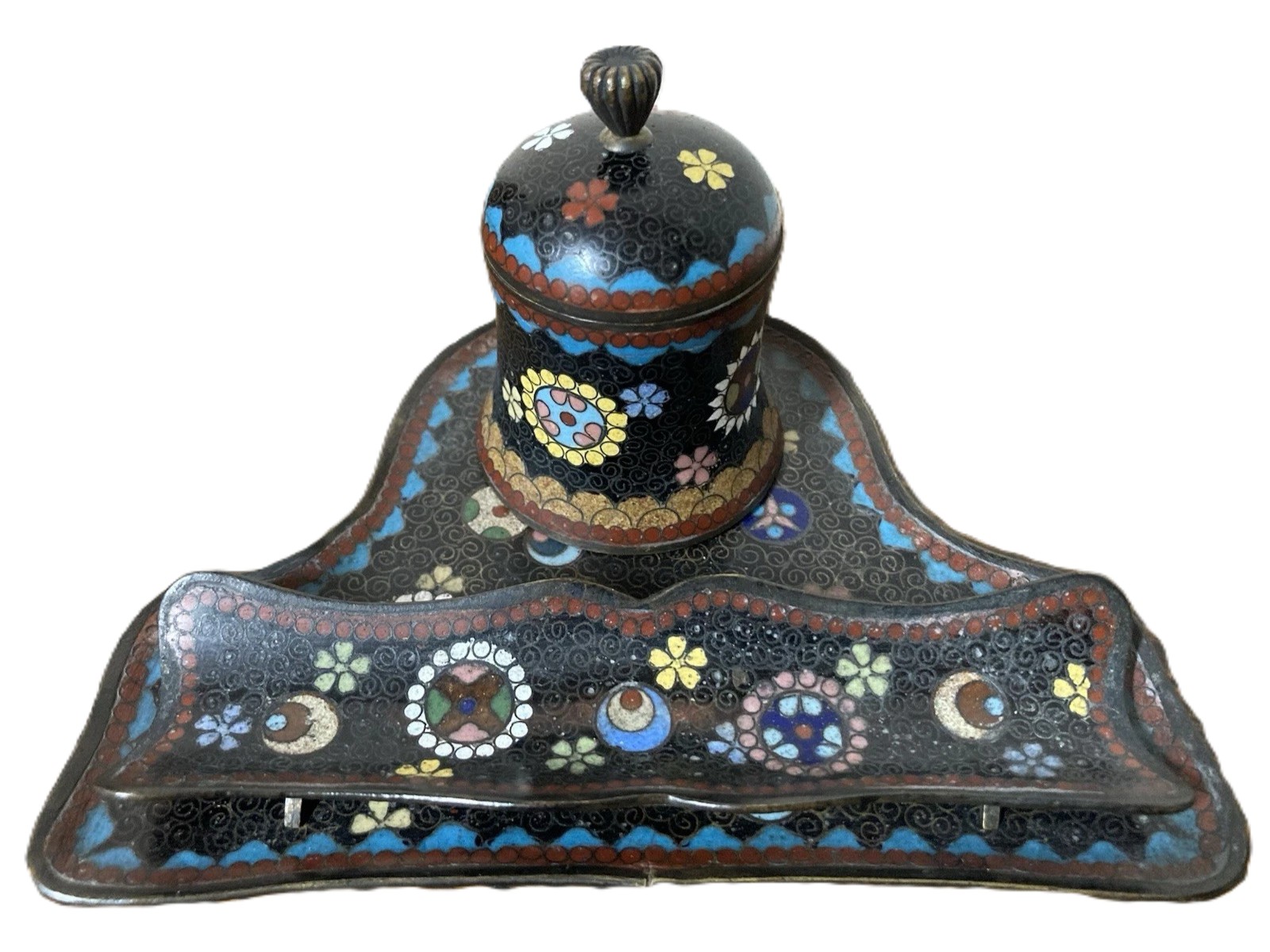
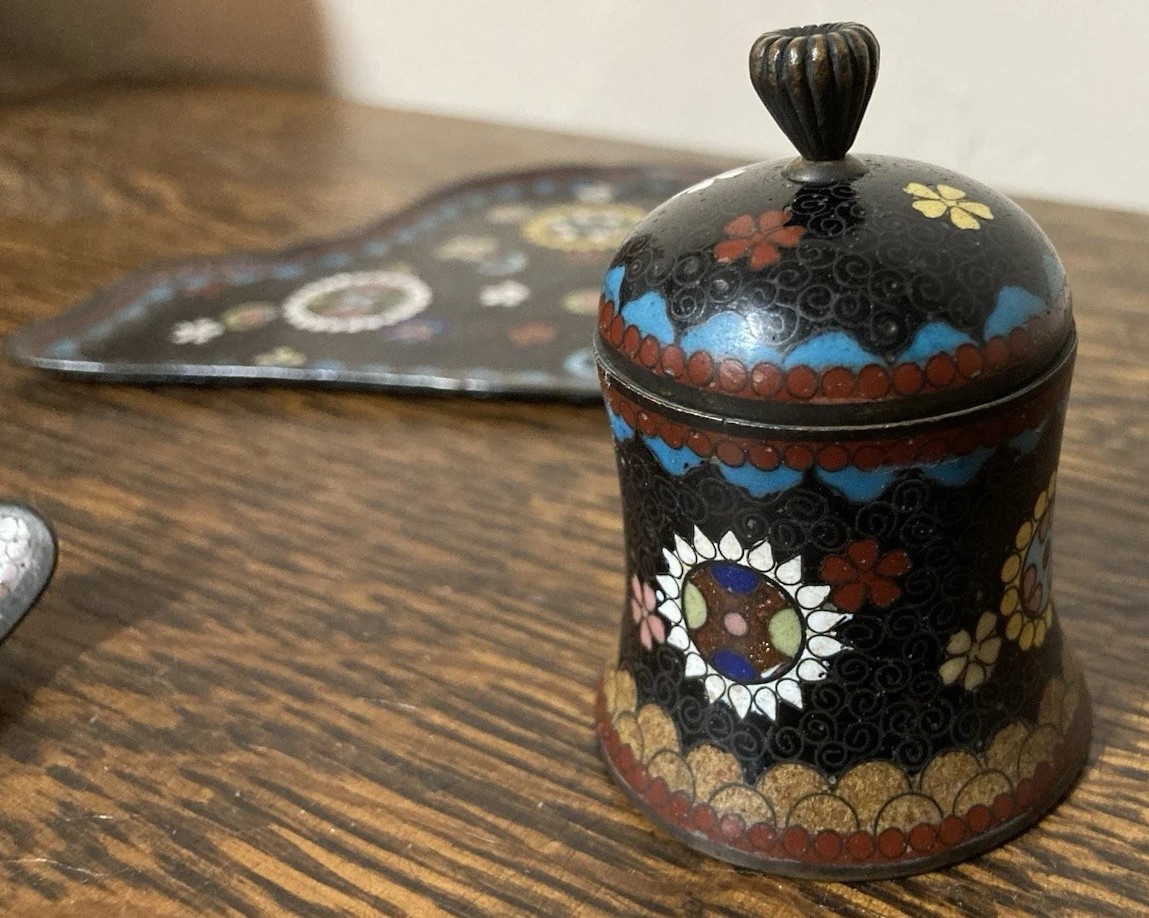
This is a nice example of a Japanese Cloisonné (Shippo) desk set. The craftsmanship, motifs, and technical details are hallmarks of Japanese enamelwork.
Origin and Age
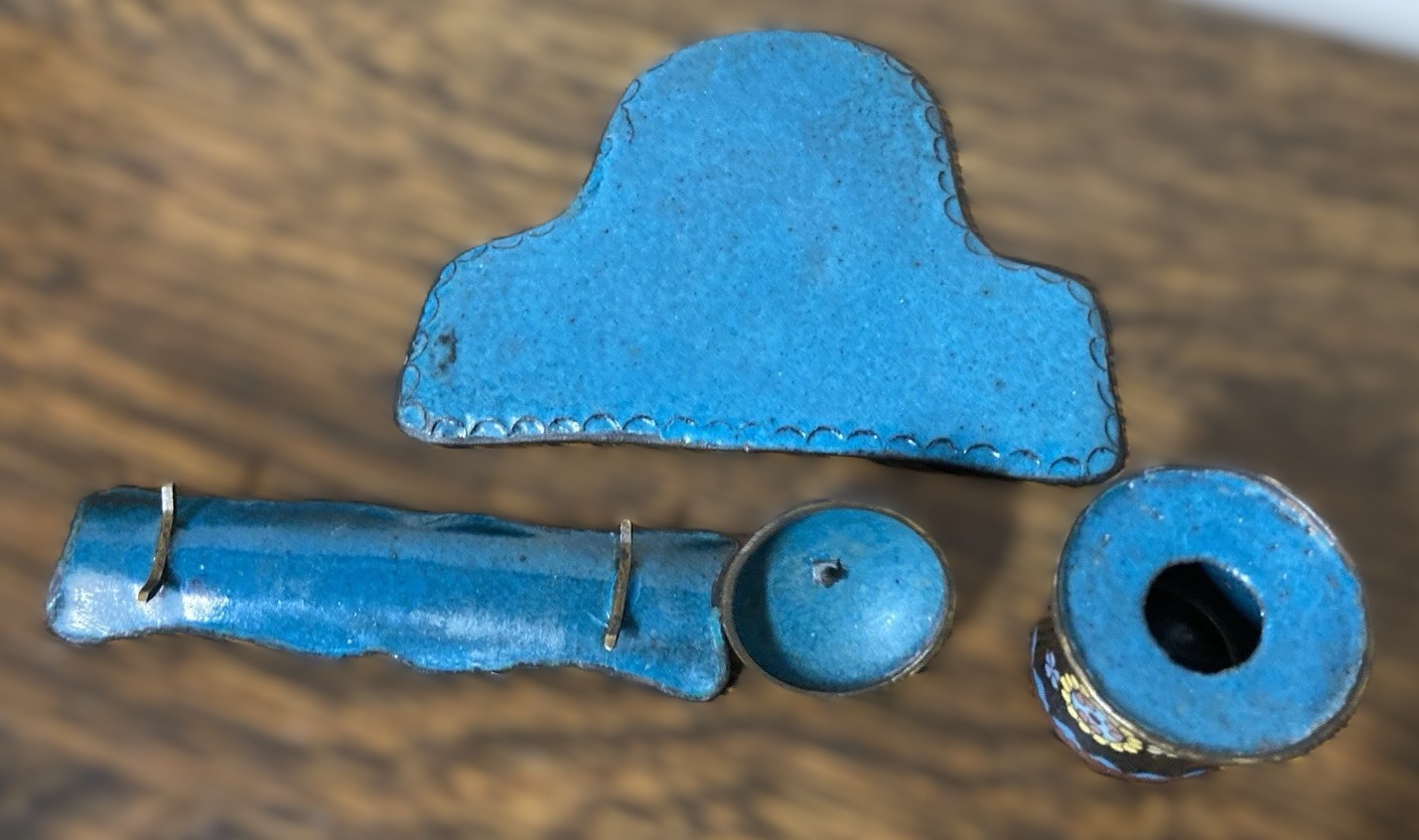
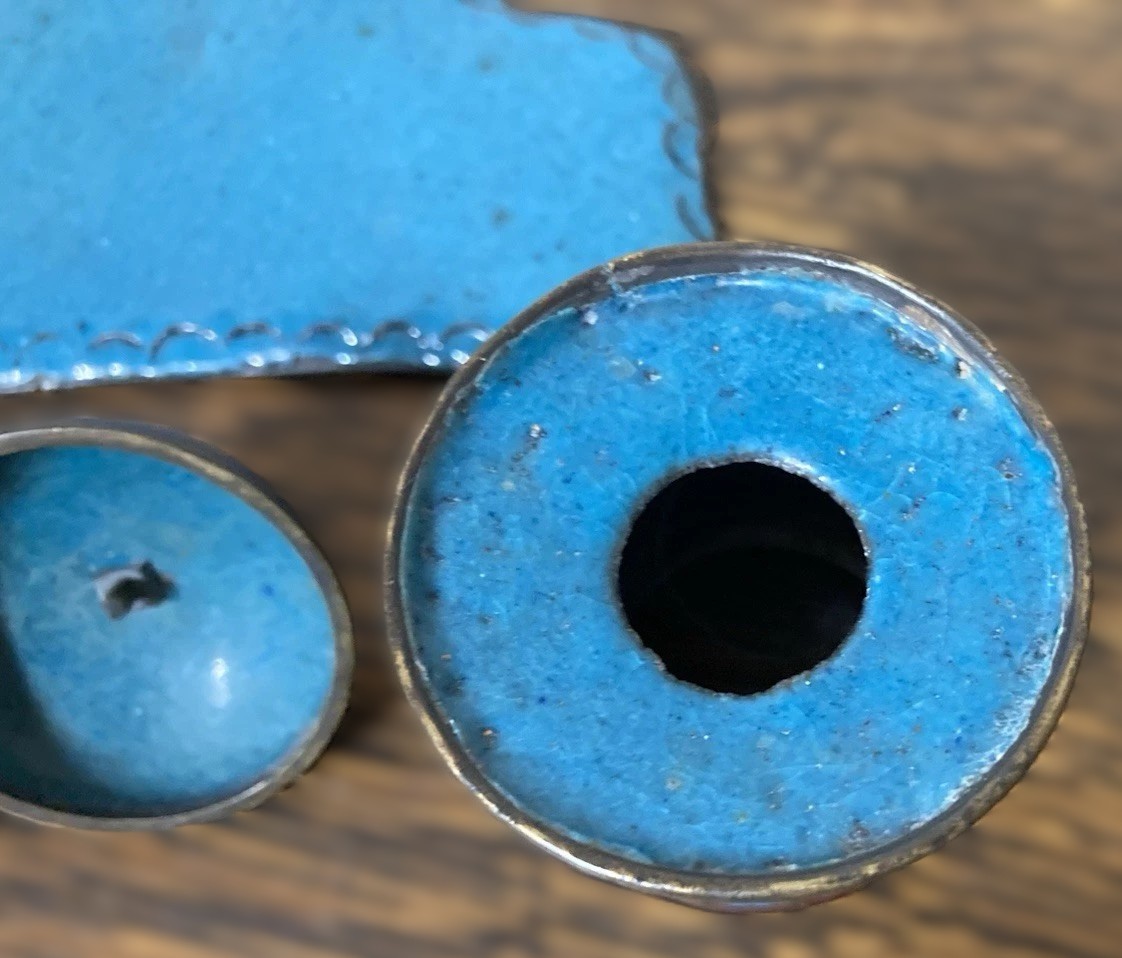
- Origin: Japan. Specifically, this style is known as Shippo-yaki. The use of the “karakusa” (scrolled vine) wirework in the background and the vibrant turquoise-blue counter-enamel on the undersides are definitive Japanese characteristics.
- Age: This set likely dates to the late Meiji Period (approx. 1890–1912). This was the “Golden Age” of Japanese cloisonné when pieces were produced both for domestic use and as high-quality exports for the Western market.
Construction and Technique
The set was created using the Cloisonné technique, which involves several meticulous steps:
- The Base: The shapes were first hand-formed from thin sheets of copper or brass.
- The “Cloisons”: Tiny, flat brass wires were bent into intricate patterns and soldered or glued to the metal base. These wires form the “cells” (cloisons) that hold the color.
- The Scrollwork: The dense, circular “cloud” or “scroll” patterns in the black background are formed by hundreds of tiny wire filigrees, a feature often seen in Japanese pieces to add texture and depth.
- Enameling: Artisans filled each cell with a paste of ground glass and metallic oxides for color.
- Firing and Polishing: The piece was fired in a kiln, causing the glass to melt. Because the enamel shrinks when heated, the process of filling and firing was repeated multiple times until the enamel was level with the wires. Finally, the surface was ground and polished with stones of increasing fineness until it was perfectly smooth.
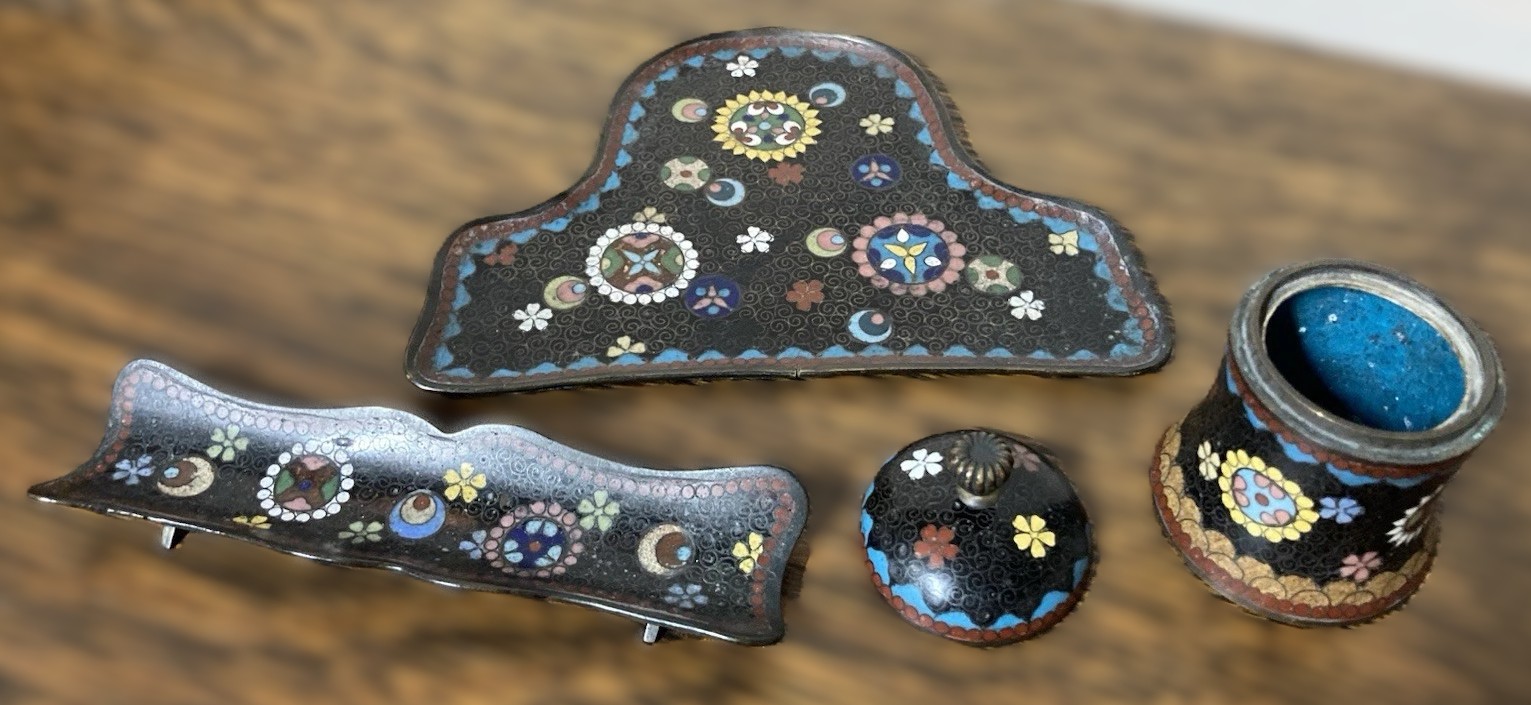
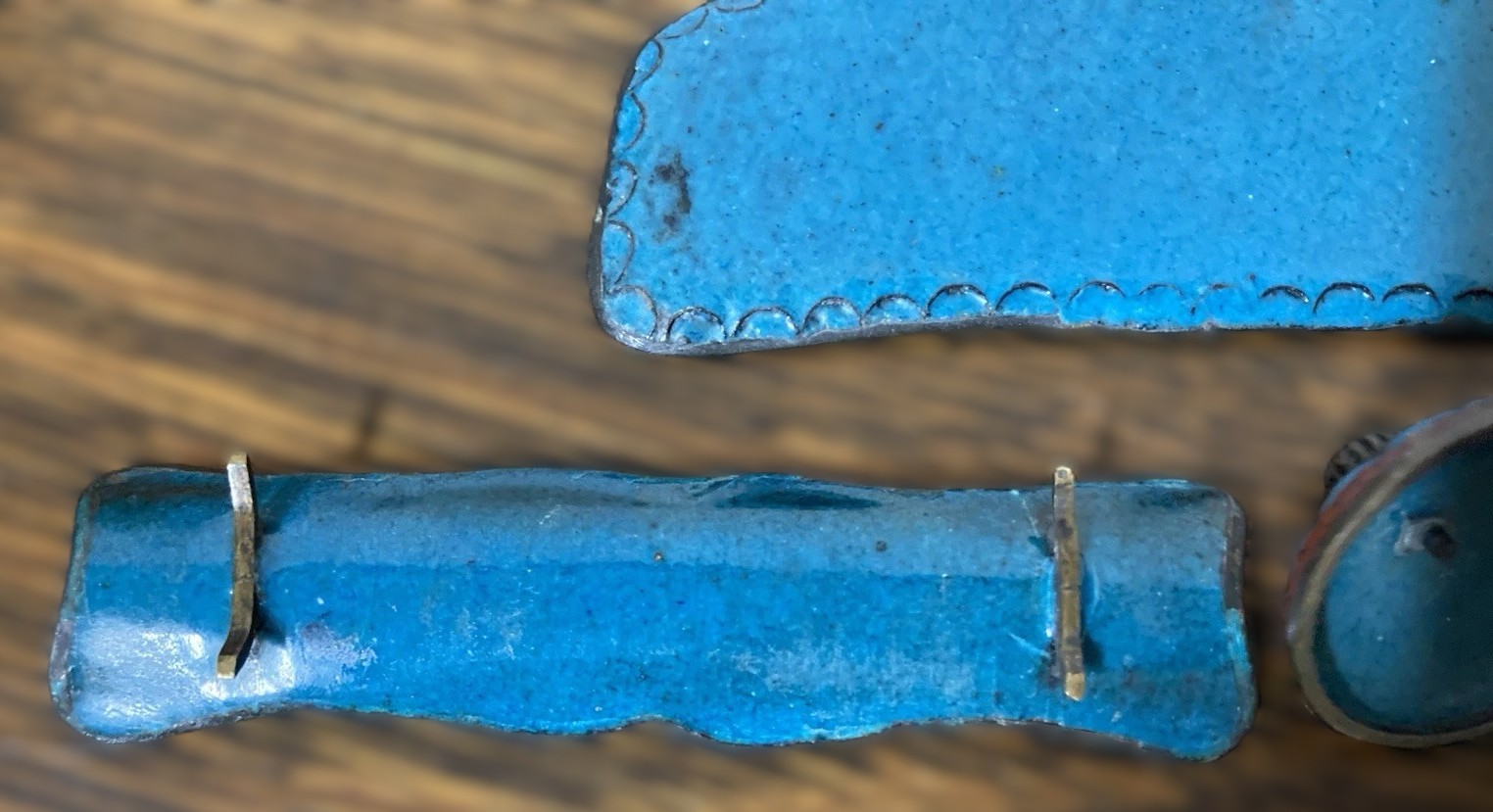
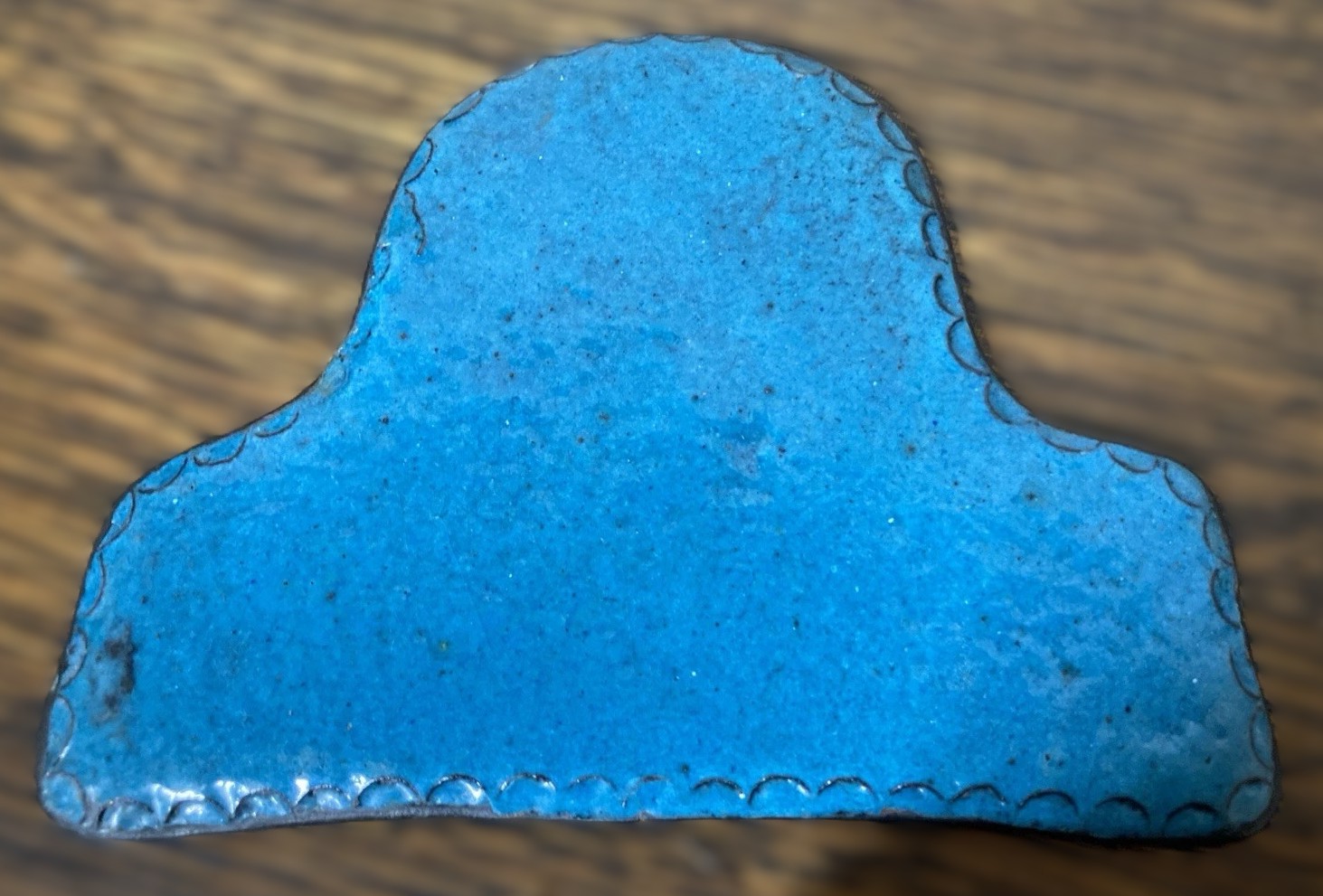
- Counter-Enameling: The bright turquoise enamel on the underside is “counter-enamel.” It is applied to the interior to balance the tension of the glass on the outside, preventing the thin metal from warping or cracking during the high-heat firing process.
Description
Components
- The Inkwell: A cylindrical reservoir with a slightly flared foot. It features a lift-off lid topped with a ribbed brass finial.
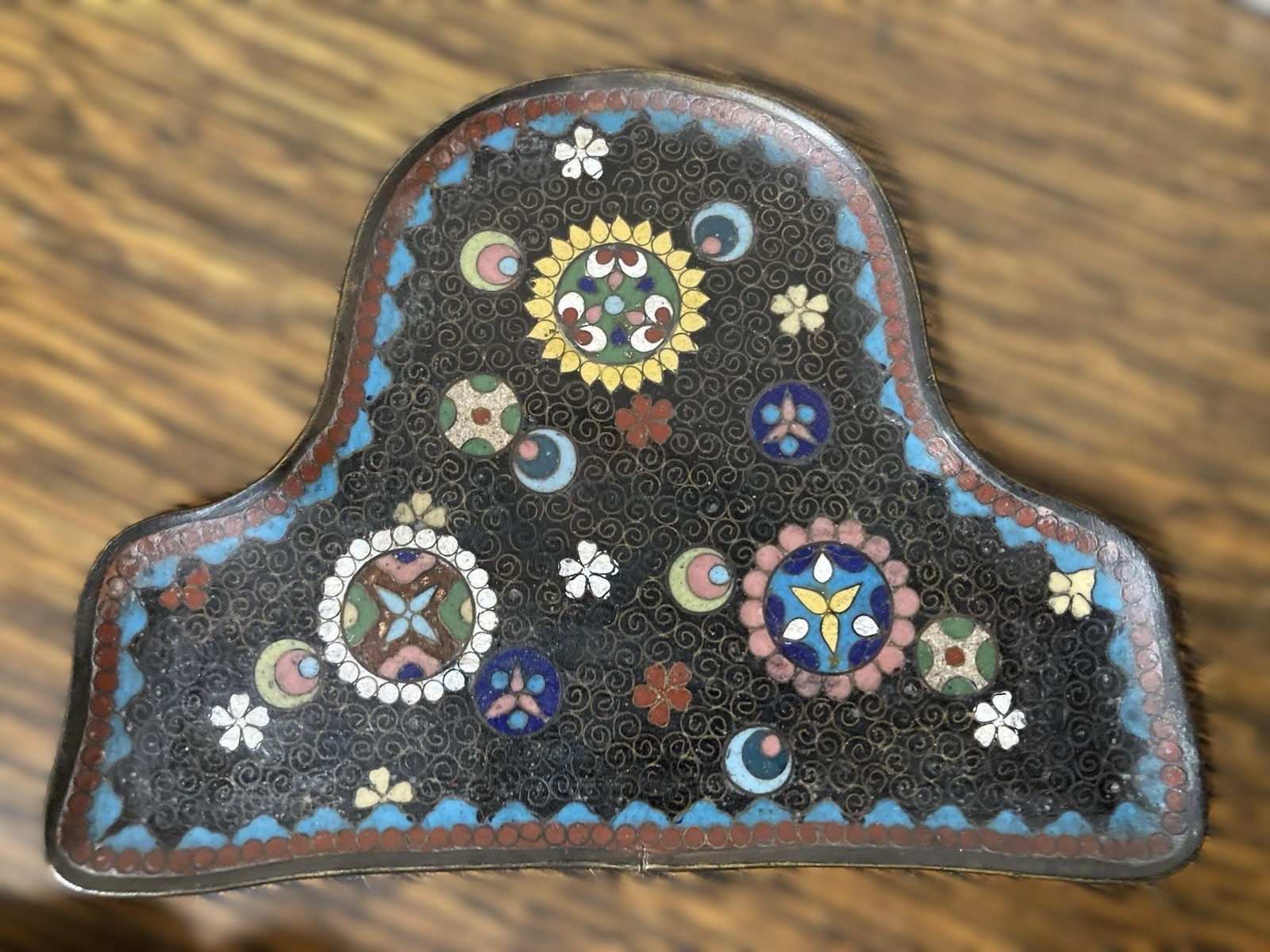
- The Base (Tray): A shaped, trilobed tray designed to hold the inkwell.
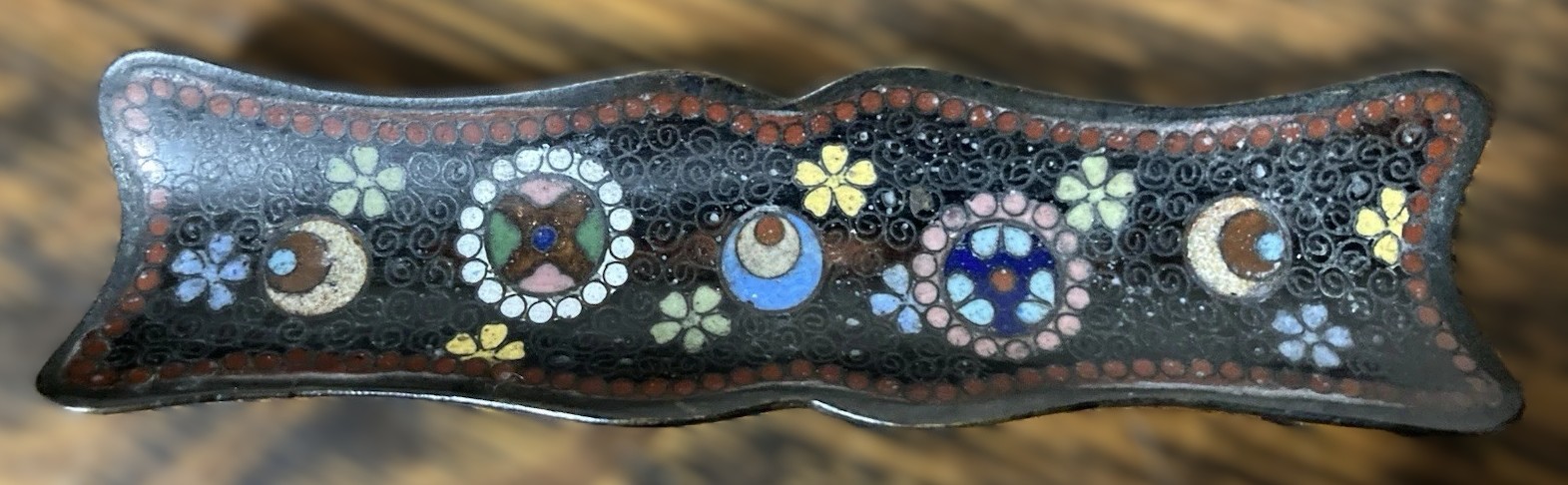
- The Pen Holder: A long, curved gutter-style tray for resting a dip pen. It sits on two small brass “feet” or rails to keep it stable.
Decorative Motifs
- Color Palette: A classic Meiji-era palette of deep “crow-black” ground with accents of cerulean blue, iron red, canary yellow, and soft pink.
- Imagery: The set is decorated with a “scattered” pattern of:
- Five-Petaled Blossoms: Representing plum or cherry blossoms (Sakura).
- Geometric Medallions: Stylized floral rosettes or “crests” (mon).
- Crescent Moons: A charming and somewhat less common celestial motif in these sets.
- Borders: The edges feature a scalloped or “cog” border of alternating red and blue enamel, which neatly frames the intricate central designs.
The set is in good condition, especially given that the “cold” blue enamel on the interior is still vibrant and the wires show little pitting or oxidation.
Sold for $250 in March 2026
Content disclaimer. The information posted is the owner’s best knowledge and may not have been vetted by the SOIC. We welcome comments, corrections, and additions, working to make our website information comprehensive and accurate.
Join the Society of Inkwell Collectors (SOIC) – it’s free!
Founded in 1981 as a non-profit organization,
we are documenting inkwells (and accessories).
We’re here to help and inform!