
Japanese Baseball Inkstand
| Categories | Sports |
| Type | Baseball |
| Material | Antimony |
| Markings | Unmarked |
| Manufacturer | Undetermined |
| Origin | Japan |
| Date or Era | circa 1935 |
| Measuring | 6” x 5 ½” x 4 ½” high |
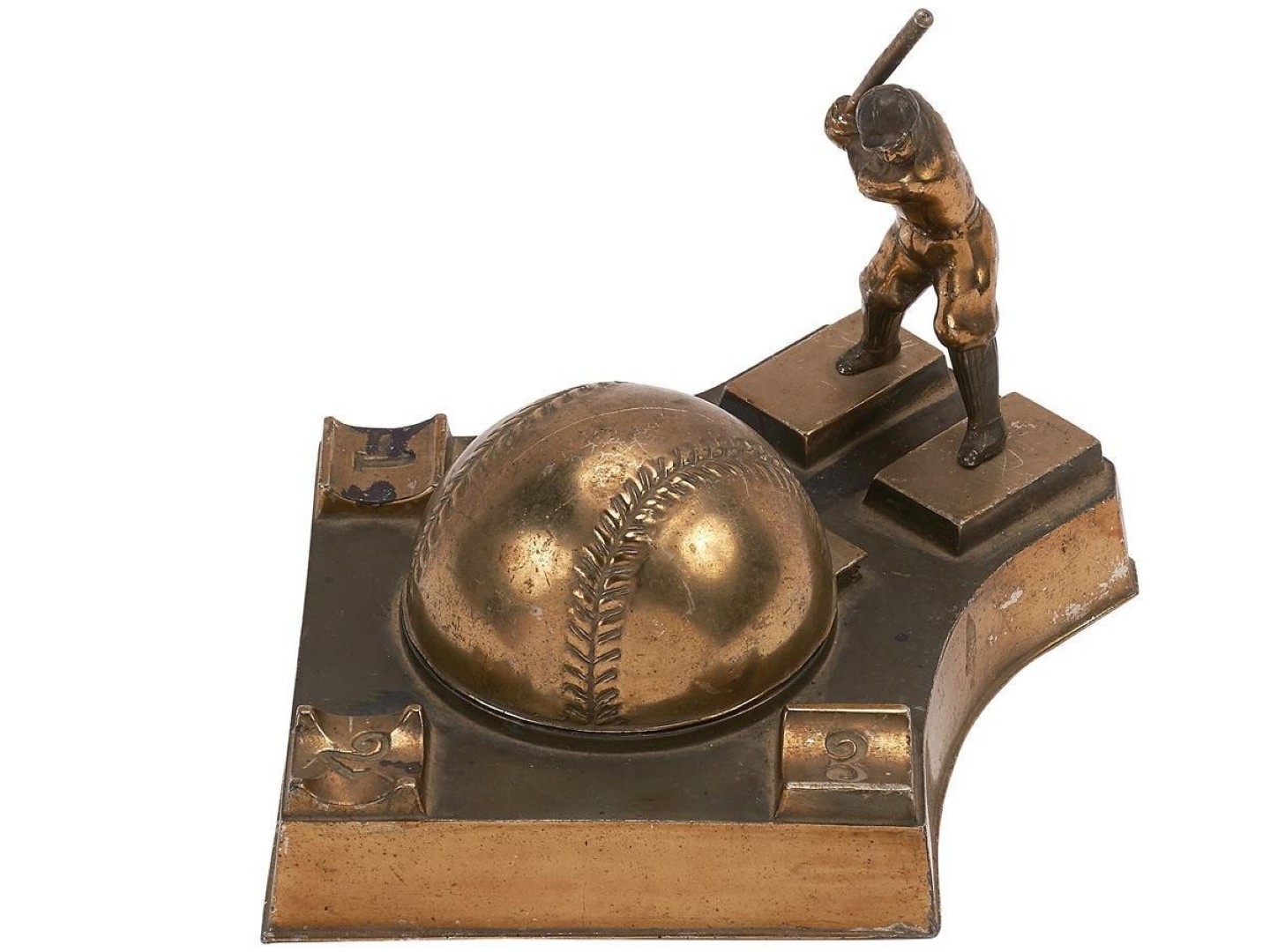
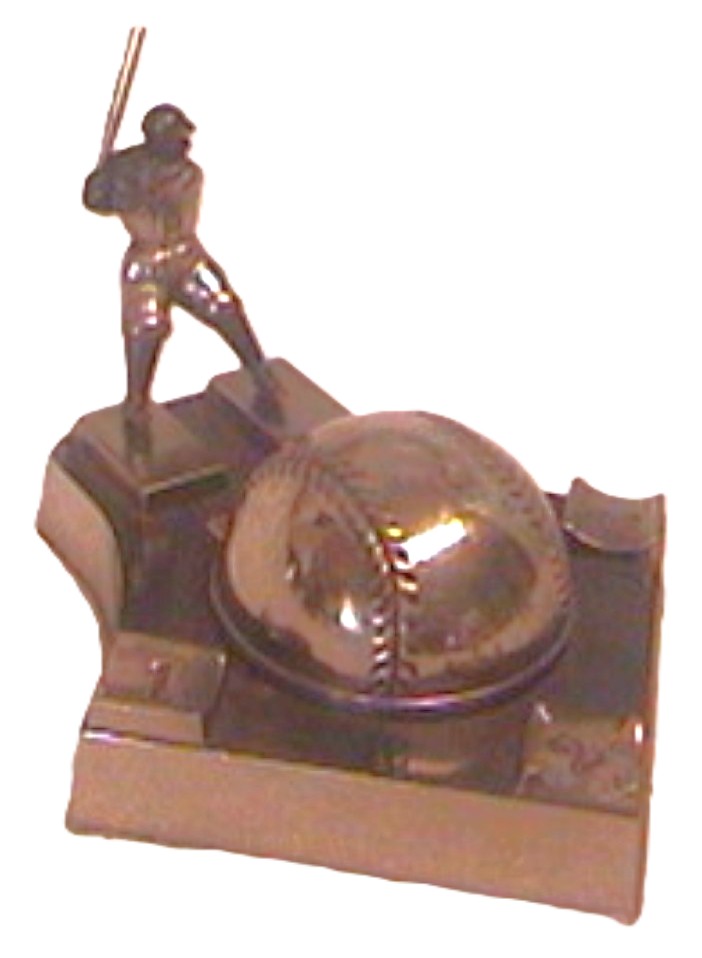
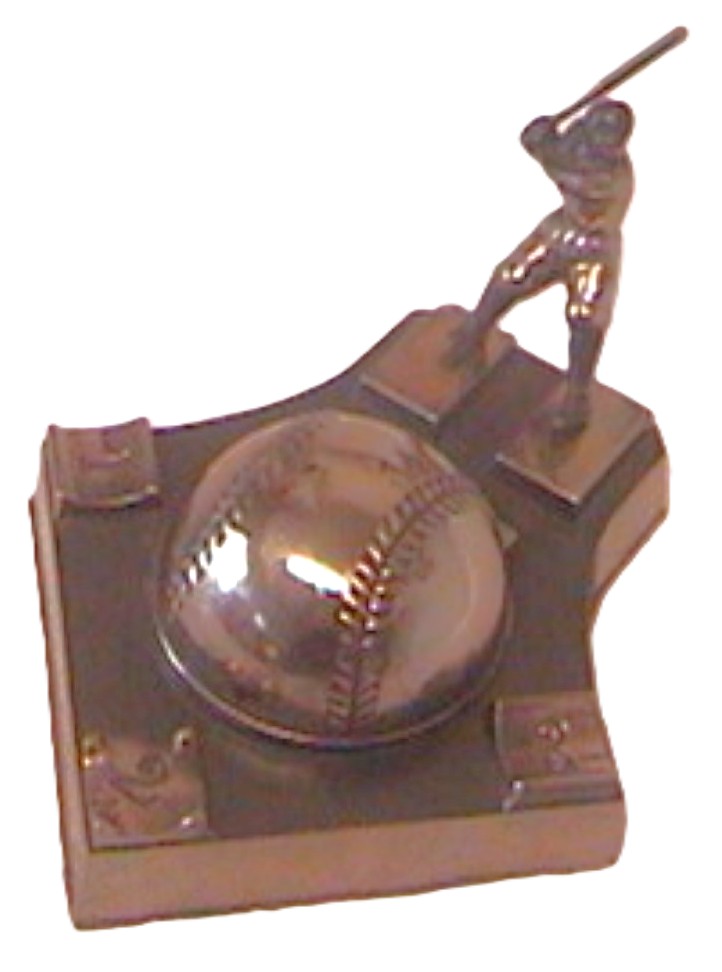
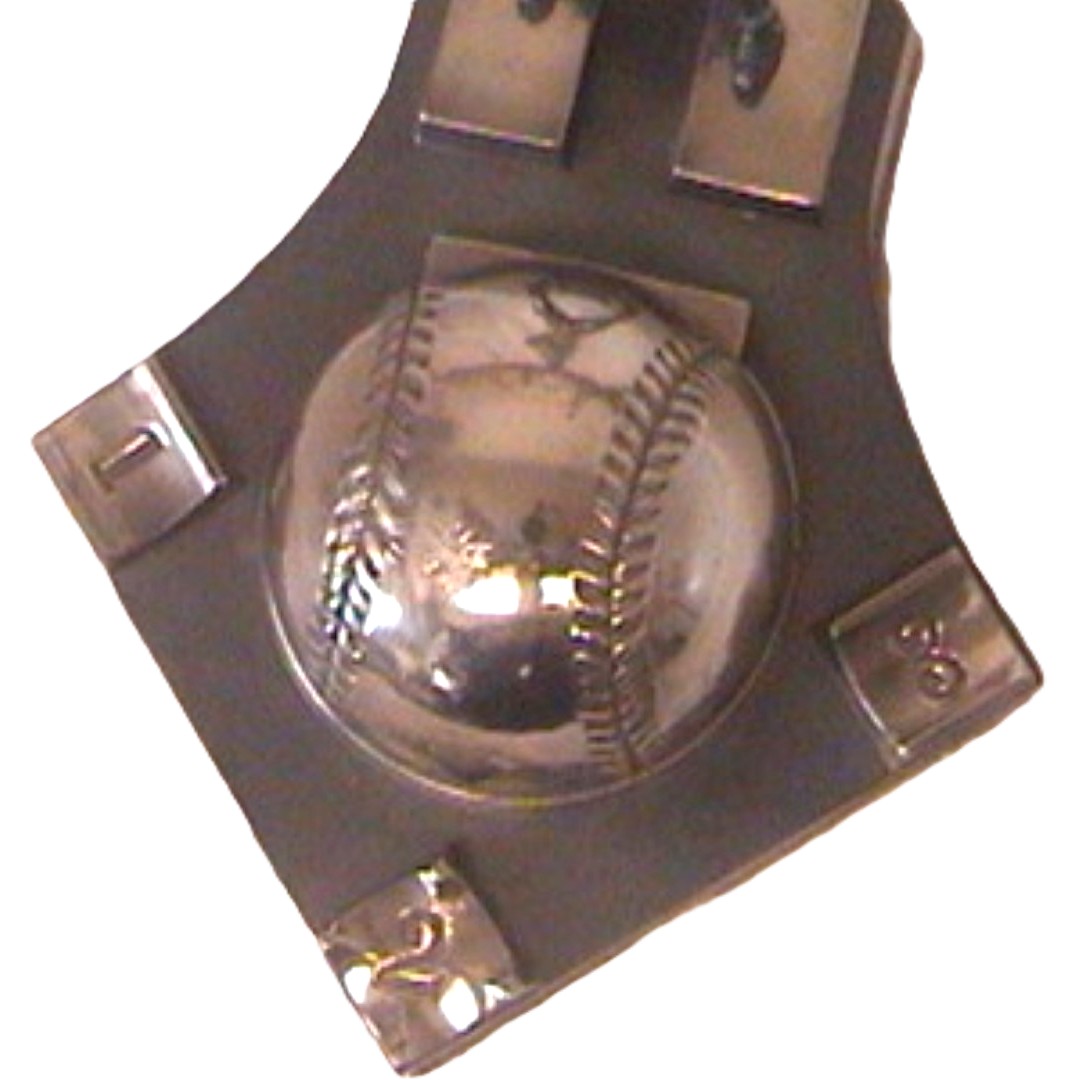
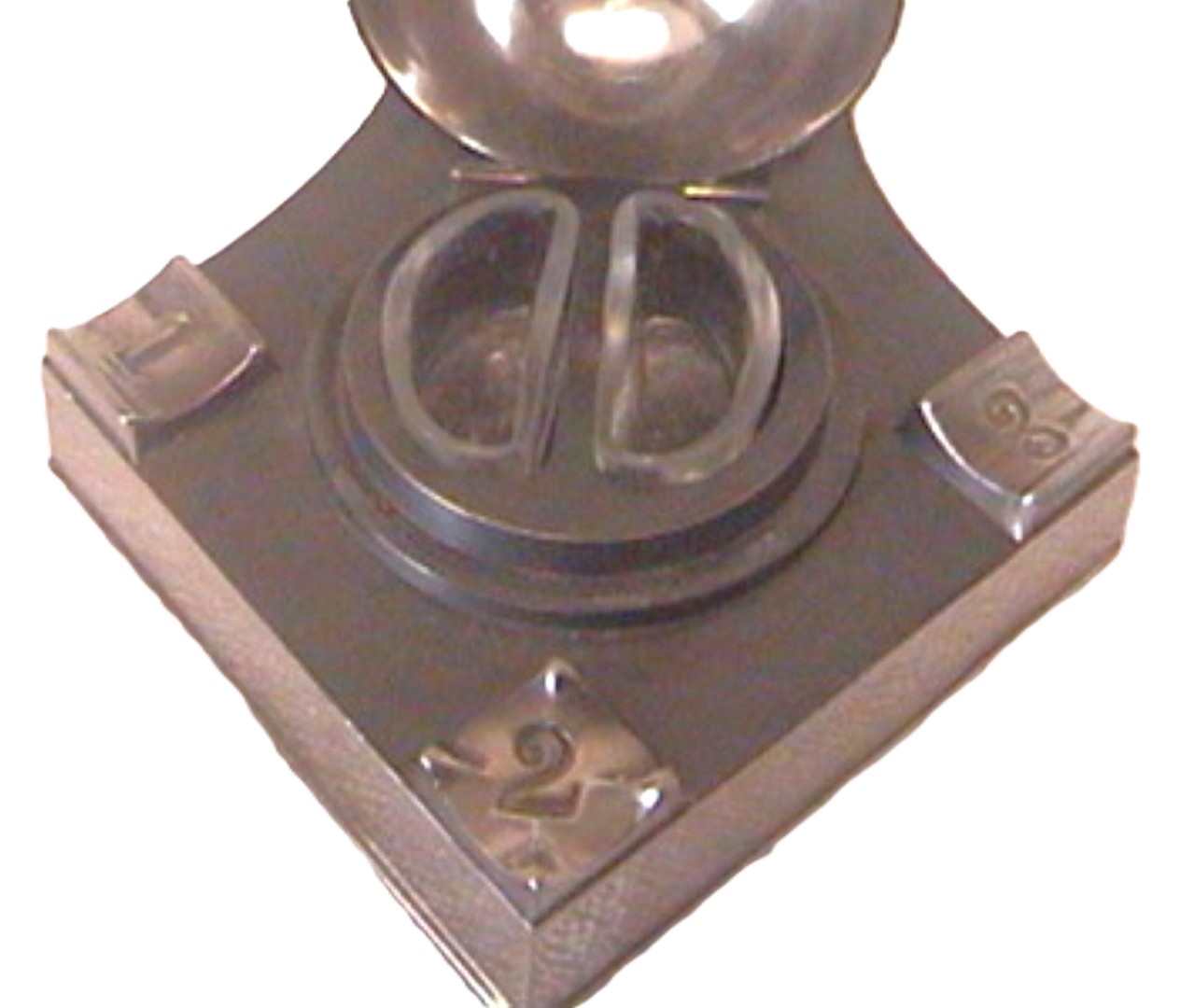
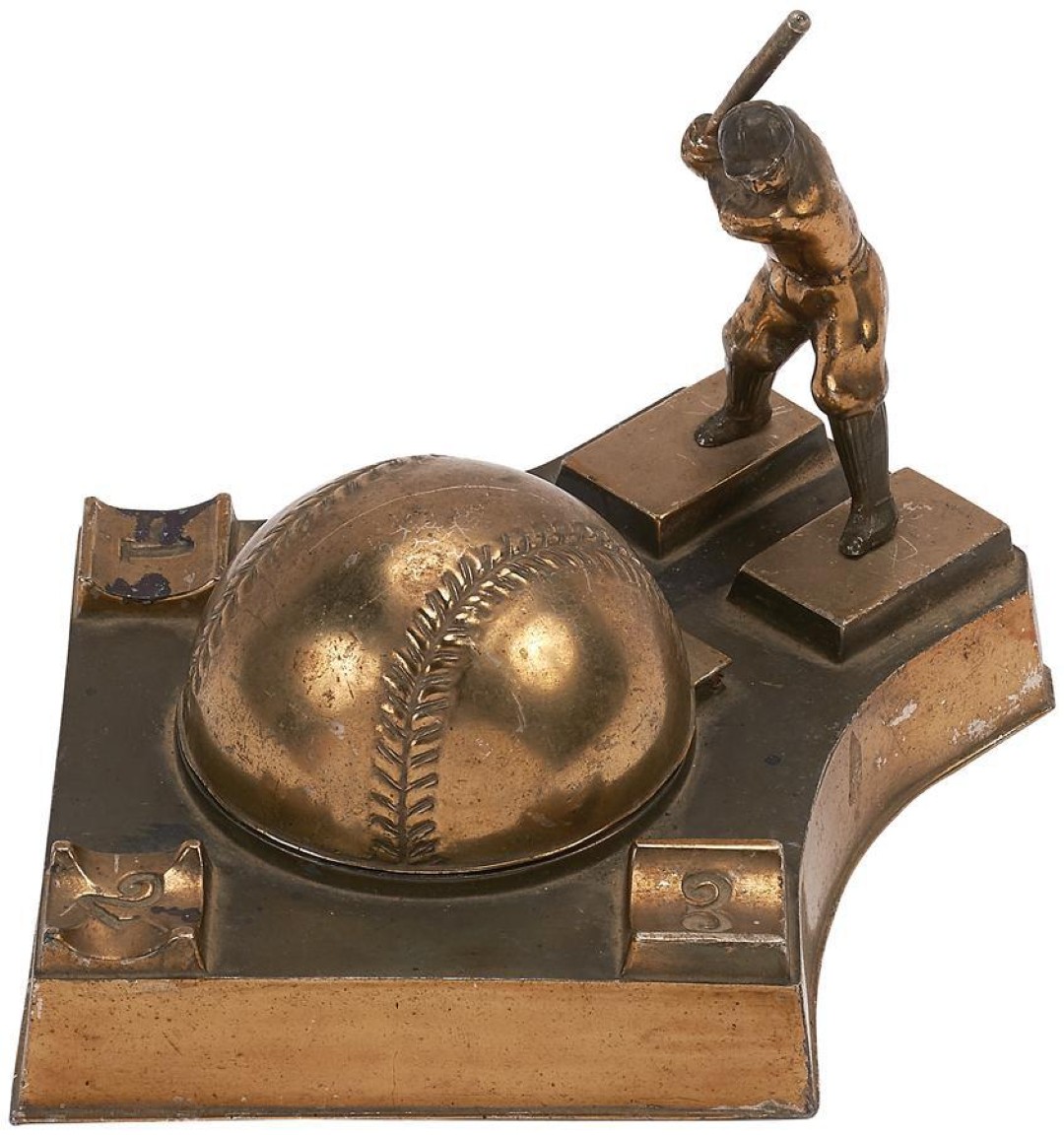
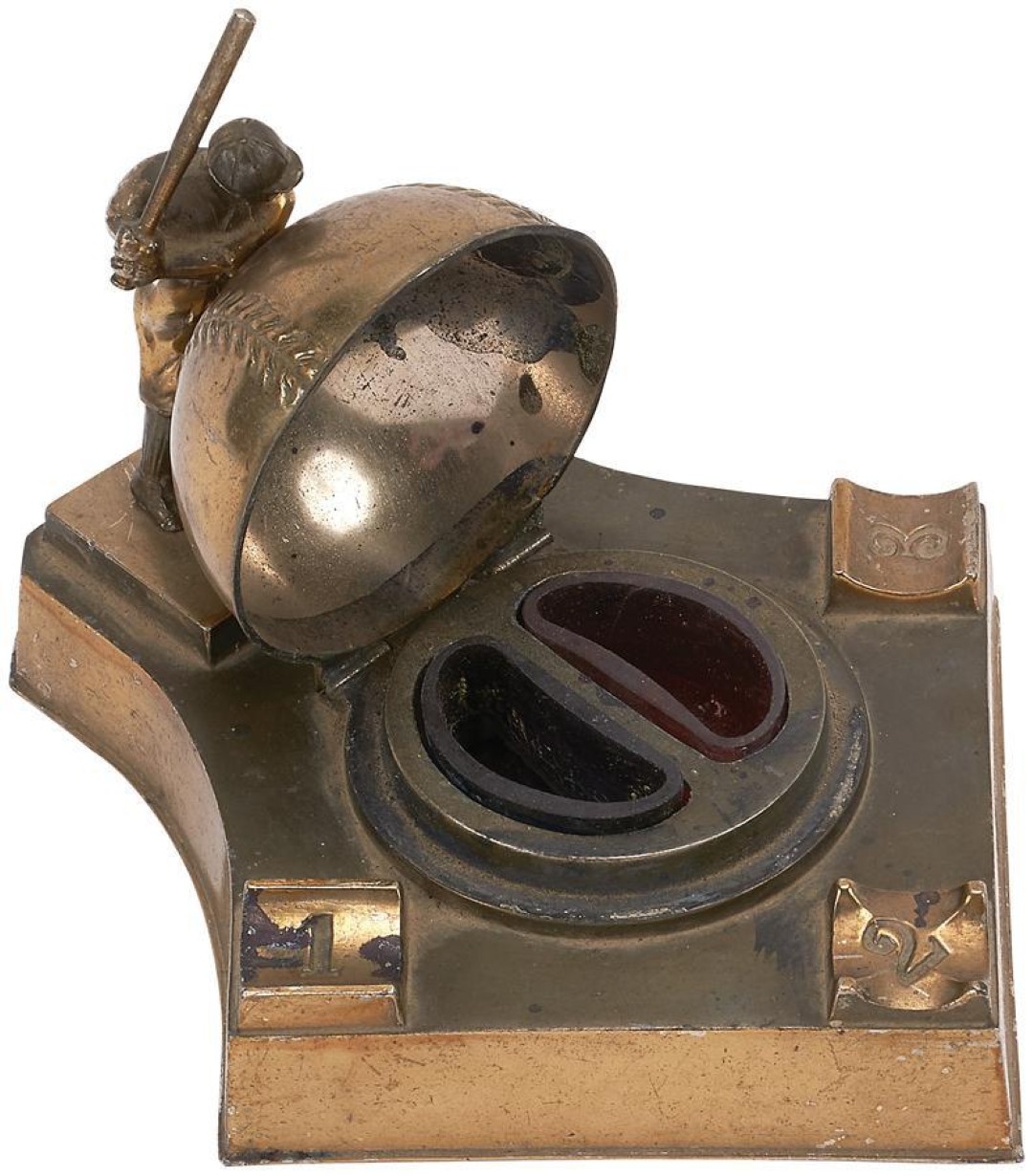
This rare desk set was produced in Japan following the historic 1934 All-American baseball tour headlined by Babe Ruth. Cast in the form of a baseball diamond with numbered bases, it features a batter at the ready and a hinged baseball-form lid. The dual glass reservoirs were designed for the two-tone ink needs (black and red) of a 1930s professional desk. This piece stands as a testament to the “Baseball Fever” that bridged the two cultures during the Interwar period.
Details
This Japanese “Antimony Ware” baseball inkstand features a white-metal batter in a 1930s-style uniform poised at the top of a baseball diamond. The base is cast with the figures “1, 2, 3” marking the corners for first, second, and third base. The centerpiece is a hinged lid in the form of a detailed, stitched baseball that opens to reveal dual “D-shaped” (semi-circular) glass ink pots.
The set is made of antimony, a specialty alloy of lead and tin that Japan dominated the production of in the early 20th century. These items were usually silver-plated or finished with a “bronze” wash. The warm, yellowish tones visible in the areas of wear are characteristic of the base metal or a copper-wash primer showing through the original silver finish.
The Historical Connection
- The 1934 “Banzai Babe” Tour In November 1934, Babe Ruth led a team of All-Americans (including Lou Gehrig and Jimmie Foxx) on a legendary 18-game tour of Japan. The reception was unlike anything seen before: over 500,000 fans lined the streets of Tokyo, waving Japanese and American flags and shouting “Banzai, Babe Ruth!” The tour was so successful it led directly to the formation of Japan’s first professional baseball league in 1936.
- The Maker and Origin While not marked with a specific factory name, this type of metalwork was a hallmark of Tokyo-based antimony manufacturers who specialized in “novelties” for the export and souvenir markets. During the baseball craze of the mid-1930s, Japanese retailers like Maruzen (a famous department store specializing in stationery) and Mizuno (the sporting goods giant) often commissioned or sold high-quality desk accessories like this to celebrate the national obsession with the American game.
- Functionality The inclusion of dual ink pots suggests this was a premium office accessory. In the 1930s, it was common for clerks or business owners to use two colors of ink—typically black or blue for general writing and red for bookkeeping and corrections.
Sold for $708 in June 2016
Content disclaimer. The information posted is the owner’s best knowledge and may not have been vetted by the SOIC. We welcome comments, corrections, and additions, working to make our website information comprehensive and accurate.
Join the Society of Inkwell Collectors (SOIC) – it’s free!
Founded in 1981 as a non-profit organization,
we are documenting inkwells (and accessories).
We’re here to help and inform!