

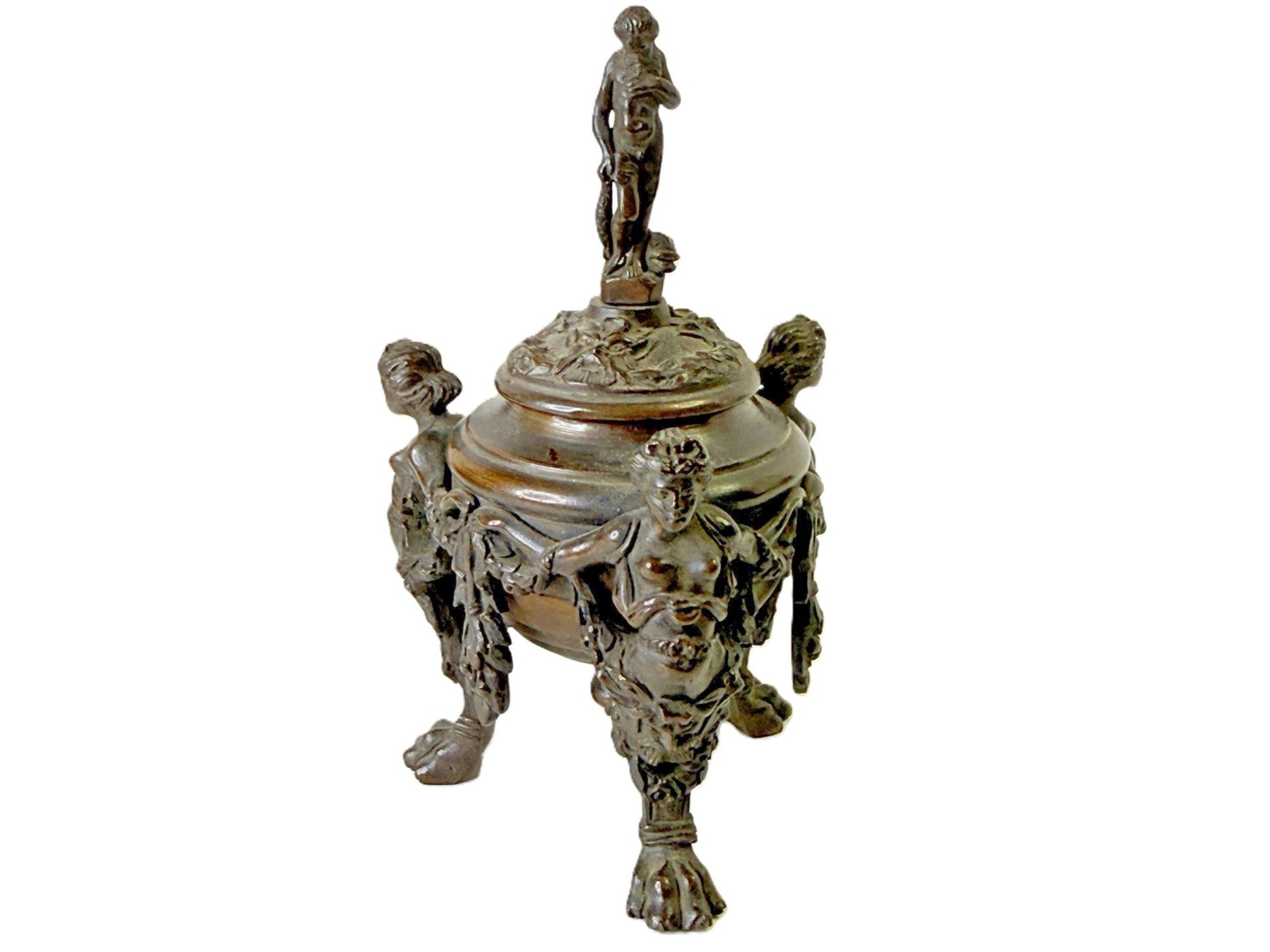


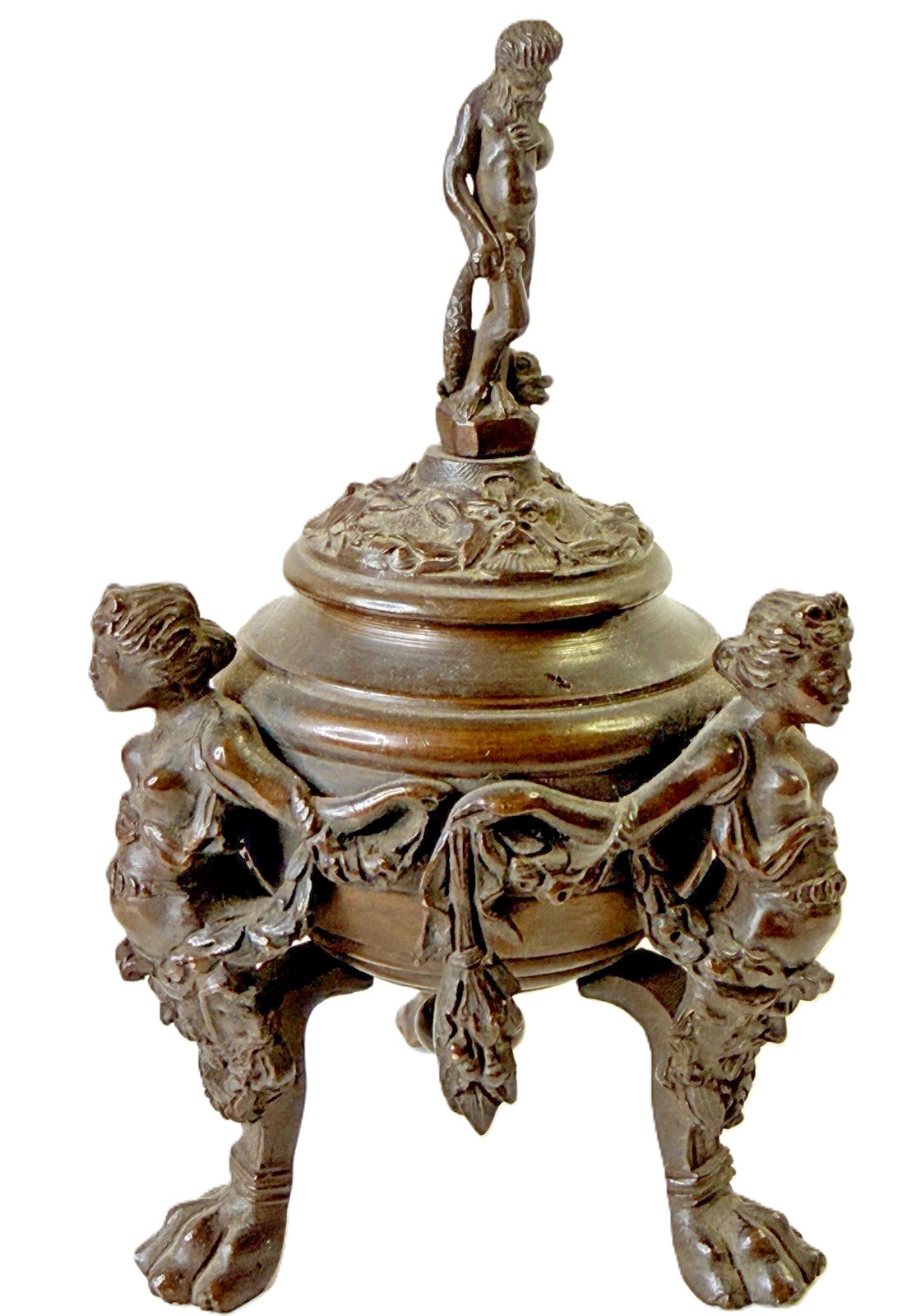






Italian Grand Tour Bronze Inkstand
| Categories | Souvenir |
| Type | Mythology |
| Material | Bronze |
| Markings | Unmarked |
| Manufacturer | Undetermined |
| Origin | Italy |
| Date or Era | circa 1880 |
| Measuring | 2 ¾” across; 4 ⅞” high |
This is an Italian Grand Tour bronze inkstand, dating to the mid-to-late 19th Century (c. 1860–1890). It is executed in the Renaissance Revival (or Neo-Renaissance) style, specifically drawing inspiration from the Mannerist designs of the 16th century.
Description of Figures
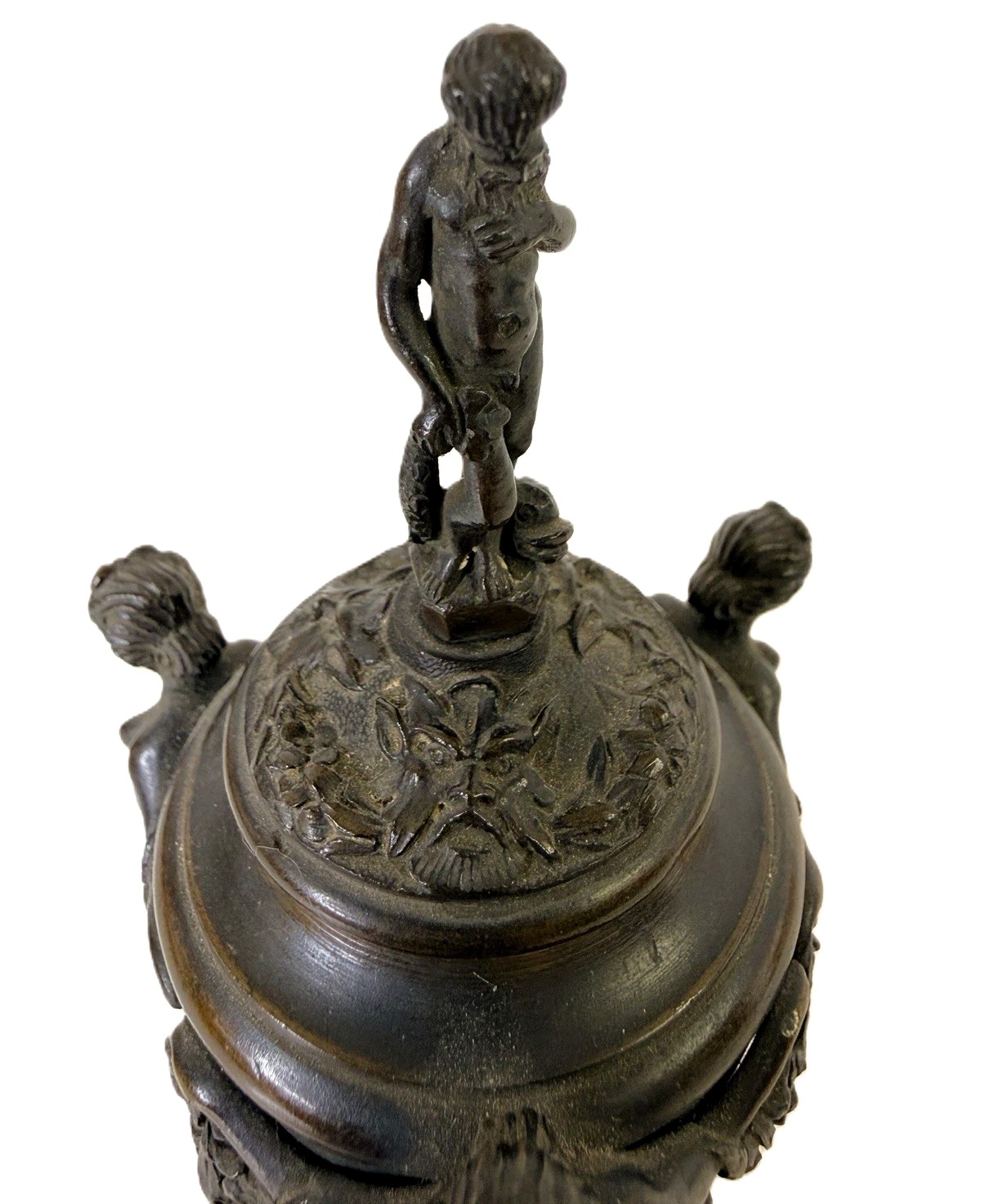
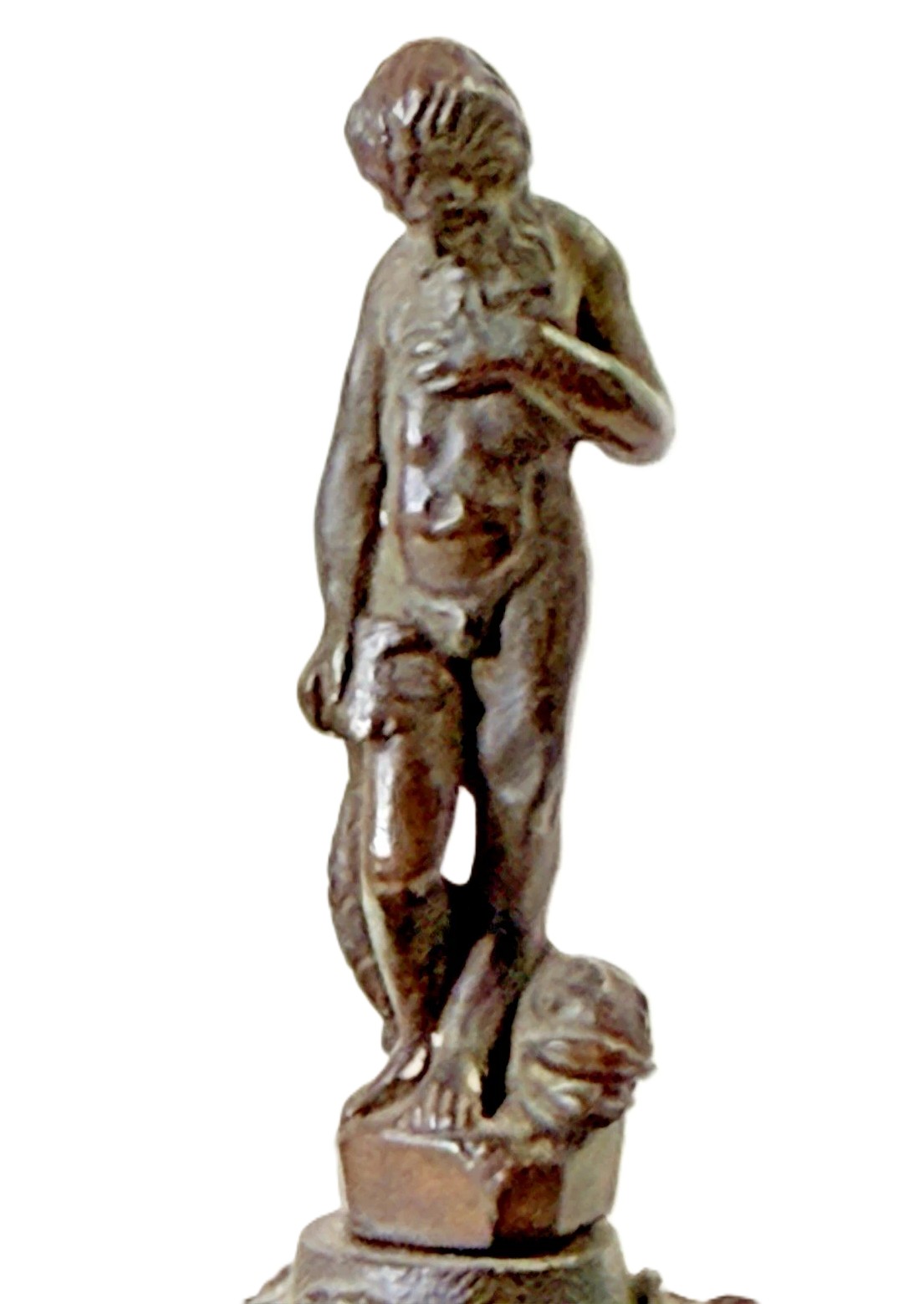
- The Finial Figure (Lid): The standing nude male figure holding a dolphin is likely Arion of Methymna, a semi-mythical Greek poet who was rescued from the sea by a dolphin. This specific figure was a highly popular “after the antique” motif in the 19th century, often modeled after classical Roman sculptures found in the Naples National Archaeological Museum. The pose—with one hand to the chest—was a common Mannerist trope to convey emotion or contemplation.
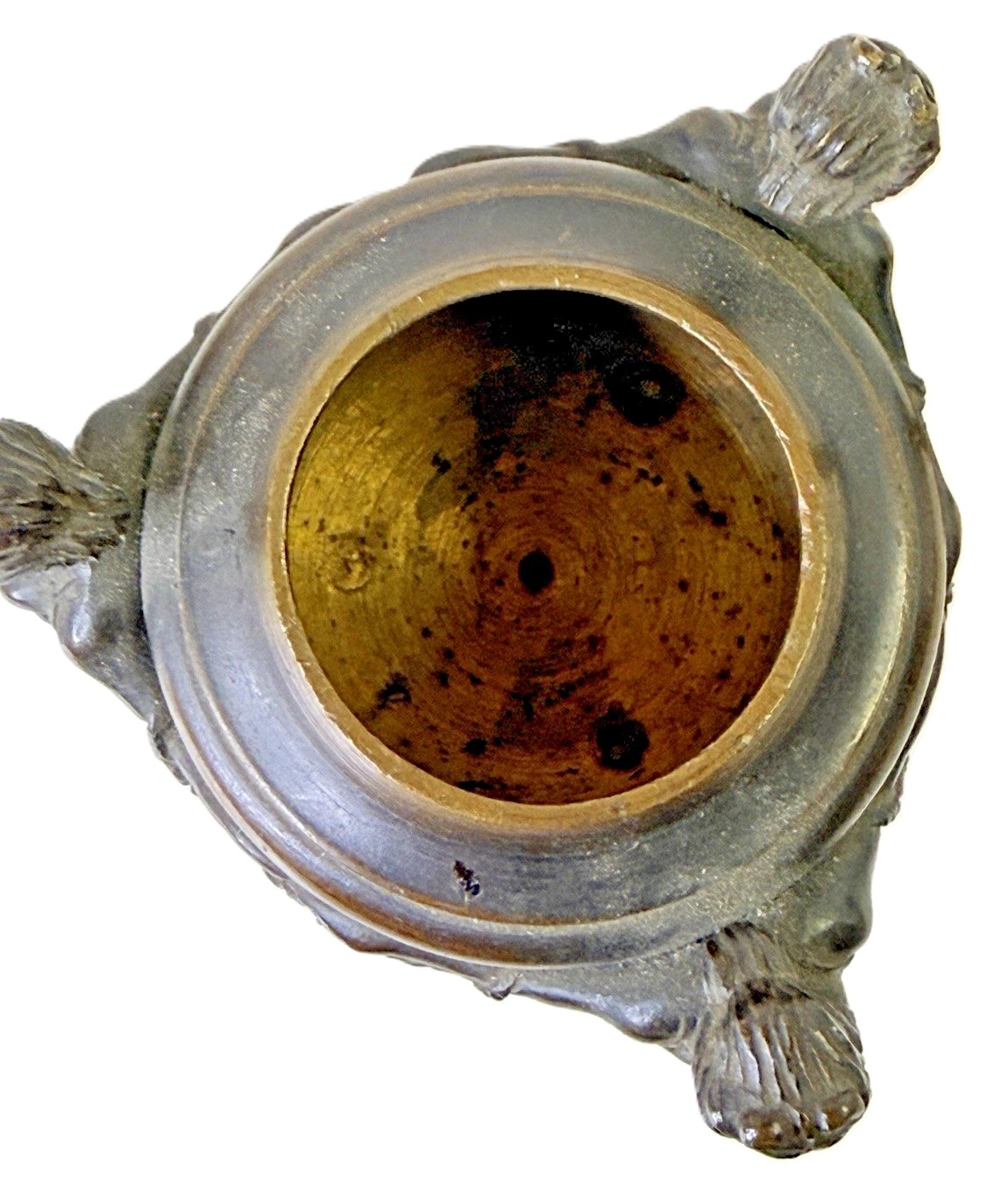
- The Legs (Tripod Base): The three legs are formed by winged caryatids (or sirens). These hybrid female figures have human torsos that transition into decorative acanthus leaf swags. These swags are held by the figures’ outstretched arms, creating a continuous garland around the body of the inkwell. The legs terminate in stylized lion-paw feet.
- The Lid Ornamentation: The domed lid is decorated in relief with mascarons (grotesque faces). These appear to represent Pan or a satyr, identifiable by the bearded features and surrounding foliage. In Renaissance art, these figures symbolized the wildness of nature and were a staple of desk accessories.
Historical Background & Origin
- Where it was made: This piece was produced in Italy, most likely in a renowned foundry in Naples or Rome. Foundries such as Sommer, Chiurazzi, or Righetti specialized in these high-end bronze reproductions for wealthy travelers.
- When it was made: The peak period for these elaborate bronzes was between 1870 and 1890. During this era, travelers on the “Grand Tour” sought functional yet artistic “souvenirs” that demonstrated their classical education and taste.
- Who made it: While these pieces are rarely signed, they are typically attributed to the Italian School. The design is a “pastiche”—a creative combination of elements from different Renaissance masters, such as Andrea Riccio or Severo da Ravenna, whose work defined the look of Italian bronze desk ornaments.
Technical Details
- Process: The inkstand was created using the lost-wax casting method. This is evident in the fine detailing of the hair and the feathers on the wings.
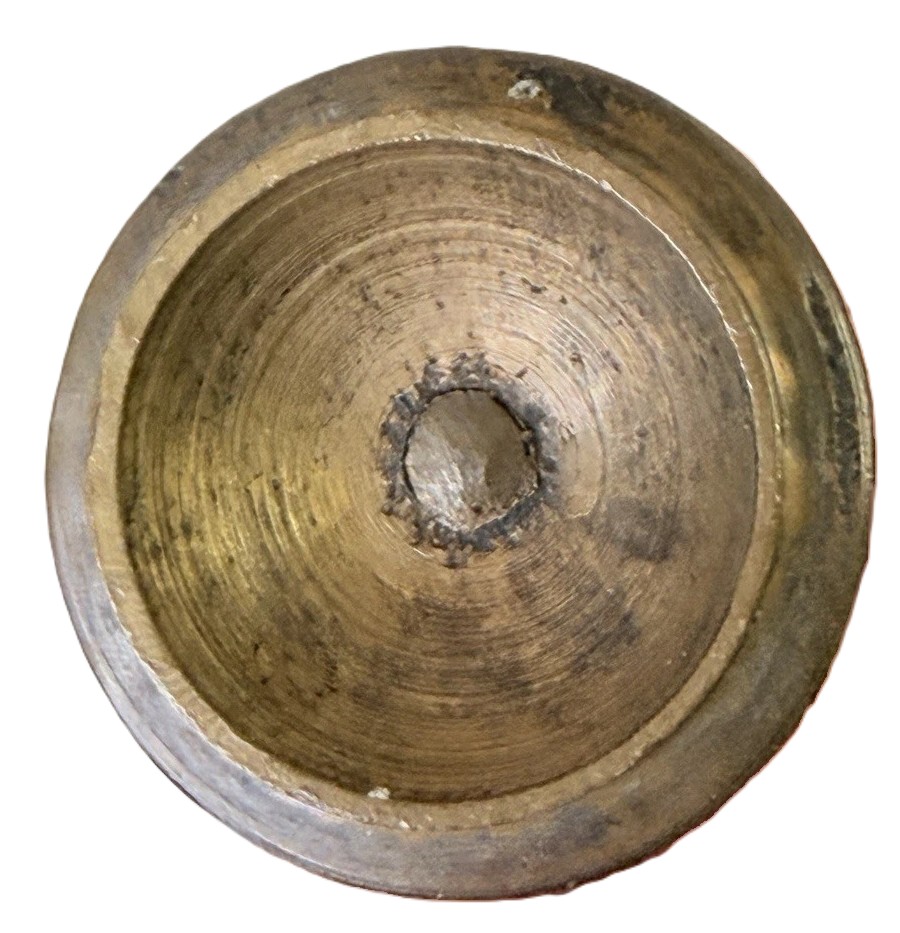
- Material: It is cast in bronze with a deep, dark brown patina (sometimes referred to as a “Renaissance patina”). The interior is hollow and originally would have held a fitted glass or ceramic liner to contain the ink.
- Form: The tripod form is a direct reference to ancient Roman bronze tripods and lamps unearthed at Pompeii and Herculaneum, which heavily influenced 19th-century European design.
Sold for $400 in March 2026
Content disclaimer. The information posted is the owner’s best knowledge and may not have been vetted by the SOIC. We welcome comments, corrections, and additions, working to make our website information comprehensive and accurate.
Join the Society of Inkwell Collectors (SOIC) – it’s free!
Founded in 1981 as a non-profit organization,
we are documenting inkwells (and accessories).
We’re here to help and inform!