

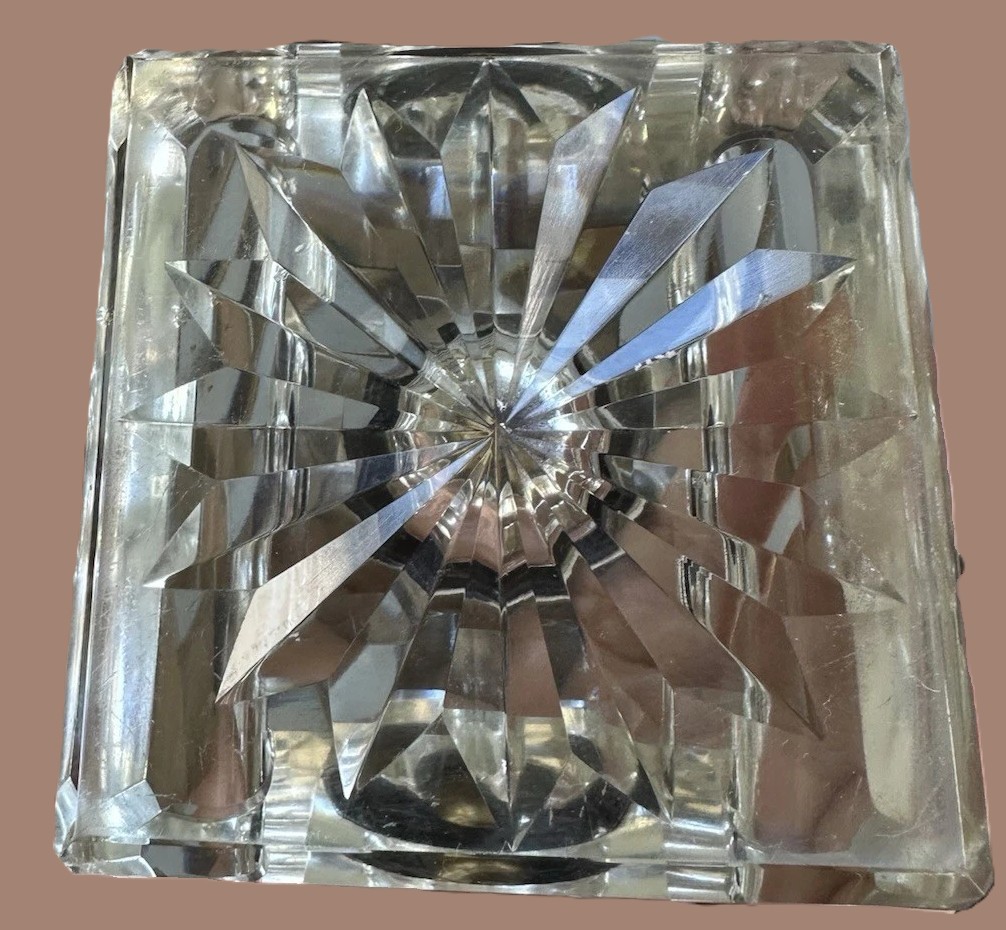
Imperial Russian Silver-Mounted Cut Crystal Inkwell
| Categories | Glass - Non-figural |
| Material | Glass, Silver |
| Markings | See Narrative |
| Manufacturer | Undetermined |
| Origin | Russia |
| Date or Era | circa 1900 |
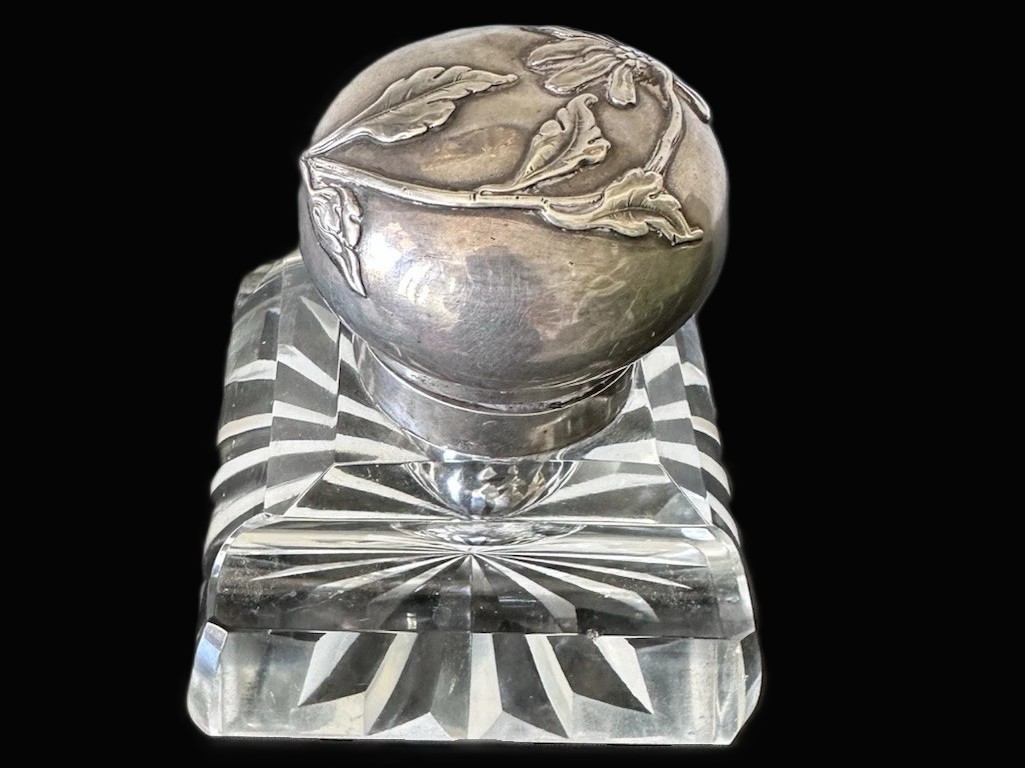
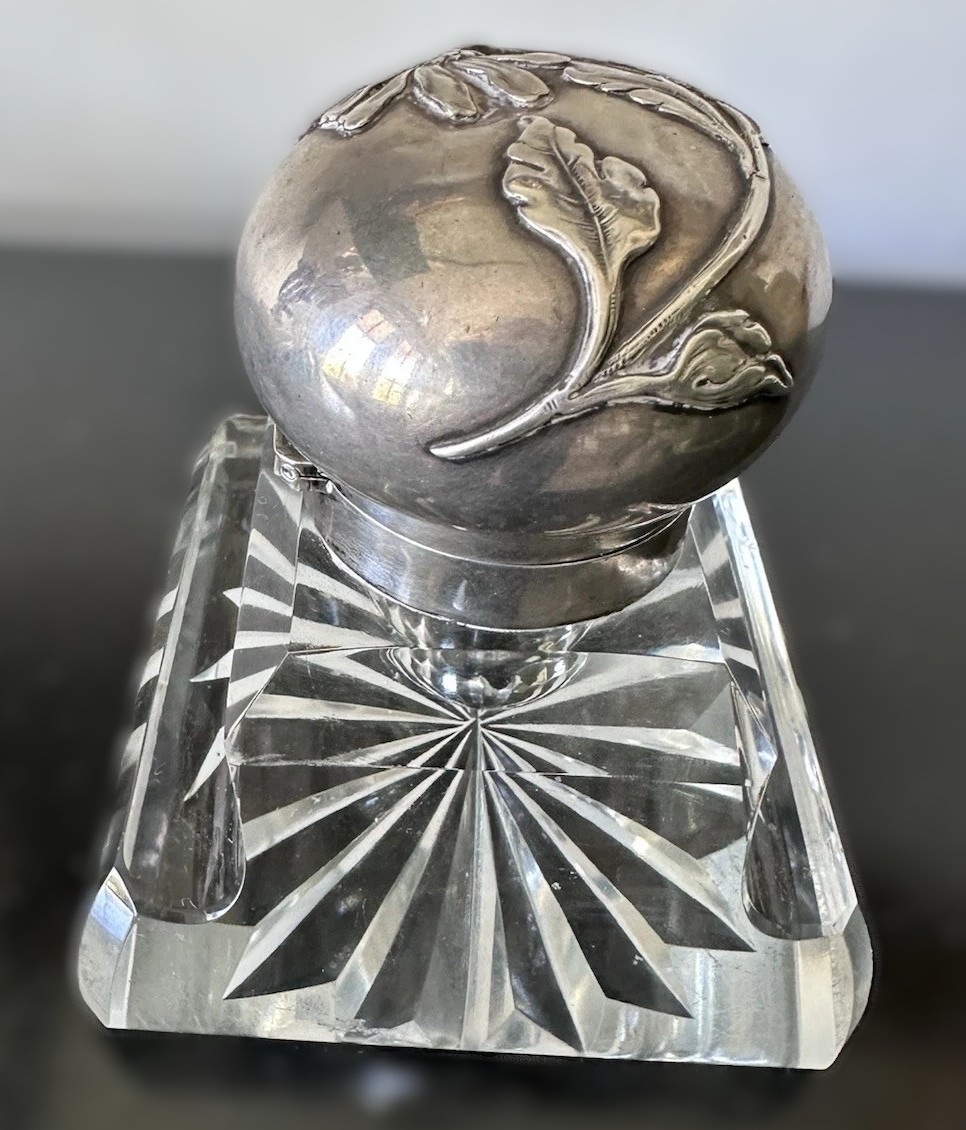
This late 19th-century Imperial Russian inkwell combines heavy, brilliantly cut lead crystal with a parcel-gilt and repoussé silver-mounted lid.
Dating the Inkwell
Based on the style, structure, and hallmarks on the silver collar, this piece can be dated to circa 1896–1908, during the late Imperial Russian period (transitioning from the late Alexander III / early Nicholas II era into the height of the Russian Art Nouveau / Modern movement).
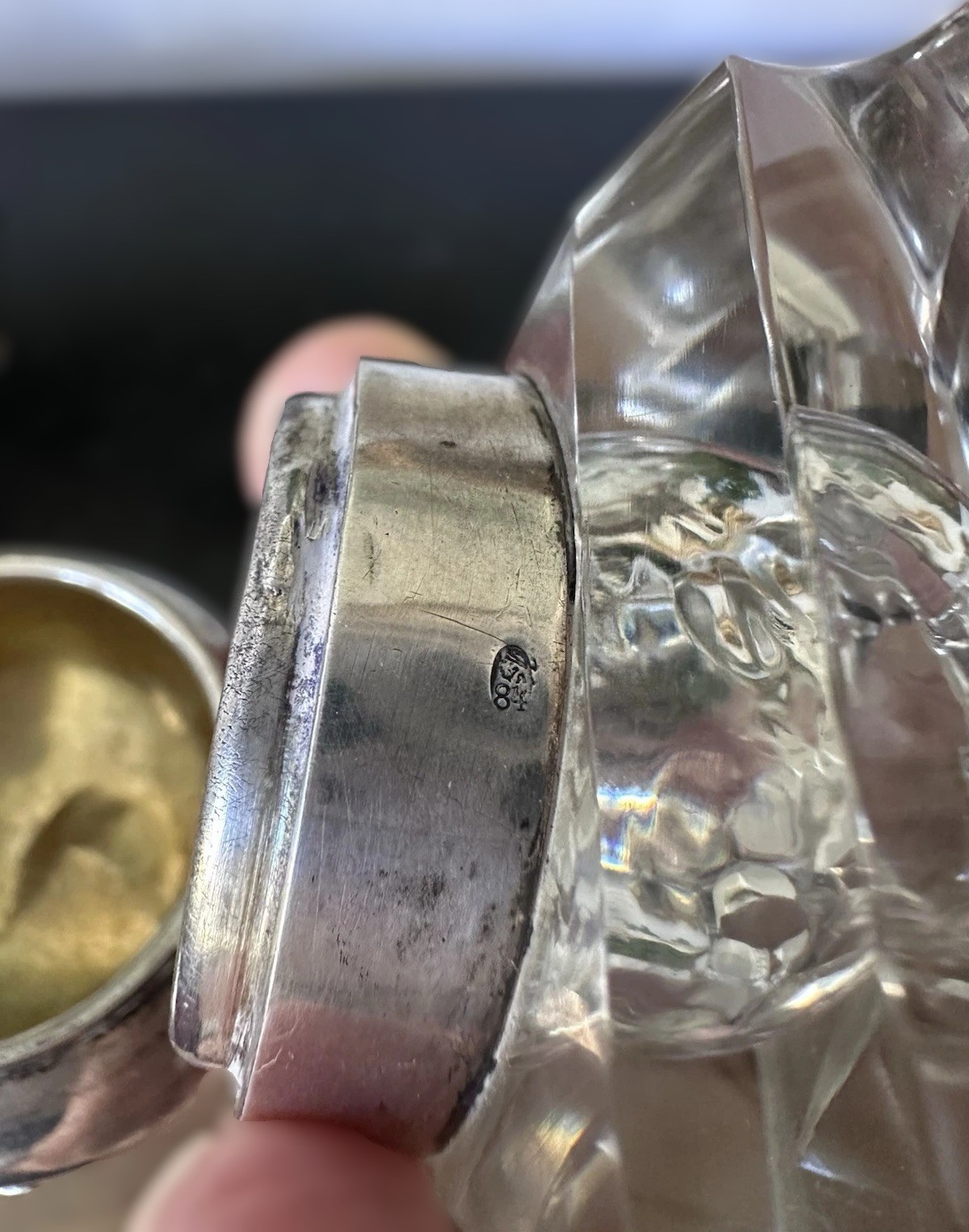
- The Hallmarks: Next to the “84” zolotnik standard mark (denoting 87.5% pure silver, which was standard for Russian silver before the revolution), there is a small oval punch containing the imperial assayer/fineness mark. In late 1896, Russia introduced the Kokoshnik mark (a profile of a woman wearing a traditional Russian headdress). For items made between 1896 and 1908, the head faces to the left.
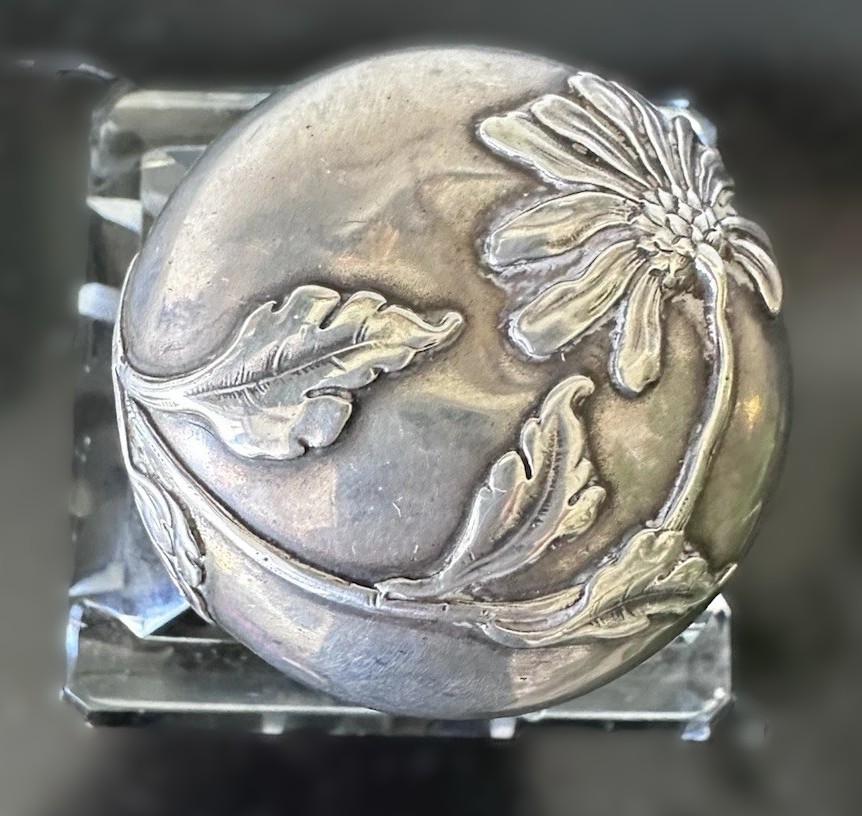
- The Style: The naturalistic, asymmetrical repoussé floral design featuring sweeping stems, organic leaf forms, and a stylized daisy-like blossom rendered with undulating petals is a classic expression of the Russian Art Nouveau movement (Modern style), which flourished across St. Petersburg and Moscow workshops from the mid-1890s through the turn of the century.
Description
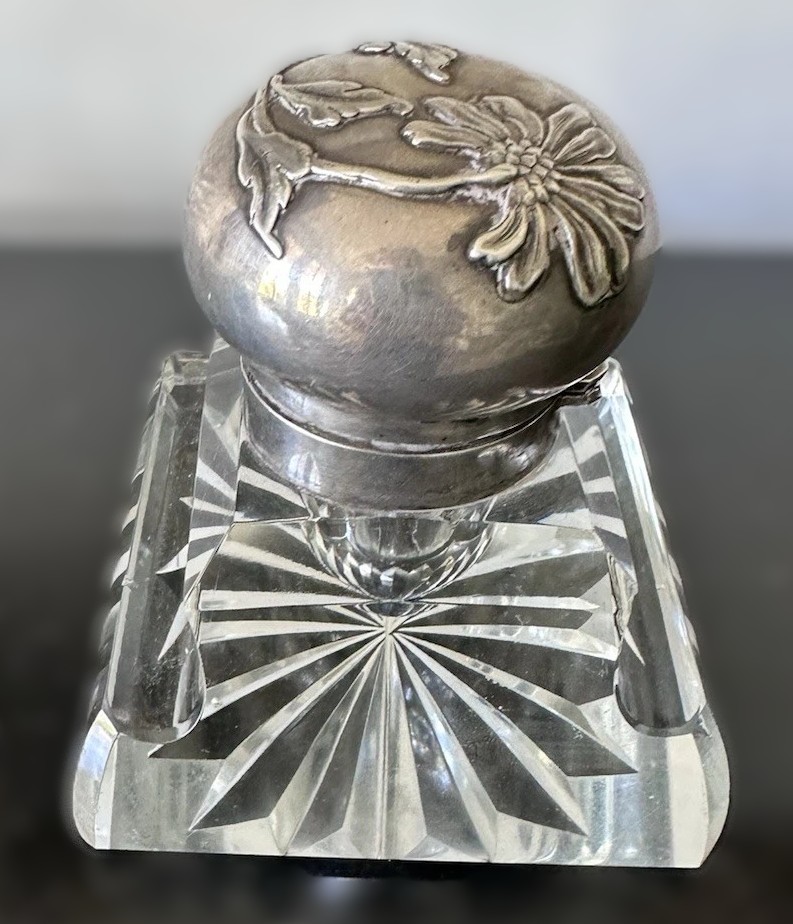
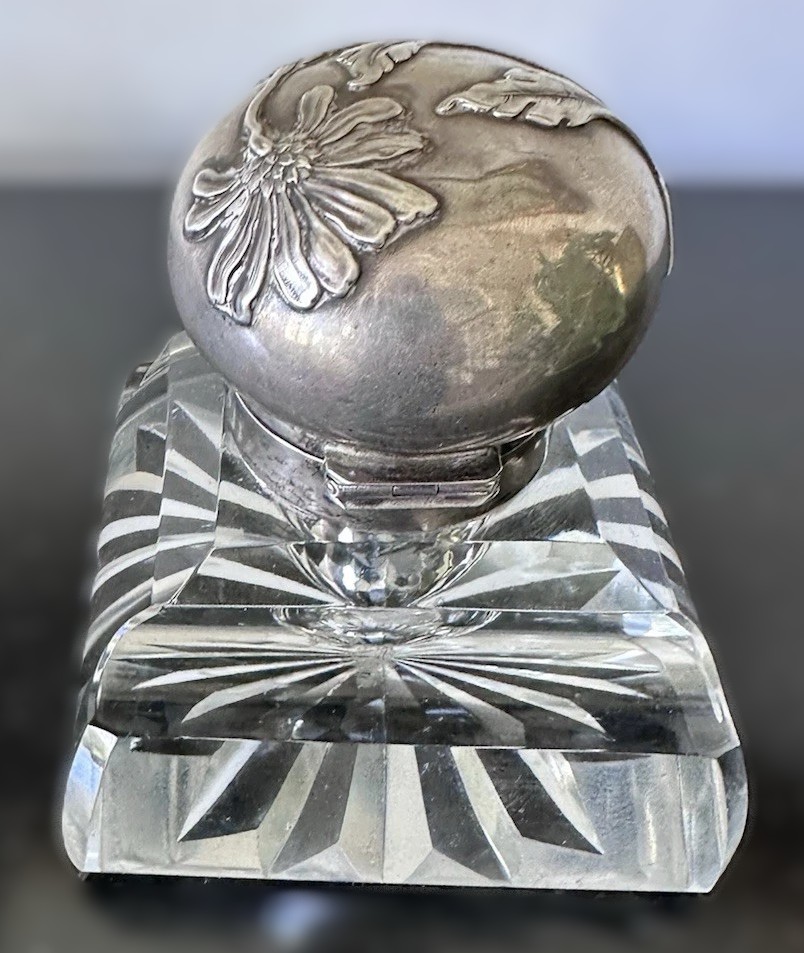
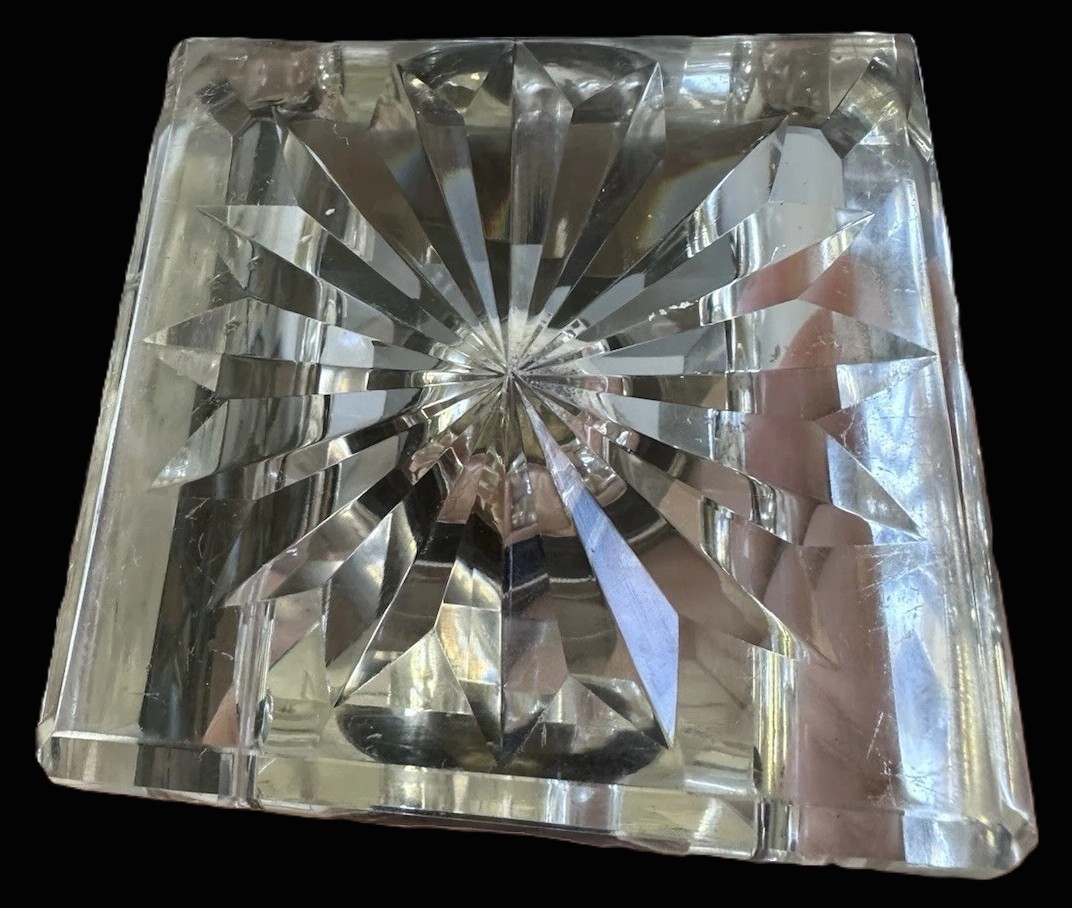
- The Crystal Base: The heavy, thick-walled colorless crystal inkwell is cast in a classic square foot-form profile with a dramatic, deeply cut pinwheel and starburst geometric pattern radiating across the wide canted shoulders and the flat base.
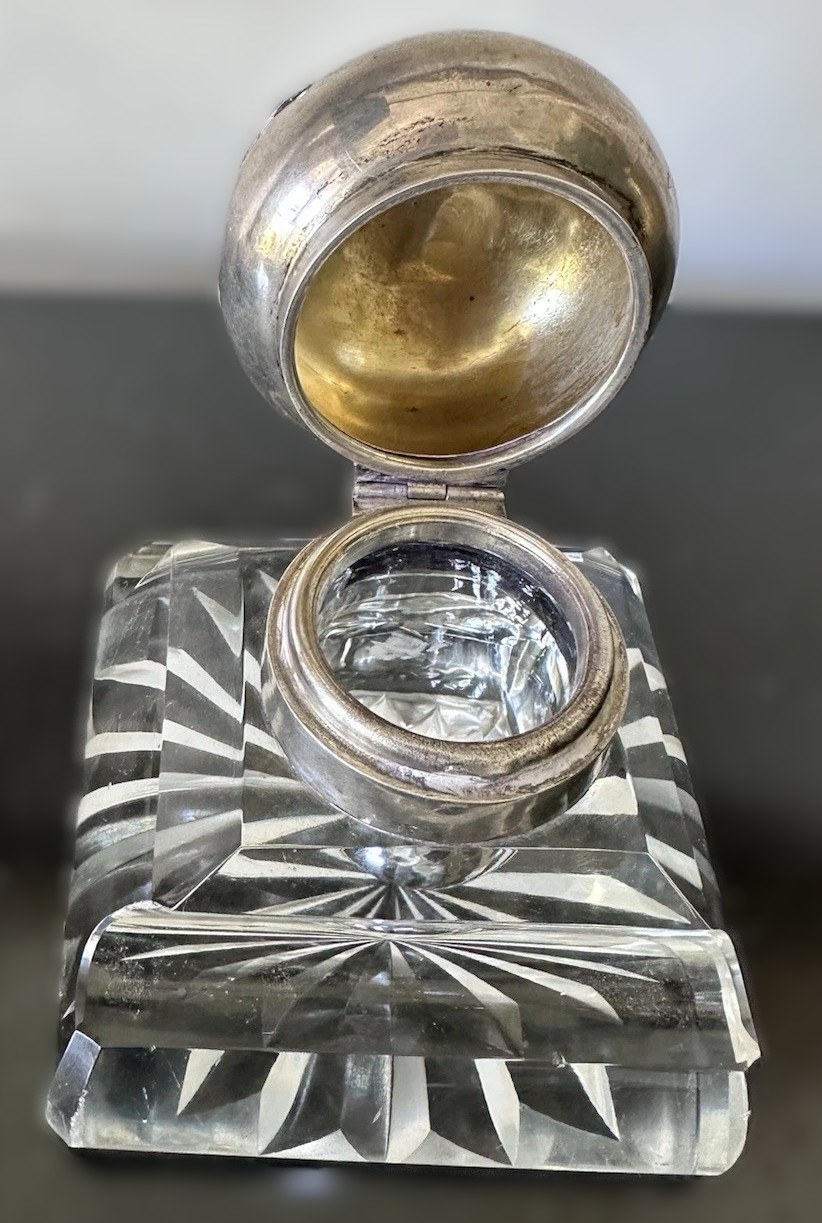
- The Silver-Gilt Mount & Hinged Cover: The spherical (“onion” or dome-shaped) silver cap is hinged to the collar with a tight-fitting knuckle hinge.
- The Exterior: Hand-chased and repoussé in high relief with an asymmetrical Art Nouveau floral spray. The design features slender, curving stems wrapping organically around the dome, unfolding into detailed leaves and a prominent daisy blossom stretched across the upper shoulder.
- The Interior: Opening the lid reveals a rich vermeil (gold-wash over silver) interior, a traditional luxury feature in high-end inkwells designed to protect the silver from the corrosive and staining properties of acidic iron-gall writing inks of the era.
- Where It Was Made: It was crafted in Imperial Russia—most likely in one of the major luxury silver centers of St. Petersburg or Moscow, where master silversmiths frequently collaborated with premier glassworks (such as the Imperial Glassworks or leading private manufacturers) to produce high-end desk garnitures and luxury appointments for the aristocracy and intelligentsia.
- Who Made It: While the maker’s punch mark (typically consisting of Cyrillic initials of the silversmith or workshop master) is partially rubbed or obscured on the narrow collar band next to the 84 stamp, pieces of this exact caliber, bulbous hinged architecture, and naturalistic repoussé floral styling were frequently produced by premier workshops operating under or supplying major Russian houses like Fabergé, Ivan Khlebnikov, or Nichols & Plinke, as well as skilled independent guild masters in St. Petersburg and Moscow during the turn of the 20th century.
Sold for $465 in September 2026
Content disclaimer. The information posted is the owner’s best knowledge and may not have been vetted by the SOIC. We welcome comments, corrections, and additions, working to make our website information comprehensive and accurate.
Join the Society of Inkwell Collectors (SOIC) – it’s free!
Founded in 1981 as a non-profit organization,
we are documenting inkwells (and accessories).
We’re here to help and inform!