

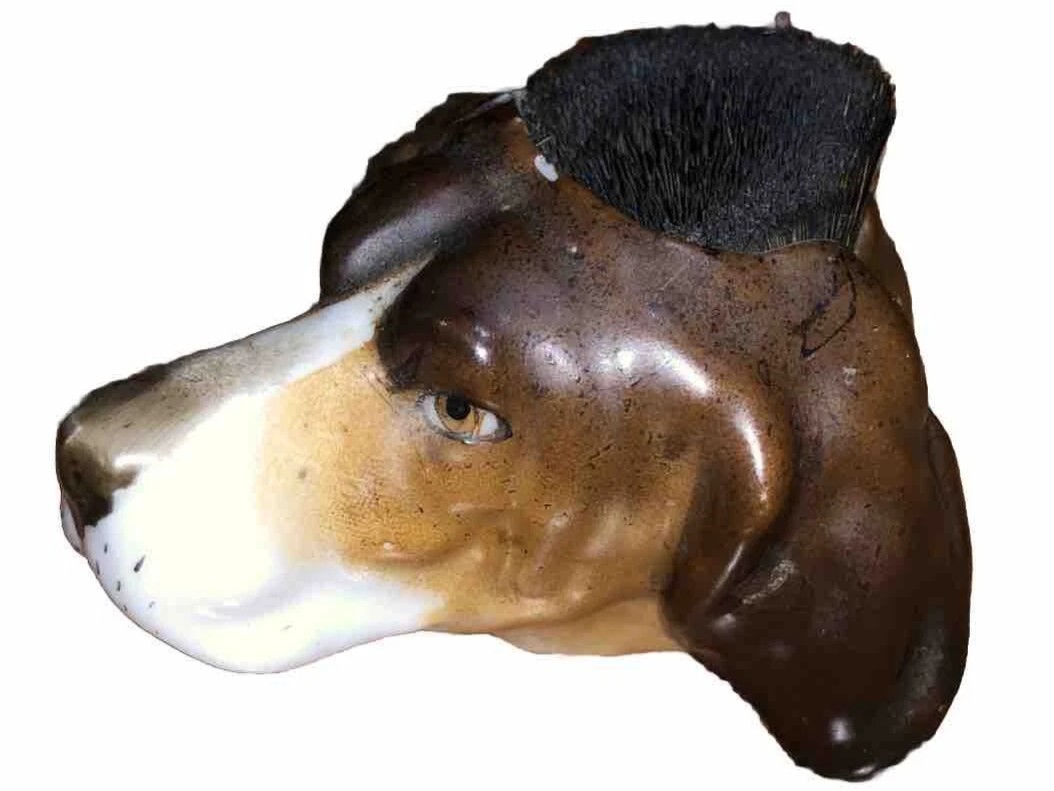
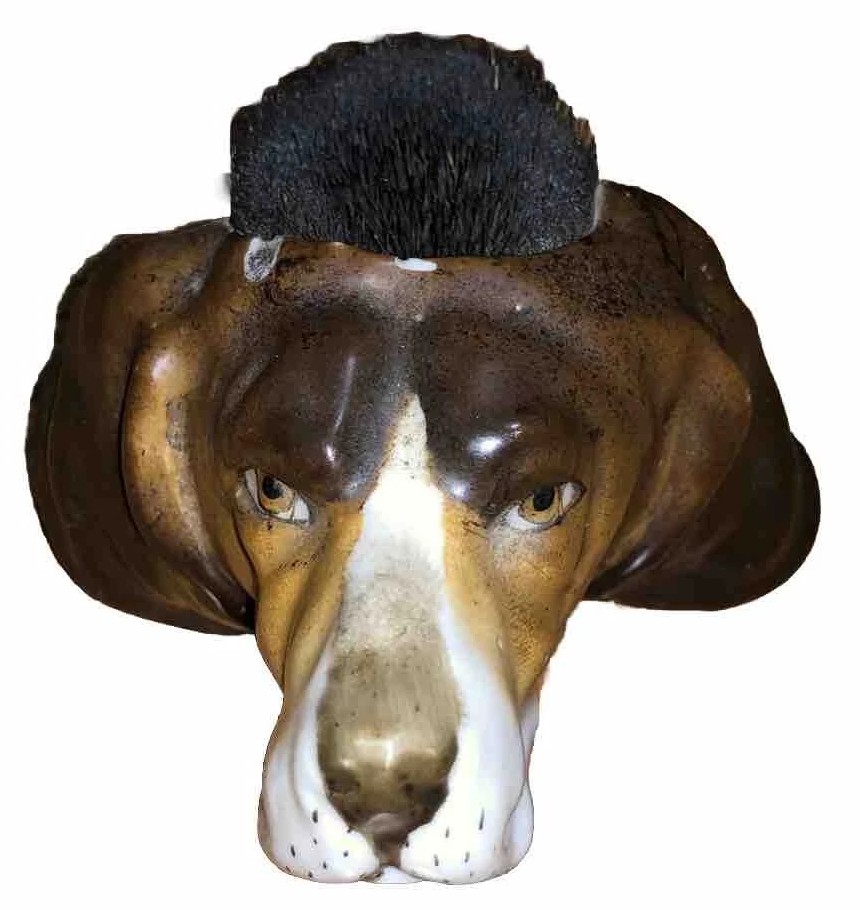
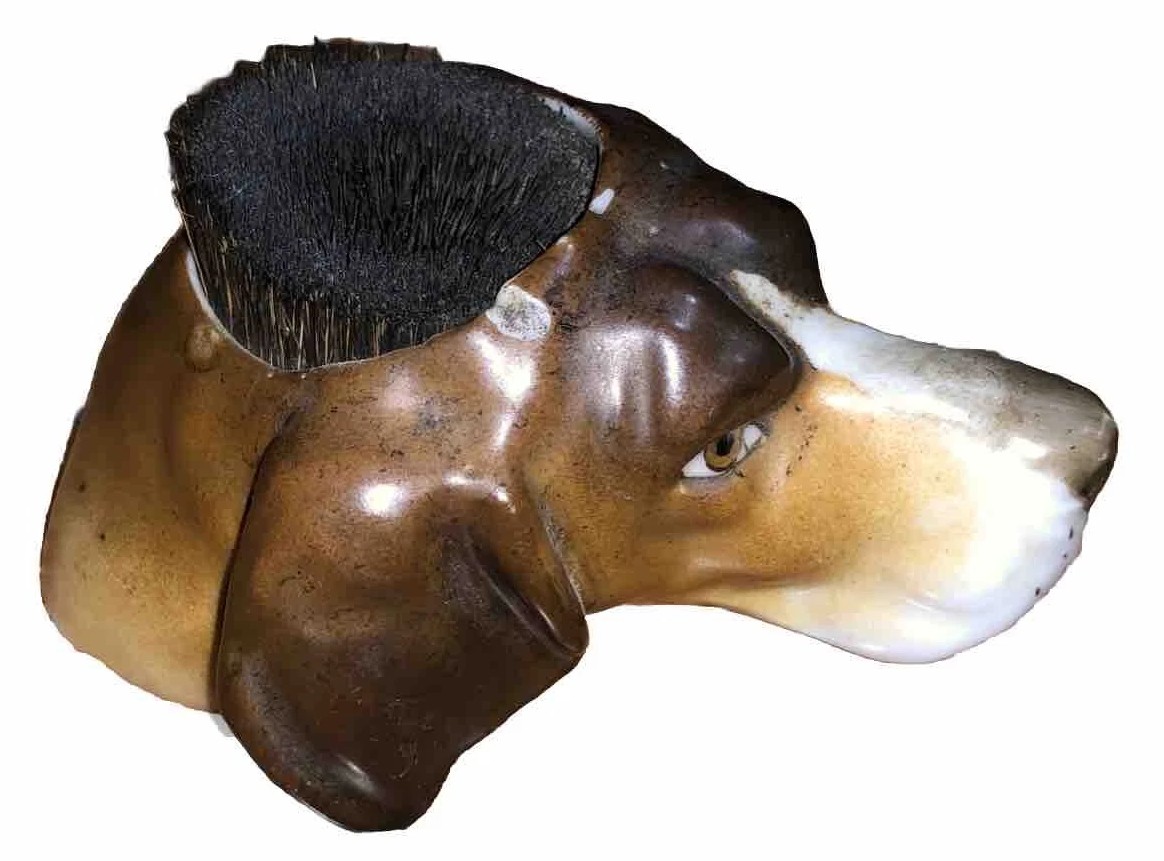
Hound’s Head Pen Wipe
| Categories | Accessories |
| Type | dog |
| Material | Porcelain |
| Markings | GERMANY |
| Manufacturer | Undetermined |
| Origin | Germany |
| Date or Era | circa 1895 |
| Measuring | 3 ¼” long |
Description
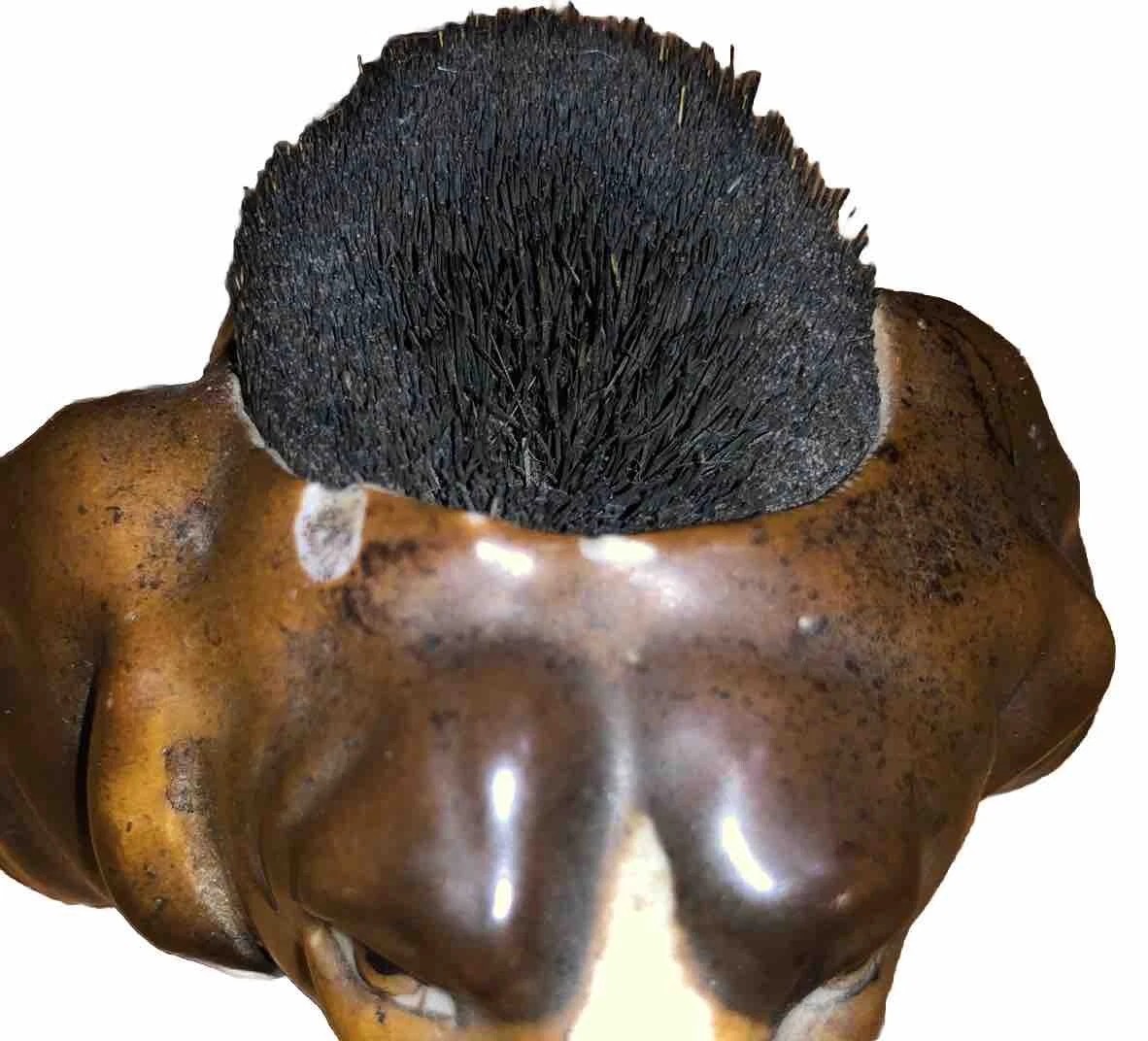
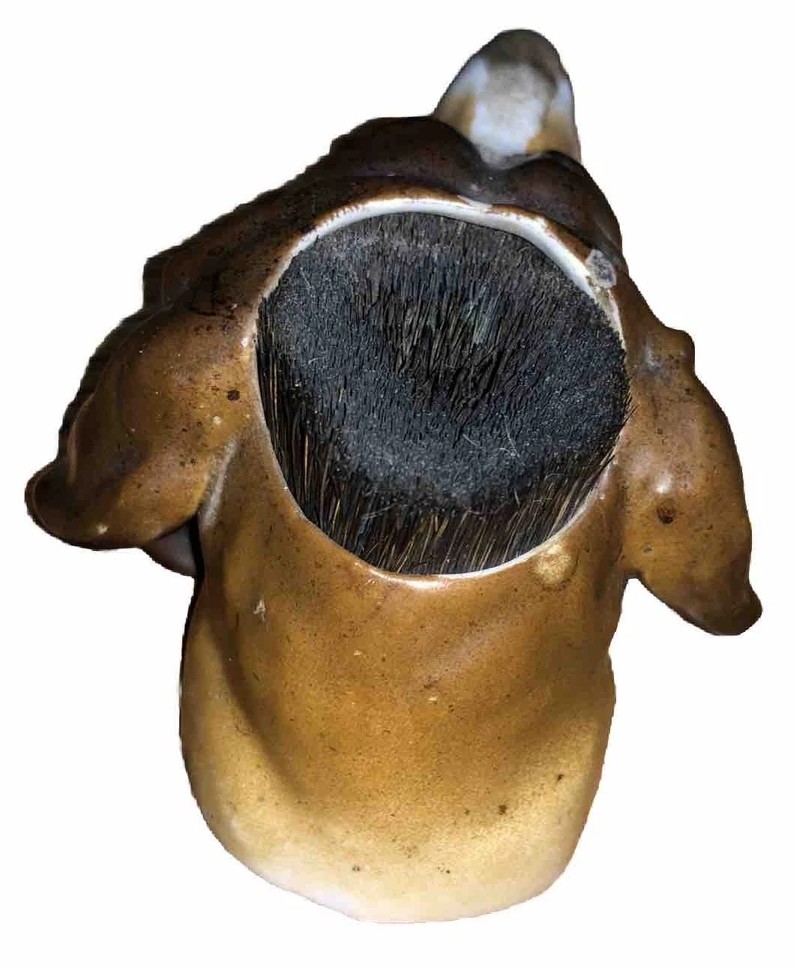
This figural porcelain pen wipe (or pen wiper) is modeled as the head of a hound—strongly resembling a foxhound, pointer, or beagle. It is detailed with long, heavy floppy ears, an alert facial structure, and expressive hand-painted hazel/amber eyes. The muzzle features fine black tick marks/pips to simulate whiskers. The top of the dog’s skull is deliberately molded with a large, hollow circular opening designed to hold a tightly packed bundle of cleaning fibers.
Wipe Material
The material used for the insert is natural boar’s hair (hog bristle), which has been trimmed flat across the top.
During the 19th and early 20th centuries, boar bristle was the premier material for this task. It was favored because the stiff, coarse nature of the hair was resilient enough to scrape away heavy or semi-dried iron gall ink from steel dip pen nibs, yet flexible enough not to bend or split the delicate metal points. The bristles were typically dyed black or dark brown so that the inevitable ink accumulation wouldn’t look unsightly on a writing desk.
Base Markings & Identification
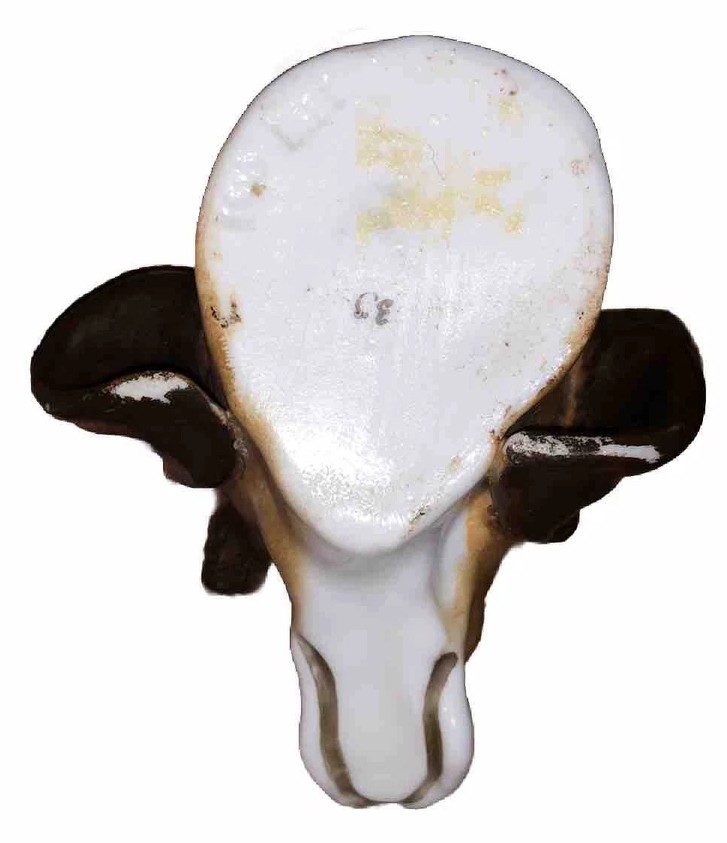
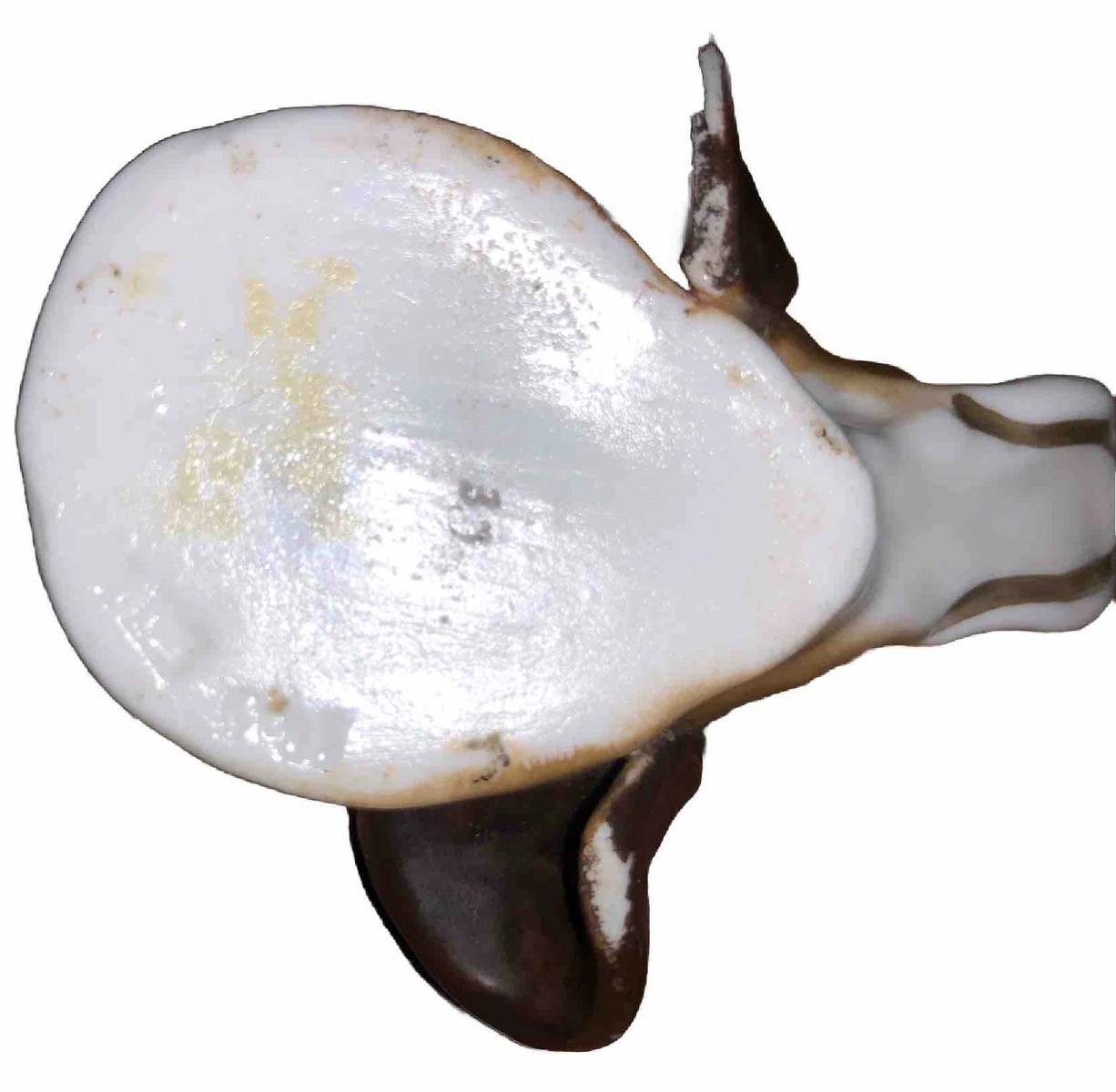
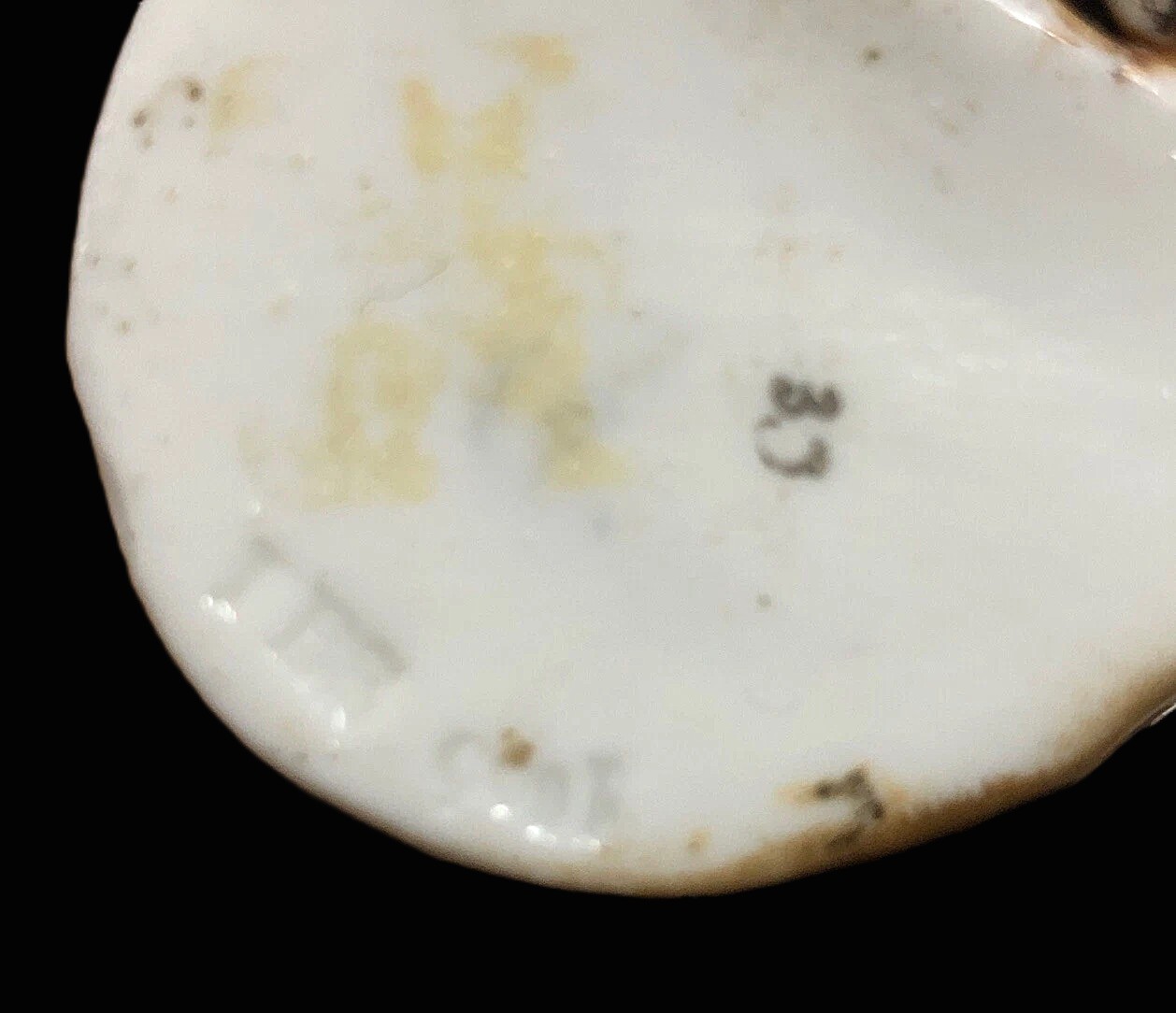
Looking closely at the unglazed base:
- The Impressed Mark: Along the bottom edge of the rim, there is an uppercase impressed mark that reads GERMANY.
- The Printed Number: In the center of the base, there is a dark underglaze/overglaze stamp of the number 33 (or possibly 35). This is a standard factory mold, model, or inventory shape number.
Who Made It & Where?
Because it lacks a distinct company logo (such as the Gebrüder Heubach sunburst or the Schäfer & Vater crown), an exact factory attribution is difficult. It was produced in the Thuringia region of Germany, which was the global powerhouse for porcelain novelties, fairings, and desk accessories at the turn of the century.
How Old Is It?
This piece dates from circa 1895–1914.
The single impressed “GERMANY” mark is a direct result of the U.S. McKinley Tariff Act of 1890, which mandated that all imported goods be clearly marked with their country of origin. The simple one-word designation “GERMANY” was standard practice from 1891 until the onset of World War I, after which the phrasing generally shifted to “Made in Germany.”
Sold for $239 in April 2026
Content disclaimer. The information posted is the owner’s best knowledge and may not have been vetted by the SOIC. We welcome comments, corrections, and additions, working to make our website information comprehensive and accurate.
Join the Society of Inkwell Collectors (SOIC) – it’s free!
Founded in 1981 as a non-profit organization,
we are documenting inkwells (and accessories).
We’re here to help and inform!