

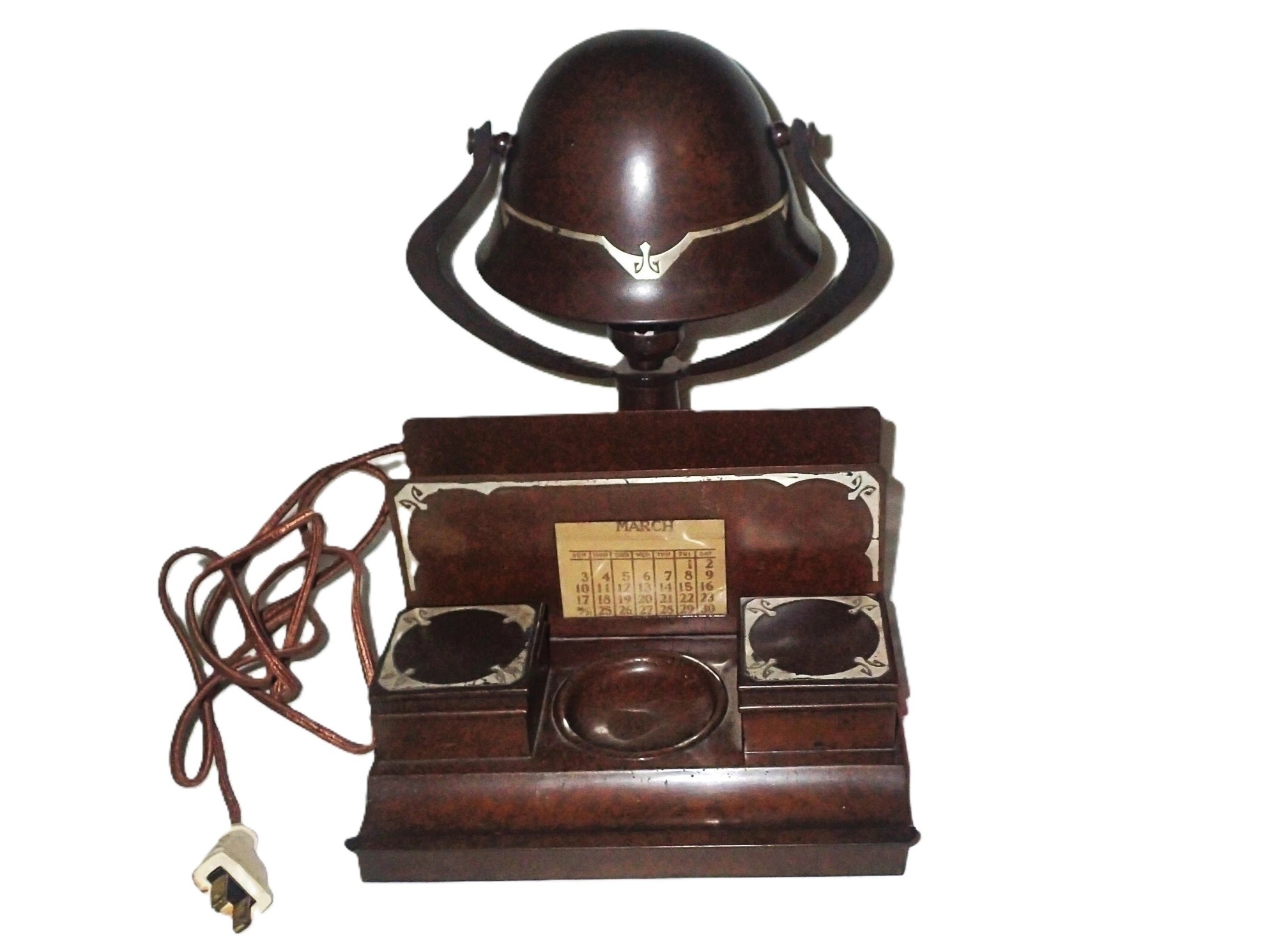
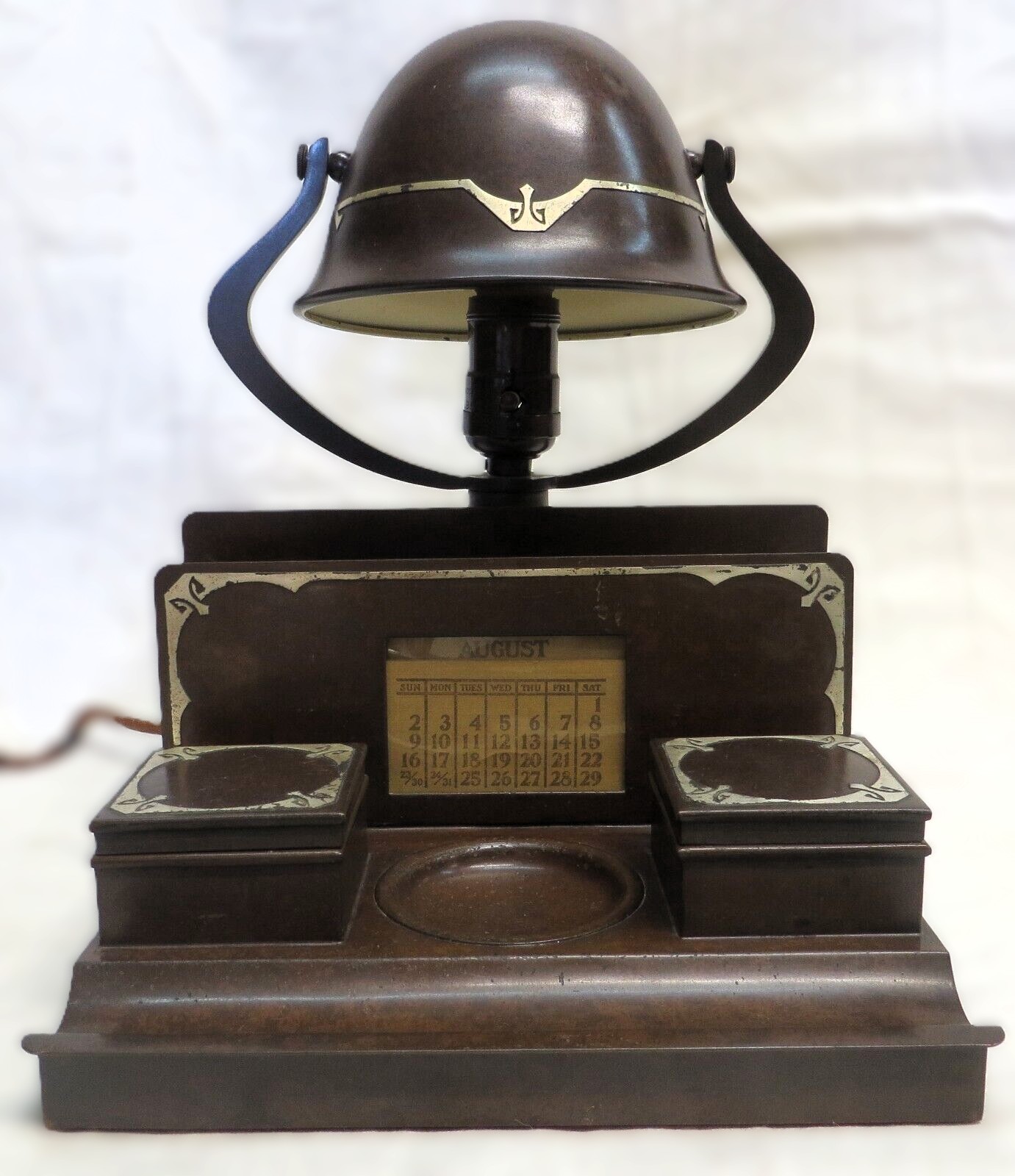
Heintz Art Metal Combination Inkstand, Calendar, and Lamp
| Categories | Arts & Crafts, Dual Purpose Inkstands |
| Type | Calendar |
| Material | Silver on Bronze |
| Markings | See Narrative |
| Manufacturer | Heintz |
| Origin | United States |
| Date or Era | circa 1915 |
| Measuring | 8 ¼” x 8 ¾” x 12” high |
| Patent | US Patent No. 1,036,832 (granted on August 27, 1912, following an application filed on June 7, 1911). |
Description
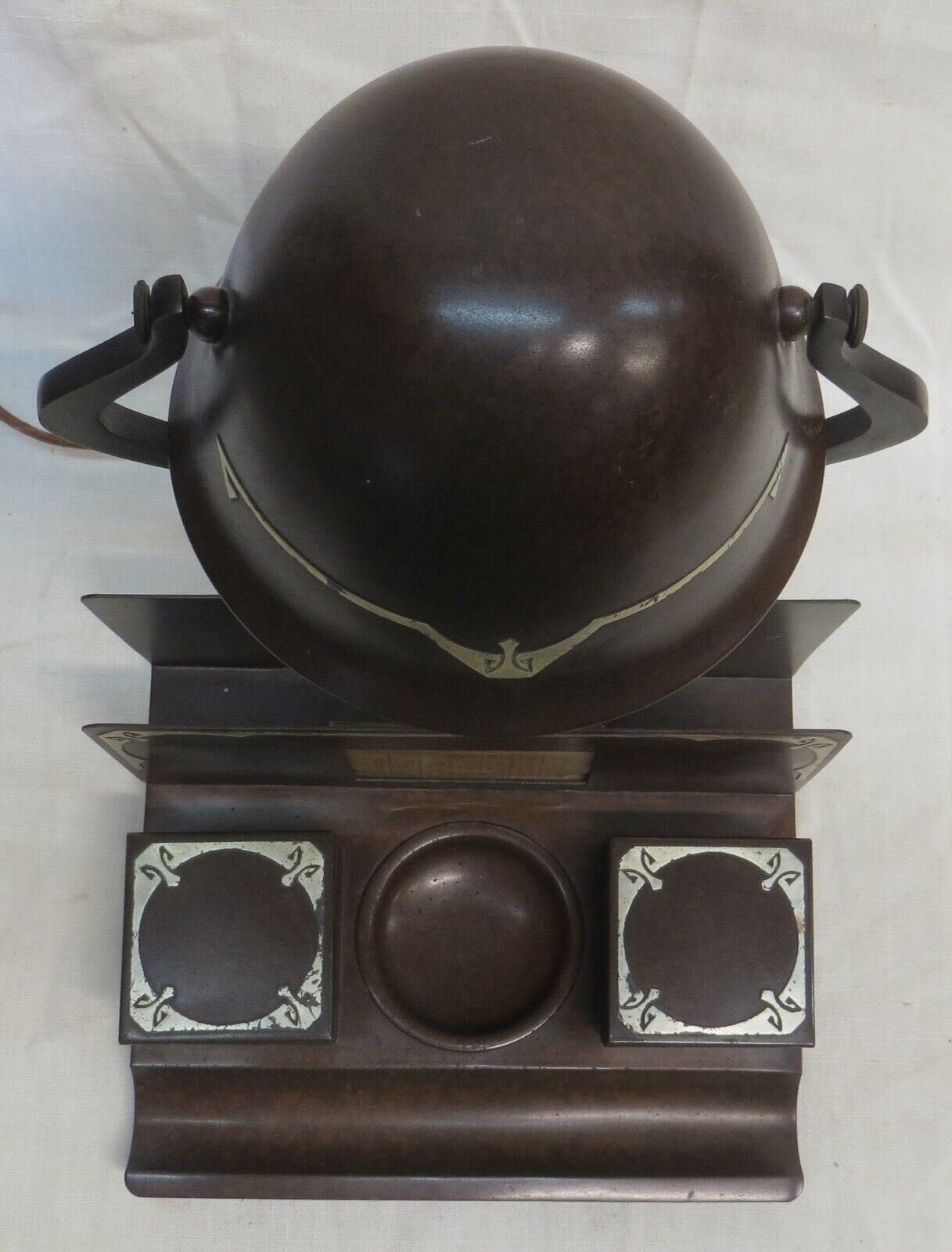
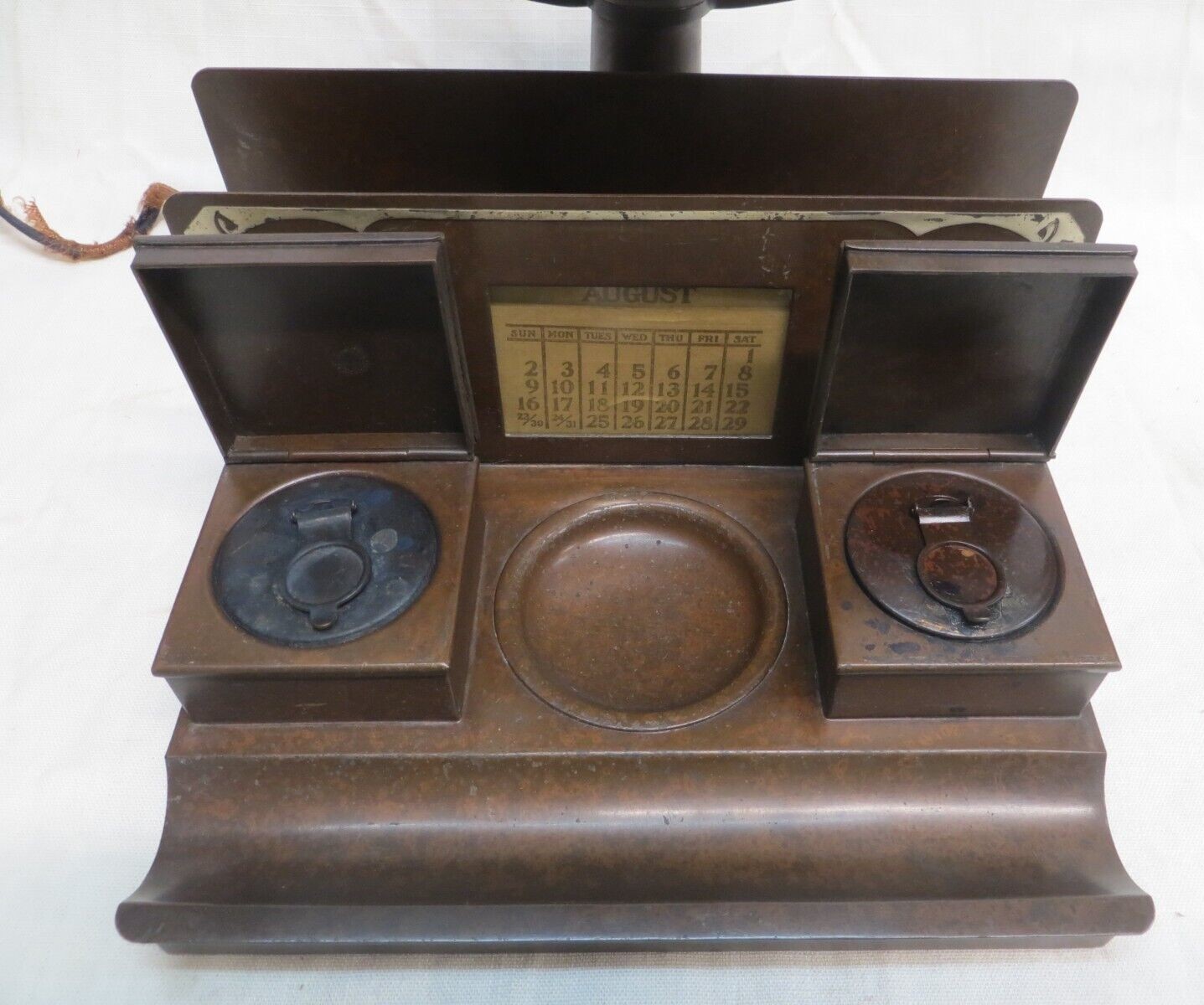
This rare American Arts & Crafts desk accessory is a multi-functional combination piece created by the Heintz Art Metal Shop (HAMS) of Buffalo, New York. Crafted during the height of the Arts & Crafts movement (circa 1915), the piece is executed in solid bronze featuring Heintz’s signature rich brown factory patina and is adorned with applied sterling silver overlay accents.
The structural layout incorporates several integrated desk utilities:
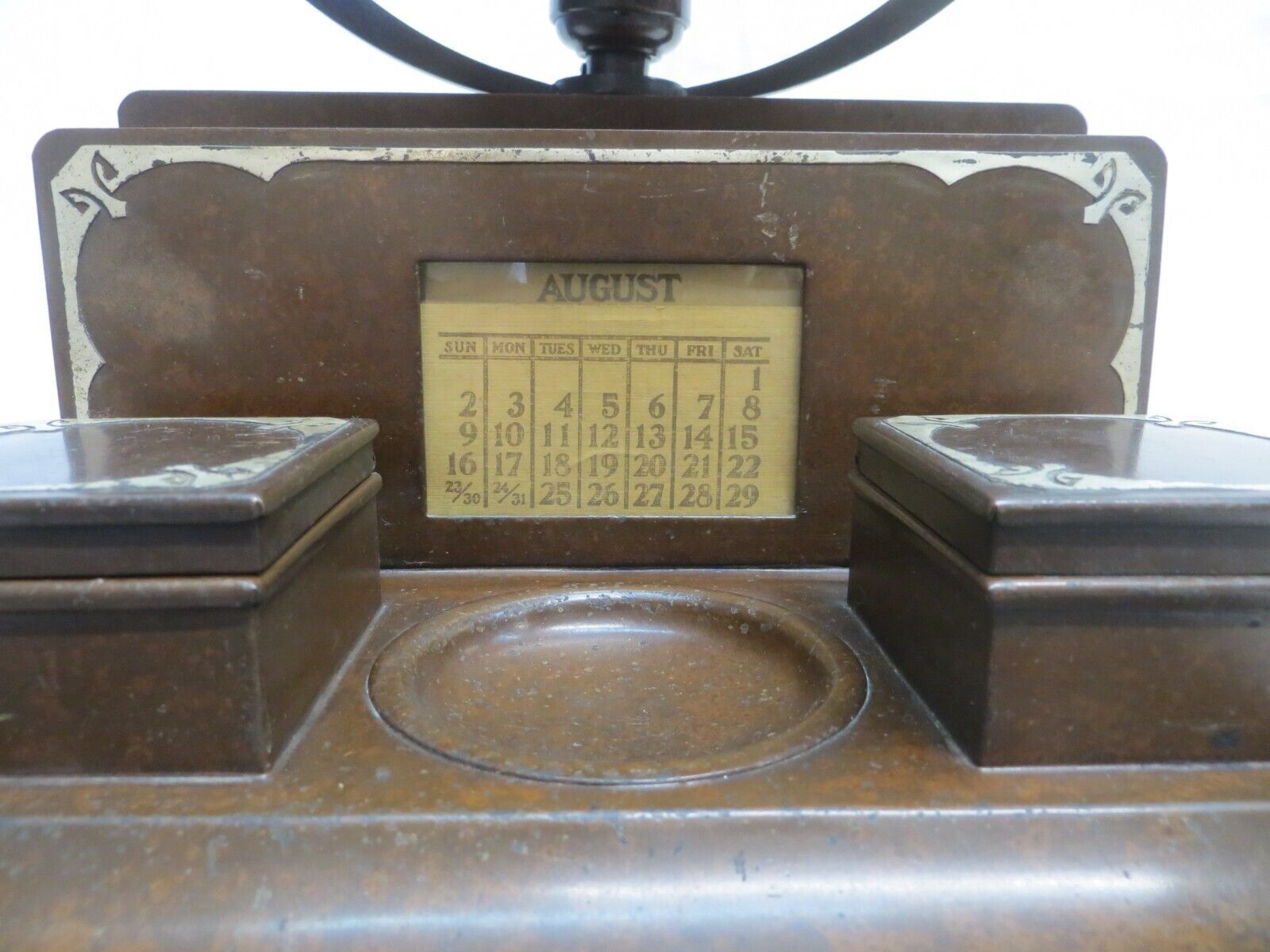
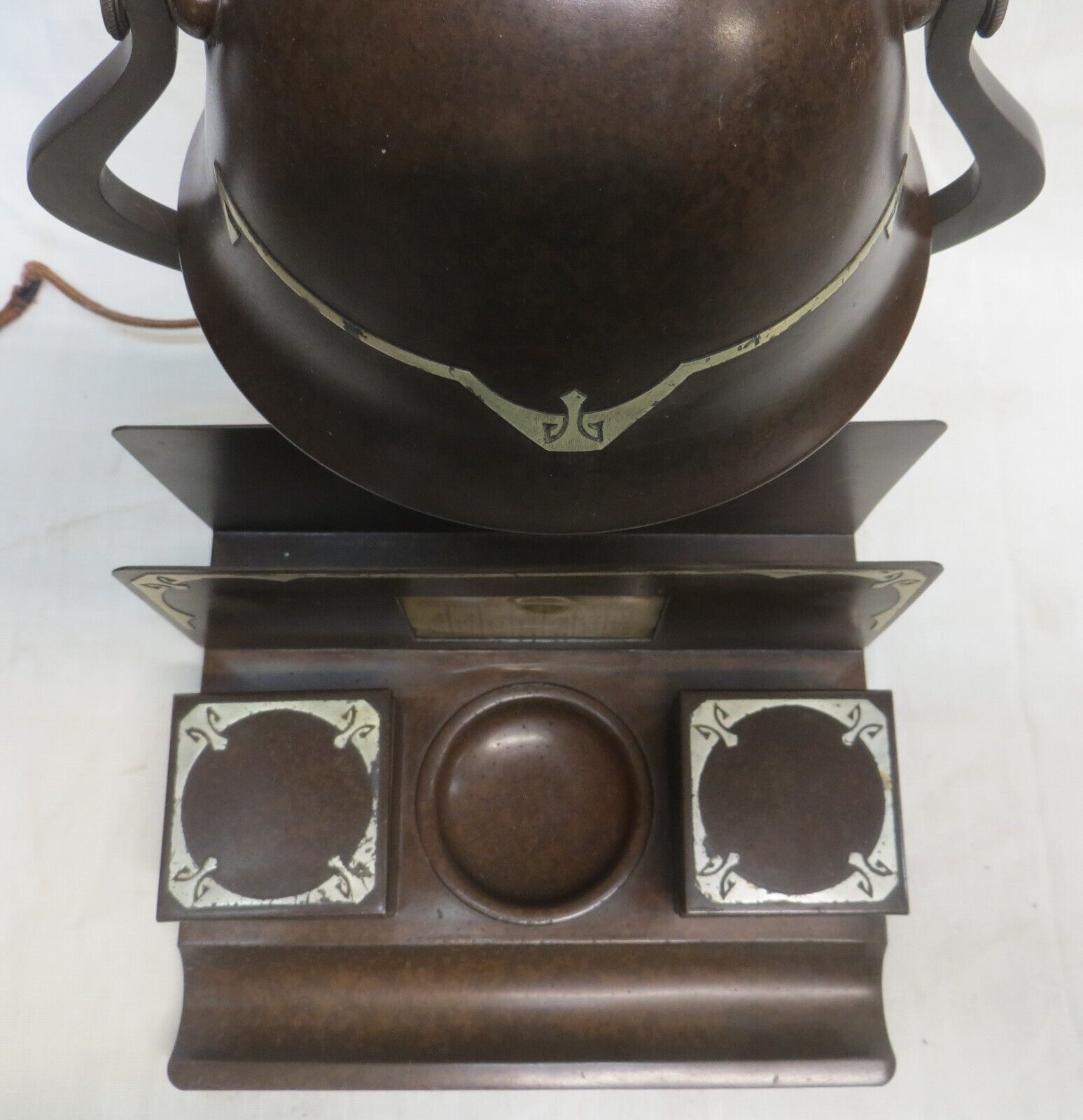
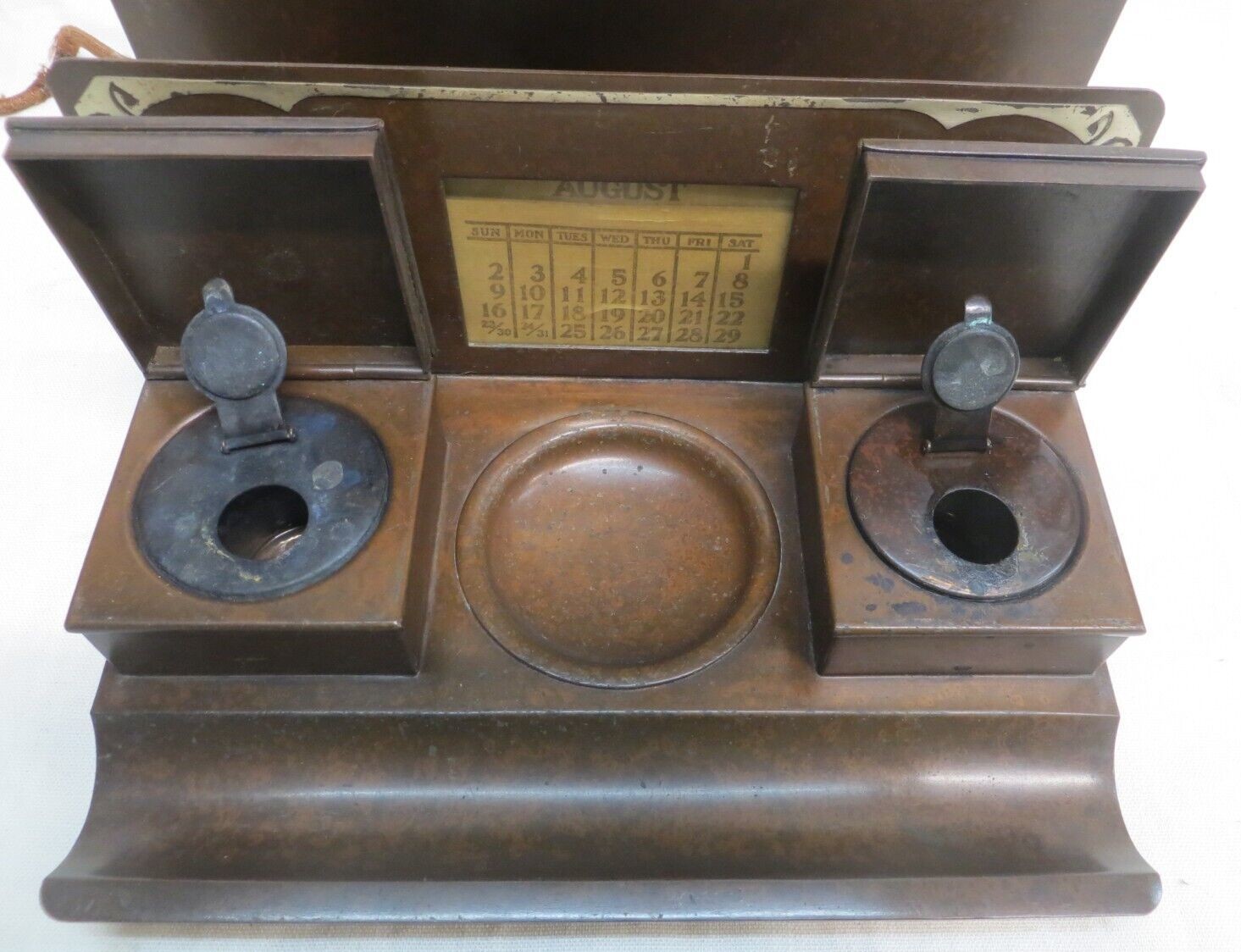
- The Base & Writing Tray: The heavy bronze foundation features a stepped profile with a built-in pen/pencil groove running along the front edge.
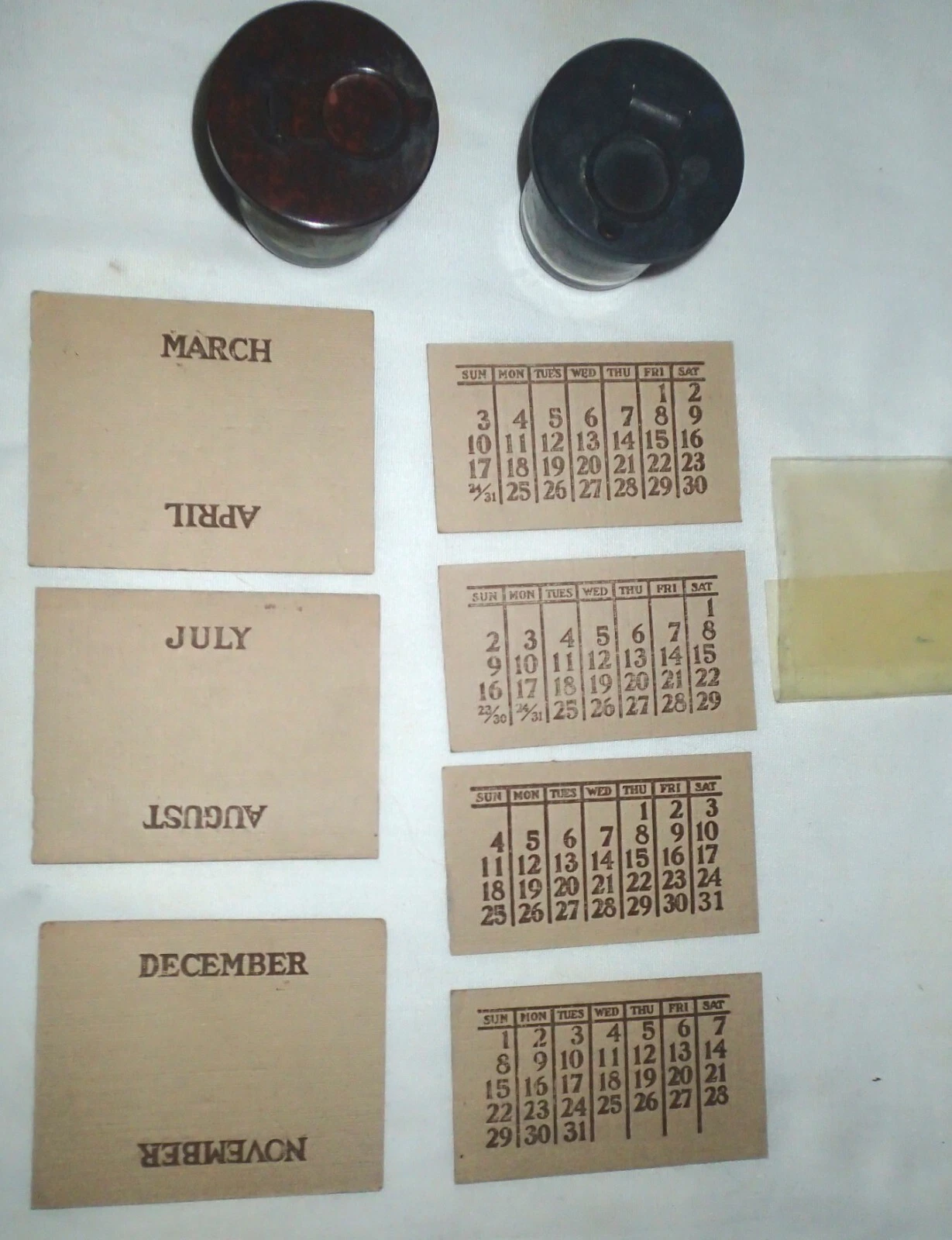
- Inkwells: Flanking the center are two double inkwells with hinged, lidded covers. Inside, the inkwells retain their original glass liners.
- Central Depression: Centered between the inkwells is a circular recessed depression intended writing accoutrements.
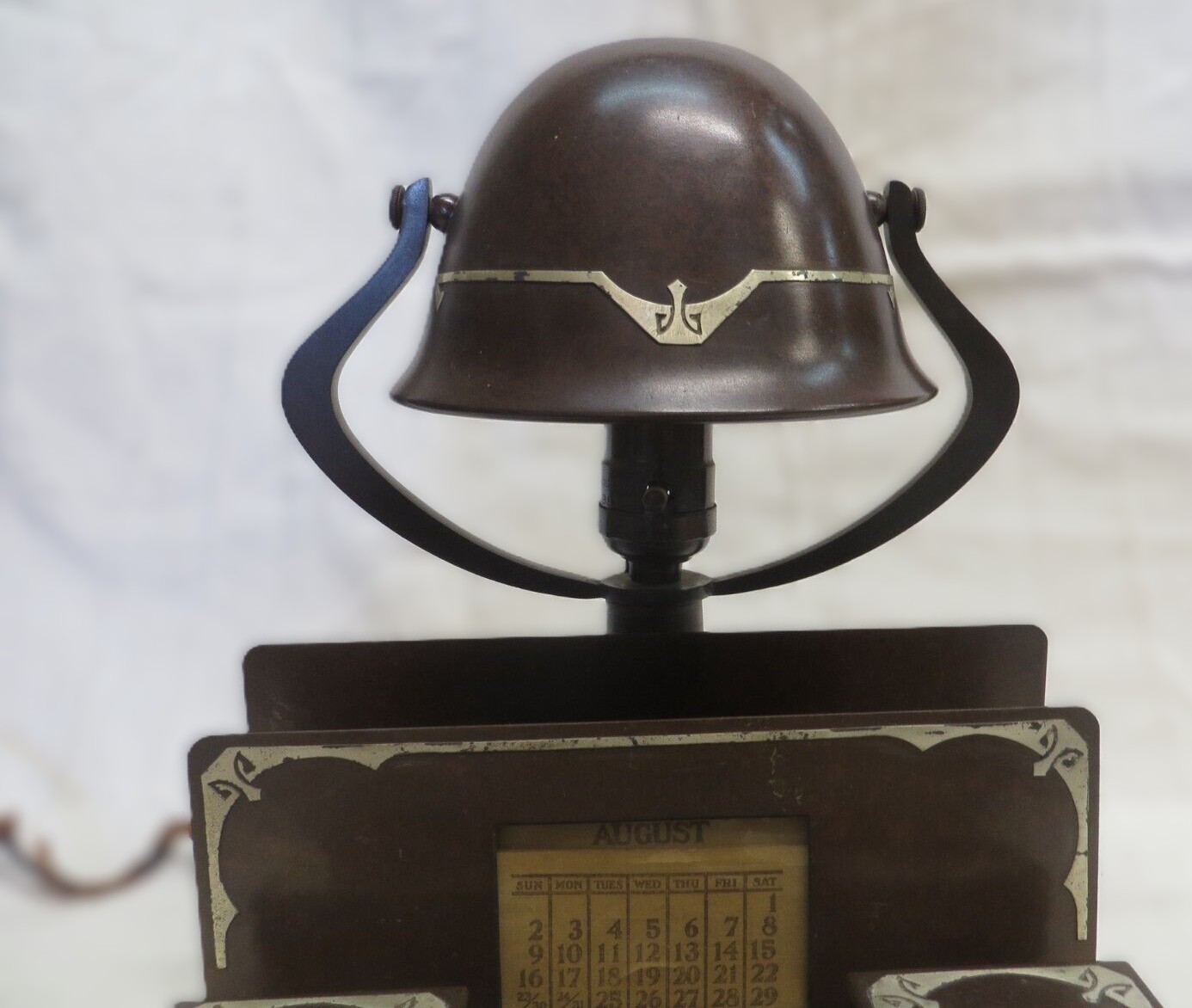
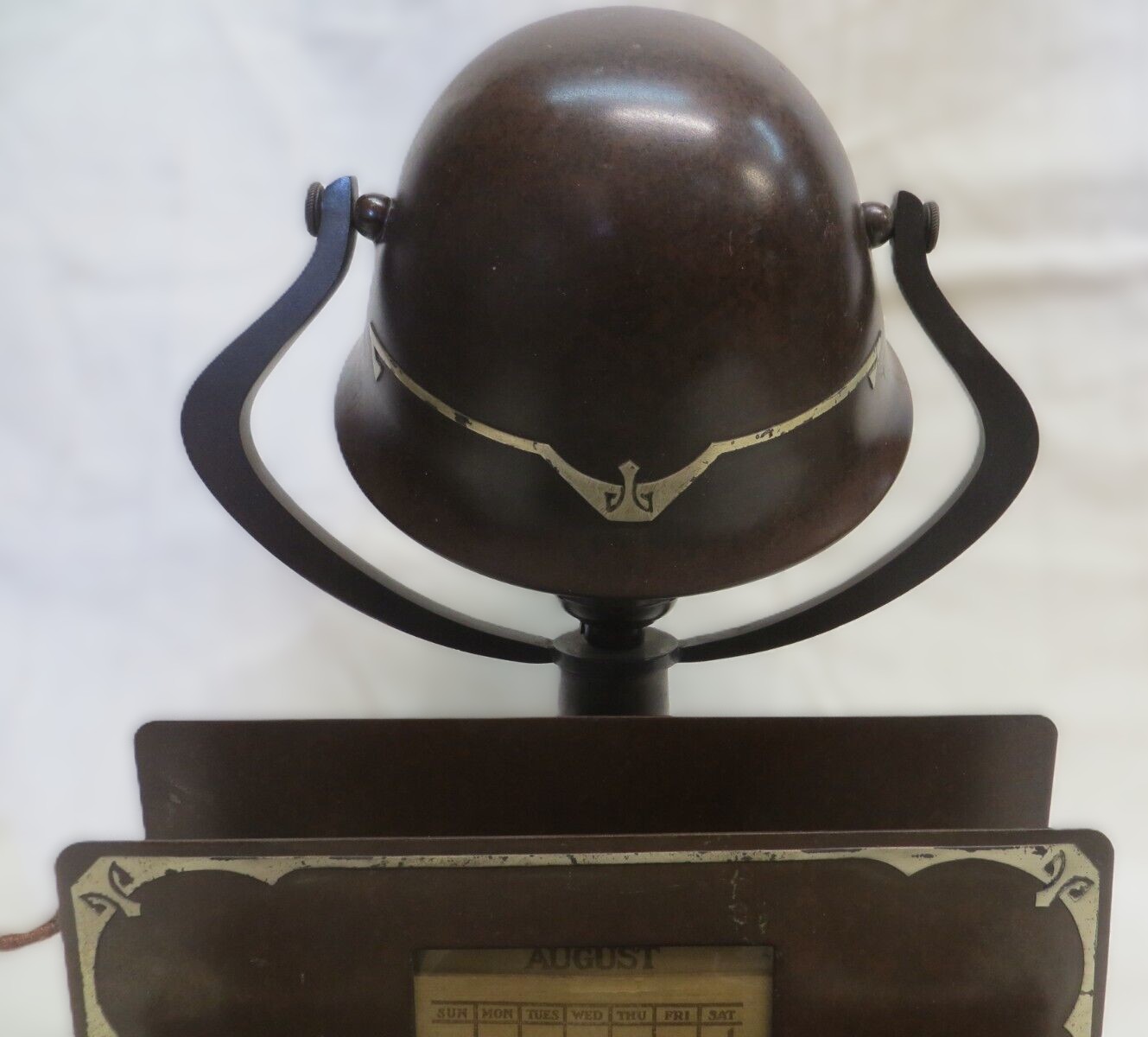
- Perpetual Calendar: Rising behind the center is a perpetual calendar housing with an open window displaying the month card (e.g., “August” or “March”) and day-of-the-week grid. The piece comes with its original replacement monthly paper cards.
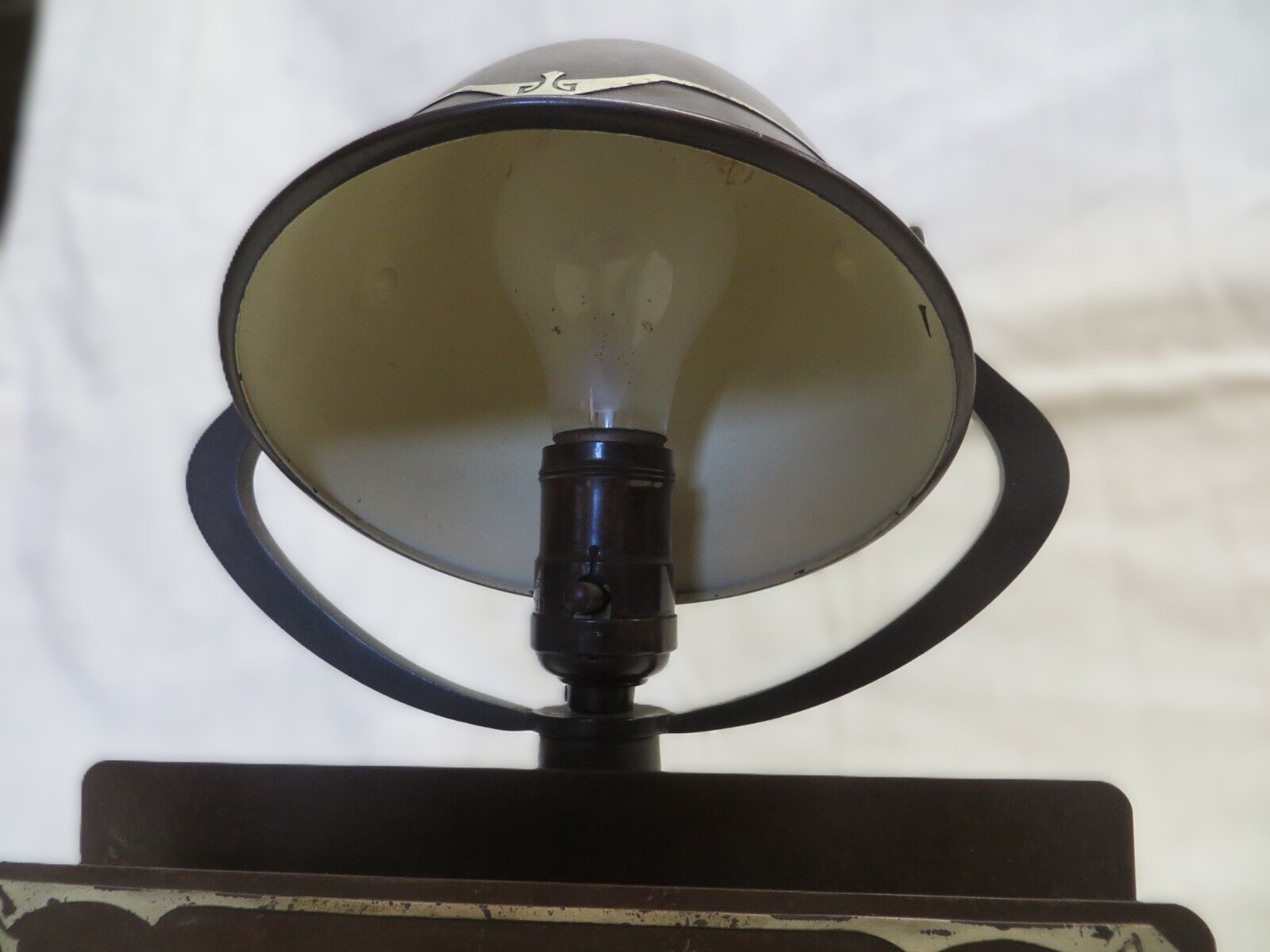
- The Lamp: Surmounting the back tier is an adjustable electric desk lamp. It features a distinctive hemispherical, helmet-style pivoting shade supported by an elegant, curved yoke frame. The shade is accented with a delicate applied sterling silver monogram or stylized motif.
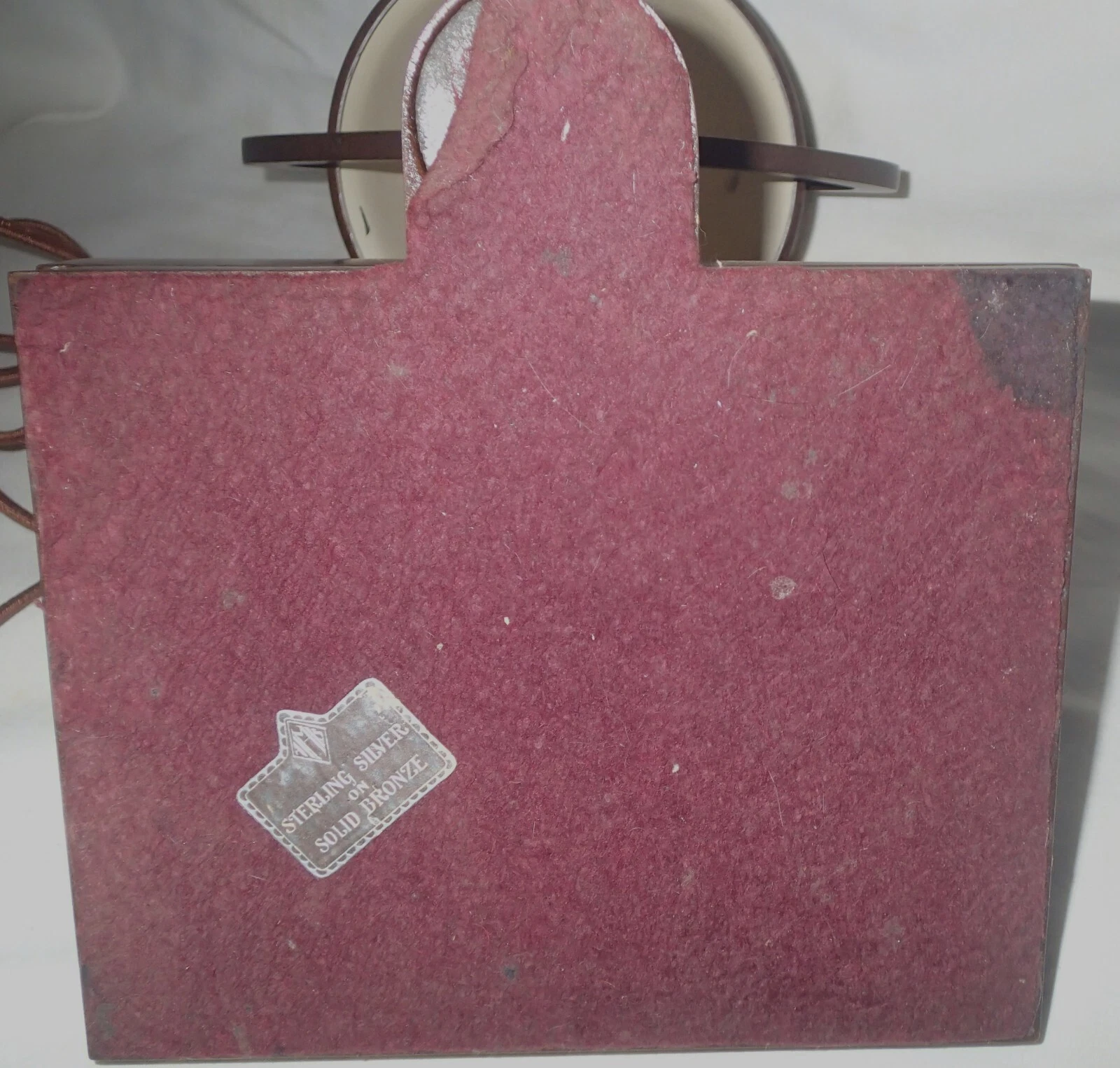
- Underside and Label: The base is lined with its original maroon felt and retains its original paper label reading “STERLING SILVER ON SOLID BRONZE”.
The Patent: Number and Summary
The revolutionary technique used to apply sterling silver directly to bronze without the use of visible solder or glue was patented by Otto L. Heintz.
- Patent Number: US Patent No. 1,036,832 (granted on August 27, 1912, following an application filed on June 7, 1911).
- Patent Summary: The patent outlines a specialized metallurgical process for permanently attaching precious metal overlays (such as sterling silver) onto base metal bodies (such as bronze or copper). By utilizing a precise combination of chemical treatment, mechanical pressure, and thermal bonding, the silver design is fused directly onto the bronze substrate in a way that prevents lifting, peeling, or shifting, creating a seamless inlay effect.
Manufacturing Date and Patent Status of the Combination Design
- Manufacture Date: circa 1912 – 1920s.
- Was the combination design patented? While the process of applying sterling silver to bronze was heavily patented, the specific multi-use desk set configuration (combining inkwells, a calendar, and a lamp into one unified casting) was a product design innovation rather than a separate utility patent. Heintz produced various complex desk set configurations assigned to their 1000–1200 production number series.
Historical Advertising
Heintz Art Metal Shop heavily marketed its high-end desk suites, lamps, and smoking accessories through prominent Arts & Crafts publications such as Gustav Stickley’s The Craftsman magazine, as well as luxury trade catalogs distributed through premier department stores and jewelers (such as Tiffany & Co., B. Altman & Co., R.H. Macy & Co., and Ovington’s). Advertisements from the 1910s frequently emphasized their proprietary finishes (“patinas”), handcrafted shapes, and the elegance of “Sterling Silver on Solid Bronze” executive office goods designed for sophisticated home libraries and executive desks.
History of the Heintz Art Metal Shop
- Founding & Early Years (1902–1906): The enterprise began when Otto L. Heintz (born into a family of Buffalo, New York manufacturing jewelers) purchased a small struggling company in 1902 and initially named it the Art Crafts Shop. In these early years, the shop focused primarily on copper items decorated with colorful fired enamel.
- Transition to Sterling-on-Bronze (1906): Around 1906, Otto Heintz shifted the company’s artistic direction entirely, renaming it the Heintz Art Metal Shop. He pioneered the technique of shaping bronze via lathe-spinning and stamping, pairing the warm metal with applied sterling silver designs and complex, chemical-heat patinas (ranging from their signature warm golden-brown and verde green to rich “Royal” red-iridescent finishes).
- Leadership Changes & Closure (1918–1930): The company enjoyed immense national acclaim and widespread placement in fine homes and executive offices until Otto Heintz’s sudden passing at age 41 on January 10, 1918. Following his death, key staff members moved on—such as sales manager Fred Smith, who departed in 1919 to found the competing Smith Metal Arts Co. (maker of “Silvercrest”). The original Heintz Art Metal Shop persevered through the 1920s but ultimately succumbed to the economic pressures of the Great Depression, closing its doors permanently on February 11, 1930.
Sold for $760 in February 2024
Content disclaimer. The information posted is the owner’s best knowledge and may not have been vetted by the SOIC. We welcome comments, corrections, and additions, working to make our website information comprehensive and accurate.
Join the Society of Inkwell Collectors (SOIC) – it’s free!
Founded in 1981 as a non-profit organization,
we are documenting inkwells (and accessories).
We’re here to help and inform!