





Hand-Carved Swiss Chalet Inkstand
| Categories | Figural - Inanimate |
| Type | Buildings / Structures |
| Material | Wood |
| Markings | Unmarked |
| Manufacturer | Black Forest |
| Origin | Switzerland |
| Date or Era | circa 1890 |
| Measuring | 7 ⅞” x 4 ¾” x 3 ⅛” high |
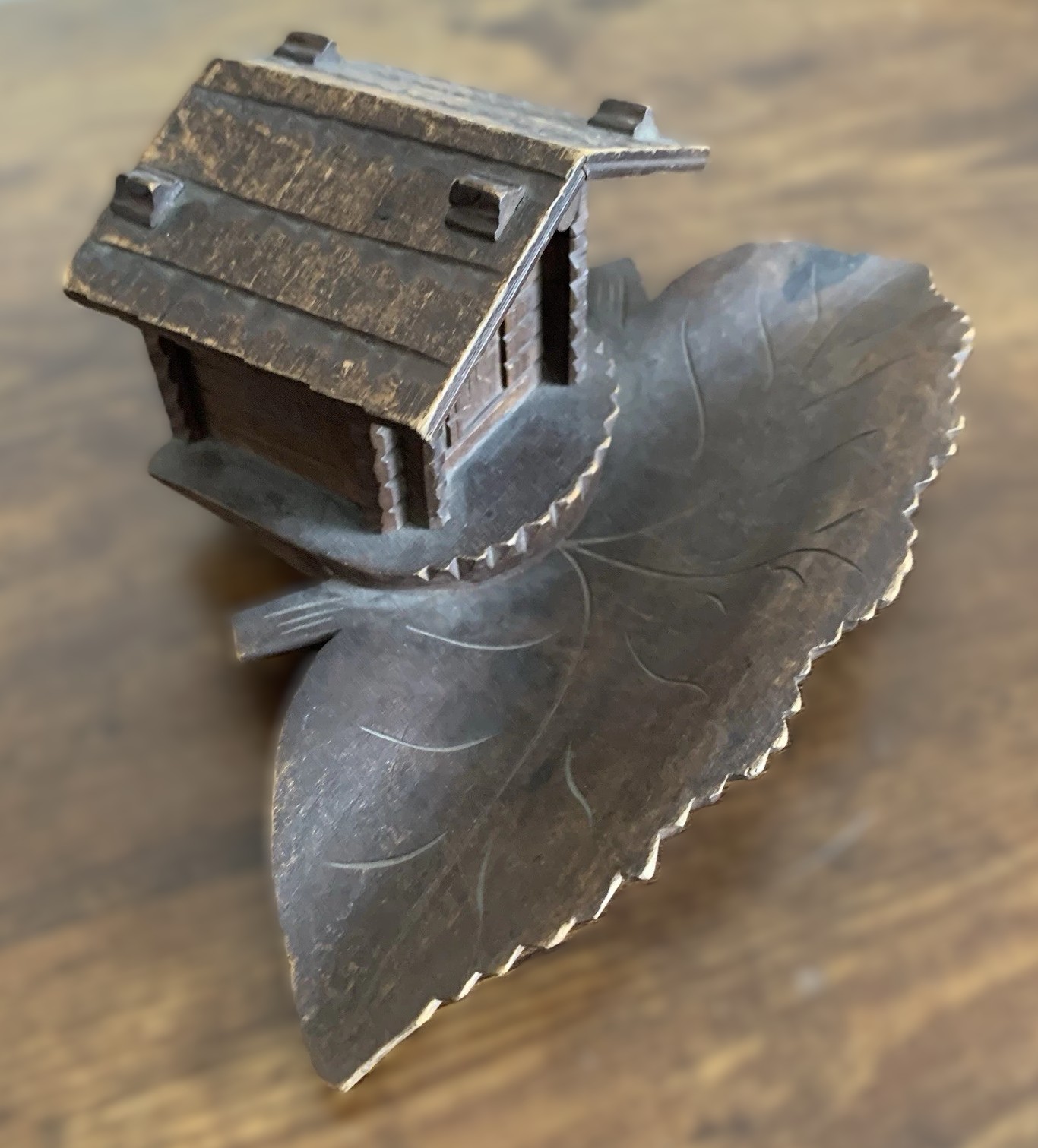
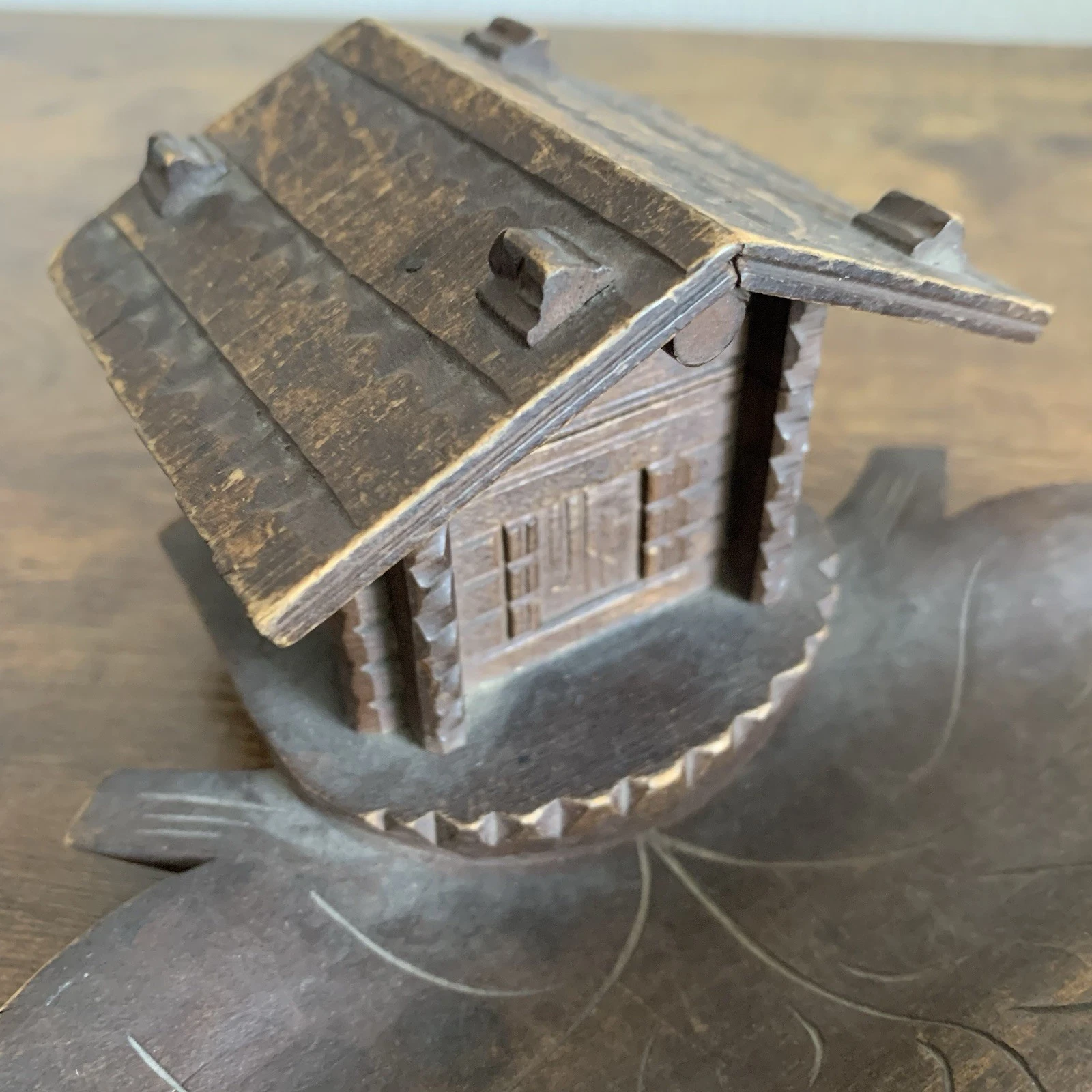
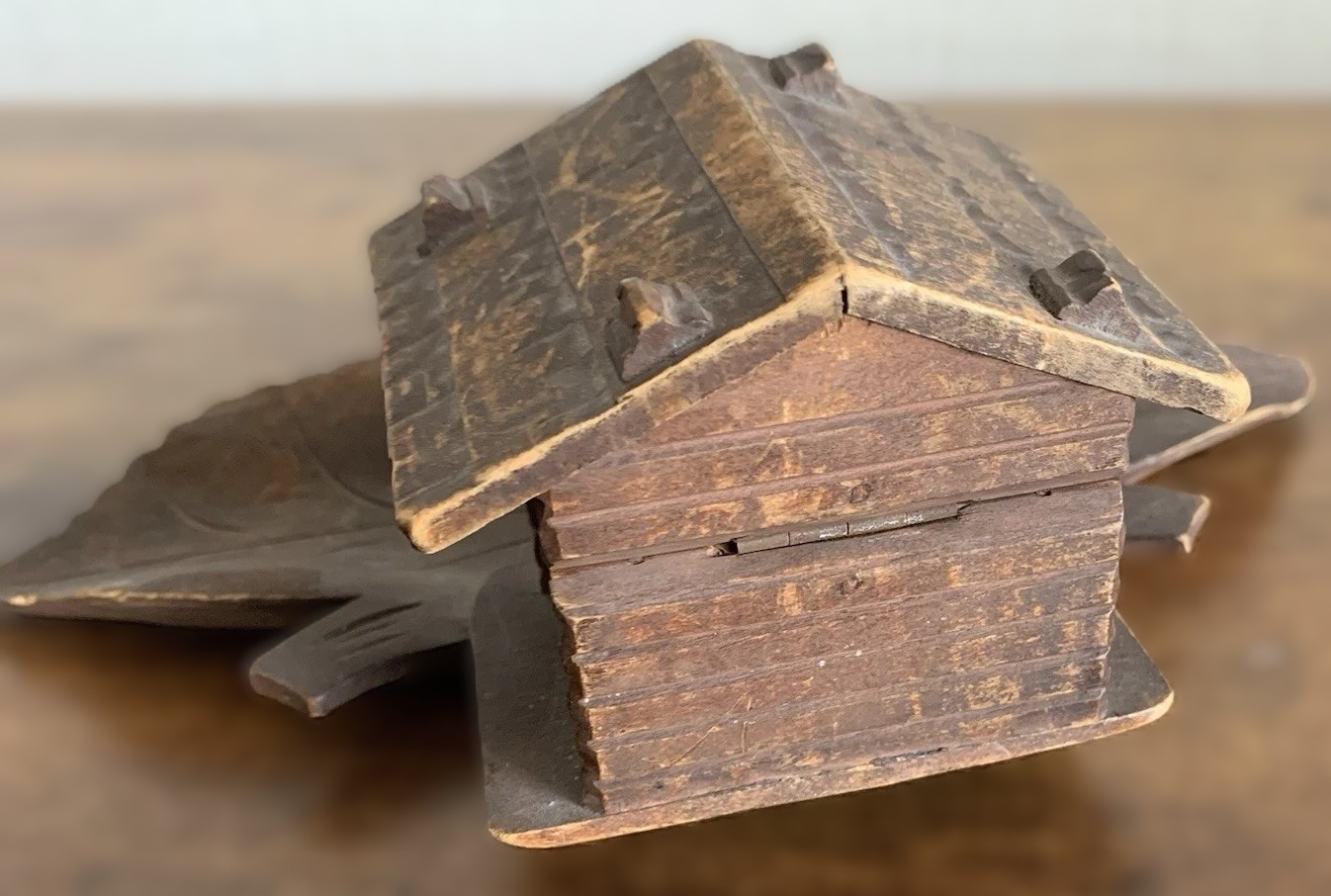
This hand-carved wooden inkstand is a classic example of Alpine folk art, specifically the “Swiss Chalet” style produced in the Brienz region of Switzerland during the late 19th century.
Description
- The Chalet: The inkwell is meticulously carved to resemble a traditional Swiss alpine cabin or chalet. It features notched “logs” at the corners, a detailed door and window, and a steeply pitched shingled roof.
- Roof Details: The roof is decorated with carved “stones” or weights, which historically were used in the Alps to hold down shingles against high mountain winds.
- The Base: The chalet sits atop a large, masterfully carved leaf-shaped base, complete with intricate vein patterns and serrated edges. The base serves both as a decorative element and a functional tray for resting a dip pen.
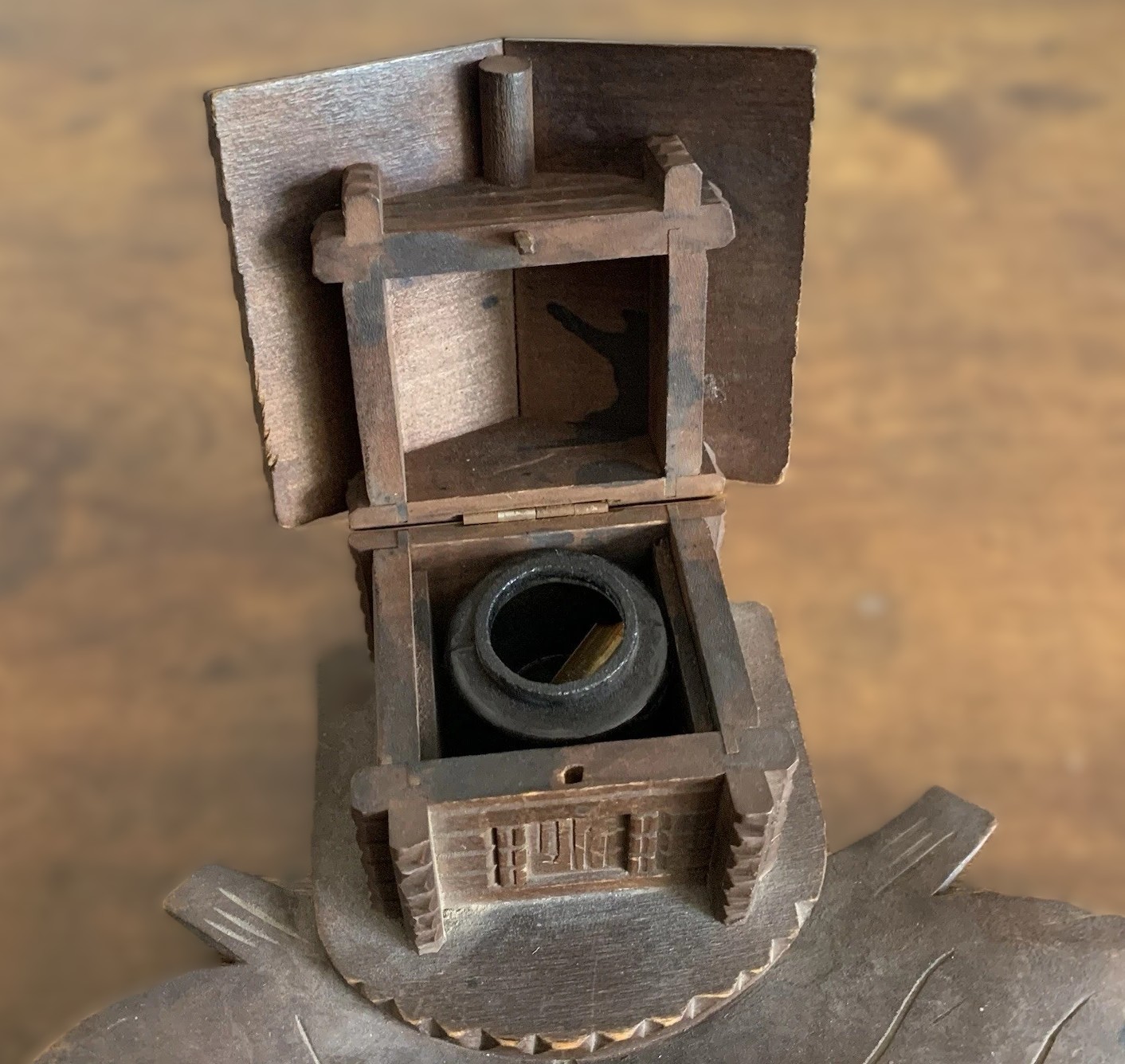
- The Mechanism: The entire roof is hinged at the back, lifting to reveal a square-cut interior compartment.
The Original Ink Bottle
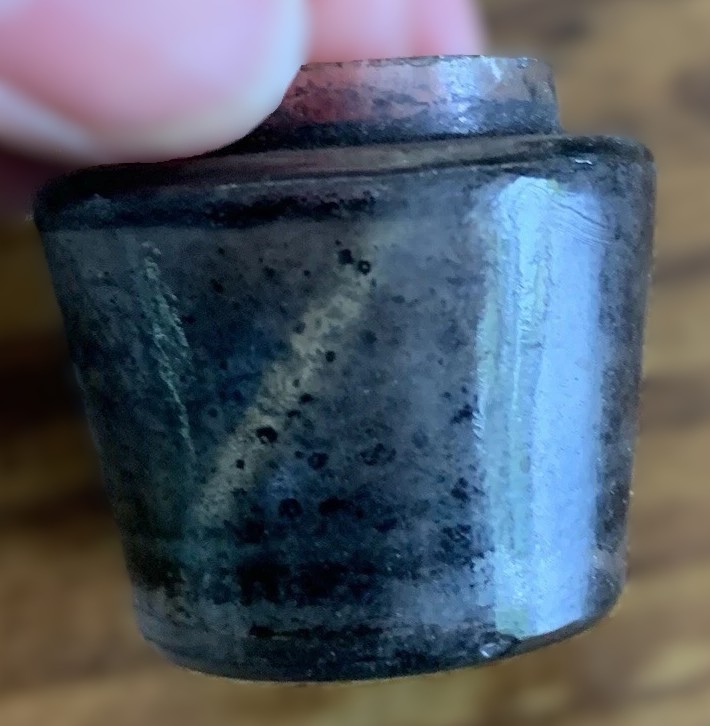
- Material: The set retains its original glass ink bottle.
- Shape: It is a squat, tapered vessel designed to fit perfectly within the wooden “log” walls of the cabin.
Origin and Age
- Origin: Brienz, Switzerland. While often broadly categorized as “Black Forest” carving, these architectural and figural pieces were the specialty of the Bernese Oberland region. The Brienz school was famous for producing these “souvenirs” for wealthy Victorian travelers on the Grand Tour.
- Estimated Age: Circa 1880–1900. The style of the hinges and the naturalistic, high-relief carving of the leaf base are characteristic of the peak production period for Brienz woodcarving during the Late Victorian era.
- Wood Type: This piece is most likely carved from Lindenwood (lime) or Swiss Pine, which were favored by Alpine carvers for their soft, even grain that allowed for such fine architectural detail.
Observations on Condition
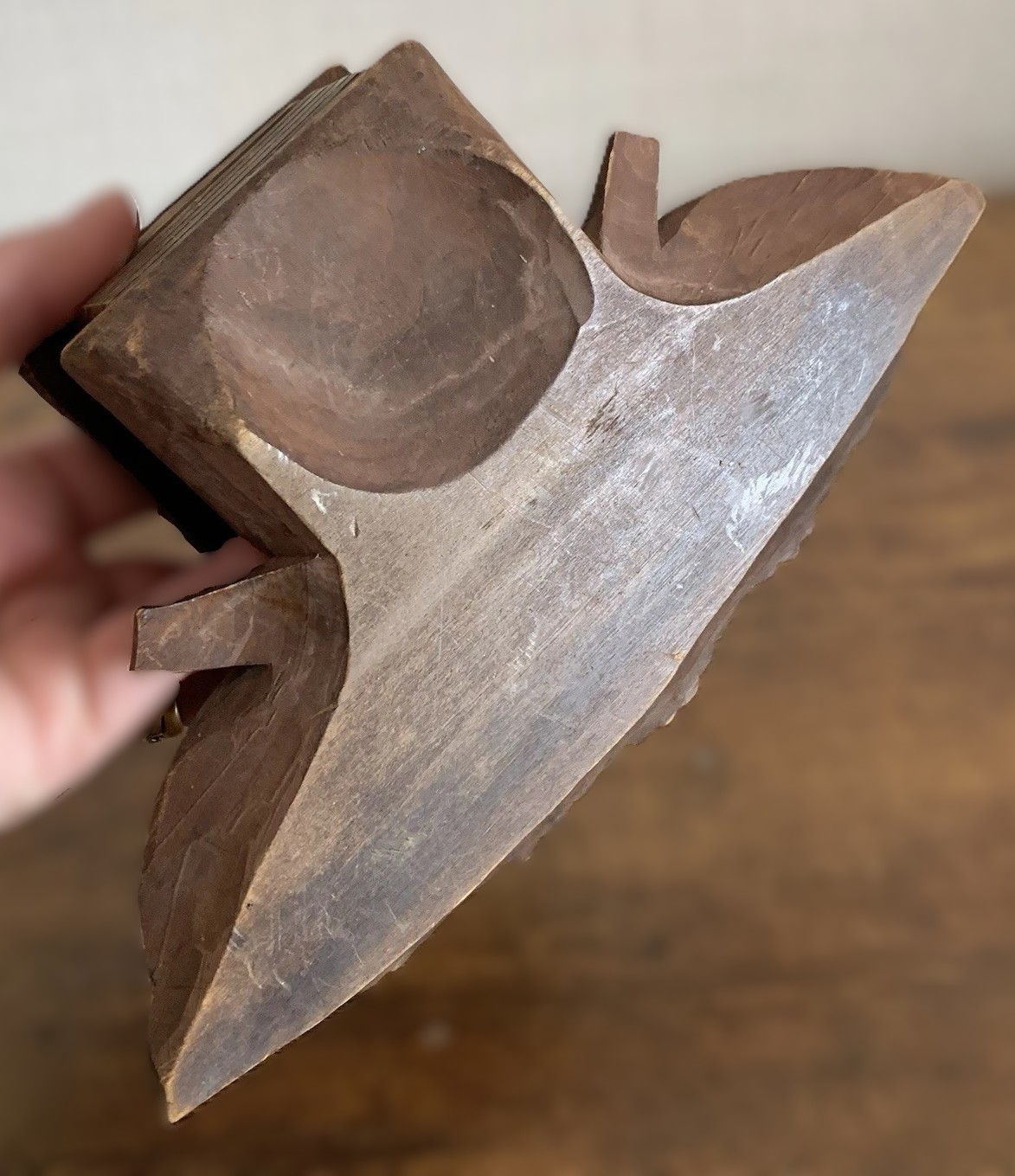
The underside of the piece shows the authentic, hand-chiseled flat surface typical of 19th-century Brienz work, rather than the perfectly smooth machine-sanded bottom found on modern reproductions. The dark, aged patina suggests it has been well-preserved over the last 120+ years.
Sold for $35 in December 2025
Content disclaimer. The information posted is the owner’s best knowledge and may not have been vetted by the SOIC. We welcome comments, corrections, and additions, working to make our website information comprehensive and accurate.
Join the Society of Inkwell Collectors (SOIC) – it’s free!
Founded in 1981 as a non-profit organization,
we are documenting inkwells (and accessories).
We’re here to help and inform!