


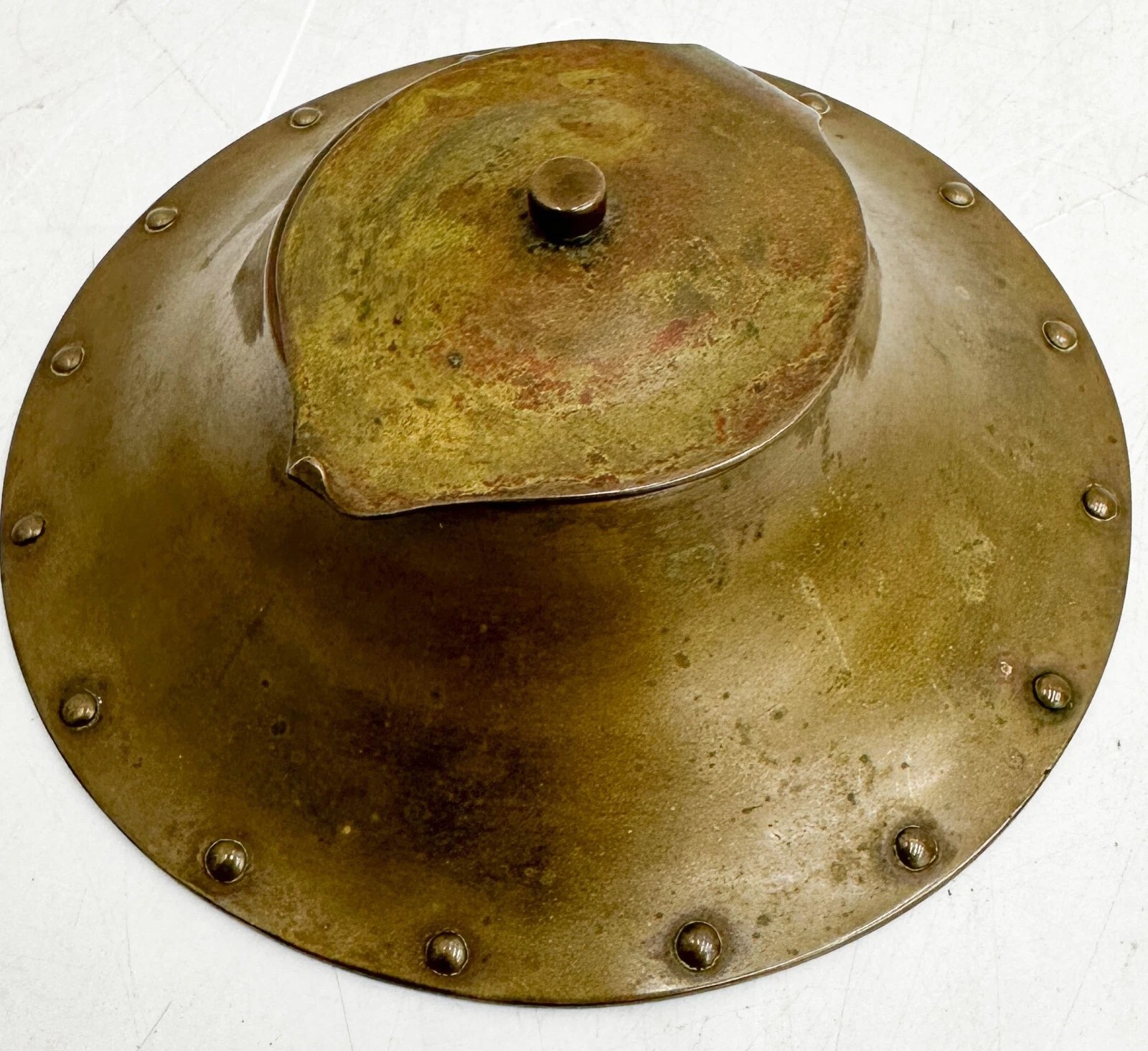
Gustav Stickley Inkwell
| Categories | Arts & Crafts |
| Material | Coppered metal |
| Markings | See Narrative |
| Manufacturer | Gustav Stickley |
| Origin | United States |
| Date or Era | circa 1905 |
| Measuring | 5 ½” diameter; 1 ¾” high |
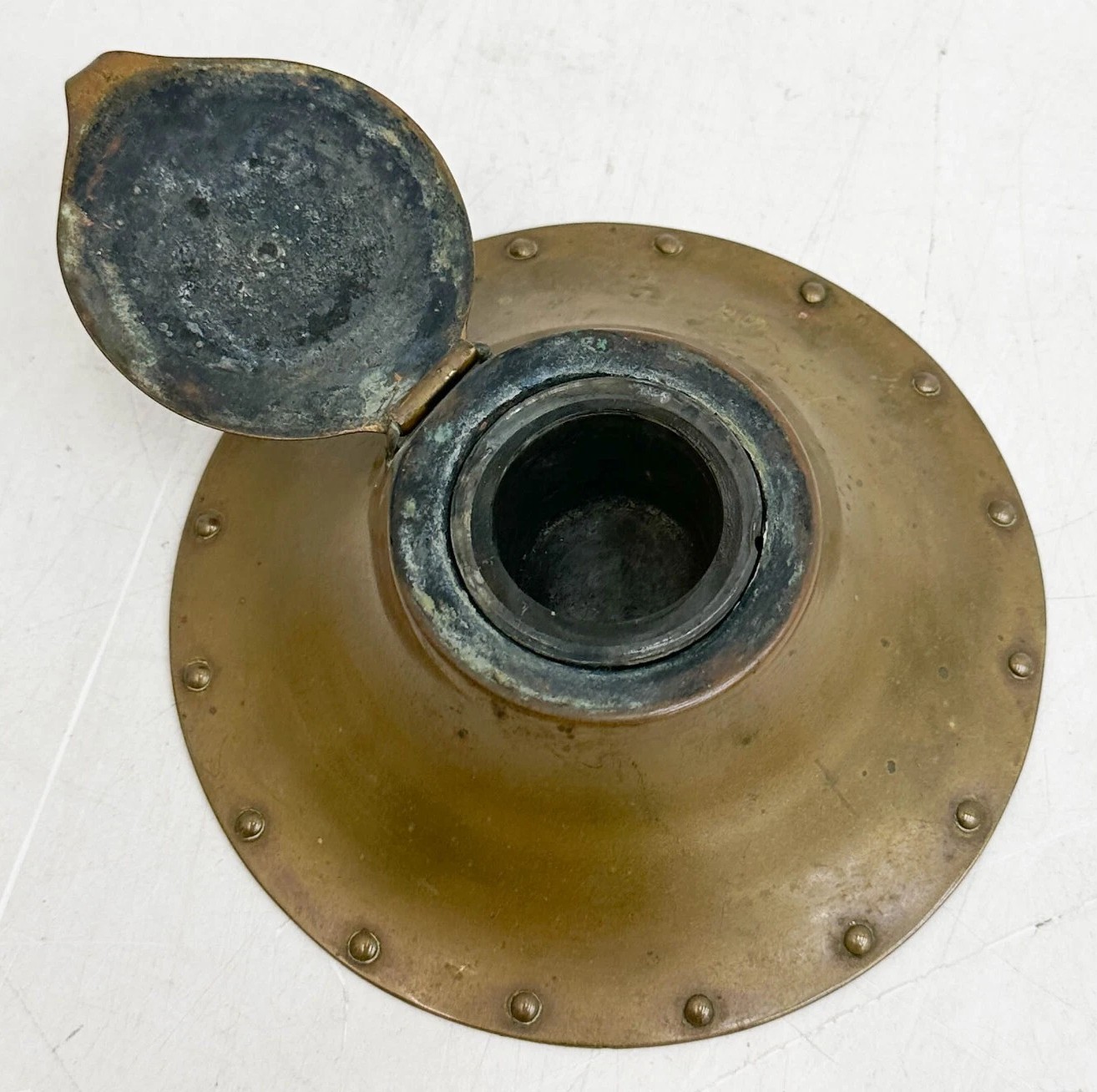
This Gustav Stickley Craftsman Workshops copper inkwell is a definitive example of the American Arts and Crafts movement, embodying the philosophy of “beauty in utility”.
Physical Description
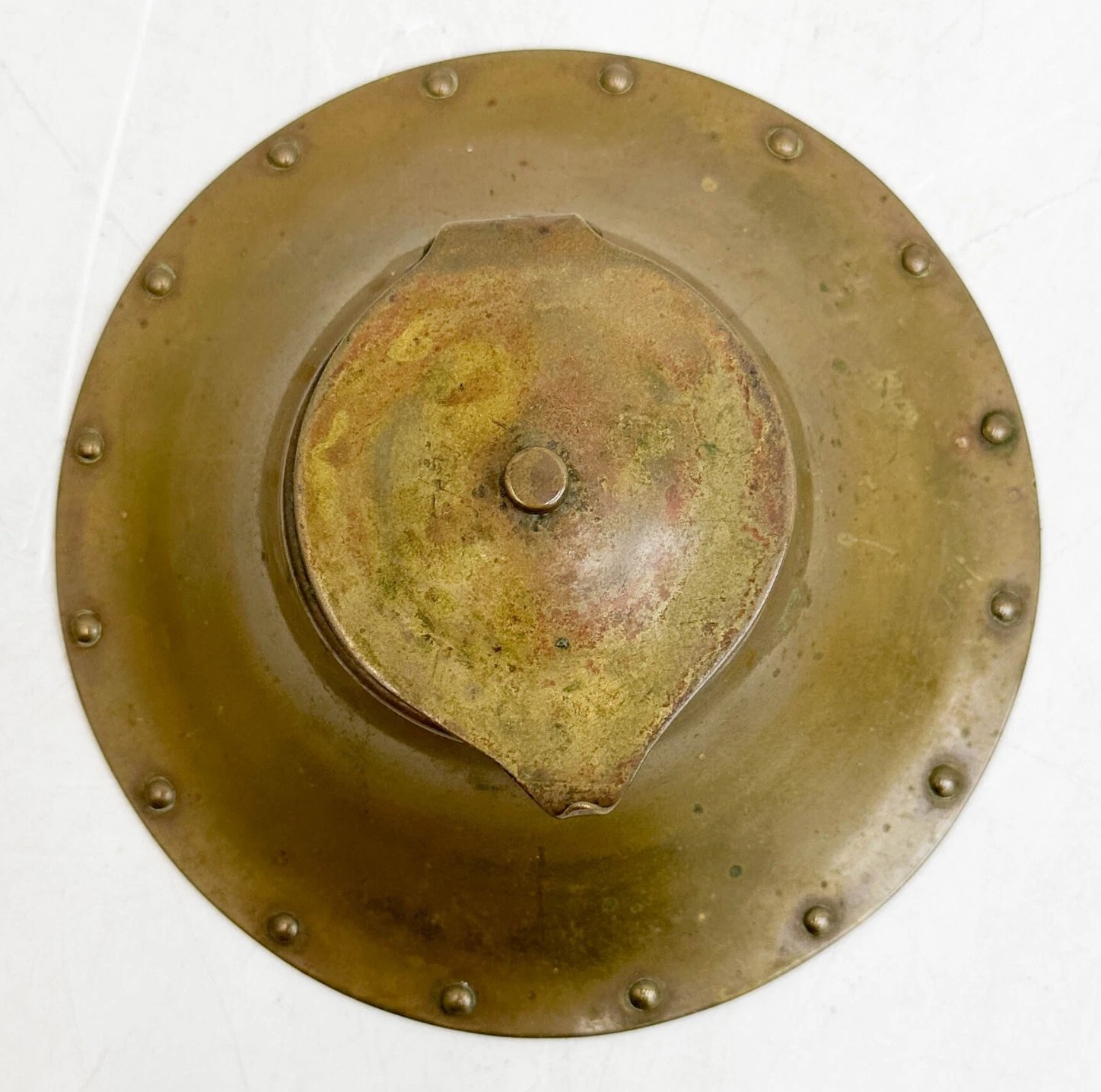
- Form: The inkwell features a wide, circular splayed base that tapers upward to a central ink reservoir.
- Material: It is crafted from heavy gauge hammered copper with a dark, original patinated finish.
- Construction: The perimeter of the base is decorated with a series of prominent, hand-hammered rivets (or studs), a signature aesthetic detail of Stickley’s metalwork.
- Mechanism: The top features a hinged lid with a simple circular pull knob.
- Internal Components: Inside the copper housing is a removable, heavy glass liner (reservoir) to hold the ink.
The “Craftsman Workshops” Mark
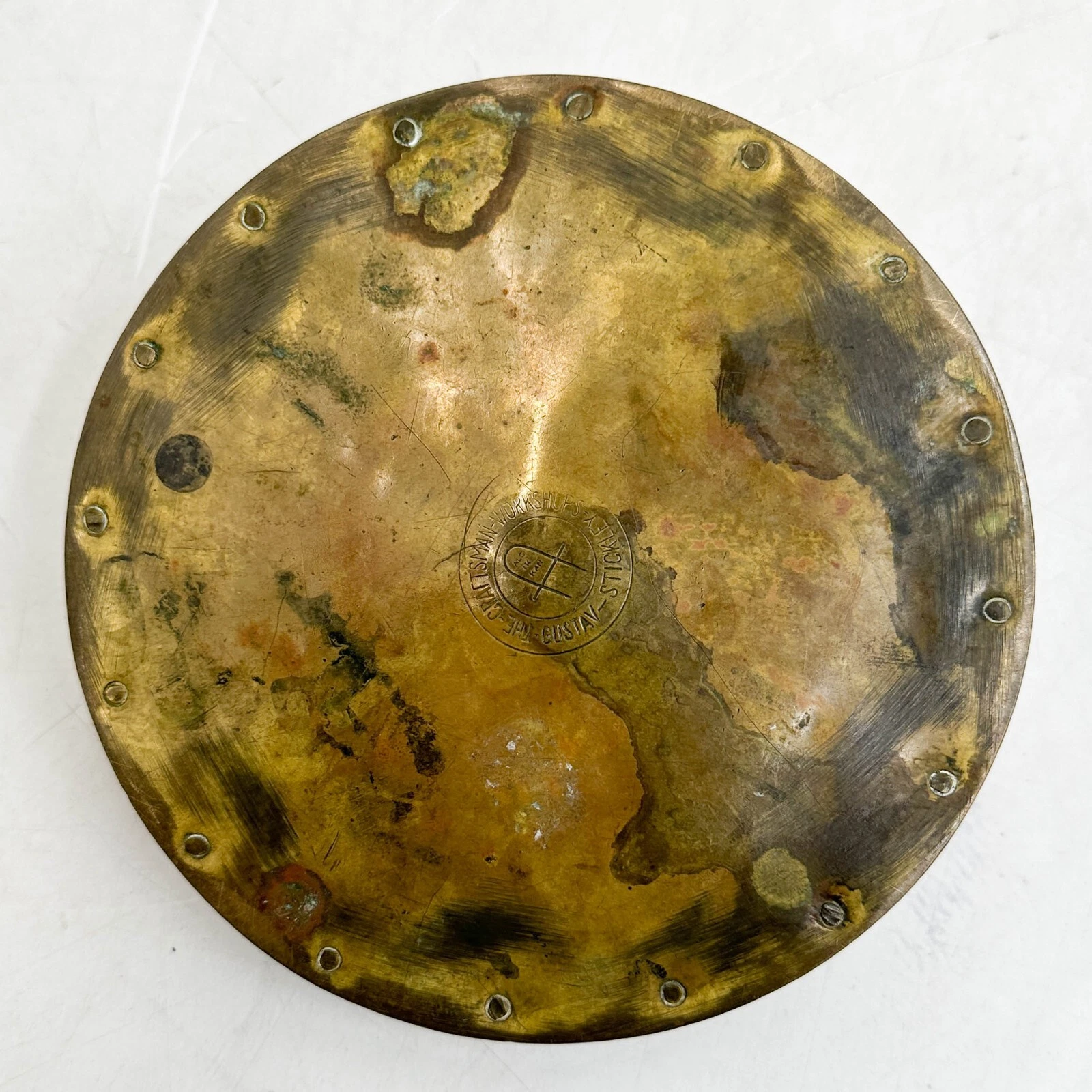
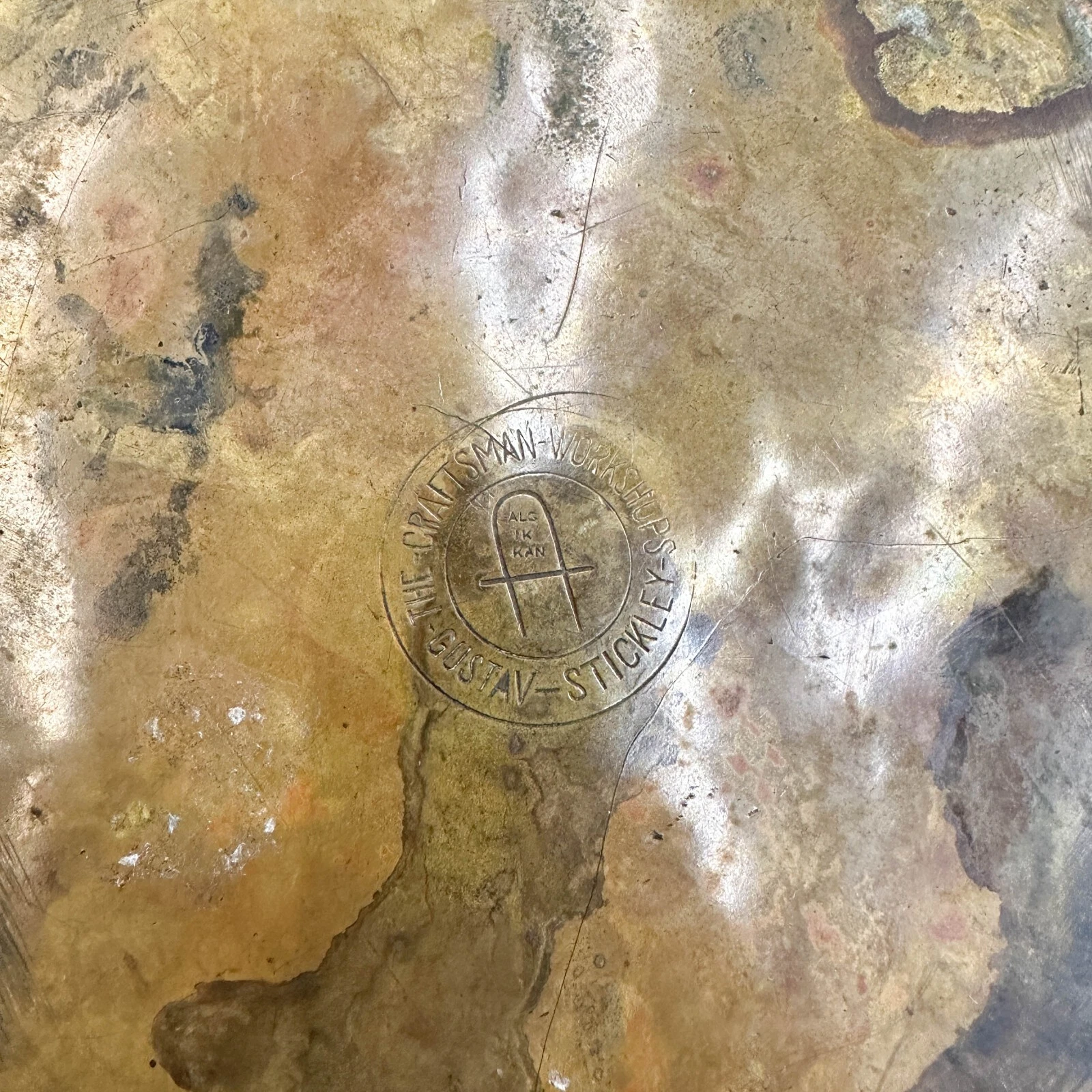
The underside of the inkwell features the official Gustav Stickley shop mark, which provides several key details:
- Design: The mark consists of a circular stamp containing a joiner’s compass.
- Motto: Inside the compass is the Flemish phrase “Als Ik Kan,” which translates to “As best I can“. This was a personal motto adopted by Stickley to signify his commitment to superior craftsmanship.
- Text: Surrounding the compass are the words: “THE CRAFTSMAN-WORKSHOPS – GUSTAV STICKLEY“.
- Authenticity: This specific circular stamp was used by the Craftsman Workshops in Eastwood (Syracuse), New York, primarily between 1905 and 1912.
Historical Context & Information
- Era: This piece dates to the peak of Stickley’s production, circa 1905–1910.
- Catalog Number: In original Stickley catalogs, this design is typically identified as No. 195. It was often sold as part of a larger desk set that included a blotter, pen tray, and letter opener in matching hammered copper.
- Artistic Philosophy: Stickley’s metalwork shop was established around 1902 to complement his famous “Mission” oak furniture. The “honest” construction—where the rivets and hammer marks are left visible—was meant to contrast with the mass-produced, overly ornate Victorian goods of the previous era.
Sold for $734 in December 2025
Content disclaimer. The information posted is the owner’s best knowledge and may not have been vetted by the SOIC. We welcome comments, corrections, and additions, working to make our website information comprehensive and accurate.
Join the Society of Inkwell Collectors (SOIC) – it’s free!
Founded in 1981 as a non-profit organization,
we are documenting inkwells (and accessories).
We’re here to help and inform!