




Gothic Revival Double Inkstand
| Categories | Bronze - Brass - Copper |
| Material | Brass |
| Markings | Unmarked |
| Manufacturer | Undetermined |
| Origin | England |
| Date or Era | circa 1870 |
| Measuring | 11 ¼” x 7 ¾” x 3 ¼” high |
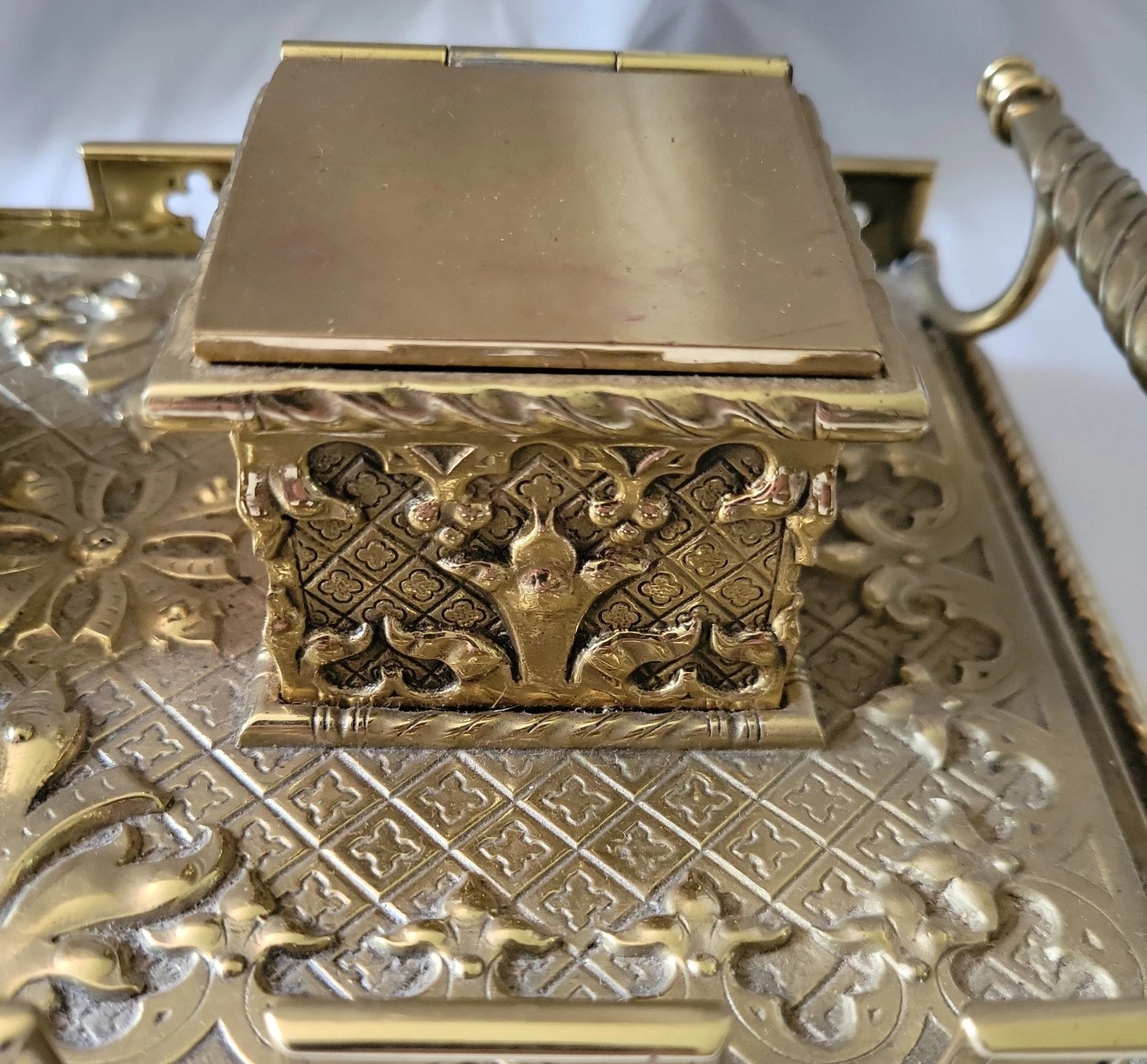
This Gothic Revival double inkstand is an example of the 19th-century architectural aesthetic applied to desk accessories.
Description
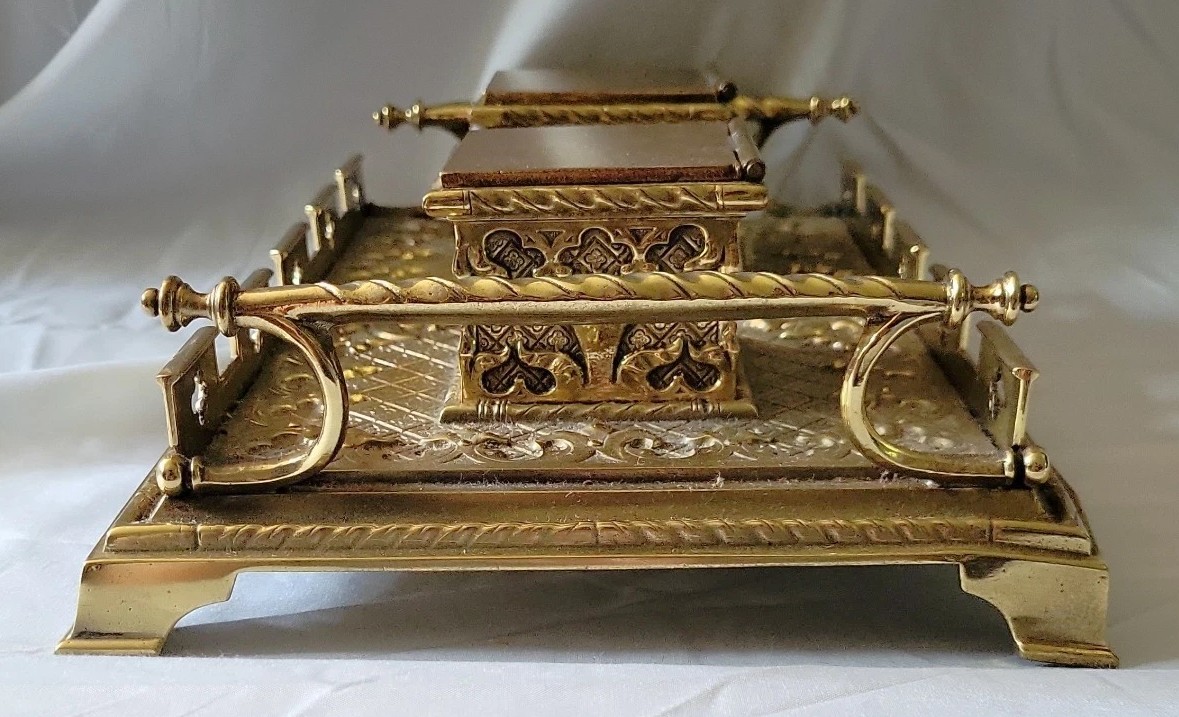
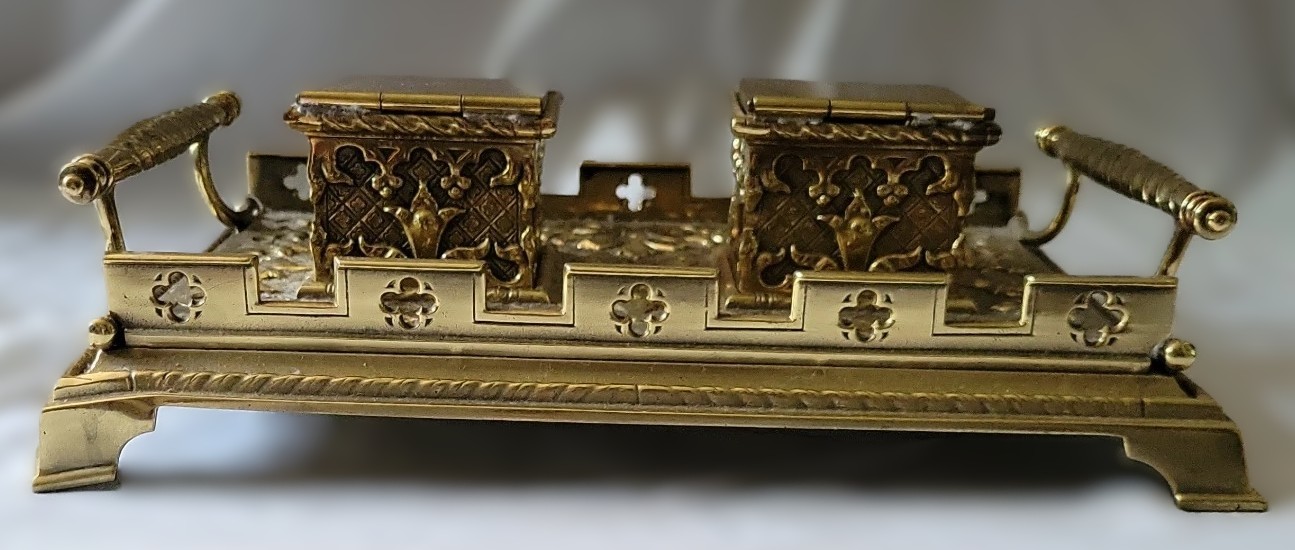
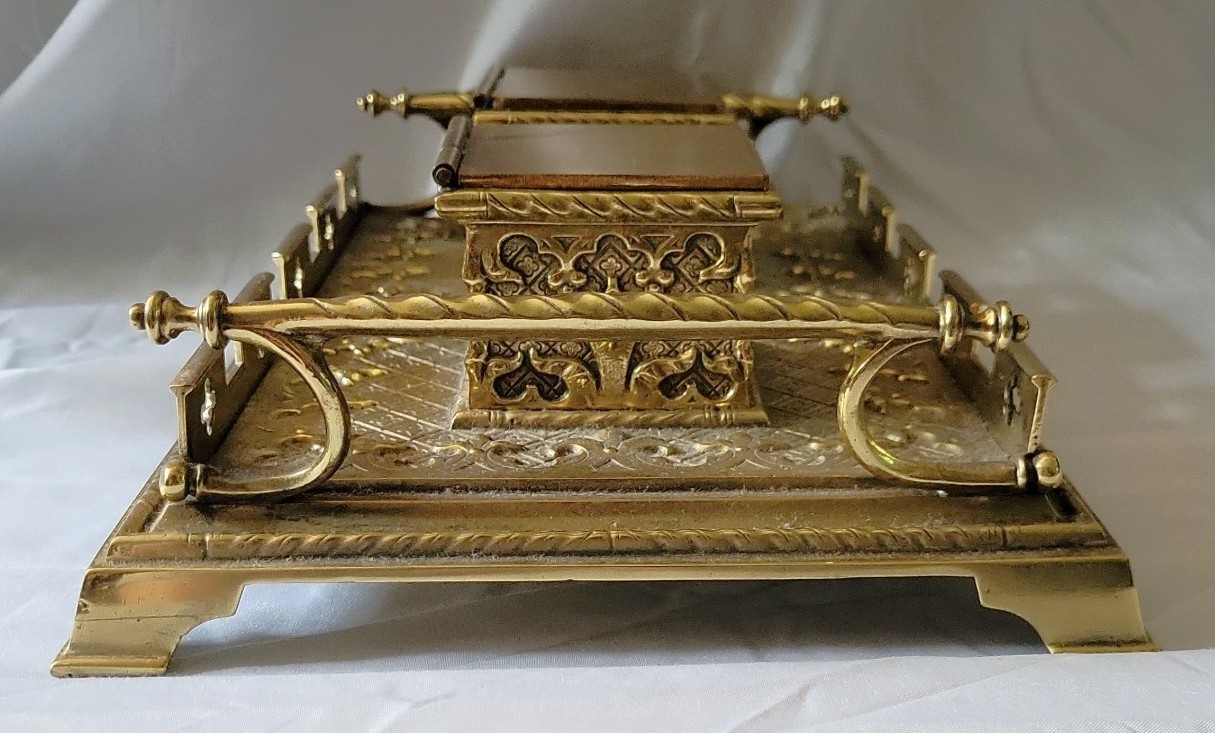
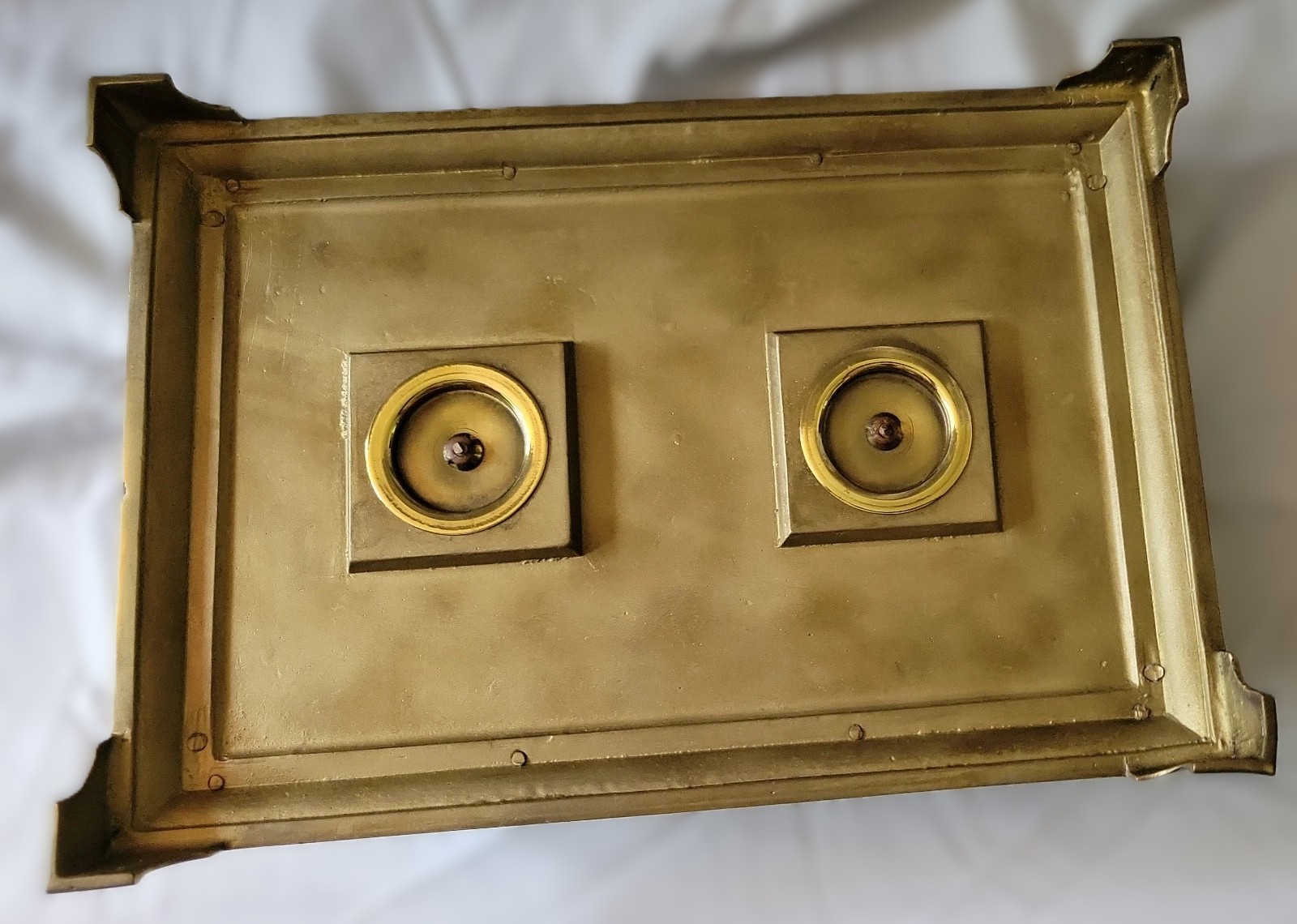
- The Structure: This is a heavy, rectangular brass stand with a double-well design. It features two square, hinged inkwell housings flanking a central space.
- Architectural Detailing: The piece is heavily decorated with Gothic architectural motifs:
- Quatrefoils: The low gallery rail surrounding the tray is pierced with rhythmic quatrefoils (four-lobed clover designs), a hallmark of Gothic window tracery.
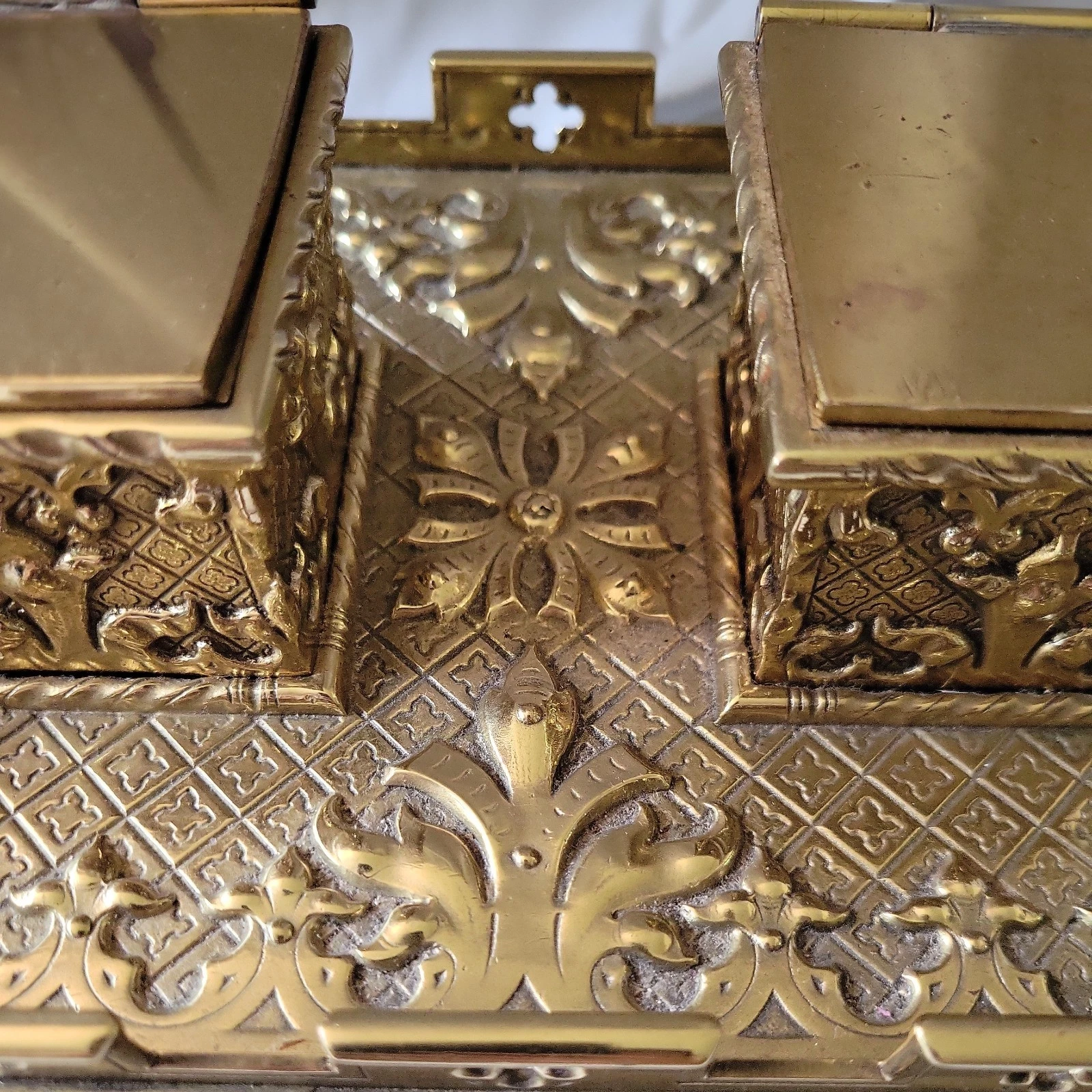
- Diaper Work: The vertical panels of the inkwell housings feature a diamond diaper pattern, often seen in stone carvings of the period.
- Fleur-de-lis: Stylized fleur-de-lis or Gothic foliate designs are embossed on the primary flat surfaces of the tray and the sides of the wells.
- Handles & Feet: The stand is flanked by two large, twisted rope-style handles and rests on four substantial bracket feet with tiered, stepped edges that reinforce the “building-like” feel of the piece.
- Missing Components: The glass inserts are missing. These would have been circular glass pots that dropped into the square brass housings to hold the ink.
Origin and Manufacturer
Despite the lack of a visible mark, this piece is characteristic of the high-quality brassware produced in England during the mid-to-late Victorian era.
- Potential Maker: A primary candidate for this style is William Tonks & Sons of Birmingham. Tonks was one of the largest producers of high-end Gothic Revival architectural brassware and frequently used these specific types of bracket feet and quatrefoil piercing without always marking their domestic pieces.
- Alternative Attribution: The quality of the casting also aligns with firms like Messenger & Co., who specialized in the “Ecclesiastical” style for both home and church use.
Estimated Age
- Circa 1865–1885.
- The Gothic Revival movement in England, championed by designers like A.W.N. Pugin, peaked in the 1870s. This “High Victorian” period favored these heavy, masculine desk sets for use in home libraries or law offices. The use of heavy brass casting and mechanical hinges suggests it was made before the lighter, stamped-metal mass production of the 1890s took over.
Significance
This inkstand belongs to the Ecclesiastical or Pugin-esque school of design. In the 1870s, owning such a set was a statement of serious scholarship and traditional values, as it mirrored the grand “Gothic” architecture of the era’s universities and cathedrals.
Sold for $360 in December 2025
Content disclaimer. The information posted is the owner’s best knowledge and may not have been vetted by the SOIC. We welcome comments, corrections, and additions, working to make our website information comprehensive and accurate.
Join the Society of Inkwell Collectors (SOIC) – it’s free!
Founded in 1981 as a non-profit organization,
we are documenting inkwells (and accessories).
We’re here to help and inform!