

Glass Inkwell – Water Lily – René Lalique
| Categories | Glass - Non-figural |
| Material | Glass |
| Markings | Signed |
| Manufacturer | Rene Lalique |
| Origin | France |
| Date or Era | circa 1910 |
| Measuring | 3 ¼” diameter |
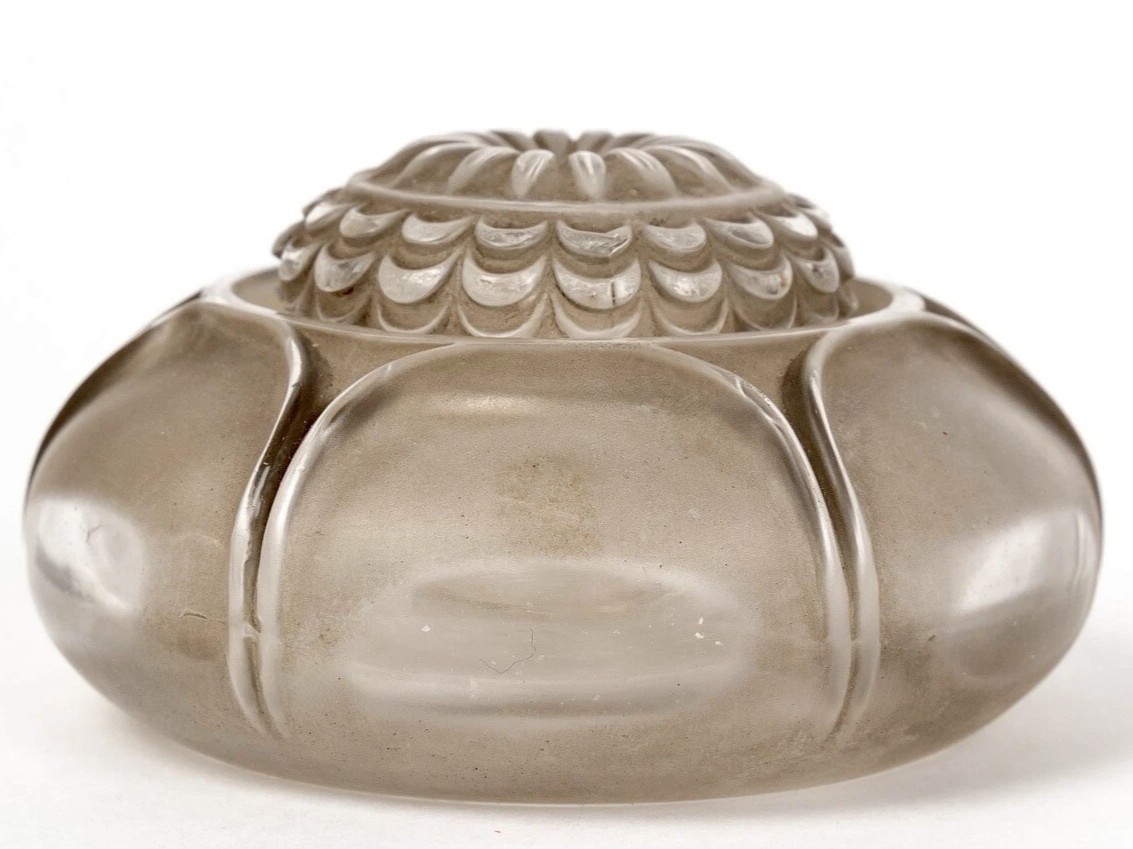
This exquisite “Nénuphar” inkwell is a rare, early 20th-century masterpiece by the legendary French glassmaker René Lalique.
What “Nénuphar” Means
The word “Nénuphar” is French for Water Lily.
- Symbolism: In the Art Nouveau period, water lilies were a favorite motif of René Lalique, symbolizing beauty, purity, and the “floating” world of water.
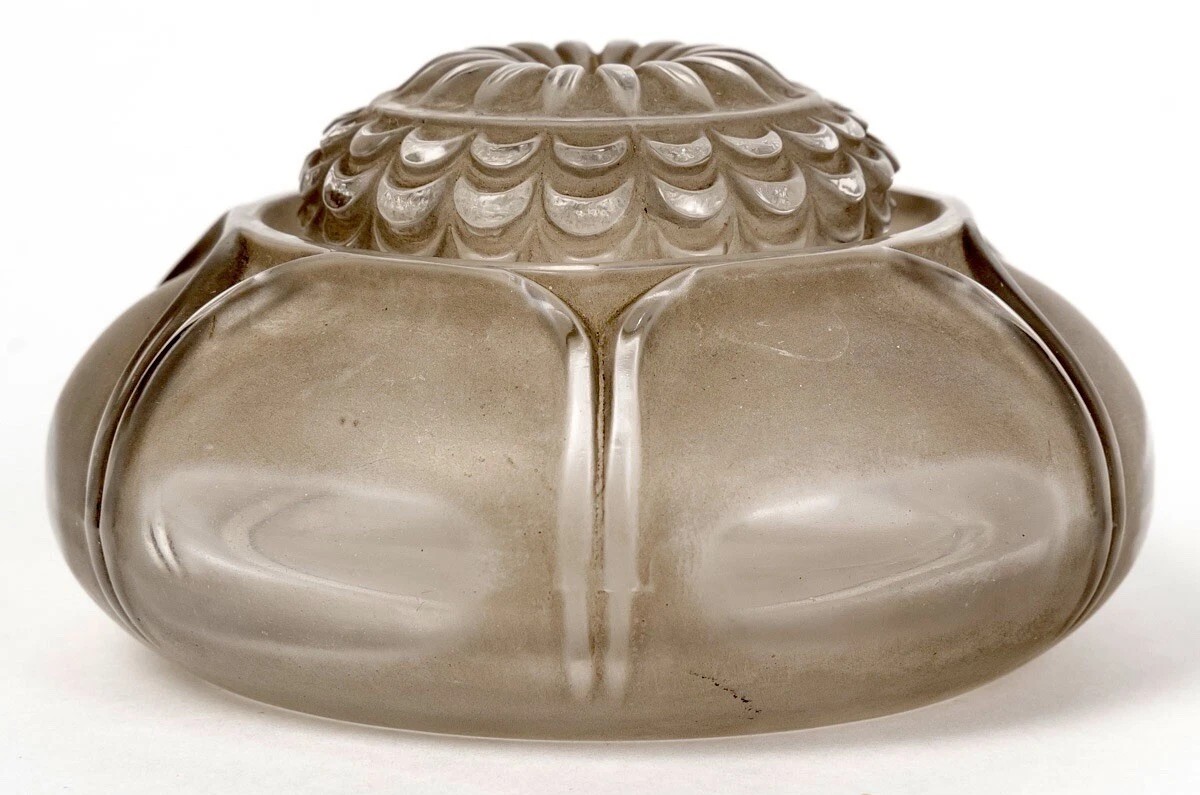
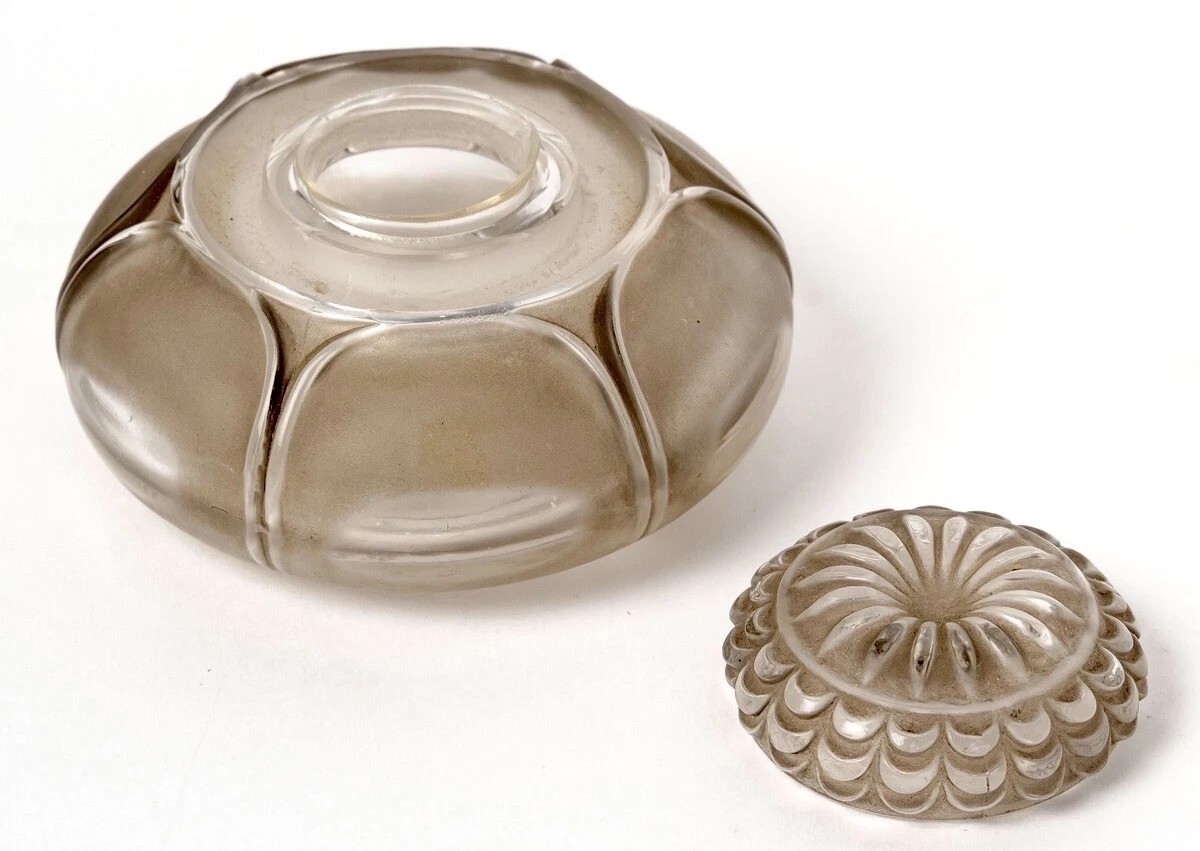
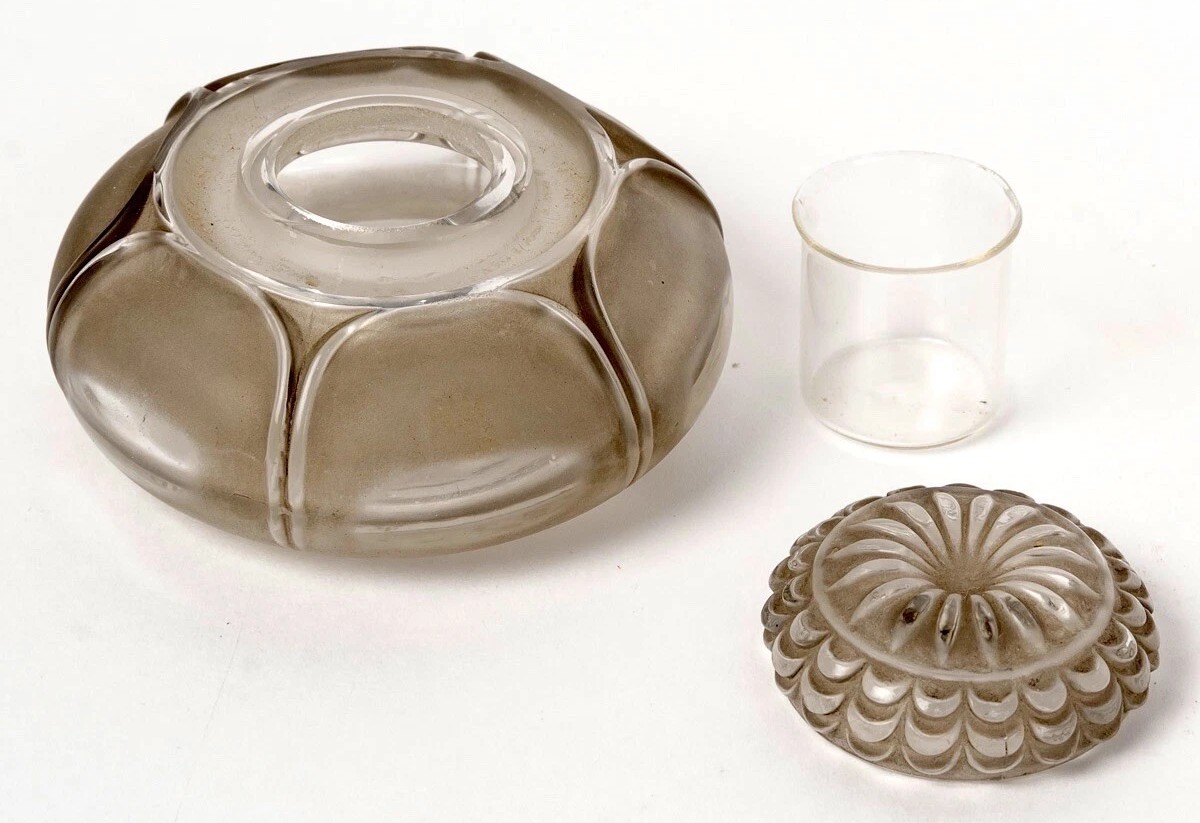
- Design Integration: The inkwell’s shape is designed to mimic the anatomy of the flower: the rounded glass body represents the broad, floating lily pad, while the tiered, sculpted lid represents the blossom of the lily sitting atop the water.
Description
- The Glass & Patina: The piece is crafted from pressed white glass. The “gray patina” is an intentional finish where a dark pigment was wiped into the recessed lines of the design to accentuate the shadows and make the details of the lily petals pop against the translucent glass.
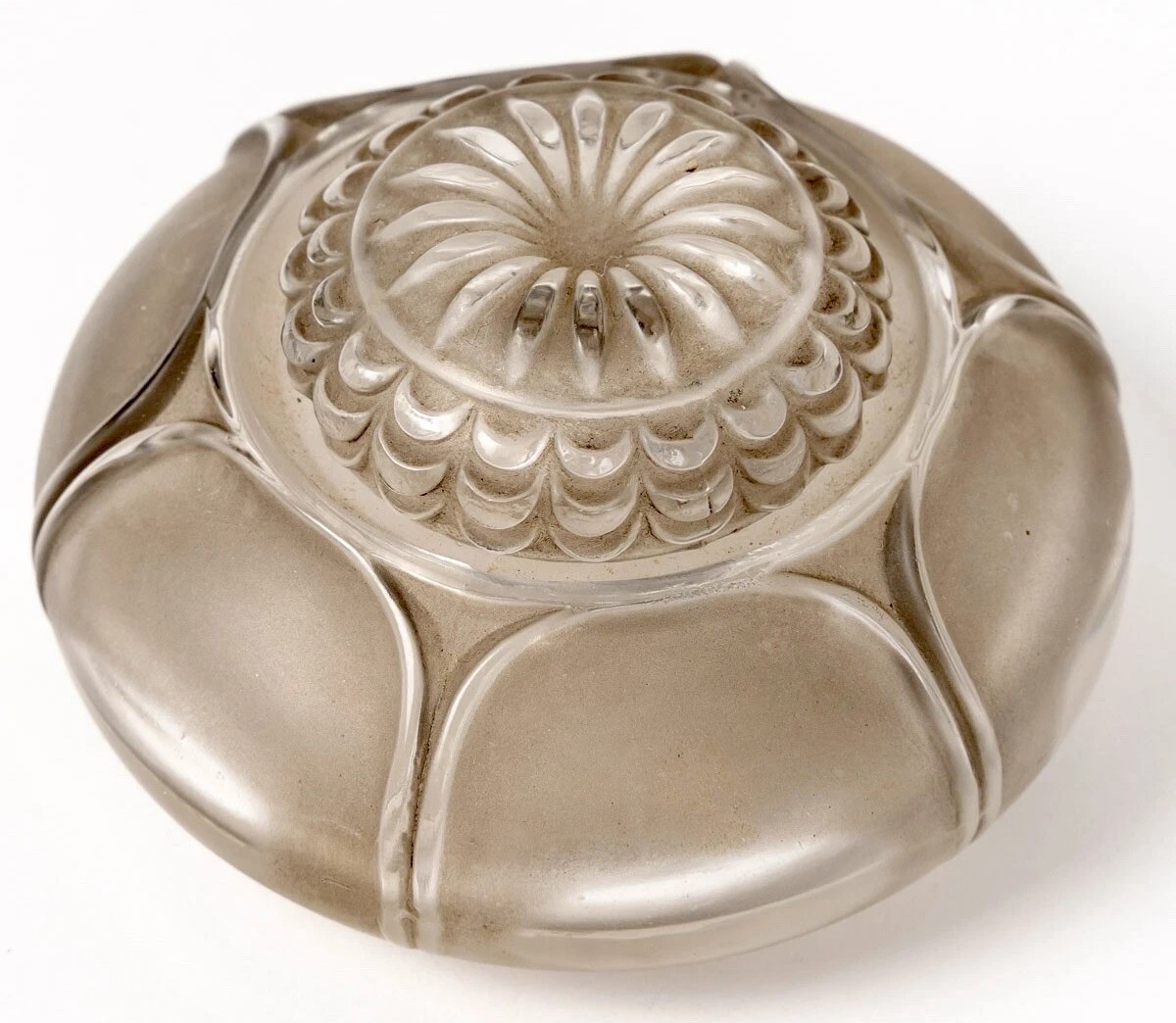
- The Lid: The lid features a complex, overlapping scalloped petal pattern. When viewed from above, it forms a perfect sunburst of petals, a hallmark of Lalique’s obsession with botanical geometry.
- The Body: The base of the inkwell is divided into smooth, bulging sections separated by vertical “ribs,” which represent the radiating veins of a giant lily pad.
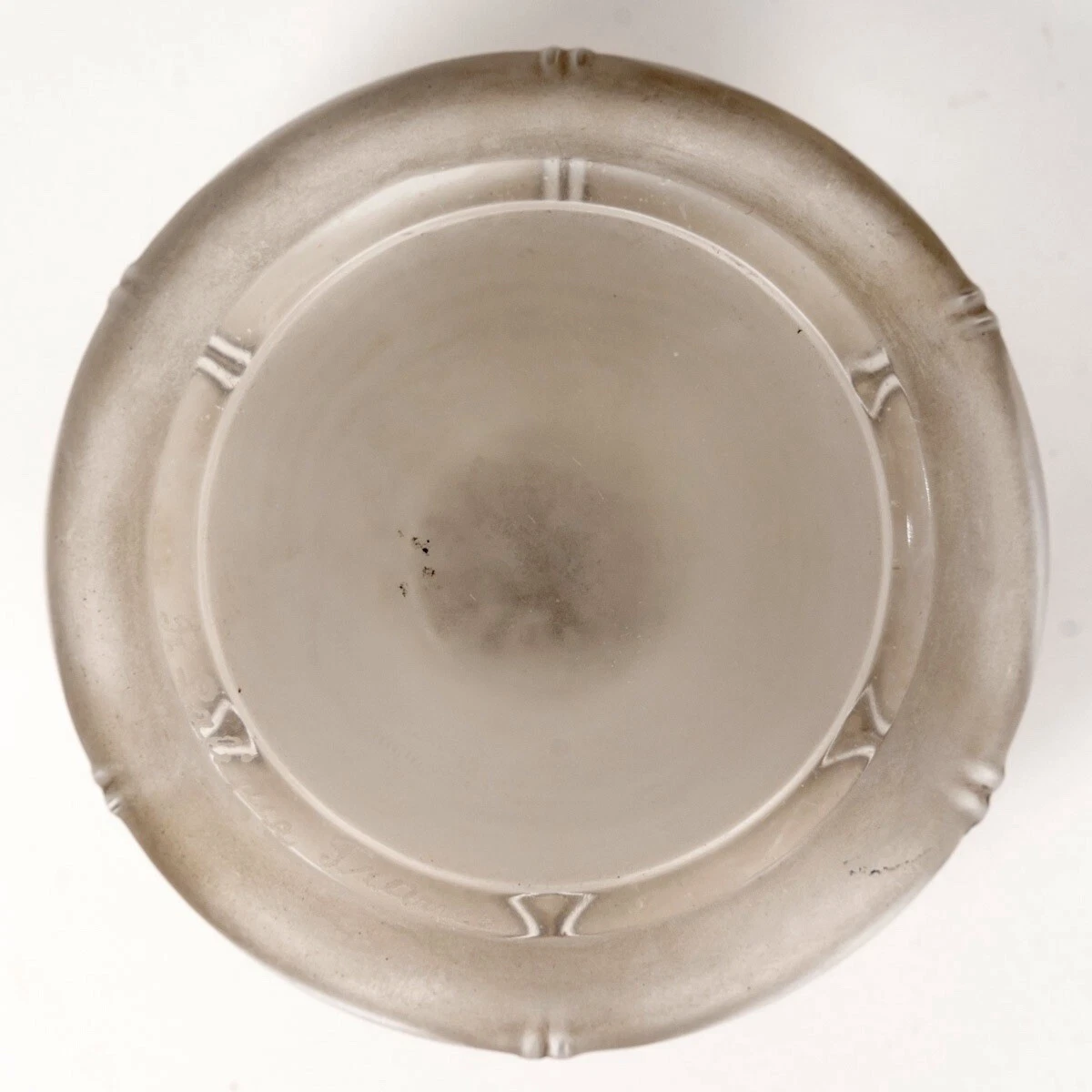
- Signature: The engraved signature (“R. Lalique” on the underside) confirms its authenticity and indicates it was produced during René Lalique’s lifetime rather than being a posthumous reproduction.
About the Manufacturer: René Lalique
René Lalique (1860–1945) was the world’s most influential glass designer of the early 20th century.
- Transition from Jewelry: In 1910, the year this inkwell was created, Lalique was transitioning from being the world’s premier Art Nouveau jeweler to a master of Art Deco glass.
- Technique: This inkwell was created using the lost-wax or pressed glass technique, where molten glass was forced into a mold to achieve a high level of sculptural detail that hand-blown glass could not replicate.
- Historical Context: In 1910, Lalique had just opened a new workshop at Combs-la-Ville, and items like the “Nénuphar” were among the first luxury commercial glass items he produced before shifting to massive production for perfume houses like Coty.
Rarity and Value
The “Nénuphar” is considered a highly collectible “early period” Lalique piece.
- Age: created in 1910.
- Status: Because this model was discontinued in the mid-1930s and was never put back into production by the modern Lalique company, examples in good condition with the original patina are increasingly rare on the auction market.
The “Nénuphar” inkwell is a well-documented piece in the scholarly archives of René Lalique’s work.
Catalog & Reference Numbers
- Model Number: 425
- Félix Marcilhac Catalog Raisonné: In the definitive guide, René Lalique – Catalogue Raisonné de l’Œuvre de Verre, this design is listed as No. 425 on page 315.
- Sigrid Barten Reference: It is also cataloged in Sigrid Barten’s René Lalique Schmuck und Objets d’Art 1890-1910 as No. 1673.
Technical Specifications
- Design Date: 1910.
- Dimensions: Most examples have a diameter of approximately 8.5 cm (3 ¼”), though a smaller variant of 7 cm (2 ¾”) is also recorded.
- Signatures: Authentic pieces typically bear an engraved signature, often “R. Lalique” or “R. Lalique France”.
Archival Significance
Because this design was introduced in 1910, it marks the very beginning of Lalique’s full-time transition into glassware. The “Nénuphar” was not just a desk accessory; it was an experiment in molded glass geometry. The gray patina you see was achieved by wiping an oil-based pigment into the recessed lines of the frosted glass—a technique that remains a signature element of the house’s “early period” aesthetic.
Sold for $1500 in December 2025
Content disclaimer. The information posted is the owner’s best knowledge and may not have been vetted by the SOIC. We welcome comments, corrections, and additions, working to make our website information comprehensive and accurate.
Join the Society of Inkwell Collectors (SOIC) – it’s free!
Founded in 1981 as a non-profit organization,
we are documenting inkwells (and accessories).
We’re here to help and inform!