


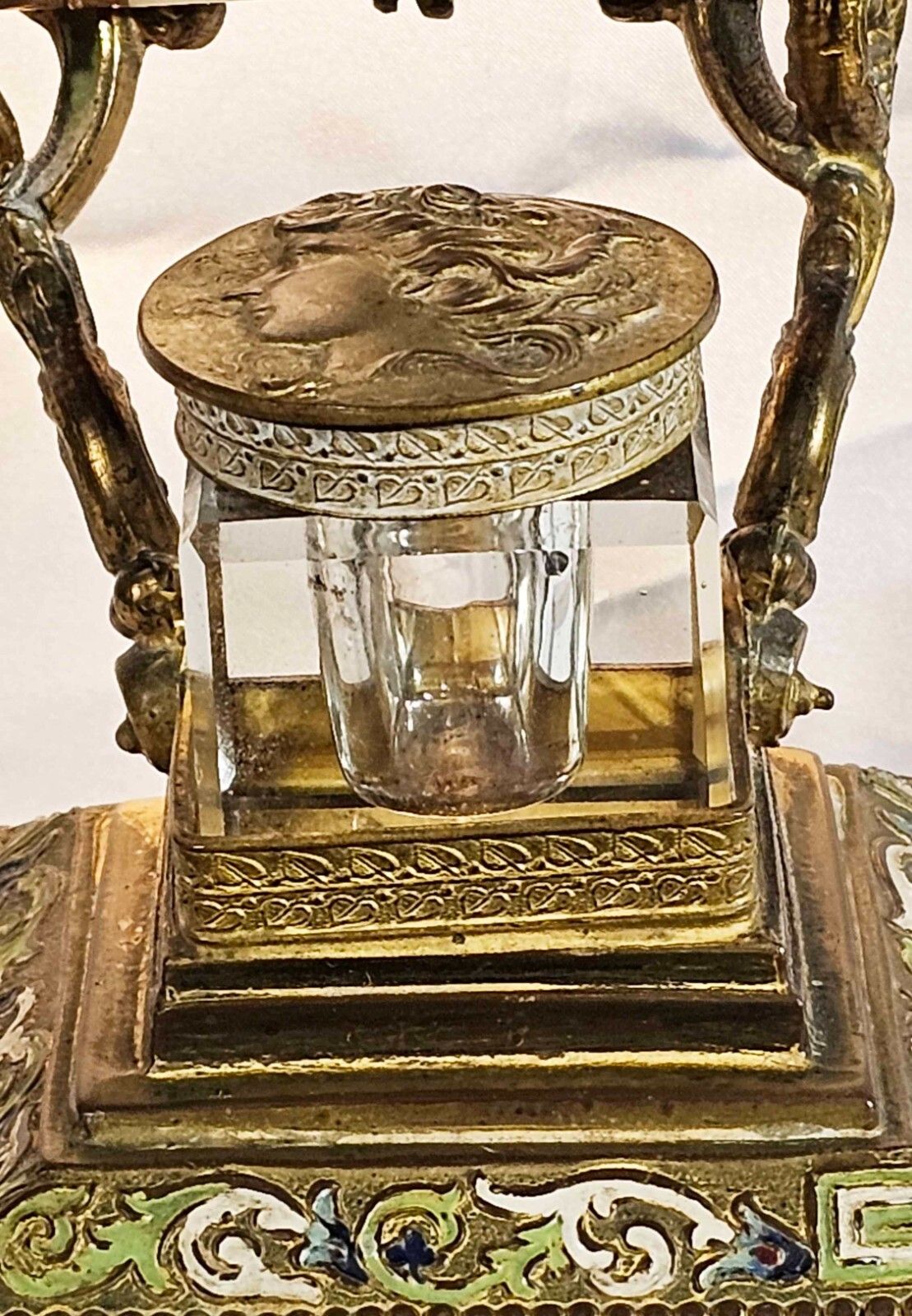
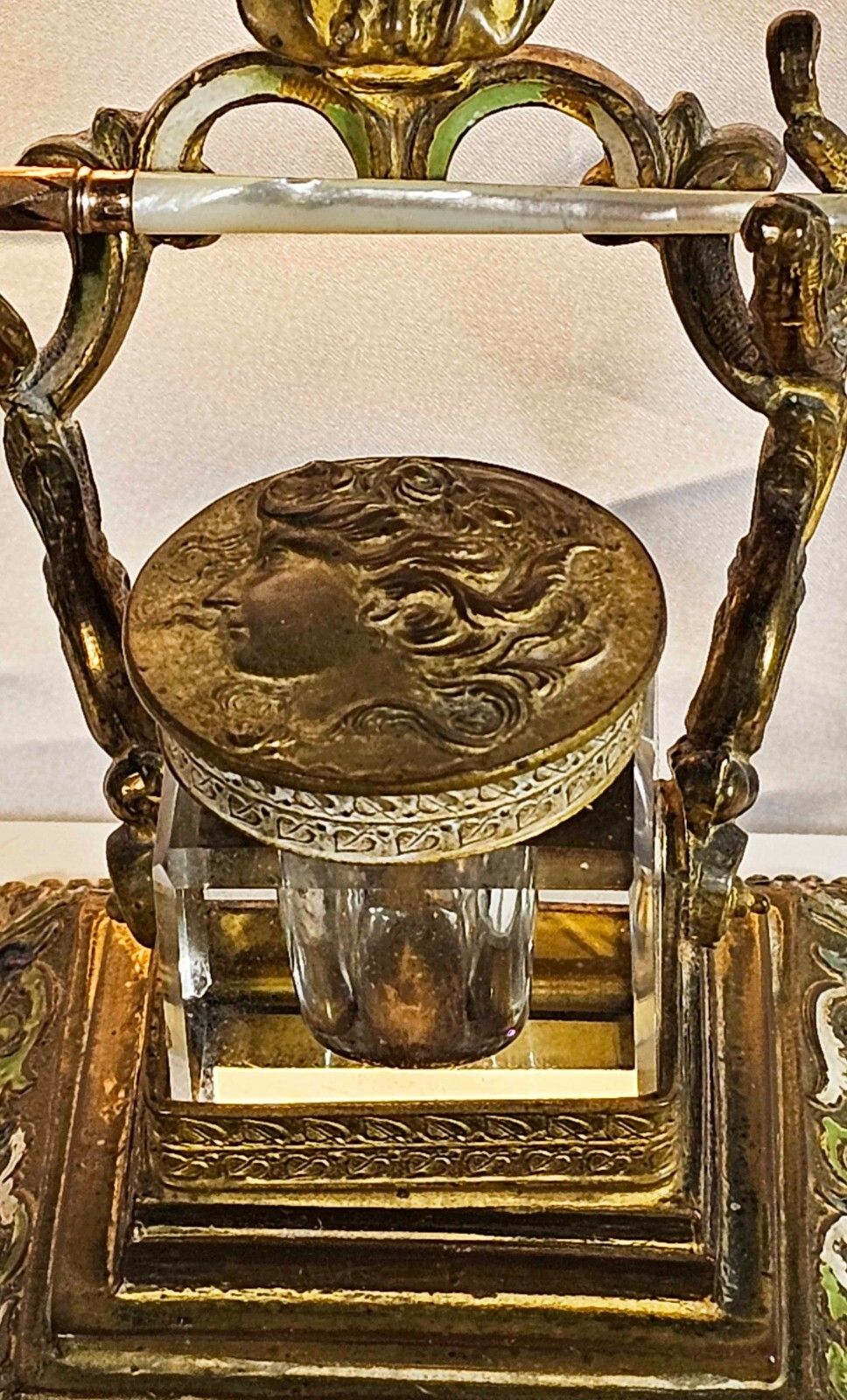

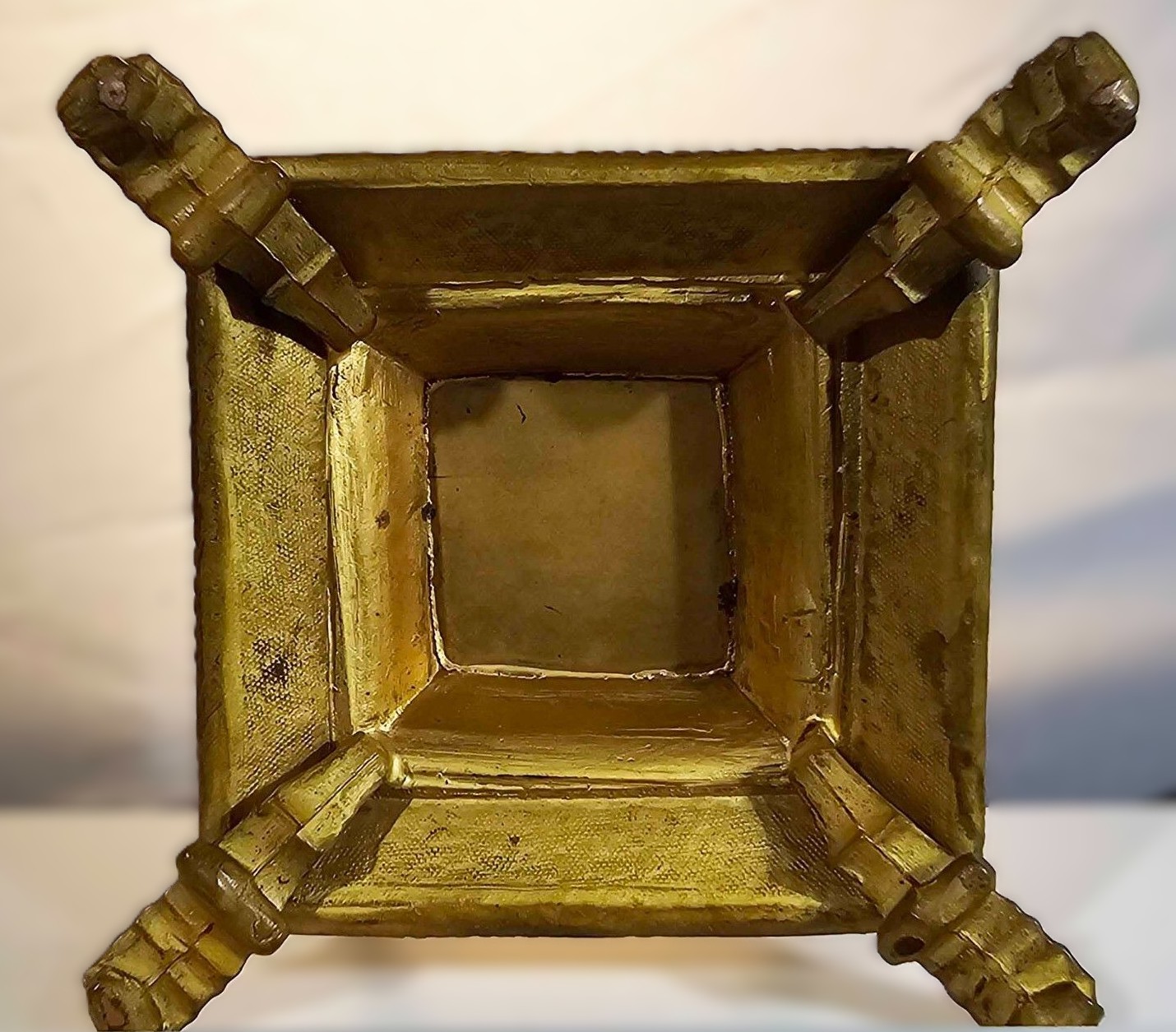
Gilt Bronze Inkstand: Shakespeare and the Muse
| Categories | Figural - Mythology; Literature; Religion; Fictional |
| Type | Literature |
| Material | Gilt Bronze |
| Markings | Unmarked |
| Manufacturer | Undetermined |
| Origin | Undetermined |
| Date or Era | circa 1880 |
| Measuring | 4 ¾” high |
Detailed Description
- Overall Form & Material: A single, figural inkstand crafted from gilt bronze (bronze coated in gold lacquer/wash).
- Central Figure (Shakespeare):
- The primary feature is a bust of William Shakespeare, recognizable by his balding head, beard, and Elizabethan collar.
- This bust sits atop a pedestal which forms the main body of the inkwell. The presence of Shakespeare indicates an English or a highly Anglophile market (such as the Continent) celebrating literary genius.
- Inkwell and Lid:
- The square glass inkwell is held on the four-footed base below.
- The lid is separate and features the impressed bust of a female figure.
- Decoration:
- Enamel Highlights: The piece features enameled highlights, using cold-painted enamel or possibly champlevé techniques in recessed areas. The colors, green and white, add visual richness to the gilt metal.
- Pen Holder: The base incorporates a raised pen holder above the inkwell.
Identity of the Female Bust
The female bust placed on the inkwell lid is likely intended to represent a Classical Muse.
- Likely Identity: Calliope or Melpomene
- Calliope (The Muse of Epic Poetry): Given Shakespeare’s status as a playwright, the most appropriate muse is often Calliope. She is traditionally associated with literary inspiration.
- Melpomene (The Muse of Tragedy): As Shakespeare is equally famous for his great tragedies (Hamlet, Macbeth), Melpomene is a strong candidate.
Origin and Age Assessment
The style of casting, the use of gilt bronze and enamel highlights, and the celebratory nature of the subject matter are characteristic of a specific period and region.
- Likely Origin: The quality and style suggest a major Continental European manufacturing center, often exported to the English-speaking world:
- France (Articles de Paris): French manufacturers excelled at producing such ornate bronze/gilt metal objets d’art celebrating culture and literature.
- Austria/Germany: Also known for high-quality spelter and bronze castings finished to resemble fine metalwork.
- Style Period: The reverence for historical figures and the highly decorative, somewhat weighty sculptural style is typical of the mid-to-late 19th Century.
- Estimated Age: circa 1860 – 1900
Sold for $400 in October 2025
Content disclaimer. The information posted is the owner’s best knowledge and may not have been vetted by the SOIC. We welcome comments, corrections, and additions, working to make our website information comprehensive and accurate.
Join the Society of Inkwell Collectors (SOIC) – it’s free!
Founded in 1981 as a non-profit organization,
we are documenting inkwells (and accessories).
We’re here to help and inform!