

Inkipedia
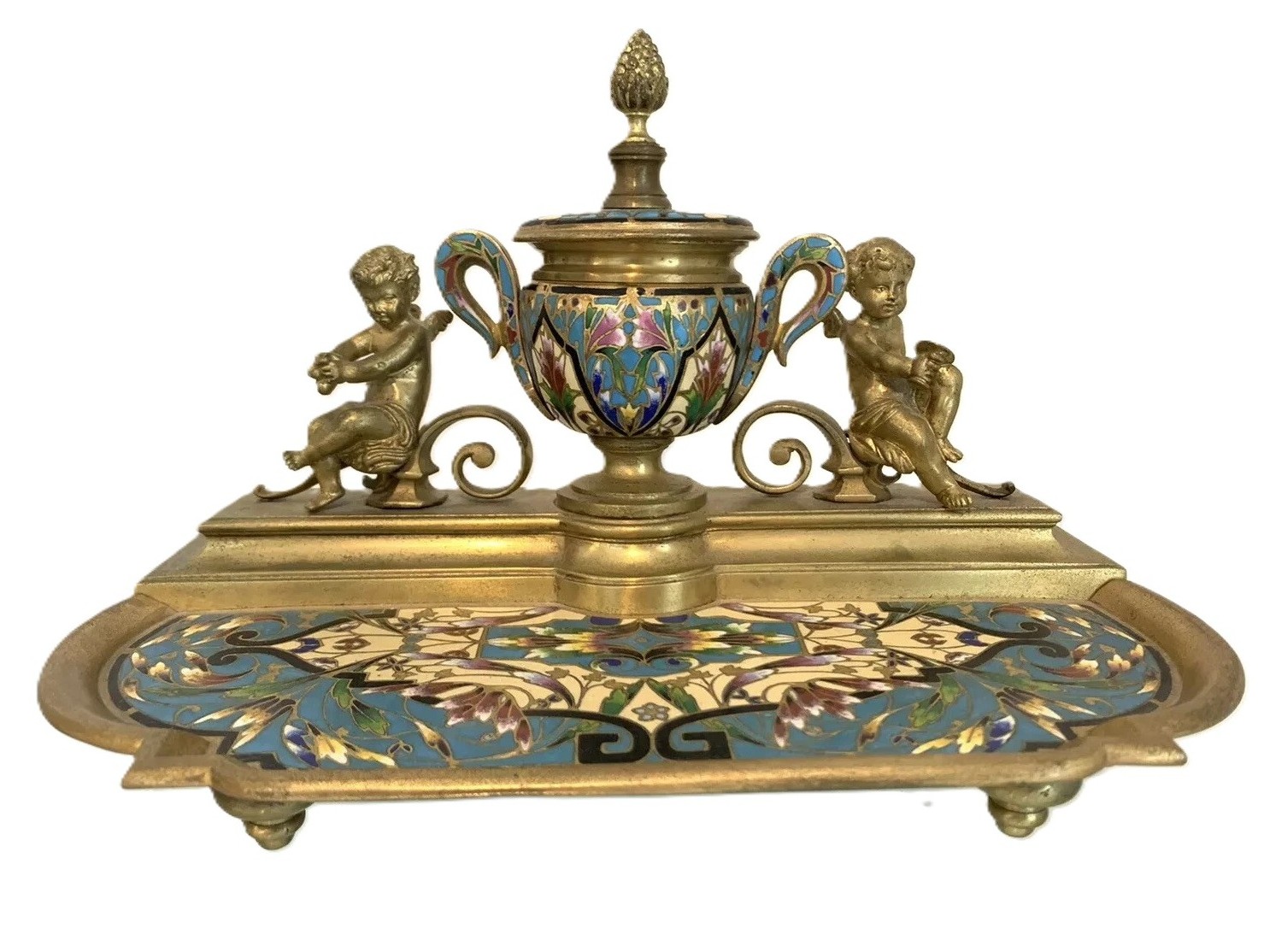
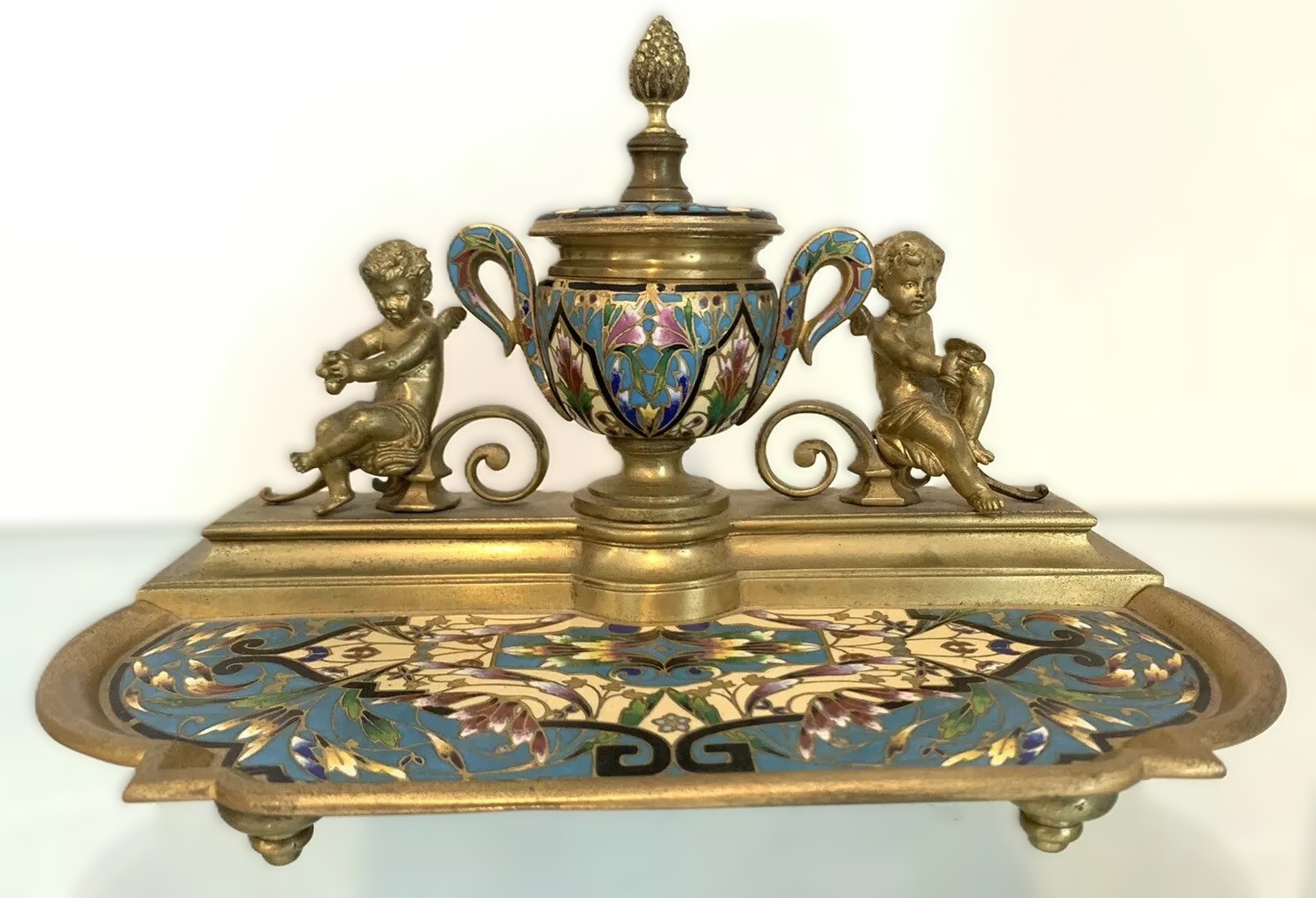
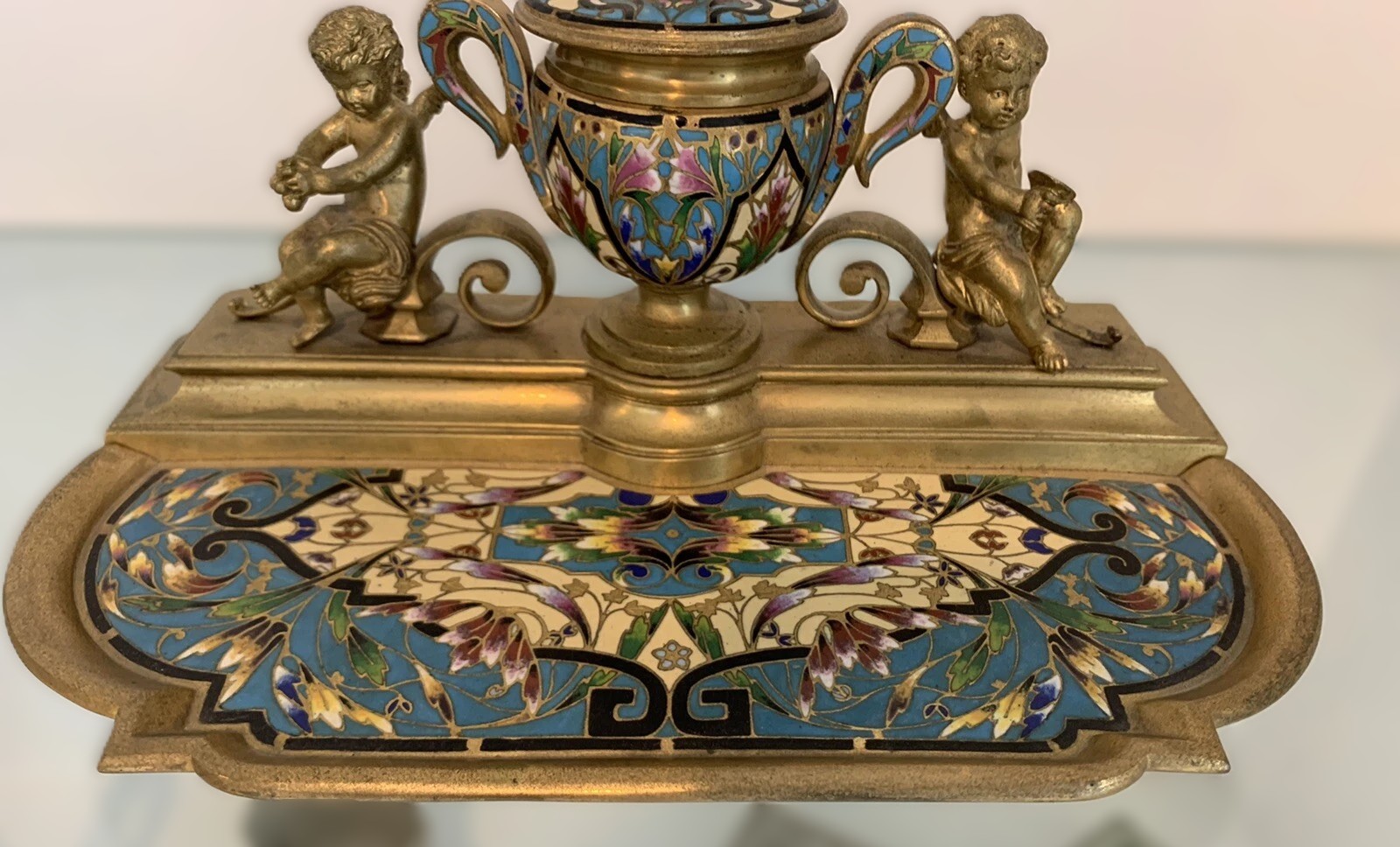
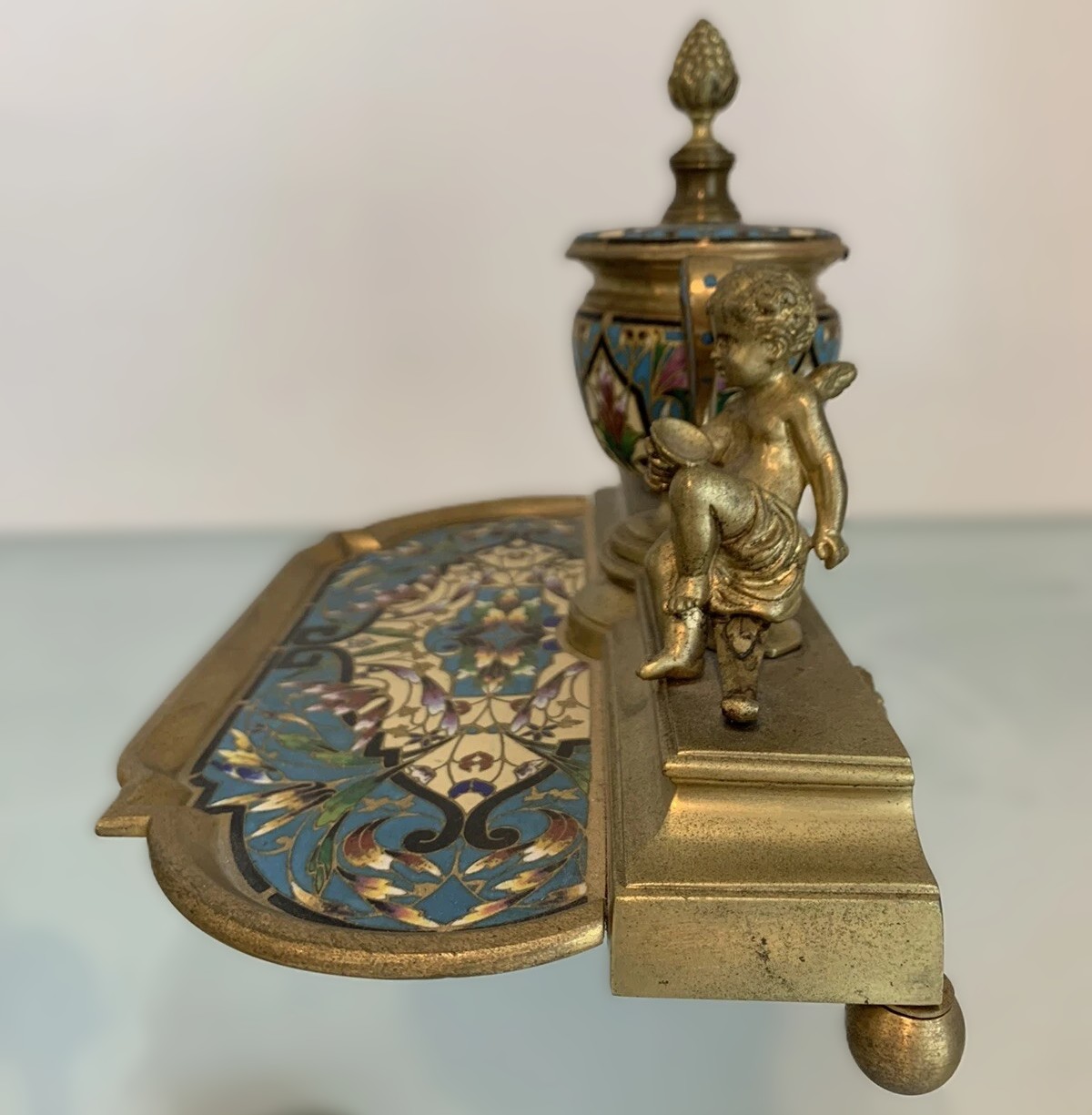
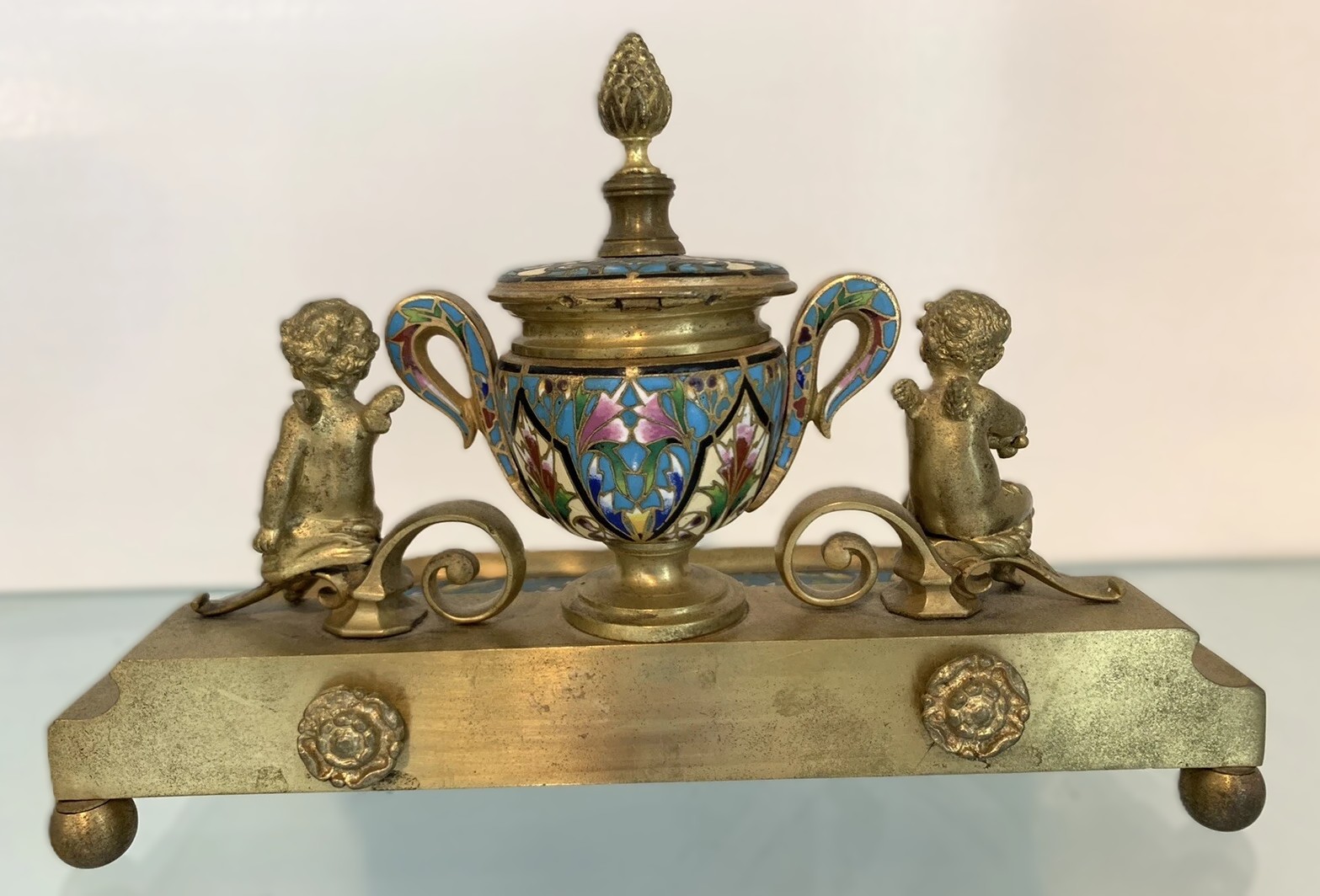
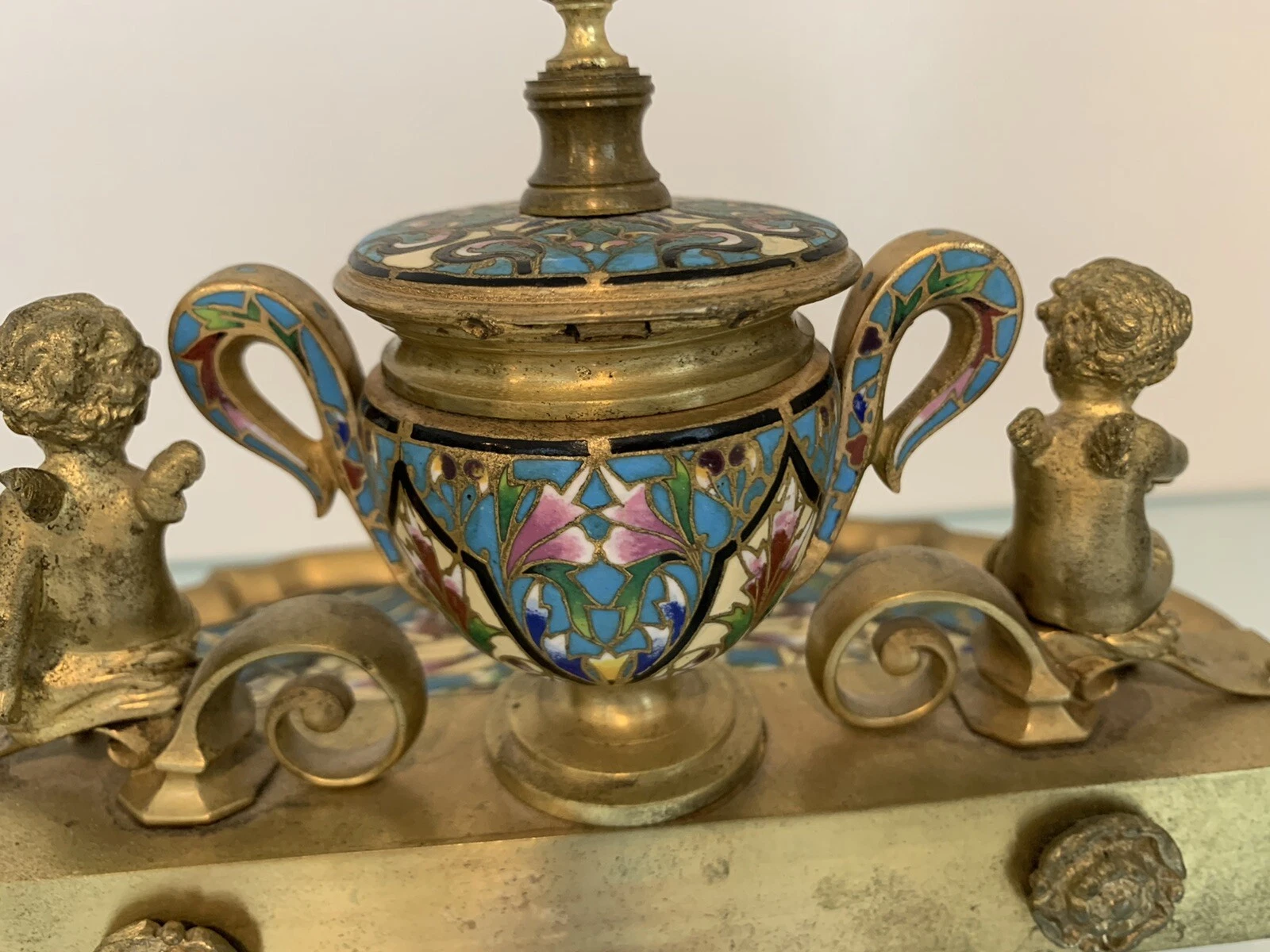
Gilt Bronze & Champlevé Enamel Cherub Inkstand
| Categories | Enameled Metal, Figural - Mythology; Literature; Religion; Fictional |
| Type | Champlevé, Cupid / Cherub / Angel |
| Material | Bronze, Enameled Brass/Bronze/Metal |
| Markings | Unmarked |
| Manufacturer | Undetermined |
| Origin | France |
| Date or Era | circa 1890 |
Description
- Form & Structure: A late 19th-century French desk stand (encrier / standish) cast in gilt bronze (ormolu) with integrated champlevé enamel decoration. It rests on four turned ball feet, featuring a shaped rectangular base with a recessed pen tray in front and an elevated plinth at the rear.
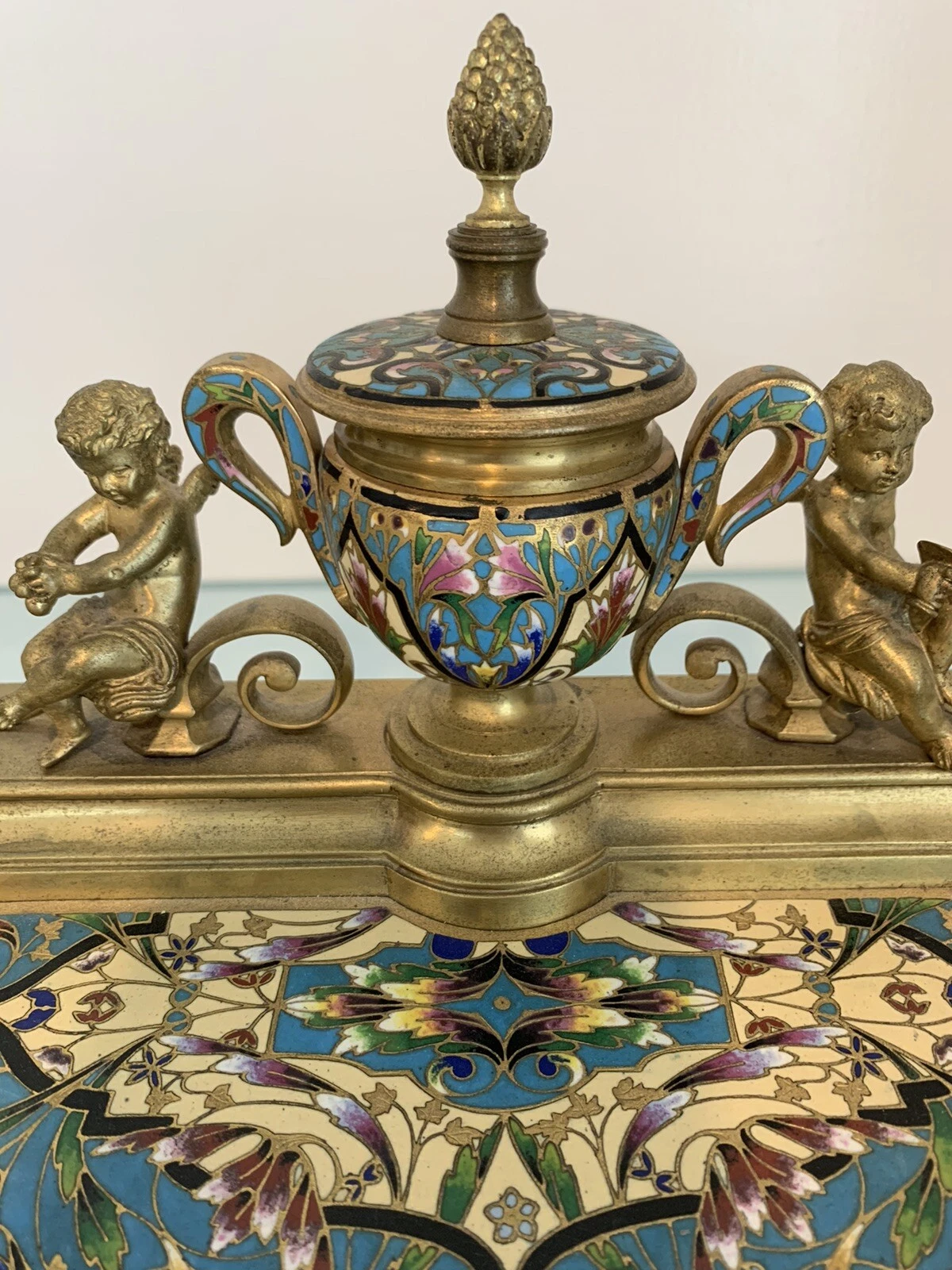
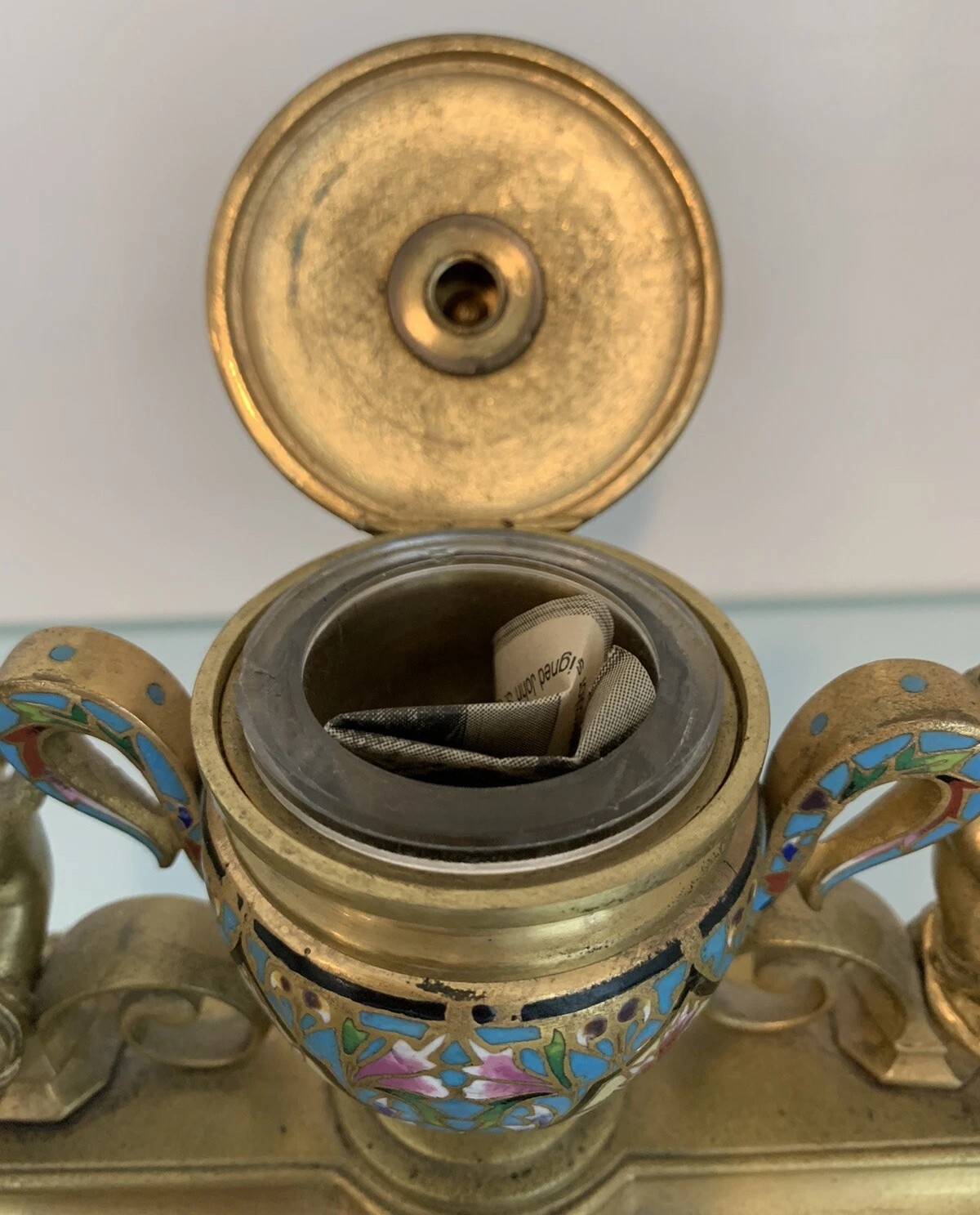
- Central Urn / Inkwell: A classical twin-handled amphora urn topped by a domed lid with a pinecone finial. The urn opens on a rear hinge to reveal an original removable clear glass insert.
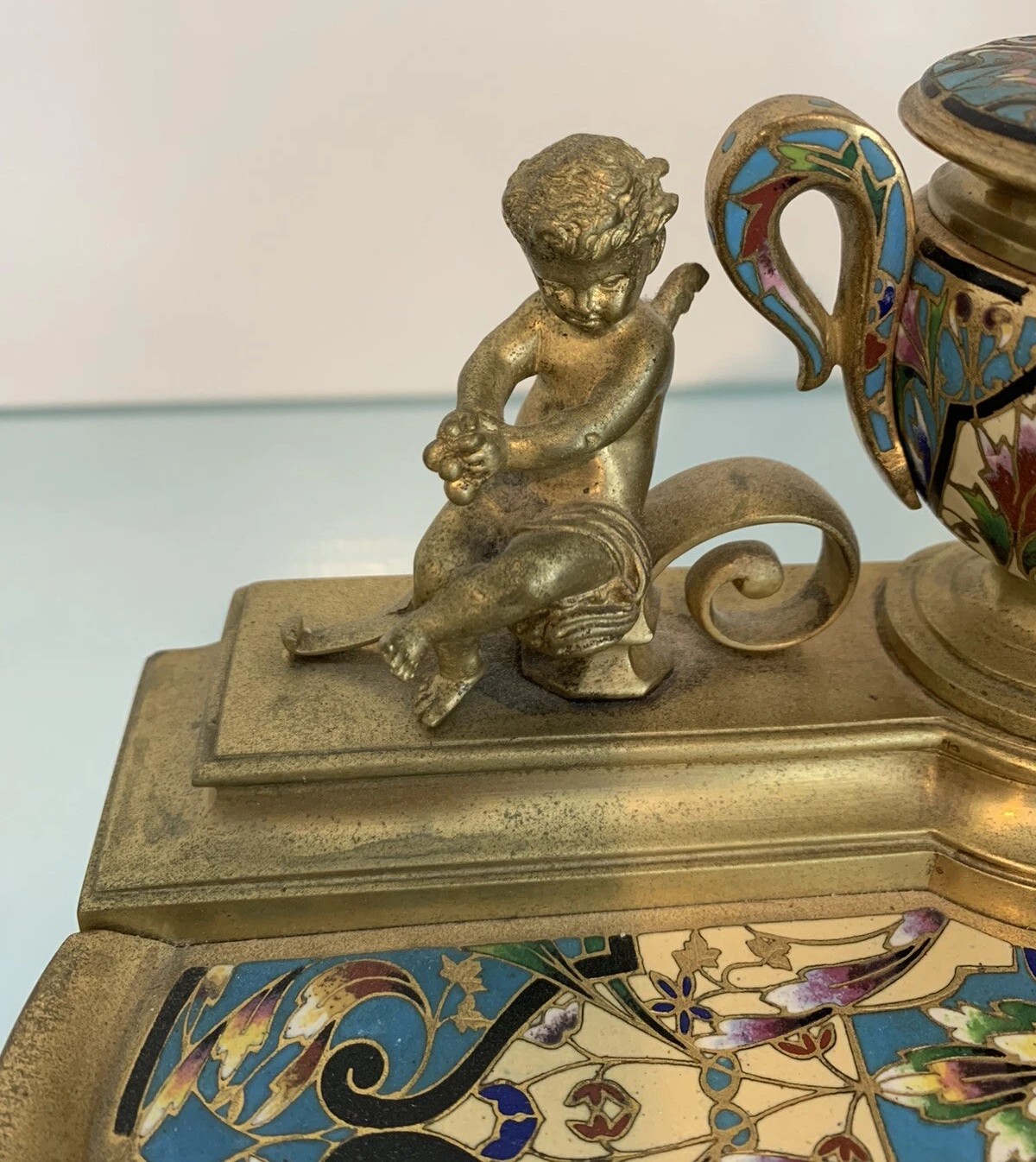
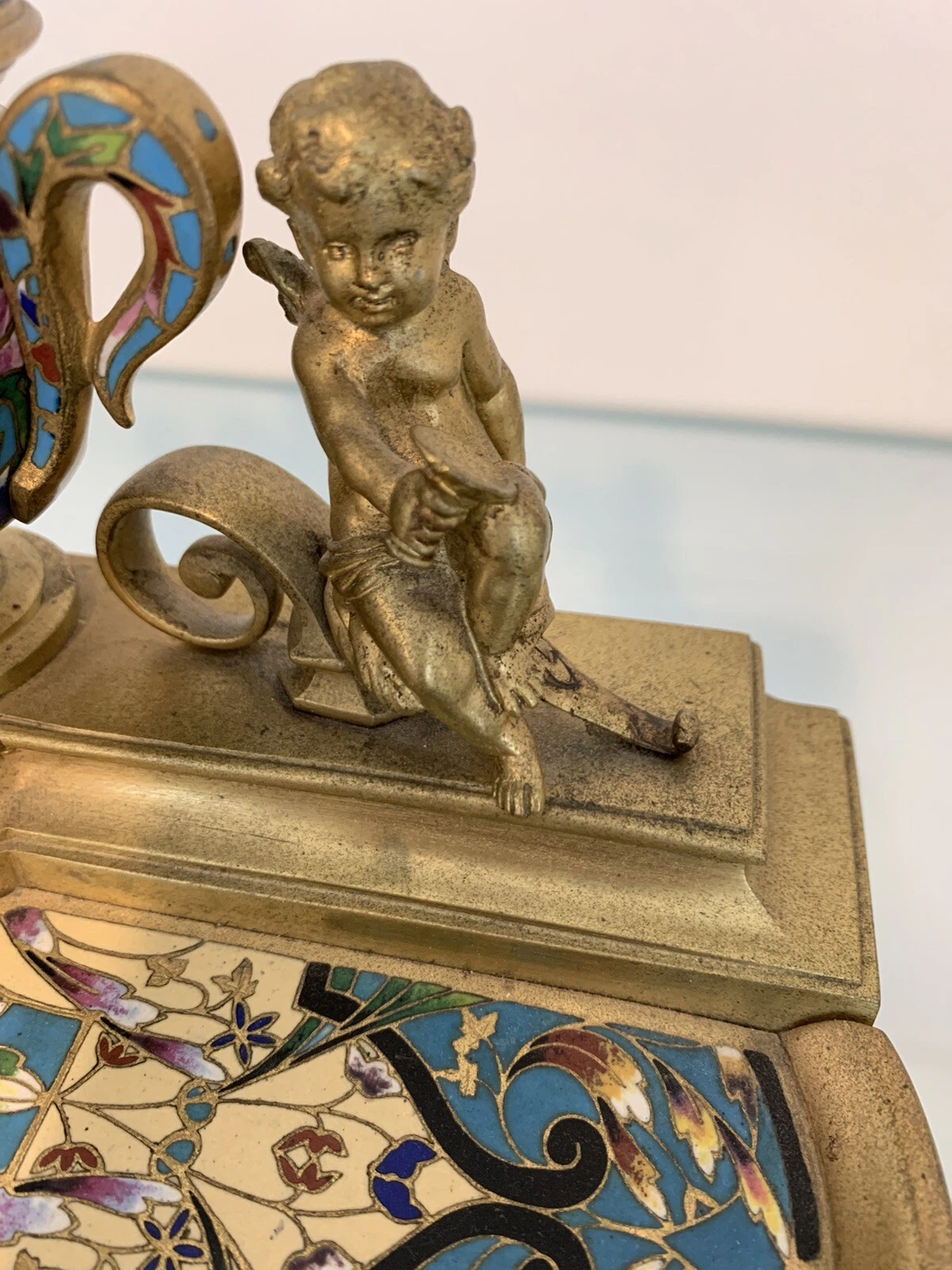
- Figural Elements: Flanking the central urn are two sculpted gilt bronze putti (cherubs) seated atop scrolling ribbon supports, each posed holding small implements/tools.
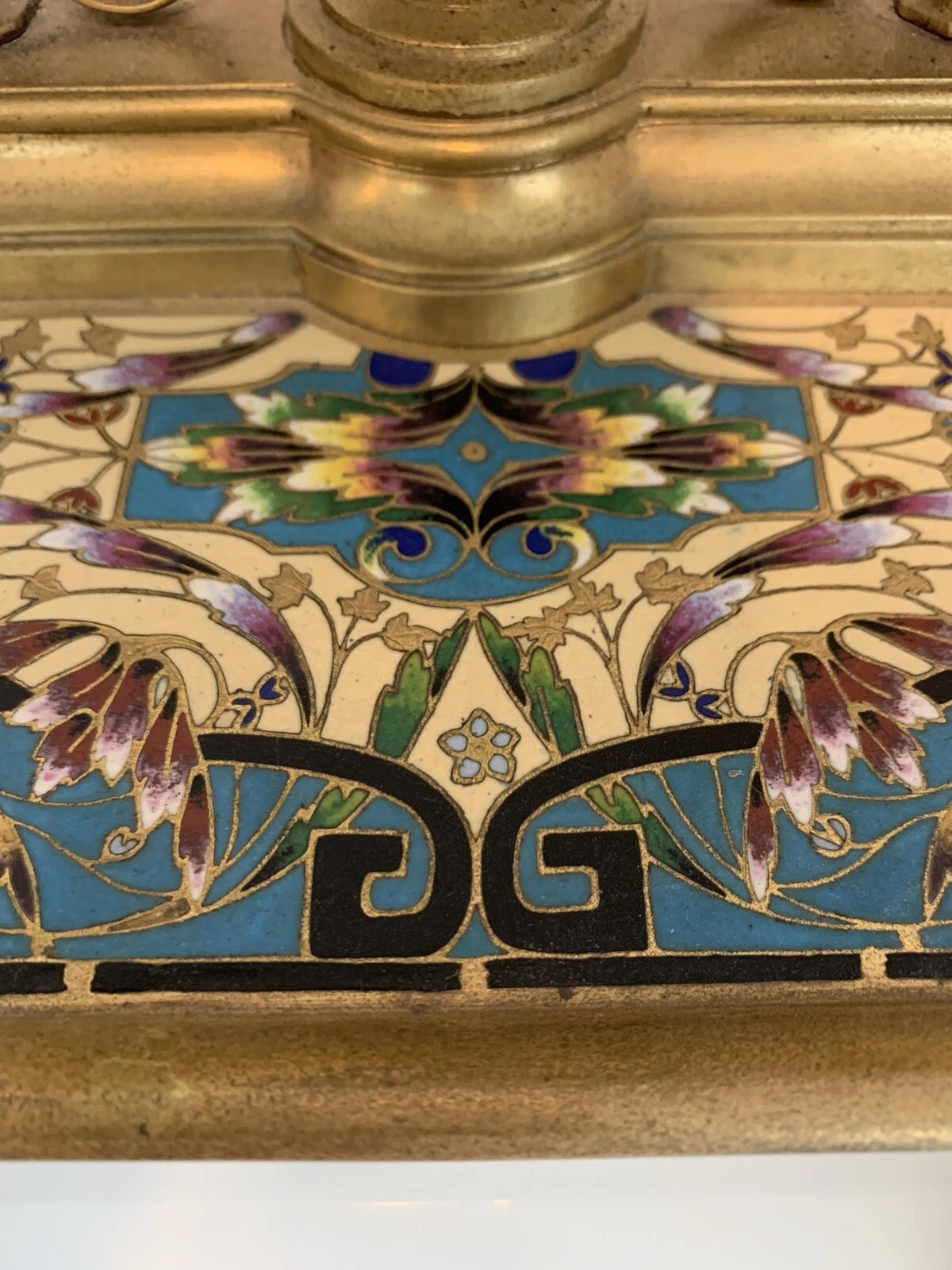
- Enamel Technique & Motifs: The pen tray, urn body, lid, and looped handles feature fine champlevé vitreous enamel on bronze cells. The decorative palette uses sky blue, cobalt, cream/ivory, sage green, and mauve/wine. Stylistically, the motifs blend Neoclassical revival (Greek key/fret accents, classical scrolls) with emerging Art Nouveau / Aesthetic Movement elements (stylized foliate arabesques, flowering blossoms, whiplash scrollwork, and a central butterfly/palmette motif).
- Hardware & Construction: The back panel of the plinth is finished with decorative cast-bronze floral rosettes concealing the structural mounting bolts.
Origin & Manufacturing Details
- Where was it made?
- France, almost certainly in Paris, which was the global center for high-end bronzes d’art and fine champlevé enameling during the late 19th century.
- When was it made?
- Circa 1880–1900 (Late Third Republic / Belle Époque period). The transitional aesthetics—bridging Second Empire Neoclassicism and late 19th-century decorative eclecticism/Japonisme-influenced floral stylized enamel—date this piece squarely to the last two decades of the 19th century.
- Who made it?
- Unsigned French Fondeur / Enameler: The vast majority of these luxury desk accessories were produced by Parisian bronze founders and enamel ateliers for high-end retail emporiums (such as L’Escalier de Cristal, Maison Alphonse Giroux, or F. Barbedienne workshops). Without an underside foundry stamp, numerical inventory mark, or incised signature appears under the base casting, it is attributed to the Parisian School of Enamelers.
Additional Details
- Champlevé: This piece uses true French champlevé, where the bronze field is cast and carved out with troughs into which wet vitreous enamel pastes are packed, kiln-fired at high heat, ground flush, and polished.
- Stylistic Cross-Pollination: The Greek fretwork paired with the stylized floral pendants reflects the French eclectic taste popular during the 1889 and 1900 Paris Universal Expositions (Expositions Universelles).
Sold for $750 in July 2026
Content disclaimer. The information posted is the owner’s best knowledge and may not have been vetted by the SOIC. We welcome comments, corrections, and additions, working to make our website information comprehensive and accurate.
Join the Society of Inkwell Collectors (SOIC) – it’s free!
Founded in 1981 as a non-profit organization,
we are documenting inkwells (and accessories).
We’re here to help and inform!