

Gilt Bronze and Champlevé Enamel Inkstand
| Categories | Enameled Metal |
| Type | Champlevé |
| Material | Enameled Brass/Bronze/Metal |
| Markings | Unmarked |
| Manufacturer | Undetermined |
| Origin | France |
| Date or Era | circa 1880 |
| Measuring | 4 ¼” x 3 ¾” x 5 ⅝” high |
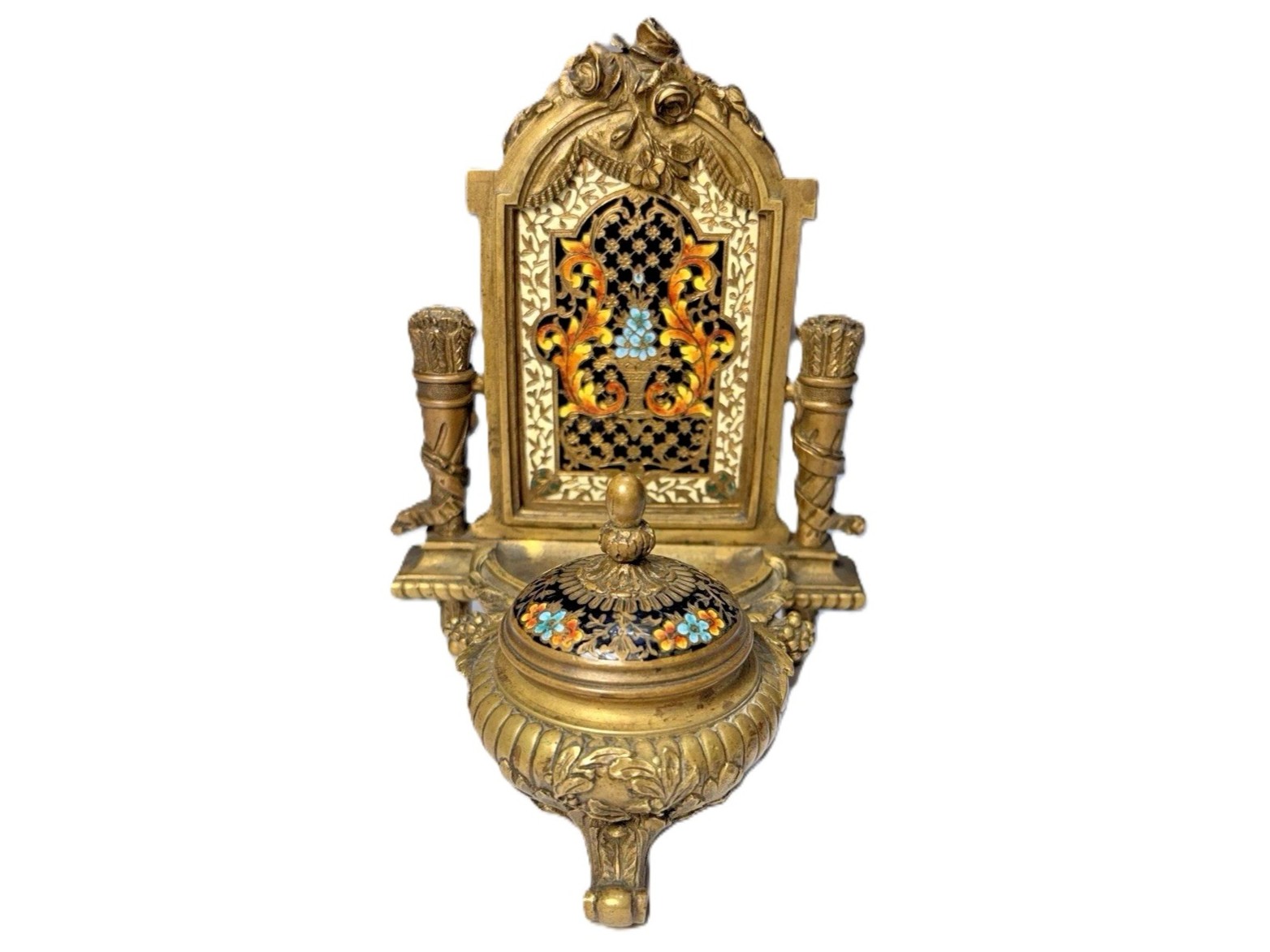
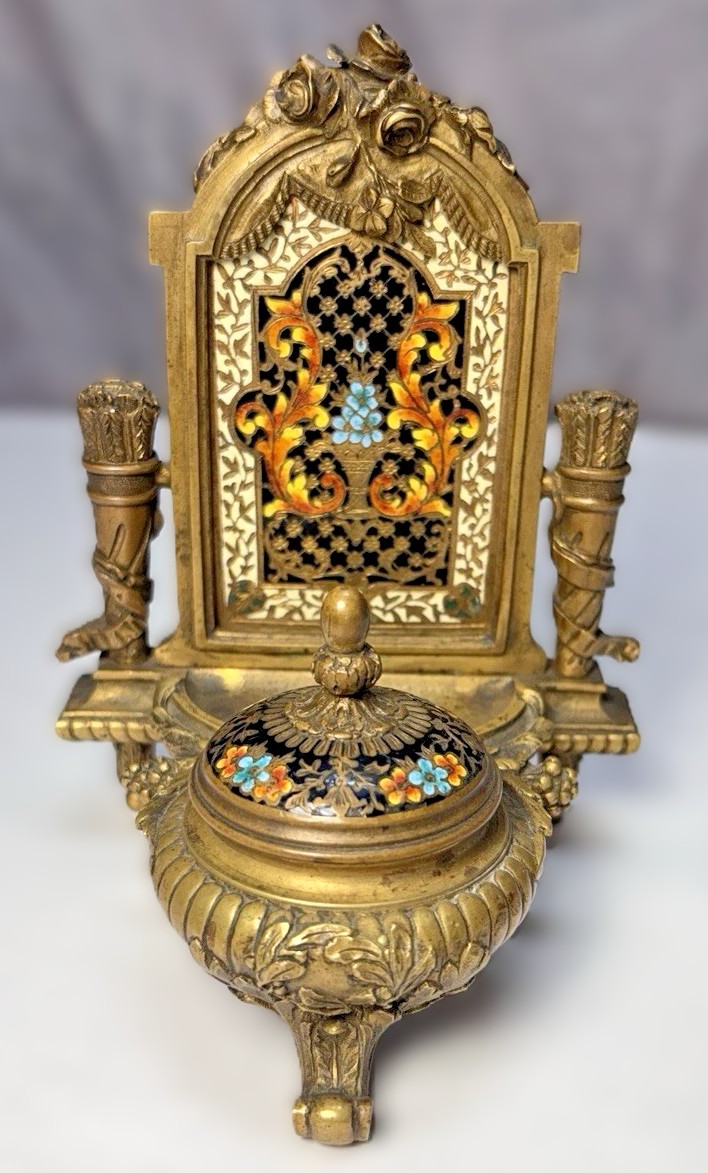
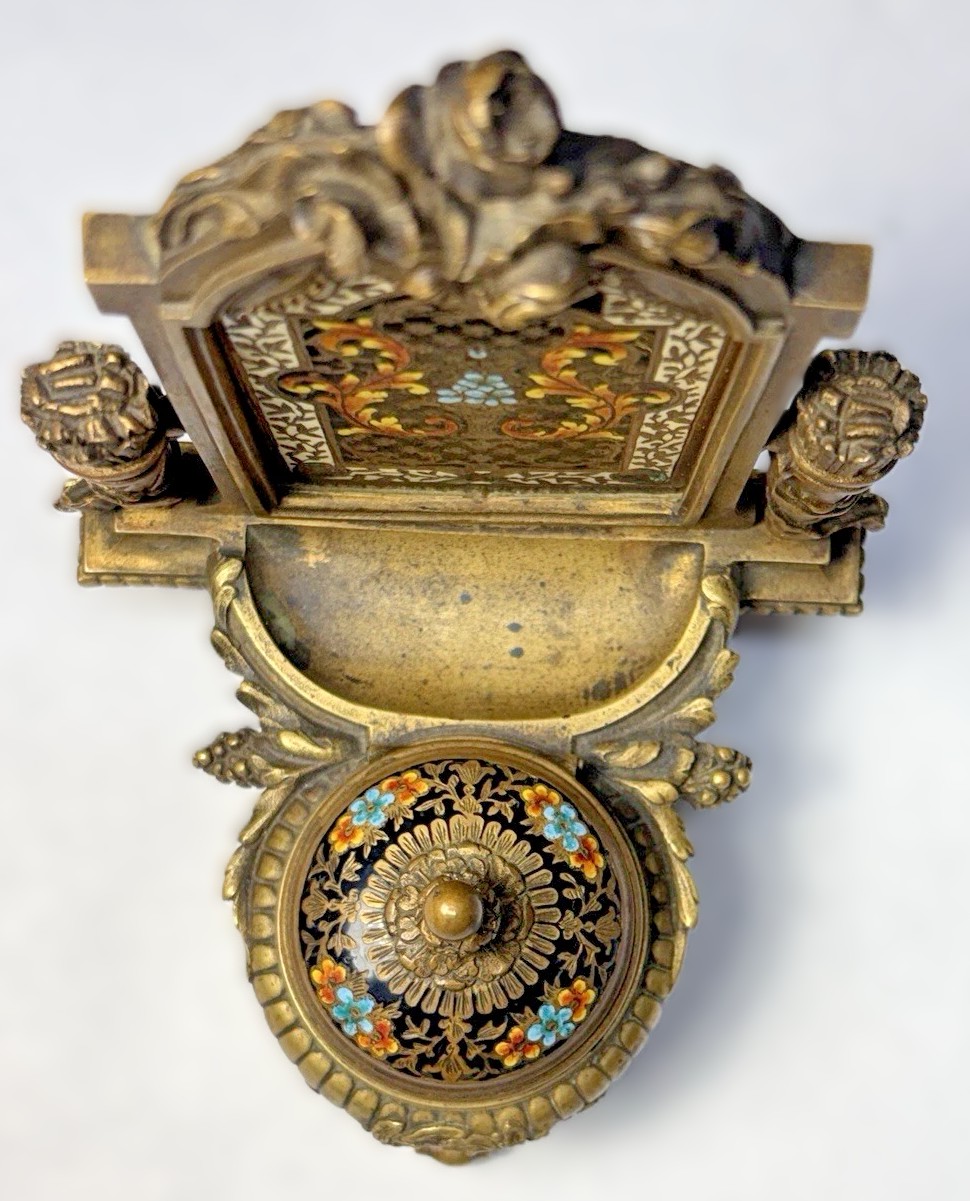
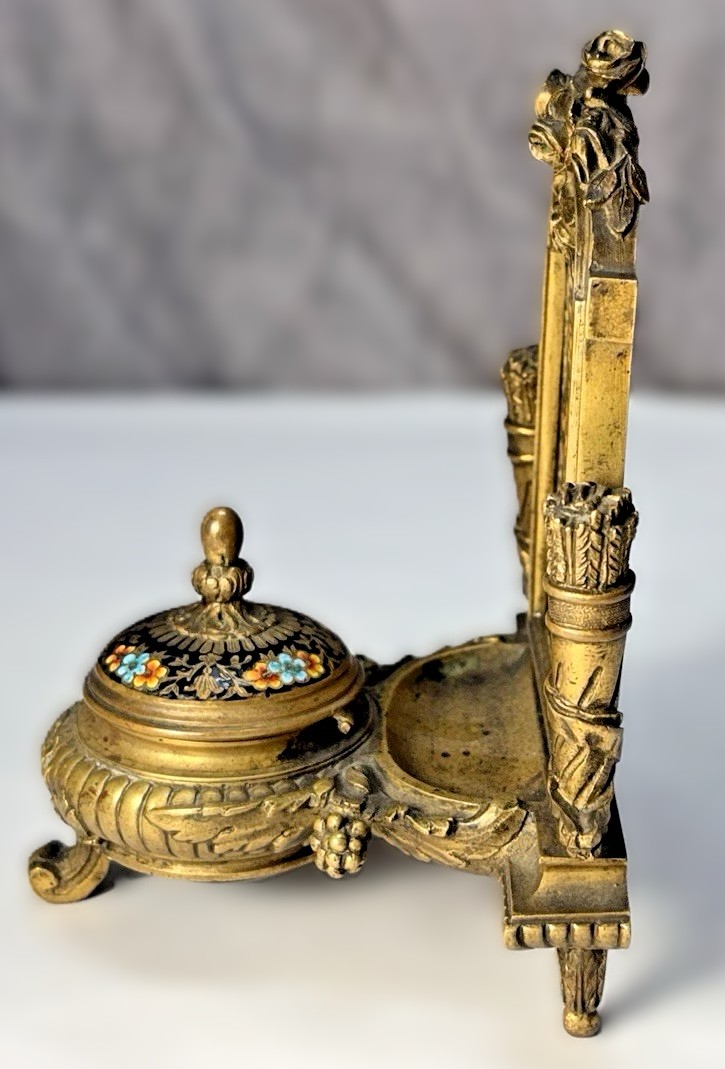
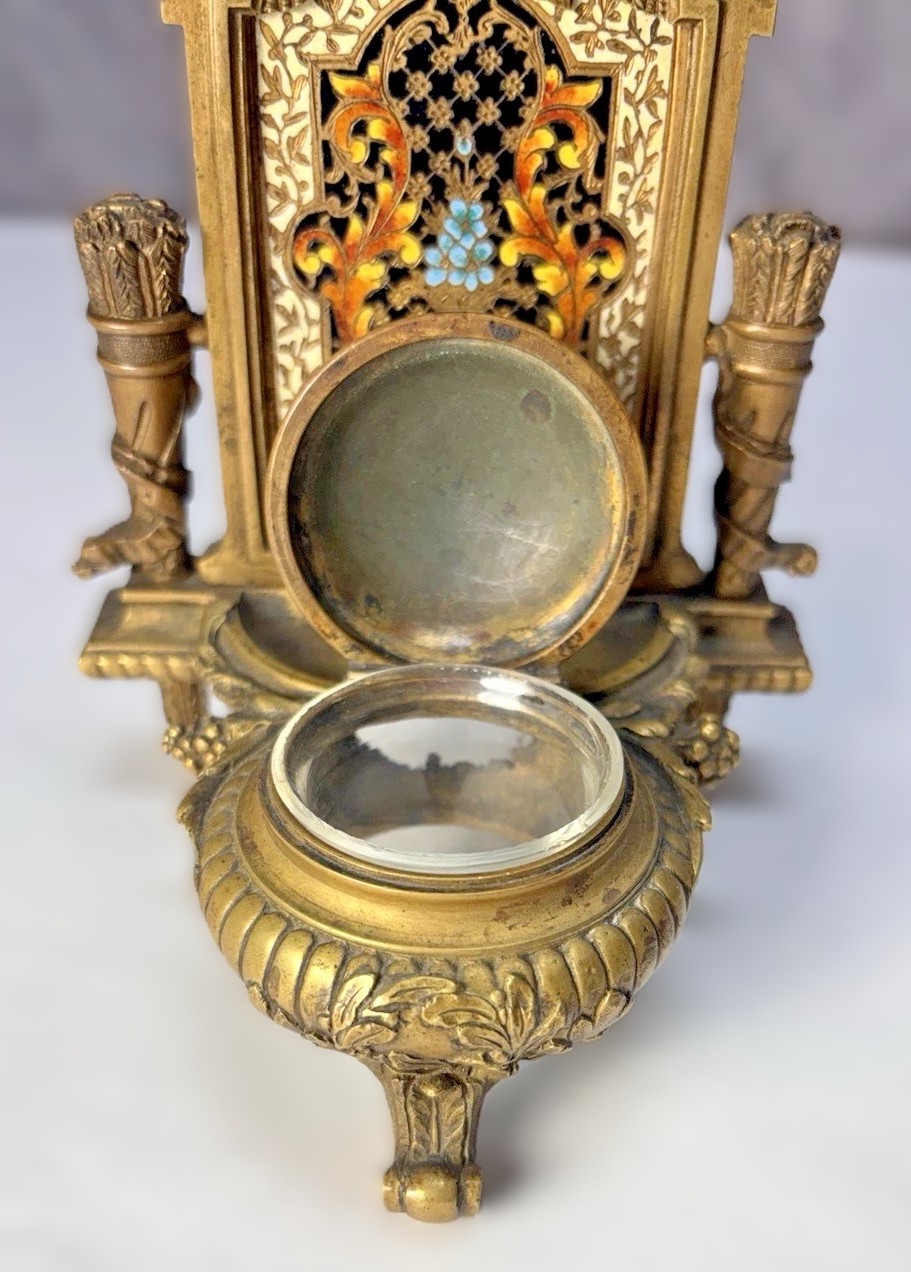
This French gilt bronze (ormolu) and Champlevé enamel inkstand was created in the Neoclassical (Louis XVI Revival) style.
Technique: Champlevé vs. Cloisonné
While often conflated, this technique is Champlevé (specifically champlevé à taille d’épargne), not Cloisonné:
- Champlevé: Cells/recesses are cast or carved directly into the metal base (bronze or brass) and filled with enamel paste before being fired and polished flush with the raised metal borders.
- Cloisonné: Fine wire strips (cloisons) are bent and soldered onto a metal surface to form compartments for the enamel.
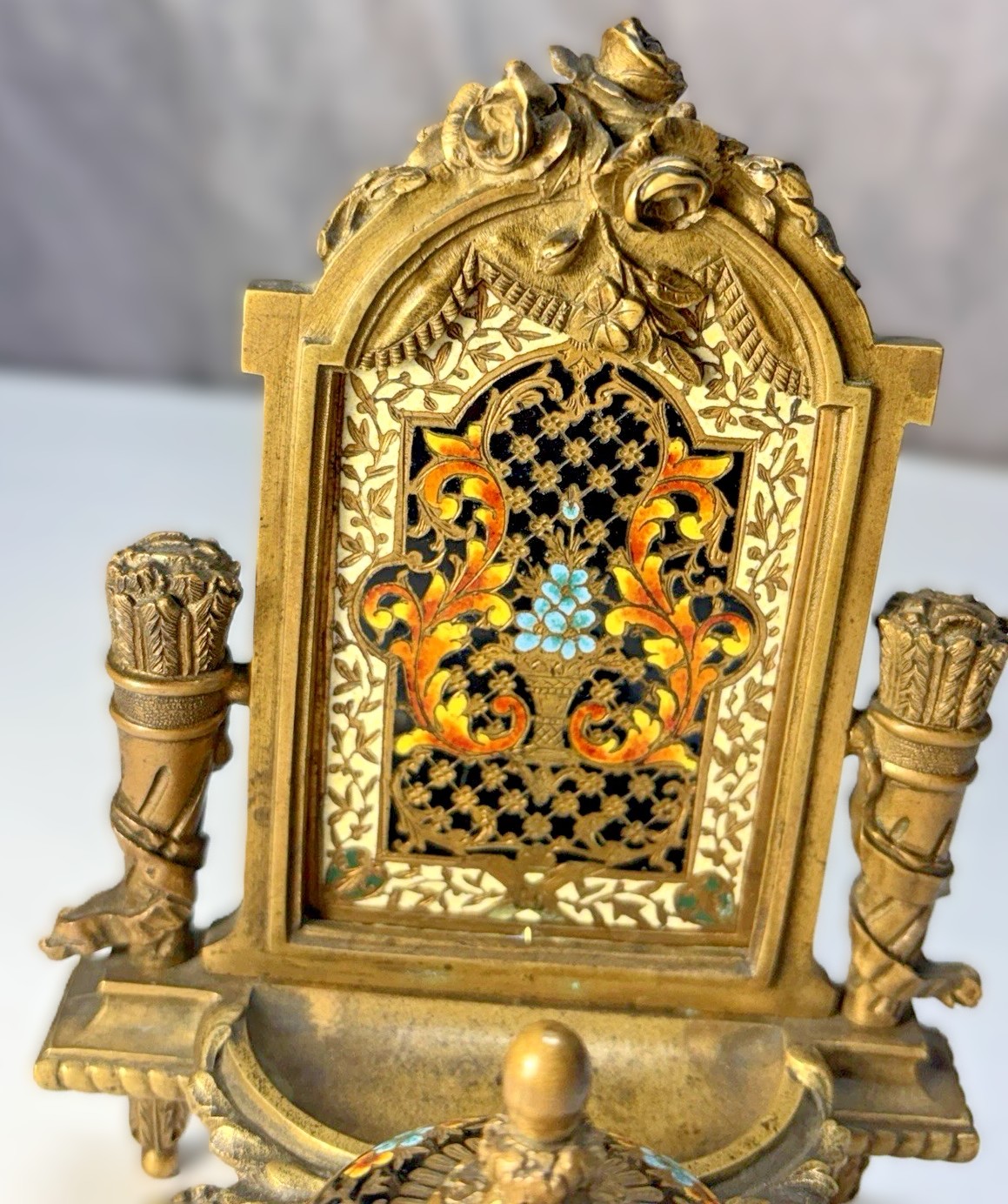
Examing the intricate lattice and floral cartouche on the arched back panel or the hinged lid, one sees the thick, solid bronze boundaries forming the cell walls directly from the cast structure.
Description & Key Features
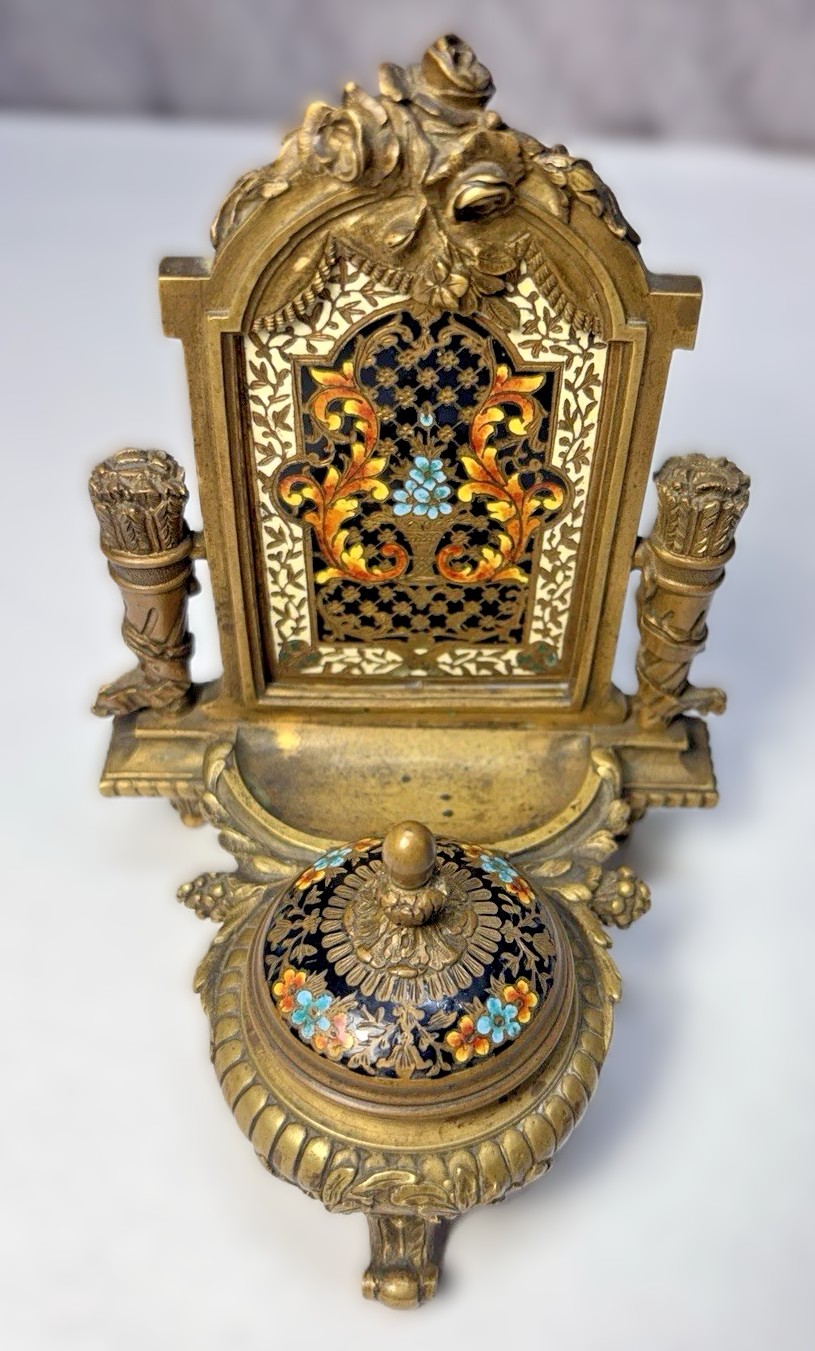
- Architectural Back Panel: Features a grand arched cresting decorated with deeply cast roses and foliage. The central inset field displays a black/navy enamel ground set with a lattice pattern (trellis) framing a central vase emitting scrolling acanthus leaves, yellow/orange floral motifs, and turquoise-blue blossoms.
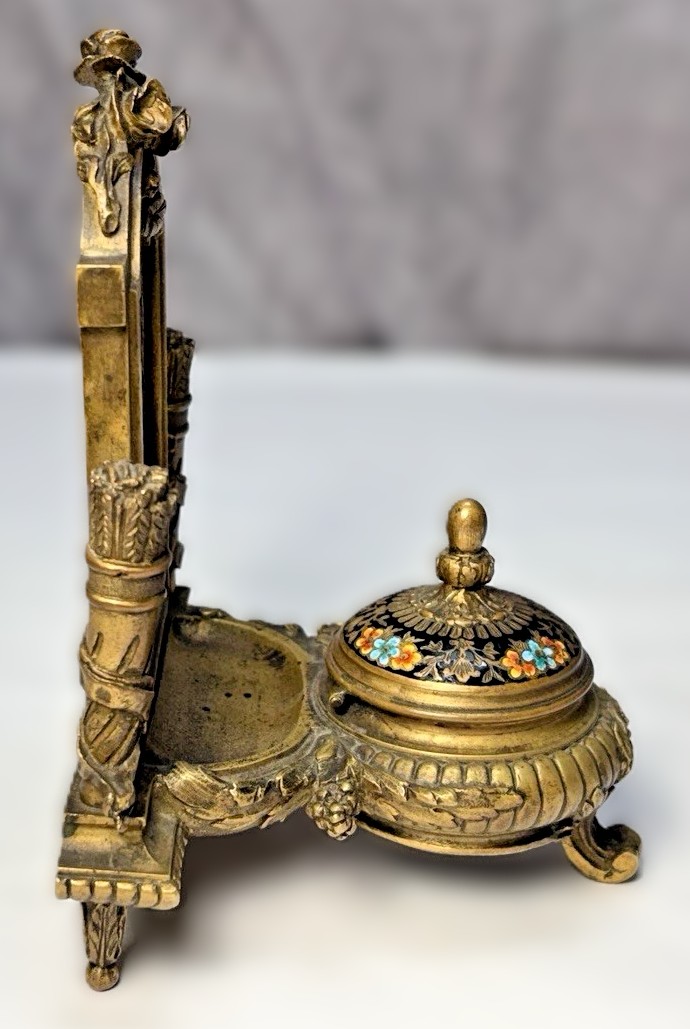
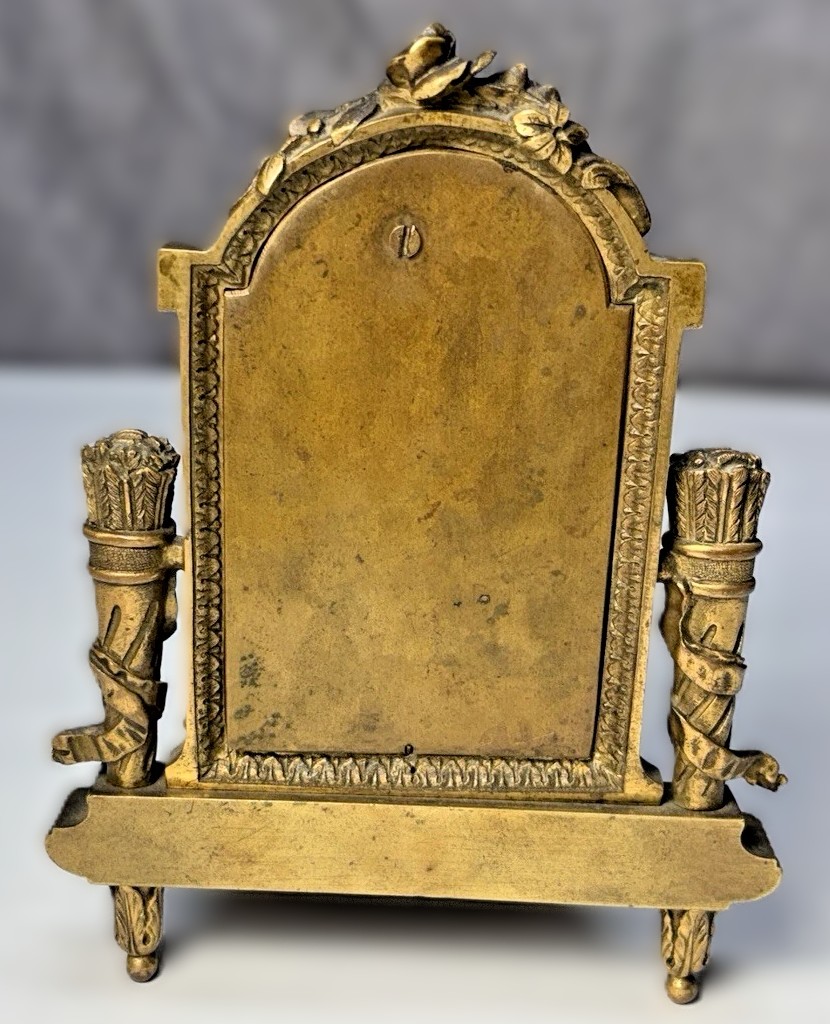
- Flanking Quivers of Arrows: Framing the central panel are two detailed, standing quivers filled with arrows and wrapped in crisscrossing ribbons, classic Neoclassical symbols associated with love (Cupid’s arrows) and victory.
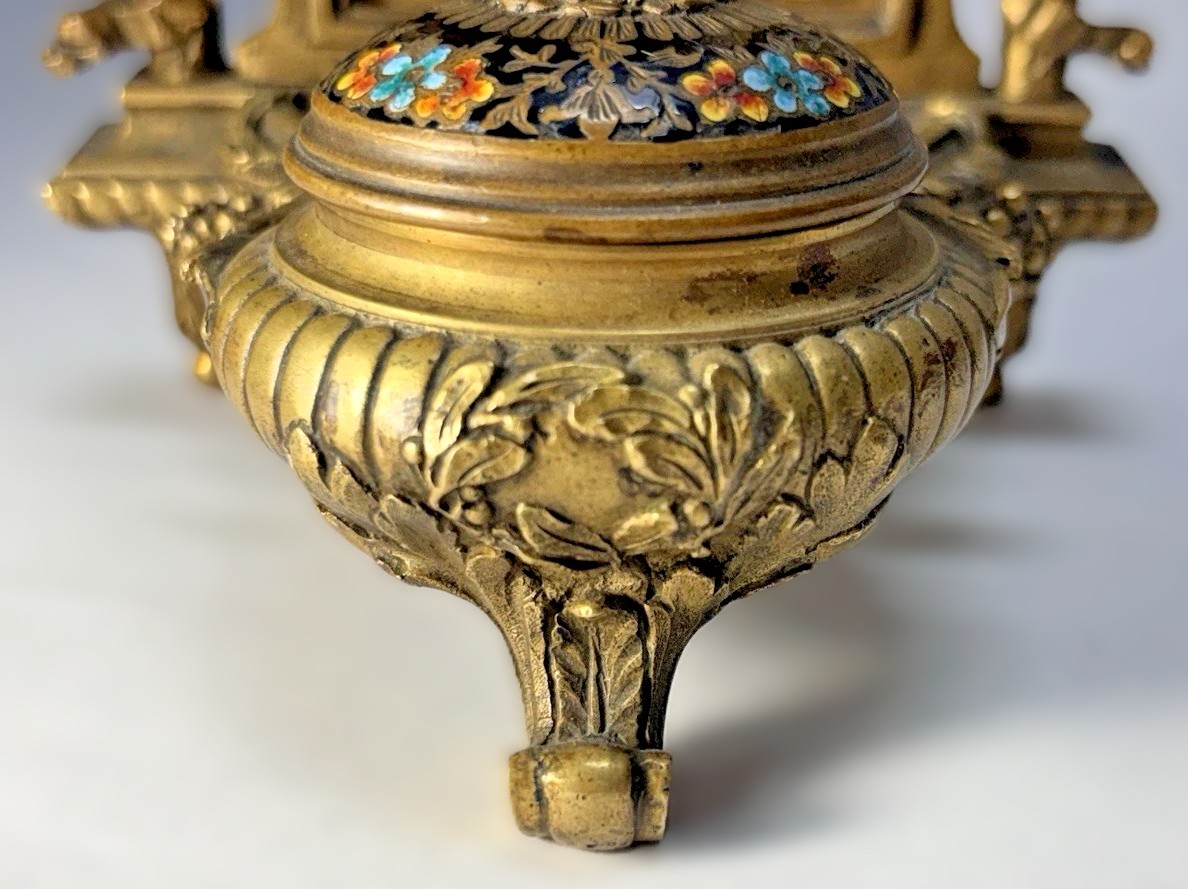
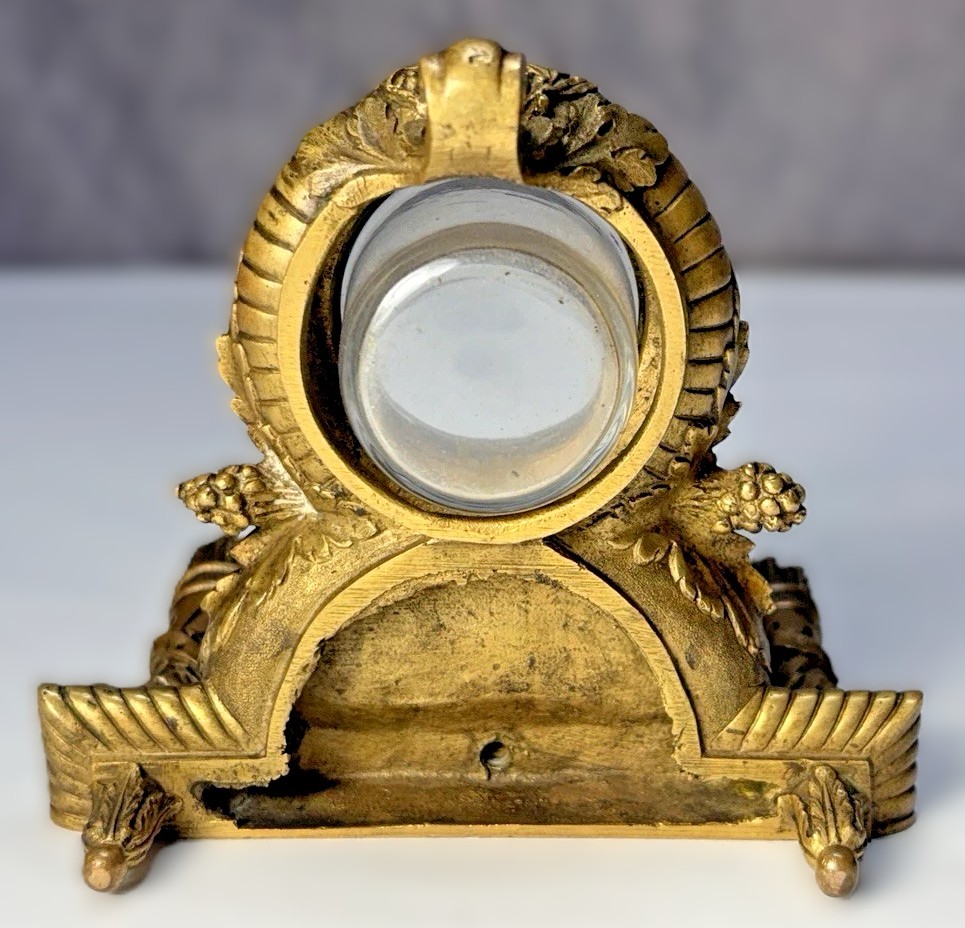
- Ink Well & Reservoir: The forward basin features a single, round pot with a gadrooned and leaf-molded bronze base resting on stylized scrolled feet. It opens to reveal a clear, glass insert. The hinged lid is topped with a turned finial and adorned with polychrome floral enamel (turquoise, orange, and white flowers).
- Pen Tray: Just behind the inkwell sits a built-in concave recess to rest dip pens or quills.
- Reverse: The smooth, solid brass back plate is secured by a single central flathead screw, typical of French 19th-century metal assembly.
Production Details
- Maker: Unmarked / Attributed to French Bronziers (such as Ferdinand Barbedienne, L’Escalier de Cristal, or contemporary Parisian workshops of the era).
- Where: Paris, France.
- When: Circa 1870–1890 (Late 19th Century, Napoleon III / Third Republic period).
Sold for $195 in June 2026
Content disclaimer. The information posted is the owner’s best knowledge and may not have been vetted by the SOIC. We welcome comments, corrections, and additions, working to make our website information comprehensive and accurate.
Join the Society of Inkwell Collectors (SOIC) – it’s free!
Founded in 1981 as a non-profit organization,
we are documenting inkwells (and accessories).
We’re here to help and inform!