

Inkipedia
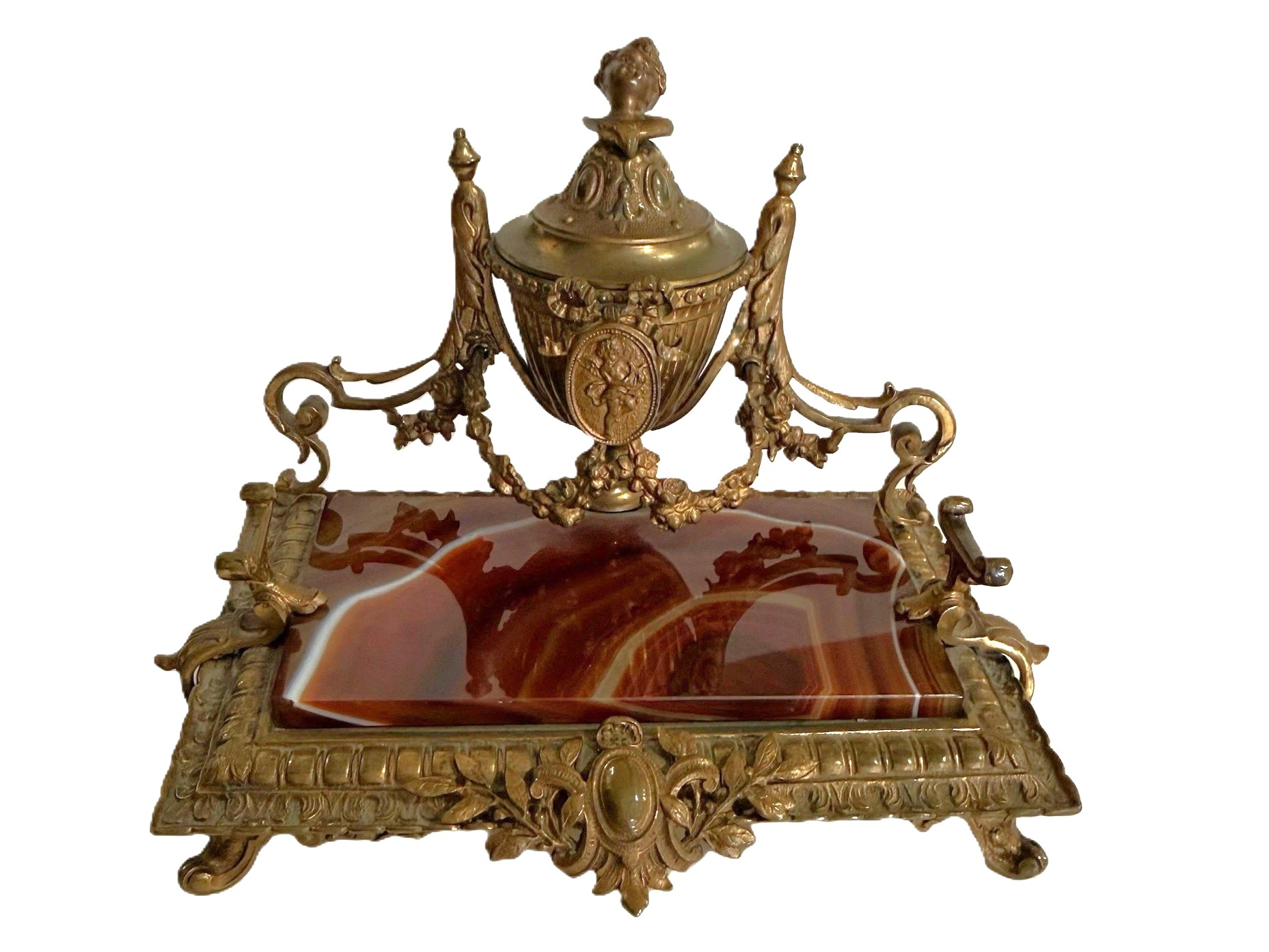
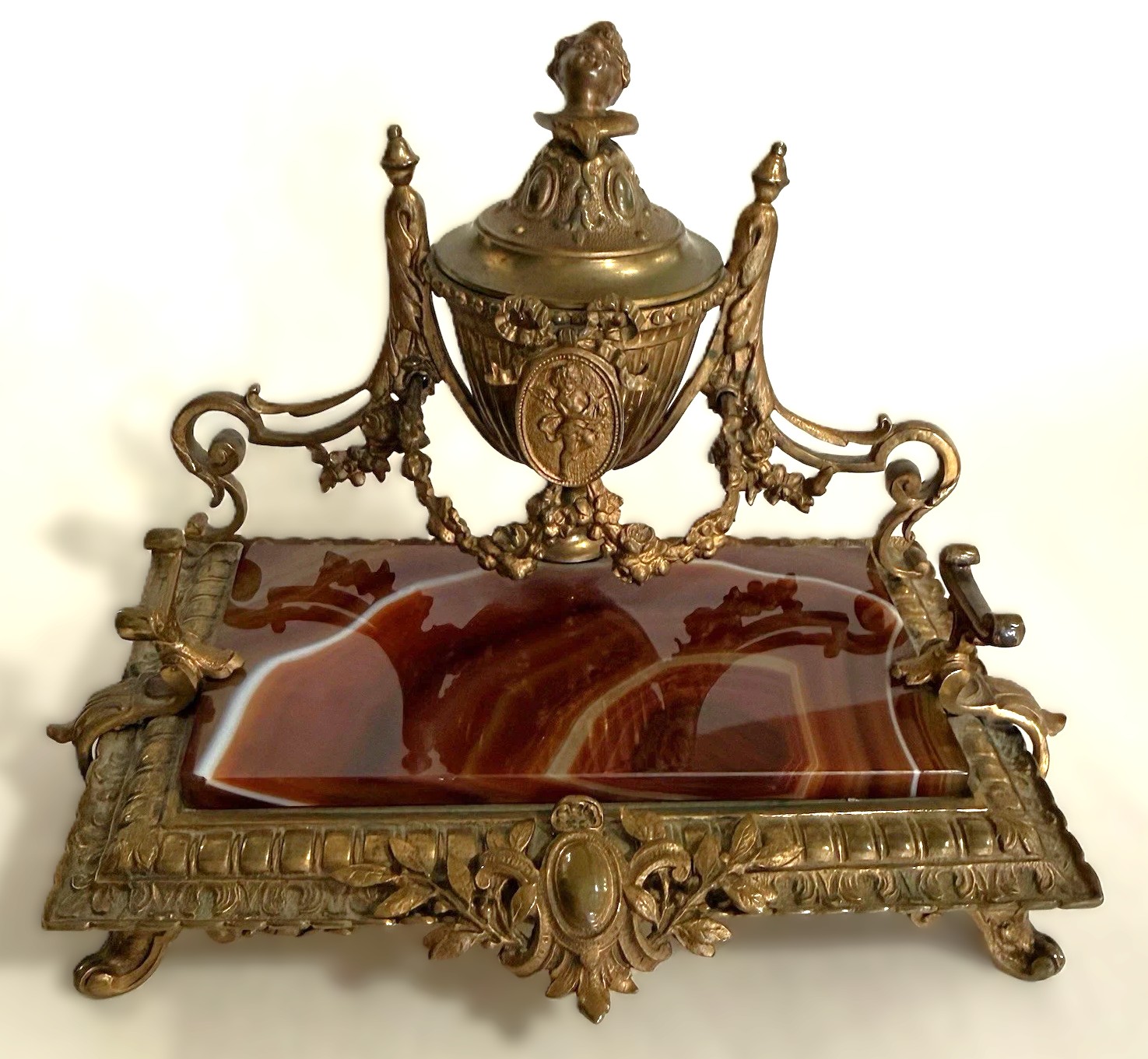
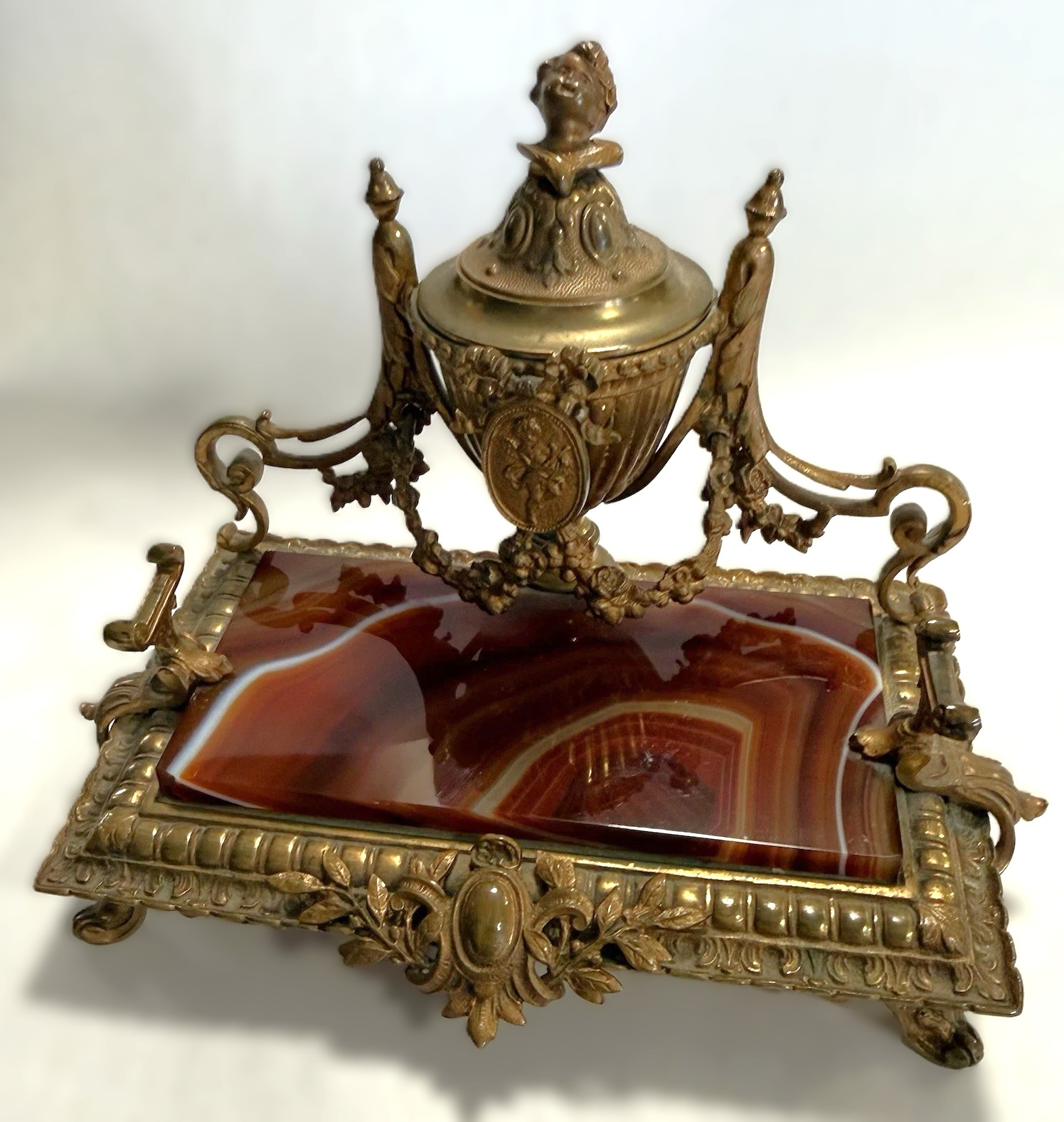
Gilt-Bronze and Banded Agate Inkstand
| Categories | Stone/Marble/Ivory/Bone/Hoof/Leather |
| Material | Agate, Gilt Bronze |
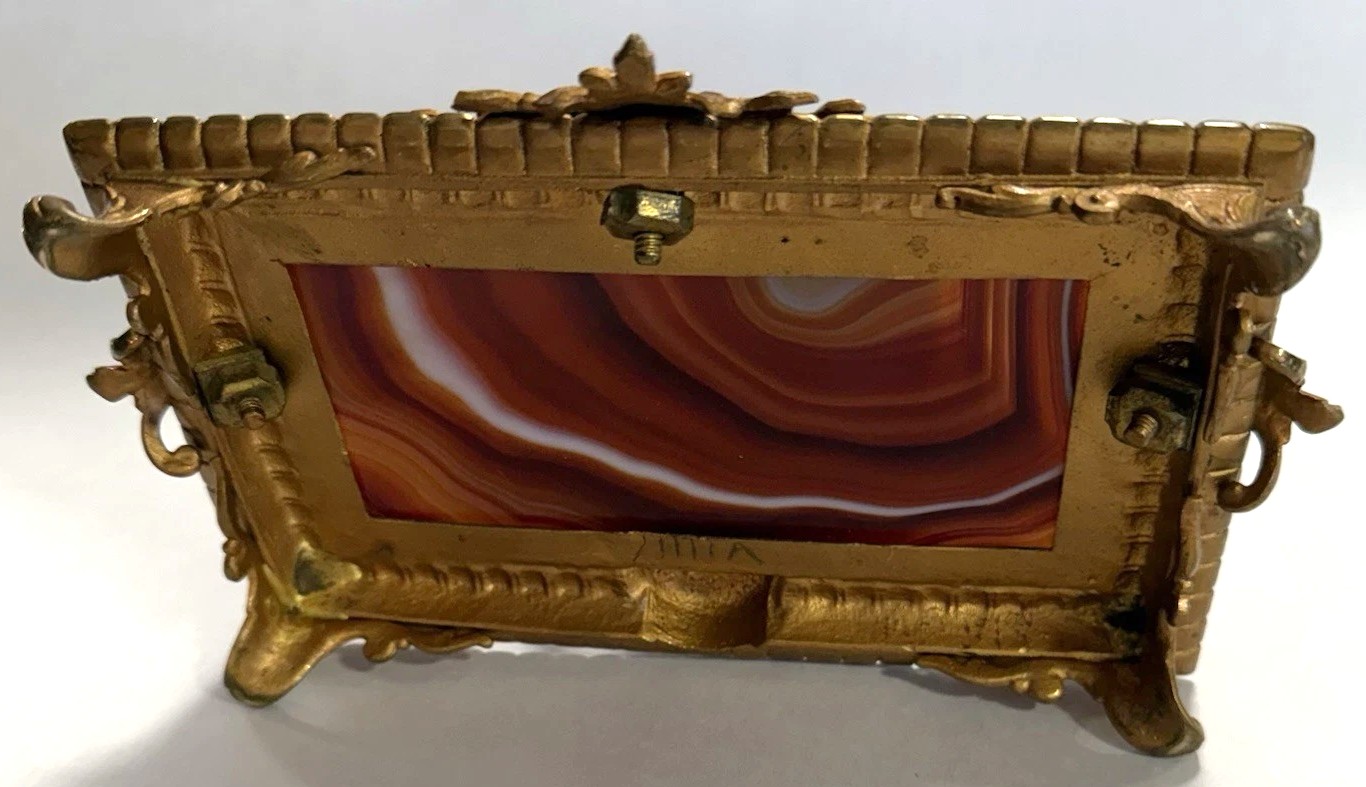
| Markings | See Narrative |
| Manufacturer | Undetermined |
| Origin | France |
| Date or Era | circa 1870 |
| Measuring | 7 ½” x 4” x 5” high |
This French Napoleon III gilt-bronze and banded agate inkstand dates to approximately 1860–1880. Pieces like this were the height of luxury during the Second Empire in France and were sold in the exclusive boutiques of the Palais Royal in Paris.
Origins and Maker
- Where it was made: France (Paris). The style, casting quality, and assembly are characteristic of Parisian “Bronziers” who specialized in objets de vertu (luxury desk accessories).
- Who made it: While there isn’t a stamped manufacturer’s name, the hand-inscribed inventory mark on the underside (“7/111/A”) is a classic retailer’s catalog number. This indicates it was sold through a high-end shop such as Tahan or Alph. Giroux, firms that curated work from master craftsmen for the French aristocracy and wealthy international travelers.
Description
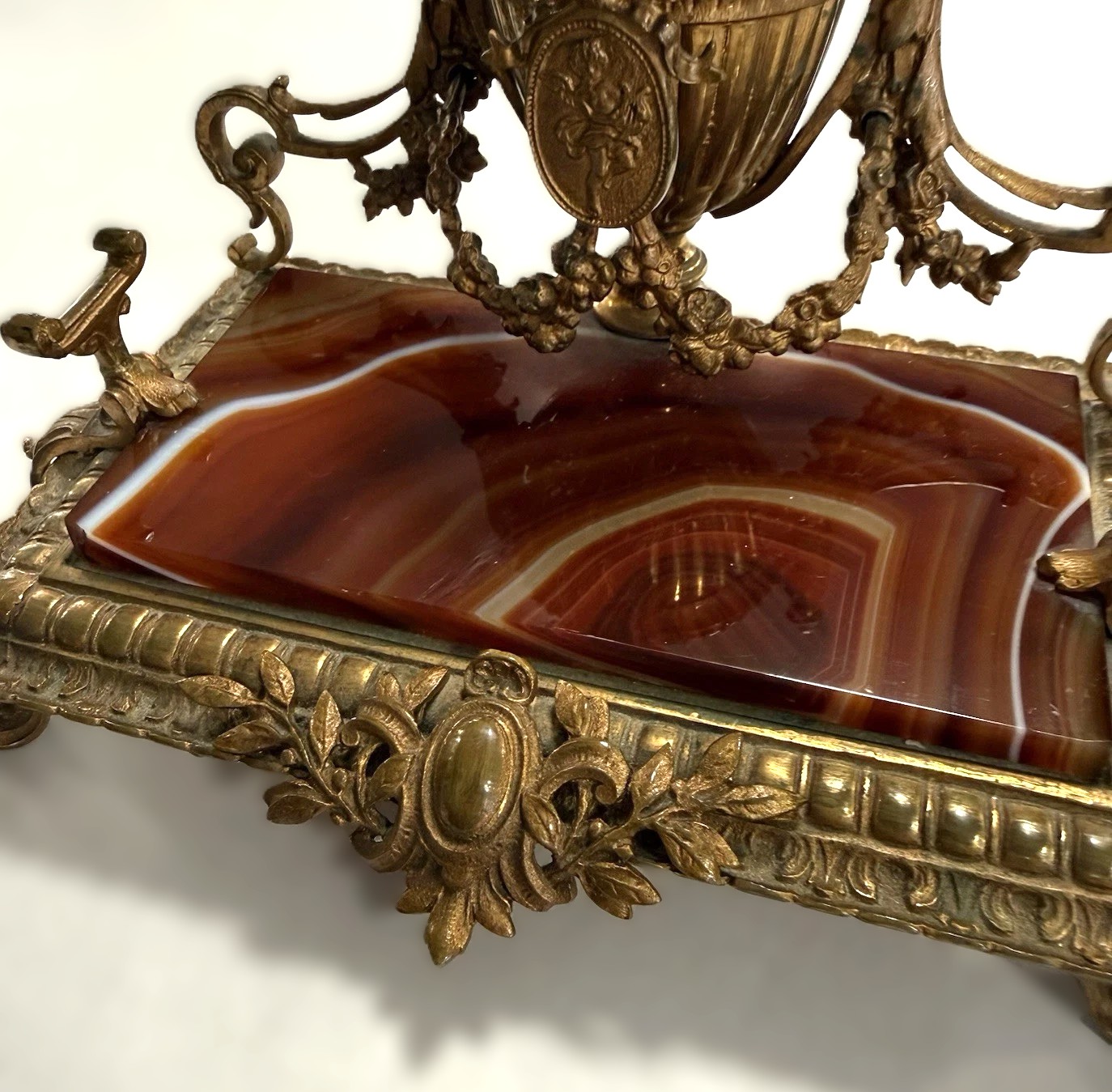
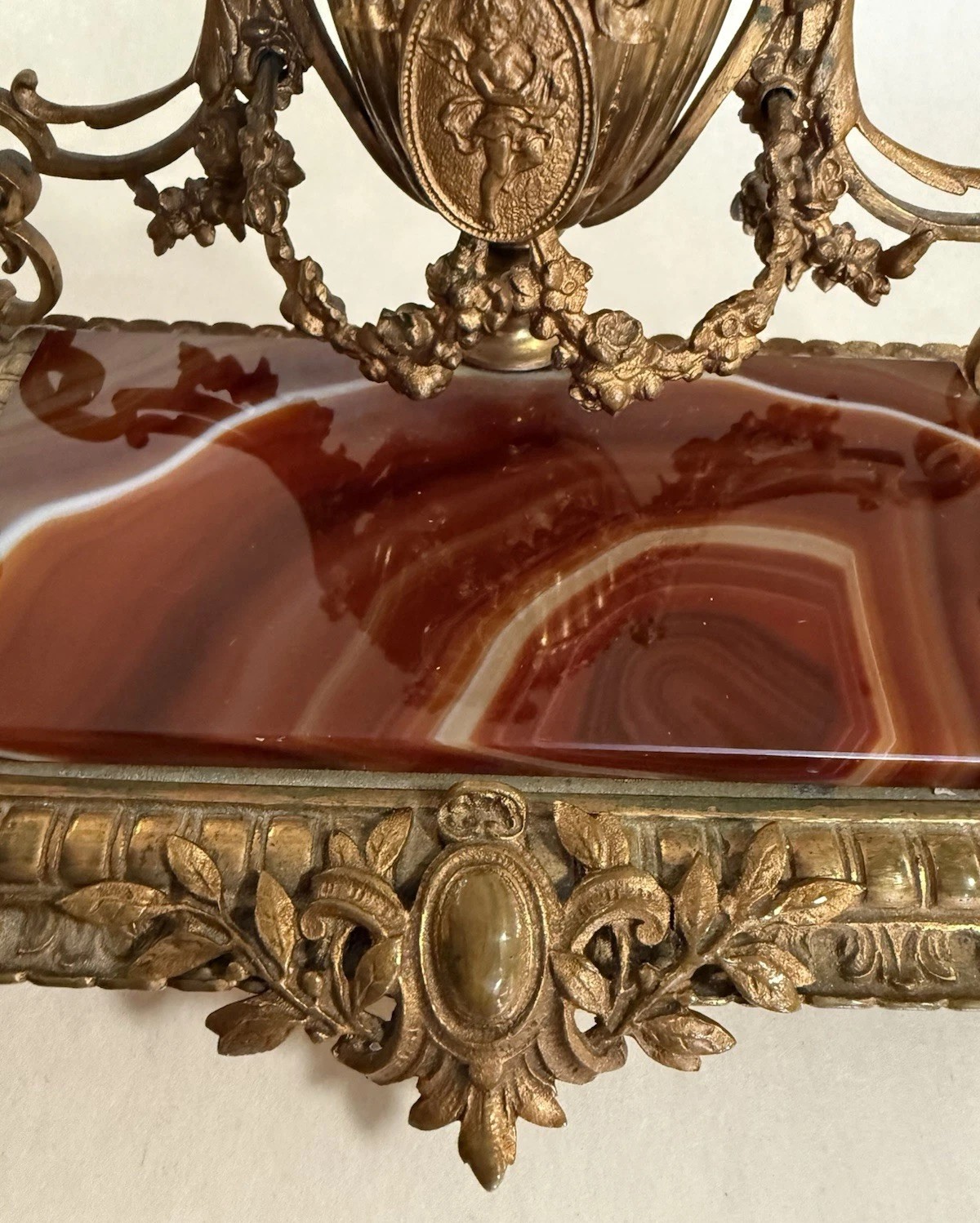
- The Agate Base: The foundation is a substantial, highly polished slab of banded sardonyx agate. The distinct orange, red, and white “fortification” banding suggests the stone likely originated from Brazil or India, which provided the high-quality hardstones favored by 19th-century European lapidaries.
- The Metalwork: The frame is ormolu (gilt-bronze). It features a Louis XV Revival (Neo-Rococo) design, characterized by its scrolled supports, gadrooned (beaded) borders, and asymmetrical floral swags.
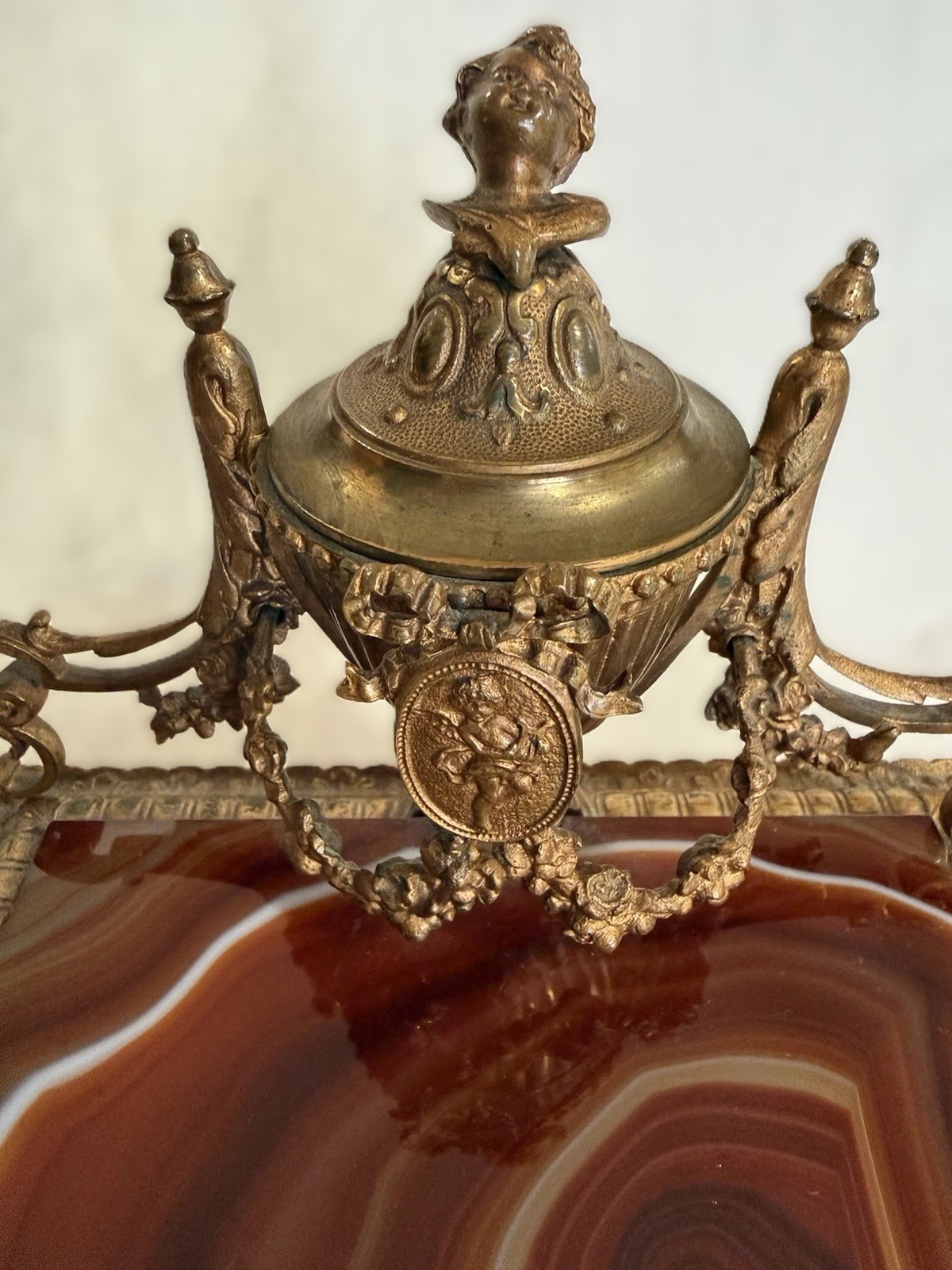
- The Inkwell: The central urn-form inkwell is elegantly suspended within a scrolled framework. It is adorned with:
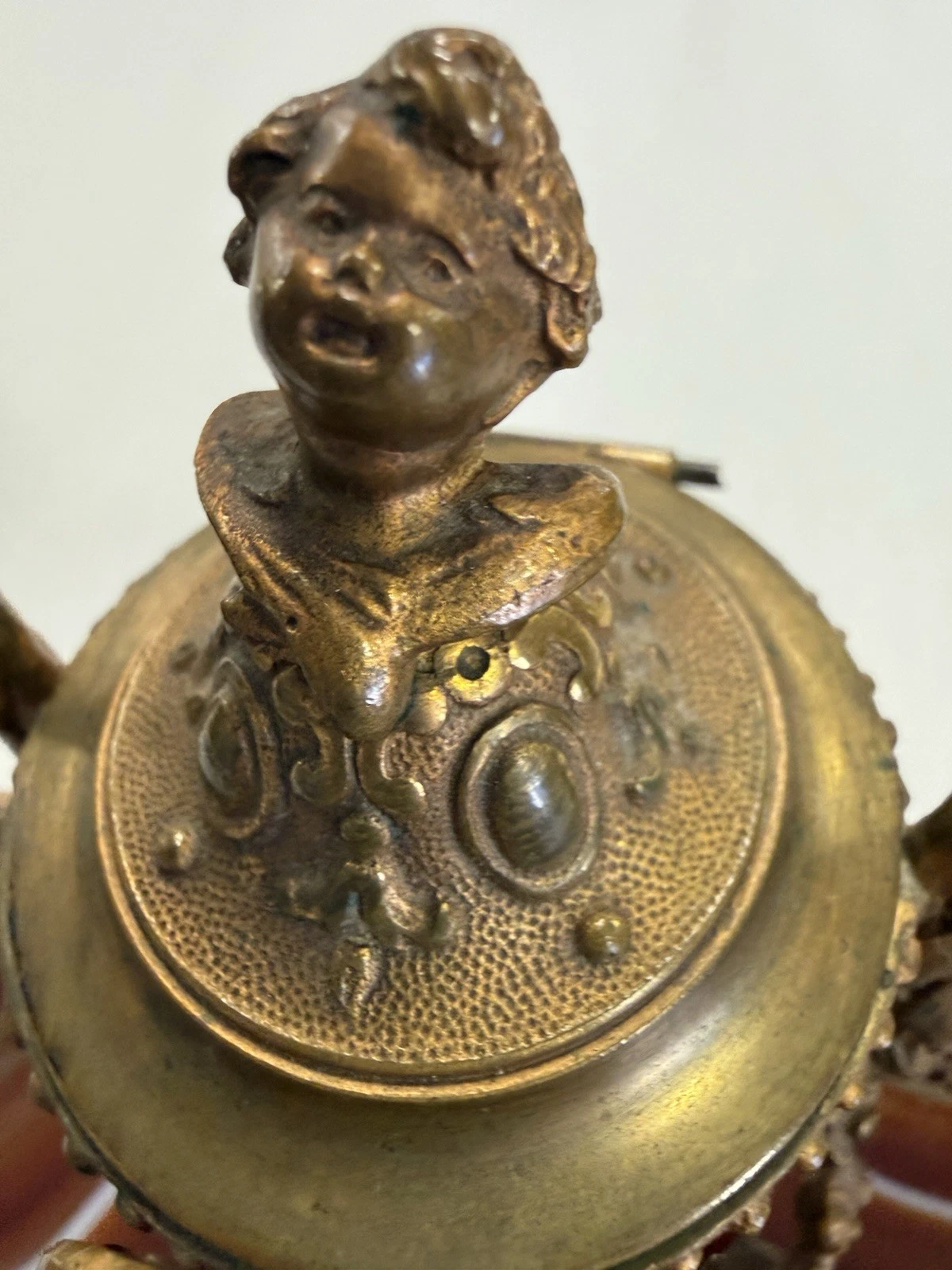
- A putto (cherub) finial atop the lid.
- An oval relief medallion of a cherub on the front of the vessel.
- Intricate floral garlands draped from the side supports.
- The “Gem” Inset: The translucent green cabochon at the front of the base is chrysoprase or high-quality green glass, a common decorative contrast used to complement the warmth of the agate.
Insights
- Suspended Design: This “hanging urn” style was a sophisticated alternative to the more common stationary wells. It was designed to give the heavy stone base a sense of lightness and architectural “air.”
- Condition Note: Large slabs of agate like this are prone to “star cracks” or “thermal shock” fractures over time. This on is well-preserved.
- Functionality: The two “prongs” on either side of the agate base are a dedicated pen rest, designed to hold a dip pen horizontally when not in use.
Sold for $161 in March 2026
Content disclaimer. The information posted is the owner’s best knowledge and may not have been vetted by the SOIC. We welcome comments, corrections, and additions, working to make our website information comprehensive and accurate.
Join the Society of Inkwell Collectors (SOIC) – it’s free!
Founded in 1981 as a non-profit organization,
we are documenting inkwells (and accessories).
We’re here to help and inform!