

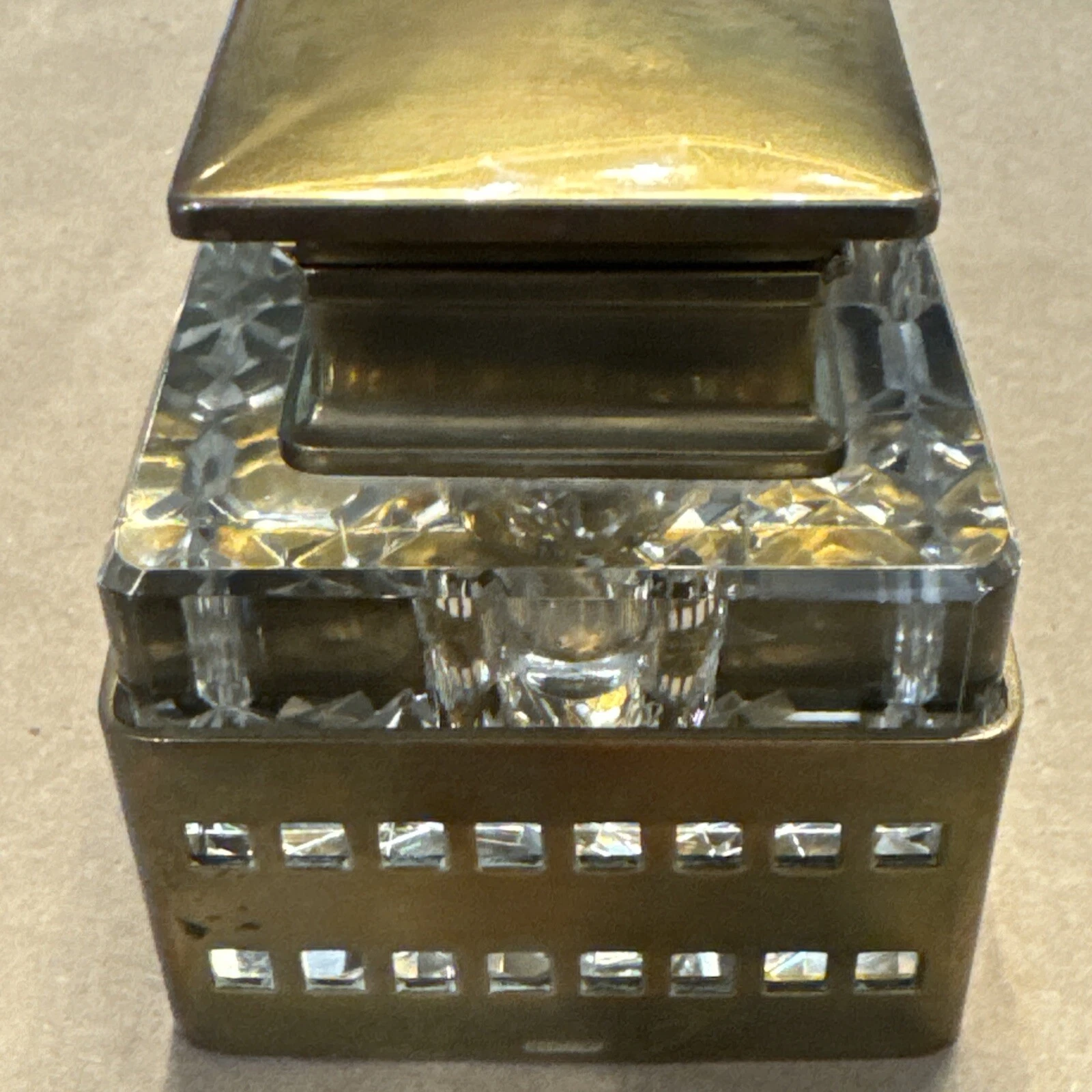
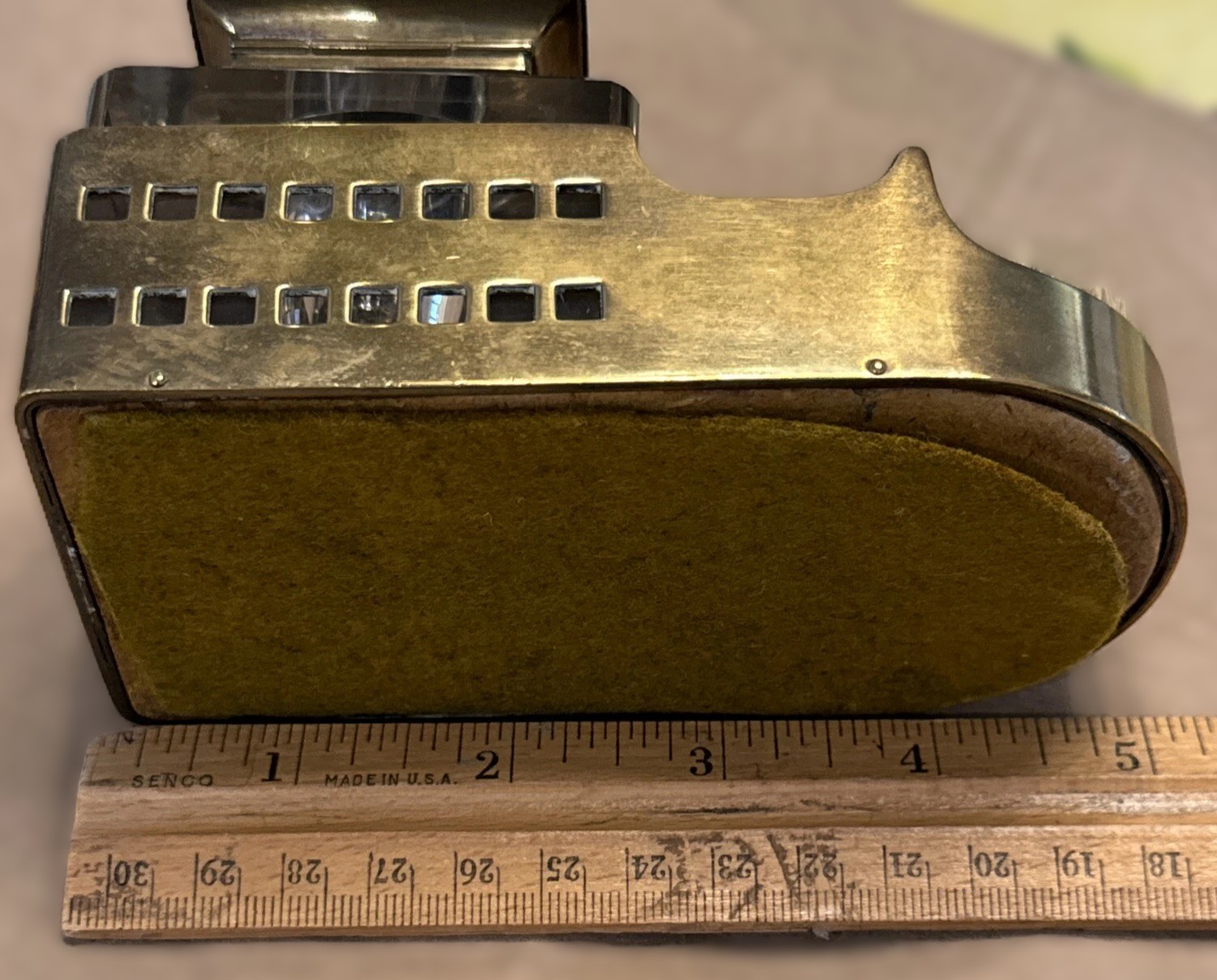

German Jugendstil Inkstand with Pen Wipe
| Categories | Art Nouveau |
| Material | Brass, Glass |
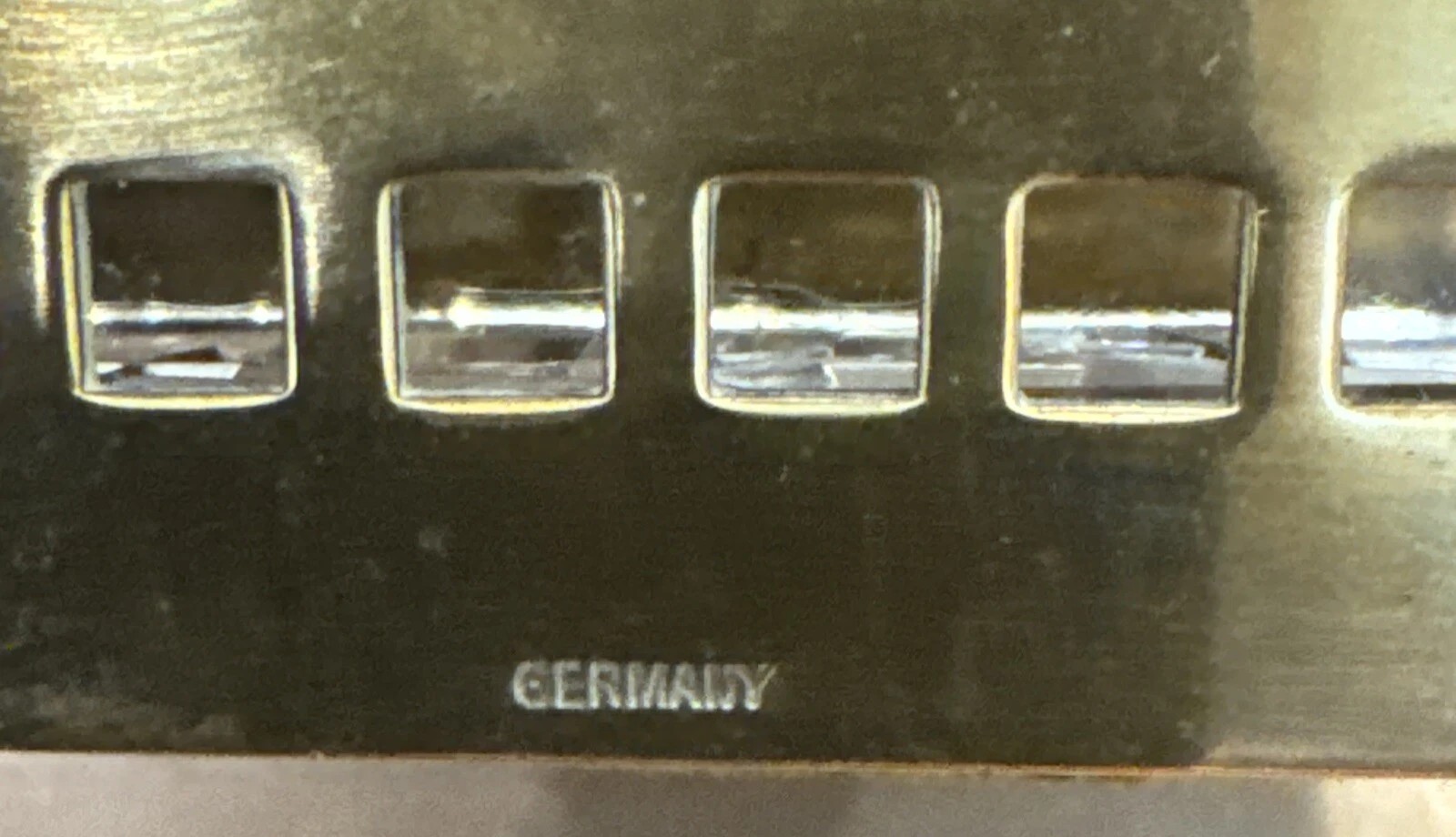
| Markings | Germany |
| Manufacturer | Undetermined |
| Origin | Germany |
| Date or Era | circa 1910 |
| Measuring | 5” across; 3” high |
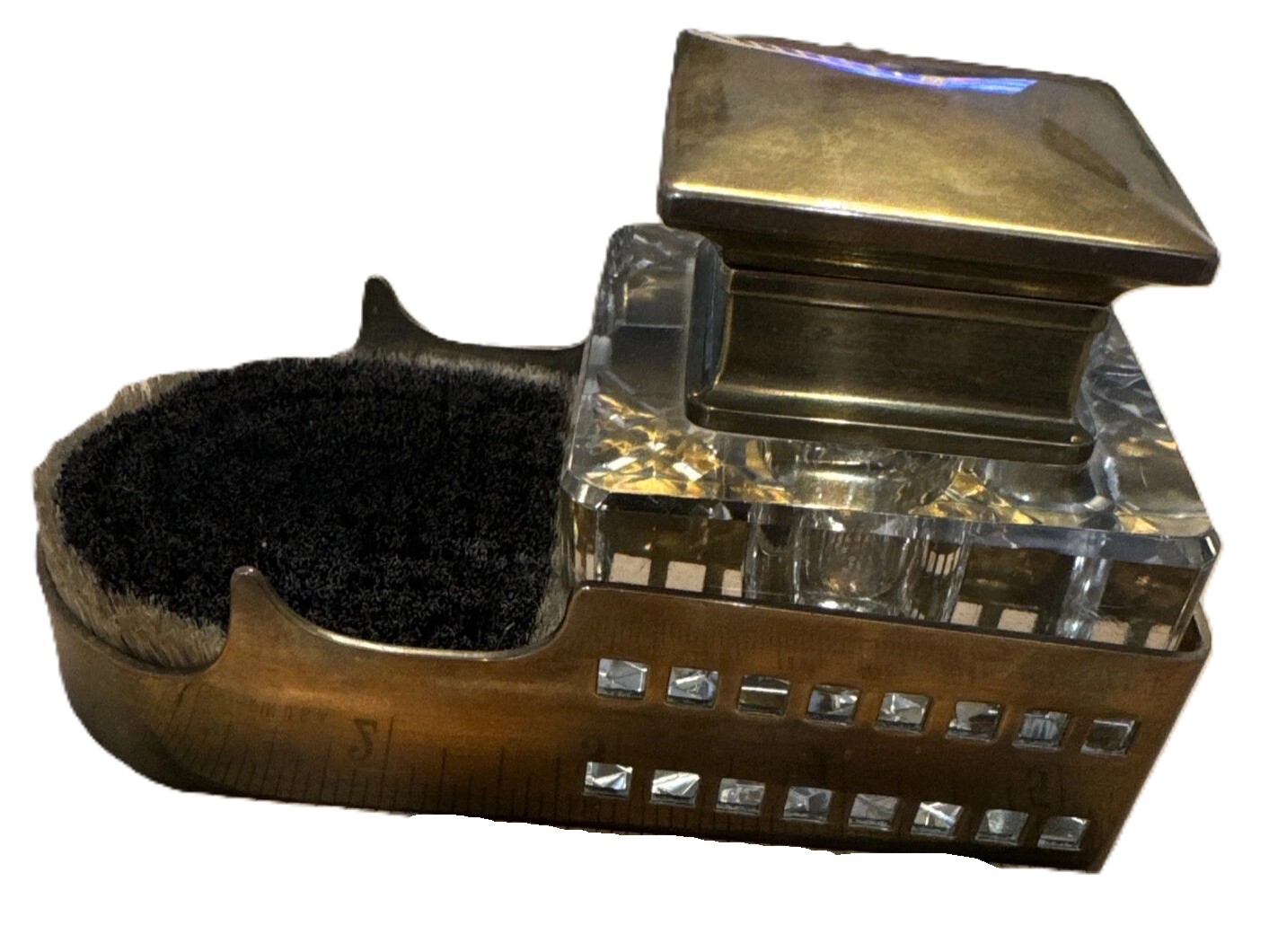
The combination of a brass stand, a glass inkwell, and a dedicated pen wipe was popular in the late 19th and early 20th centuries. This piece is a single inkstand featuring a combination of writing necessities designed for a dip pen user:
- Structure: It consists of a single, cast brass base with built-in pen rest and mounting for the inkwell and pen wipe.
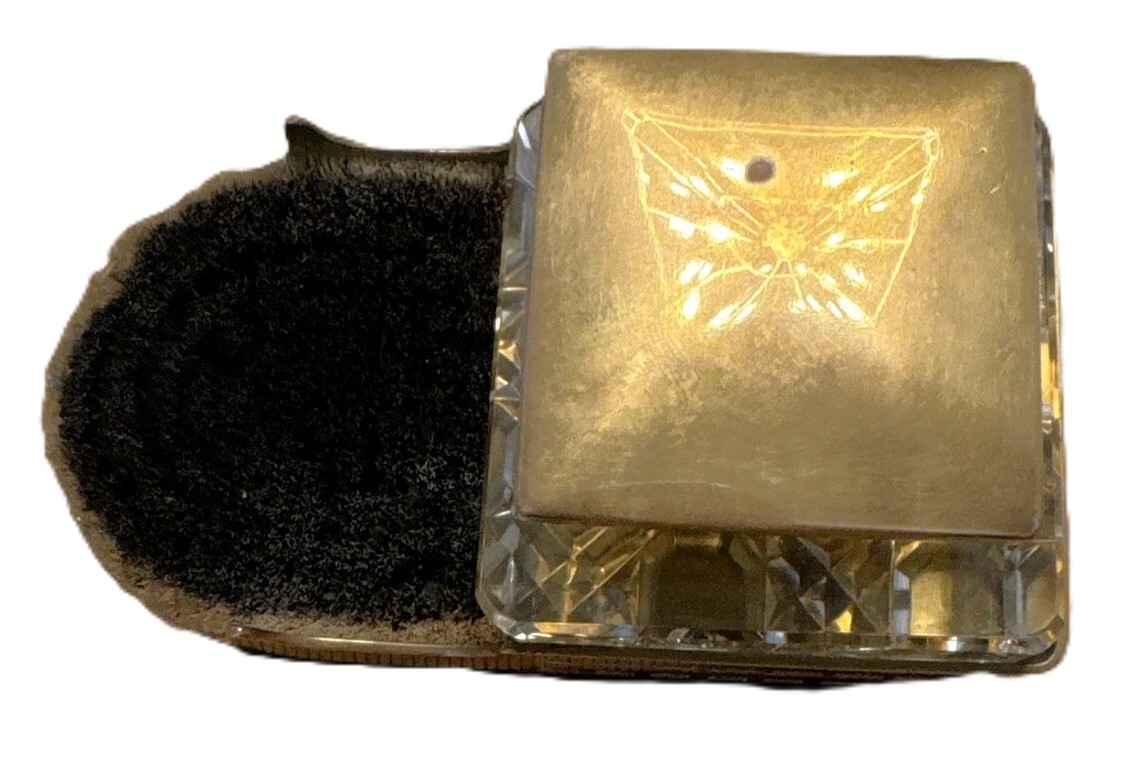
- Inkwell: A square, clear glass inkwell is recessed into the brass base. It is topped with a brass hinged lid. The glass is molded, suggesting industrial production methods.
- Pen Wipe: A significant feature is the large, semi-circular pen wipe (also called a nib wiper) next to the inkwell. This consists of tightly packed bristles (horsehair) held within the brass rim. Its purpose was to quickly clean the excess ink off the nib of a dip pen.
- Marking: The presence of the “Germany” mark is a key identifier, indicating it was made for export.
Style and Design (Art Nouveau / Jugendstil)
The most striking feature for identifying the style is the organic, flowing, and naturalistic ornamentation on the brass base and the lid of the inkwell.
- Style: The style is strongly indicative of Art Nouveau (known as Jugendstil in Germany).
- Features:
- Asymmetry and Curves: The overall shape of the brass base and the decorative scrolling is graceful, asymmetrical, and relies on sweeping curves and whiplash lines, typical of the Art Nouveau movement.
- Floral Motifs: The decoration on the lid incorporates stylized representations of vines and leaves.
- Brass Material: German makers excelled in using cast and stamped brass and other base metals for utilitarian yet highly decorative desk items during this period.
Estimated Age
Based on the style and the “Germany” mark, the inkstand can be reliably dated:
- Date Range: circa 1890 – 1910.
- Reasoning:
- Art Nouveau: This style was dominant across Europe and Germany specifically from the mid-1890s to World War I (1914).
- “Germany” Mark: The requirement for items to be marked with their country of origin for export to the US and UK became common after the McKinley Tariff Act of 1890. The simple “Germany” mark places it in the early period of this export requirement, before WWI disrupted global trade.
- Pen Wipe: The need for a dedicated pen wipe faded with the widespread adoption of the fountain pen in the 1920s and 30s, confirming its origin in the era of the dip pen.
This piece is a classic example of mass-produced, high-quality decorative metalware from Germany, a center for such items during the Art Nouveau period.
Sold for $221 in October 2025
Content disclaimer. The information posted is the owner’s best knowledge and may not have been vetted by the SOIC. We welcome comments, corrections, and additions, working to make our website information comprehensive and accurate.
Join the Society of Inkwell Collectors (SOIC) – it’s free!
Founded in 1981 as a non-profit organization,
we are documenting inkwells (and accessories).
We’re here to help and inform!