

Inkipedia







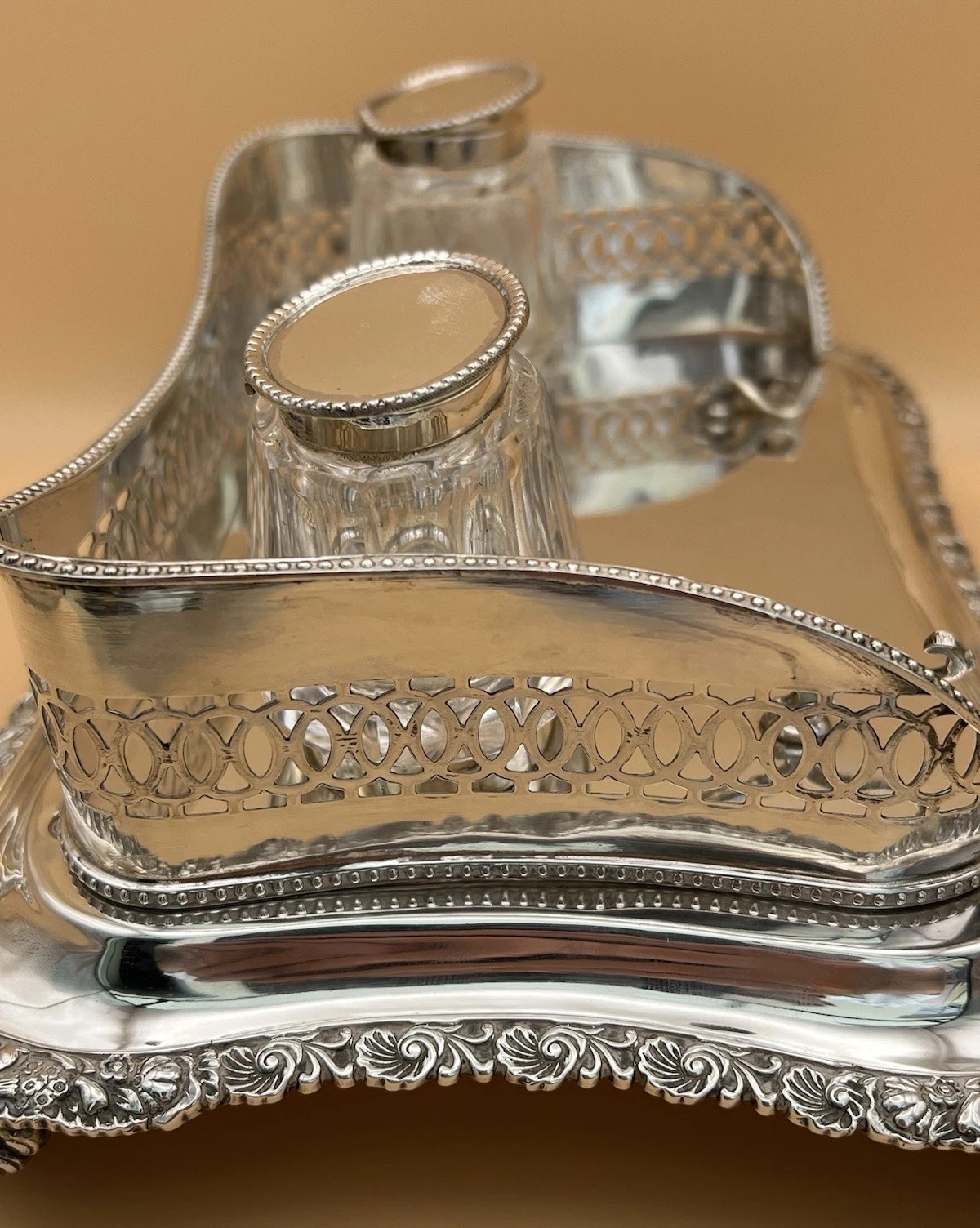


George III Regency Silver Inkstand
| Categories | Silver |
| Type | Standish |
| Material | Silver |
| Markings | See Narrative |
| Manufacturer | Edward Farrell |
| Origin | England |
| Date or Era | circa 1817 |
| Measuring | 9 ⅝” x 7” x 3 ¼” high |
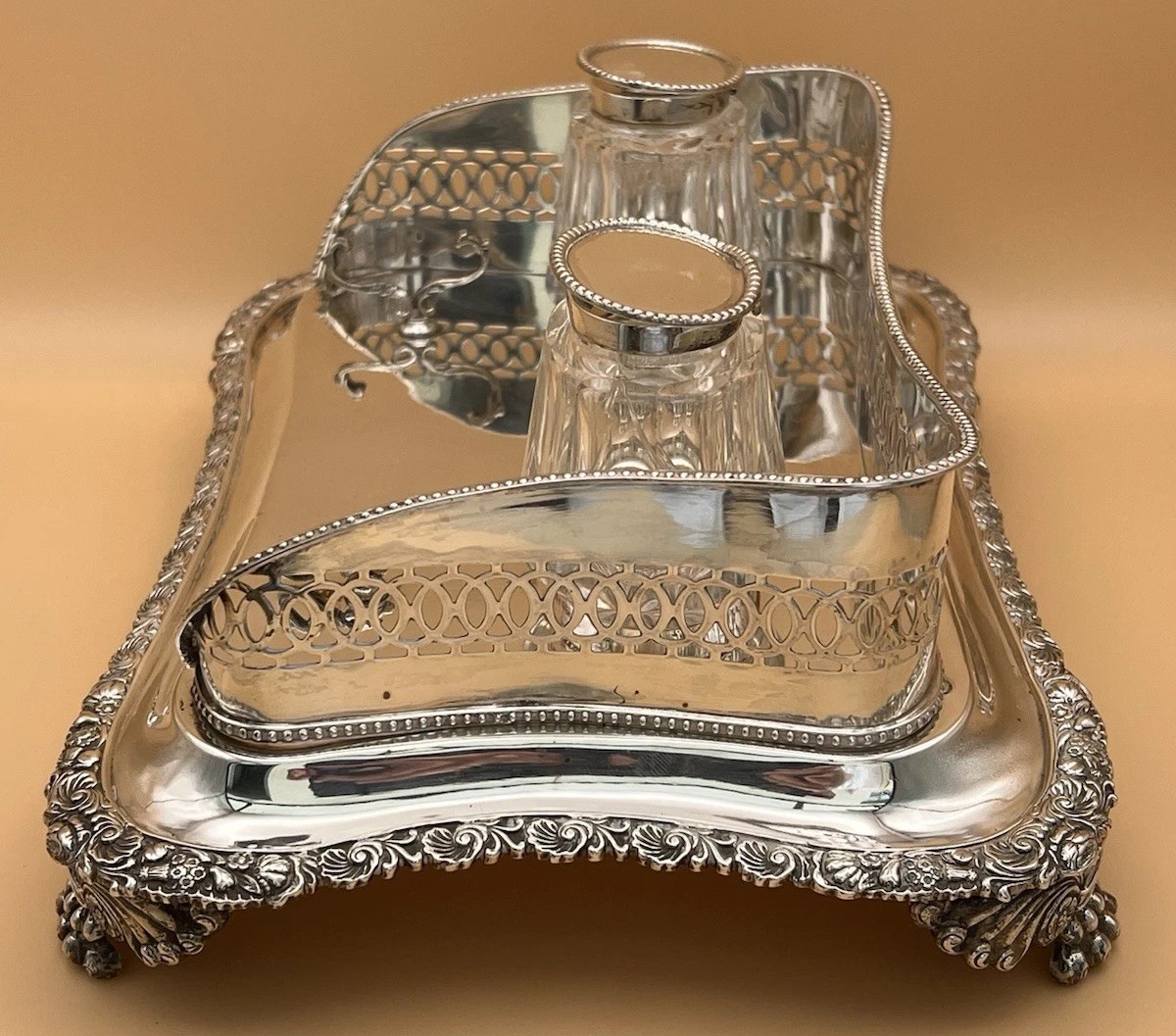
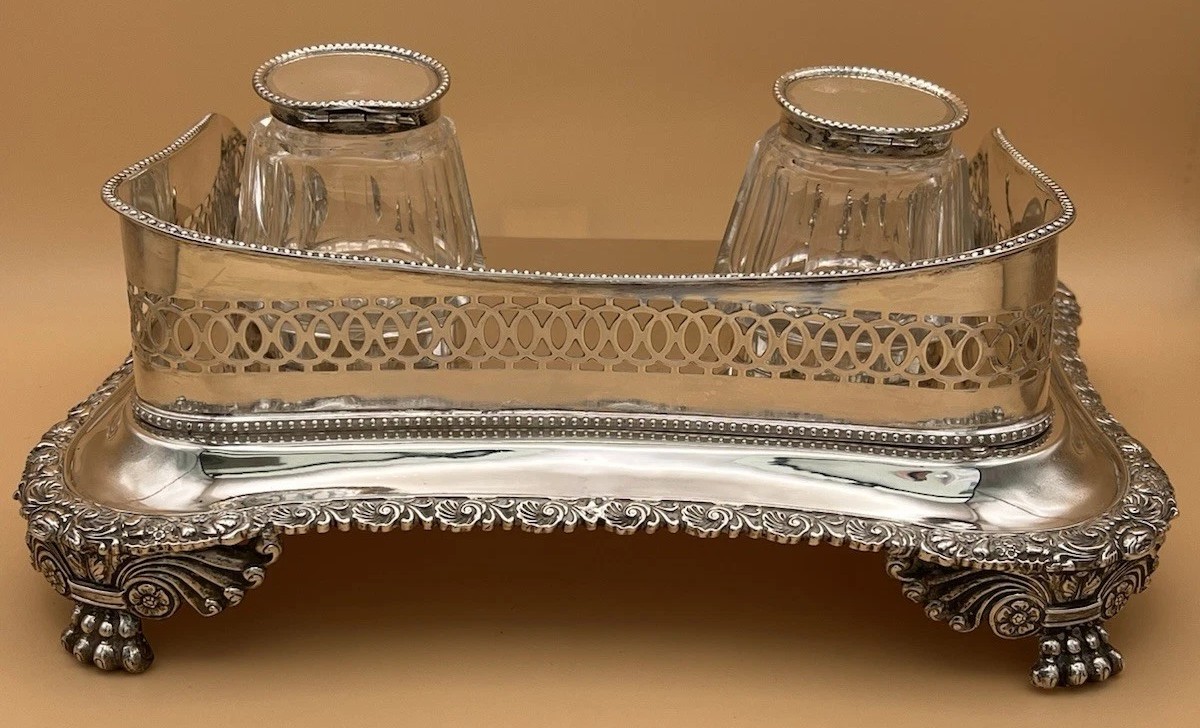
This is a solid silver double inkstand (or standish) made during the British Regency period, officially marked for the final years of the reign of King George III.
Key Identifying Information
- Period: George III / Regency (Transitional style from Georgian formality to heavier Victorian decoration).
- Hallmarks: London, 1817.
- Maker: Edward Farrell, one of the prominent silversmiths of the era known for heavy, decorative pieces.
Structural Description
| Component | Detailed Features | Style Notes |
| Form | Rectangular with Canted Corners. The base plate is substantial, featuring a depression or tray between the two wells. | The broad, rectangular shape is a classic Regency form, providing a stable platform for writing accessories. |
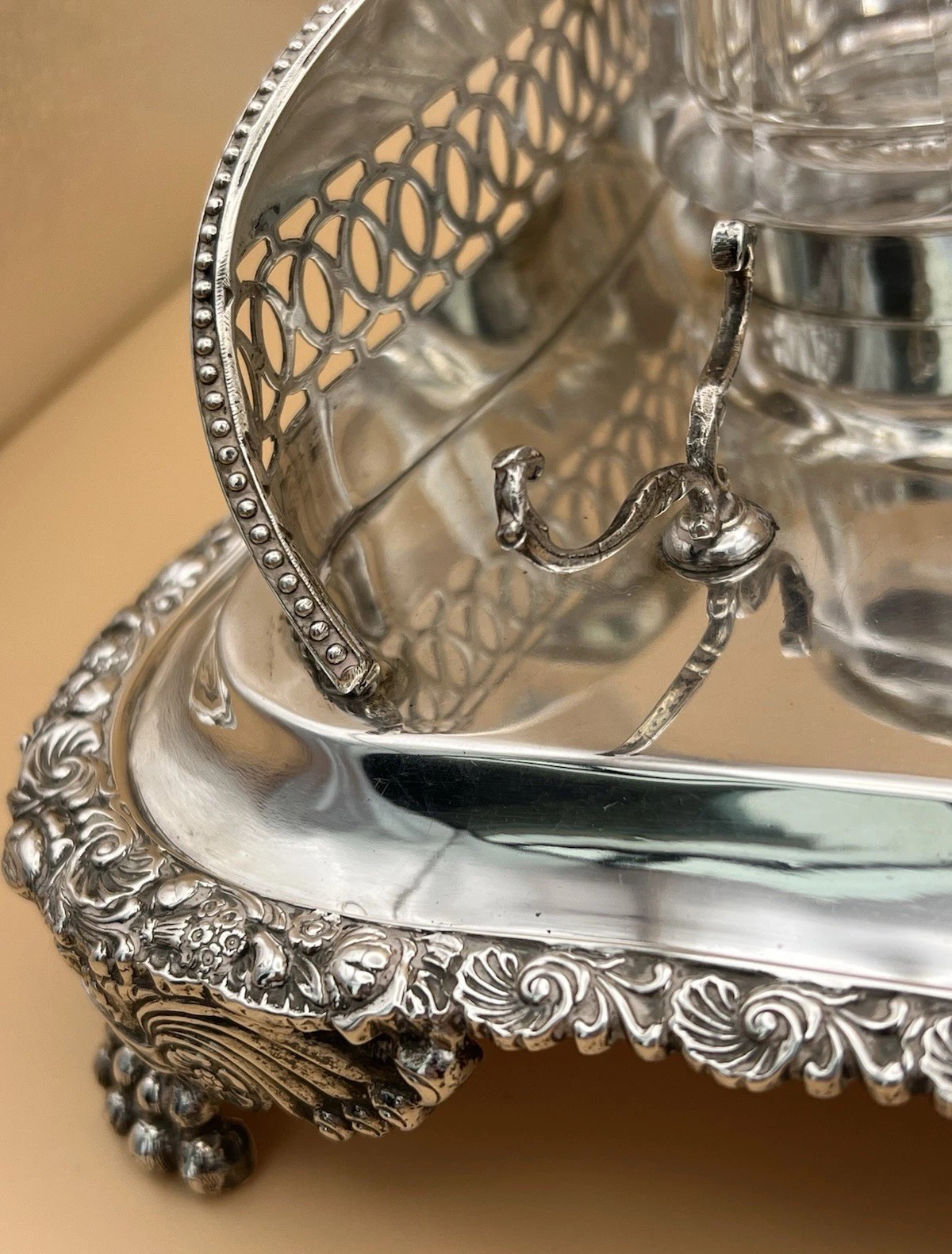
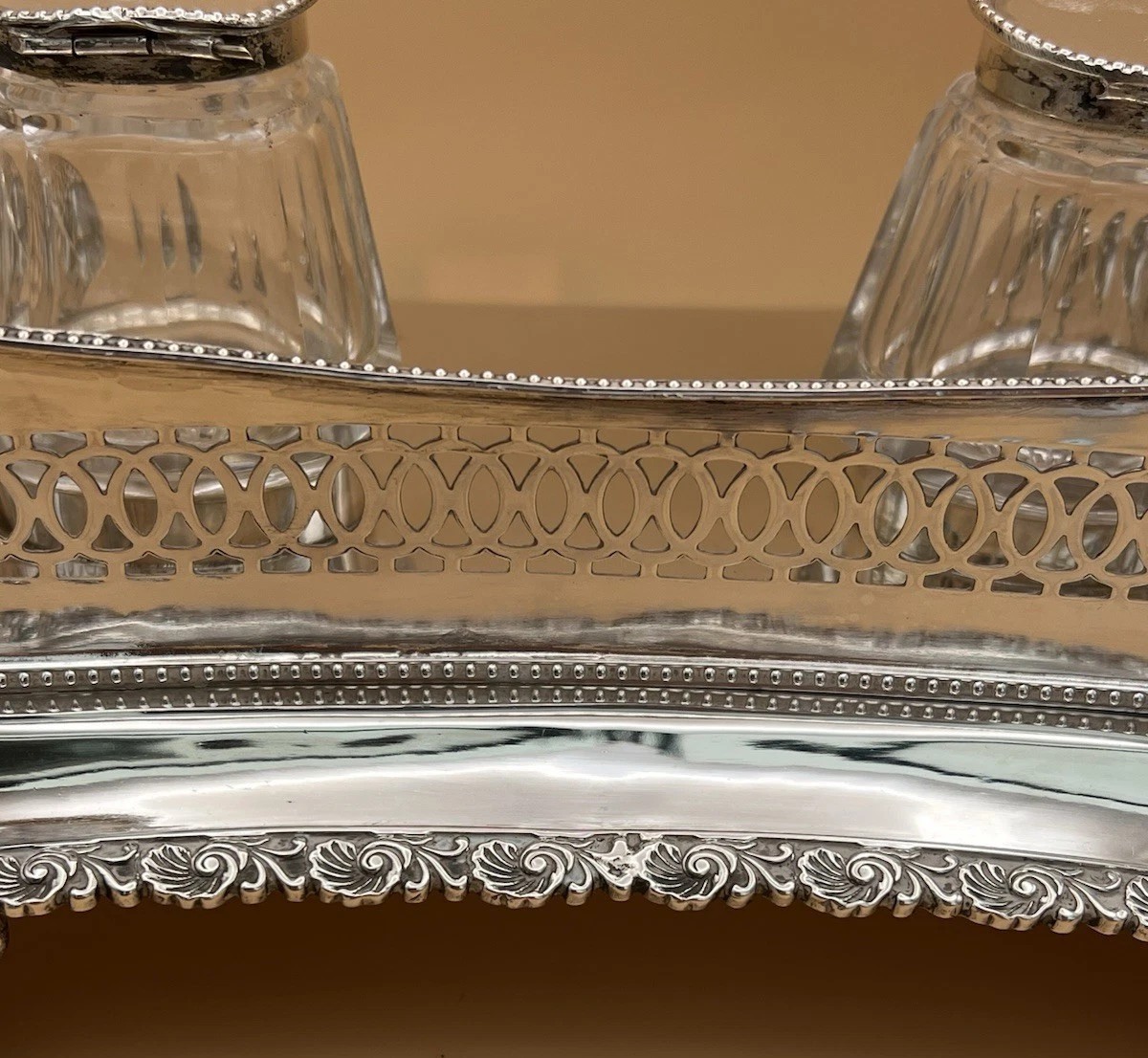
| Galleried Rail | Pierced and Beaded Gallery. A three-sided vertical barrier or “gallery” runs along the back and sides of the inkstand, terminating at the front in the pen rest. It is decorated with intricate piercing and defined by parallel rows of beaded decoration along the top and bottom edges. | The pierced gallery is typical of silver desk stands, preventing pens or wafers from rolling off and adding high-end detailing. |
| Rim Decoration | Repoussé and Chased Foliate Motifs. The lower edge of the base is heavily decorated with shells, classical vases of flowers, and realistic individual flowers and leaves. | This heavy, naturalistic, decoration is a hallmark of Edward Farrell’s work. |
| Feet | Four Cast Lion Paw Legs. The stand is raised on four cast feet shaped like classical lion paws. These are embellished further with intricate flower and leaf decoration cast onto the ankle or cuff of the paw. | These dramatic, classical zoomorphic feet add a sense of grandeur and solidity, characteristic of the Regency style’s influence from antiquity. |
| Inkwells | Two Cut Glass Pots with Silver Lids. The inkwells themselves are made of thick, lead-based, cut glass, featuring fluting or diamond cutting. The functional lids are solid silver. | This combination of clear, sparkling glass and highly polished silver epitomized luxury in the period. |
| Quill/Pen Rest | Central U-Shaped Depression. A slight depression or raised silver bar is incorporated into the front of the base to hold one or more quill pens horizontally. | Essential feature for a period when quill and dip pens were the primary writing tools. |
Sold for $1200 in September 2025
Content disclaimer. The information posted is the owner’s best knowledge and may not have been vetted by the SOIC. We welcome comments, corrections, and additions, working to make our website information comprehensive and accurate.
Join the Society of Inkwell Collectors (SOIC) – it’s free!
Founded in 1981 as a non-profit organization,
we are documenting inkwells (and accessories).
We’re here to help and inform!