






Gardner Inkstand – Patented 1896
| Categories | Mechanical - Pump / Siphon |
| Type | Siphon |
| Material | Glass, Rubber |
| Markings | See Narrative |
| Manufacturer | W L Mason & Co |
| Origin | United States |
| Date or Era | circa 1896 |
| Measuring | 3” x 3” x 3” high |
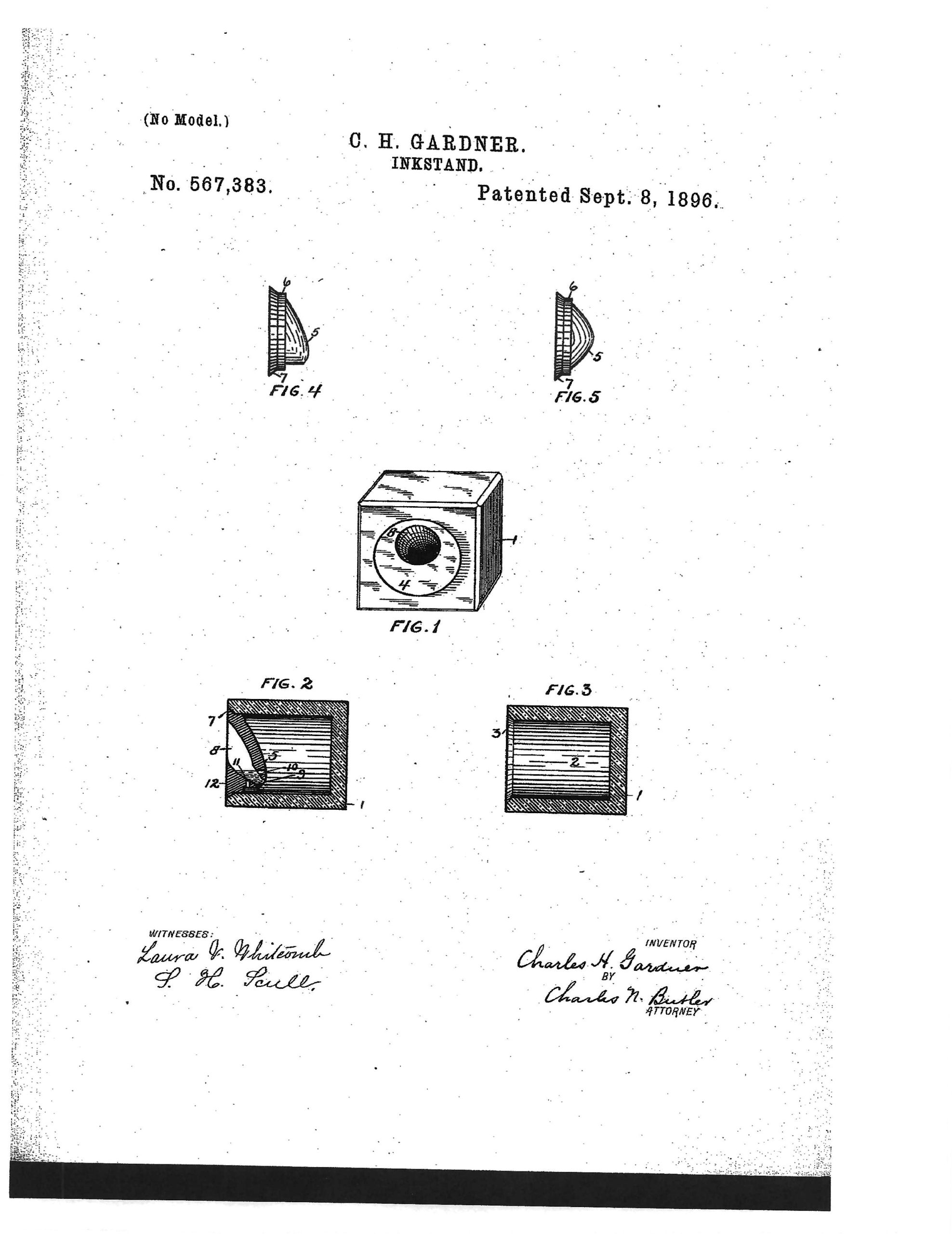
| Patent | Patented September 8, 1896, No. 567,383 |
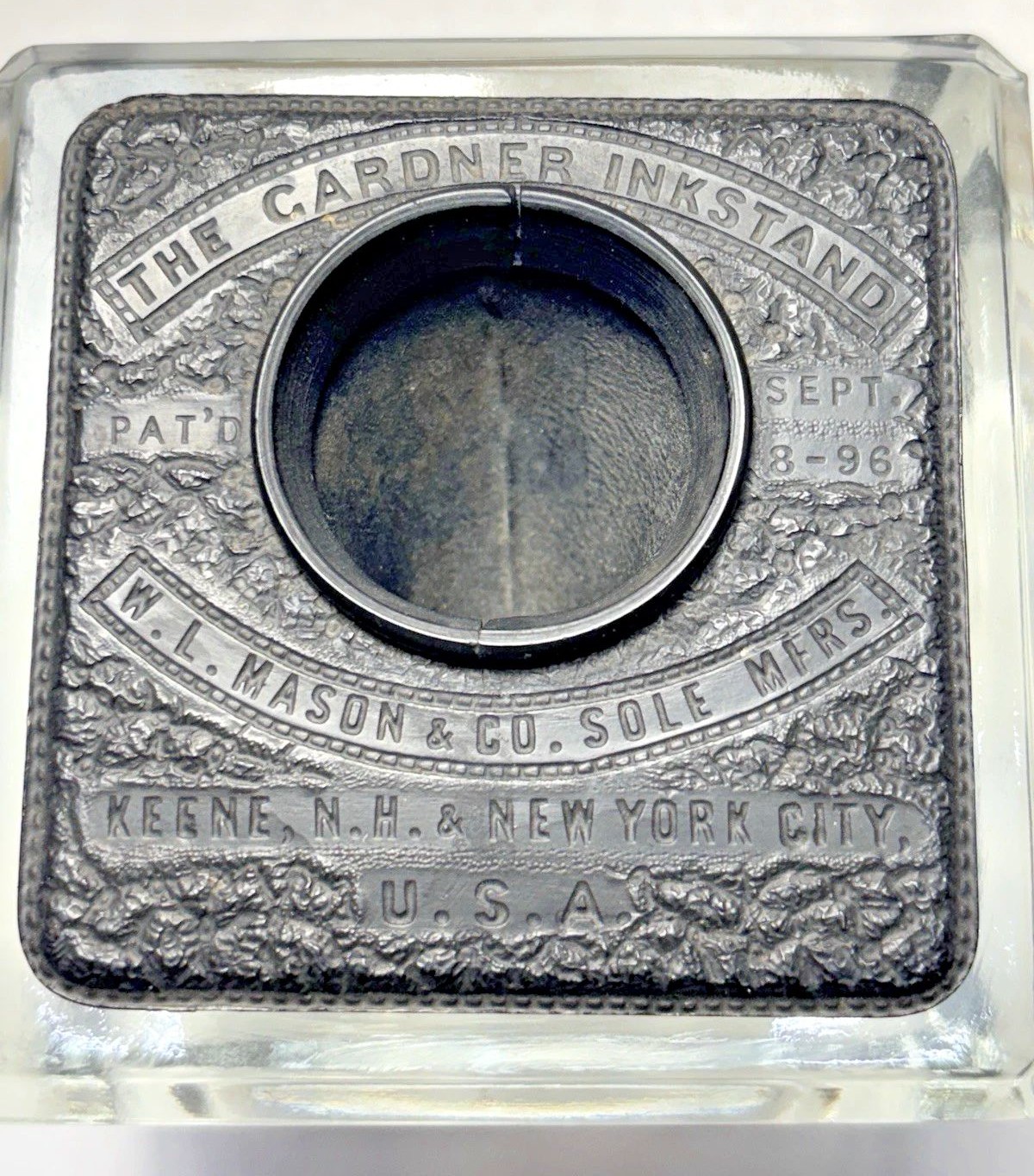
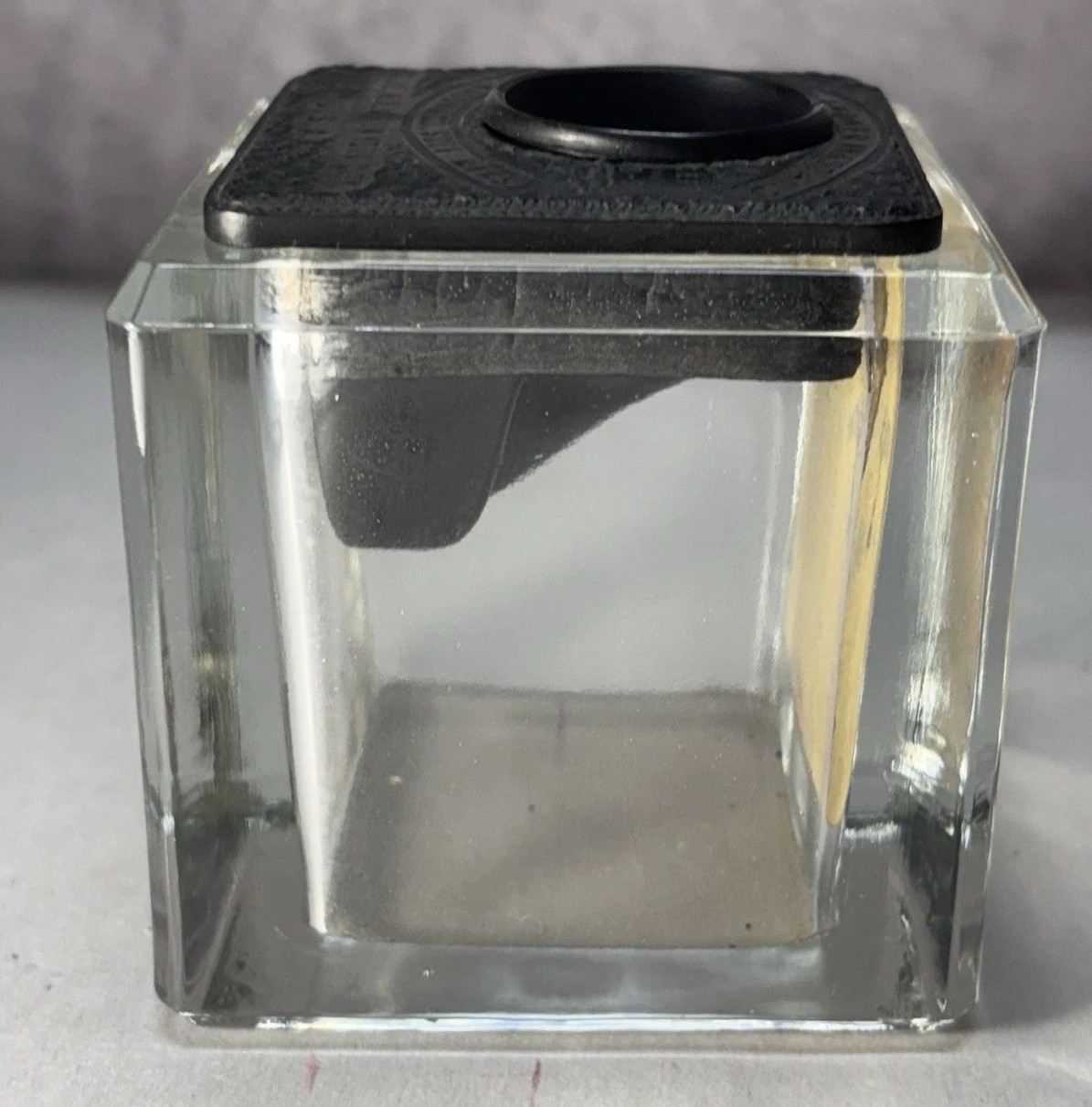
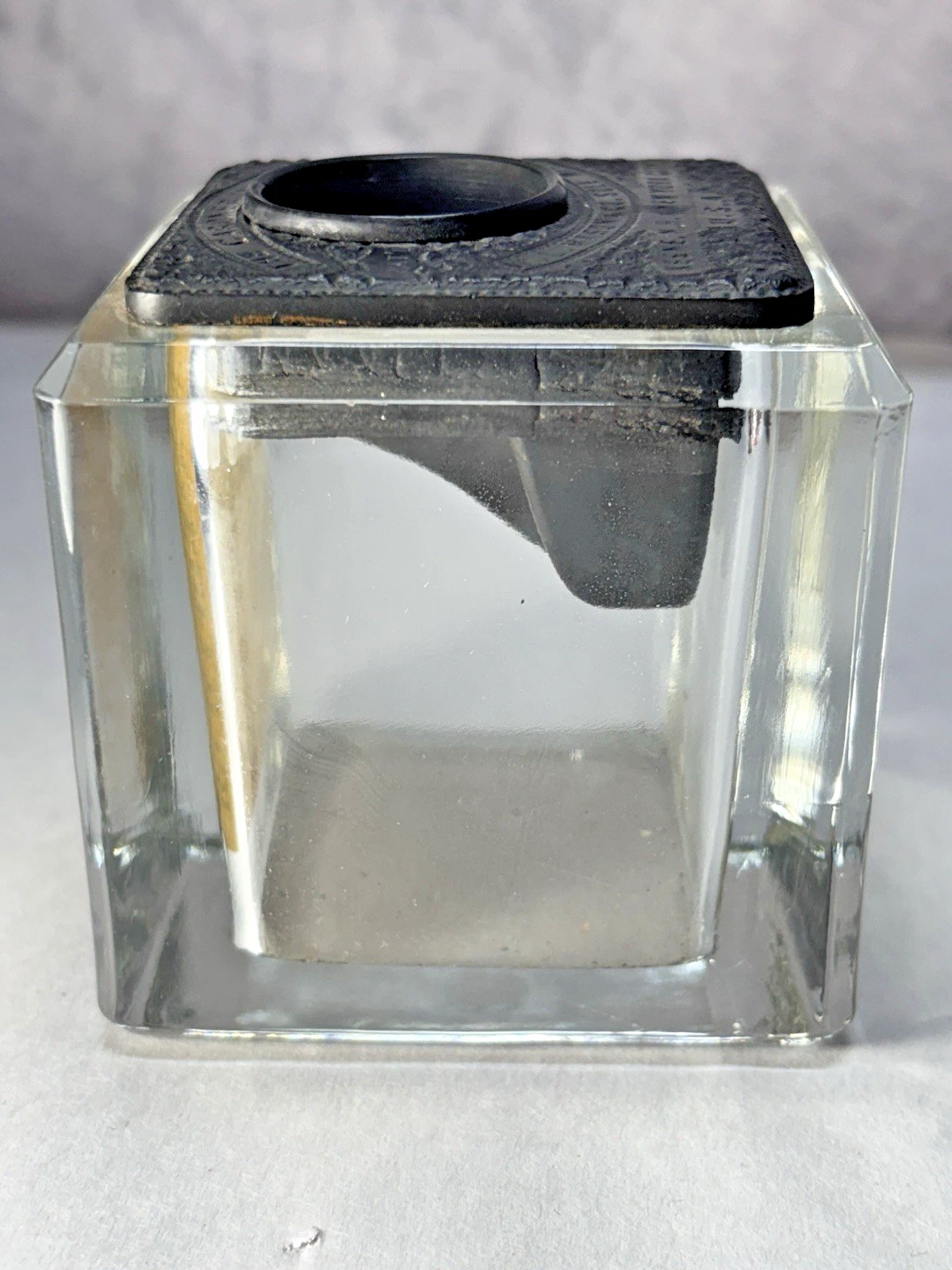
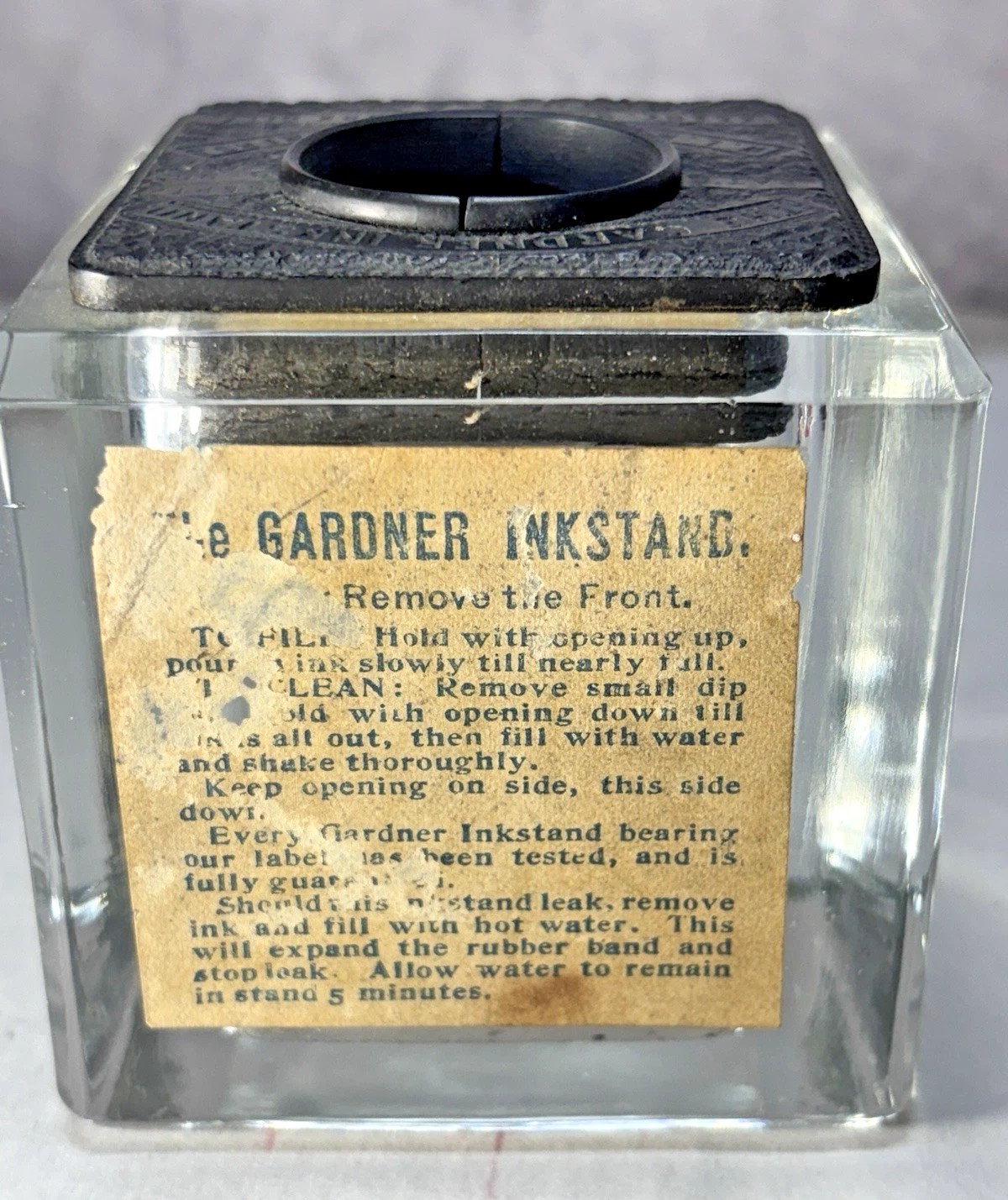
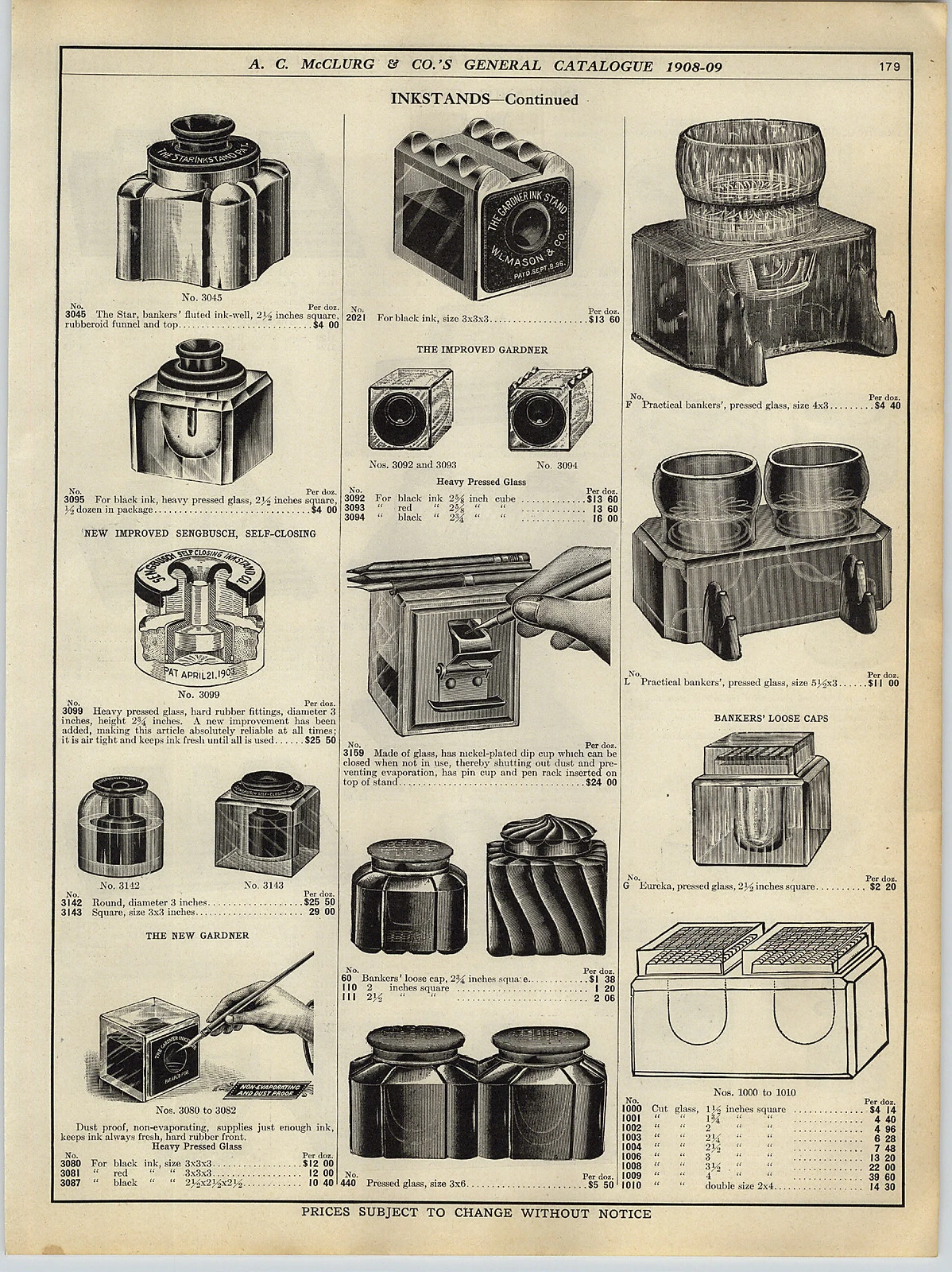
This Gardner Inkstand, patented by Charles H. Gardner on September 8, 1896, is a sophisticated “fountain” or reservoir-style inkwell. It was designed to solve the two biggest headaches for 19th-century writers: ink drying out from air exposure and the accumulation of dust in the dipping well.
How the Gardner Inkstand Works
The inkstand operates using the principles of atmospheric pressure and a vacuum seal.
- The Reservoir: The main body is an airtight glass chamber that holds the bulk of the ink.
- The Dipping Well: At the front is a small, shallow opening. This is connected to the main chamber by a small channel at the bottom.
- The Vacuum: When you fill the reservoir and seal the lid, a partial vacuum is created above the ink. The weight of the air pushing down on the small amount of ink in the open dipping well prevents the ink inside the main chamber from rushing out.
- Self-Leveling: Every time you dip your pen and remove a bit of ink, a tiny bubble of air is allowed to enter the reservoir. This air “pushes” just enough ink back into the dipping well to keep the level perfectly consistent until the main supply is empty.
Transcriptions
Based on surviving pieces and original documentation for Patent #567,383:
On the Lid:
The Gardner Inkstand W. L. Mason & Co. Sole Mfrs Keene, N. H. & New York City USA.
Summary of Patent #567,383
While “fountain” inkwells had existed for decades, Charles H. Gardner’s specific patent focused on the stopple and venting mechanism.
- The Innovation: The patent describes a specific type of threaded stopple equipped with a resilient gasket (rubber). This ensured an absolutely airtight seal, which was the “Achilles’ heel” of earlier designs. If air leaked in through the lid, the vacuum would break, and the ink would flood the desk.
- What is Patented: Specifically, the patent covers the “combination of a reservoir having a neck, a dipping well communicating with the reservoir at its bottom, and a stopple provided with a venting passage.”
- The Result: This design allowed the user to control the flow precisely. By turning the stopple, you could regulate the air intake to adjust the depth of the ink in the dipping well.
The Stopple Mechanism (Figure 2 in the Patent)
The stopple is the component designed to maintain the “atmospheric” vacuum required for the inkstand to function. According to the patent specifications:
- Airtight Construction: The stopple is designed to fit into the neck of the reservoir with precision. It features a compressive gasket or washer (made of rubber or leather) that is squeezed between the head of the stopple and the rim of the glass reservoir to ensure no air can leak in.
- The Threaded Design: Garner’s specific innovation involved a threaded engagement. By twisting the stopple into place, the user can apply consistent downward pressure on the gasket. This was a significant improvement over simple “plug-style” corks or stoppers, which could loosen over time and cause the vacuum to fail.
- Venting Control: The stopple is not just a cap; it is the master control for the “fountain” effect. If the stopple is slightly unscrewed, air enters the reservoir, causing ink to surge into the dipping well. When fully tightened, it locks the atmospheric pressure in place, keeping the ink level perfectly static in the well.
This stopple design transformed the reservoir from a simple bottle into a self-regulating tool, ensuring the dipping well never overflowed while the main supply remained protected from the air.
Sold for $44 in January 2026
Second example sold for $62 in February 2026
Content disclaimer. The information posted is the owner’s best knowledge and may not have been vetted by the SOIC. We welcome comments, corrections, and additions, working to make our website information comprehensive and accurate.
Join the Society of Inkwell Collectors (SOIC) – it’s free!
Founded in 1981 as a non-profit organization,
we are documenting inkwells (and accessories).
We’re here to help and inform!