

French World War I Commemorative Inkstand (“Gloire au 75”)
| Categories | Figural - Persons |
| Type | Military |
| Material | Spelter |
| Markings | See Narrative |
| Manufacturer | Henri Fugère |
| Origin | France |
| Date or Era | circa 1920 |
| Measuring | 10 ⅝” x 6 ⅝” x 5 ½” high |
Description
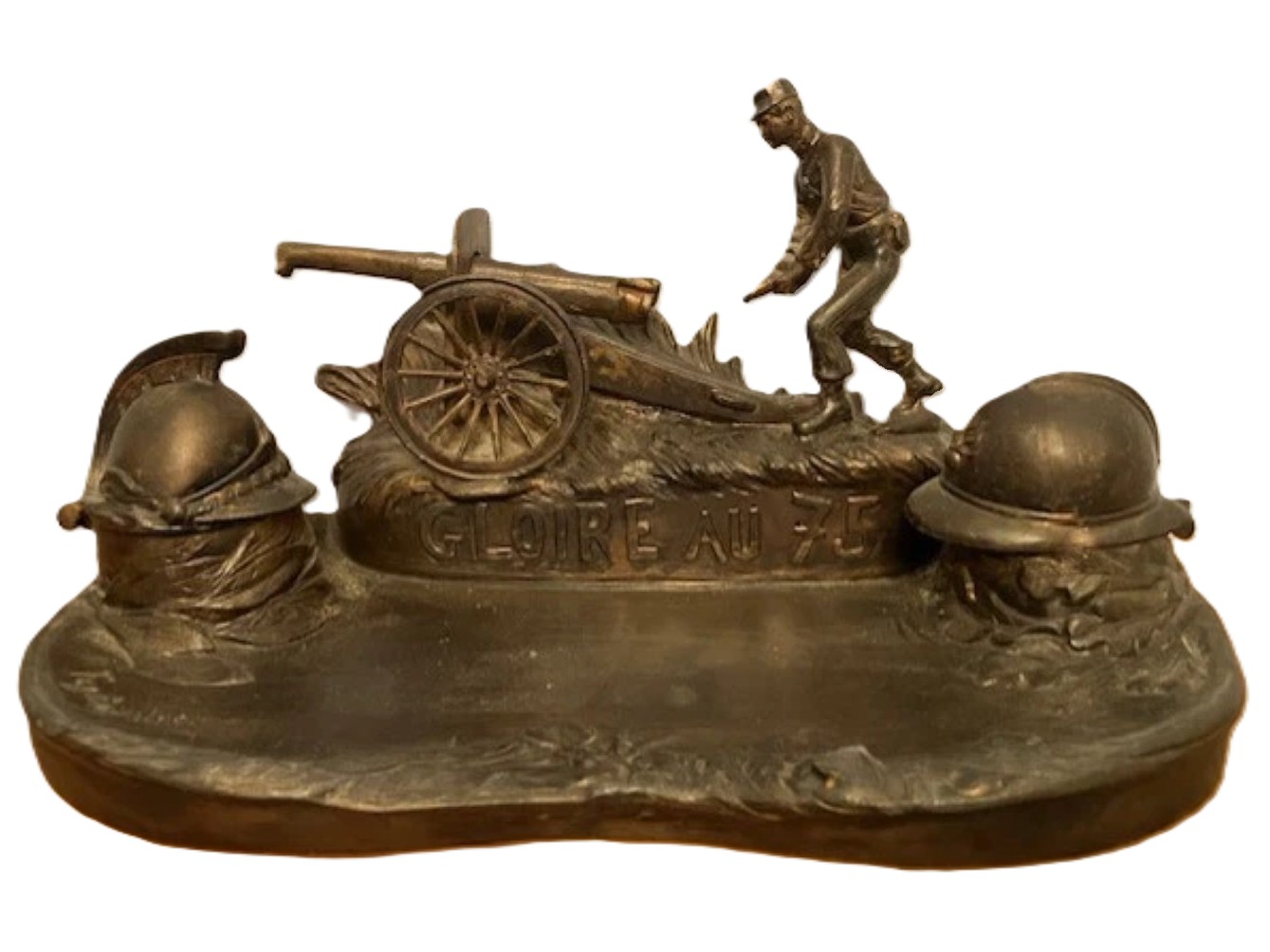
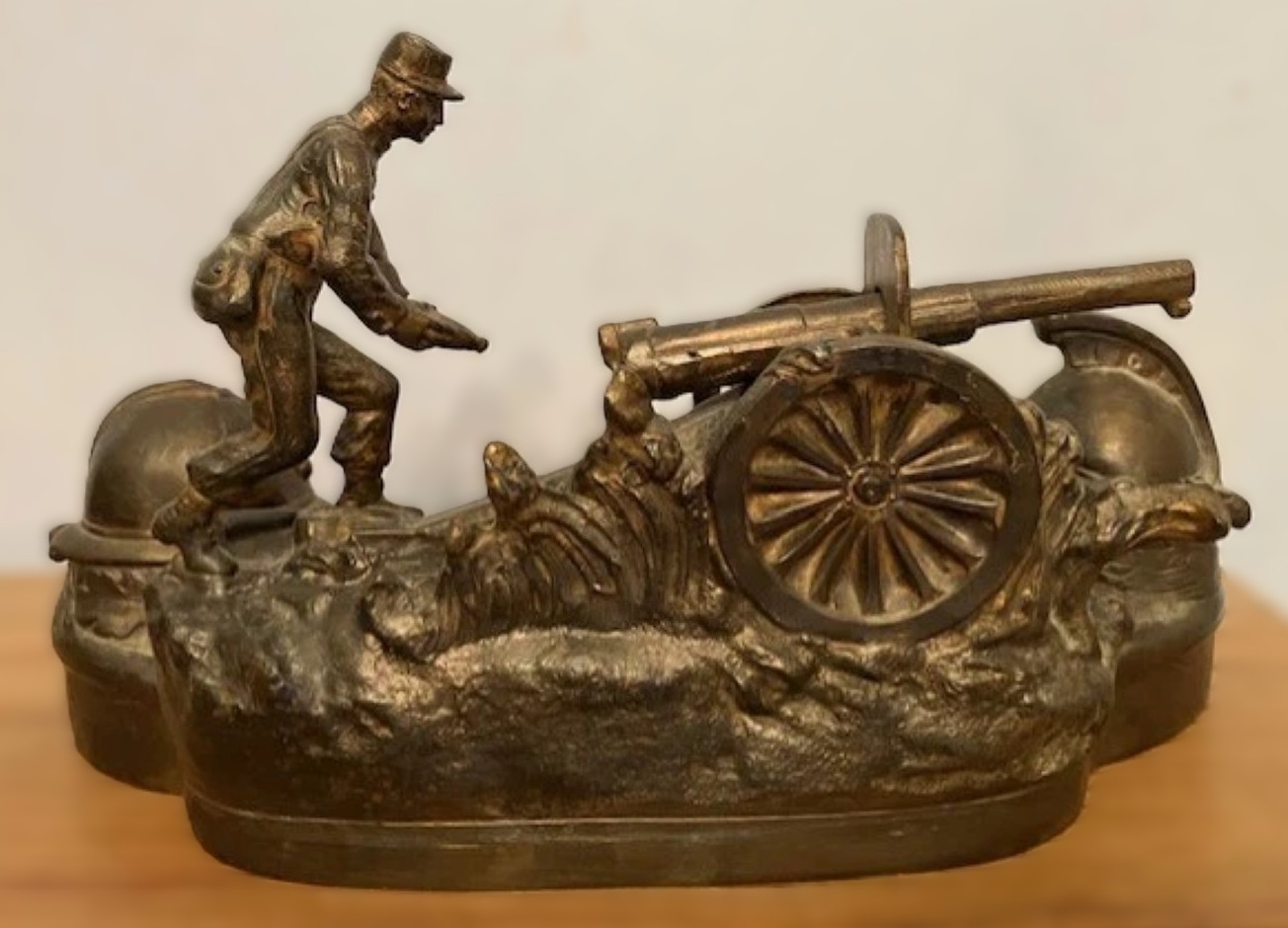
- Central Scene: A French artilleryman (artilleur) positioned on uneven, ground-like terrain, actively servicing a Canon de 75 mm (the famous French 75mm field gun).
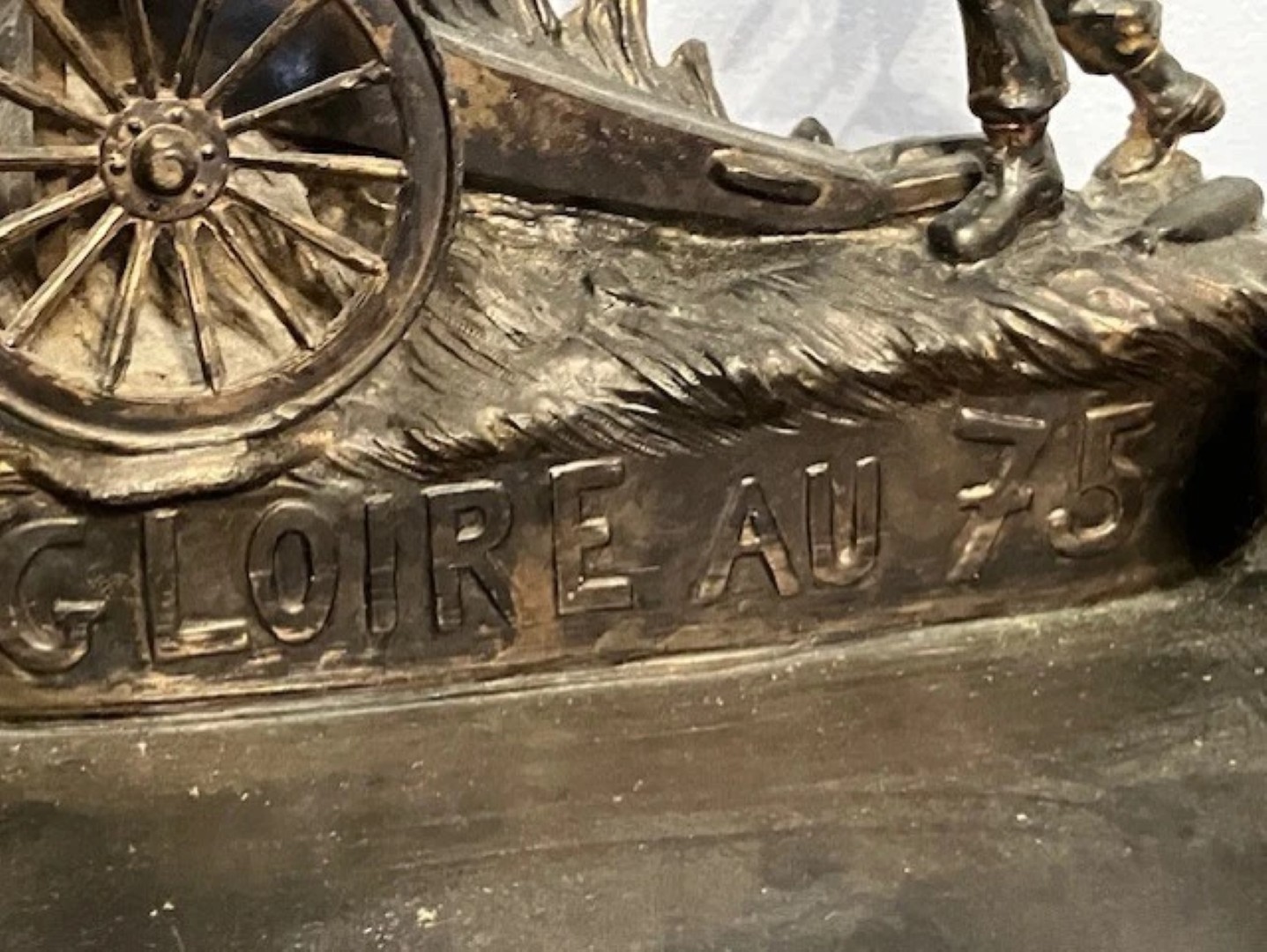
- Commemorative Inscription: Embedded directly into the raised central mound below the gun trail is the relief text “GLOIRE AU 75” (“Glory to the 75”).
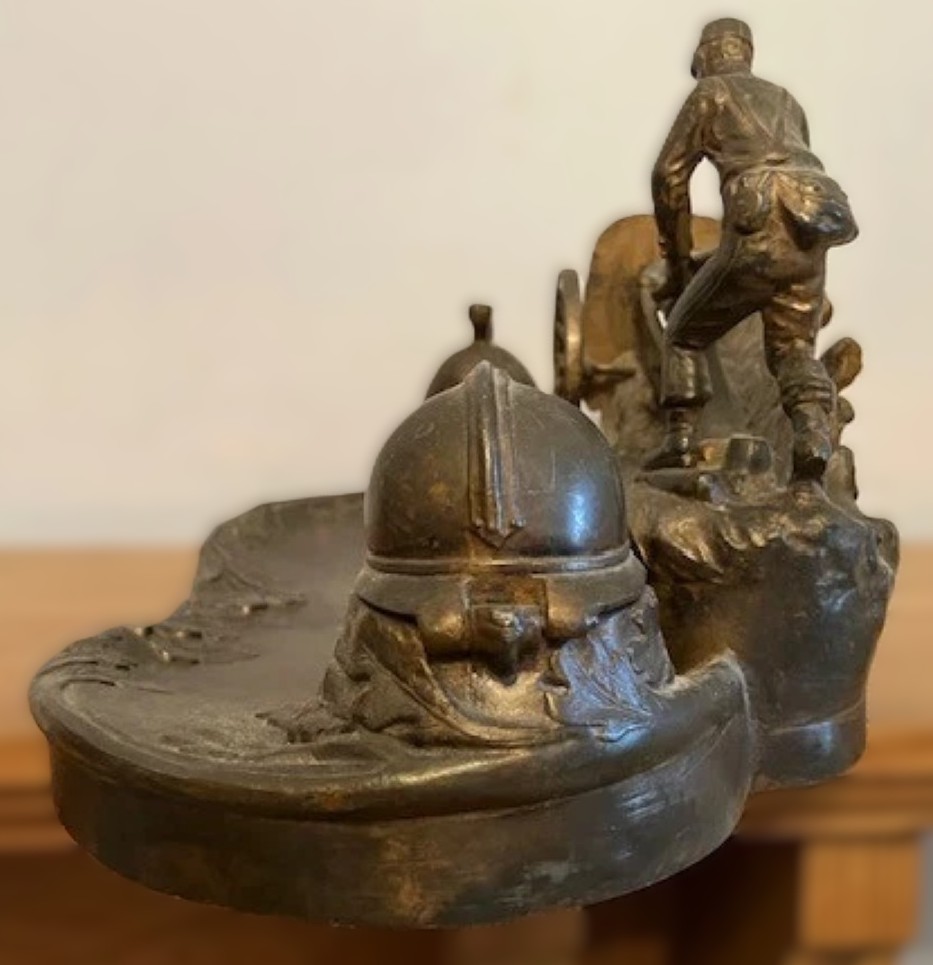
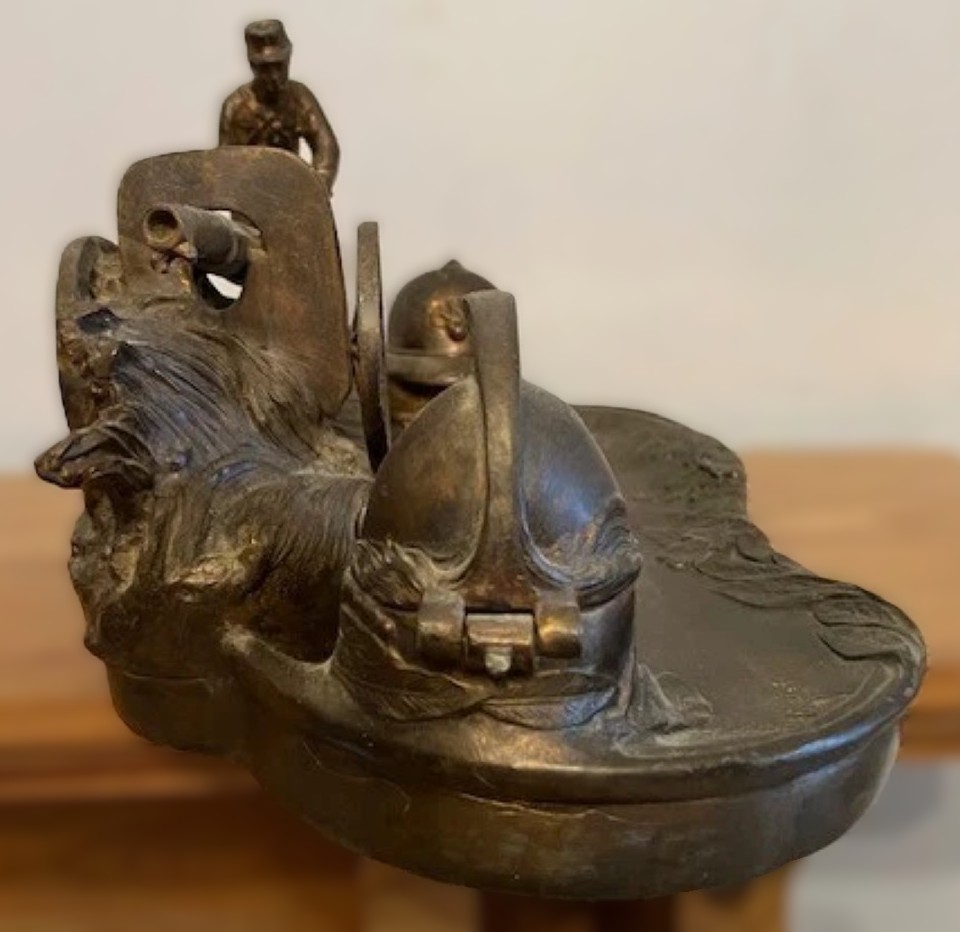
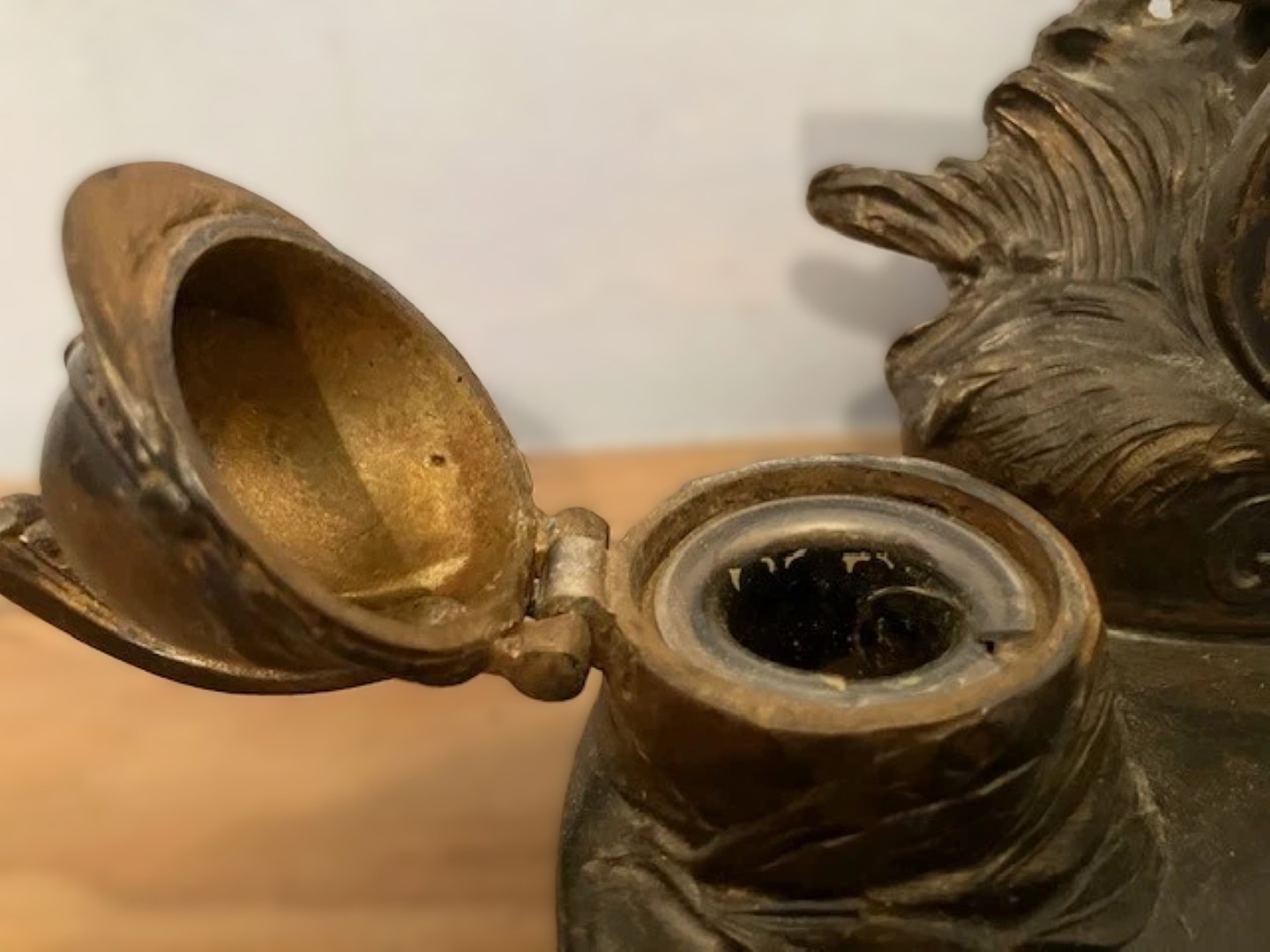
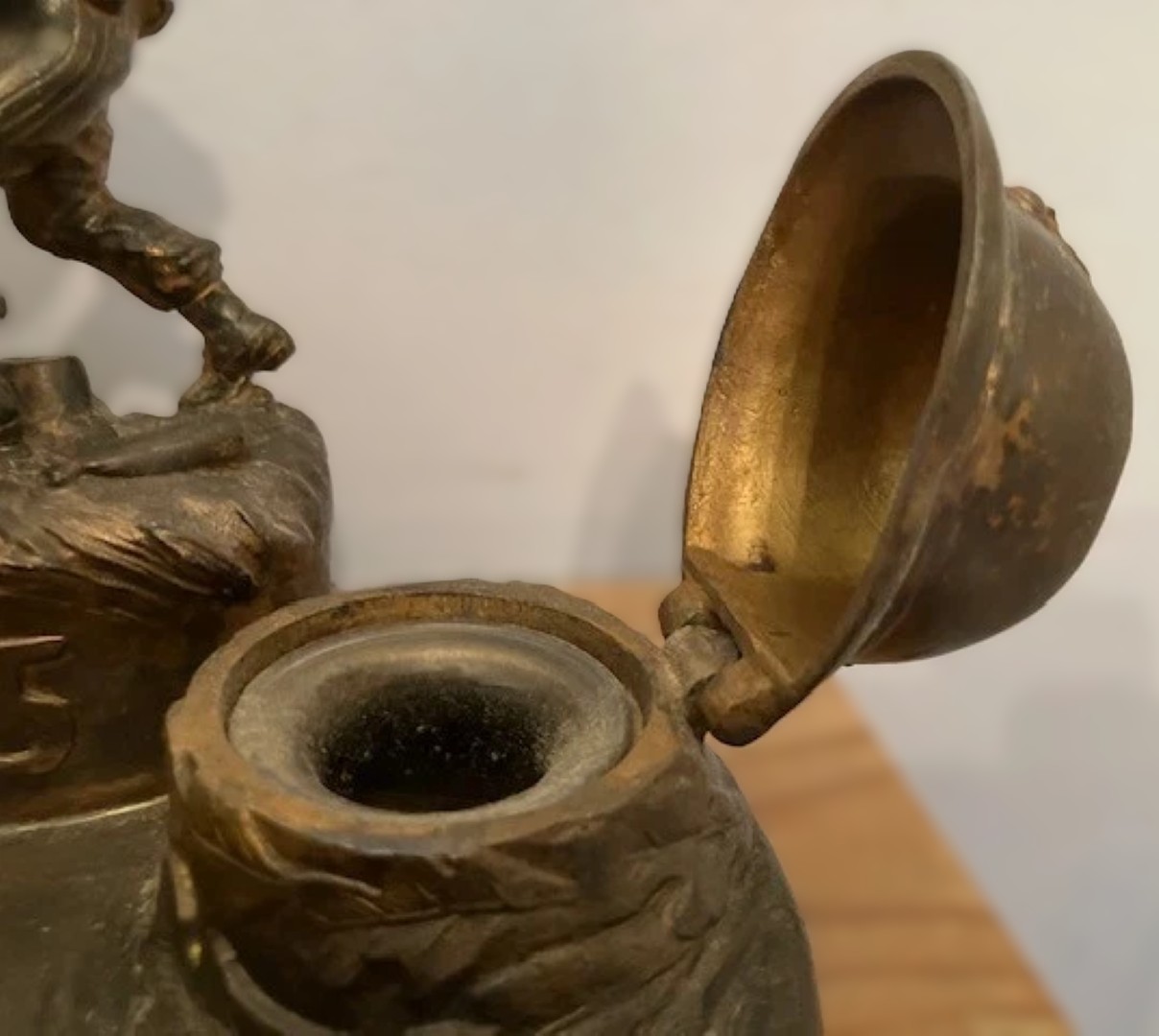
- Twin Inkwells: Flanking the central artillery piece are two integrated, hinged inkwell covers modeled as Model 1915 Adrian Helmets (casque Adrian).
- Left Helmet: Features the crest/insignia of the French Infantry.
- Right Helmet: Features the crossed-cannons insignia of the French Field Artillery.
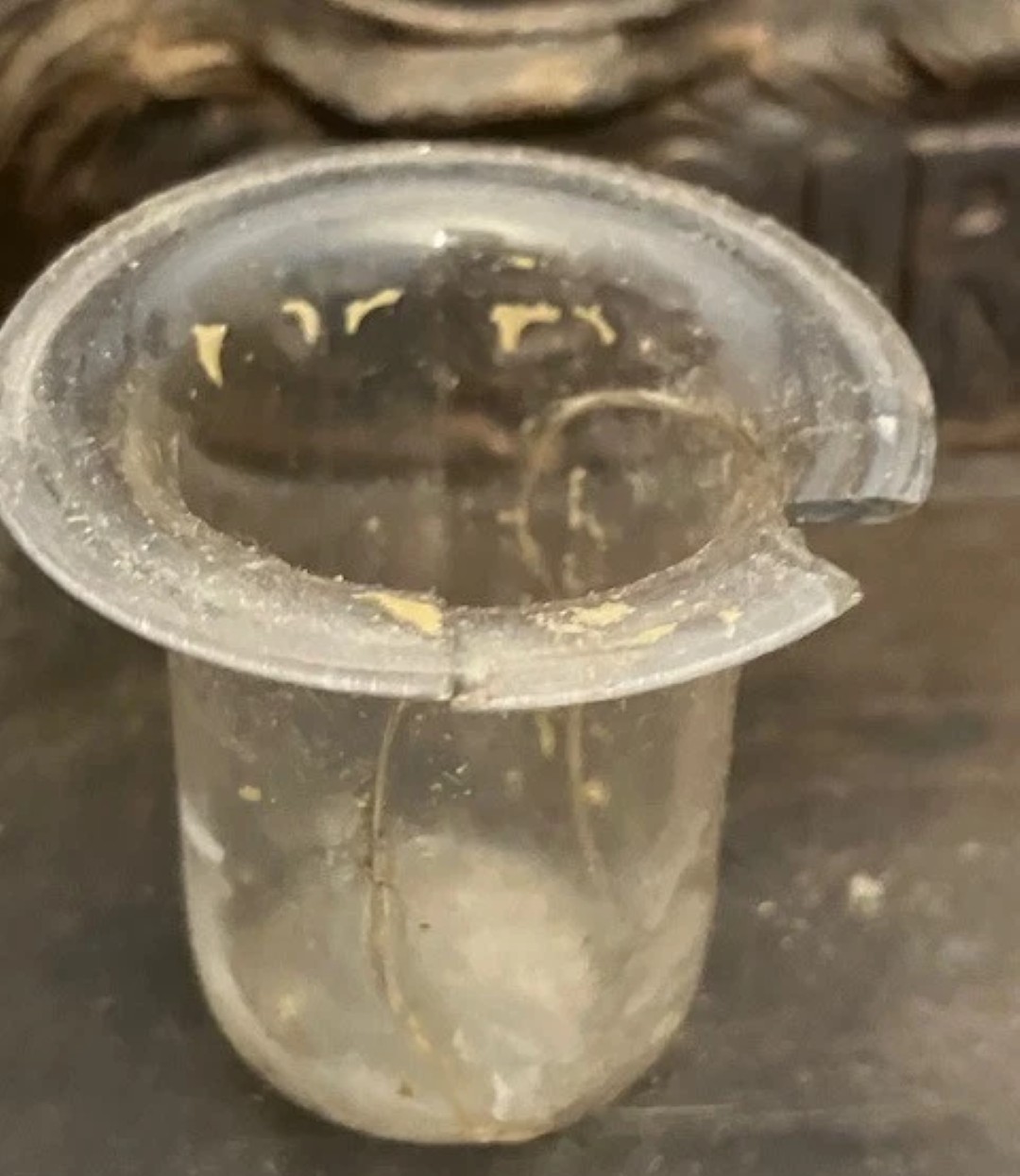
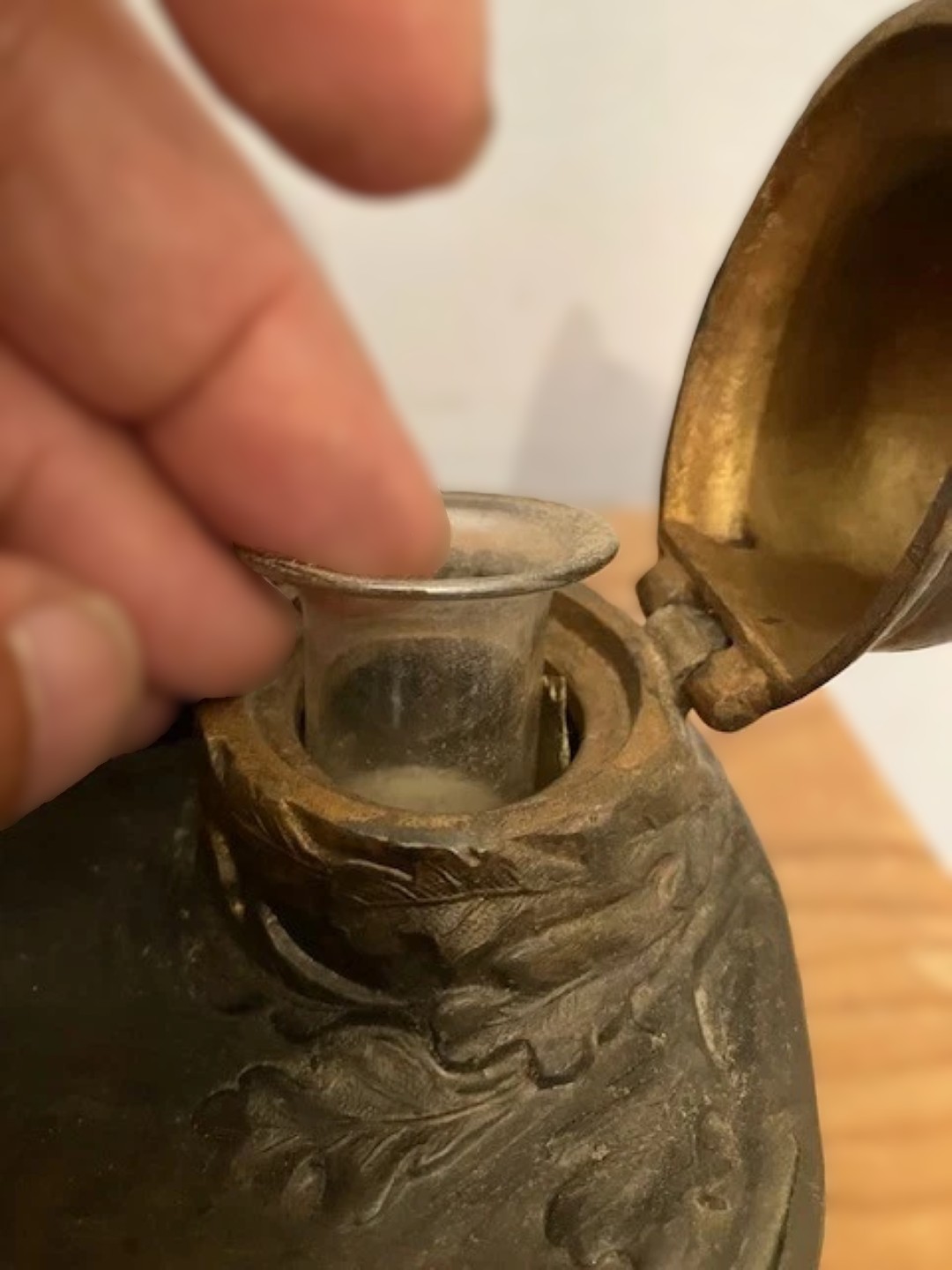
- Interiors: Both wells reveal internal collars designed to seat original glass ink reservoirs.
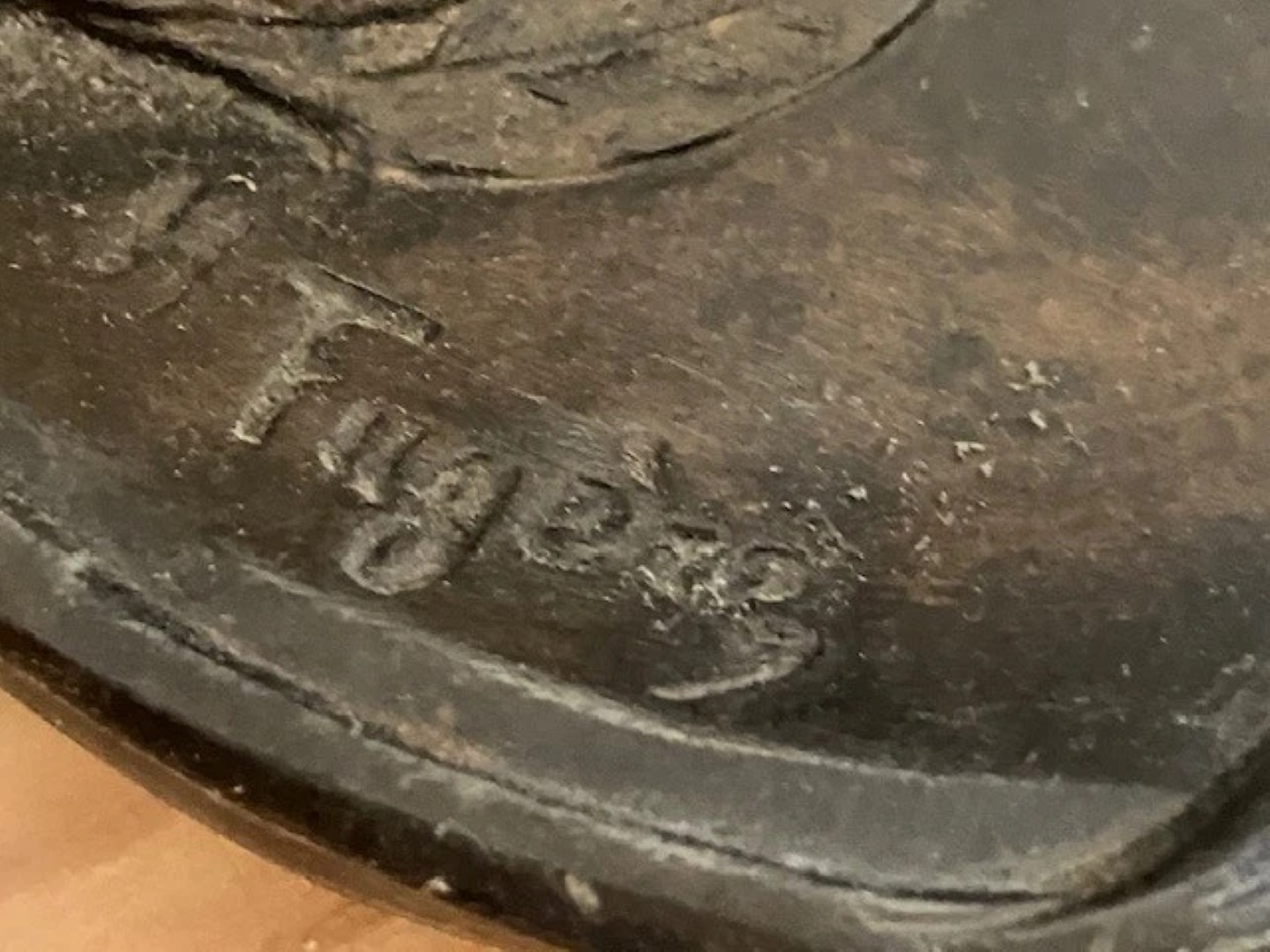
- Pen Tray & Base: A wide, shallow curved pen trough runs along the front of the base. The front left corner of the base bears the incised signature “H. Fugère”.
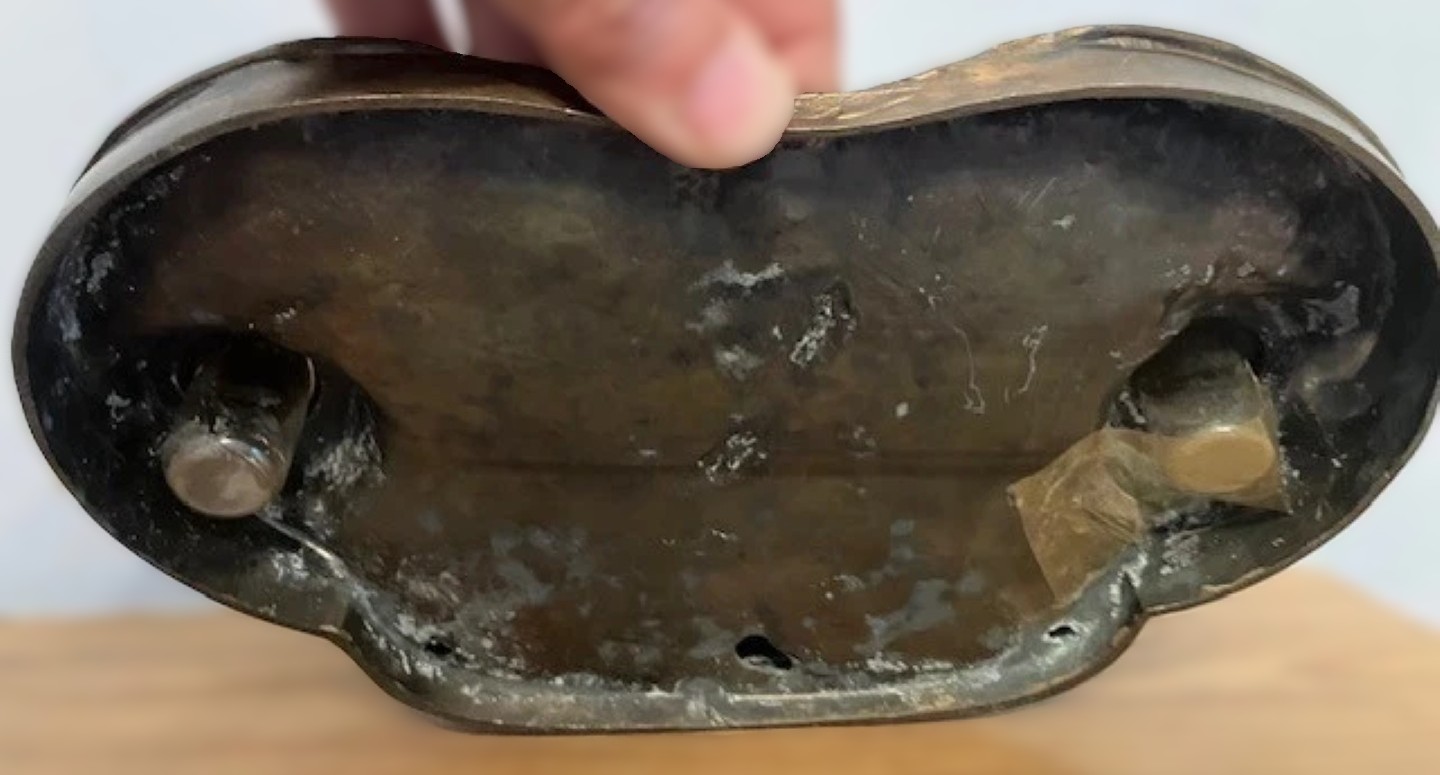
- Material & Construction: Cast in patinated spelter metal (régule) with a dark bronze/gilt finish, set over a hollow-cast base anchored underneath by internal threaded rods/bolts.
Historical & Cultural Significance
“Gloire au 75”
The inscription honors the Matériel Téléphonique/Schneider 75mm Model 1897 field gun. Renowned for its revolutionary hydropneumatic recoil mechanism—which allowed the gun to fire rapidly without needing to be re-aimed after every shot—the French 75 became a powerful symbol of national defense and victory during WWI. It inspired widespread patriotic souvenirs, trench art, and desktop commemoratives across France during and immediately following the war.
The Sculptor: Henri (Henry) Fugère (1872–1944)
- Biography: Henri Fugère was a French sculptor and medallist born in Saint-Mandé on September 7, 1872. He died in Paris in 1944.
- Training & Career: He studied at the École des Beaux-Arts in Paris under prominent masters, including Jules Thomas, Gabriel-Jules Thomas, Ernest Barrias, Jules-Félix Coutan, and Denys Puech.
- Exhibitions & Guilds: From 1893 onwards, he exhibited regularly at the Salons of the Société des Artistes Français, earning an Honorable Mention in 1927 and eventually serving as the society’s vice president.
- Artistic Style: Fugère was a versatile artist whose career bridged classical Academic sculpture, Art Nouveau, and Art Deco styles. While best known for his Art Deco theatrical dancers, classical busts, and chryselephantine (bronze and ivory) figures, he produced a series of patriotic and realistic military bronzes during and following WWI.
Sold for $135 in July 2026
Content disclaimer. The information posted is the owner’s best knowledge and may not have been vetted by the SOIC. We welcome comments, corrections, and additions, working to make our website information comprehensive and accurate.
Join the Society of Inkwell Collectors (SOIC) – it’s free!
Founded in 1981 as a non-profit organization,
we are documenting inkwells (and accessories).
We’re here to help and inform!