


French Rococo Revival Double Inkstand
| Categories | Bronze - Brass - Copper |
| Material | Gilt Bronze |
| Markings | See Narrative |
| Manufacturer | Baudy |
| Origin | France |
| Date or Era | circa 1880 |
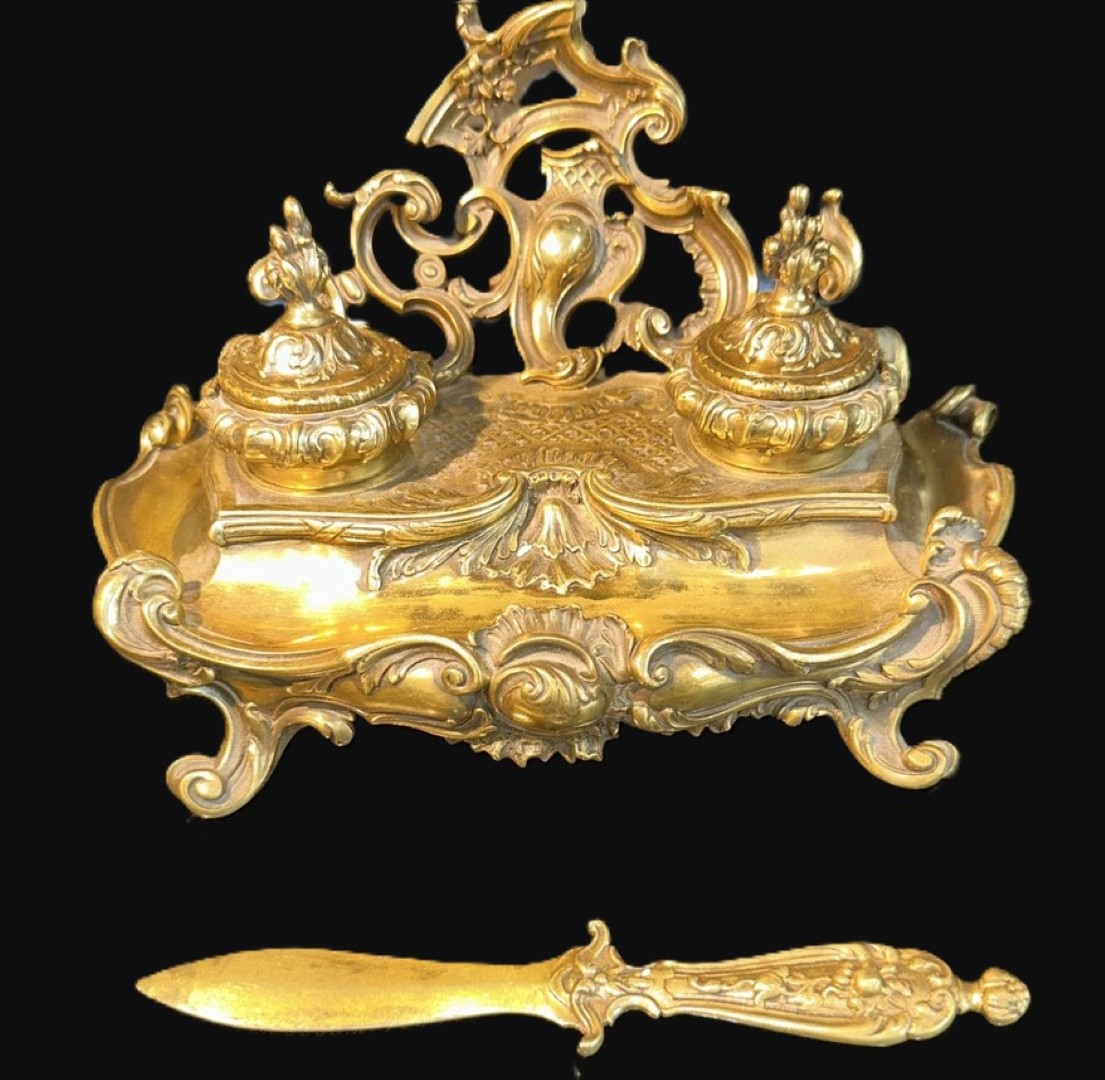
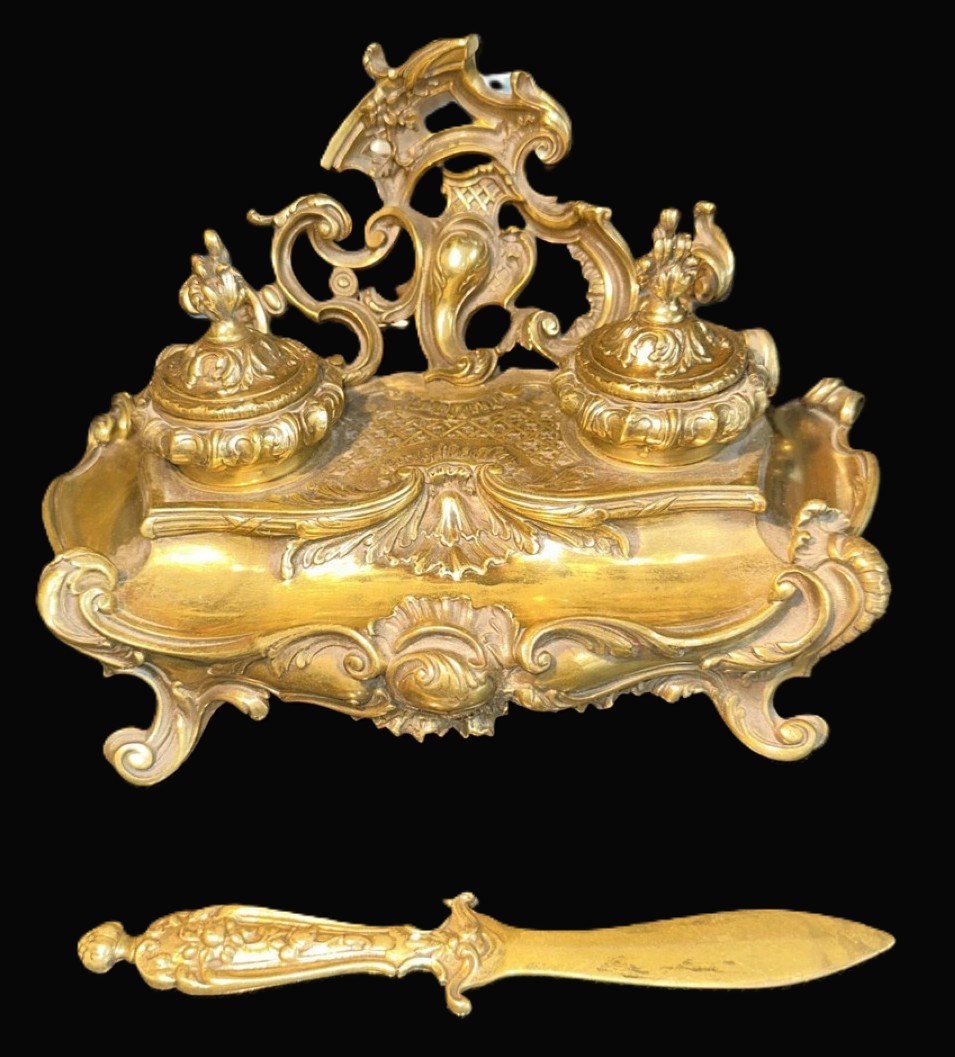
This is an elaborate, 19th-century French Rococo Revival double inkstand accompanied by a matching letter opener, all crafted in gilded bronze (also known as ormolu).
Description
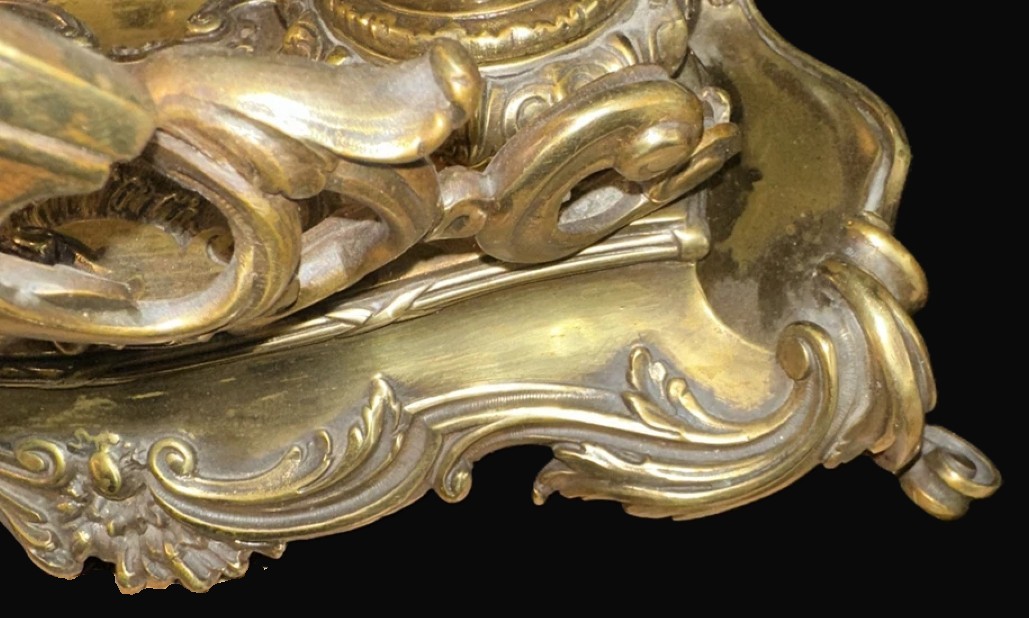
The inkstand is designed with heavy, symmetrical ornamentation and a dynamic sense of movement characteristic of the Louis XV style.
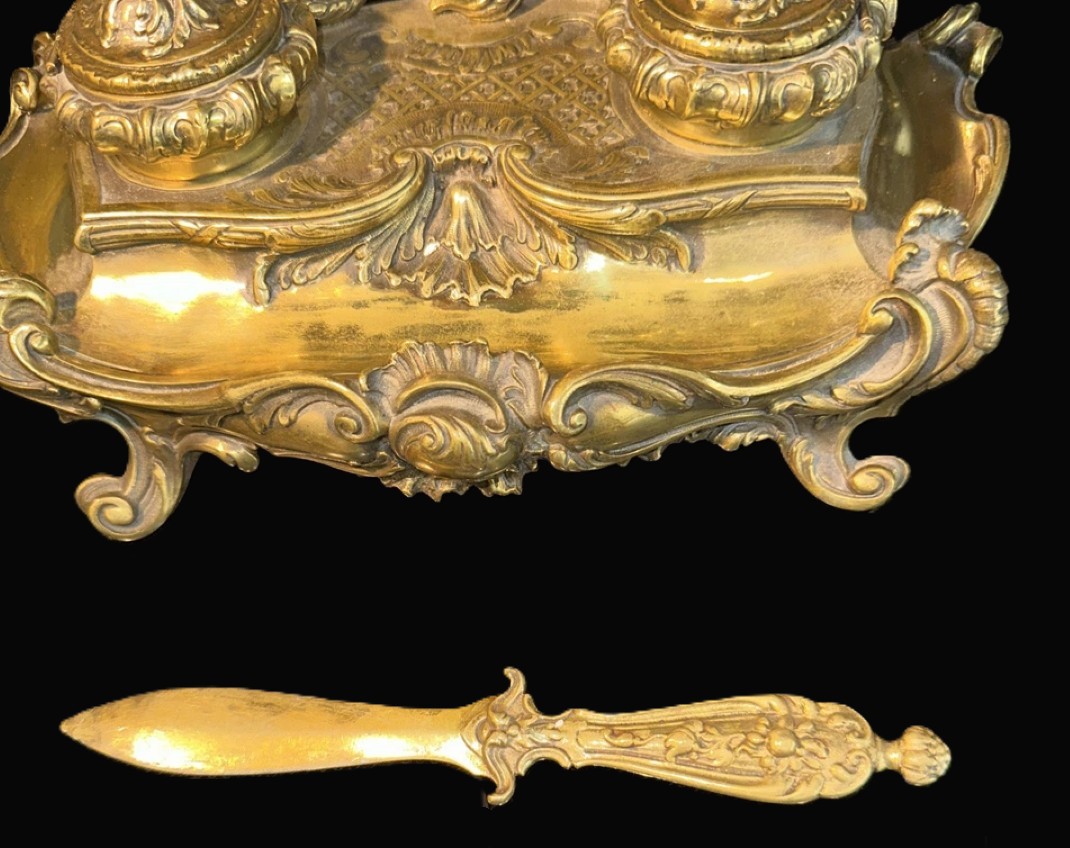
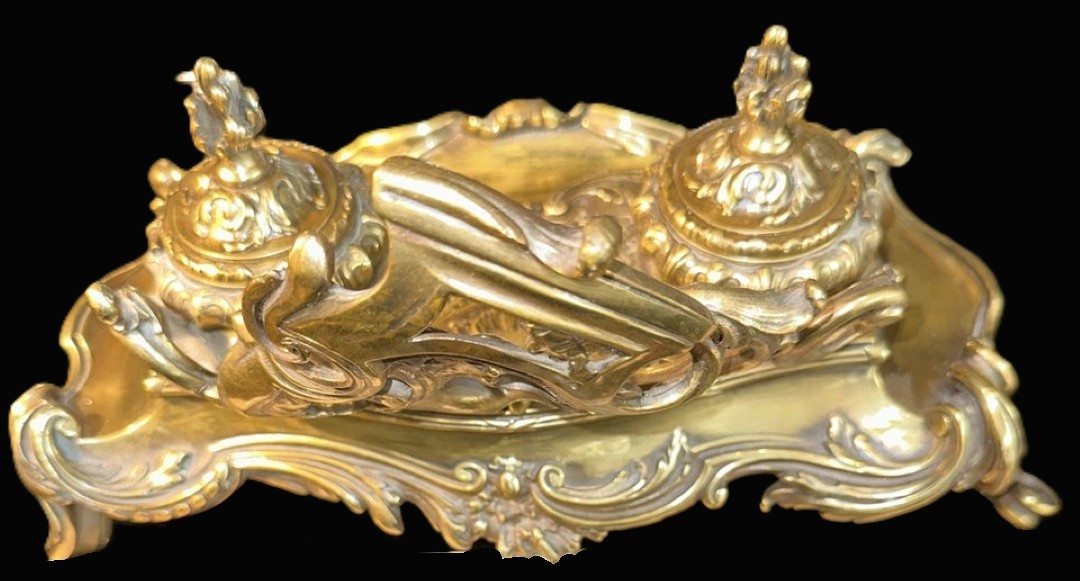
- The Base: The inkstand features a wide, contoured base that serves as a pen tray. It is elevated on four scrolling acanthus-leaf feet.
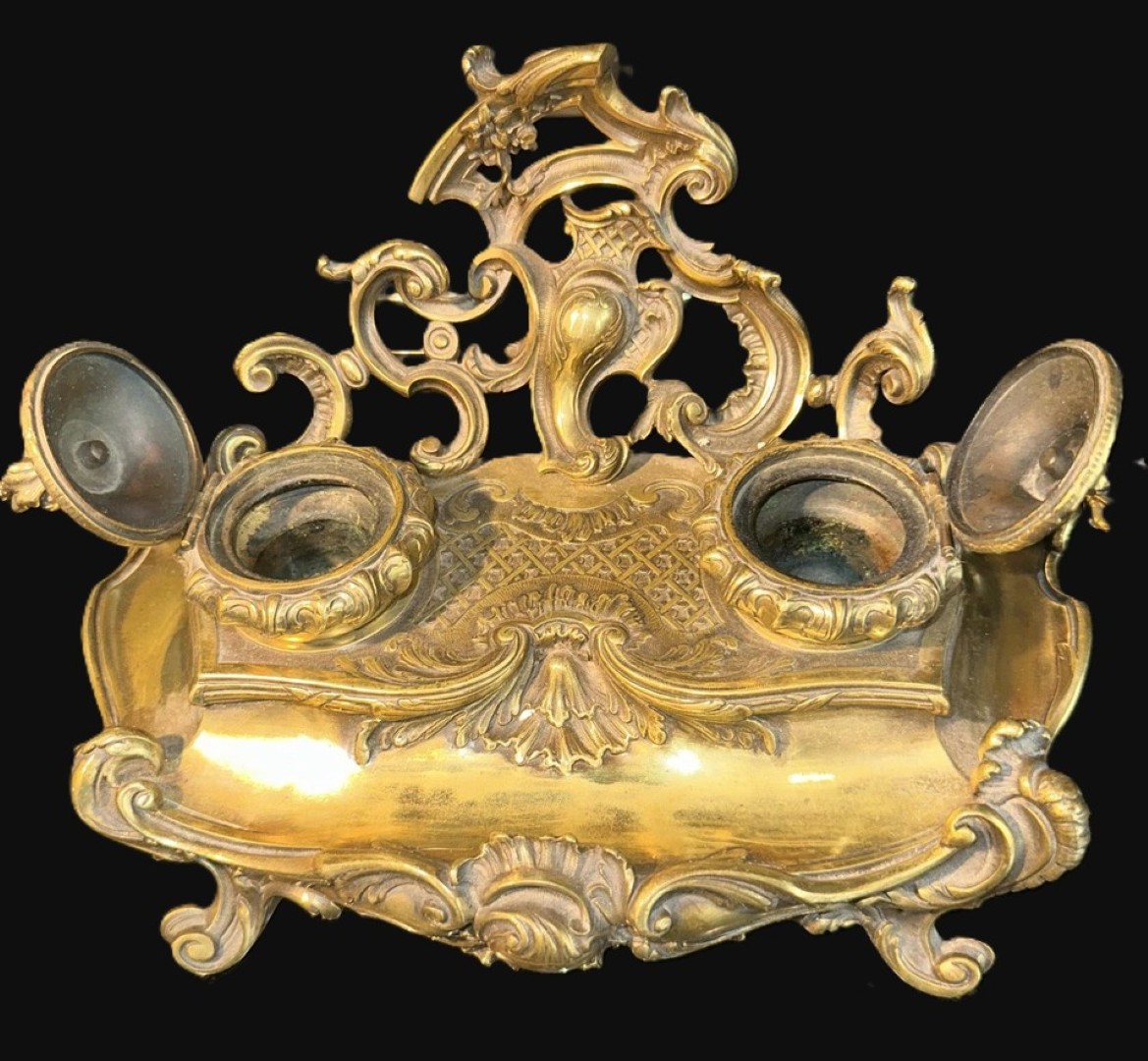
- The Inkwells: There are two identical, rounded inkwells with hinged, domed lids. The lids are decorated with relief-cast floral and foliate motifs and are topped with ornate finials. The inserts are missing.
- Central Decorative Crest: Rising between and behind the inkwells is a large, pierced decorative crest. It features complex C-scrolls, shell motifs, and floral swags, providing a dramatic backdrop for the piece.
- Letter Opener: The set includes a matching gilded letter opener with a handle that mirrors the foliate and scrollwork design of the inkstand base.
Markings and Identification
The underside of the piece reveals specific manufacturing marks that help identify its origin:
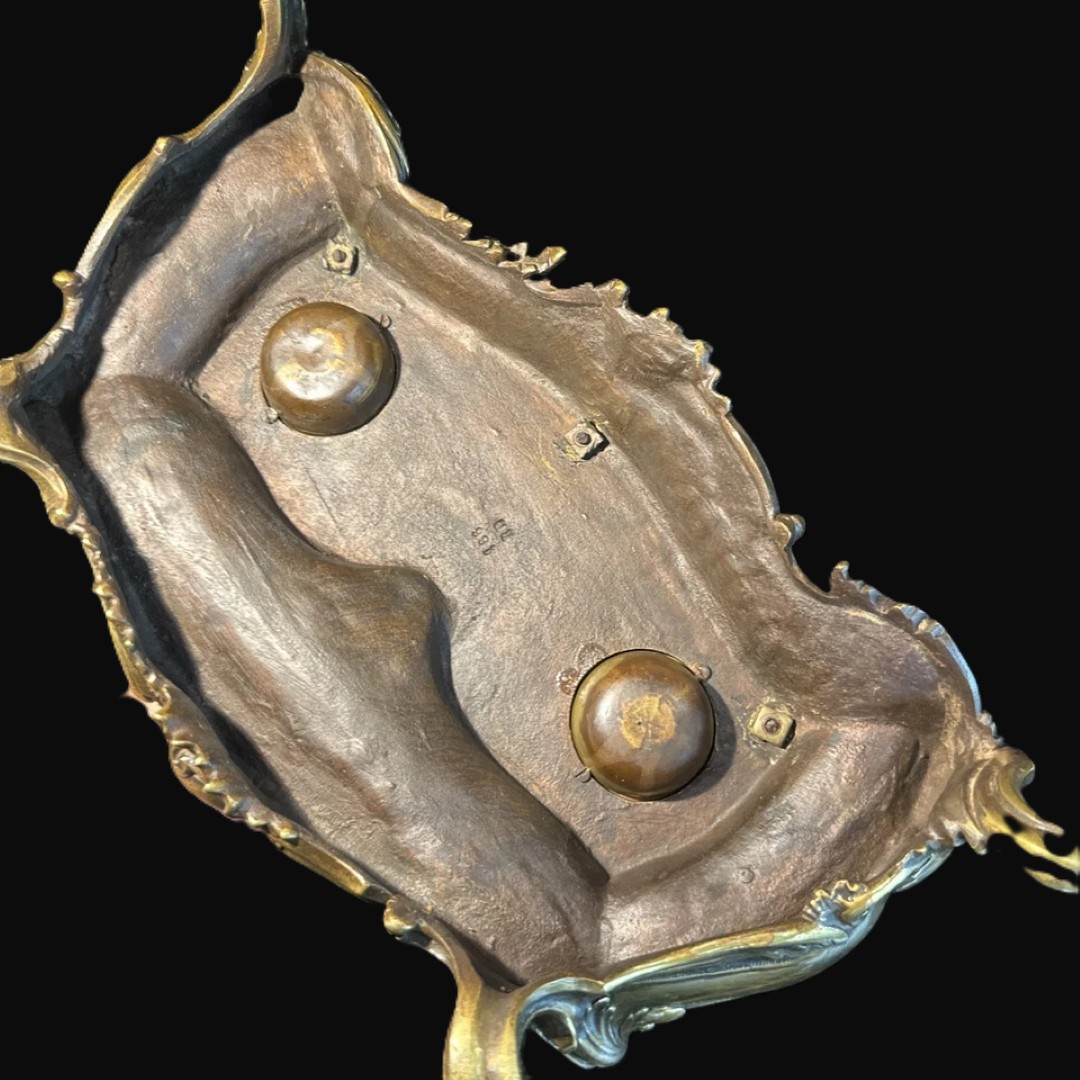
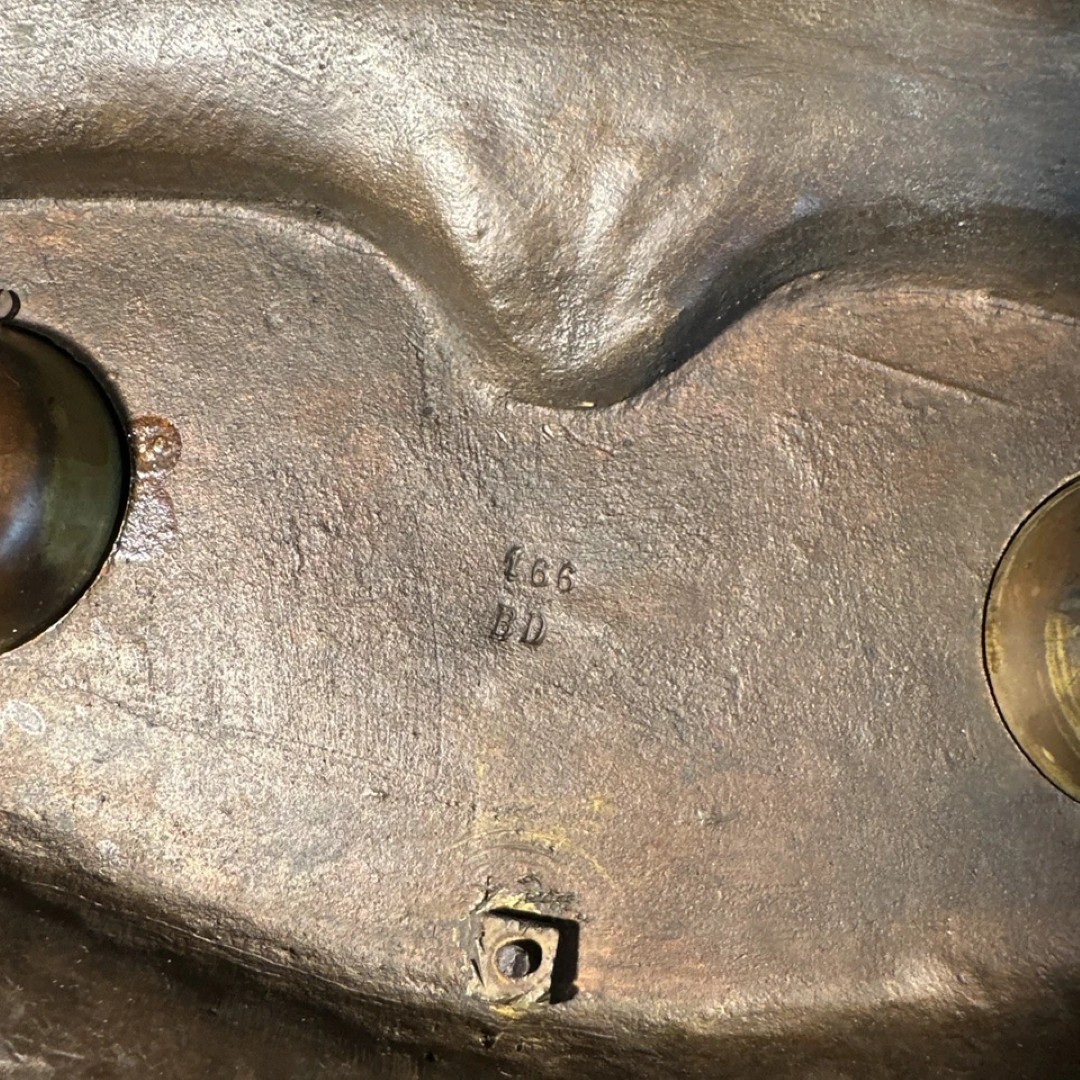
- The Markings: The numbers “166” and the initials “BD” are stamped into the metal on the underside of the base.
- Significance: The “BD” mark is associated with Baudy, a high-end French bronze founder active in Paris during the mid-to-late 19th century. Baudy was known for producing high-quality decorative arts in the “Neo-Rococo” style. The “166” likely refers to a specific pattern or production number in the Baudy workshop’s catalog.
Age and Origin
- Estimated Age: Based on the style and the foundry mark, this set dates to approximately 1860–1880.
- Region: It was manufactured in Paris, France, which was the global center for high-quality gilded bronze production during the Second Empire period.
Construction Details
- Assembly: The underside shows that the main components—the inkwell bodies and the central crest—are secured to the base using original square-head bolts and threaded rods, a standard technique for quality 19th-century bronze assembly.
- Gilding: The piece retains a significant amount of its original fire-gilding, which gives it its rich, gold appearance.
Sold for $403 in January 2026
Content disclaimer. The information posted is the owner’s best knowledge and may not have been vetted by the SOIC. We welcome comments, corrections, and additions, working to make our website information comprehensive and accurate.
Join the Society of Inkwell Collectors (SOIC) – it’s free!
Founded in 1981 as a non-profit organization,
we are documenting inkwells (and accessories).
We’re here to help and inform!