

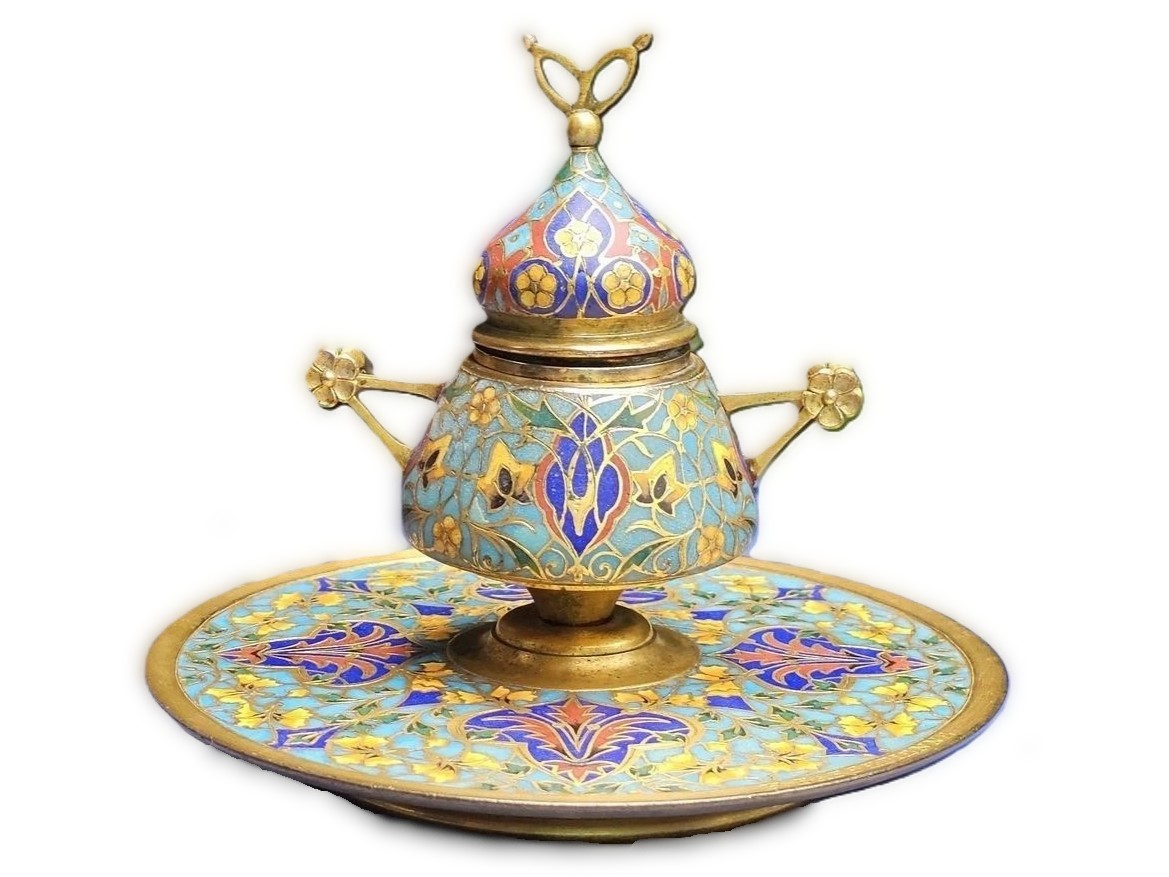
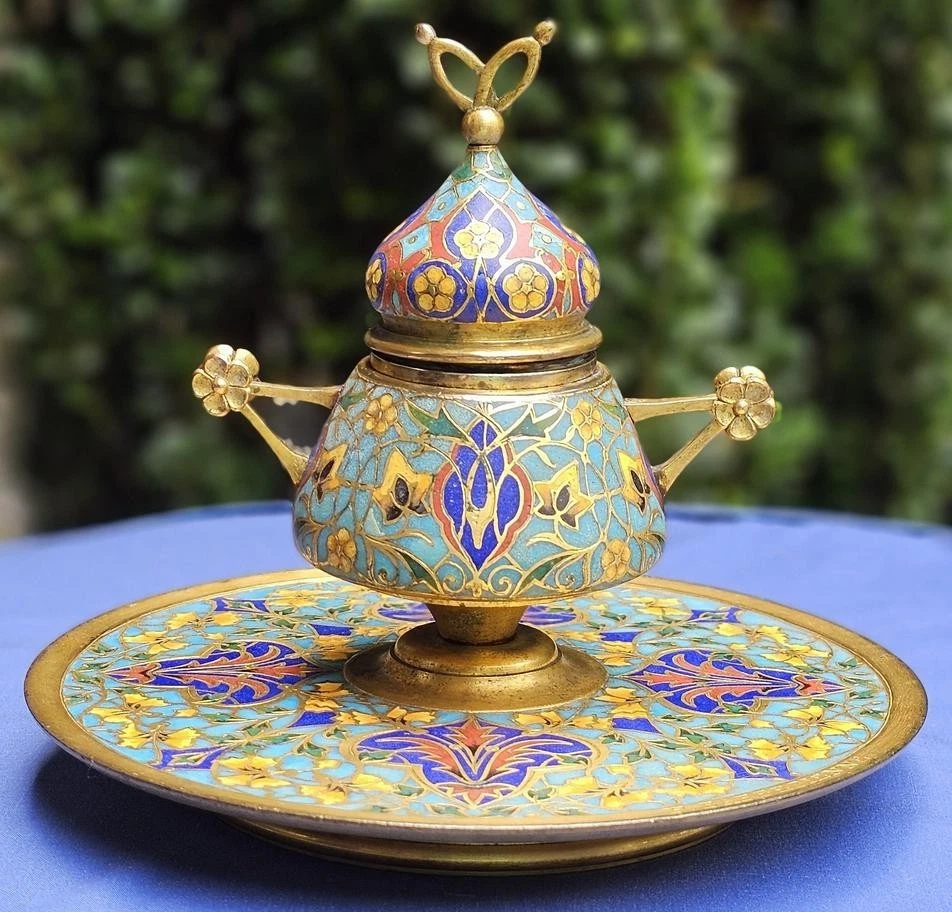
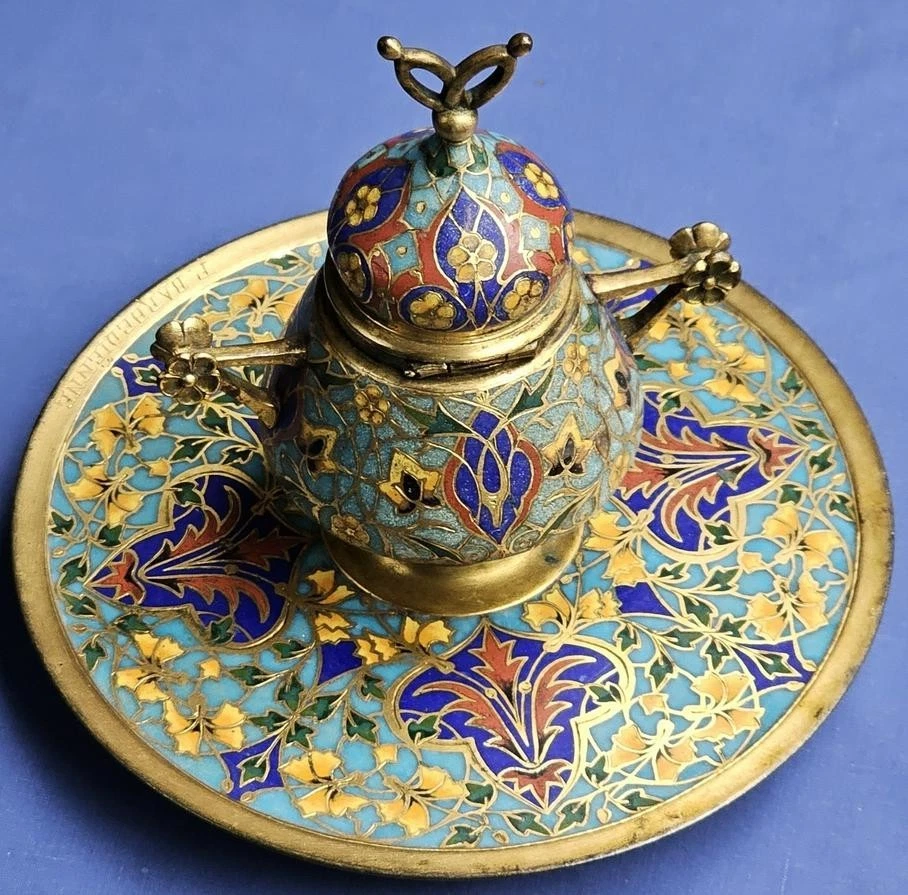
French Orientalist Champlevé Enamel and Gilt-Bronze (Ormolu) Inkstand
| Categories | Enameled Metal |
| Type | Champlevé |
| Material | Enameled Brass/Bronze/Metal |
| Markings | See Narrative |
| Manufacturer | Barbedienne Foundry |
| Origin | France |
| Date or Era | circa 1870 |
| Measuring | 5 ½”H × 6 ½” diameter |
Maker: Ferdinand Barbedienne (Fondeur)
Designer: Attributed to Louis-Constant Sévin
Date: Circa 1865–1875
Dimensions: 5 ½”H × 6 ½” diameter
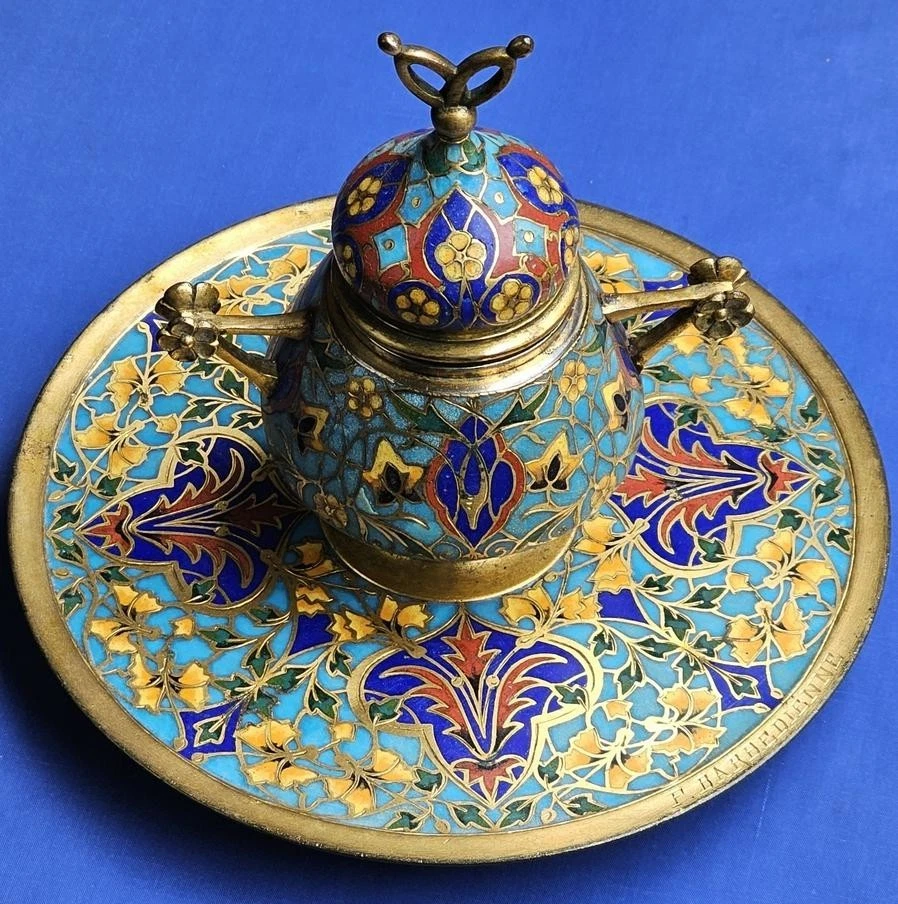
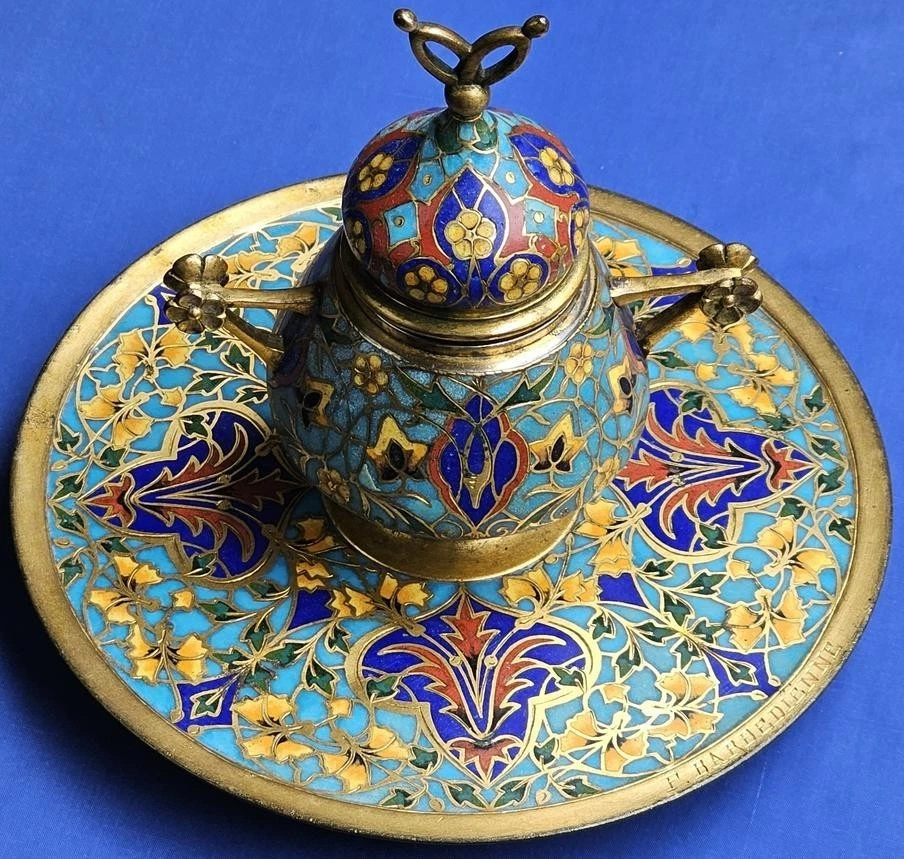
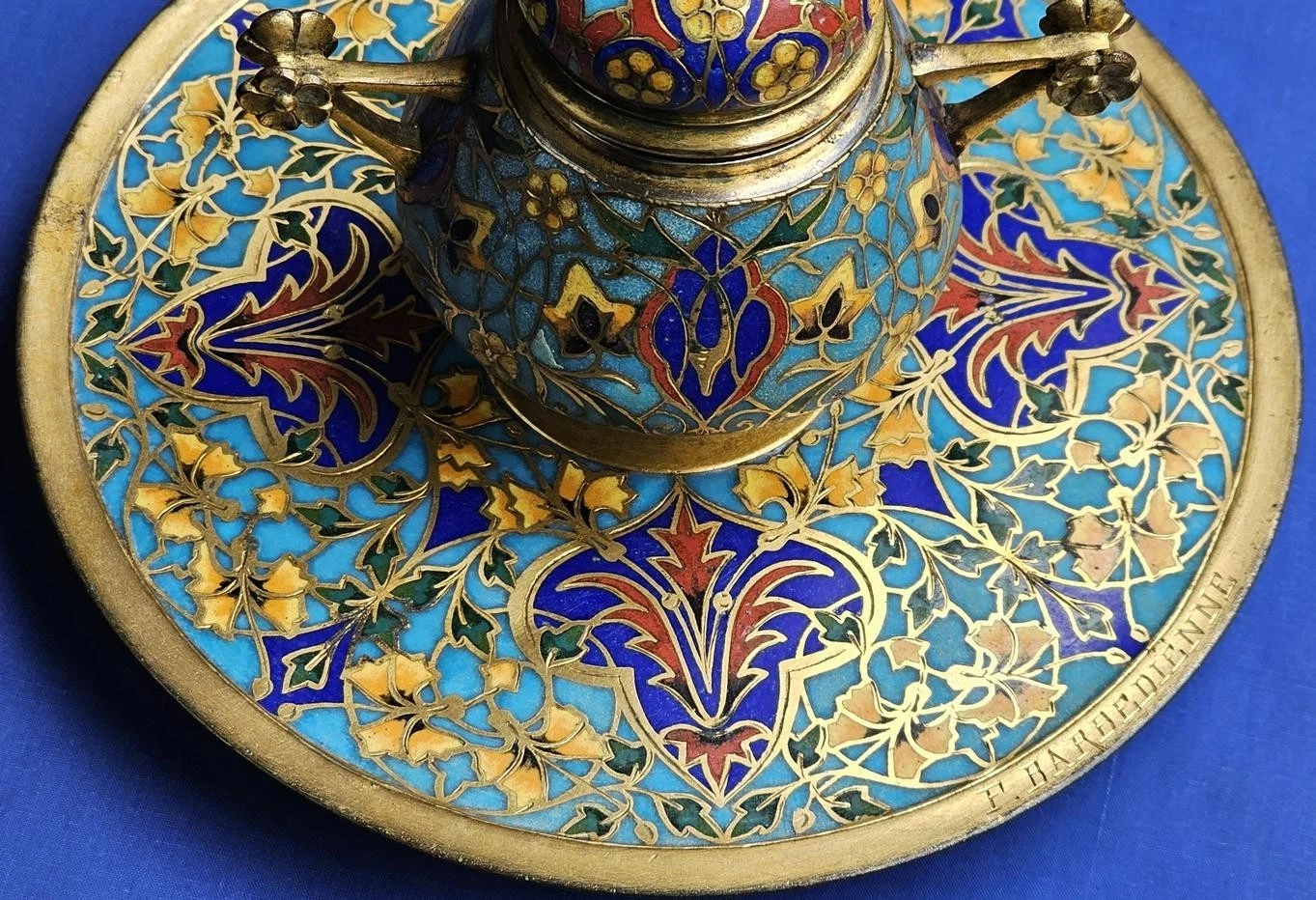
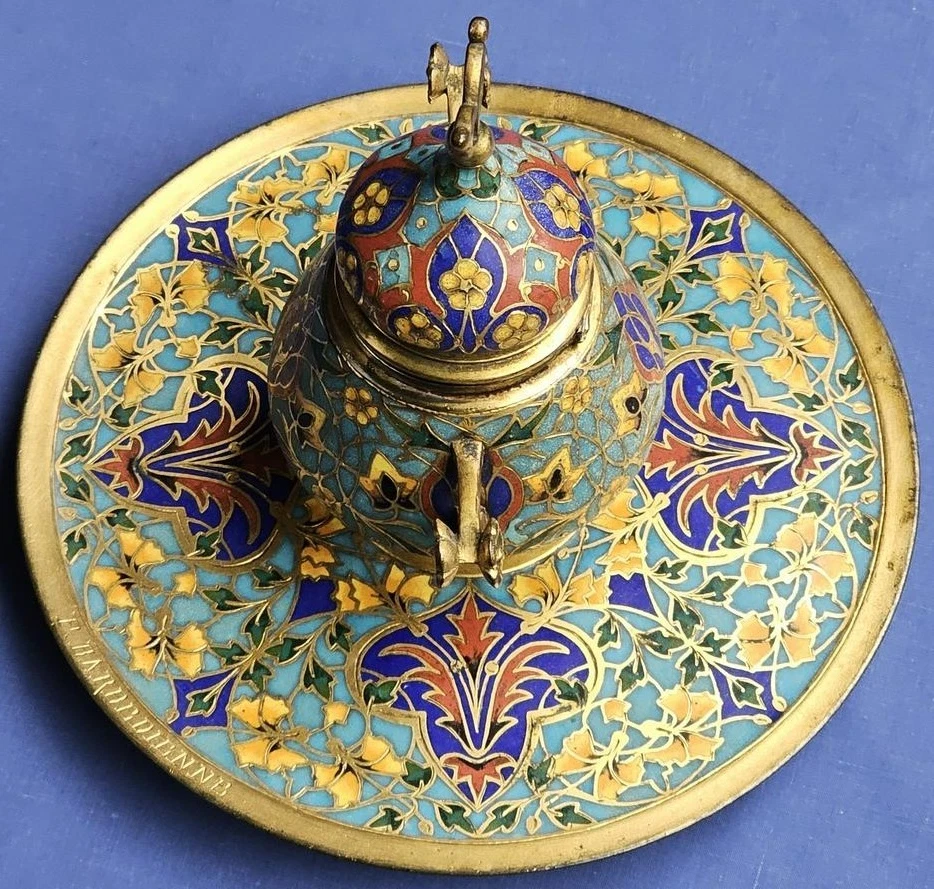
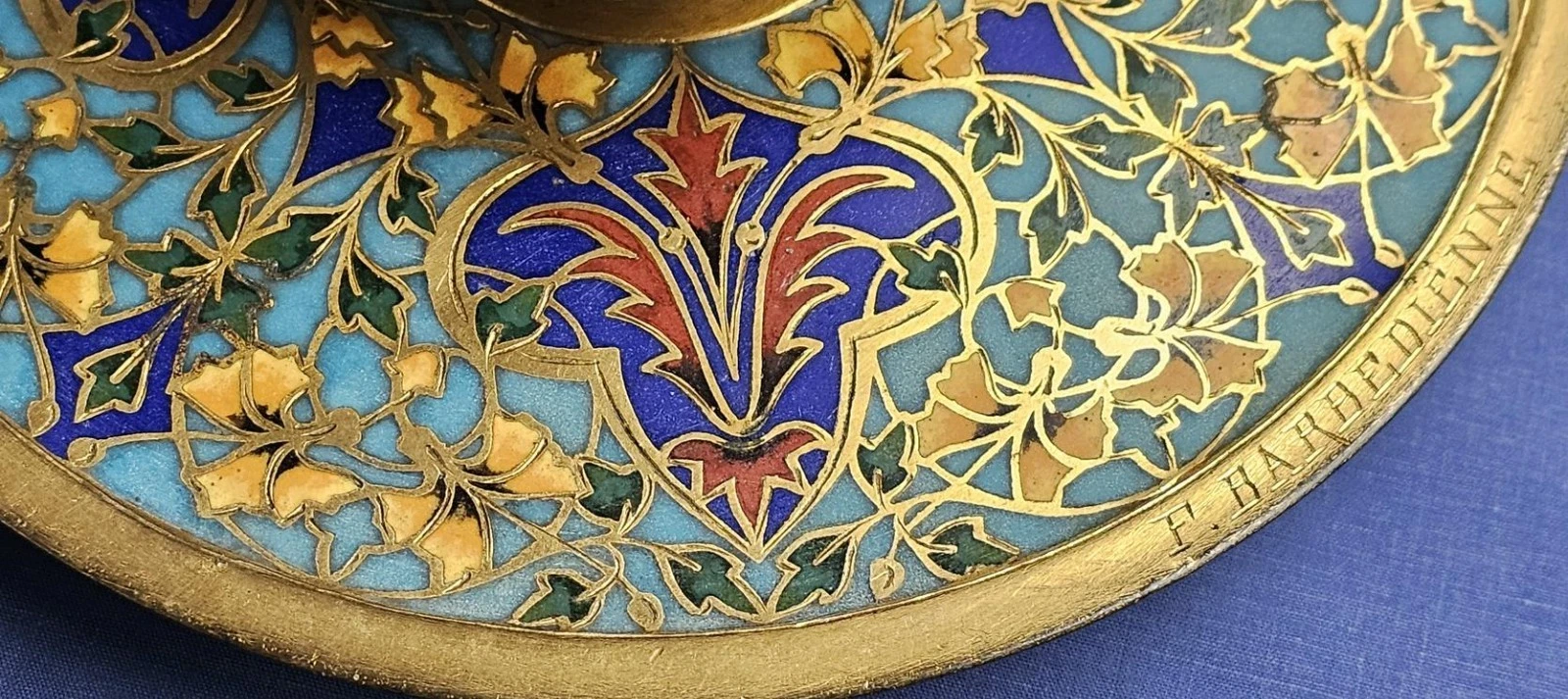
Signature: Stamped F. BARBEDIENNE along the outer gilded rim of the integrated tray.
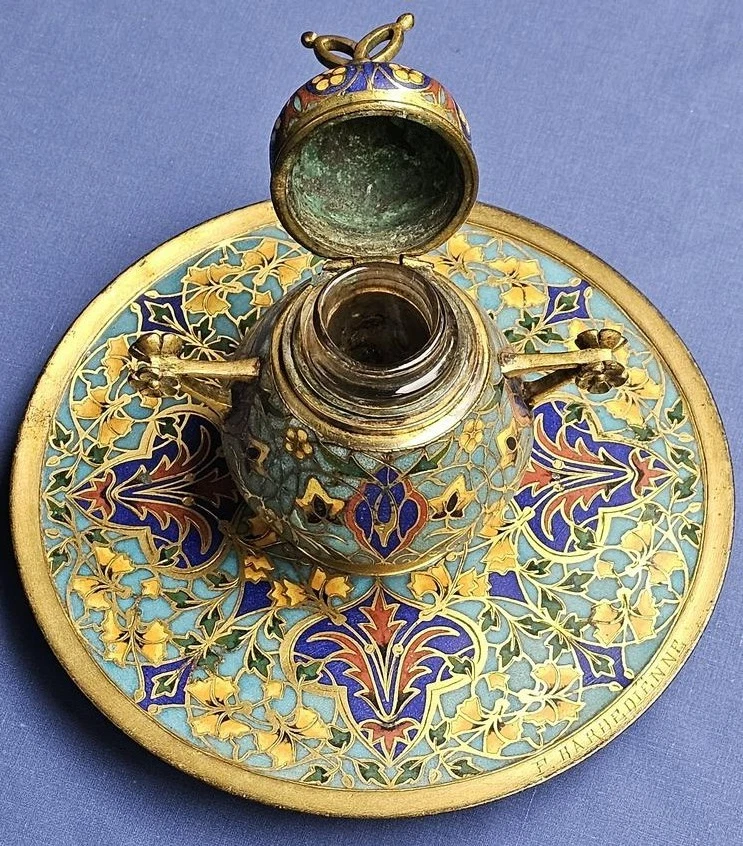
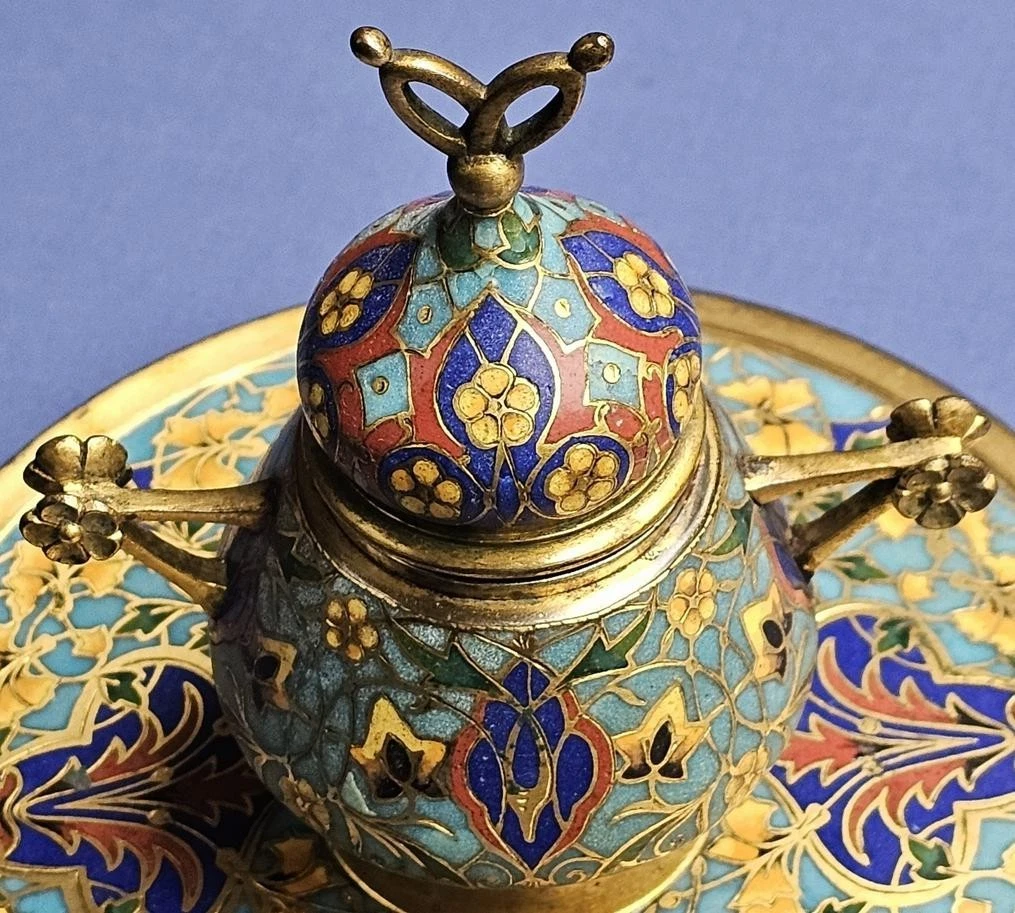
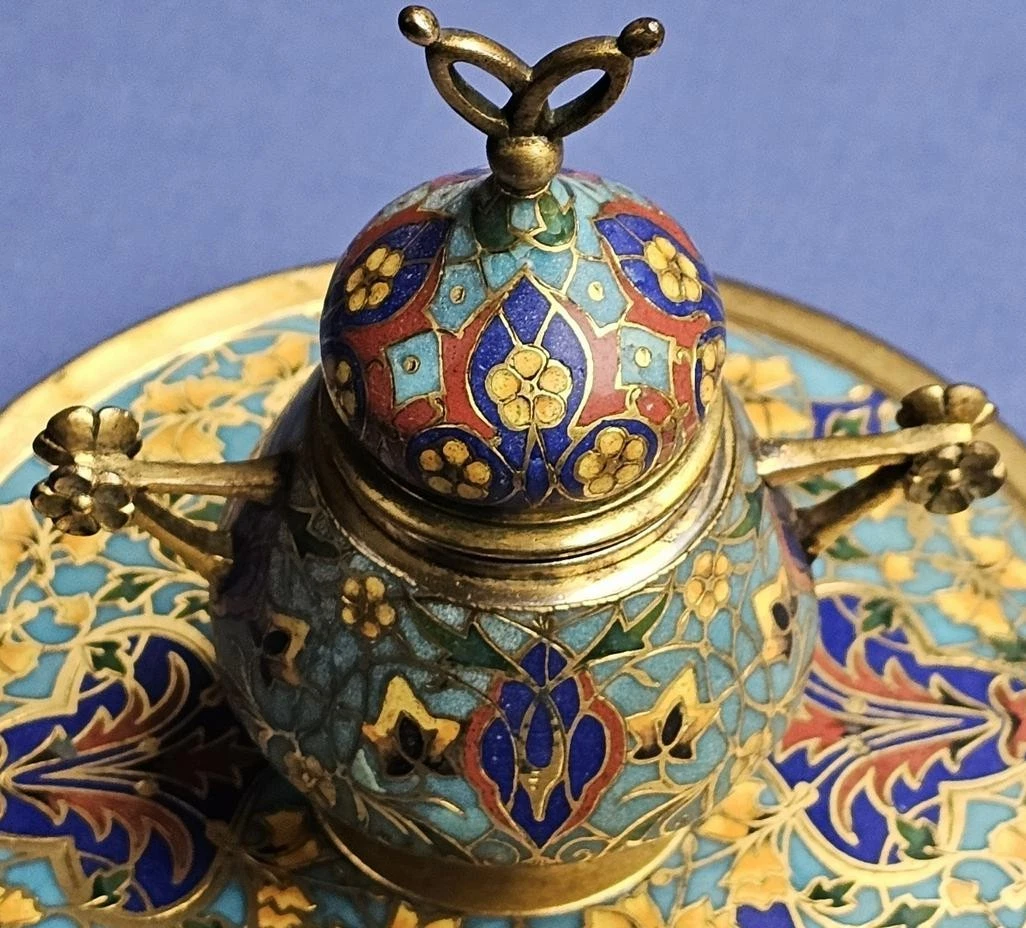
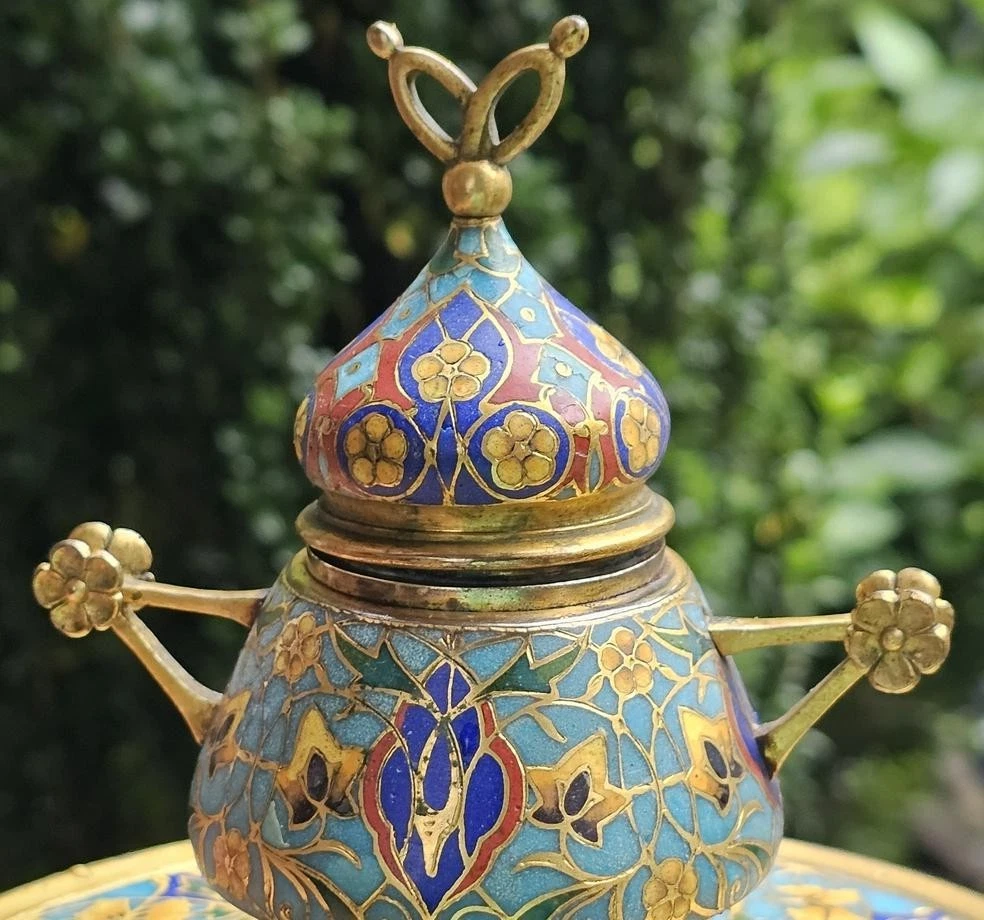
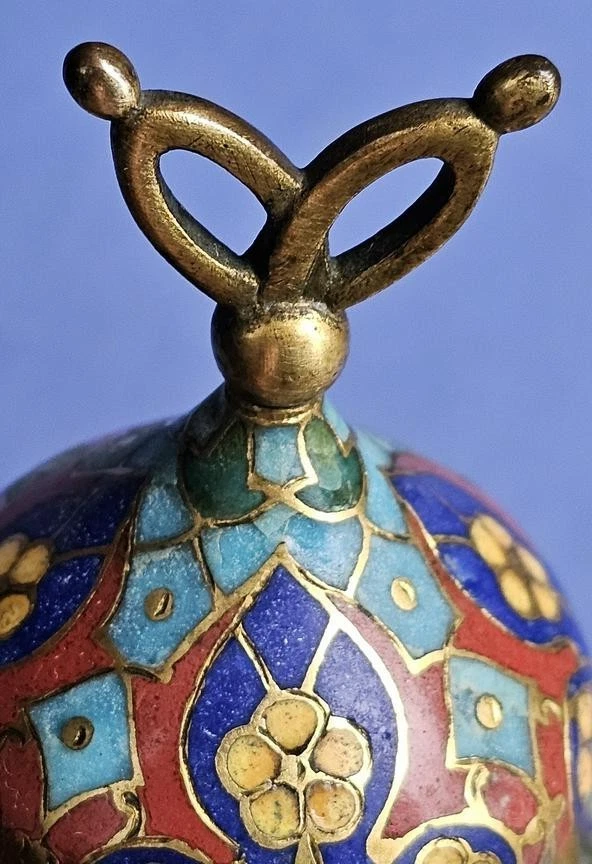
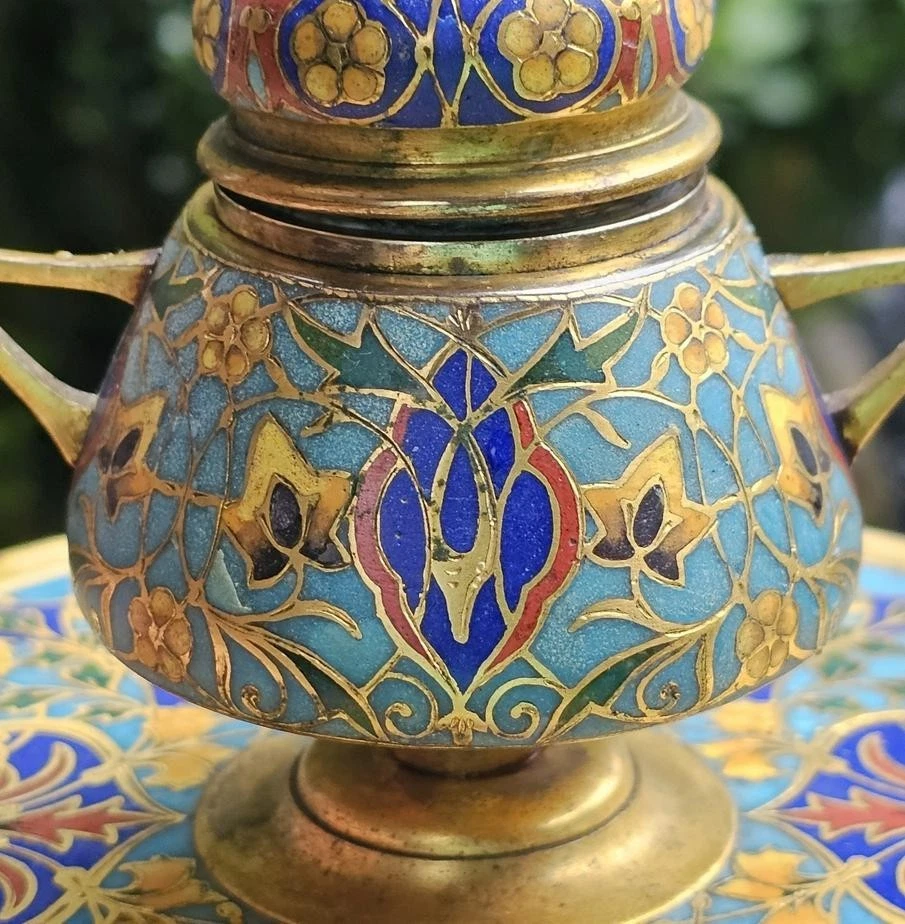
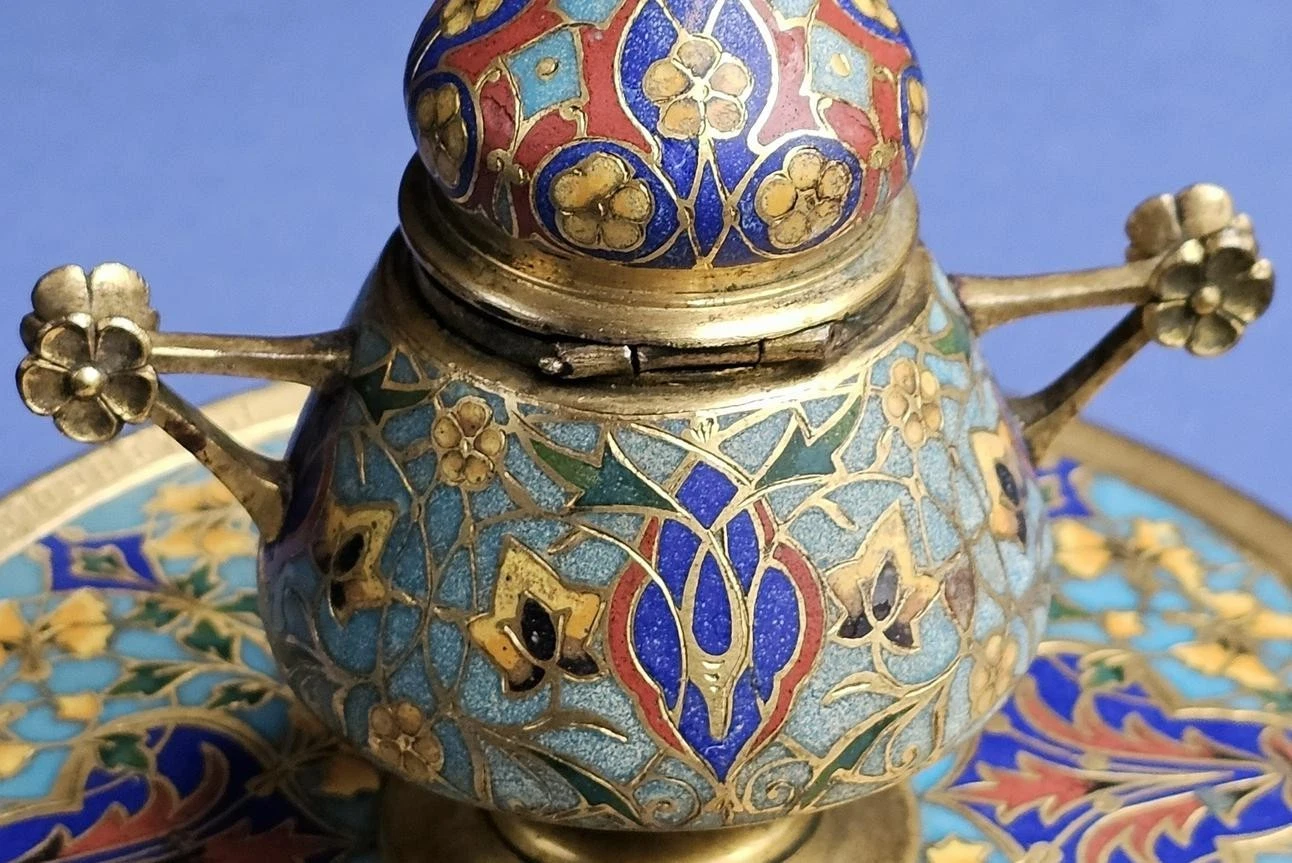
Description: An exceptional 19th-century French Néo-Grec/Orientalist gilt-bronze and champlevé enamel inkstand, comprising a bulbous central inkwell with an integrated circular tray. The piece is vividly decorated in multi-colored champlevé enamel featuring brilliant turquoise, cobalt blue, ochre yellow, rust red, and forest green hues arranged in intricate arabesques, palmettes, and scrolling foliate vines.
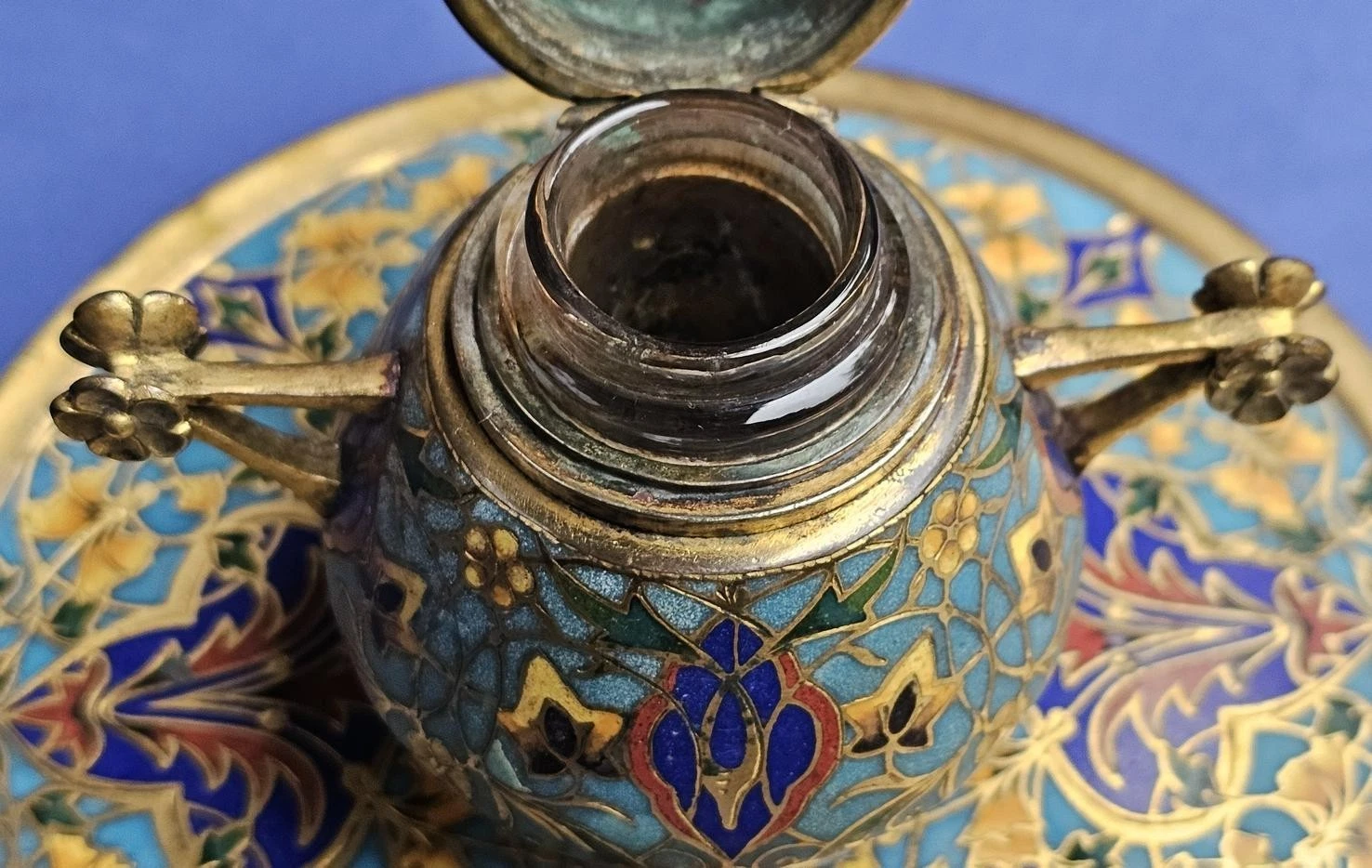
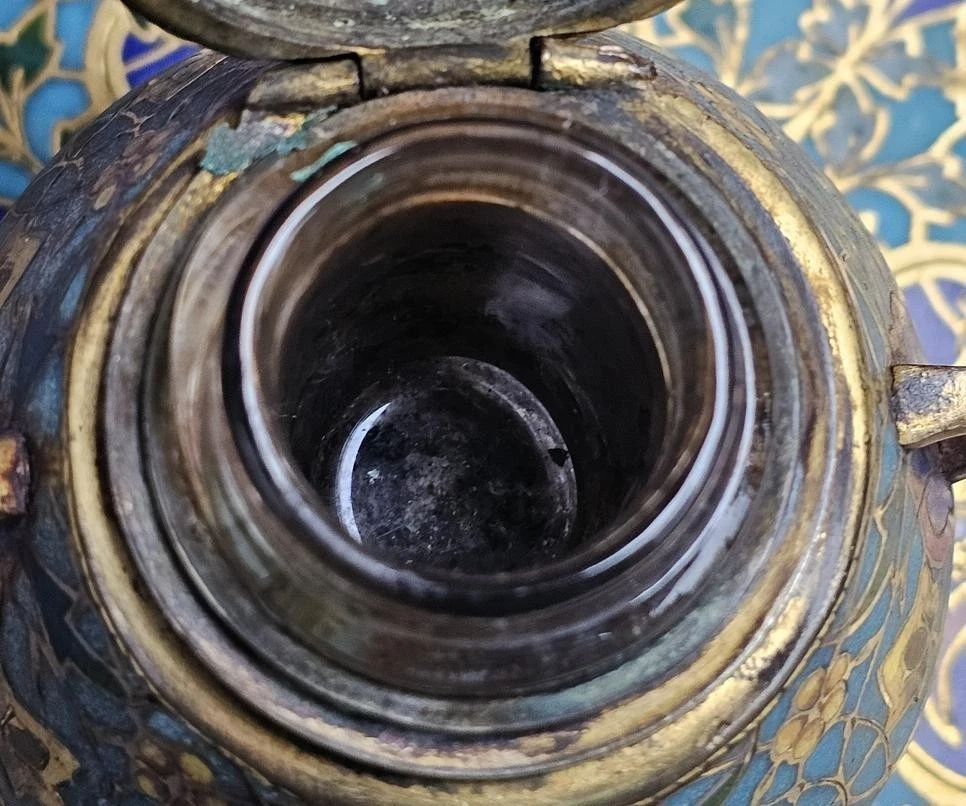
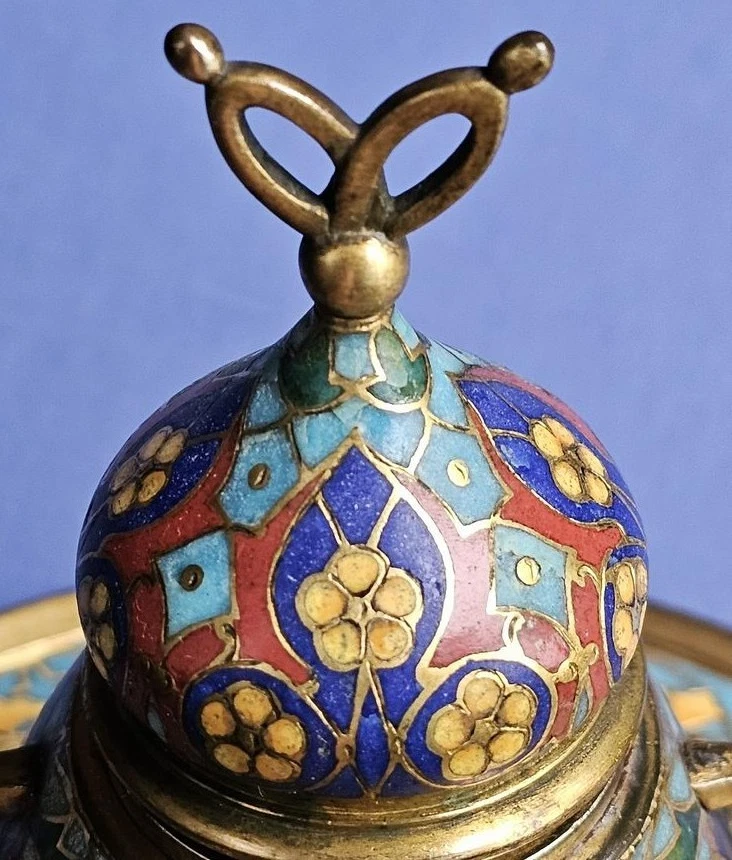
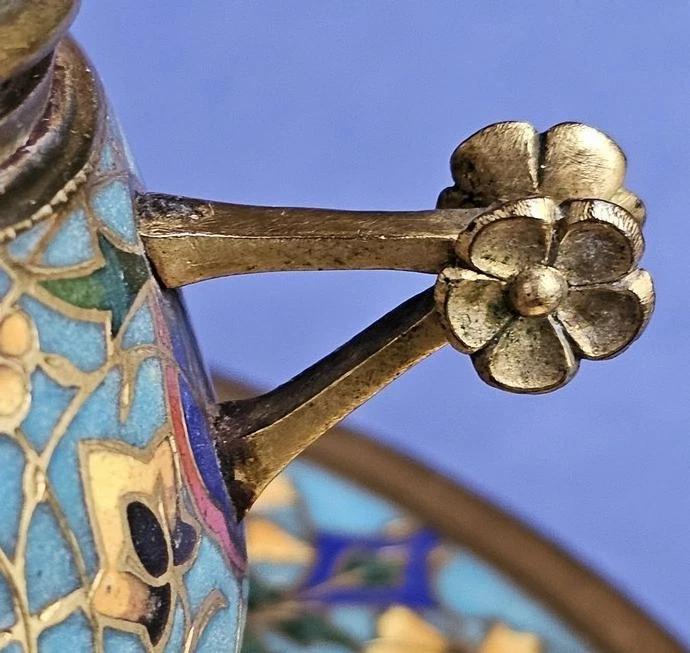
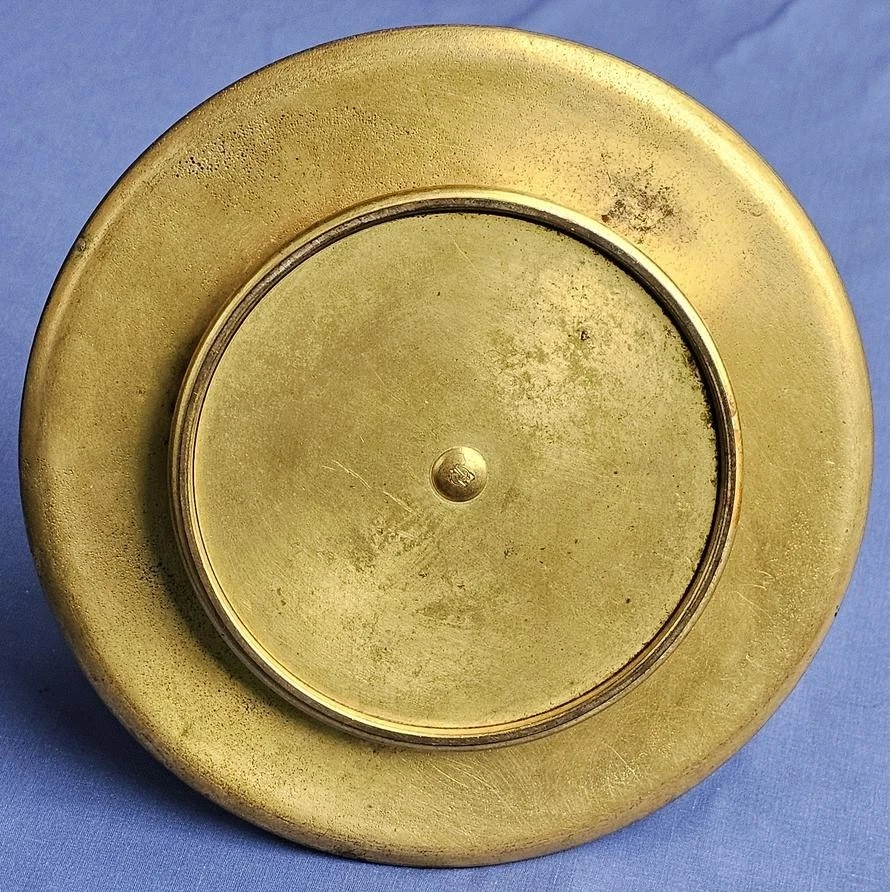
The central vessel is fitted with dual geometric loop handles terminating in carved floral rosettes, a hinged onion-domed lid topped with a stylized double-loop finial, and contains its original, undamaged glass insert. The underside displays a neatly finished, turned brass base ring with a central assembly rivet.
Background: Ferdinand Barbedienne (1810–1892)
Ferdinand Barbedienne was one of the most prominent French bronze founders (fondeurs) and decorative artists of the 19th century.
- The Foundry: Founded in Paris in 1838 alongside Achille Collas, the Maison Barbedienne initially gained fame using Collas’s mechanical reduction process to replicate famous classical sculptures in bronze.
- Enamel Innovation: Around 1858, Barbedienne began experimenting with champlevé enameling. By directly casting the recessed cells (champs) into bronze rather than soldering wire partitions (as in cloisonné) or hand-chisel carving, Barbedienne revolutionized the technique, winning international acclaim at the Great London Exhibition of 1862 and the 1878 Paris Exposition Universelle.
- Legacy: The firm produced high-end decorative objects for royalty and elite private patrons across Europe, setting the standard for French industrial art until well into the 20th century.
Designed by Louis-Constant Sévin
Louis-Constant Sévin (1821–1888) served as the primary sculpteur-ornemaniste (chief ornamental sculptor/designer) for Maison Barbedienne for over 30 years (1855–1888). We attribute this specific inkstand design to Sévin based on several key factors:
- Exclusive Artistic Leadership: Sévin designed almost all of Barbedienne’s custom luxury metalwork, hollowware, clock garnitures, and desk accessories during the 1860s and 1870s. Over his career at the foundry, he produced thousands of individual decorative models.
- Signature Aesthetic Markers:
- Eclectic Motifs: Sévin was renowned for combining Eastern/Islamic ornament (scrolling palmettes, onion domes, and rich turquoise/cobalt palettes) with classical European forms.
- Distinctive Details: The floral-rosette terminals on the side handles, the double-loop finial on the lid, and the symmetrical palmette reserves on the tray are signature Sévin ornamental trademarks seen across his cataloged works for Barbedienne.
- Exposition Masterpieces: Sévin was the mastermind behind Barbedienne’s celebrated champlevé revival pieces exhibited throughout the 1860s and 1870s. While lower-tier foundry workers executed the casting and enameling, the original conceptual drawings, models, and color layouts belonged exclusively to Sévin.
Sold for $421 in August 2026
Content disclaimer. The information posted is the owner’s best knowledge and may not have been vetted by the SOIC. We welcome comments, corrections, and additions, working to make our website information comprehensive and accurate.
Join the Society of Inkwell Collectors (SOIC) – it’s free!
Founded in 1981 as a non-profit organization,
we are documenting inkwells (and accessories).
We’re here to help and inform!