

Inkipedia
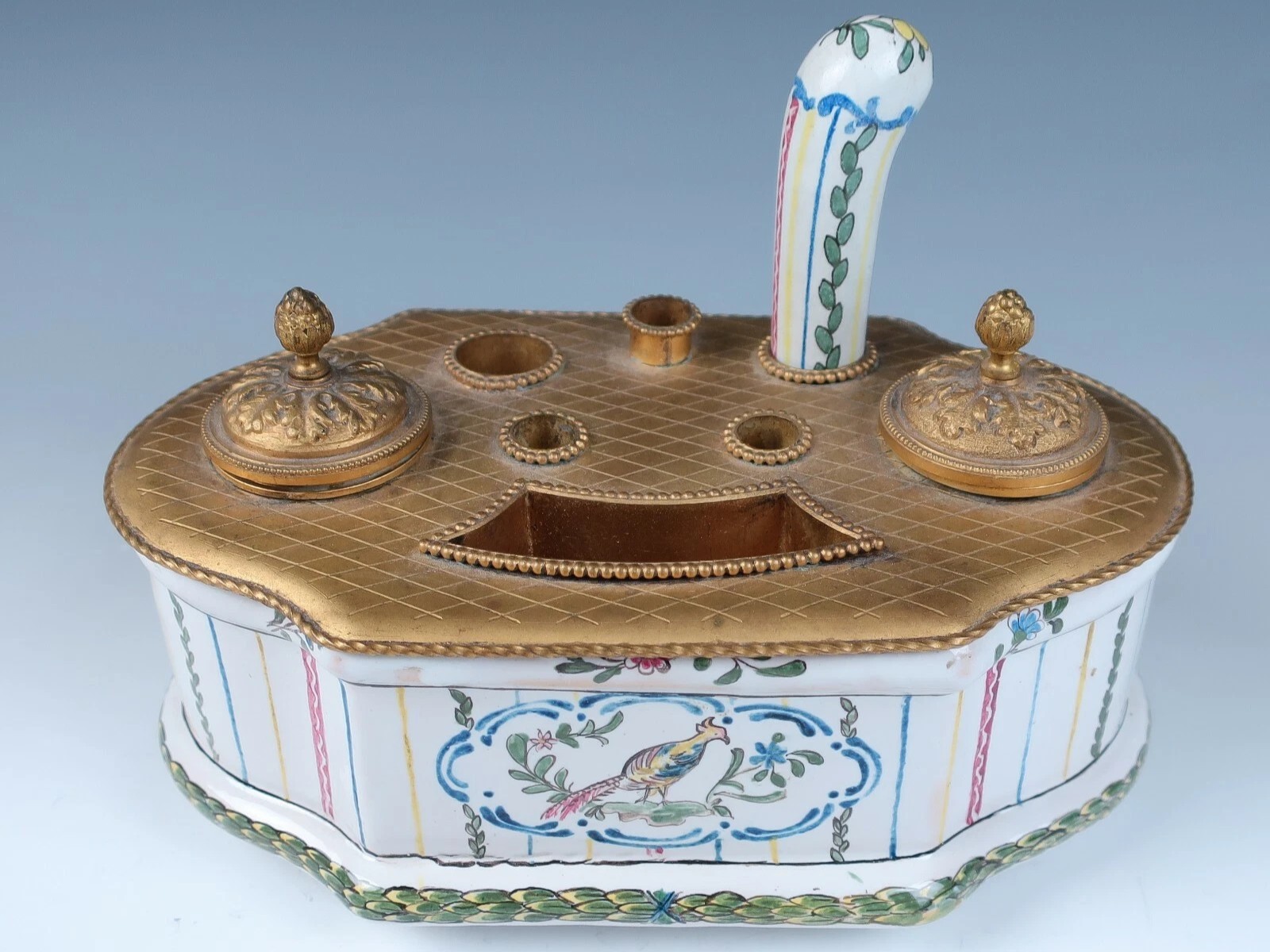
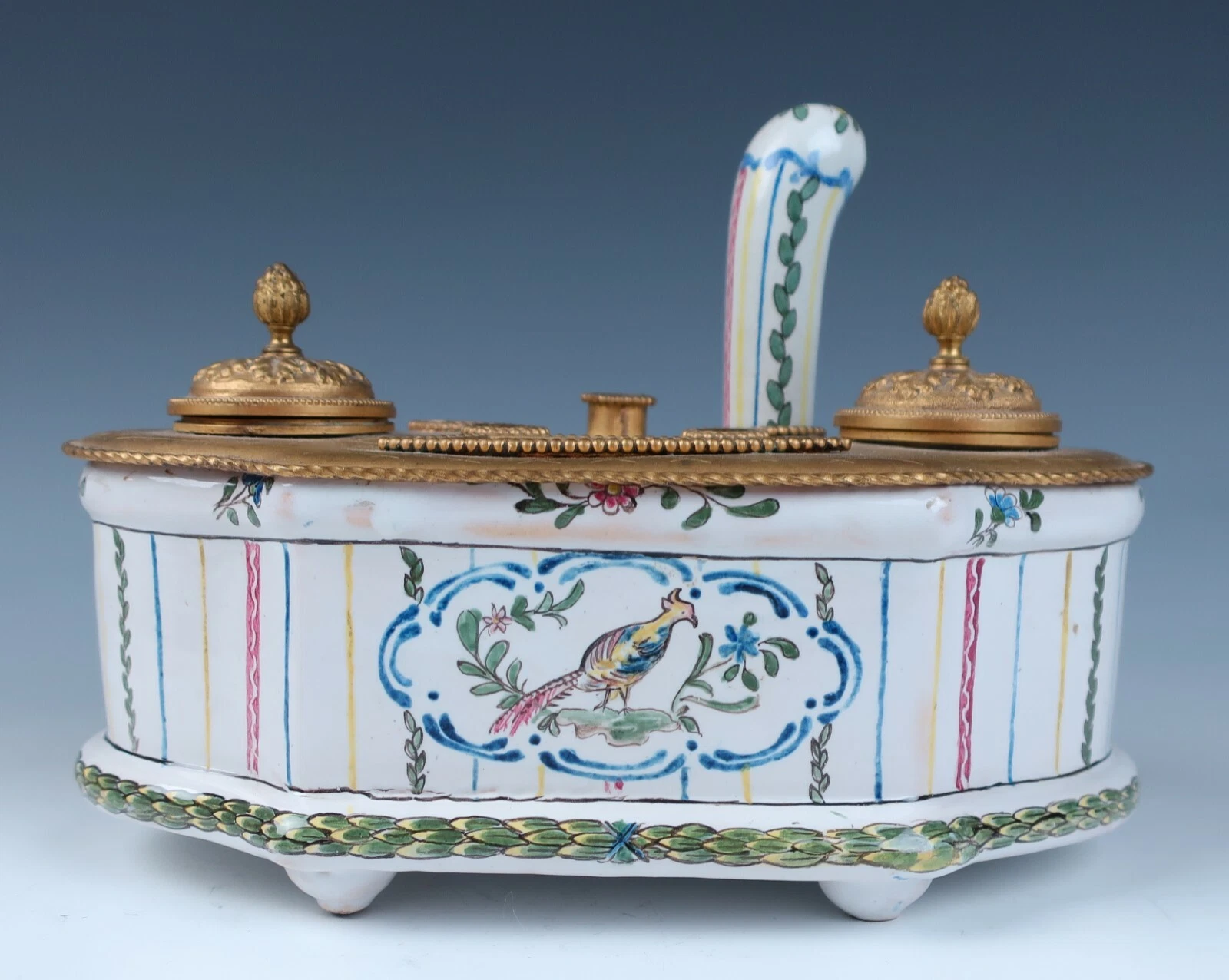
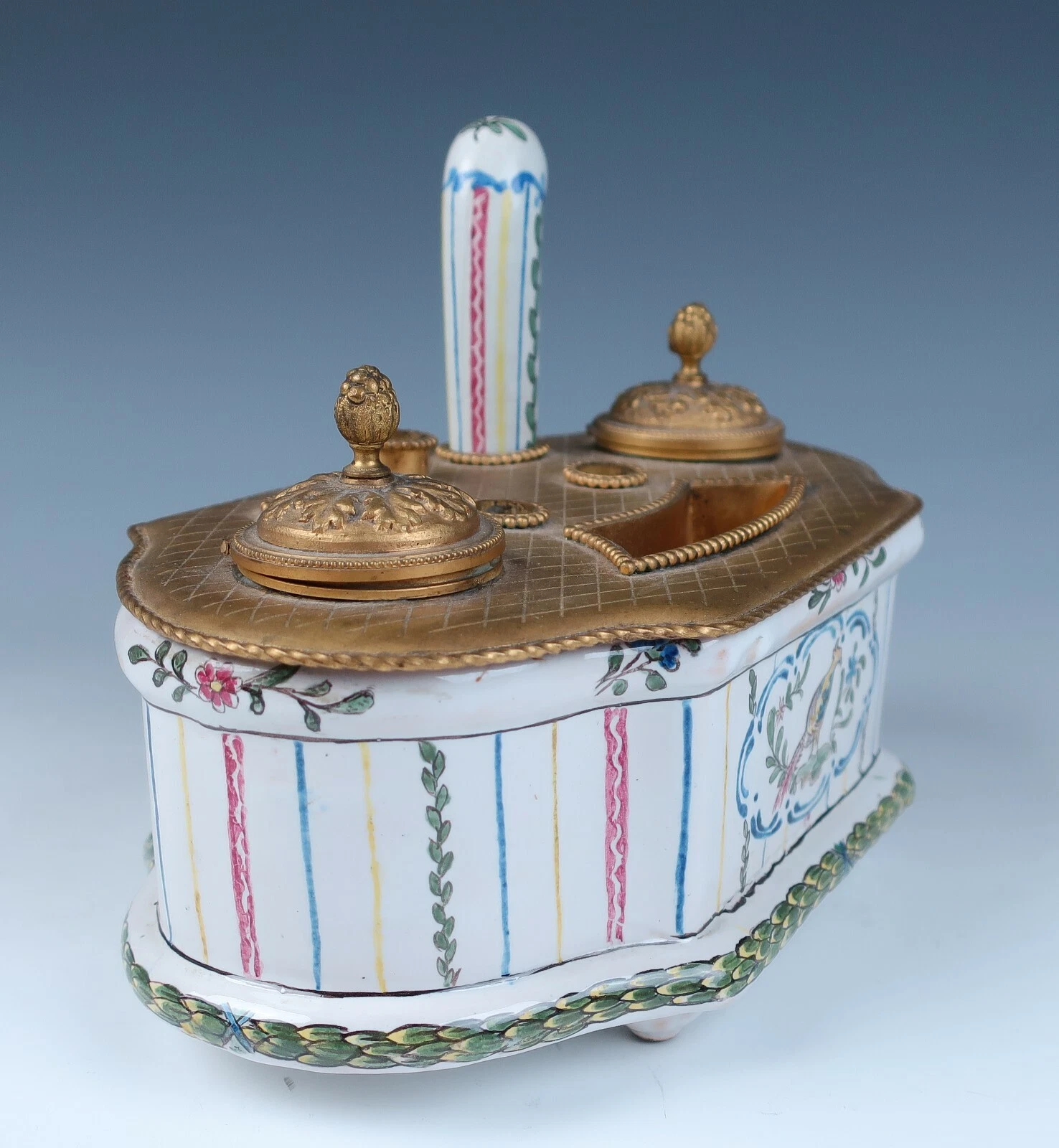
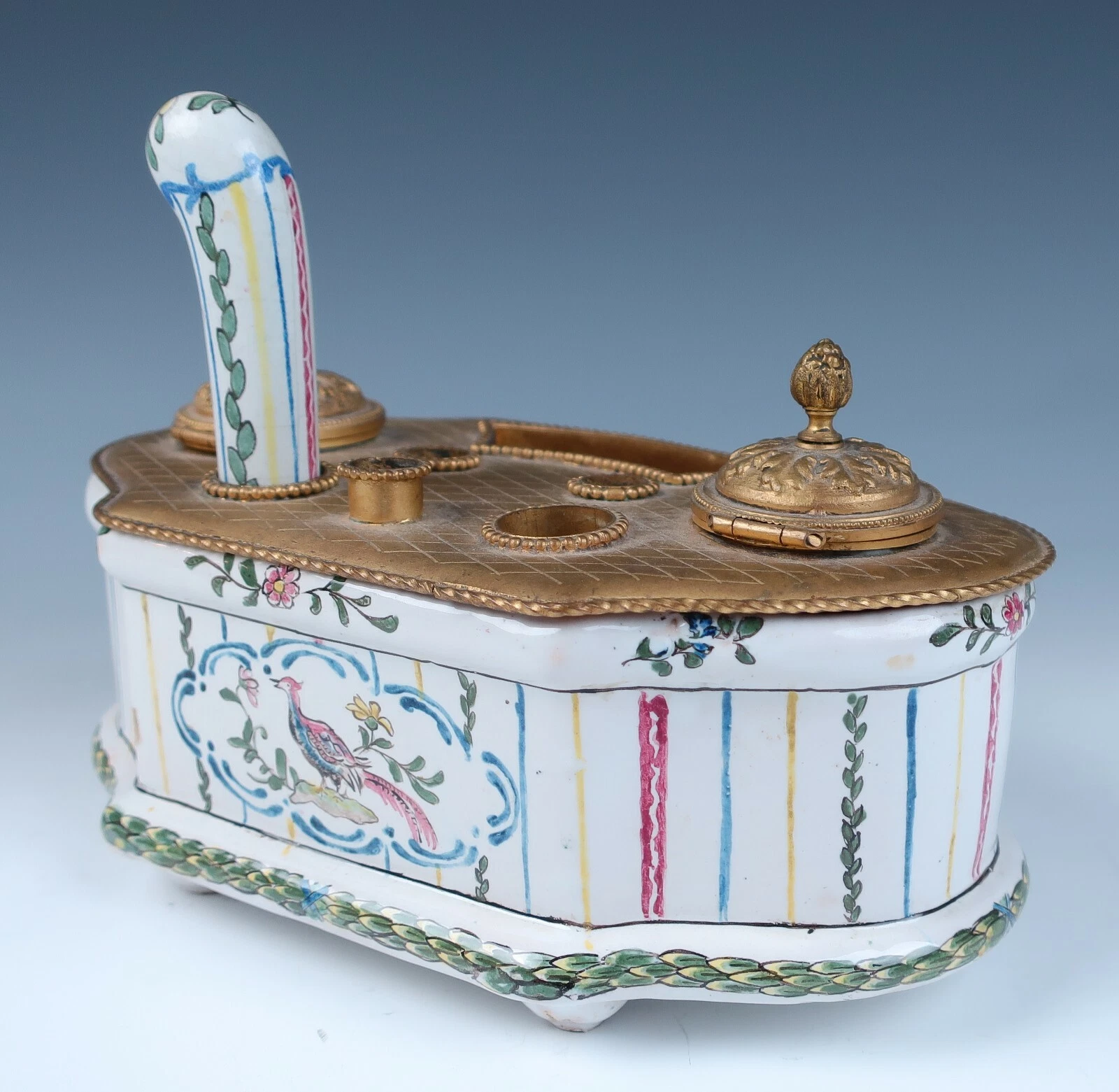
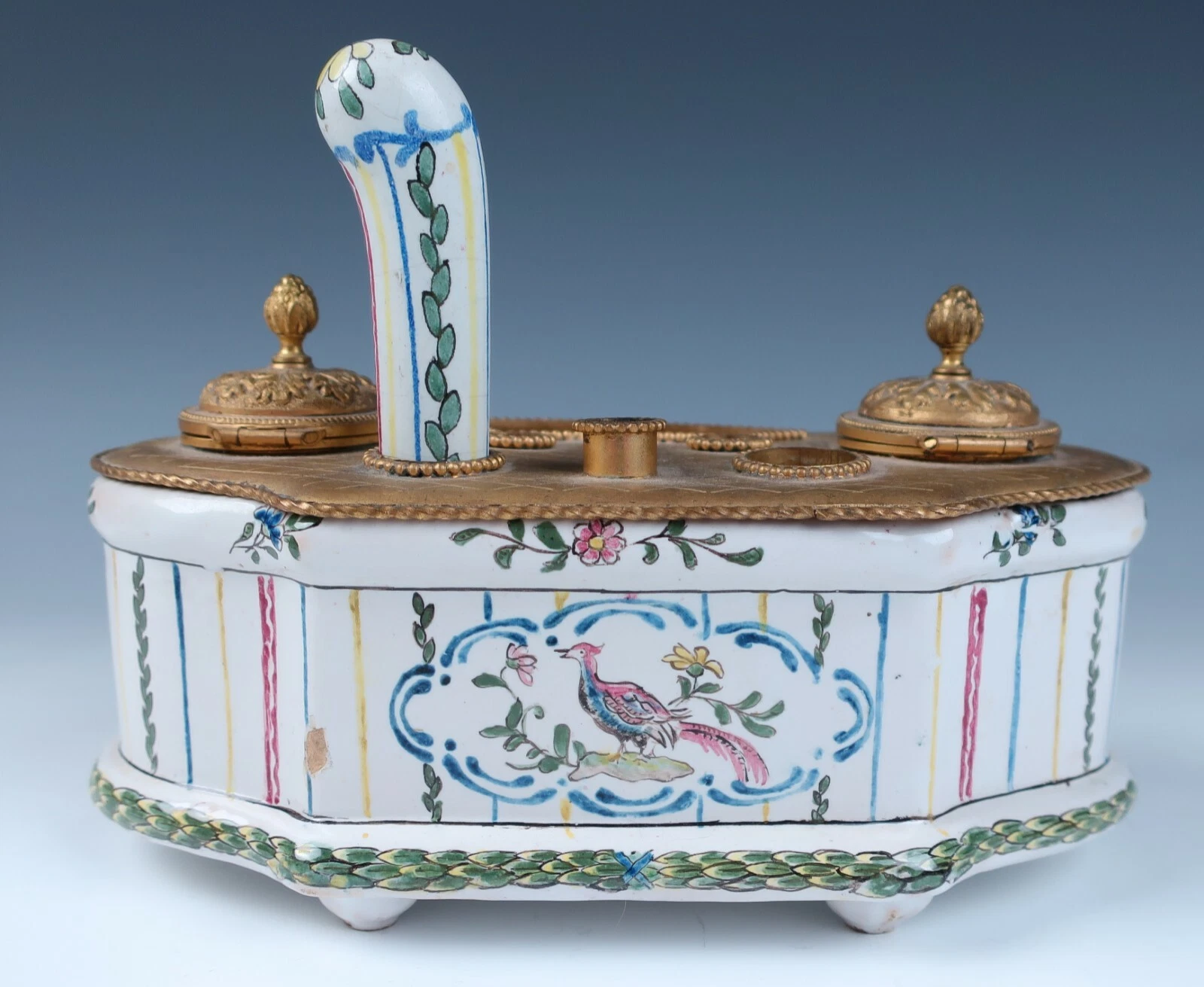
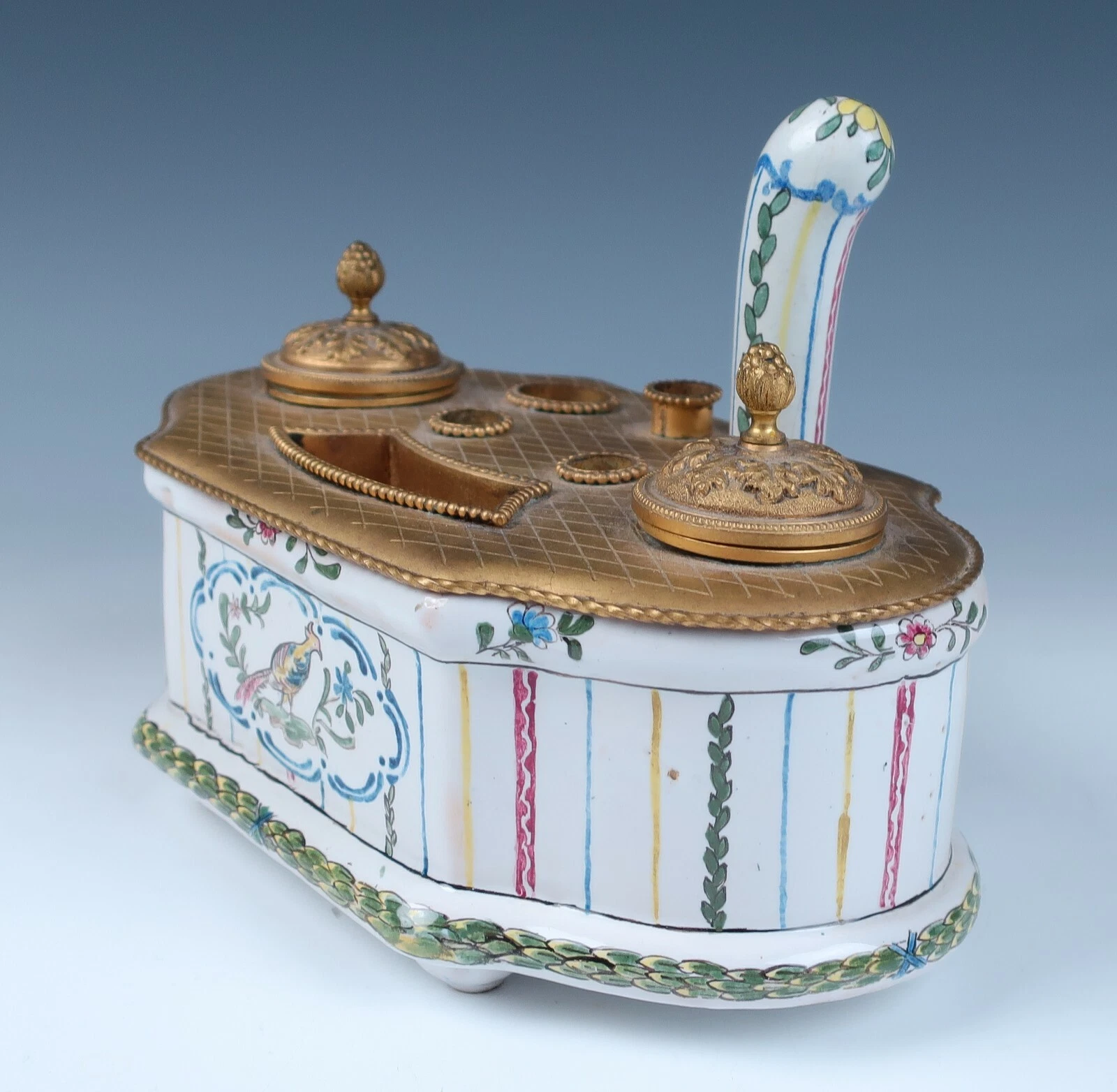
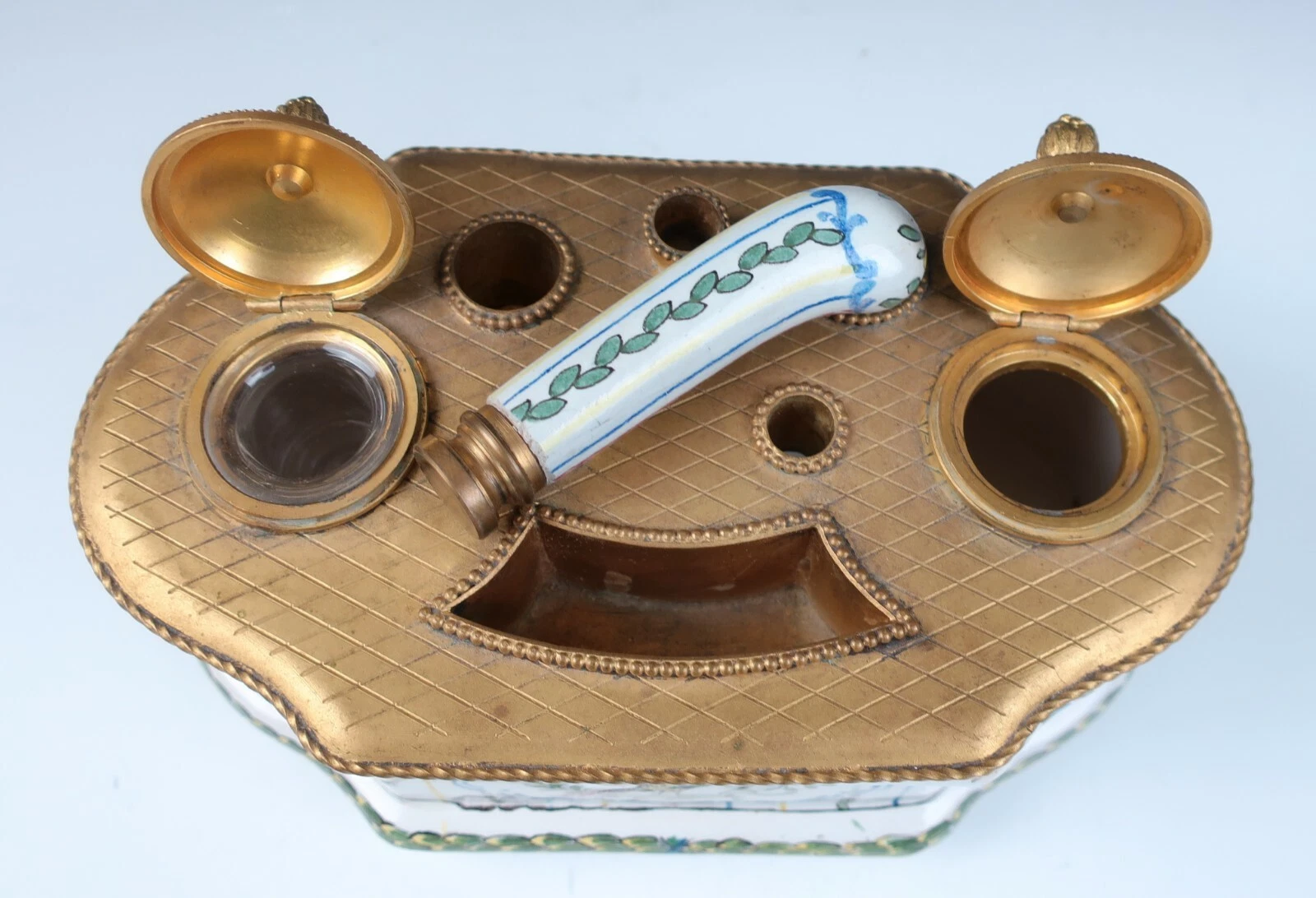
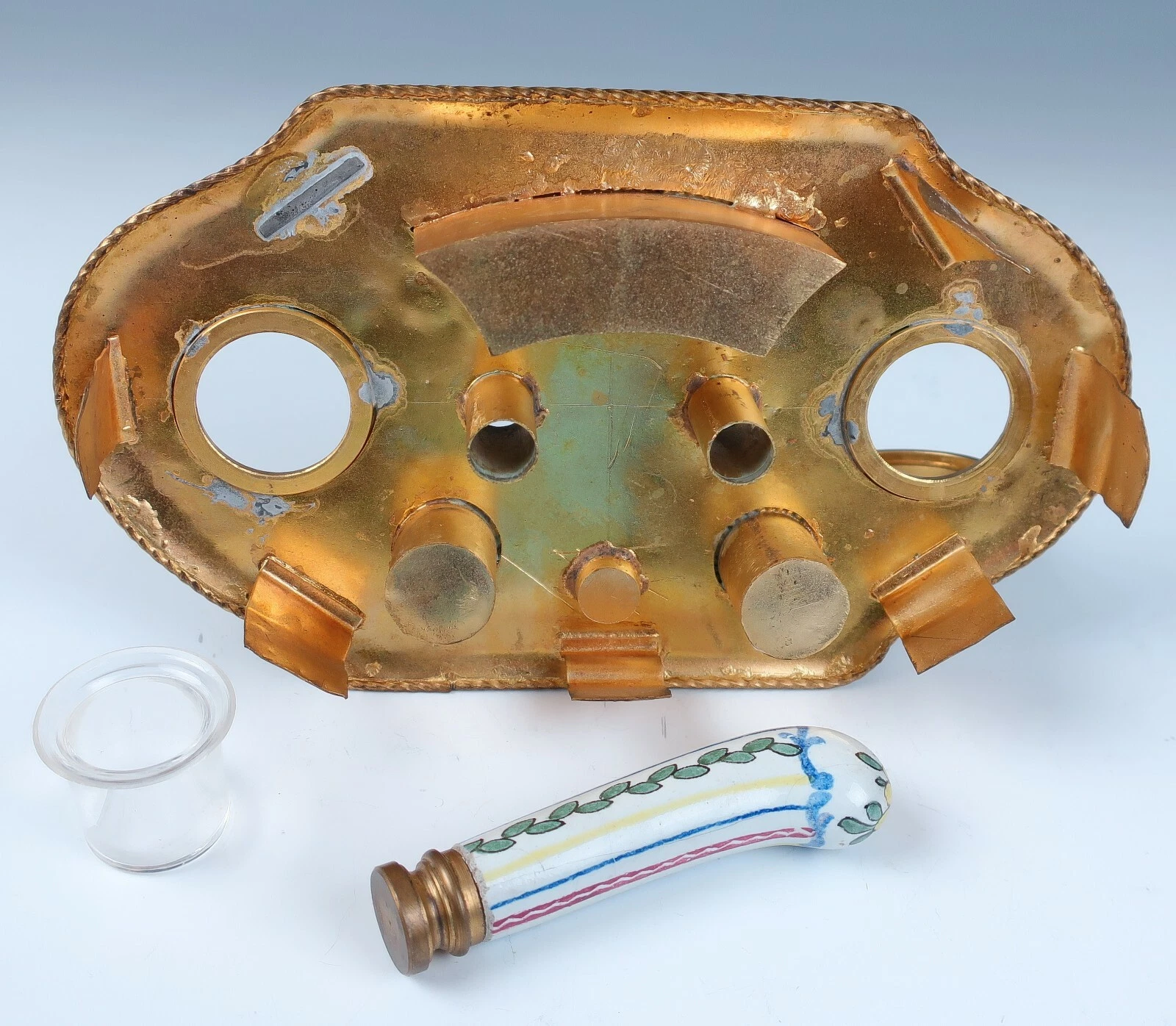
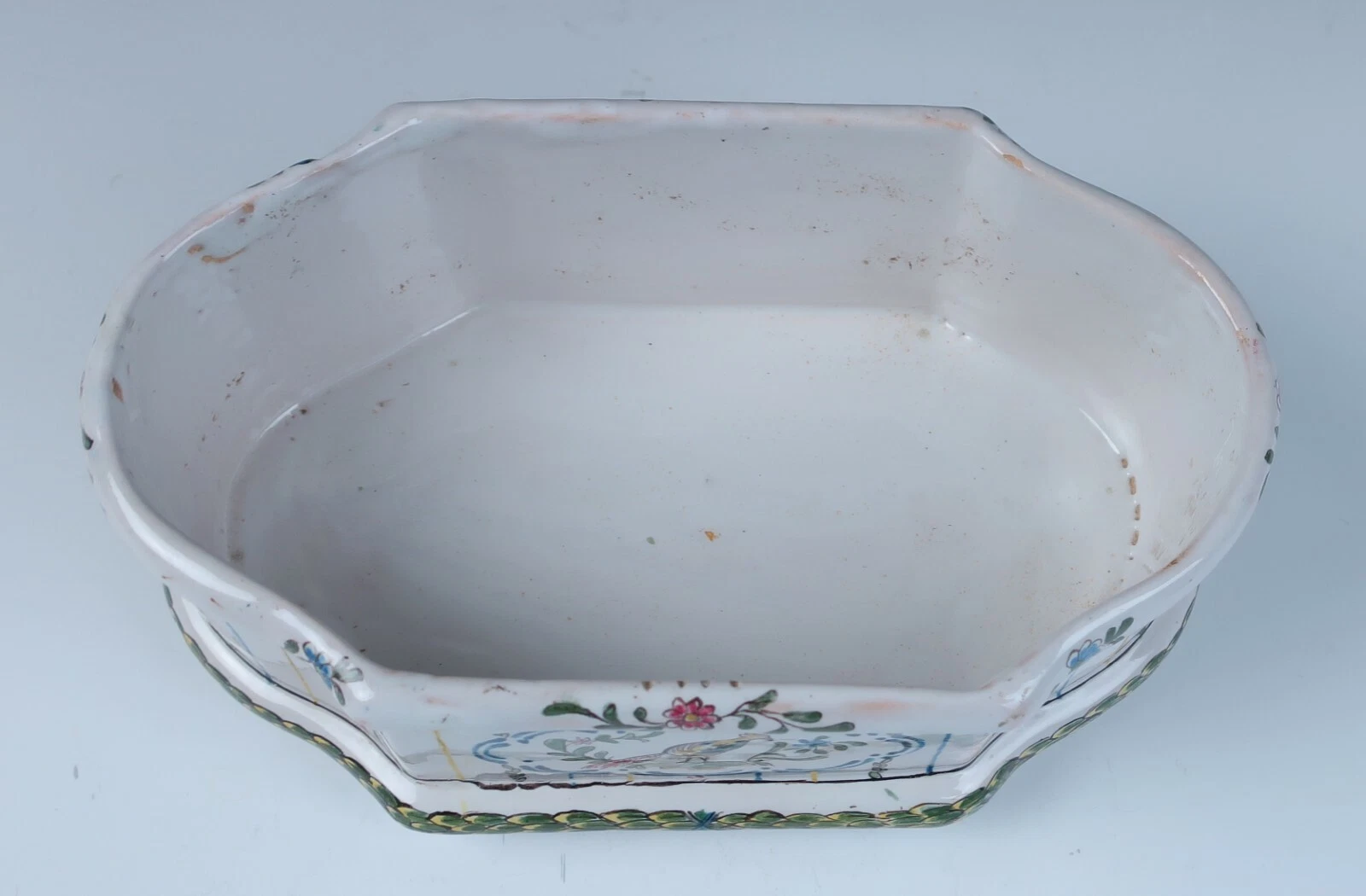
French Faience Inkstand with Wax Seal
| Categories | Ceramics/Porcelain non-Figural |
| Material | Faience Pottery |
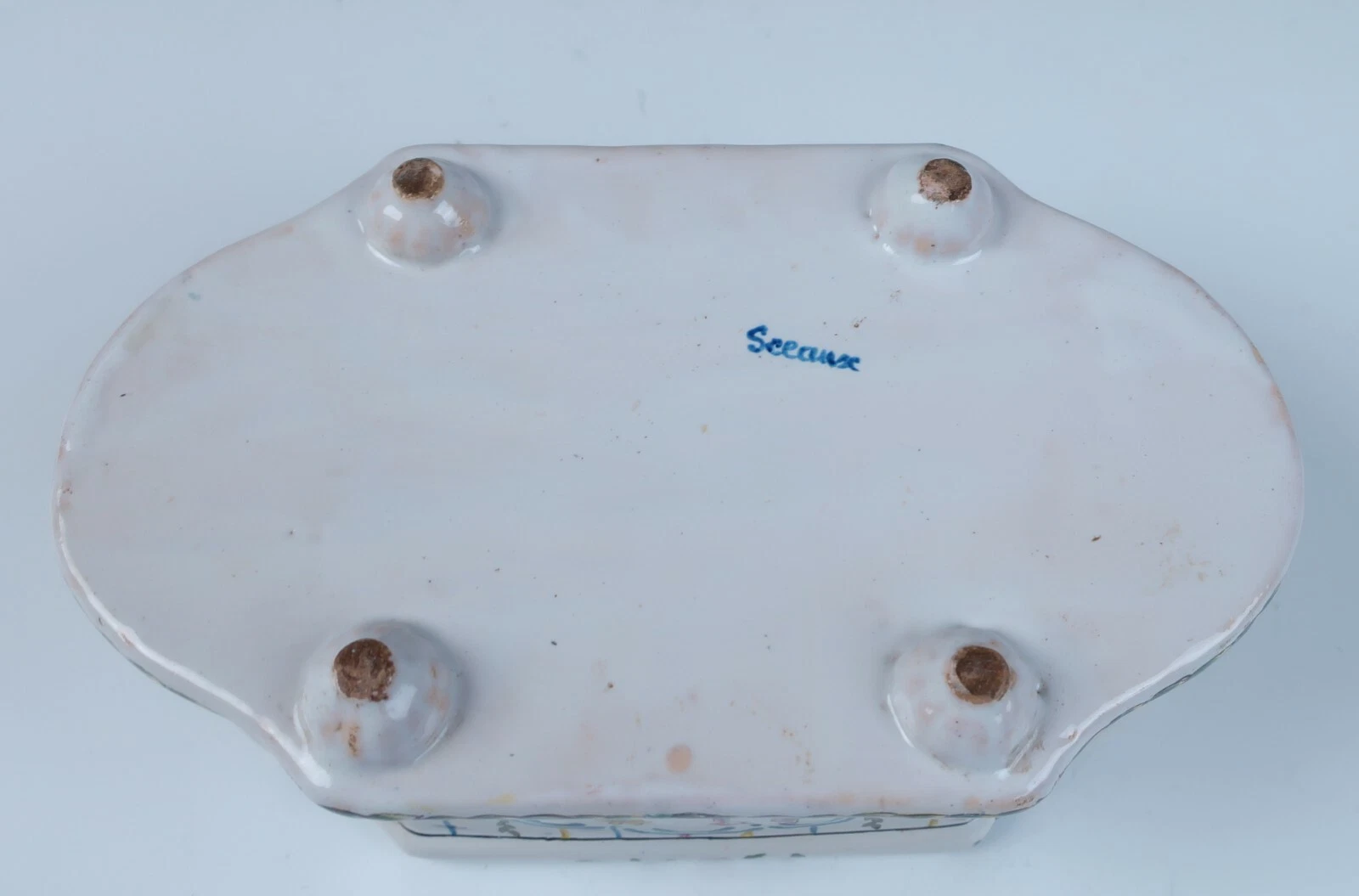
| Markings | See Narrative |
| Manufacturer | Undetermined |
| Origin | France |
| Date or Era | circa 1880 |
| Measuring | 7 ½” across |
This French faience inkstand is a 19th-century revival piece executed in the 18th-century style of the Sceaux manufactory.
Description
- The Faience Body: The base consists of a lobed, octagonal tin-glazed earthenware (faience) reservoir resting on four molded knob feet. The exterior is hand-painted with classic Sceaux-style motifs, including central cartouches containing colorful exotic birds or pheasants enclosed by blue rococo scrollwork. The surrounding panels feature alternating vertical stripes of pink, yellow, blue, and delicate green leaf trails, while the lower molding is bordered by a green laurel-wreath band.
- The Ormolu/Gilt Metal Mounts: The inkstand is fitted with a heavy, diamond-hatched (diaper pattern) gilt-metal or ormolu top plate bordered by a twisted rope edge. The underside shows the secure tabs and structural construction holding the components in place.
- Fittings & Components:
- Inkwells: The top plate includes two hinged inkwell lids topped with cast pinecone or acorn finials. The left well retains its original clear glass liner insert, while the right well is missing its insert.
- Matching Wax Seal: There is a removable desk seal painted with a coordinating leaf-trail and stripe pattern. It features a finished gilt-metal matrix base for stamping wax and slots perfectly into one of the designated central collars when not in use.
- Desk Utility: The plate features a curved, open pen tray slot at the front and three smaller circular apertures intended to hold quill pens or desktop accessories.
Maker & Approximate Date
- The Mark: The underside of the base features a hand-painted blue script mark reading “Sceaux”.
- The True Origin: While the original Sceaux factory achieved great renown in the 18th century for its high-quality glaze and fine polychrome painting, this piece exhibits the slightly heavier potting, pristine white glaze consistency, and metal attachment style typical of 19th-century historicism.
- Attribution & Date: It is highly probable that this piece was manufactured by a premier 19th-century French revival workshop specializing in high-fidelity historic European ceramics—most notably Samson, Edmé & Cie (Samson of Paris), or a contemporary Paris-area faiencier like those in Bourg-la-Reine or Desvres. It can be safely dated to the late 19th century (circa 1870–1890), a period when high-quality ormolu-mounted porcelain and faience reproductions of 18th-century royal factories were immensely popular among European collectors.
Sold for $125 in May 2026
Content disclaimer. The information posted is the owner’s best knowledge and may not have been vetted by the SOIC. We welcome comments, corrections, and additions, working to make our website information comprehensive and accurate.
Join the Society of Inkwell Collectors (SOIC) – it’s free!
Founded in 1981 as a non-profit organization,
we are documenting inkwells (and accessories).
We’re here to help and inform!